






We all look for inspiration when we decide to restore our homes. You might want to include a Pinterest-worthy reading nook, a cozy exposed brick wall, or maybe just keep the original charm intact. But let’s be honest, it’s not always easy. Restoring any home takes effort, and when it’s a historic one, you’ve got layers of time (and sometimes mystery wallpaper) to deal with.
That’s why we decided to take a scroll through the Facebook page ‘Restoring Your Historic House,’ a community dedicated to preserving and celebrating the beauty of older homes. From careful craftsmanship to heartwarming before-and-afters, this page is full of real stories and renovation magic. Keep scrolling to be totally mesmerized; you might just fall in love with these homes.
#41
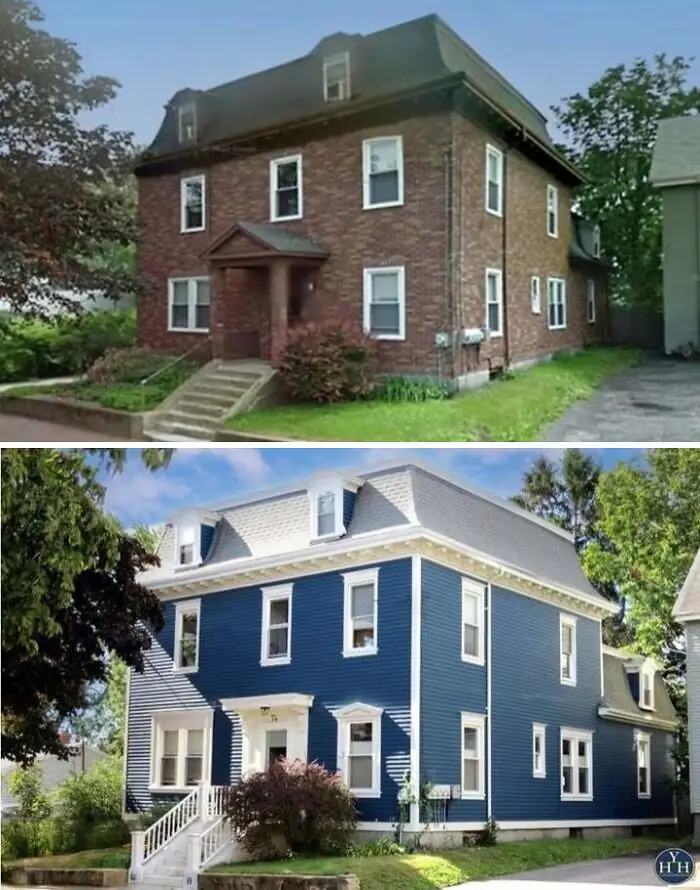
Before & After ~ Portland, Maine, Second Empire.
I've known this house since a boyfriend lived there in the early 1990s. Even then, the fake brick asphalt siding was looking worn and dated. Fortunately, a few years ago someone recognized its potential and used historic photos to restore the wood trim and clapboard siding to take it back to its intended character.
Hundreds of thousands of historic houses have been covered over with inappropriate "maintenance free" siding materials. This usually involves removing character-defining trim elements, as was done here. Using physical evidence left on the building, like paint marks and nail holes, and historic photos it is usually possible to replicate the missing trim when restoring.
The dirty secret of "maintenance free" products is that they are unrepairable. Once they are damaged, or just get old and deteriorate, they have to be replaced. Historic materials can be selectively repaired or replaced in-kind without having to completely replace all of the material. Our ancestors were less wasteful.
"Restoring Your Historic House, The Comprehensive Guide for Homeowners" is filled with information to help historic house owners restore their houses - including tips for removing inappropriate siding.
Signed and personalized copies of the award-winning and bestselling 720-page hardcover book are available directly from the author in our online bookshop at YourHistoricHouse.com/shop/.
Our shop also carries select preservation and restoration titles by other authors.
"Restoring Your Historic House" is also available in bookstores nationwide and from online retailers.
© Scott T. Hanson 2025.
15points
#42
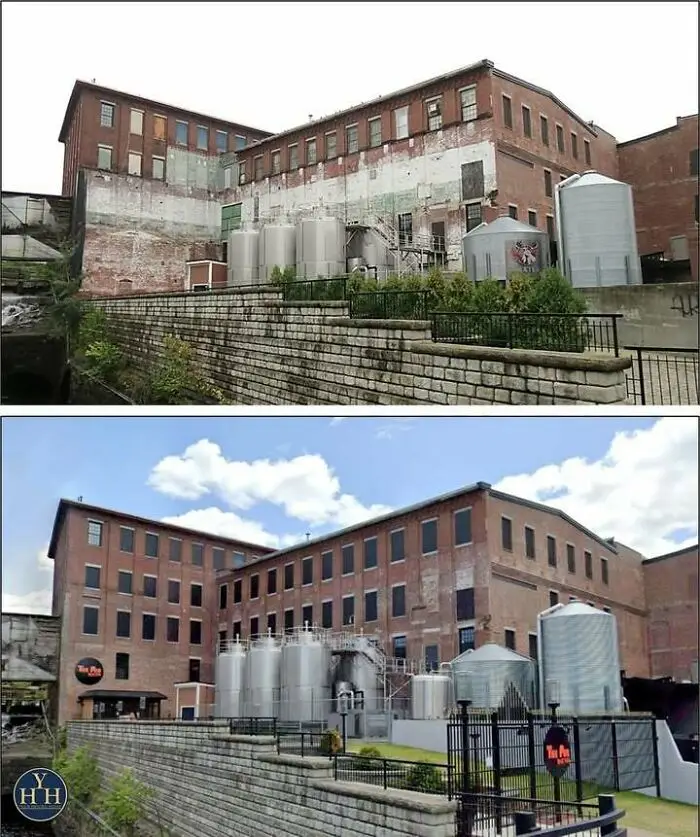
Appropriate Paint Removal from Exterior Brick.
I frequently see terrible advice on removing paint from exterior brick in a number of old house groups. Sandblasting is never the right answer for this.
When brick is fired in the kiln, a hard "skin" forms on the outer surfaces, where it is most exposed to the heat. Similar to the crust on a loaf of bread. Sandblasting will remove this outer skin and leave the softer interior of the brick exposed. The interior of a brick, once exposed, is like a sponge and will absorb excessive moisture.
In a cold climate, this will freeze and quickly cause the brick to break down. In a warmer climate, the brick will deteriorate more slowly but still will eventually crumble. Power washing with enough pressure to remove paint also damages the brick, and drives excessive moisture into the brick and mortar.
The National Park Service has a Preservation Brief on this topic: https://ow.ly/cjjW50QKPAa
There are products made to remove paint from brick without causing damage. As a preservation consultant on historic tax credit projects, I have seen the best results from Prosoco products. They manufacture a line of masonry paint removal products for a variety of conditions, along with excellent masonry restoration cleaners. The painted walls of the mill building in the photos were stripped and cleaned with their products. https://ow.ly/BlC850QKPAb
Appropriate approaches for all exterior materials are covered in "Restoring Your Historic House, The Comprehensive Guide for Homeowners."
Signed and personalized copies of the award-winning and bestselling 720-page hardcover book are available from the author in our online shop at YourHistoricHouse.com/shop/.
© Scott T. Hanson 2025.
15points
#43
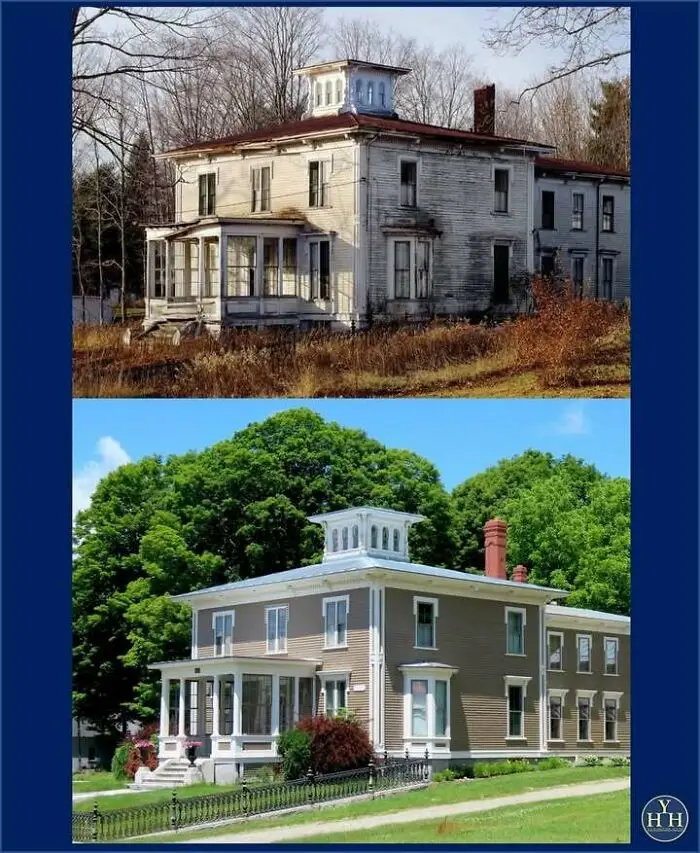
Before & After ~ The c. 1868 Gile-Harvey House in Readfield, Maine.
This house is an excellent example of what is possible with determination and commitment.
My friend Cornelius Donovan took the before photo of this house several decades ago. Seeing this abandoned house as a teenager started his love of historic houses and preservation. Today, he is restoring a similar Italianate house.
Fortunately, someone else also saw the potential for the Gile-Harvey House; today, it is beautifully restored. It is the most prominent house in the village of Readfield, and its restoration has improved the appearance of the whole community.
The Italianate style got a toehold before the Civil War, popularized in part by its use for Queen Victoria's summer retreat, Osborne House on the Isle of Wight. It really took off after the war, with examples of the style appearing in all parts of the United States.
"Restoring Your Historic House, The Comprehensive Guide for Homeowners" was written to help people who want to restore a house with sensitivity to its character-defining features.
Signed and personalized copies of the award-winning and bestselling 720-page hardcover book are available from the author in our online shop at YourHistoricHouse.com/shop/.
Our shop also carries select preservation and restoration titles by other authors. Save on cost and shipping with our multi-book combo packs!
"Restoring Your Historic House is also available in bookstores nationwide and from online retailers.
© Scott T. Hanson 2025.
15points
#44
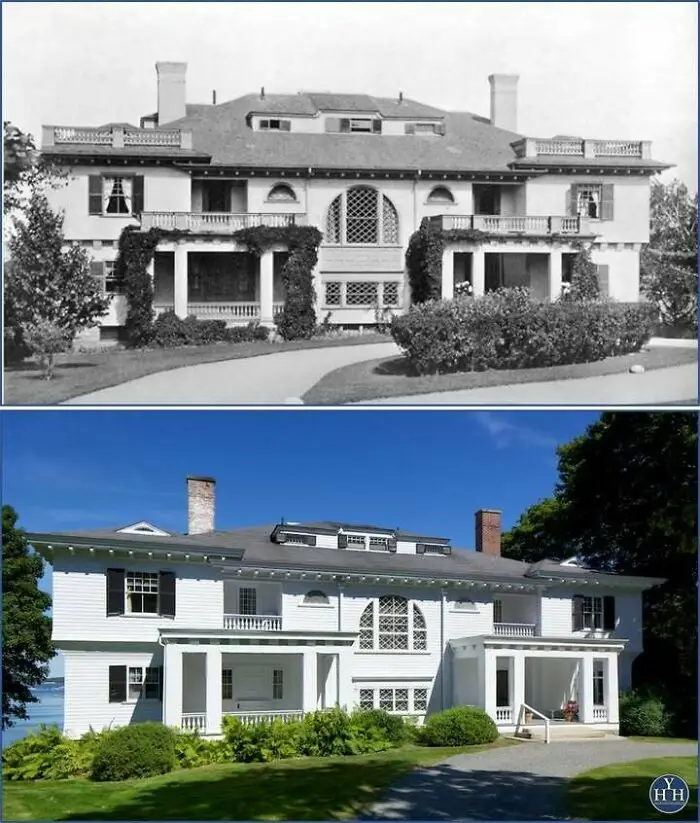
Then & Now ~ Bar Harbor Vacation.
We are visiting Bar Harbor, Maine, this week. I am sharing some of the wonderful historic houses found here, including the John D. Jones cottage "Reverie Cove" was designed by architect Fred Savage and built in 1893.
Savage was a native of Mount Desert Island, where Bar Harbor is located, and became a leading designer of summer cottages after working as a draftsman in the Boston office of Peabody & Stearns. He designed more than 300 cottages. Reverie Cove survived the Fire of 1947 that destroyed many of the island's great cottages.
At some point, the original stucco failed and was replaced with painted wood shingle, somewhat diminishing the intended "Mediterranean Revival" character of the house.
The color photo was taken by architectural photographer Dave Clough in 2013 for a book project I co-authored with Maine State Historian, Earle G. Shettleworth, Jr. and architect Christopher Glass. The book was "Homes Down East, Classic Maine Coastal Cottages and Town Houses," published by Tilbury House Publishing (currently out of print).
Following publication of "Homes Down East," the publisher asked if I had any ideas for another book. I did, and "Restoring Your Historic House, The Comprehensive Guide for Homeowners" was born.
Having Dave Clough join that project as photographer for the 13 featured houses presented between the how-to chapters added enormously to the quality of the finished product.
Signed and personalized copies of the award-winning and bestselling 720-page hardcover "Restoring Your Historic House" are available from me in our shop at YourHistoricHouse.com/shop/.
Our shop also carries select preservation and restoration titles by other authors. Save with our multi-book combo packs!
© Scott T. Hanson 2024.
14points
#45
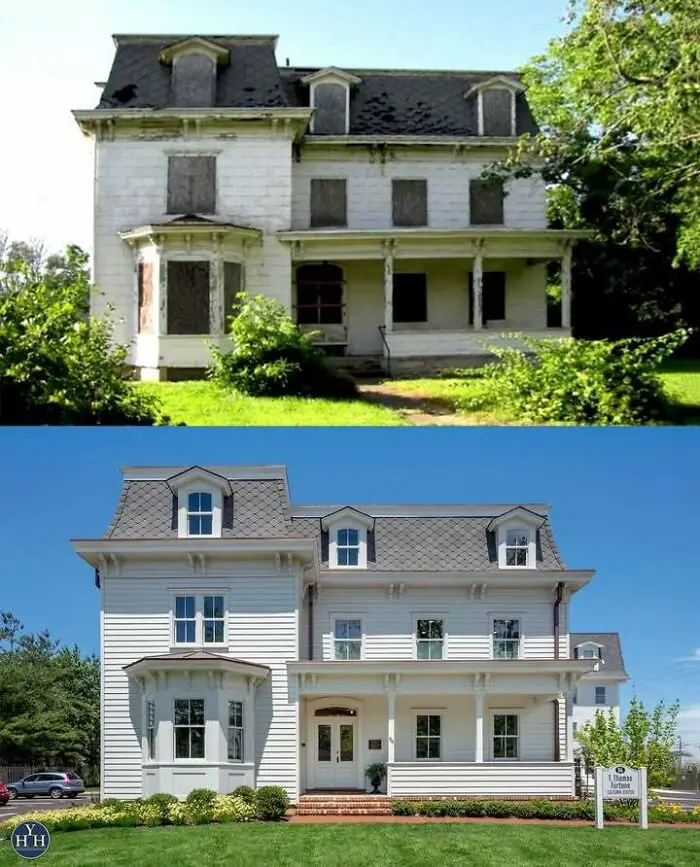
Mansard Monday Before & After ~ The T. Thomas Fortune House in Red Bank, NJ.
Born into slavery in Florida, Timothy Thomas Fortune relocated to New York City in the late 19th century, becoming the first African-American newspaper publisher in the United States. Fortune promoted civil rights in his paper, the "New York Age" and moved his family to this house in 1901.
Fortune’s tenure at the nation’s most influential black paper for over 20 years established him as the leading African-American journalist of the late 19th and early 20th centuries. Fortune guided the new African-American printing and publishing industry into an era of respect and profitability. He is also remembered for his involvement and contribution to black organizing and has been said to be “The bridge to the modern-day Civil Rights Movement.” Fortune died in 1928 at the age of 71.
After a long period of neglect and abandonment, the house was restored to its appearance when Fortune owned it and is now home to the T. Thomas Fortune Cultural Center: https://www.tthomasfortuneculturalcenter.org/
Knowing what is possible is the first step toward saving a house that has been neglected. "Restoring Your Historic House, The Comprehensive Guide for Homeowners" was written to help people undertake such a project.
Signed and personalized copies of the award-winning and bestselling 720-page hardcover book are available from the author at YourHistoricHouse.com/shop/ and through the shop on this page.
Before photo: T. T. Fortune Center. After photo: Roger Mumford Homes.
© Scott T. Hanson 2023
14points
#46
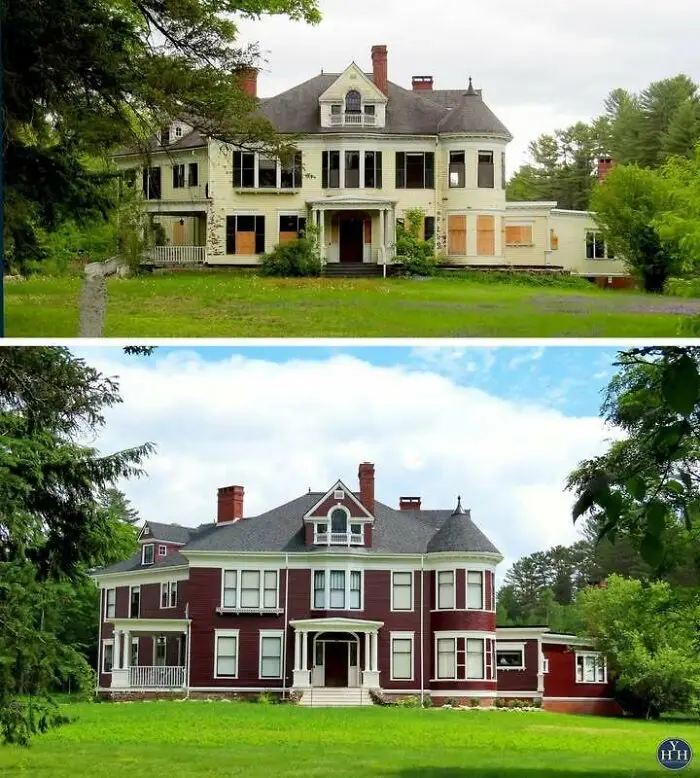
Before & After ~ Gehring House, Bethel, Maine.
Designed by architect Frederick A. Tompson and built in 1896 for Dr. J.D. Gehring, the house is Free-Classic Queen Anne in style leaning toward Colonial Revival. In the early 20th century, Gehring was a noted psychologist to the wealthy and famous, many of whom stayed with the Gehring family during treatment.
Vacancy and neglect in recent years left the house threatened by vandalism. I became involved in efforts to restore the house in 2017, and, after several false starts, new owners have finally succeeded in saving and restoring the building, right down to its original paint colors.
Every house can't be saved, some genuinely are too far gone to be saved, but many homes are destroyed every year that could have been preserved. Knowing it is possible is often the critical first step toward accomplishing something good.
I wrote "Restoring Your Historic House, The Comprehensive Guide for Homeowners" to help people know what is possible and how to achieve it.
Signed and personalized copies of the award-winning and bestselling 720-page hardcover book are available from the author in our online shop at YourHistoricHouse.com/shop/.
Our shop also carries select preservation and restoration titles by other authors. Save on cost and shipping with our multi-book combo packs!
© Scott T. Hanson 2025.
12points
#47
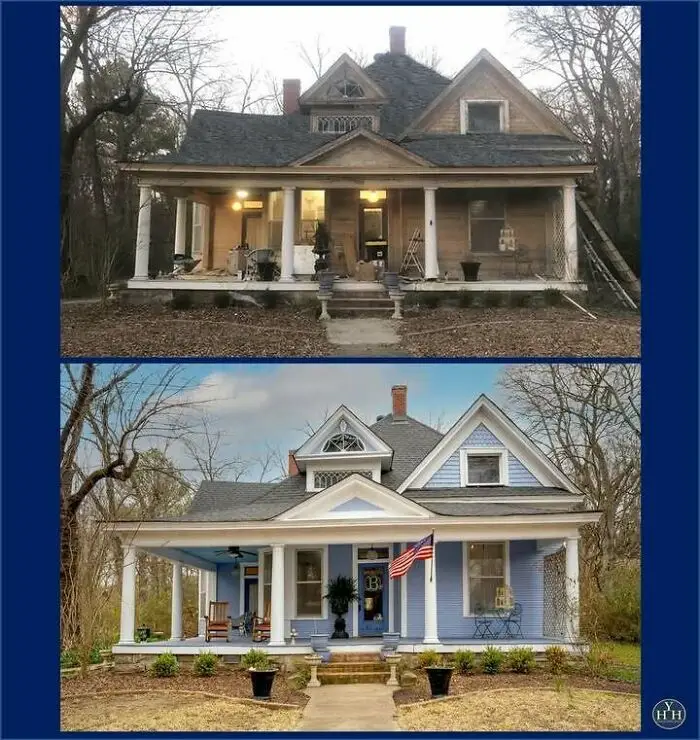
Before and After ~ A Queen Anne Gem in Conway, Arkansas.
Before: Our Restoration Nation, after: David Hatfield.
This wonderful Queen Anne before and after comes from my friends Laine and Kevin Berry of Our Restoration Nation. They are among my favorite house restorers sharing their projects on social media.
I visited Laine and Kevin and their current restoration project, Hope Farm, in Natchez, Mississippi this week. The work they are doing there, after the house was nearly destroyed by fire in 2023, is simply outstanding. I got lots of photos of the work in progress for future posts here.
Unlike so-called "reality" TV, Laine and Kevin approach their projects with authentic enthusiasm, passion, and commitment to honoring the historic fabric and character of the houses they take on. They share the good, the bad, and the ugly parts of the process, delivered with humility and a great deal of humor. Follow them on Instagram or YouTube!
This sweet house, now called "Scottie," was condemned and being sold as a tear-down when they rescued it. It's a beautiful example of what is possible when someone cares enough to do the hard and dirty work of saving a threatened house. Be like Laine and Kevin! Here is a link to a great article about the restoration with lots of photos: https://ow.ly/Q7yH50RoHqX
"Restoring Your Historic House, The Comprehensive Guide for Homeowners" was written to help anyone who wants to restore a house with sensitivity, covering all aspects of the process.
Signed and personalized copies of the award-winning and bestselling 720-page hardcover book are available from the author in our online shop at yourhistorichouse.com/shop/.
Our shop also carries select preservation and restoration titles by other authors. Save with our multi-book combo packs!
© Scott T. Hanson 2025.
10points
#48
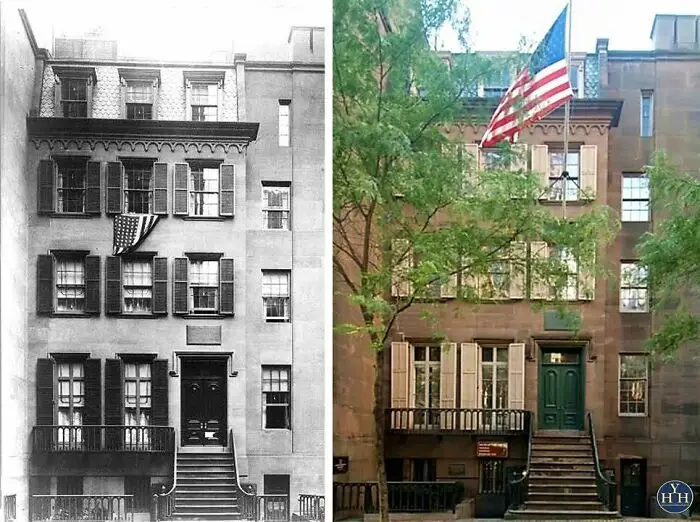
Mansard Monday ~ President's Day edition.
Here is a then and now look at the President Theodore Roosevelt Birthplace in New York City. The only Presidential house I can find with a Mansard roof.
By the time President Roosevelt died in 1919, his childhood home, built in 1854, had been converted to commercial use and the facade dramatically altered. The Women's Roosevelt Memorial Association purchased the property and hired architect Theodate Pope Riddle to meticulously reproduce Roosevelt's home as it was in his childhood, to be furnished with family portraits, original furniture, and other Roosevelt heirlooms. The house opened to the public in 1923 and is now operated by the National Park Service.
The grand homes of "Great Men" were the focus of early preservation efforts. The house was recreated for its association with Roosevelt, not for its architecture. This was perhaps the first restored Victorian era building in the country, well before the architecture of that period was widely appreciated.
"Restoring Your Historic House, The Comprehensive Guide for Homeowners" includes information on the methods and materials used in restoring major landmarks, historic tax credit rehabs, and private home restorations, showing a range of options to solve issues in your house.
Signed and personalized copies of the award-winning and bestselling 720-page hardcover book are available from the author at YourHistoricHouse.com/shop/ and through the shop on this page.
Our shop also carries select preservation and restoration titles by other authors. Save on cost and shipping with our multi-book combo packs!
© Scott t. Hanson 2024.
10points
#49
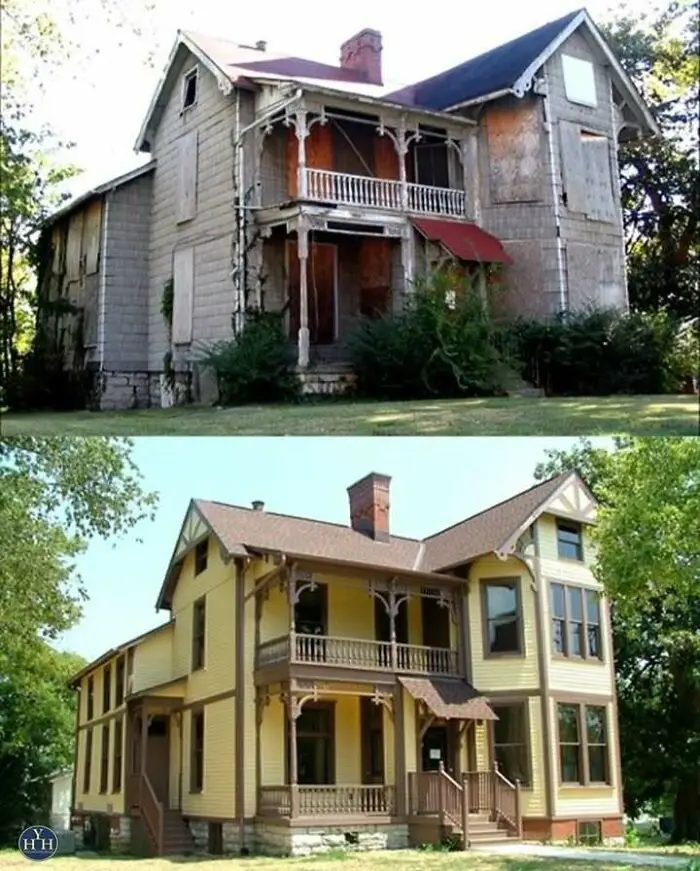
Before and After ~ John Wesley Work House.
This Queen Anne/Stick Style house was home to Nashville composer and ethnomusicologist John W. Work III. Work moved into the house on Fisk University campus in 1937 and lived there for many years.
A music teacher and one of the first academic scholars of rural African American folk music, Work made some of the earliest known field recordings of black Nashvillians. After a period of abandonment, the house was restored by Fisk University and the National Park Service.
This house perfectly illustrates what is possible in restoring historic homes. It also is an example of institutions recognizing the importance of preserving African American history by restoring a house that was home to a historically significant Black individual.
Once close to collapse, it was restored to its appearance while Work lived in it, including the documented historic paint colors.
"Restoring Your Historic House, The Comprehensive Guide for Homeowners" is filled with information to help historic house owners restore their houses.
Signed and personalized copies of the award-winning and bestselling 720-page hardcover book are available directly from the author in our online shop at YourHistoricHouse.com/shop/.
Our shop also carries select preservation and restoration titles by other authors.
"Restoring Your Historic House" is also available in bookstores nationwide and from online retailers.
© Scott T. Hanson 2025.
9points
#50
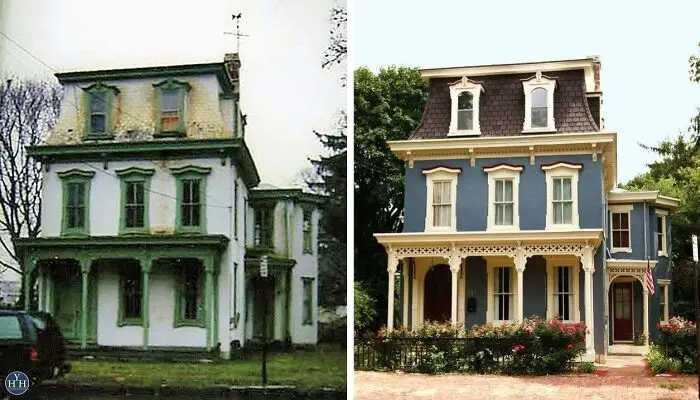
Before and After ~ A Second Empire Gem in Carlisle, Pennsylvania.
This wonderful Second Empire before and after house comes from the This Old House website.
Restored by a young woman with some help from her dad, it is an excellent example of what can be done to save a historic house with the right combination of determination, knowledge, and other resources.
Houses like this one were built in urbanized areas across the US during the second half of the 19th century, providing stylish and comfortable dwellings for middle-class families. Many were neglected after the middle class moved to suburbs outside the urban centers in the mid-20th century. Now, "empty nest" baby boomers and millennials are moving back to cities in large numbers and houses like this are being restored.
Knowing what is possible is the first step toward saving a house that has been neglected. "Restoring Your Historic House, The Comprehensive Guide for Homeowners" was written to help people learn what they need to know to undertake such a project.
Signed and personalized copies of the award-winning and bestselling 720-page hardcover book are available from the author in our online shop at YourHistoricHouse.com/shop/.
Want to learn more about historic house styles? "A Field Guide to American Houses," the updated classic by Virginia McAlester, is available in our shop. Save on cost and shipping with our multi-book Combo Packs!
"Restoring Your Historic House is also available in bookstores nationwide and from online retailers.
© Scott T. Hanson 2025.
9points