





In over 4.5 billion years of Earth’s existence and millions of years of human evolution, we’ve seen civilizations rise and fall, survived wars and famines, and made discoveries that have shaped the world we live in.
With so much behind us, it’s no surprise we want to know more about how we got here. To satisfy your (and our) curiosity, we’ve compiled a fascinating collection of photos and facts from the Facebook page ‘History’s Mysteries.’
Scroll down to explore them, and don’t forget to upvote your favorites!
#41 Dunnottar Castle, Located On A Rugged Headland On Scotland's Northeast Coast, Holds A Fascinating And Complex History

Although the castle as it stands today primarily dates from the 15th and 16th centuries, its story stretches back much further. Archaeological evidence suggests that the site has been fortified since at least the 7th century, but specific details about these early fortifications remain unknown.
Throughout the medieval period, Dunnottar Castle was a pivotal stronghold. It played a crucial role during the Wars of Scottish Independence, notably enduring a prolonged siege by English forces in 1296. Despite the overwhelming odds, the defenders managed to hold the castle for months, a testament to its formidable defenses.
One of the most intriguing chapters in Dunnottar Castle's history involves the Scottish Crown Jewels. In 1651, amidst the chaos of the English Civil War, the jewels were hidden in a secret vault within the castle to protect them from Oliver Cromwell’s forces. They remained concealed there until 1660, when they were recovered and later displayed in Edinburgh
Report
89points
#42 Þrídrangar Lighthouse, Built In 1939, Is One Of The Most Isolated And Remarkable Lighthouses In The World

Perched atop a jagged sea stack off Iceland’s coast, it’s surrounded by the relentless North Atlantic Ocean, making it accessible only by helicopter or a perilous climb. The name “Þrídrangar,” meaning “Three Rock Pillars,” reflects the lighthouse’s precarious position on the highest of these rugged formations.
Constructing the lighthouse was an extraordinary feat of human determination. Workers scaled the steep rock faces, facing great personal risk, to establish this vital beacon in one of the most remote and inhospitable locations imaginable. Despite its isolation, Þrídrangar has served as a crucial navigational aid, guiding seafarers through some of the most dangerous waters on the planet.
Its lonely position, far from any human settlement, adds to its mystique. Þrídrangar stands not just as a lighthouse but as a symbol of human resilience, defying nature’s extremes and enduring the test of time.
Report
89points
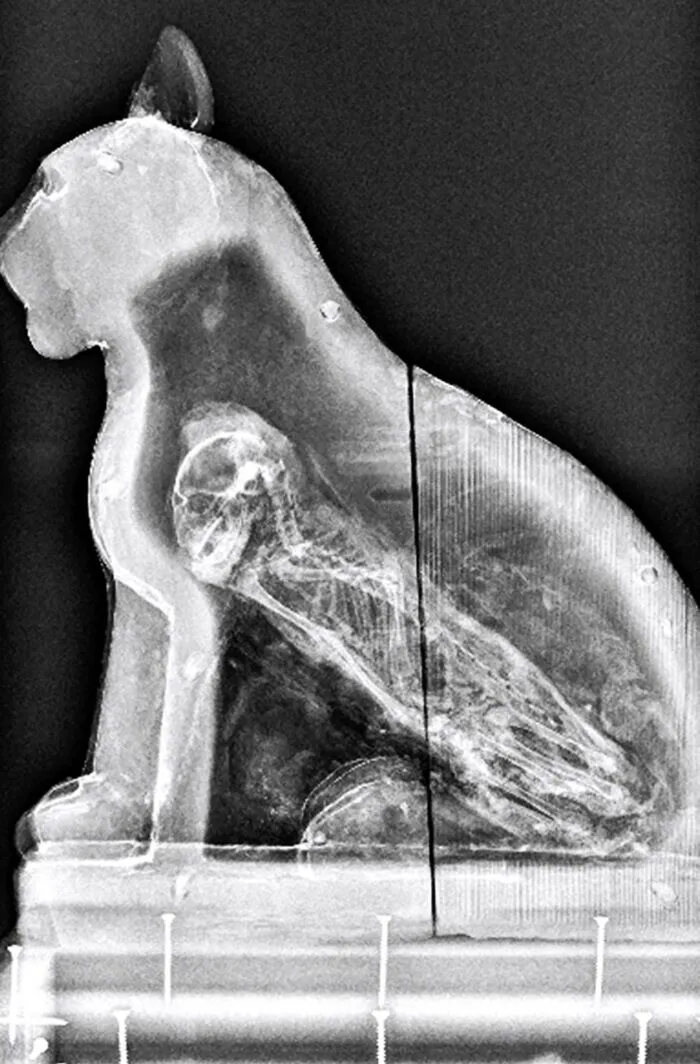
#43 An X-Ray Scan Of A Sarcophagus From Saqqara, An Ancient Burial Ground South Of Modern-Day Cairo, Uncovered The Presence Of A Cat Inside
Report
85points
#44 Lindholm Høje, Located Near Aalborg In Denmark, Is One Of Scandinavia’s Largest And Most Important Viking Burial Sites
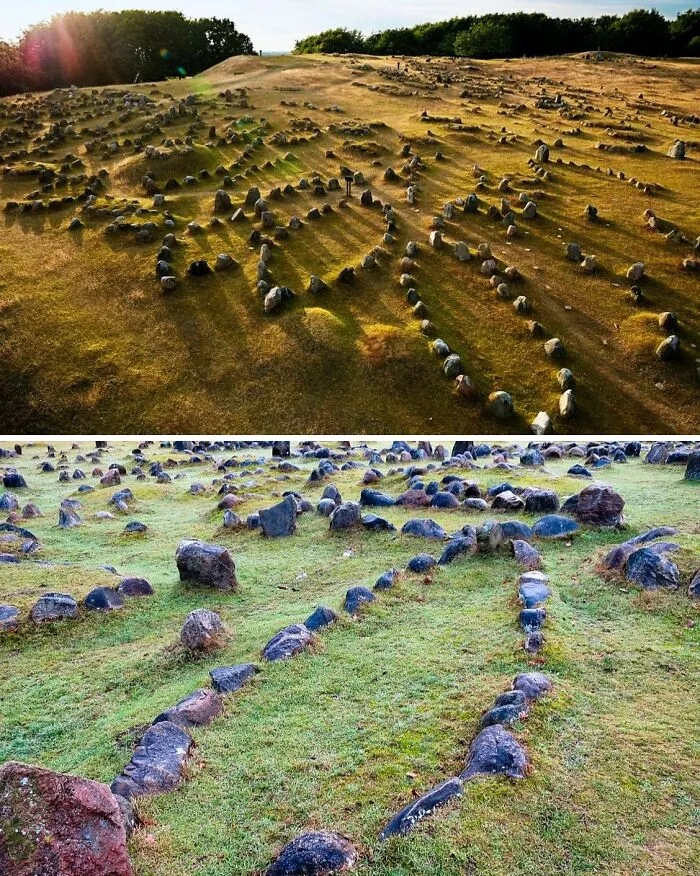
This ancient site, used from the Germanic Iron Age through the Viking Age, contains over 700 graves and approximately 150 stone ship settings—stones arranged to outline the shape of ships, a symbolic gesture meant to honor the deceased and guide them to the afterlife. The site reveals a complex picture of Viking burial customs, featuring both cremation and inhumation practices that evolved over time. What makes Lindholm Høje particularly striking is its remarkable preservation; for centuries, it was buried under layers of drifting sand, protecting it from the ravages of time until modern excavations in the 20th century brought it to light. Among the graves, archaeologists have found a wealth of artifacts, including weapons, jewelry, and tools, offering valuable insights into Viking daily life, social structures, and beliefs. Lindholm Høje stands out not just for its scale but for the stories it tells about the Vikings—a society that was not only fearsome warriors but also skilled craftsmen, traders, and farmers. As you explore this site, the stone ship settings and burial mounds serve as a powerful reminder of the Viking era’s reach and its deep connection to both land and sea.
Report
83points
#45 The Colossal Statue Of Ramesses II In Memphis, Egypt, Stands As An Impressive Relic Of Ancient Times

Originally carved from limestone, it once reached a towering height of over 10 meters, depicting the mighty pharaoh in a powerful stance.
Unearthed in 1820 near the ruins of the former capital, the statue reflects the grandeur of Ramesses II’s rule, a period marked by his prominence during the New Kingdom. Interestingly, during the 19th century, there were plans to transport the statue to London, but its sheer size made the task impossible, leaving it to remain in Egypt.
Though now lying horizontally due to centuries of damage, the statue’s detailed craftsmanship, from the pharaoh’s facial features to the hieroglyphic inscriptions, continues to captivate visitors, offering a window into the majesty of Egypt’s past.
Report
82points
#46 In The 18th Century, The Imperial Treasury Of Vienna Housed A Bizarre And Unsettling Artifact—a Tiny Figure Encased In A Prism Of Glass, Believed To Be A Demon

According to accounts, this "devil" had been trapped during an exorcism in Germany a century earlier. The figure, now part of the Kunsthistorisches Museum Collection in Vienna, was considered by some to be proof of supernatural forces at play.
At the time, religious beliefs and the fear of the occult were intertwined, and objects like this one became symbols of the battle between good and evil. Though now such claims are viewed with skepticism, this artifact remains a strange reminder of a time when people believed that demons could be physically captured and confined. The figure’s eerie preservation in glass adds an otherworldly quality to its mysterious past.
Report
77points
#47 A 5,000-Year-Old Wooden Boat, Believed To Have Been Used By The Pharaohs Of Ancient Egypt, Was Unearthed Near The Saqqara Necropolis

This remarkable discovery sheds new light on the maritime traditions of Egypt’s early dynastic period. The vessel, remarkably well-preserved despite its age, is thought to have played a key role in the funerary practices of the time, potentially serving as a symbolic vehicle for the pharaoh’s journey to the afterlife.
Crafted from local wood, the boat’s exceptional state allows archaeologists to closely examine the boat-building techniques of ancient Egyptians, revealing how these vessels were constructed and their cultural importance. This find not only enriches our understanding of early Egyptian history but also offers a rare glimpse into their spiritual beliefs and the significant role that boats played in pharaonic rituals.
This discovery stands as a testament to the ingenuity of ancient Egyptian craftsmanship and deepens our appreciation of their complex spiritual and cultural traditions.
Report
72points
#48 Voronya Cave, Also Known As Krubera Cave, Holds The Distinction Of Being The Deepest Known Cave On Earth
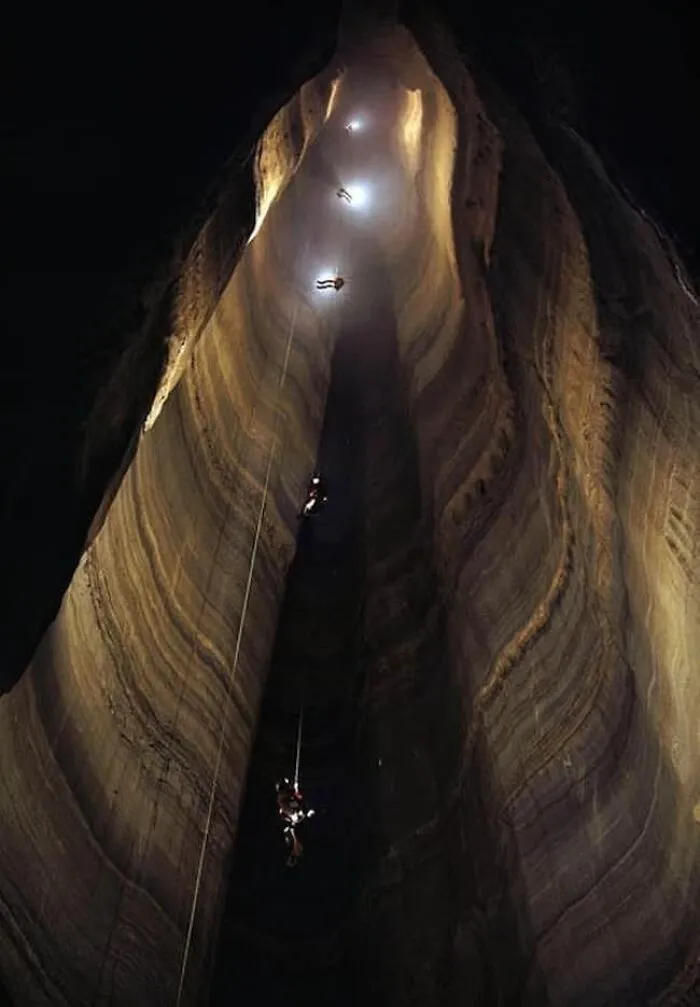
It is situated in the Arabika Massif of the Western Caucasus in Abkhazia, Georgia. The cave reaches an astounding depth of 2,197 meters (7,208 feet), making it a significant point of interest for speleologists and geologists.
The cave was first discovered in 1960, but its depth wasn't fully explored until the early 2000s, primarily through the efforts of Ukrainian cavers. These explorers were the first to reach the cave's maximum depth, which required navigating a complex network of narrow passages, vertical shafts, and underground chambers. The exploration of Voronya Cave demands not only advanced technical skills but also specialized equipment due to the extreme conditions within the cave.
The cave environment is particularly harsh, characterized by low temperatures, high humidity, and total darkness. These conditions make exploration difficult and limit the extent to which the cave has been mapped. Despite numerous expeditions, much of the cave's lower reaches remain unexplored.
Voronya Cave's significance lies not only in its record-breaking depth but also in the ongoing exploration challenges it presents. It continues to be a focal point for those studying the geological processes that shape the Earth's underground structures. The cave remains a symbol of the complexities and dangers inherent in exploring the world's most remote and inaccessible places.
Report
71points
#49 The Crowley Lake Columns

It's located in California’s Eastern Sierra region, are a stunning geological formation resulting from ancient volcanic activity.
These unique columns, which can tower up to 20 feet high, are primarily composed of ash and pumice from the Long Valley Caldera eruption approximately 760,000 years ago.
The columns are thought to have formed through a combination of rapid cooling and subsequent erosion, rather than solely from molten lava cooling and contracting. They offer a captivating glimpse into Earth’s geological history and the powerful natural forces at work
Report
69points
#50 The Hand Brand, Used By The British Army During The English Civil War (1641-1651), Served To Mark Deserters And Criminals

This branding tool features the initials "CR" surrounded by a crown, likely representing "Carolus Rex" for King Charles I, who was executed for treason in 1649. The blunt metal spikes suggest they may have been dulled either through wear or intentionally to increase pain during branding. Typically, the tool would be heated to burn the mark into the skin.
While branding was abolished in 1829, it persisted for army deserters until 1879, transitioning to tattooing instead. This change marked a significant shift in how the military handled punishment and identification of those who deserted their posts, reflecting evolving attitudes toward discipline and human rights within the armed forces.
Report
56points
