






In over 4.5 billion years of Earth’s existence and millions of years of human evolution, we’ve seen civilizations rise and fall, survived wars and famines, and made discoveries that have shaped the world we live in.
With so much behind us, it’s no surprise we want to know more about how we got here. To satisfy your (and our) curiosity, we’ve compiled a fascinating collection of photos and facts from the Facebook page ‘History’s Mysteries.’
Scroll down to explore them, and don’t forget to upvote your favorites!
#21 The Bison Sculptures Found In The Le Tuc D’audoubert Cave In Ariège, France
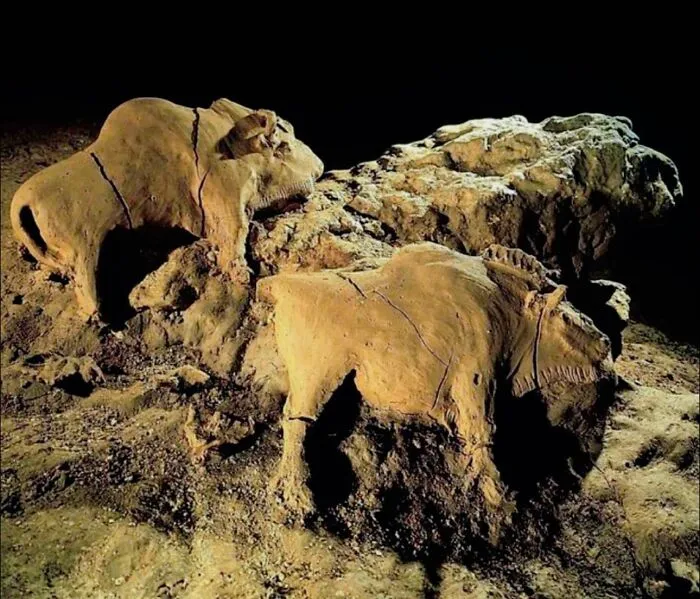
Extraordinary examples of prehistoric art, estimated to be around 14,000 years old. Dating back to the Upper Paleolithic period, specifically the Magdalenian culture, these sculptures depict two bison and are remarkable for their detail and realism.
Discovered in 1912 by the three teenage sons of the French count Henri Begouën, the sculptures have been well-preserved due to the cave’s stable environment. Crafted in high relief from clay, the bison showcase the skill and artistic ability of prehistoric humans. The artists used their hands, fingernails, and simple tools to shape the clay, creating lifelike textures and details such as fur and muscle structure.
Discovered in 1912 by the three teenage sons of the French count Henri Begouën, the sculptures have been well-preserved due to the cave’s stable environment. Crafted in high relief from clay, the bison showcase the skill and artistic ability of prehistoric humans. The artists used their hands, fingernails, and simple tools to shape the clay, creating lifelike textures and details such as fur and muscle structure.
Report
126points
#22 Niagara Falls As A Breathtaking Spectacle Of Ice In The Early 1900s, Showcasing One Of The Rare Times It Has Frozen Over

Report
124points
#23 In 2021, Archaeologists In Sbeitla, Tunisia, The Ancient City Of Sofitola, Uncovered A 1,500-Year-Old Byzantine Bathtub
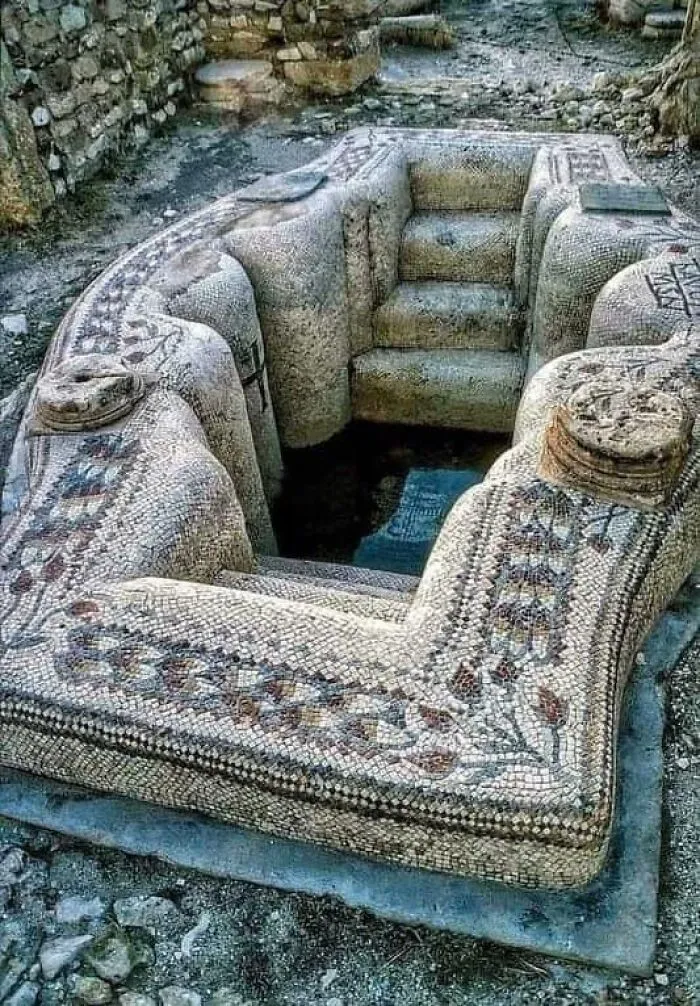
Made from stone, this tub exemplifies the region’s advanced craftsmanship and the luxurious lifestyle during the Byzantine period. The discovery provides insight into the wealth and sophistication of the city, revealing how even provincial towns like Sbeitla embraced high standards of architecture and infrastructure.
Report
123points
#24 Bruce Mccandless Made History As The First Human To Float Freely In Space Without Any Tether To A Spacecraft

On February 7, 1984, during the STS-41-B mission, he ventured into the vast expanse equipped only with his Manned Maneuvering Unit (MMU), a jetpack-like device that allowed him to navigate in zero gravity. Drifting away from the safety of the space shuttle Challenger, McCandless became a solitary figure against the backdrop of the cosmos, relying solely on the MMU's thrusters to control his movements.
This daring maneuver was more than a technical achievement; it symbolized the human drive to explore the unknown and push the boundaries of space travel. McCandless’s untethered spacewalk remains an iconic moment, showcasing both the bravery of astronauts and the remarkable advancements in space technology that made such feats possible.
Report
119points
#25 This Illustration Is An 18th-Century Depiction Of A Once-Common Belief That Toothaches Were Caused By Small, Demonic Creatures Known As "Tooth Worms"
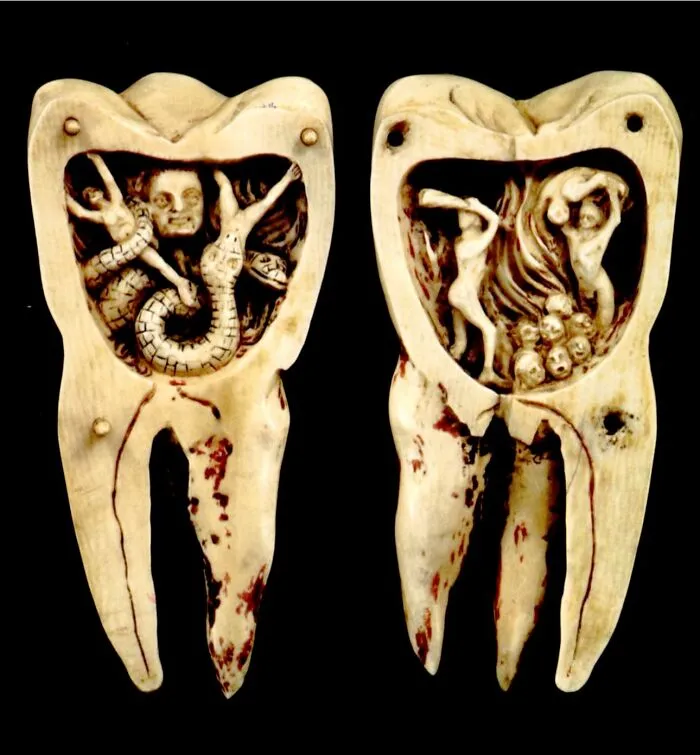
In this folklore, the tooth worm was imagined as a malevolent entity burrowing into teeth, causing decay and pain. Before modern dentistry, people believed that the writhing of these worms within the tooth was the source of excruciating discomfort.
The concept dates back to ancient civilizations, but it endured well into the 18th century. Artists often portrayed the tooth worm as a demon from hell, adding to the fear and mystery surrounding dental ailments in a time when treatment was rudimentary and pain was inescapable.
The concept dates back to ancient civilizations, but it endured well into the 18th century. Artists often portrayed the tooth worm as a demon from hell, adding to the fear and mystery surrounding dental ailments in a time when treatment was rudimentary and pain was inescapable.
Report
116points
#26 In April 2016, Construction Workers In Tomares, A Suburb Of Seville, Spain, Made A Serendipitous Discovery While Installing Electricity In El Zaudín Public Park
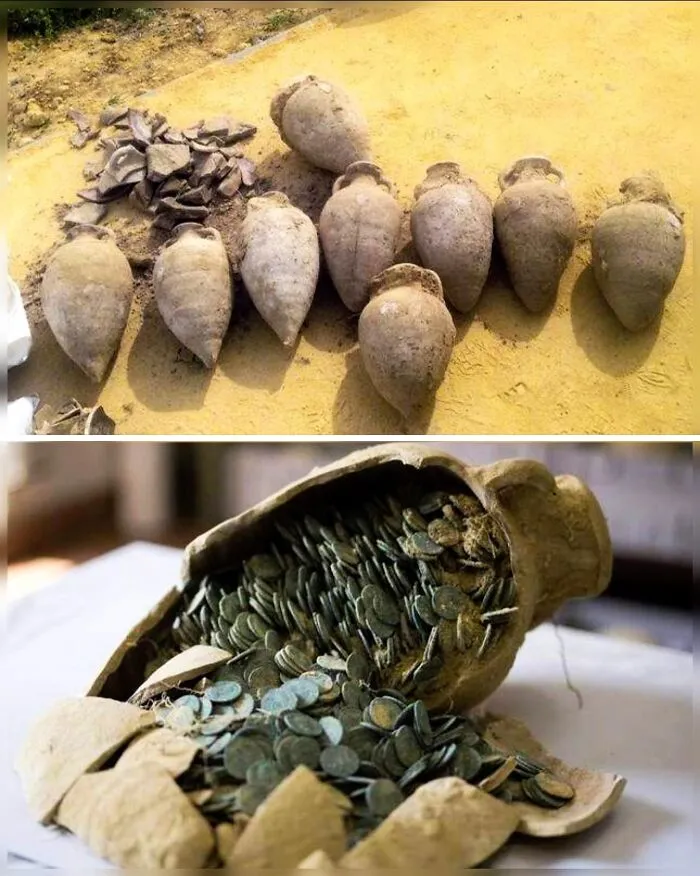
Using a mechanical digger, they unearthed a remarkable trove of Roman coins hidden in 19 large ceramic amphorae, buried about a meter underground. While the digger damaged 10 of the amphorae, nine remained intact and sealed. This hoard, weighing over 1,300 pounds and containing more than 50,000 bronze coins from the late third and early fourth centuries AD, was concealed with bricks and ceramic filler.
The workers halted their project and alerted authorities, prompting an excavation by archaeologists. By November 2022, experts from the University of Seville had completed their analysis, confirming the find as the largest Roman coin hoard ever discovered in Spain. This extraordinary cache provides invaluable insights into Roman economic history and highlights the strategic measures taken to safeguard wealth during that era.
The workers halted their project and alerted authorities, prompting an excavation by archaeologists. By November 2022, experts from the University of Seville had completed their analysis, confirming the find as the largest Roman coin hoard ever discovered in Spain. This extraordinary cache provides invaluable insights into Roman economic history and highlights the strategic measures taken to safeguard wealth during that era.
Report
114points
#27 Houtouwan, Once A Thriving Fishing Village On Shengshan Island Off The Coast Of China, Is Now A Remarkable Example Of Nature Reclaiming Human Spaces

Abandoned in the 1990s due to its remote location and difficulty in accessing resources, the village’s stone houses are now completely overrun with thick green vegetation. Ivy and creeping plants have consumed the walls and roofs, creating a hauntingly beautiful landscape where the remnants of human life are barely discernible beneath layers of greenery.
Report
113points
#28 Underground Caves Lined With Millions Of Shells, And No One Knows Who Built Them

The Shell Grotto in Margate, Kent, England, stands as one of history’s most baffling mysteries. Discovered in 1835, this hidden passageway is adorned with over 4.6 million meticulously arranged shells, forming elaborate mosaics that cover every inch of its walls and ceilings. The designs are precise and intricate, depicting symbols, patterns, and figures whose meanings remain shrouded in mystery.
What makes the grotto so compelling is that no one knows who created it, when, or why. Some speculate it dates back to ancient times, possibly as far as the Roman or Phoenician period, while others believe it was constructed in the medieval era or even the 18th or 19th century by an eccentric individual. Was it a secret temple, a meeting place for a hidden society, or a mysterious art project? Theories are abundant, but definitive answers are nonexistent. The Shell Grotto is more than just a stunning piece of craftsmanship; it’s a riddle that continues to confound experts and captivate visitors from around the world.
What makes the grotto so compelling is that no one knows who created it, when, or why. Some speculate it dates back to ancient times, possibly as far as the Roman or Phoenician period, while others believe it was constructed in the medieval era or even the 18th or 19th century by an eccentric individual. Was it a secret temple, a meeting place for a hidden society, or a mysterious art project? Theories are abundant, but definitive answers are nonexistent. The Shell Grotto is more than just a stunning piece of craftsmanship; it’s a riddle that continues to confound experts and captivate visitors from around the world.
Report
111points
#29 Shoichi Yokoi Was A Japanese Soldier Who Hid In The Jungles Of Guam For 27 Years After World War II Ended, Unaware That The War Was Over

He avoided capture out of fear and loyalty to the Imperial Japanese Army’s orders to never surrender.
Yokoi was discovered in January 1972 and returned to Japan in February of that year. Upon his return, he was overcome with emotion and wept, as it was his first time back in Japan since the war.
Report
107points
#30 Once A Lavish Roman Resort Located On The Northwest Shore Of The Gulf Of Naples, Baiae Was The Playground Of Emperors Like Nero And Julius Caesar, Famed For Its Opulent Villas, Hot Springs, And Scandalous Reputation
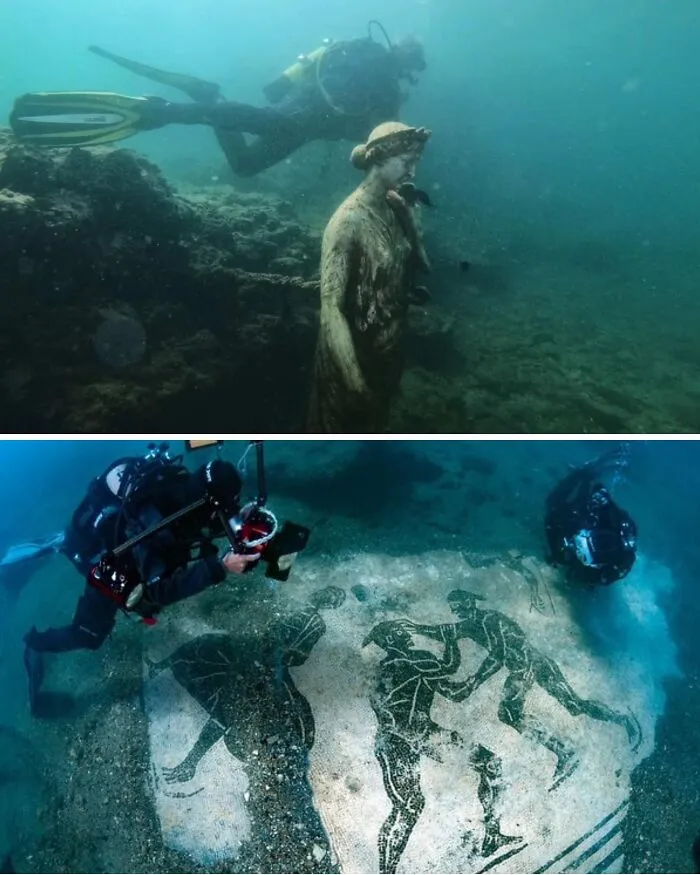
Known for corruption and excess, it was a place where Rome’s elite indulged in debauchery and political schemes.
However, the same volcanic activity that powered its famous hot springs ultimately sealed its fate. Due to a process called bradyseism, the land slowly sank from volcanic activity beneath the surface, causing much of the city to gradually submerge, taking its grandeur with it beneath the waves.
However, the same volcanic activity that powered its famous hot springs ultimately sealed its fate. Due to a process called bradyseism, the land slowly sank from volcanic activity beneath the surface, causing much of the city to gradually submerge, taking its grandeur with it beneath the waves.
Report
105points
#31 The Maras Salt Mines, Located In Peru's Sacred Valley, Are An Ancient Site Where Salt Has Been Harvested For Over 2,000 Years

These mines consist of over 5,000 small, terraced salt pans that stretch across a mountainside. The salt is collected from a natural underground stream that fills the pans with mineral-rich water. As the water evaporates in the sun, it leaves behind salt crystals.
The history of the Maras salt mines dates back to before the Inca Empire, making them one of the oldest known salt production sites in the world. The Incas took control of the mines and used the salt as a key resource for trade and preservation. Remarkably, the traditional methods of salt harvesting at Maras have been preserved and are still used today by local families.
These salt mines are not only a significant historical site but also a living part of the local culture, where ancient practices continue in the modern world. The Maras salt mines offer a unique glimpse into the past, showing how ancient civilizations utilized natural resources in ways that remain relevant today.
Report
104points
#32 Europe’s Oldest Known Road Lies On The Island Of Crete, A Remarkable Engineering Feat Over 3,500 Years Old
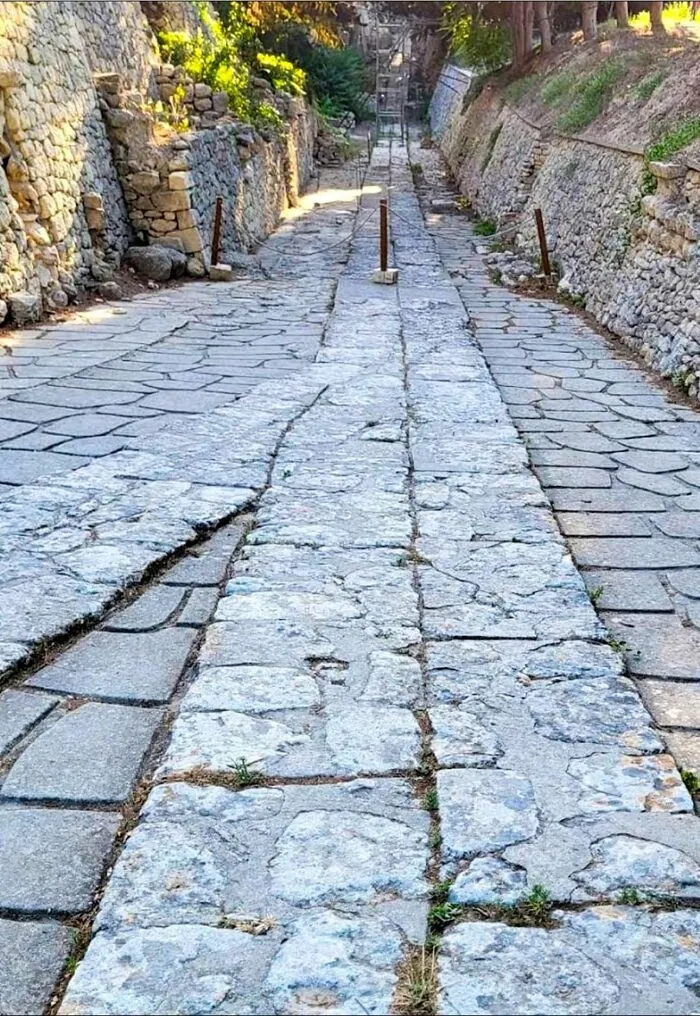
This Minoan road spans roughly 50 kilometers, connecting the ancient city of Knossos with Gortyn and Lebena.
What makes this road so extraordinary is its advanced construction. It features side drains to manage water runoff, which helped preserve the road over millennia. The roadbed is composed of a 20-centimeter-thick pavement of sandstone blocks, tightly fitted and bound with a durable clay-gypsum mortar.
On top of this foundation, a layer of basaltic flagstones was laid to provide a smooth, hard-wearing surface. The inclusion of separate shoulders, which were uncommon for the time, demonstrates a sophisticated understanding of road design, ensuring safe and efficient travel.
Report
101points
#33 Petra Theater, Constructed During The 1st Century Ad In Petra, Jordan, Exemplifies The Advanced Engineering And Architectural Prowess Of The Nabataeans
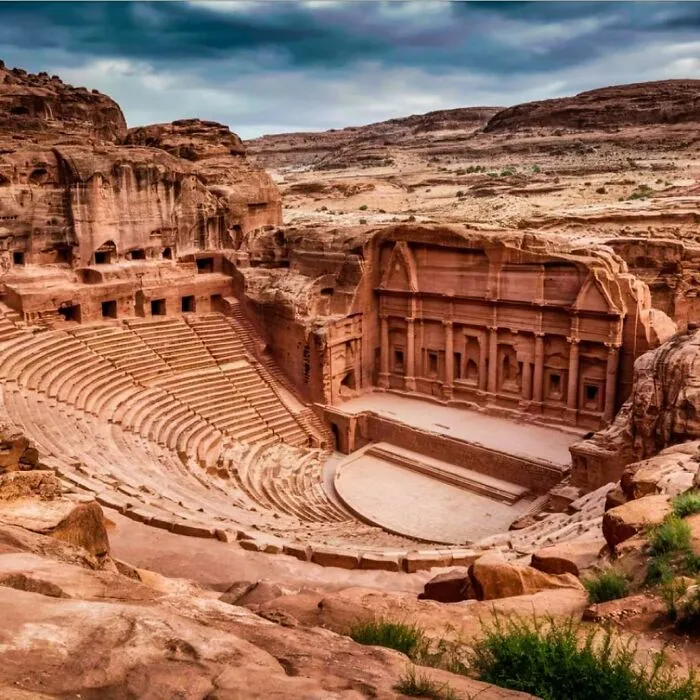
This impressive structure features a semi-circular auditorium meticulously carved out of the local sandstone, with the seating area divided into three horizontal tiers, separated by broad passageways and accessible via seven stairways.
The theater's stage and external walls, built from dressed stone, complement the rock-carved auditorium. With a capacity of up to 3,000 spectators, Petra Theater was a central venue for public performances and gatherings, reflecting the cultural and social significance of the Nabataean civilization.
The theater's integration of rock-cut and constructed elements highlights the innovative blend of natural and man-made materials, showcasing the Nabataeans' exceptional architectural skill.
Report
100points
#34 In 2009, Archaeologists Unearthed A Striking Gladiator Helmet From Pompeii’s “Gladiators’ Barracks” (Regio V), Offering A Captivating Glimpse Into Ancient Roman Combat

This helmet, crafted from bronze and featuring intricate engravings, belonged to a murmillo—a type of gladiator known for his distinctive fish-shaped helmet. The murmillo’s high crest and broad rim were designed to resemble a fish, and the term “murmillo” itself is derived from the Greek word for a type of saltwater fish.
The murmillo’s gear also included a loincloth, a belt, short greaves protecting his lower legs, a linen arm guard for his right arm, and a curved rectangular shield. He wielded a gladius, the short, straight sword from which gladiators took their name. The helmet’s detailed craftsmanship and its connection to the murmillo’s unique fighting style highlight the fierce and dramatic nature of gladiatorial contests in ancient Rome.
This find not only enriches our understanding of Roman gladiatorial equipment but also vividly illustrates the cultural and social dynamics of Pompeii, preserved under volcanic ash since the eruption of Mount Vesuvius in 79 AD.
Report
97points
#35 In The Center Of Split, Croatia, There’s A Grocery Store With A Truly Unique Location—set Within The Ancient Walls Of Diocletian’s Palace, A Unesco World Heritage Site Built In The Fourth Century Ad

This impressive palace was constructed by the Roman Emperor Diocletian as a retirement residence. The grocery store itself occupies the ground floor of Mala Papalićeva Palača, a noble residence added to the complex in the 13th century, merging modern life with a rich tapestry of history.
Though Diocletian’s Palace received UNESCO recognition in 1979, parts of the complex remained privately owned. This allowed the grocery store to open in 2014, much to the surprise of locals. Because of the private ownership, authorities were unable to prevent it.
Report
93points
#36 The Shilin Stone Forest In China’s Yunnan Province Is A Breathtaking Labyrinth Of Towering Limestone Pillars, Spread Over 180 Square Miles

Known as the “first natural wonder of the world,” this remarkable site is the result of 270 million years of natural forces—rain, wind, and seismic activity—that carved the landscape into its current form. The forest is part of the South China Karst, a vast region that emerged after the sea receded during the Permian period.
Walking through this otherworldly terrain feels like stepping into a fairy tale. The stone formations, resembling animals, people, and plants, evoke a sense of magical realism. In the Greater Stone Forest, you might encounter rock shapes that look like mythical creatures, while the Lesser Stone Forest offers tranquil meadows and bamboo groves.
The area is steeped in local legends. One of the most captivating tales is that of Ashima, a beautiful girl who was turned to stone after a tragic love story. According to local lore, Ashima’s rejection of a suitor led to her being kidnapped and later drowned in a flood. Today, a stone named after her is said to echo her name when called out, adding a haunting layer to this already mystical place.
Report
91points
#37 Devils Tower, Located In Northeastern Wyoming, Is A Dramatic Geological Formation That Rises Nearly 1,267 Feet Above The Surrounding Landscape

This massive monolithic butte, composed of igneous rock, features striking vertical grooves and a towering pillar-like appearance. Formed about 50 million years ago, Devils Tower is thought to be the eroded remnant of a volcanic intrusion, with its distinctive columns.
Beyond its geological intrigue, Devils Tower holds significant cultural importance. Native American legends from multiple tribes describe the tower as the result of a dramatic escape from giant bears. According to these stories, the ground rose to save a group of girls from the bears, leaving deep claw marks on the rock.
Today, the tower is regarded as a sacred site, where rituals and offerings are made by local tribes. While a popular climbing destination, a voluntary climbing ban in June respects these cultural traditions. Devils Tower continues to captivate with its blend of natural beauty and cultural richness, standing as a powerful symbol of both geological and spiritual significance
Report
91points
#38 Nearly 3,400-Year-Old Chariot Body Of Thutmose IV

Found in his tomb, KV 43, this chariot is one of the few Egyptian examples to survive into the modern day. It was part of the king’s burial items, meant to serve him in the afterlife, and offers a rare glimpse into the past.
Made from lightweight wood, the chariot was designed for speed and maneuverability, essential for both battle and ceremony. It wasn’t just practical; it was also beautifully decorated, likely with gold leaf, leather, and intricate designs. These details highlighted the king’s power and status, fitting for a ruler who was both a warrior and a god-like figure.
The discovery of Thutmose IV's chariot gives us a valuable look at the engineering and artistry of the 18th Dynasty. Despite being buried for millennia, its preservation helps us understand the significance of chariots in ancient Egypt and showcases the skill of its craftsmen.
Report
90points
#39 Discovered Accidentally By A Farmer In Namibia Africa, The Hoba Meteorite Remains A Mysterious Marvel

This mammoth slab of iron, weighing a staggering 60 tons, is Earth's largest natural chunk of iron. It's estimated to have impacted our planet some 80,000 years ago, and one of the most fascinating aspects of the meteorite is that it left no impact crater, despite its immense size.
Report
89points
#40 Roman Crocodile Armor, Dating Back To The 3 Century Ad, Was A Form Of Protective Gear Crafted From The Tough Hide Of Nile Crocodiles
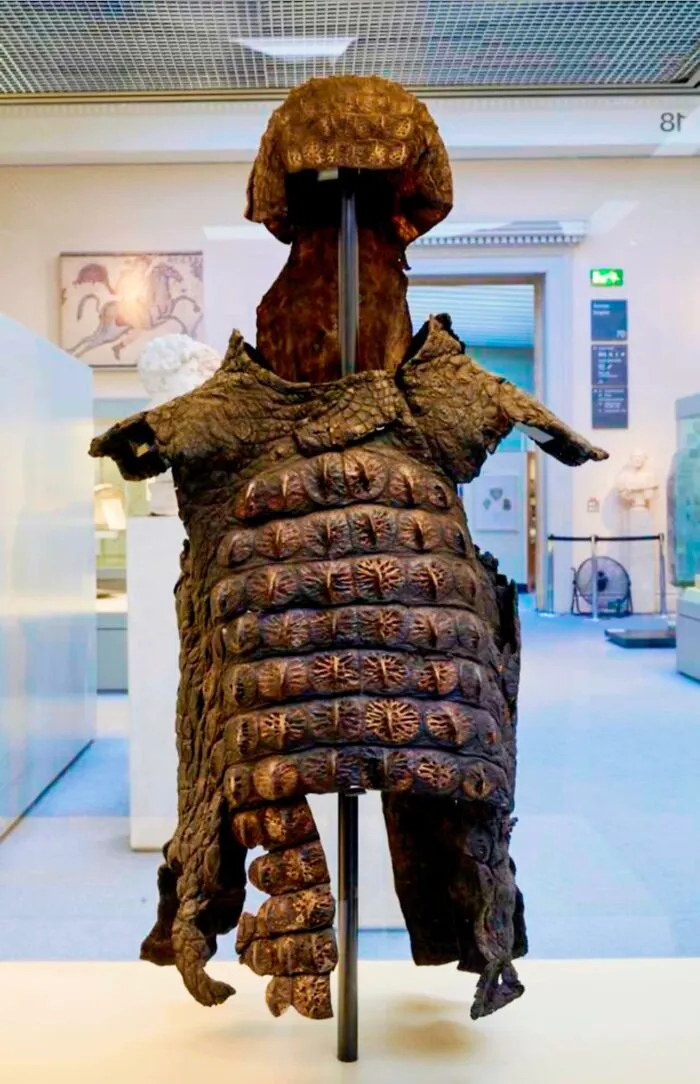
The Romans likely adopted this type of armor during their conquests in Egypt and other regions where crocodiles were prevalent.
Crocodile armor was not as widely used as other types of Roman armor, and scholars believe that it might have been worn during processions or ceremonies, rather than in combat. As a result, crocodile armor was more of a rare and exotic choice rather than a standard issue for Roman soldiers.
Crocodile armor was not as widely used as other types of Roman armor, and scholars believe that it might have been worn during processions or ceremonies, rather than in combat. As a result, crocodile armor was more of a rare and exotic choice rather than a standard issue for Roman soldiers.
Report
89points
