






There are days when all you want is a good laugh, and then there are days when you’re drawn to the raw beauty, grit, and soul of the past.
That’s why we’ve put together this stunning collection of vintage photos curated from the Facebook page Historic Lens Stories. These images offer a rare glimpse into the lives of people who left an unforgettable mark on the movie and music industries. Keep scrolling and let history speak for itself.
#41
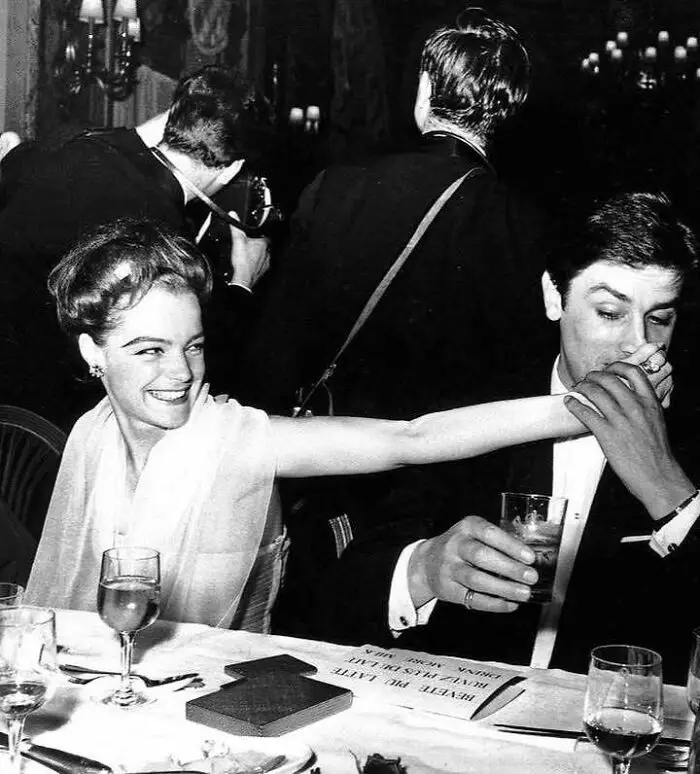
Alain Delon and Romy Schneider’s relationship remains one of the most legendary romances in European cinema, captivating fans during the 1960s and beyond. The couple first met in the late 1950s and quickly became one of the most glamorous pairs of the era, symbolizing the allure of French and German cinema. Their intense chemistry on and off screen made them icons of beauty, sophistication, and cinematic passion. Even after their breakup in the late 1950s, their connection endured, both personally and professionally, culminating in their unforgettable reunion for the film La Piscine (1969). This project allowed them to channel past emotions into their performances, creating a tension and authenticity that resonated deeply with audiences.
La Piscine, directed by Jacques Deray, became an emblem of French psychological cinema and romantic intrigue. Filmed at the luxurious Côte d’Azur, the movie’s narrative of jealousy, desire, and betrayal mirrored, in many ways, the real-life intensity between Delon and Schneider. Behind the scenes, the crew observed a mix of nostalgia, tenderness, and unresolved feelings, making the set a charged environment where reality and performance intertwined. Romy Schneider herself would later express, “I loved Alain. I still love him. I always will,” a testament to the enduring emotional impact of their relationship. Delon’s personal devotion was equally profound, as evidenced by his lifelong keepsake of her photograph and his solitary vigil at her coffin in 1982, highlighting a love that transcended time and tragedy.
Their story has left an indelible mark on cinema history, blending on-screen artistry with real-life romance. Alain Delon and Romy Schneider’s legacy continues to inspire fans and filmmakers alike, epitomizing the golden age of European cinema where passion, glamour, and artistry converged. Beyond their iconic films, their relationship represents timeless human emotion—love, longing, and devotion—that resonates across generations. Even decades later, images and anecdotes from their lives evoke the elegance, magnetism, and intensity of two stars whose bond, both professional and personal, remains unforgettable in cinematic history.
Report
5points
#42
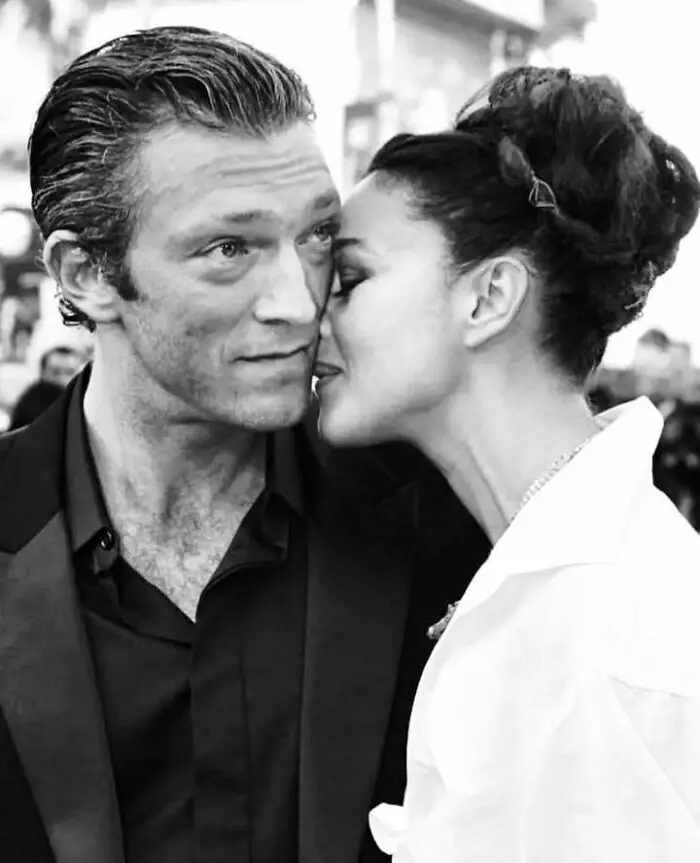
In 2012, Vincent Cassel and Monica Bellucci stood as one of cinema’s most magnetic couples, both on and off screen. Photographed by Vincent Peters, their timeless elegance and chemistry radiated through black-and-white portraiture, embodying the golden balance between European sophistication and international stardom. By this time, Bellucci had already been celebrated as one of Italy’s most iconic actresses and models, having starred in films such as Malèna (2000) and The Passion of the Christ (2004), while Cassel had established himself as a versatile French actor in acclaimed works including La Haine (1995), Eastern Promises (2007), and Black Swan (2010).
Their marriage, which began in 1999, symbolized a true cultural union—Bellucci’s Italian glamour alongside Cassel’s French intensity. Together, they collaborated in films such as L’Appartement (1996) and Gaspar Noé’s controversial Irreversible (2002), where their raw performances left an indelible mark on world cinema. By 2012, they were fixtures at international film festivals, fashion houses, and art circles, admired not just as individuals but as a couple who embodied charisma and style. Their photographs from this era reflect a moment where personal and professional lives intertwined seamlessly, making them subjects of fascination for the media and beloved by audiences worldwide.
Historically, their partnership came to define a generation of European cinema in the late 1990s and early 2000s. Though they would announce their separation in 2013, the legacy of Cassel and Bellucci together continues to inspire modern discussions about celebrity culture, fashion, and international film history. The 2012 portrait captures not only the allure of two global stars but also the cultural context of their union at a time when cinema was becoming increasingly international, blurring boundaries between Hollywood, Europe, and beyond. It remains a visual reminder of a love story that shaped film, fashion, and popular imagination across decades.
Report
5points
#43
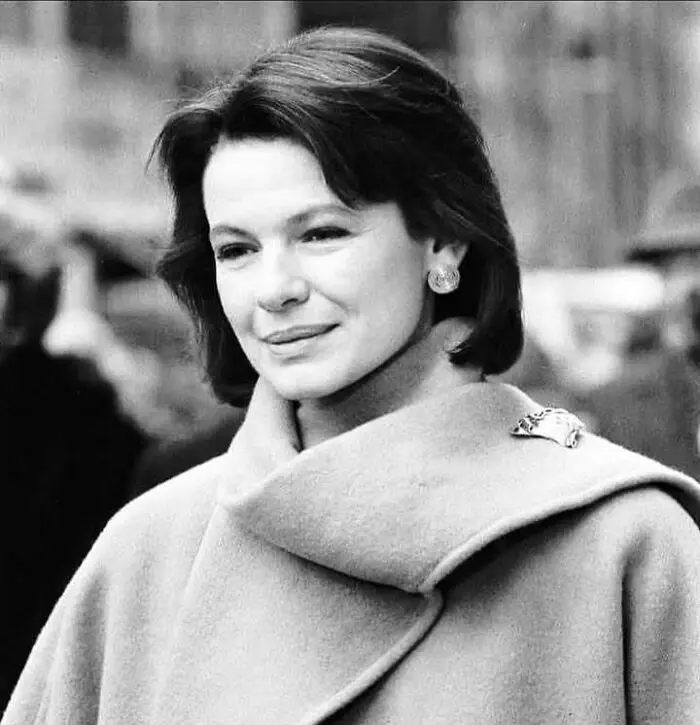
By 1985, Dianne Wiest had firmly established herself as one of the most versatile and compelling actresses of her generation. Born in 1948 in Kansas City, Missouri, Wiest trained at the University of Maryland and later with the prestigious American Conservatory Theater, building a foundation that would allow her to seamlessly navigate stage, film, and television. By the mid-1980s, she had already appeared in acclaimed projects including Tootsie (1982), where her performance as Sandy was praised for its depth and nuance, earning her a reputation as a character actress capable of balancing subtlety with emotional power. Christopher Durang’s comparison of Wiest to legendary performers like Margaret Sullavan, Julie Harris, and Jessica Tandy underscored her unique ability to blend intelligence, charm, and authenticity in every role.
Wiest’s career in the early 1980s was marked by collaborations with some of the most influential directors of the era. Her work with Woody Allen, beginning with Hannah and Her Sisters (1986), though slightly later, was already being anticipated due to her rising reputation. Allen recognized her ability to inhabit complex, multidimensional characters, often portraying women with inner strength, wit, and vulnerability—a quality reminiscent of the classic actresses Durang referenced. On stage, Wiest continued to earn acclaim for her performances in productions such as The Man Who Came to Dinner and Macbeth, demonstrating that her talents extended far beyond the screen.
By the time of Durang’s 1985 commentary in Film Comment, Wiest had become synonymous with intelligent, transformative performances that resonated with audiences and critics alike. Her distinctive presence, whether in leading roles or supporting parts, set her apart from contemporaries and cemented her as a modern heir to the legendary actresses of Hollywood’s Golden Age. This period not only solidified her professional identity but also laid the groundwork for the multiple Academy Awards and accolades she would earn later, confirming her enduring influence in American cinema and theater.
Report
5points
#44
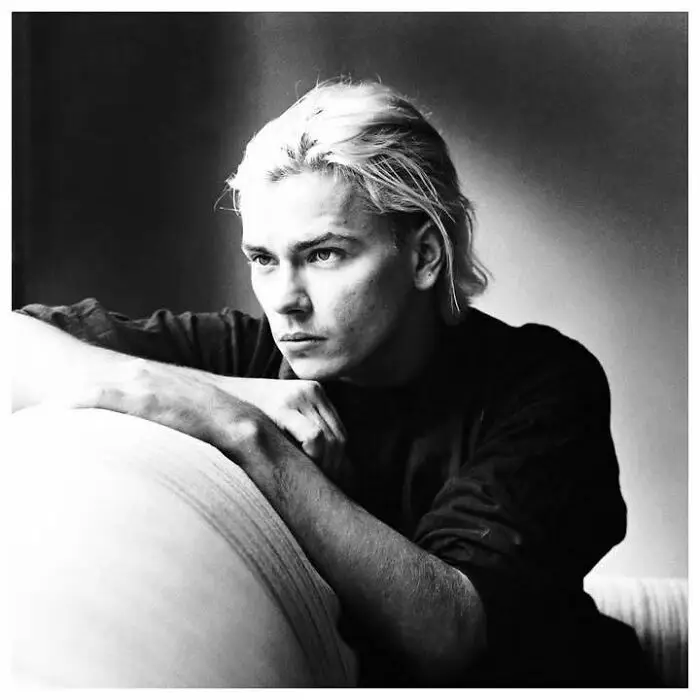
River Phoenix, born August 23, 1970, in Madras, Oregon, was one of the most talented and promising actors of his generation, known for his depth, intensity, and authenticity on screen. Rising to fame in the 1980s, Phoenix gained early recognition for his performances in television and film, but it was his breakout role in Stand by Me (1986) that established him as a critically acclaimed young actor capable of conveying profound emotion and realism. Beyond his acting career, Phoenix was known for his philosophy toward art and life, emphasizing authenticity, empathy, and a dedication to truth in performance, as reflected in his statement about creating work “most true to life” and driven by caring rather than just career ambitions.
During the late 1980s and early 1990s, Phoenix continued to take on roles that challenged him artistically and socially, including performances in My Own Private Idaho (1991) and Dogfight (1991). He was deeply engaged with causes outside of acting, including environmentalism, animal rights, and humanitarian efforts, reflecting his commitment to living consciously and purposefully. Colleagues and critics often noted that his approach to acting transcended conventional careerism; River sought roles that explored human complexity and social truth, earning respect for both his craft and his ethical approach to life. His unique philosophy made him a compelling figure in Hollywood, admired for combining star power with a sincere moral and artistic compass.
Tragically, River Phoenix passed away on October 31, 1993, at the age of 23, leaving behind a legacy that continues to influence actors, filmmakers, and fans worldwide. His brief but remarkable career remains a testament to the power of artistic integrity, personal conviction, and empathy in creative work. Photographs and interviews from his life capture the intensity, sensitivity, and vision that defined him, reminding the world of an artist who strove not for fame alone but for meaningful expression and human connection. Today, Phoenix is celebrated as a symbol of authenticity, artistic devotion, and the enduring impact of one of Hollywood’s most luminous talents.
Report
5points
#45
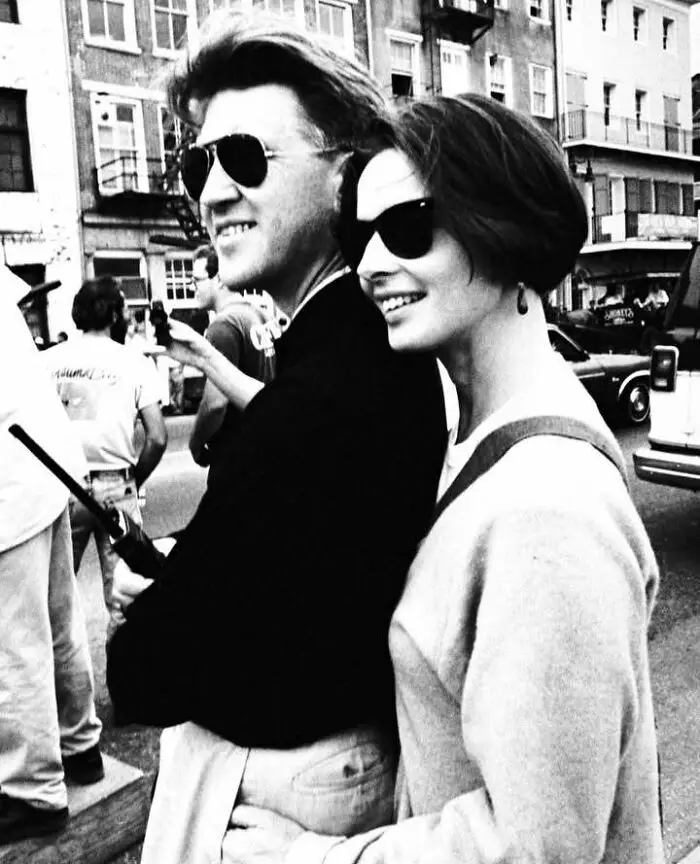
In the late 1980s, Isabella Rossellini and David Lynch shared both a personal and creative partnership that captured the imagination of cinema enthusiasts around the world. Rossellini, born in 1952 to legendary actors Ingrid Bergman and Roberto Rossellini, had already established herself as a model and actress with a striking presence that combined classic beauty with contemporary sophistication. David Lynch, born in 1946, was emerging as one of the most visionary directors of his generation, known for his surrealist style and atmospheric storytelling. Their relationship coincided with a pivotal period in both of their careers, as Rossellini starred in films that showcased her versatility while Lynch was preparing to create some of his most iconic works.
During this period, Rossellini and Lynch collaborated professionally, most notably in Blue Velvet (1986), where Rossellini portrayed the complex and haunting character Dorothy Vallens. The film was a critical and cultural milestone, blending neo-noir aesthetics with psychological intensity, cementing Lynch’s reputation as a director unafraid to explore the darker sides of human nature. Rossellini’s performance earned widespread acclaim, highlighting her ability to convey vulnerability, sensuality, and inner turmoil with remarkable nuance. Their creative synergy extended beyond the set, with their personal connection influencing their artistic expression and providing a unique dynamic that contributed to the film’s enduring impact.
The late 1980s also marked a period of expanding influence for both artists. Rossellini continued to navigate the worlds of fashion, cinema, and experimental projects, while Lynch began developing the distinctive visual and narrative style that would later define Twin Peaks (1990–1991) and Wild at Heart (1990). Photographs of the couple from this era capture a blend of intimacy, glamour, and artistic magnetism, reflecting the synergy between two creative forces at the height of their powers. Their relationship remains an iconic chapter in both of their lives, illustrating how personal and professional collaboration can shape the cultural and cinematic landscape of a generation.
Report
4points
#46
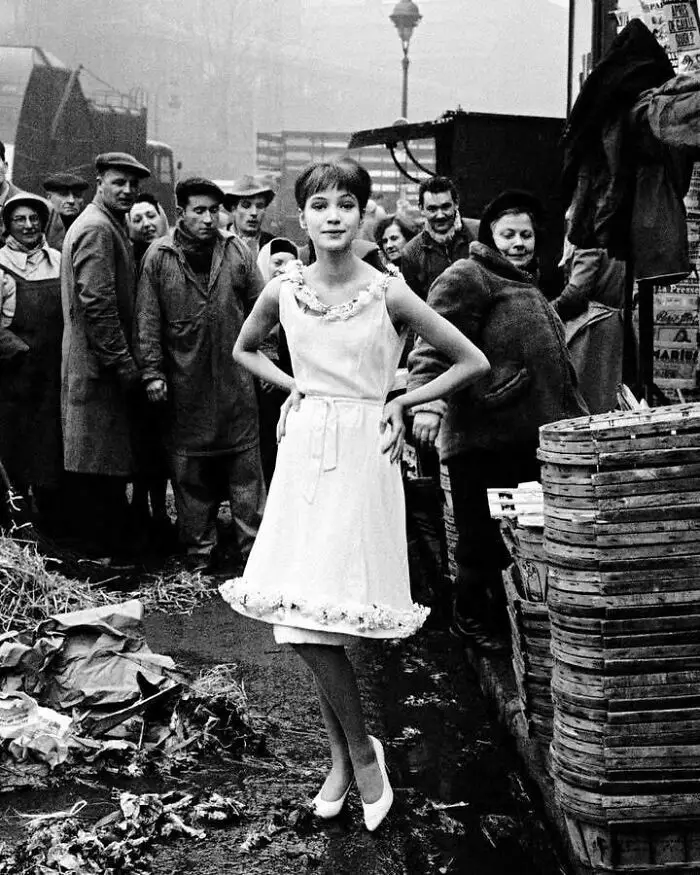
Photographed by Frank Horvat in 1959, this image captures a nineteen-year-old Anna Karina at the bustling Les Halles market in Paris — a moment suspended between innocence and destiny. Having recently arrived from Denmark with dreams of becoming an actress, Karina was still modeling for advertisements and magazines when Horvat, one of the leading photographers of postwar Europe, discovered her. His lens captured not glamour, but authenticity — the essence of a young woman wandering through the heart of Paris, unaware that she was about to become a defining face of a cinematic revolution. The photo radiates quiet energy, reflecting both the liveliness of Les Halles and the poetic melancholy that would soon define her screen presence.
Paris in 1959 was at the brink of cultural transformation. The Nouvelle Vague was beginning to reshape cinema, challenging the polished studio system with raw, human storytelling. Within a year of this photo, Jean-Luc Godard would cast Anna Karina in Le Petit Soldat (1960), igniting both a creative partnership and a legendary love story. Over the following decade, she starred in some of the movement’s most influential films — A Woman Is a Woman (1961), Vivre Sa Vie (1962), Band of Outsiders (1964), and Pierrot le Fou (1965). Karina’s delicate expressiveness, paired with her understated elegance, made her the emblem of the New Wave: modern, mysterious, and profoundly human.
Frank Horvat’s photograph thus serves as a prophetic document — the calm before the brilliance. Les Halles, the “belly of Paris,” was still a living, breathing market before its demolition in the 1970s, symbolizing the end of an era. In this image, Karina embodies both the city’s realism and its dreams. Her thoughtful gaze and natural grace anticipate the muse she would become — an icon of freedom, youth, and artistry who forever changed the face of French cinema and 20th-century culture.
Report
4points
#47

Brigitte Bardot in the 1950s and 1960s epitomized Old Hollywood glamour while simultaneously redefining French cinema and fashion. Circa 1956, Bardot rose to international fame with the release of And God Created Woman, a film that not only showcased her magnetic beauty and sensual presence but also symbolized a new era of liberated femininity. Photographs from this period capture her effortlessly chic style—tousled hair, smoky eyes, and a playful yet confident demeanor that exuded both allure and individuality. Bardot’s appeal extended far beyond the screen; she became a global fashion icon whose influence shaped trends in Paris and Hollywood alike, from the popularity of Breton stripes and ballet flats to the art of casual, natural glamour. Her image graced magazine covers worldwide, solidifying her status as a muse for photographers, designers, and artists of the era.
During the late 1950s and early 1960s, Bardot’s film career and public persona reflected a bold, modern approach to female stardom. She starred in landmark films such as Contempt (1963) by Jean-Luc Godard and Viva Maria! (1965), collaborating with visionary directors who celebrated her talent while enhancing her cinematic mystique. Her presence in photo shoots and publicity stills demonstrated a mastery of expression, capturing vulnerability, charm, and playfulness all at once. Iconic imagery from this era highlights Bardot’s ability to embody both sophistication and natural sensuality, bridging the gap between traditional glamour and the emerging youth-driven cultural movements of mid-20th-century Europe.
Bardot’s influence extended beyond cinema into fashion, lifestyle, and popular culture, establishing her as one of the most enduring icons of Old Hollywood glamour fused with French elegance. Her signature style—voluminous hair, winged eyeliner, and effortless yet striking clothing choices—set trends that remain influential decades later. By the mid-1960s, she had become synonymous with freedom, charm, and modern femininity, a symbol of beauty and confidence that resonated globally. Photographs capturing Bardot during this transformative period are more than visual records; they are historical artifacts reflecting a unique intersection of film, fashion, and cultural revolution, encapsulating the timeless appeal of a true icon.
Report
3points
#48

In 1972, Pamela Courson was living quietly in San Francisco, a city still pulsing with the aftershocks of the 1960s counterculture. Known to the world as the longtime companion and muse of Jim Morrison, lead singer of The Doors, Pamela had shared a deep, passionate relationship with him from 1965 until his untimely passing in July 1971. The couple had met in Los Angeles during the height of the psychedelic revolution, and their love story unfolded amidst the chaos of fame, poetry, and rebellion. After Jim’s passing in Paris, Pamela retreated to California, carrying with her the echoes of an era defined by art, music, and freedom. San Francisco — the heart of the hippie movement — offered her both refuge and remembrance.
By 1972, the city’s Haight-Ashbury district had transformed from a vibrant utopia into a more melancholic shadow of its former self. Yet, for Pamela, it was a place where the spirit of the 1960s still lingered — in the vintage boutiques, record stores, and cafés filled with dreamers and drifters. Her bohemian style — flowing fabrics, long red hair, and a touch of ethereal mystery — embodied the fashion and mood of the early ’70s. Friends described her as poetic and introspective, often writing in journals or sketching, still deeply influenced by the artistic energy she had shared with Morrison. Her life in San Francisco symbolized both survival and solitude — a continuation of the idealism that had shaped her generation.
Pamela Courson’s story is intertwined with the mythology of The Doors and the legacy of 1960s rock culture. Though she passed away in 1974 at just 27, her presence in photographs and memories from 1972 captures a fleeting moment in time — when music, love, and youth burned brightly before fading into legend. Today, she remains a symbol of that hauntingly beautiful intersection between art, freedom, and the fragile intensity of the counterculture dream.
Report
3points
#49
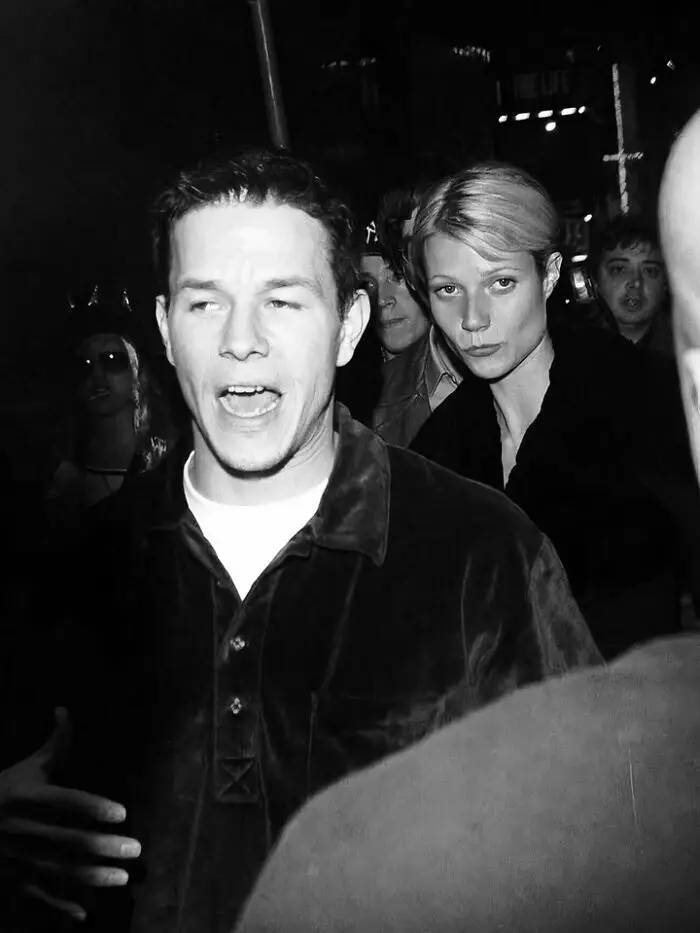
This 1997 photograph of Mark Wahlberg and Gwyneth Paltrow captures two rising Hollywood stars at the height of their late-’90s fame—a time when both were transitioning from early career success to full-fledged superstardom. However, their earlier collaboration came in The Truth About Charlie development years later; in 1996–97, Wahlberg and Paltrow were building reputations in very different but equally powerful ways. Paltrow, fresh from acclaimed performances in Emma (1996) and Sliding Doors (1998), was redefining the image of the modern screen actress—sophisticated, introspective, and fashion-forward—while Wahlberg was emerging from his early “Marky Mark” persona into serious dramatic territory following his breakthrough in Boogie Nights (1997).
The late 1990s marked a defining era in Hollywood’s youth culture, with style and attitude reflecting the changing face of stardom. Wahlberg, photographed here in his sharp, confident tone, represented the new wave of American masculinity—gritty yet refined, carrying the streetwise energy that made him relatable. Paltrow, by contrast, embodied timeless grace with minimalist fashion and quiet intelligence, soon earning her Oscar for Shakespeare in Love (1998). The chemistry between the two captured the aesthetic of that decade: effortless, slightly rebellious, and deeply cinematic. Their photo symbolized the intersection of two artistic paths shaped by ambition, image reinvention, and the expanding world of ’90s celebrity culture.
By 1997, both actors had become cultural icons in their own right, representing a generation bridging old Hollywood glamour and modern authenticity. The photograph stands as a nostalgic time capsule from an era when film stars were also fashion influences and symbols of a new creative freedom. It reflects not only their personal transformations but the broader evolution of the entertainment industry in the late 20th century—where charisma, individuality, and image redefined what it meant to be a star in the modern age.
Report
3points
#50
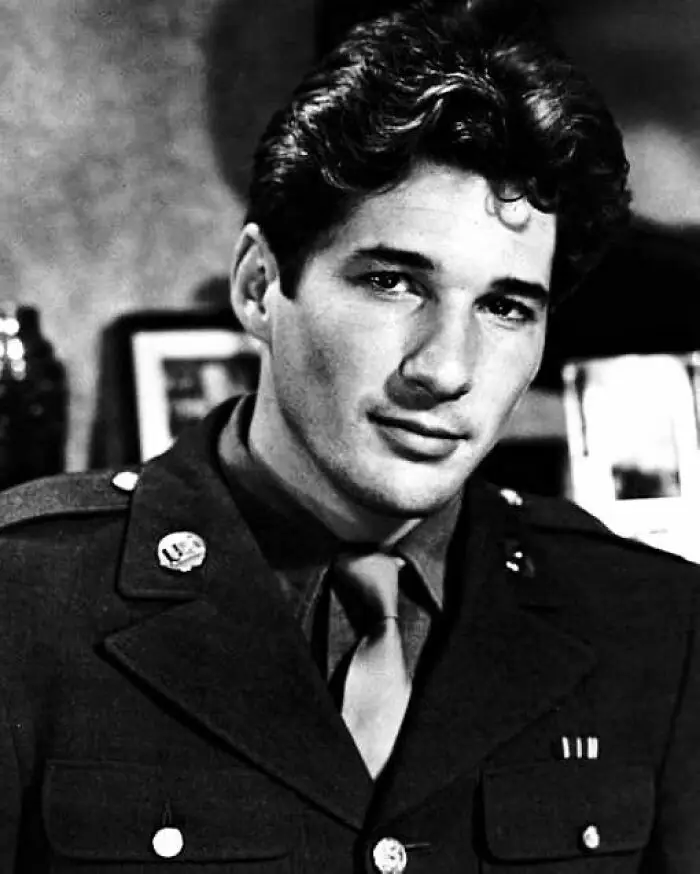
Richard Gere, born on August 31, 1949, in Philadelphia, Pennsylvania, rose to become one of Hollywood’s most recognizable and enduring leading men. His career breakthrough came in the late 1970s and early 1980s with films like American Gigolo (1980), which cemented his image as a magnetic screen presence. Soon after, An Officer and a Gentleman (1982) turned him into a global star, with the film’s romantic storyline and iconic scenes becoming defining moments of 1980s cinema. By the 1990s, Gere reached new heights with Pretty Woman (1990) alongside Julia Roberts, a film that not only became a box office phenomenon but also one of the most beloved romantic comedies of all time.
Throughout the 1990s and 2000s, Gere expanded his repertoire, moving seamlessly between genres. He starred in political dramas like Red Corner (1997), thrillers such as Primal Fear (1996), and musicals like Chicago (2002), for which he won a Golden Globe for Best Actor. His ability to balance charm, intensity, and vulnerability gave him staying power in an industry known for constant reinvention. Beyond his acting, Gere’s career has also been defined by his dedication to humanitarian and spiritual causes. A practicing Buddhist, he has been a prominent supporter of human rights, particularly advocating for Tibet and working closely with the Dalai Lama. His philanthropic efforts have made him a respected figure not only in entertainment but also in global activism.
In more recent years, Gere has taken on selective projects, focusing on roles that align with his artistic values rather than mainstream appeal. His performances in films like Arbitrage (2012) showcased his depth as a seasoned actor. Simultaneously, he has continued to dedicate time to humanitarian initiatives, from AIDS awareness to refugee support. Celebrating his birthday today highlights not only a career spanning more than four decades but also a life committed to compassion, creativity, and social justice. Richard Gere remains a symbol of enduring talent, timeless charisma, and a star whose impact extends far beyond the screen.
Report
3points