

It’s a fascinating world we live in; and the deeper into its secrets we delve, the more there is to discover. That’s probably the reason all sorts of informative platforms online—whether they’re focused on videos, podcasts, or other formats—seem to be blooming nowadays.
One of such rabbit holes of information about anything and everything in life is the ‘fasc1nate’ account on X (Twitter). The posts, enthralling you to scroll for hours, cover information about science, gadgets, history, art, and much more, providing a little something for everyone to enjoy. We have gathered some of the most captivating examples shared by the account on this list for you today, so wait no longer and scroll through to learn something new.
#41
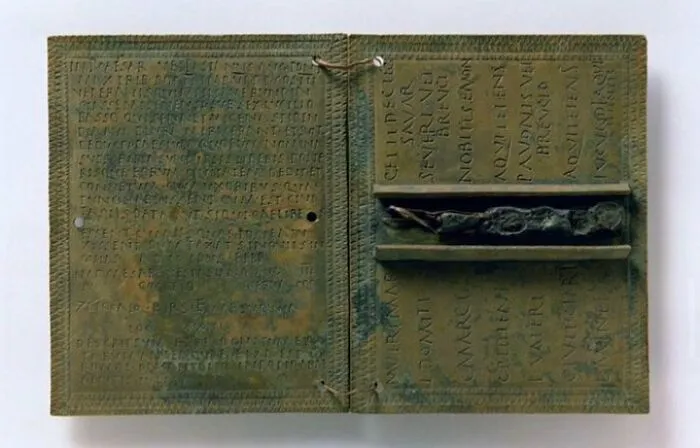
A Roman military diploma was discovered in Croatia in 1997. This ancient document, found in a river, dates all the way back to 71 AD.
These military diplomas were like golden tickets for retiring Roman soldiers. They were evidence of an honorable discharge from the Roman army and came with great perks. For instance, the diploma granted Roman citizenship to the soldier and their entire family.
These privileges went beyond just bragging rights. Roman citizenship came with tangible benefits, like being exempt from certain taxes, enjoying legal protection, and even the possibility of holding public office.
But what truly sets this discovery apart is that the diploma still bears the wax seals of those who witnessed the document. These seals were pressed onto the diploma to authenticate its contents and prove its legitimacy.
Report
104points
#42
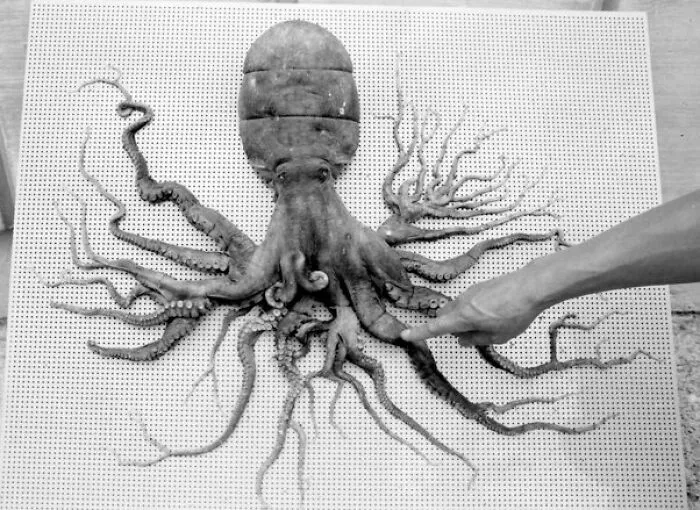
When an octopus' tentacle (arm or leg) is split, most often due to fighting, something called "over-regeneration can occur during the healing process.If this happens repeatedly, the octopus can have dozens of tentacles. The most ever counted was on an Octopus found in Matoya Bay, Japan, 1998. It had 96
Report
101points
#43
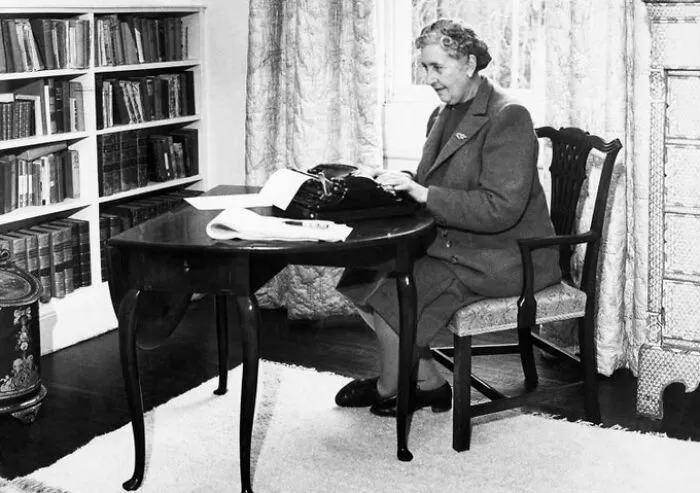
Shortly after 9:30pm on Friday, 3 December 1926, Agatha Christie got up from her armchair and climbed the stairs of her Berkshire home.
She kissed her sleeping daughter Rosalind, aged seven, goodnight and returned downstairs again. Then she climbed into her Morris Cowley and drove off into the night. She would not be seen again for 11 days.
Her disappearance would spark one of the largest manhunts ever mounted. Agatha Christie was already a famous writer; more than one thousand policemen and hundreds of civilians were assigned to the case.
Report
99points
#45
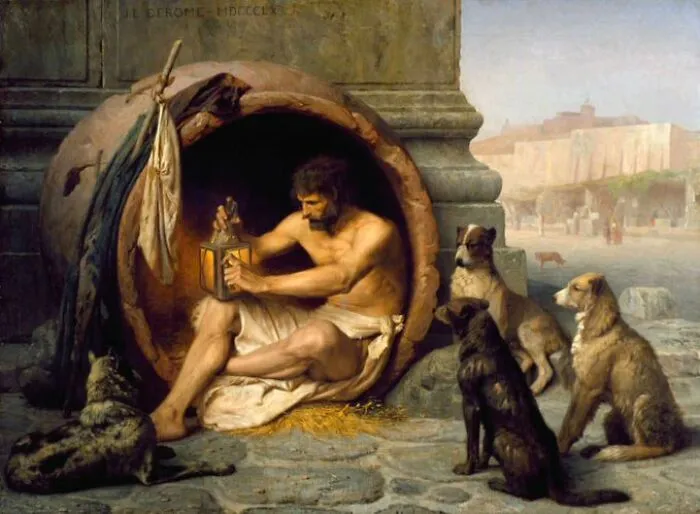
Though details about the early life of the Greek philosopher Diogenes are limited, he is often the subject of wild speculation. What is evident, however, is that this ancient philosopher was among history’s most unconventional figures.
Diogenes was born around 412 or 404 B.C. in the distant Greek colony of Sinope. During his younger years, he assisted his father in coin minting for the colony, a profession they had to abandon when they were exiled for tampering with the gold and silver composition of the coins.
After his exile, Diogenes found himself in Corinth, a city in mainland Greece.
Upon his arrival, his behavior took a drastic turn. Left jobless, he chose the life of a wandering beggar. Discarding nearly all his belongings, he held onto only a few pieces of cloth for modesty and a wooden bowl for sustenance.
Diogenes was known to frequently interrupt Plato’s lectures, munching loudly to disrupt the discussions. He would vocally challenge Plato's philosophical notions and, at times, acted provocatively in public spaces. His audacity extended to relieving himself in the most unexpected places, including on Plato’s seat in his academy.
Diogenes' eccentricities were further emphasized by his habit of consuming food he found scattered about, sharing it with stray dogs that constantly trailed him—even into Plato’s lectures. Yet, in a surprising twist, Diogenes emerged as one of the most esteemed philosophers of Greece.
Tales of his sharp intellect are abundant, often leaving his contemporaries, Plato included, in the shadows.
A notable account is when Alexander the Great approached Diogenes, who was reclining naked atop the barrel he resided in. When the mighty ruler asked if there was any way he could assist the philosopher, Diogenes responded, “You could move out of my light.”
Report
96points
#46
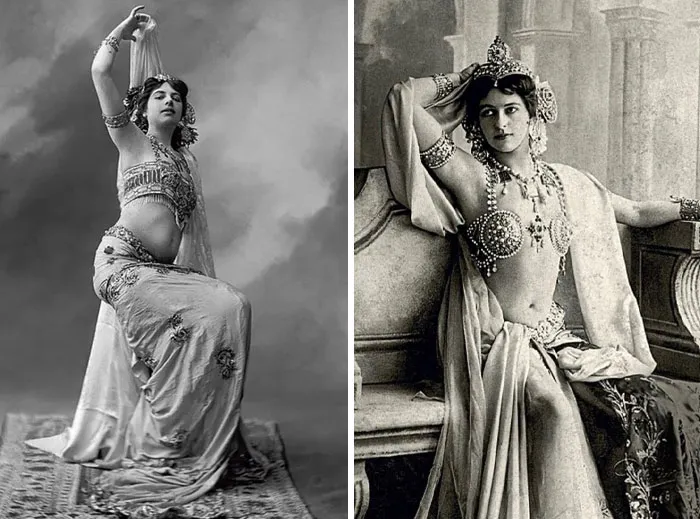
Mata Hari was a renowned Dutch dancer known for her great beauty and skills. She quickly rose to fame as a much-desired performer across Europe.
During the First World War, she lived in Paris, surrounded by numerous influential admirers. There's speculation that she leveraged her intimate relationships with these men to collect intelligence for Germany, though the full scope of her activities remains debated.
In 1917, the French authorities arrested Mata Hari, charging her with espionage. She stood accused of relaying critical military information, such as troop movements, to the Germans. Despite her protests of innocence, she was convicted and sentenced to death.
Mata Hari met her end by firing squad on October 15, 1917. Her execution stirred international outrage, with many asserting she had been unjustly singled out by the French officials.
Report
94points
#47
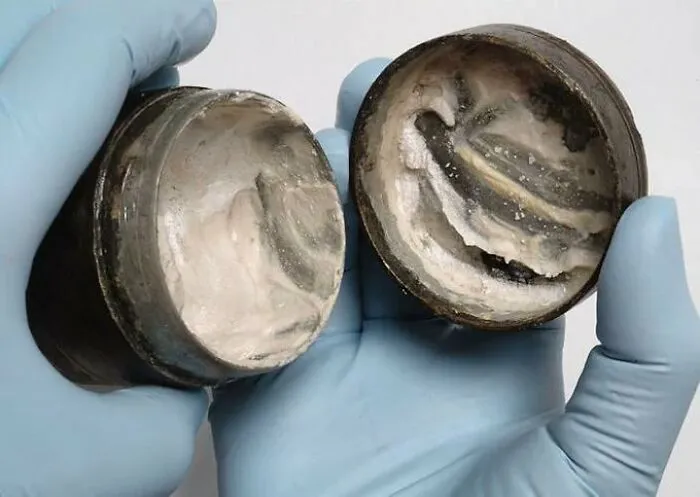
2,000-year-old face cream inside a metal container from Roman times with visible ancient finger marks. "The cream was composed of refined animal fat, starch, and tin.
The researchers then created their own version, made to the same recipe. When they rubbed the whitish cream into their skin, it produced a white layer with a smooth powdery texture. The latter quality was created by the starch—still used for this purpose in modern cosmetics."
Professor Richard Evershed from Bristol University said, "White face paint was fashionable in Roman times and normally derived its colour from a lead compound. A tin compound would have been an acceptable substitute and in good supply from Cornwall."
In ancient Rome, lead was the most popular metal and was commonly used in cups, plates, coins, pipes, cosmetics, face powder, paints, food seasoning, and even birth control.
Scientists have even discovered that tap water from ancient Rome contained up to 100 times more lead than local spring water.
As a result, some historians have speculated that lead poisoning may have played a part in bringing down the Roman Empire
Report
88points
#48

During the mid-19th century, Paris faced significant challenges in managing the growing issue of public urination.
To address this, the city installed cast iron and masonry public urinals on the curbs of streets.
One such example is the urinal in Paris, France, dating back to 1865.
These urinals were designed to drain directly into the underground sewer system, providing a convenient and hygienic solution for the city's sanitation needs.
This innovative approach helped alleviate the problem of public urination, which was becoming a major concern in urban areas.
These urinals represented a step forward in urban planning and public health, as they improved sanitation conditions and contributed to the overall cleanliness of the city.
Report
87points
#49
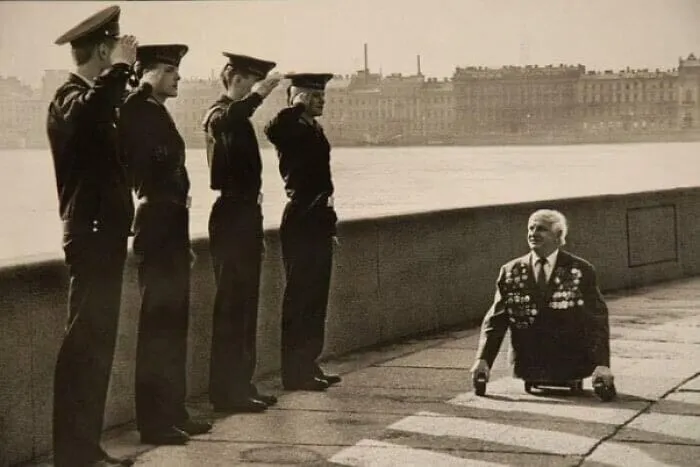
In 1989, a powerful photograph captured the attention of the world and shed light on the resilience and sacrifice of war veterans.
The image, taken by Ivan Kurtov, depicted Anatoly Golimbievsky, a decorated veteran who had lost both legs during World War II, being saluted by four young sailors.
The photograph was part of a larger photo story that Kurtov had been working on, focusing on the life of Golimbievsky. Kurtov had the opportunity to meet the veteran on Victory Day, celebrated on May 9th in Russia, when he was sent to a veterans meeting in Leningrad by his press agency, ITAR-TASS.
To honor Golimbievsky, Kurtov decided to stage a photo shoot with the veteran. He contacted the Nakhimov school for Naval Cadets and requested around 30 sailors to participate. However, only three sailors and one officer were sent to him. Despite this, Kurtov proceeded with the shoot.
Originally, Kurtov had planned to capture the photograph against the backdrop of the iconic cruiser 'The Aurora,' which was docked opposite the Nakhimov school. However, he found that the presence of the large ship was too distracting for the intended message of the photo. Instead, he opted to take the picture with the city in the background.
While the photo was approved by ITAR-TASS, many newspapers were hesitant to publish it, citing concerns about showcasing what they viewed as "pathology." Only when Kurtov won the first prize at World Press Photo did Russian newspapers begin to print the image.
Report
84points