





The world of birds never stops fascinating us, and every time we start exploring it, we discover something new and surprising. That’s why we’ve put together another interesting collection for all curious bird lovers out there who are always eager to admire new species.
'Best Bird Shots' is an Instagram page dedicated to curating amazing photography from people traveling to the most remote locations just to capture the incredible diversity and beauty of birdlife.
We've gathered some of our favorite images shared by the page below. Scroll down, enjoy these incredible feathered creatures, and don't forget to upvote the photos that impressed you the most!
#21 Pink Robin
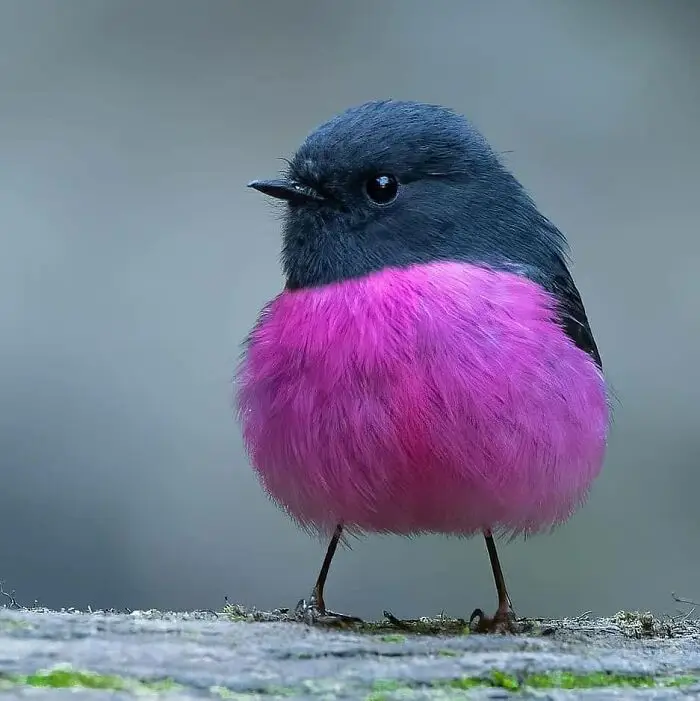
The Pink Robin (Petroica rodinogaster) looks like a tiny, round cotton ball dipped in vibrant pink ink. Native to the dense, cool temperate rainforests of southeastern Australia and Tasmania, it is a shy but breathtakingly beautiful creature.
Only the males sport the brilliant, neon-pink or magenta breast. Their heads and backs are a dark, smoky charcoal color, making the pink patch stand out even more. Females are a much more subtle, camouflaged olive-brown with buff-colored wing bars.
Despite its name, it is not closely related to the European or American robins. It belongs to the Australasian robin family (Petroicidae), a completely distinct group of birds.
They love dark, damp places. You won't usually find them in suburban parks; instead, they live in the deep understory of temperate rainforests, especially around gullies filled with moss, ferns, and sassafras trees.
They are sit-and-wait predators. A Pink Robin will sit perfectly still on a low branch or fern frond, scan the forest floor for insects, spiders, and centipedes, and then swoop down silently to grab them.
Their nests are miniature masterpieces of camouflage. They construct deep, cup-shaped nests using green moss, binding it tightly together with sticky spiderwebs, and lining the inside with soft fern down. Because of this, the nest looks exactly like a natural mossy knot on a branch.
Report
15points
#22 Western Rosella Family
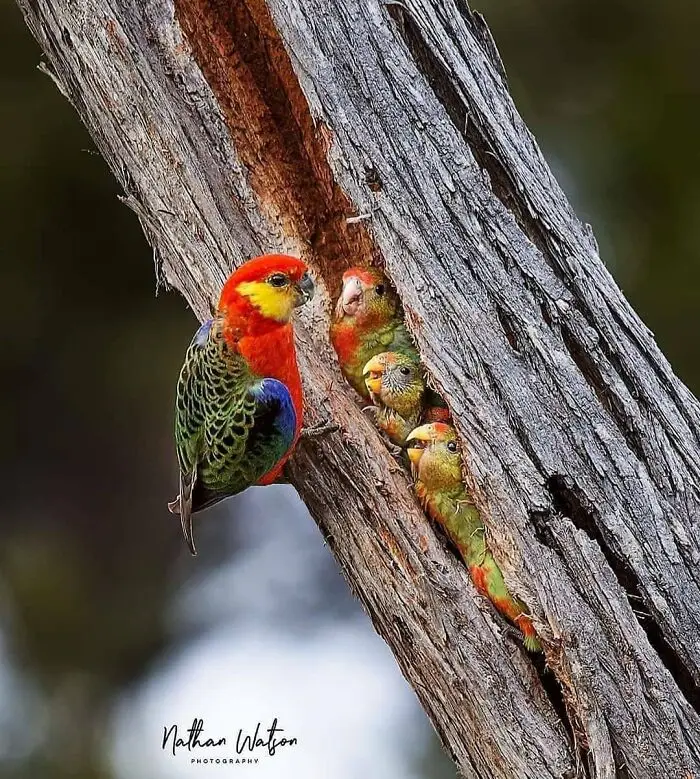
The Western Rosella (Platycercus icterotis), also known as the Moyadong, is a small, vibrant parrot native exclusively to the forests and woodlands of southwestern Australia. It holds the distinction of being the smallest of all the rosella species.
While most rosellas have blue or white cheek patches, the Western Rosella is easily picked out by its prominent, bright yellow cheeks.
Unlike many other rosellas where males and females look identical, this species shows clear differences. The male boasts a brilliant red head and underparts with a green-and-black scalloped back. The female is much more muted, wearing a mostly olive-green plumage with just a subtle flush of red on her face and underparts.
Rosellas are generally known for being loud and boisterous, but the Western Rosella is surprisingly quiet and placid. They make soft, musical piping whistles that are far less harsh than the shrieks of their larger cousins.
Their natural diet consists of eucalyptus seeds, grass seeds, and flowers. However, they have a major sweet tooth for introduced fruits. This frequently draws them into apple and pear orchards, which historically put them at odds with local farmers.
They breed in the deep hollows of mature, living eucalyptus trees—particularly the massive Jarrah and Marri trees. The female will sit on the eggs for about 20 days while the male dutifully flies back and forth to bring her food.
15points
#24 Gang-Gang Cockatoo
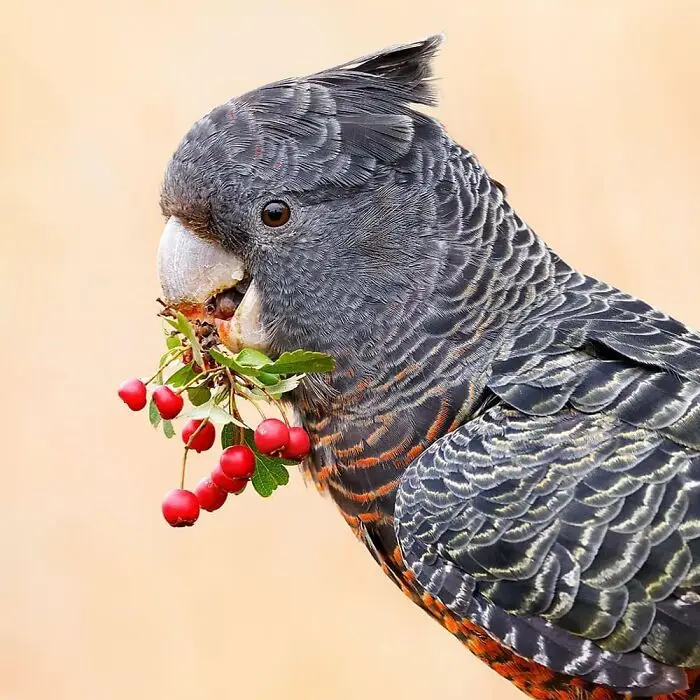
The Gang-Gang Cockatoo (Callocephalon fimbriatum) is a small, charismatic parrot native to the cooler, heavily forested mountain regions of southeastern Australia. It is instantly recognizable by its unique wispy crest and its highly unusual vocalizations.
While both sexes have slate-grey bodies with a beautifully "scalloped" feather pattern, only the male sports a brilliant, fiery-red head and a wild, wispy crest that curves forward. Females have a completely grey head and crest, but feature subtle green and pinkish bars across their bellies.
Instead of the loud, ear-piercing shrieks common to most cockatoos, the Gang-Gang makes a much quieter, distinctively raspy sound. Birdwatchers often describe it as sounding exactly like a creaky wooden door opening or a rusty corkscrew turning.
Unlike many tropical parrots, Gang-Gangs thrive in cold weather. They breed in sub-alpine eucalyptus forests and can frequently be seen playing or foraging in high-altitude zones even during light winter snowfalls.
They are specialized seed eaters, absolutely loving the seed cones of native eucalyptus trees and introduced hawthorn bushes. They use their powerful beaks to systematically shred cones, often making a quiet clicking sound while they chew and raining down a heavy shower of debris onto the forest floor below.
The Gang-Gang Cockatoo is deeply cherished in its native range and serves as the official faunal emblem of the Australian Capital Territory (ACT), which surrounds the capital city of Canberra.
Report
15points
#25 Black-And-Yellow Broadbill
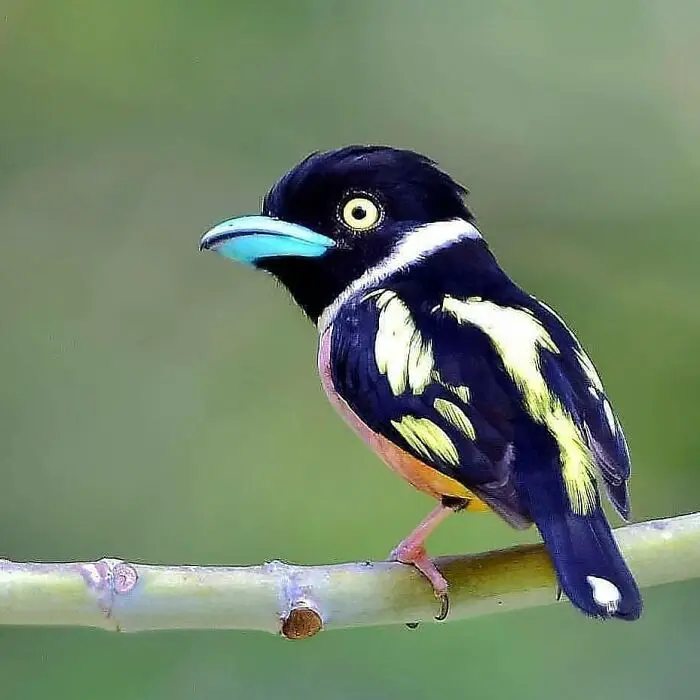
The Black-and-Yellow Broadbill (Eurylaimus ochromalus) is a small, chunkily built bird native to the tropical forests of Brunei, Indonesia, Malaysia, Myanmar, and Thailand. Looking almost like a stylized cartoon character, it is widely celebrated for its wild mix of neon colors and its incredibly wide, distinctive beak.
Its most shocking feature is its heavy, wide beak, which is a brilliant shade of bright, glowing turquoise or electric blue. This matches its stark yellow eyes, creating a sharp contrast against its pitch-black head.
Its name only scratches the surface. Along with its black head and yellow-streaked wings, it wears a crisp white collar around its neck, a soft pinkish-wine color across its breast, and a bright yellow under-tail area.
Despite being a bird, its call sounds remarkably like a noisy insect or a mechanical alarm. It starts as a series of low, metallic chuckles that steadily accelerate into a loud, high-pitched, vibrating trill—often easily mistaken for a cicada screaming in the jungle canopy.
Broadbills are famous for their engineering skills. They build large, pear-shaped or purse-like nests out of grass, leaves, roots, and moss. They suspend these bulky structures from long, thin vine tendrils directly over forest rivers or trails, making it incredibly difficult for snakes and monkeys to climb down to steal the eggs.
Its broad, scooping beak is perfectly evolved for its diet. It sits patiently in the lower and middle tiers of the rainforest before launching itself into quick aerial maneuvers to snatch up large insects like cicadas, grasshoppers, and beetles mid-air.
Report
15points
#26 Grey-Headed Chickadee
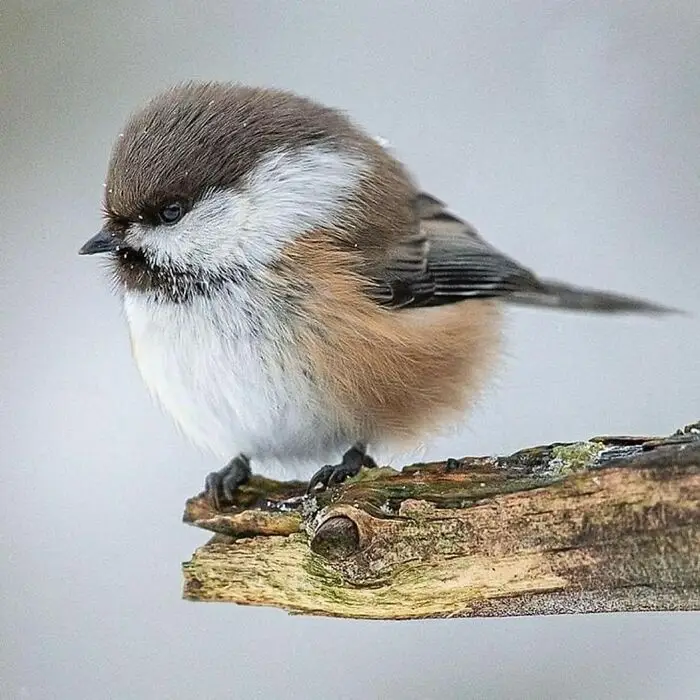
The Grey-headed Chickadee (Poecile cinctus), known across Europe and Asia as the Siberian Tit, is a small, incredibly resilient songbird that inhabits the high-latitude subarctic forests of the Northern Hemisphere. It holds a legendary reputation among North American birdwatchers as one of the continent's most elusive birds, clinging to a thin, remote breeding range in the stunted willow and spruce forests of Alaska and northwest Canada.
Their plumage is a cozy, muted arrangement designed perfectly for camouflage in cold climates. Unlike their more common relatives, they sport a soft, muted brownish-grey crown and back instead of a stark black cap. This is beautifully contrasted by clean white cheeks, a dark dusky-grey throat bib, and rich, buff-colored flanks that give them a fluffy, round appearance when puffed up against the cold.
They are master survivors of the brutal subarctic winters. To endure temperatures that routinely drop well below freezing, these chickadees utilize a physiological superpower known as nocturnal torpor—purposefully lowering their body temperature at night to save precious energy. They spend their days tirelessly foraging for insect larvae, pupae, and seeds hidden within the bark of trees, relying heavily on food caches they meticulously hid during the autumn.
During the breeding season, they reveal their strict dependency on old-growth habitats. They are secondary cavity nesters, meaning they rely on old holes carved out by woodpeckers or natural hollows in decaying trees to build their nests, which they line with insulating animal fur and moss. Because logging and climate change have altered these northern taiga forests, finding suitable old-growth nesting trees has become increasingly difficult for them.
They are generally quiet and unassuming, especially compared to other chickadee species, making them remarkably difficult to locate in the vast northern wilderness. Their calls include a soft, buzzy variation of the classic family sound—a distinct, nasal "chick-a-dee-dee"—alongside a collection of quiet, high-pitched whistles used to maintain close contact with their mates through the dense brush.
Beyond their biological grit, this bird represents one of the ultimate quests in North American birding. Because their territory is so incredibly remote and rugged, very few people have ever seen a Grey-headed Chickadee in the wild on the western side of the Atlantic. They stand as a quiet, stoic symbol of the untouched, freezing wilderness of the far north.
Report
14points
#27 Jacobin Pigeon
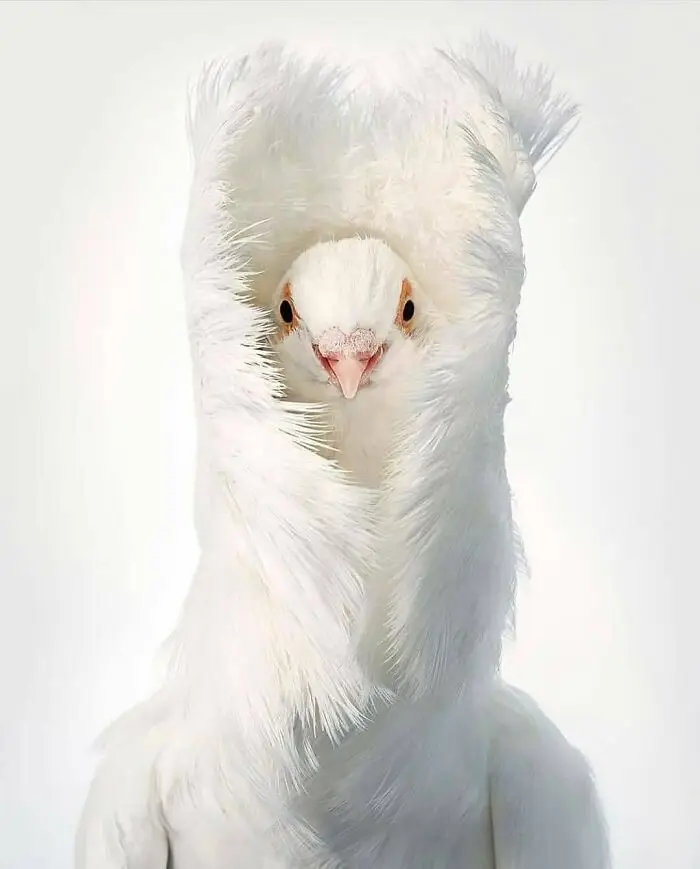
The Jacobin Pigeon is one of the oldest and most striking domestic fancy pigeon breeds in the world. Developed over centuries of selective breeding, it is famous for its extravagant "hood" of feathers that completely wraps around its head.
Their most notable feature is a dense, fluffy rosette of feathers curling forward around the neck and head. It is divided into three distinct parts: the hood (covering the top of the head), the chain (running down the sides of the neck), and the mane (growing upwards from the back of the neck).
The breed gets its name from the Jacobin order of Dominican friars who wore distinctive, dark-colored cowls or hoods. When the birds arrived in Europe, people immediately noticed the resemblance.
Jacobins became highly popular during the 16th and 17th centuries. Queen Victoria of the United Kingdom was famously fond of the breed, keeping and breeding them herself, which significantly raised their status among bird enthusiasts.
Because their feather hoods are so massive and wrap entirely around their eyes, Jacobin pigeons have very poor peripheral and forward vision. They cannot see predators easily and are generally kept in highly protected aviaries.
Beneath that massive explosion of neck feathers, the Jacobin actually has a very slender, long body with long flight feathers and a proud, upright stance. They come in a wide variety of colors, including white, black, red, and yellow.
Report
14points
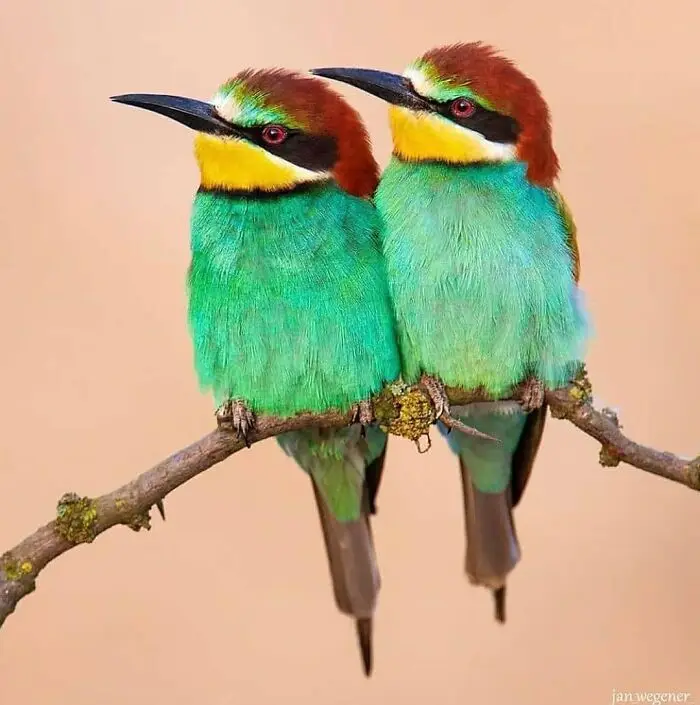
#29 Mandarin Duck

The Mandarin Duck (Aix galericulata) is a medium-sized perching duck native to East Asia, primarily found across China, Japan, Korea, and eastern Russia. Renowned for its breathtakingly intricate patterns, this elegant waterfowl is universally celebrated as one of the most beautiful and visually striking birds in the world.
Their breeding plumage is an absolute masterpiece of natural art that looks almost entirely hand-painted. While the female sports a subtle, elegantly dappled grey and white camouflage, the drake features a brilliant red bill, a large iridescent crest of green and purple, a rich chestnut neck ruff, and two prominent, fan-shaped orange feather "sails" that stand completely upright on his back like a miniature ship.
Unlike most typical ducks that spend their time exclusively on the water or flat muddy banks, Mandarin ducks are highly adept perching birds. They possess specialized claws that allow them to easily grip tree branches, and they spend a significant amount of time roosting high up in the forest canopy near secluded, densely wooded lakes, rivers, and marshes.
Their nesting habits are remarkably unconventional for a waterfowl. Instead of nesting on the ground near the reeds, the female lays her eggs deep inside natural tree cavities sometimes up to 30 feet high; when the newly hatched ducklings are just a day old, the mother calls to them from below, prompting the tiny, fluffy chicks to bravely leap out of the tree hole and free-fall to the forest floor below before being led safely to water.
They are highly adaptable foragers, shifting their diet dramatically with the changing seasons. During the autumn and winter months, they feed almost exclusively on acorns and grains, frequently walking deep into the forest undergrowth to search for nuts, while in the spring and summer, they switch to an omnivorous menu of water plants, snails, small fish, and insects.
Beyond its physical beauty, this bird holds an incredibly deep cultural legacy in East Asian tradition, particularly in Chinese and Japanese folklore. Because they are famously known to form strong pair bonds and return to the same mate for years, a pair of Mandarin Ducks has served for centuries as a sacred symbol of lifelong fidelity, love, and marital bliss, often prominently featured in traditional wedding art and gifts.
Report
14points
#30 Red Avadavat
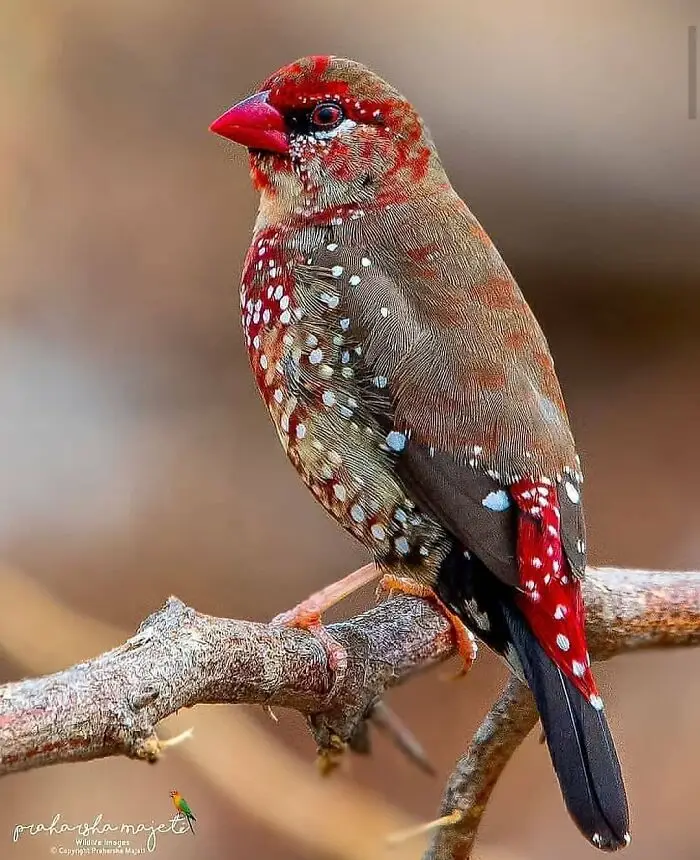
The Red Avadavat (Amandava amandava) is a tiny, sparrow-sized bird native to the tropical grasslands and plains of South and Southeast Asia. It is widely celebrated for its striking colors and holds a historic legacy as one of the world's most popular caged songbirds.
While both sexes spend most of the year in a modest, grayish-brown plumage, the breeding season triggers a dramatic transformation. The adult male molts into a brilliant, fiery crimson coat speckled with tiny white dots, making him look exactly like a ripe strawberry.
During courtship, the male puts on an endearing performance. He holds a single blade of grass or a feather in his beak, bows deeply, and hops around the female while singing a sweet, high-pitched, flute-like melody to win her over.
They are highly social and gentle creatures. Outside of the breeding season, they gather in large flocks of up to 100 birds, spending their days foraging for grass seeds on the ground and tightly huddling together—a behavior known as "clumping"—to keep warm and groom each other.
Despite their small size, they are incredibly hardy and adaptable. Originally from countries like India and Thailand, escaped birds from the pet trade have successfully established thriving wild populations in far-flung places, including Hawaii, Fiji, and southern Spain.
The unusual name "Avadavat" is a historic nod to the city of Ahmedabad in Gujarat, India. Centuries ago, this city served as the primary export hub that first introduced these "strawberry finches" to amazed bird lovers across the globe.
13points
#31 Major Mitchell's Cockatoo
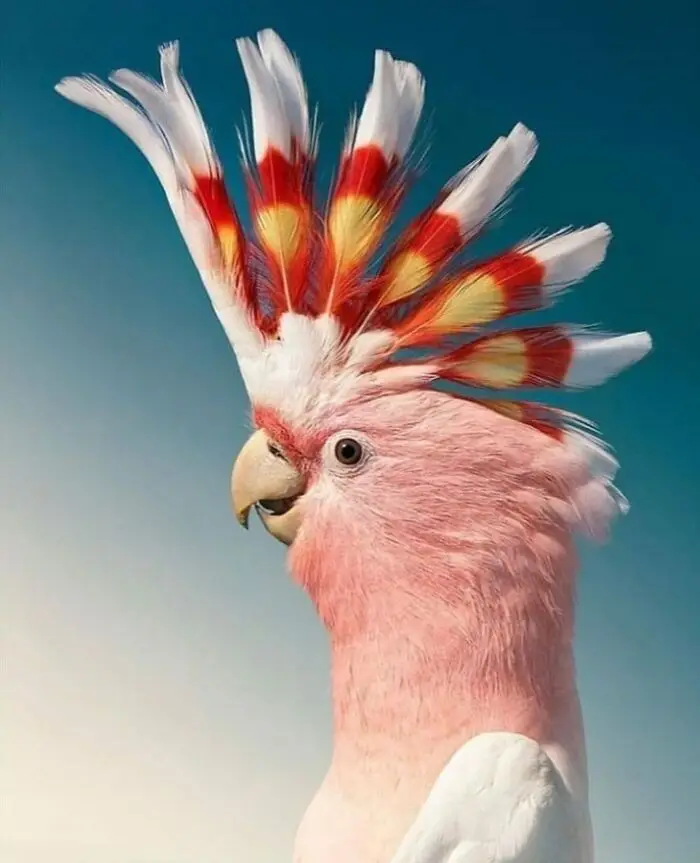
The Major Mitchell's Cockatoo (Lophochroa leadbeateri), also beautifully known as the Pink Cockatoo, is widely considered one of the most beautiful parrots in the world. Native to the dry, arid inland areas of Australia, its soft palette completely belies its tough, desert-dwelling nature.
While its body wears a soft, salmon-pink and white coloration, its crest is a jaw-dropping explosion of color. When raised, the crest reveals bold, horizontal bands of bright scarlet red and sunny yellow, framed by a crisp white trim.
These birds are true desert survivors. They thrive in the dry, open woodlands and scrubby inland plains of Australia, heavily relying on the presence of mature trees near water sources.
Unlike the Galah or the Sulphur-Crested Cockatoo, which gather in massive, raucous flocks of hundreds, Major Mitchell's Cockatoos are much more exclusive. They are typically seen in pairs or small family groups, and breeding pairs aggressively defend massive territories from other cockatoos.
Their vocalizations are quite distinct from other parrots. While they can still screech when startled, their standard call is a high-pitched, warbling, three-note cry that sounds a bit like "creek-ery-creek" or a stuttered whistle.
A famous captive Major Mitchell’s Cockatoo named "Cookie" lived at the Brookfield Zoo in Chicago. He arrived at the zoo when it opened in 1934 and lived to be 83 years old, officially making him the oldest documented parrot in history before he passed away in 2016.
Report
13points
#32 Ocellated Turkey
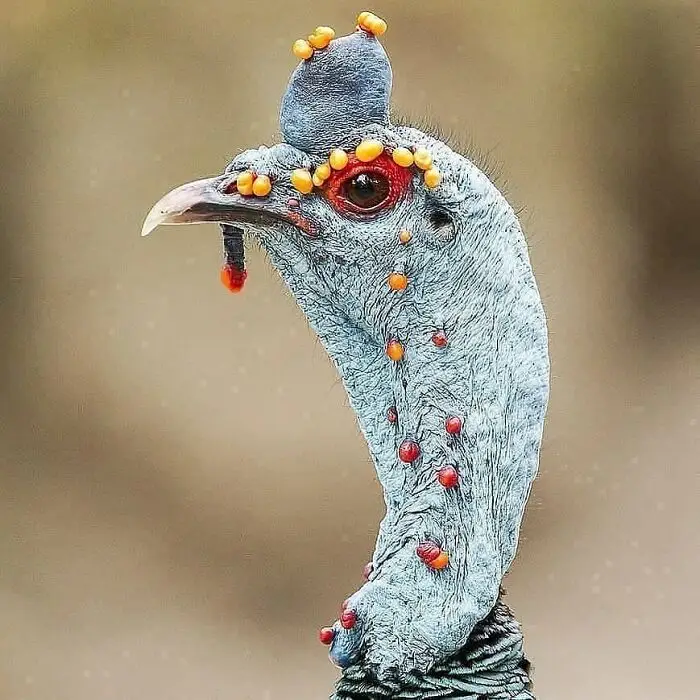
The Ocellated Turkey (Meleagris ocellata) is a large, spectacular bird found exclusively in a small pocket of Central America, primarily across the Yucatán Peninsula of Mexico, northern Guatemala, and northern Belize. A close relative of the more familiar North American wild turkey, this tropical cousin is widely regarded as one of the most stunningly colorful gamebirds in the world.
Their appearance is an absolute explosion of color, completely subverting the typical image of a muddy-brown farm turkey. Their body feathers are a mesmerizing, iridescent mosaic of bronze, emerald green, and deep blue that shimmers vividly in the sunlight. Most strikingly, their bare heads and necks are a brilliant powder-blue covered in bright orange and red warts, or nodules, which intensify in color during the mating season.
The name "Ocellated" comes from the magnificent, eye-like spots—called ocelli—that adorn their tail feathers. Much like the markings on a peacock, these blue and bronze rings are ringed with brilliant gold and are prominently featured during courtship. When a male wants to impress a female, he fans his tail wide, tucks his head back against his colorful plumage, vibrates his wings against the ground, and struts in an elegant, rhythmic circle.
They are largely ground-dwelling birds that prefer the mix of dense tropical forests and open clearings. They spend their days walking through the undergrowth in small family groups, foraging on an omnivorous diet of fallen fruits, seeds, leaves, and various insects. When night falls, they rely on powerful, heavy wingbeats to fly up into the forest canopy to roost safely out of reach of ground predators like jaguars.
Unlike the loud, familiar "gobble" of North American turkeys, the vocalizations of the Ocellated Turkey are uniquely musical and eerie. The male begins his breeding song with a series of low, hollow thumping sounds—resembling the starting engine of a small motorcycle—before accelerating into a high-pitched, warbling melody that echoes through the misty jungle mornings.
Beyond its ecological value, this bird holds a deep historical connection to the ancient Maya civilization. It is frequently depicted in classic Maya art, hieroglyphs, and pottery, where its vibrant feathers and distinct blue head were deeply revered and associated with royalty, religious rituals, and the gods of the natural world.
13points
#33 Golden Pheasant
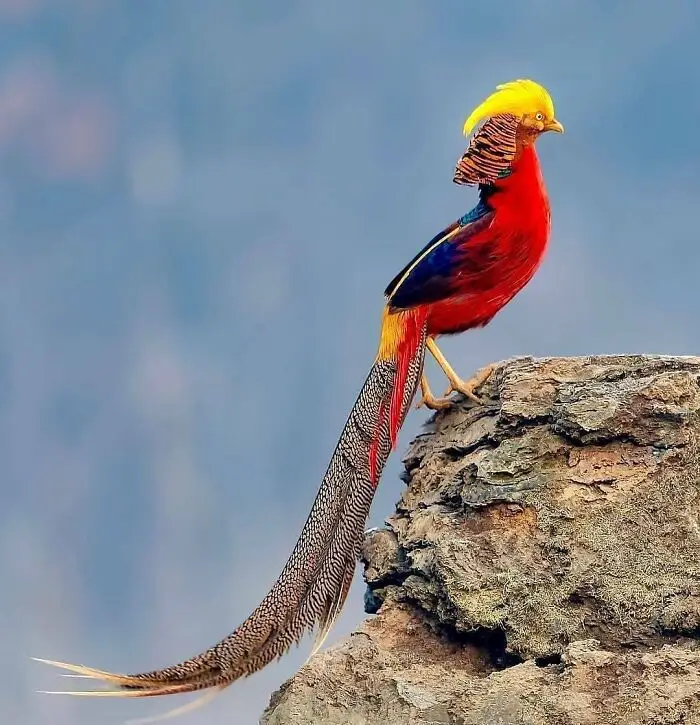
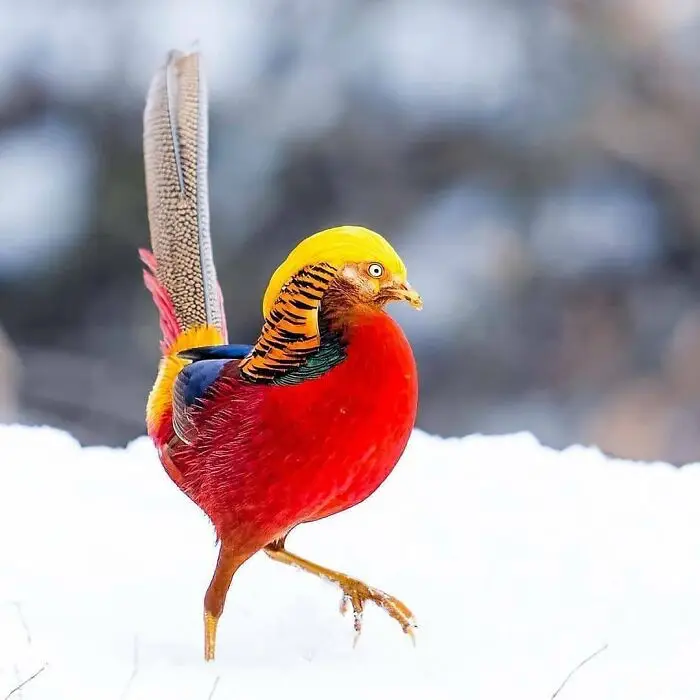
The Golden Pheasant (Chrysolophus pictus), also known as the Chinese Pheasant, is a spectacular gamebird native to the mountainous forests of western and central China. Renowned for its dazzling, multi-colored plumage, it is widely considered one of the most breathtakingly beautiful birds in the world.
The adult male is an absolute explosion of color. He features a shimmering golden-yellow crest and lower back, a deep scarlet-red breast, a metallic green upper back, and deep blue wings. To top it off, his long tail is intricately mottled with cinnamon and black.
During the breeding season, the male woos females by spreading his striped orange-and-black neck feathers (called a "ruff" or "cape") all the way forward like a fan. When fully deployed, it covers his entire face except for his piercing yellow eye, looking remarkably like an ancient Egyptian pharaoh's headdress.
In stark contrast to the flamboyant males, female Golden Pheasants are incredibly modest. They wear a dull, mottled brown and buff plumage designed to help them blend completely into the forest floor while incubating their eggs and hiding from predators.
Despite their neon colors, wild Golden Pheasants are notoriously difficult to spot in their native habitats. They are shy, solitary birds that spend most of their time foraging on the dark, dense floors of coniferous and bamboo forests, rarely flying unless they are suddenly startled.
While native to China, their unmatched beauty made them incredibly popular in private collections and aviaries worldwide. Escaped birds have successfully established wild, self-sustaining populations in several countries, including the United Kingdom, Germany, and parts of the Americas.
Report
13points
#35 Ruby-Crowned Kinglet
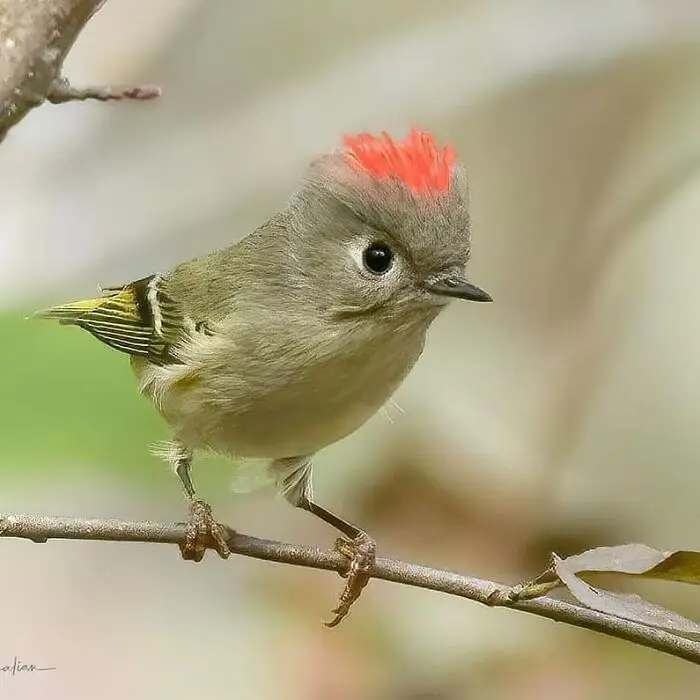
The Ruby-crowned Kinglet (Corthylio calendula) is a tiny, extraordinarily energetic songbird native to North America. Breeding in the dense boreal forests of Canada and Alaska, as well as high-elevation western mountains, these hyperactive dynamos migrate south for the winter, populating woodlands, suburbs, and brushy thickets across the United States and Mexico.
Most of the time, their appearance is rather plain and understated. They possess a plump, olive-green body, a pale underbelly, and a distinct, unbroken white eye-ring that gives them a permanently surprised expression. Their true namesake—a brilliant, ruby-red crown patch found exclusively on the males—is usually kept completely flat and hidden beneath their olive head feathers. The male only flashes this fiery streak when he is highly agitated, defending his territory, or trying to impress a female.
They are famously known as the restless spirits of the canopy. Kinglets almost never sit still; they spend their days constantly flitting from twig to twig, rapidly flicking their wings in a nervous, signature twitch. This frantic energy serves a purpose: they are highly agile insectivores, frequently hovering at the tips of branches to glean tiny insects, spiders, and insect eggs from the undersides of leaves, or executing quick aerial loop-de-loops to snap up gnats mid-air.
Their nesting biology is an impressive feat of insulation and engineering. Tucked safely high up in the dense needles of a conifer tree—often a spruce or fir—the female weaves a deep, elastic cup-shaped nest out of moss, lichens, bark strips, and spider silk. Because these birds lay exceptionally large clutches (sometimes up to 12 eggs in a single nest), the elastic walls stretch to accommodate the growing family, which is kept cozy by a thick inner lining of soft animal fur and feathers.
Despite weighing barely more than a nickel, the Ruby-crowned Kinglet possesses a astonishingly powerful voice. Their song is a remarkable vocal paradox: it begins with a few faint, ultra-high-pitched whistles, transitions into a low chattering, and then erupts into a surprisingly loud, rich, and rolling terminal trill that can easily be heard from hundreds of feet away. It is one of the loudest songs in the forest relative to the bird's miniature body size.
Beyond their biological grit, their seasonal movements make them a highly anticipated sign of the changing seasons for birdwatchers across North America. Often traveling alongside mixed-species winter flocks of chickadees, nuthatches, and warblers, their frantic wing-flicking and sudden, explosive bursts of song bring a delightful, spirited energy to the quiet autumn and winter woods.
Report
13points
#36 Western Whistler
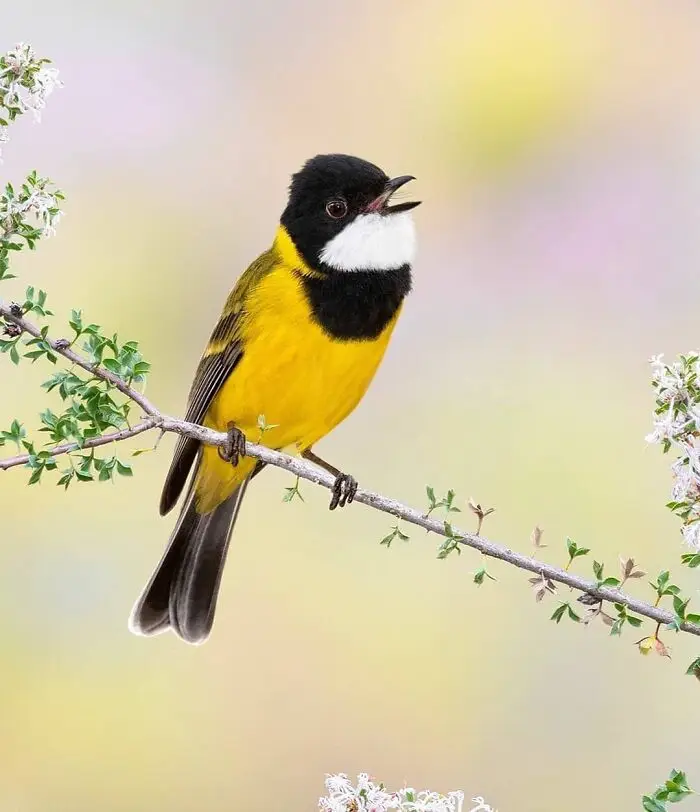
The Western Whistler (Pachycephala fuliginosa), previously recognized as a subspecies of the Golden Whistler, is a small, stocky songbird native to the woodlands, mallee, and forests of southern and western Australia. True to its name, it is celebrated for its loud, musical voice and beautiful plumage.
The adult male is an absolute standout. He sports a deep black head, a crisp white throat patch, and a striking black band across his chest that opens up to a brilliant, glowing golden-yellow belly and nape. Females are entirely different, wearing a modest, well-camouflaged palette of grey and olive-brown.
Whistlers get their name from their incredibly rich, powerful vocalizations. The male sings a series of sweet, ringing whistles that build up to an explosive, energetic finish that sounds almost like a sharp whip crack.
These birds are famous for a behavior called "thunder-clapping." If a loud, sudden noise echoes through the forest—like a clap of thunder, a branch breaking, or even a car door slamming—the male Western Whistler will immediately burst into song in response.
They are primarily insectivores, feeding on beetles, caterpillars, spiders, and small bugs. Instead of darting around hyperactively like flycatchers, they are methodical hunters. They sit completely still on a branch, scanning the surrounding bark and leaves, before making a sudden pounce to pluck their prey.
Nesting pairs work together to construct a neat, cup-shaped nest out of coarse grass, thin twigs, and bark strips. They usually tuck it away safely in the vertical fork of a small tree or a dense shrub, where the female will lay a small clutch of speckled eggs.
Report
13points
#39 Red-Headed Tit
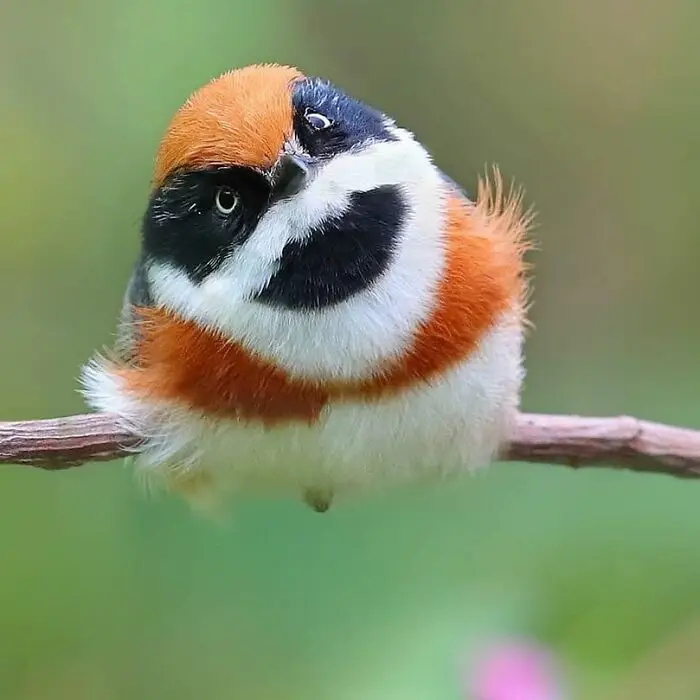
The Red-Headed Tit (Aegithalos concinnus), commonly known as the Black-Throated Bushtit, is a tiny, exceptionally cute songbird found across the Himalayas, southern China, and parts of Southeast Asia. Weighing less than a single sheet of paper, this little bird is packed with a mountain of energy and striking patterns.
Despite its small size, it has an incredibly bold facial pattern. It sports a bright reddish-orange (rufous) crown, a stark black "bandit mask" stretching across its eyes, a neat black bib on its throat, and a warm chestnut band across its chest.
Even though it is widely called a tit, it actually belongs to the Aegithalidae family (long-tailed tits or bushtits) rather than the true tit family (Paridae). This makes it a closer relative to the famous, fluffy "snow fairy" bird of Japan (the Shima Enaga) than to chickadees.
You will rarely find a Red-Headed Tit alone. Outside of the breeding season, they travel in highly active, tightly knit flocks of up to 40 birds. They move rapidly through the forest canopy, keeping in constant contact with each other through soft, high-pitched "tsip-tsip" calls.
They are incredibly agile foragers. The flock will systematically scour broadleaf forests and bamboo thickets for spiders and small insects. They easily hang upside down from the very tips of leaves and thin twigs to snatch up hidden prey.
Their nests are masterpieces of avian architecture. Working as a team, a breeding pair uses moss, lichens, and animal hair to weave a deep, stretchy, dome-shaped pocket. They bind the whole structure together using sticky spider silk, which allows the nest to expand naturally as the chicks grow bigger.
Report
13points
#40 Black-Naped Monarch
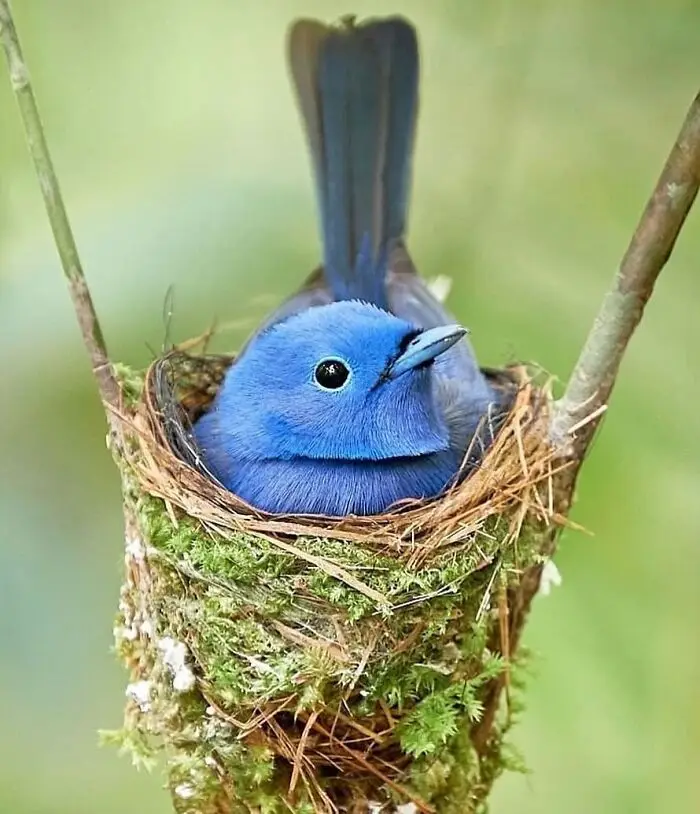
The Black-Naped Monarch (Hypothymis azurea) is a sleek, agile flycatcher native to the tropical forests of South and Southeast Asia. With its electric blue plumage and animated personality, this little bird looks like a tiny bolt of sapphire flashing through the forest understory.
The male is a brilliant azure blue with a crisp white belly. He gets his name from two sharp black markings: a small, velvety black patch on the back of his head (the nape) and a narrow, black "necklace" tracing across his throat. Females are much more understated, sporting a greyish-blue head with a soft olive-brown back and wings.
These birds are almost never still. They are highly active insectivores that hunt on the wing. They zip from branch to branch, suddenly darting into the air to snatch flies, moths, and mosquitoes right out of the sky with a sharp snap of their beaks.
When agitated or defending their territory, Black-Naped Monarchs will fan out their long tail feathers and cock them upward. They also slightly raise the feathers on the back of their head into a tiny, angular crest, giving them an incredibly intense, alert expression.
They build neat, deep, cup-shaped nests in the forks of slender tree branches. To keep the nest secure, they weave it using fine grass, bark shreds, and moss, completely wrapping the outside in thick layers of sticky spider silk to give it stability and camouflage.
Despite their small size (around 6 inches long), they are fiercely territorial. During the breeding season, pairs will boldly mob and drive away much larger birds, squirrels, or lizards that wander too close to their nesting site.
Report
13points


