





After covering famous still-life paintings, it was almost natural for us to write about the medium often utilized in the still-life genre. With watercolors, one may create nearly any genre of art, from vivid abstracts and crisp photorealist portraits to anatomical sketches and urban landscapes. Hence, it is no wonder some of the most famous artists utilized the watercolor technique in numerous, now considered some of the most famous paintings in art history.
Among the many exquisite watercolor paintings by famous artists are works that date back to the Renaissance. Watercolors were first employed by painters like Albrecht Dürer for new uses such as sketches, impromptu drawings, and making replicas.
In Britain, as "landscape" was finally accepted as an appropriate subject to paint, watercolor paintings were commonly employed to document journeys and adventures. Still, it wasn’t until the 19th century that watercolors finally began to climb the status ladder, and some of the most famous watercolor paintings started to materialize. Not by themselves, of course, but at the hands of some of the greatest artistic geniuses.
Below, we’ve compiled a list of the most famous watercolor paintings of all time. If a painting caught your attention, make sure to give it an upvote! Also, if you have anything to add about a particular painting or perhaps a famous watercolor painter behind it, leave a comment, as we are also stunned to learn more about the history of art and watercolor!
#21 Clare Hall And King's College Chapel, Cambridge, From The Banks Of The River Cam By J. M. W. Turner
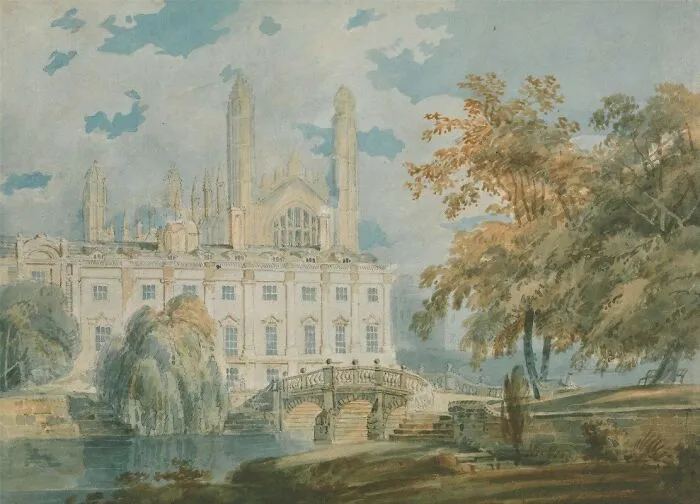
Artist: Joseph Mallord William Turner | Year (completed): 1793 | Period: Romanticism
Jacob Mallord William Turner left behind more than 2000 remarkable watercolors. While initially, Turner employed watercolors for his early commercial works, later, he utilized watercolors to document his travels. Many of his watercolor works, as opposed to accurately representing, capture the spirit of particular locations. This was one of the numerous factors that led to him becoming one of Britain's most well-known and adored watercolorists.
Report
16points
#22 Man Reading (Nicola d’Inverno) By John Singer Sargent
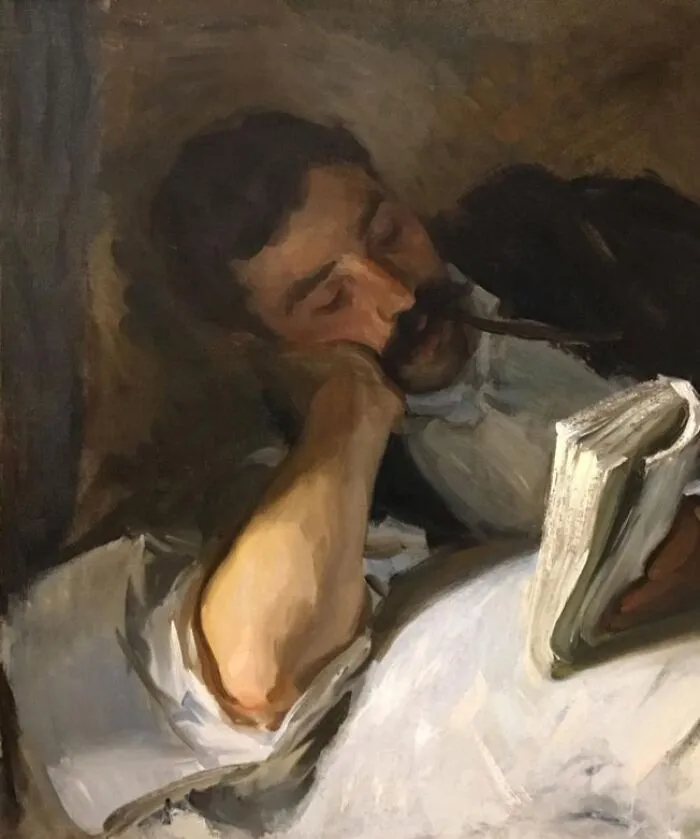
Artist: John Singer Sargent | Year (completed): 1879 | Period: Realism
Sargent, raised by American expatriate parents in Florence, started formal schooling there in the late 1860s. He traveled to Florence for his studies in the early 1870s, and by the middle of the decade, he was in Paris. He was in high demand among the affluent by the turn of the century and was the top portrait painter on the Continent. Most likely, Nicola d'Inverno, the artist's manservant who worked for him from the 1890s until 1917, is the subject of this sketch of a man reading.
Report
15points
#23 Picking Wildflowers By Rhoda Holmes Nicholls
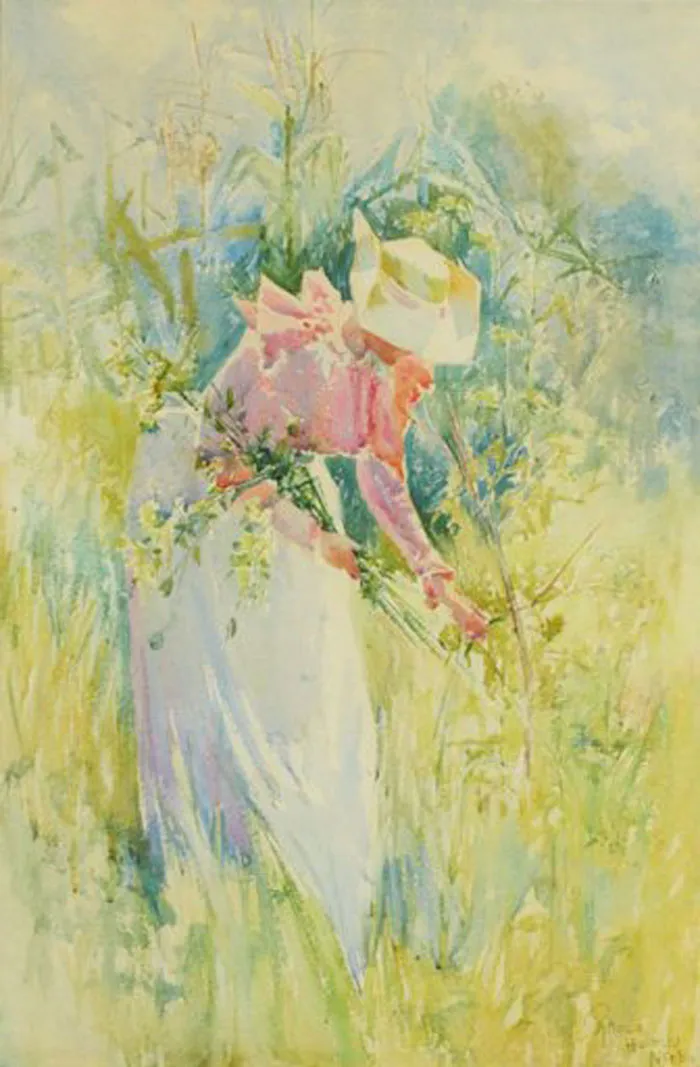
Artist: Rhoda Holmes Nicholls | Year (completed): 1900 | Period: Impressionism
Despite being little known today, Rhoda Holmes Nicholls was a prominent and successful artist in her day. The influence of Winslow Homer and James McNeill Whistler can be seen in her use of transparent washes and swift, impressionistic brushstrokes. Women and flowers were frequently depicted together in late nineteenth-century American art as a reminder of the transient nature of physical beauty. But in this interpretation, vivid color and brisk brushwork capture the scene's inherent liveliness. Instead of cultivating flowers in a garden, a strong female figure bends to harvest flowers that grow wild in the countryside. The figure's hat, which reflects the sunlight and draws attention, seems to shield her from the viewer's gaze.
Report
15points
#24 The Green Hill By Winslow Homer
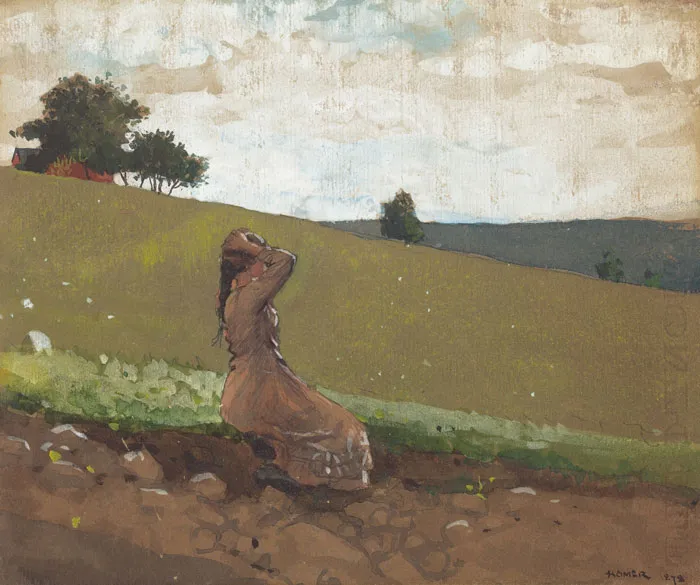
Artist: Winslow Homer | Year (completed): 1878 | Movement: Realism, American Realism
One of the most well-known painters of American outdoor settings is Winslow Homer. After returning from the war, where he created the illustrations for Harper's Weekly, he traveled to Europe and then spent the summer of 1873 in Gloucester, Massachusetts. He started working in watercolor there, which would later become his main medium. From depictions of wilderness guides to rural African American life in the years following the Civil War to images of children playing, Homer's outdoor genre pieces portrayed a diverse vision of America. After relocating to a remote area in coastal Maine, the eternal conflict between man and nature came to dominate his works.
Report
15points
#25 Flower Pots By Paul Cézanne
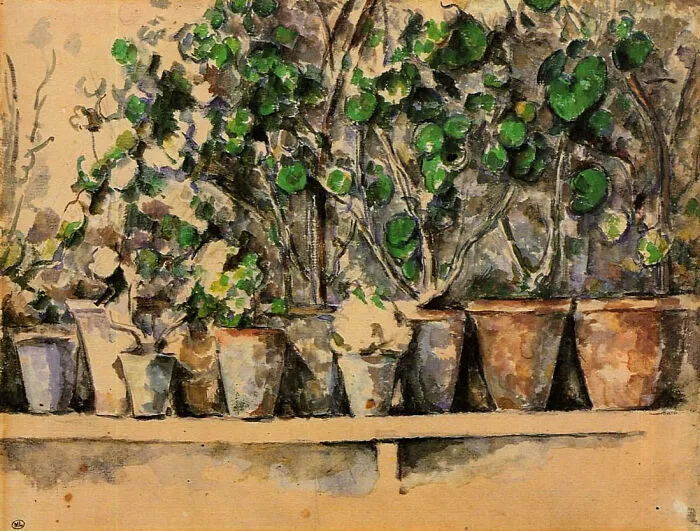
Artist: Paul Cézanne | Year (completed): 1887 | Period: Post-Impressionism
Flowering plants and freshly cut bouquets, which were prone to wilting under his prolonged gaze, were rarely painted by Cézanne. Only three of his still lifes and a small set of exquisite watercolors created over a 20-year period featured potted plants.
Report
15points
#26 Angel Of The Revelation By William Blake
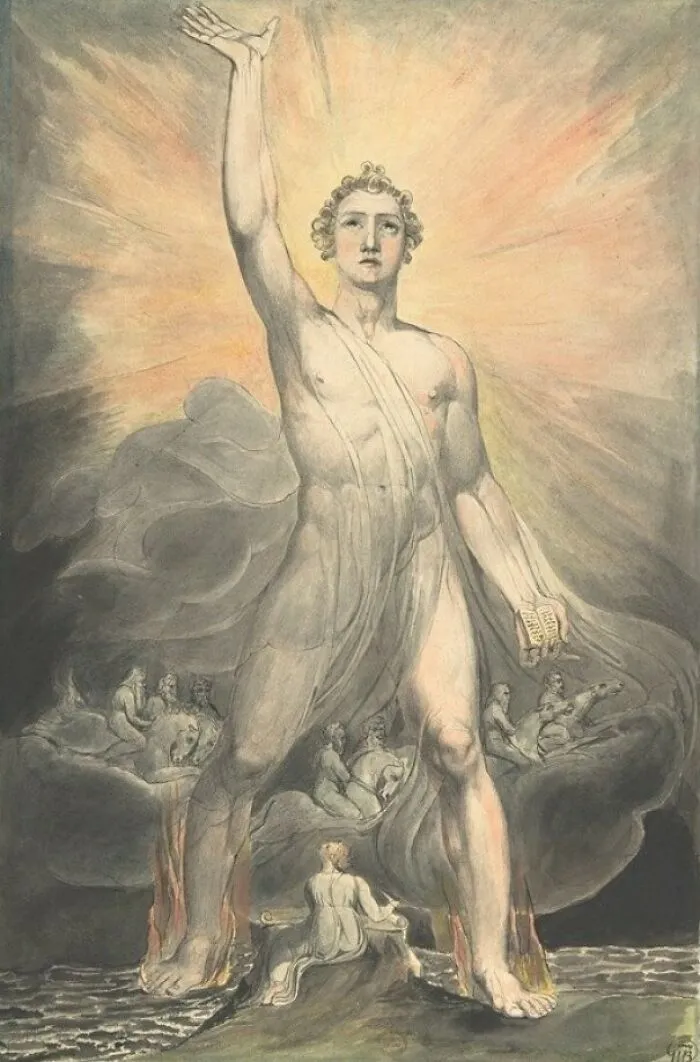
Artist: William Blake | Year (completed): 1805 | Period: Romanticism
This piece is one of a collection of eighty watercolors on biblical subjects that Blake created for Thomas Butts, a significant patron of his. It portrays the vision that John, the Book of Revelation's author, had in the opening verse of chapter 10. On the island of Patmos, the author is standing with a pen in hand and is gazing at a "mighty angel... clothed with a cloud... a rainbow was upon his head, and his face was as it were the sun, and his feet as pillars of fire." The Colossus of Rhodes was used as inspiration for the artist's depiction of the angel's water-spanning pose. He imagined the seven thunders mentioned in the text as horsemen galloping through the clouds.
Report
15points
#27 Newton By William Blake
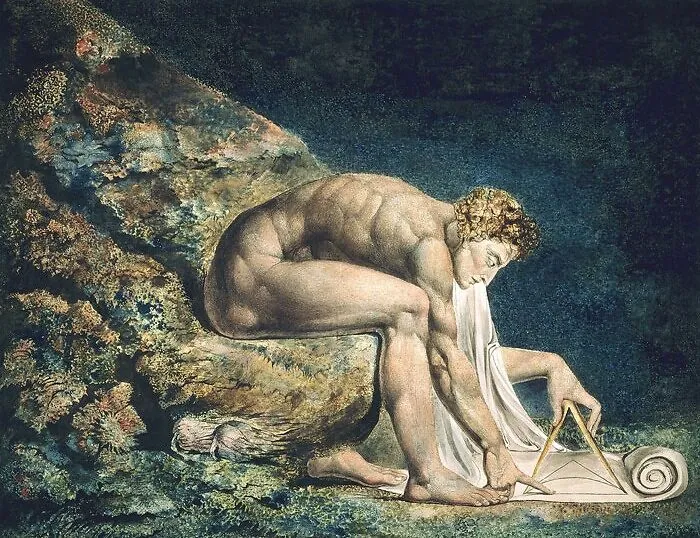
Artist: William Blake | Year (completed): 1795 | Period: Romanticism
In the illustration, Isaac Newton is depicted as naked and seated on a rock in the middle of a circle he made with his compass. Blake used the example to show how the scientist's concerns about God were caused by his inability to leave the circle of his ideas and fantasies. The compass stands in for a tool that restricts creative freedom. The boulder covered in algae and other living things represents nature, where human inventions can be seen for what they truly are. Blake viewed Newton as a misguided hero preoccupied with the wrong things in life. He once said, "Art is the tree of life, science is the tree of death," challenging Newton and the other left-brained, linear thinkers of his time who were preoccupied with reason above all else.
Report
15points
#28 The Fighting Temeraire By J. M. W. Turner
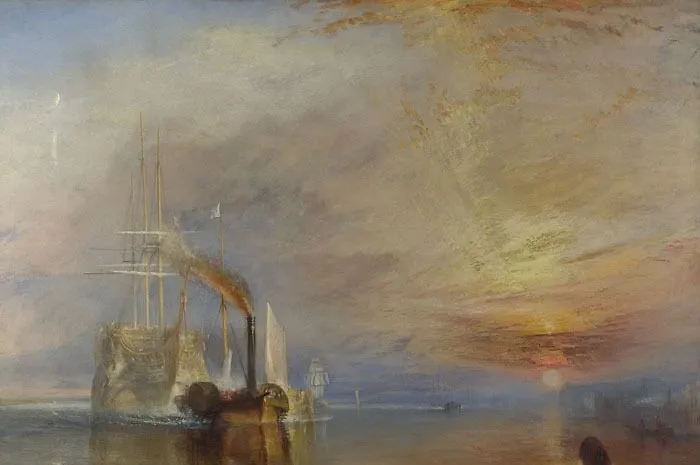
Artist: Joseph Mallord William Turner | Year (completed): 1839 | Period: Romanticism
For many Britons, Temeraire served as both a reminder of Britain's lengthy history of military prowess and a tangible link to the veterans of the Napoleonic Wars. In this watercolor, Turner honors Temeraire's valiant past while also illustrating a technical advancement that has already started to impact modern life. Positioned close to the canvas' left side, the boat is painted in white, grey, and brown tones, giving it a ghostly appearance. A tiny black tugboat, whose steam engine is apparently capable of handling its larger counterpart, pulls the mighty ship forward. In this watercolor, Turner illustrated how rapidly tradition and history were supplanted by the newfound steam engines of the Industrial Revolution.
Report
14points
#29 Tillington Church By John Constable
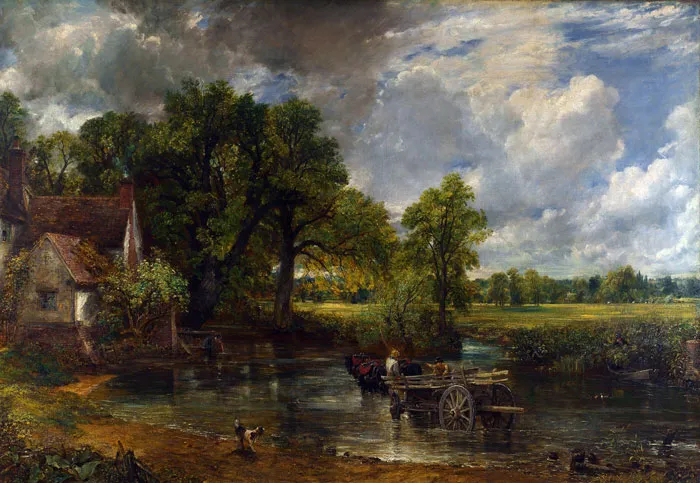
Artist: John Constable | Year (completed): 1834 | Period: Romanticism
John Constable's oil paintings are undoubtedly his best-known works. However, he started concentrating on watercolors in 1829, and his paintings' subjects were similar to those of his earlier oil sketches. Constable's expressive and lifelike method of capturing changes in the sky works well with watercolors. The artist could portray moody, emotional settings by using thicker brushes and more dense paints. Painted in the latter stages of Constable's life, this colorful watercolor depicts All Hallows Church in Tillington, West Sussex, recognizable by its characteristic domed spire.
Report
14points
#30 Two Boys Watching Schooners By Winslow Homer
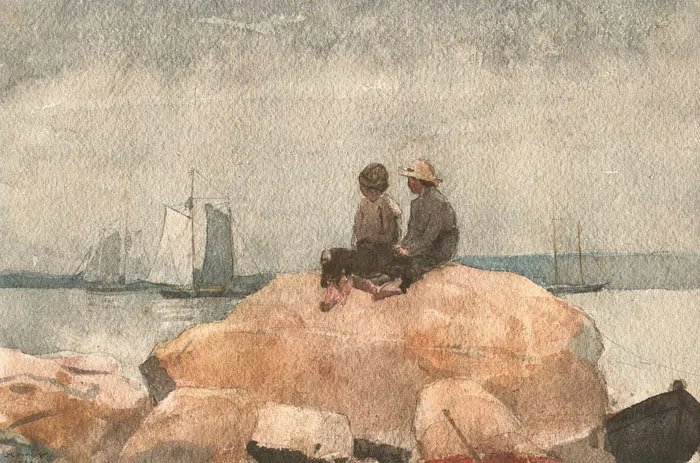
Artist: Winslow Homer | Year (completed): 1880 | Movement: Realism, American Realism
Two Boys Watching Schooners, created in 1880 during Homer's second visit to Gloucester, Massachusetts, depicts two boys perched atop a sizable rock from where they could observe the arrivals and departures of the fishing boats. The artist in this piece contrasted the warm tones of the figures and shore with the chilly blue tones of the port, sky, and schooners. In such a way, Homer stressed the psychological isolation of those waiting on land in anticipation of the safe return of those who relied on the sea to make a living.
Report
14points
#31 Roma By Rhoda Holmes Nicholls
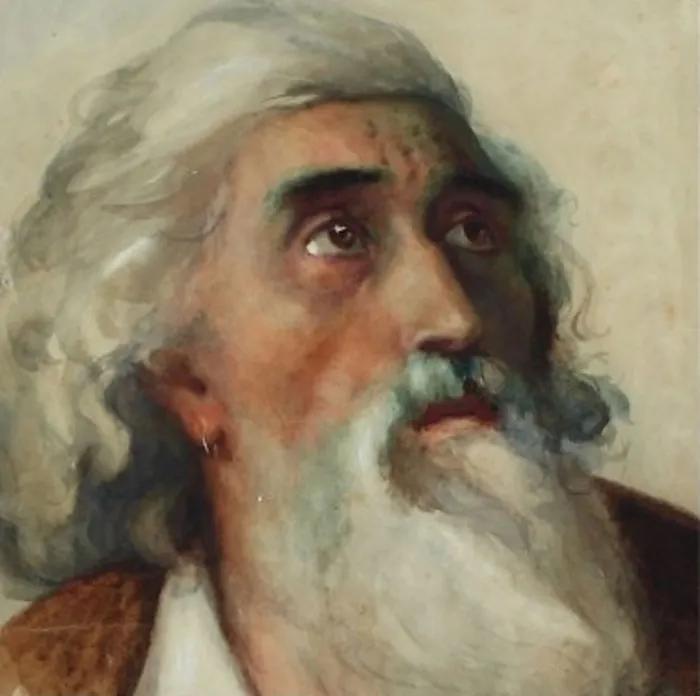
Artist: Rhoda Holmes Nicholls | Year (completed): 1880
Nicholls completed Roma (a study of a peasant man) in 1880. The painting shows a superb impressionist study of a peasant man. The image, which is believed to be one of the artist's earlier creations from when she was studying in Rome, has an almost angelic feel to it. The man’s grey hair, thick locks swept from his head, upward gaze through hazel brown eyes, ruddy complexion complementing his olive skin, and a long, thick white beard and mustache give the picture an almost angelic feel. He has earrings, so it's likely that the man is a Romany Gypsy.
Report
14points
#32 I Saw The Figure 5 In Gold By Charles Demuth
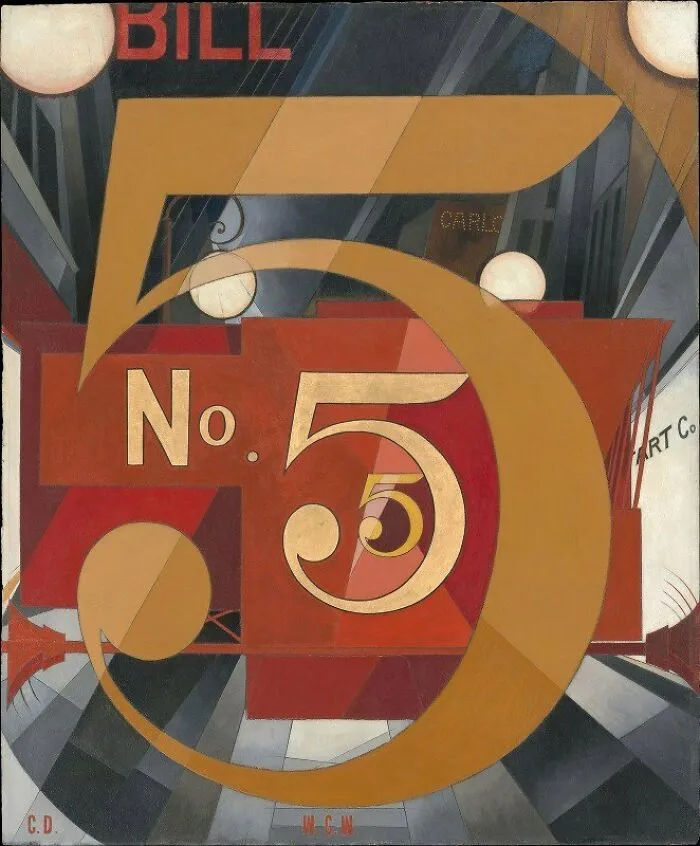
Artist: Charles Demuth | Year (completed): 1928 | Periods: Modernism, American modernism
Between 1924 and 1929, Demuth produced eight symbolic portraits as a tribute to contemporary American artists, writers, and performers. Despite not being a physical likeness, Demuth used imagery from his buddy William Carlos Williams' poem "The Great Figure," which alludes to the sounds and sights of a fire engine going down the street, to create this painting of him. The crossing lines, repeated "5," round forms of the numbers, lights, street lighting, and blasting sirens of the red fire engine give the picture a vivid, metropolitan vitality.
Report
13points
#33 Sorting The Mail By Reginald Marsh
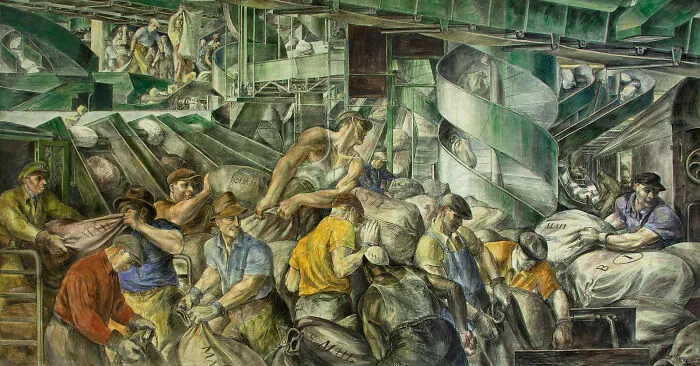
Artist: Reginald Marsh | Year (completed): 1936
New York City was thriving in the 1930s. Skyscrapers and the expansion of the subway system all rose throughout the previous ten years. The city served as a significant hub for both domestic and international shipping. Both its central post office and maritime port were among the busiest in the country. This thriving postal hub inspired Reginald Marsh’s murals, his first endeavor utilizing the fresco technique. In the mural's lower section, we can observe men with muscular physiques that exude heroism and power lifting and dragging big mailbags. The mechanism that transports the mail is depicted in the upper part of the fresco, which is painted in white, black, and green hues. Marsh's complex composition and particular approach successfully convey both the importance of workers and the mechanization of systems.
Report
13points
#34 Leaves In A Green Pot By Paul Cézanne
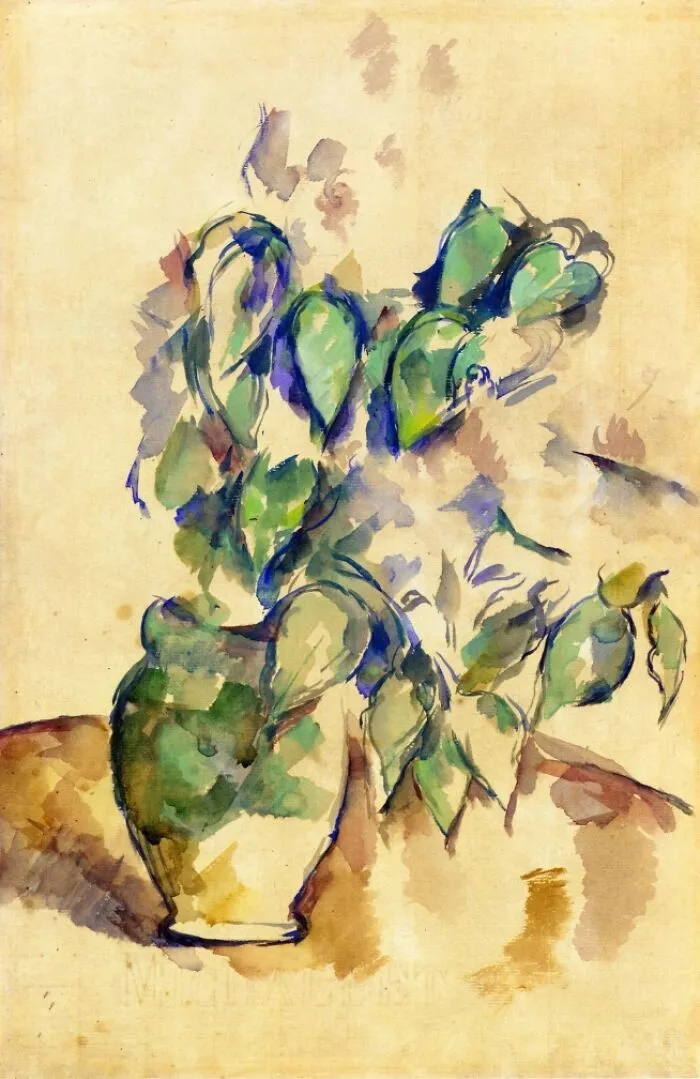
Artist: Paul Cézanne | Year (completed): 1902 | Period: Post-Impressionism
Cezanne eventually reduced his color palette to green, blue, and a few warm earth tones and began using the sparse and delicate watercolor technique as an exercise in economy. What started as a practice turned into a joy, and several of the paintings on show were obviously created for their own sake. However, they still have the signs of their ancestry. The white paper dominates, and the eye jumps from one complex of color to another, forgetting that there is nothing but whiteness in between.
Report
13points
#35 Beach With People Walking And Boats By Vincent Van Gogh
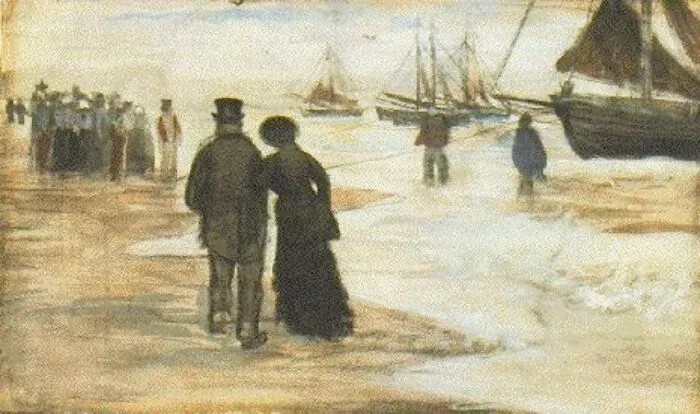
Artist: Vincent Van Gogh | Year (completed): 1882 | Period: Post-Impressionism
Yellows, oranges, and greys are prevalent in this watercolor Vincent Van Gogh painted in 1882. Around that time, Van Gogh received a commission offer to paint 20 scenes of The Hague; however, the now-classic works he completed by the end of May were rejected. Cornelis Marinus — the owner of a renowned gallery of contemporary art in Amsterdam — made a second commission offer, this time detailing the topic in great detail, but was again dissatisfied with the outcome.
Report
13points
#36 The Angels Hovering Over The Body Of Christ In The Sepulchre By William Blake
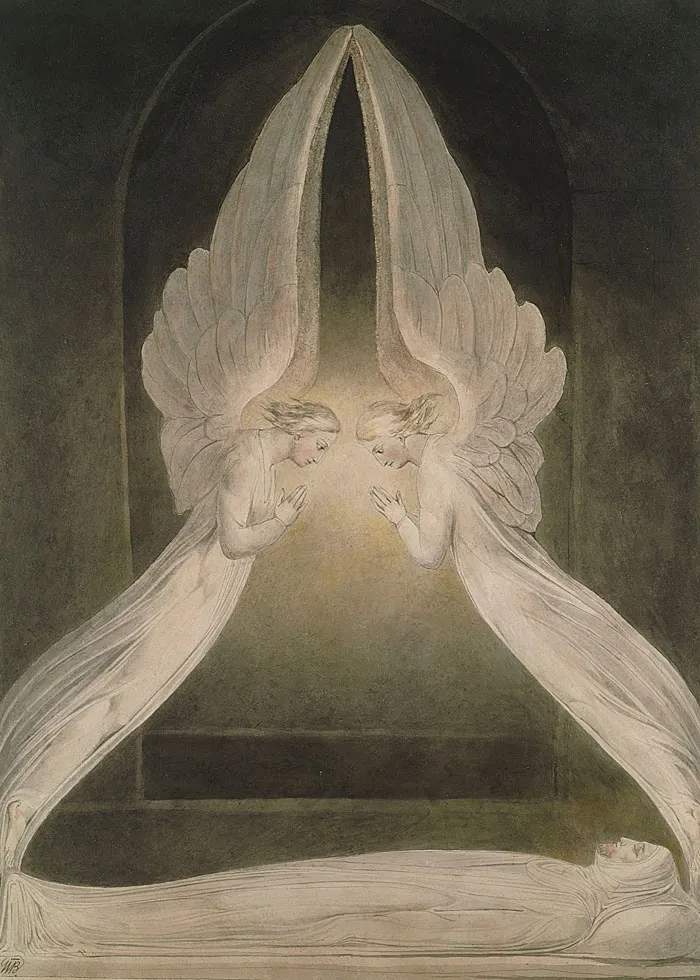
Artist: William Blake | Year (completed): 1805 | Period: Romanticism
This watercolor shows the body of Jesus Christ, which was laid to rest in a cave (also known as his tomb or sepulchre) after he was crucified. Blake looked for a description in the Old Testament's Book of Exodus to inspire his picture. When the prophet Moses is by himself on Mount Sinai, God commands him to advise the Israelites to construct a "mercy seat" surrounded by gold cherubim (angels). This graphic interpretation of the biblical text is unusual and striking. The unusual lighting and colors employed here evoke a feeling of the scene's mystique.
13points
#37 Church Pew With Worshippers By Vincent Van Gogh
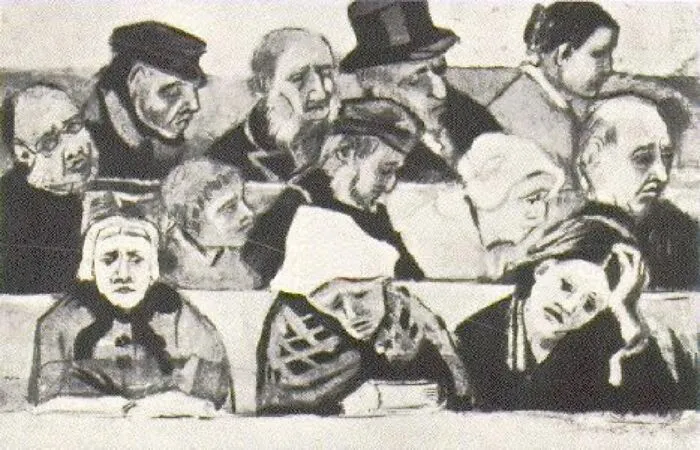
Artist: Vincent Van Gogh | Year (completed): 1882 | Period: Post-Impressionism
Vincent van Gogh painted a watercolor titled Church Pew with Worshippers between September and October 1882. In a letter to his brother Theo, Van Gogh mentions the artwork and includes a sketch. Each person in this picture, seated in a church pew, displays a distinct look. This watercolor reminds us that Van Gogh always had a strong connection to regular people.
Report
12points
#38 Alfred Diston By Elizabeth Murray
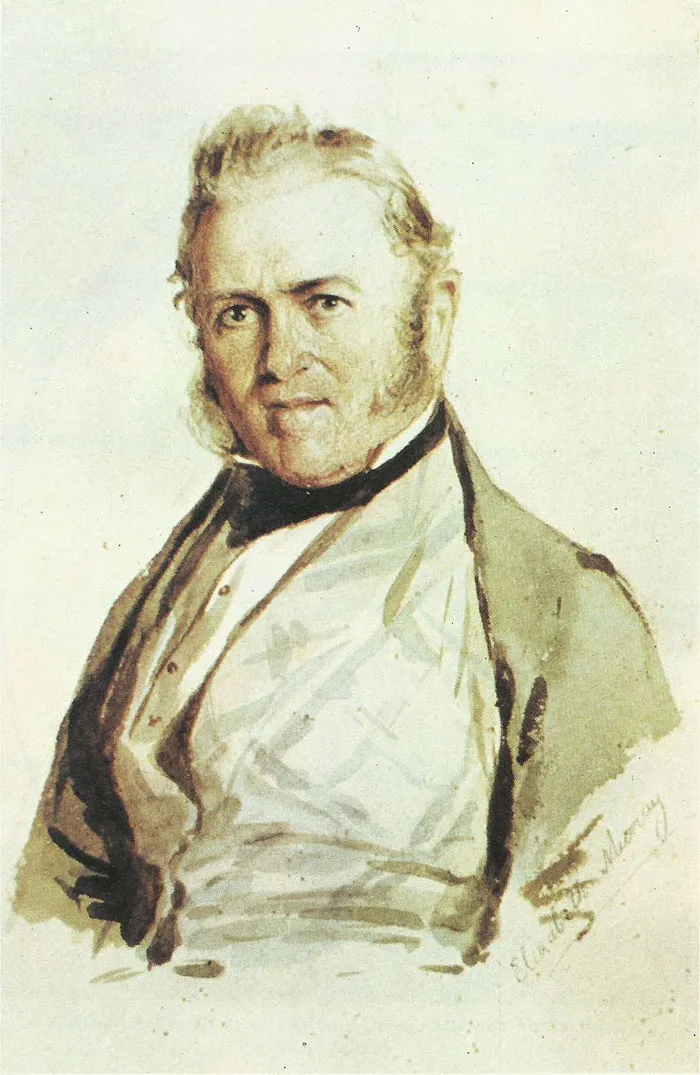
Artist: Elizabeth Murray | Year (completed): 1858 | Period: Neo-Expressionism
Alfred Diston, a friend of Murray, is depicted by her in a very lifelike manner, and his expression perfectly captures his personality. Alfred Diston was a well-educated young man with a strong grasp of several languages. He had a lovely personality and was good at making friends. He is positioned with his face to the viewer, and his body is slightly turned to the left. Murray primarily used chestnut and delicate hues like blue and yellow in the painting.
Report
12points
#39 Portrait Of Peasant Woman By Elizabeth Murray
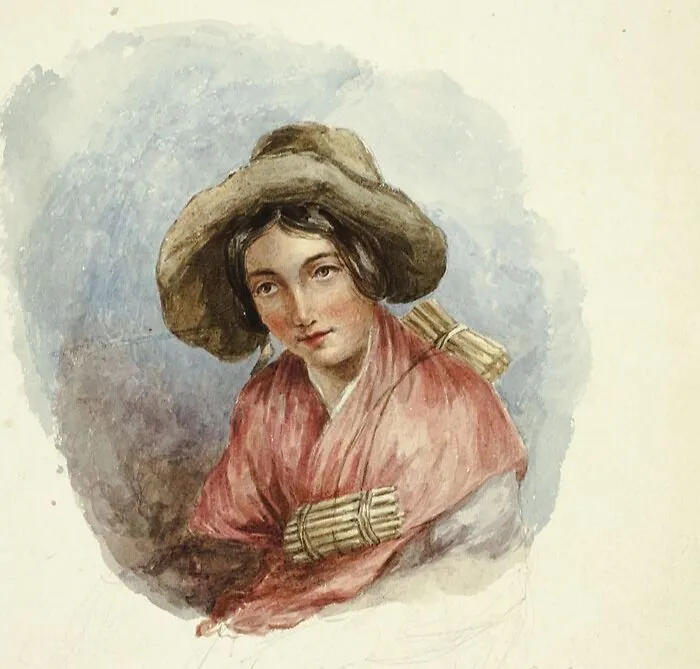
Artist: Elizabeth Murray | Year (completed): 1840 | Period: Neo-Expressionism
Particularly regarding gender, Murray drew portraits in the same manner. In some of her pieces, Murray creates similarities between up to eight distinct characters; in this way, she varies from her father, who employed more subjects in his paintings. Still, her paintings include hues and tones resembling her father's.
Report
12points
#40 Stonehenge By John Constable
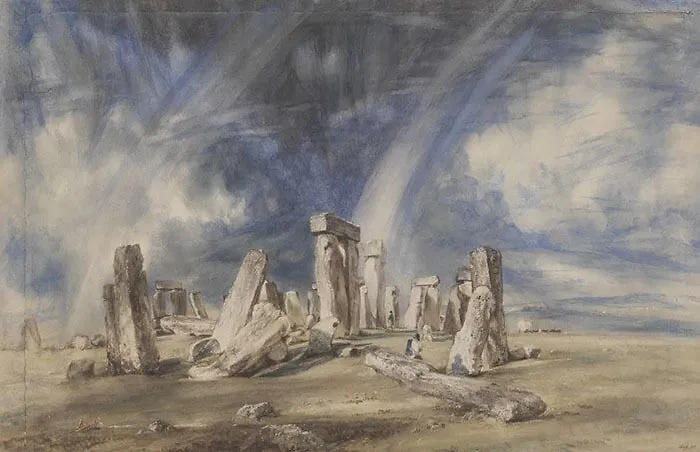
Artist: John Constable | Year (completed): 1835 | Period: Romanticism
The idea of a landscape was revolutionized by the English traditional landscape painter John Constable. Even today, beginners in the watercolors field continue to find inspiration in Constable's many well-known works.
12points
