




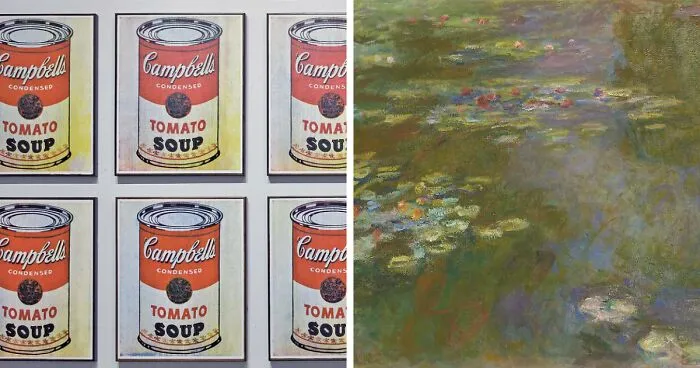

Those unfamiliar with art history may wonder, what makes a painting still life? Well, a still-life painting may feature a variety of items arranged in a specific (or disorganized) way. Sure, inanimate object layouts have been depicted by artists since the beginning of time. In fact, the interiors of ancient Egyptian tombs frequently featured still-life paintings!
However, it wasn’t until Dutch and Flemish artists captured elaborate arrangements of everyday household objects in the late 16th century that still-life paintings emerged as a separate genre. It was the collective impact of the many artisans of the time who started producing artworks that today are regarded as the most famous still-life paintings in art history.
Thanks to the pioneers of still life, the genre quickly took off and gained popularity in both Europe and the US. At the beginning of the 18th century, still-life paintings as an independent genre also appeared in Russia. The 17th to 19th century was arguably the time when some of the most famous still-life paintings in the genre were created.
Whether a fruit still-life painting or a flower still-life painting, with still life, each artist was able to present a unique interpretation of the objective arrangement of multiple objects. Inspired by the novelty, some of the most famous paintings emerged from the many ateliers, inspiring both current generations of the time and the generations of artists that followed.
Below, we’ve compiled the many still-life paintings by famous artists that formed and shaped the genre and are now regarded as some of the most famous paintings in history. Any famous still-life painting that particularly caught your attention? Make sure to give it an upvote. Do you have anything else to add about the artwork or the genre? Share your thoughts in the comments!
#41 Wood Tankard And Metal Pitcher By Paul Gauguin
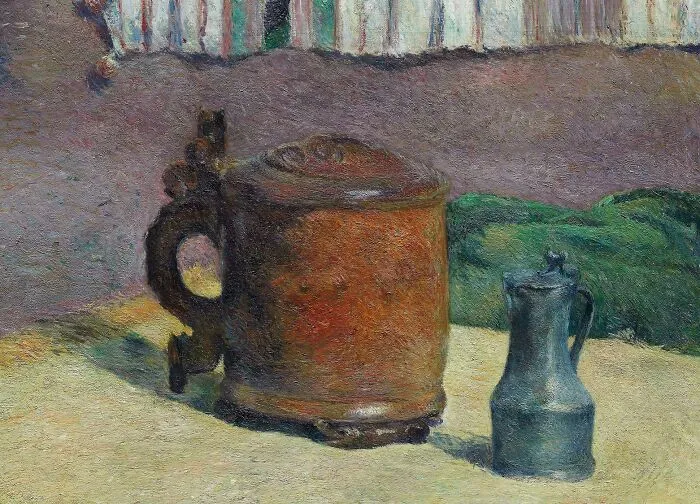
Artist: Paul Gauguin | Year (completed): 1880 | Movement: Post-Impressionism
The famous still-life painter Vincent van Gogh and the painter Paul Gaugin shared many characteristics, including similar painting styles. Many of Vincent van Gogh's works share the same color palette as Gauguin's Wood Tankard with Metal Pitcher. Critics and art lovers alike have long lauded this 1880 work for its use of diametrically opposed components. The artist painted the metal jug and the wood flask so that each object's distinctive way of reflecting light is brought to the viewer's full attention.
Report
8points
#42 Still Life With A Pewter Jug And Pink Statuette By Anri Matisas
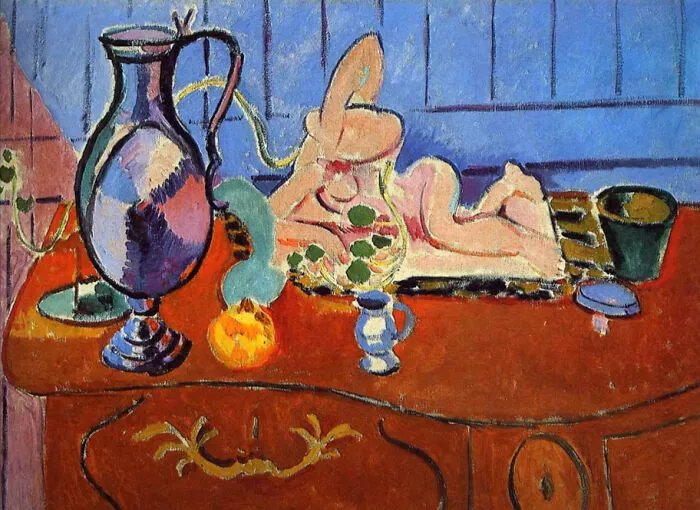
Artist: Anri Matisas | Year (completed): 1910 | Period: Expressionism
The vividly colored objects on what appears to be a cupboard are depicted in this 1910 piece. This picture comes from Matisse's Fauvist period when he became known for fusing extraordinarily vivid hues with a linear painting style. The painting features the recognizable blue walls that are prominent in many of Matisse's works since they represent the general aesthetic of his home in the suburbs of Paris. As demonstrated by Matisse in this artwork, Fauvism was a painting style that placed emphasis on bringing out the brilliant colors within each individual object.
Report
8points
#43 The Basket Of Apples By Paul Cézanne
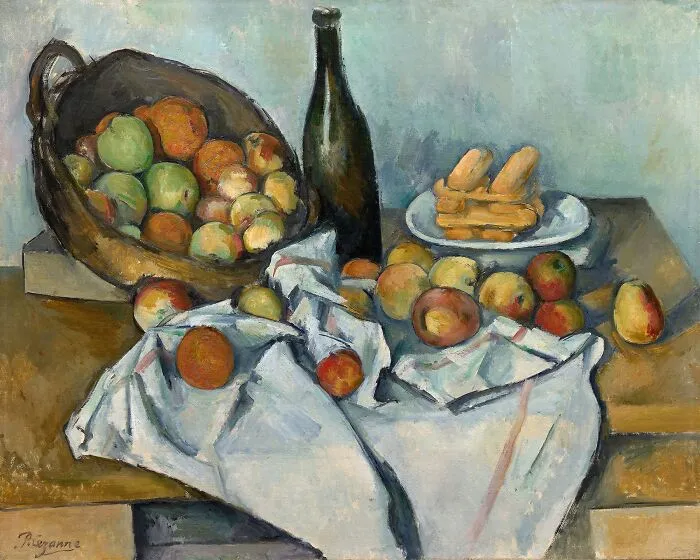
Artist: Paul Cézanne | Year (completed): 1893 | Periods: Impressionism, Post-Impressionism
One of the most significant artists of the 19th century was undoubtedly Paul Cezanne. As the movement began, he eagerly joined Pisaro, Renoir, and Monet in producing outstanding Impressionist landscape and portrait paintings. During the remainder of the 1870s, Cezanne stuck to the Impressionist style. Still, Cezanne's work was never truly Impressionist; it was always something else. Cezanne put a lot of effort into examining how naturally existing geometric shapes relate to one another. In his mind, any natural element may be reduced to its most basic geometric form.
Report
7points
#44 Natura Morta By Giorgio Morandi
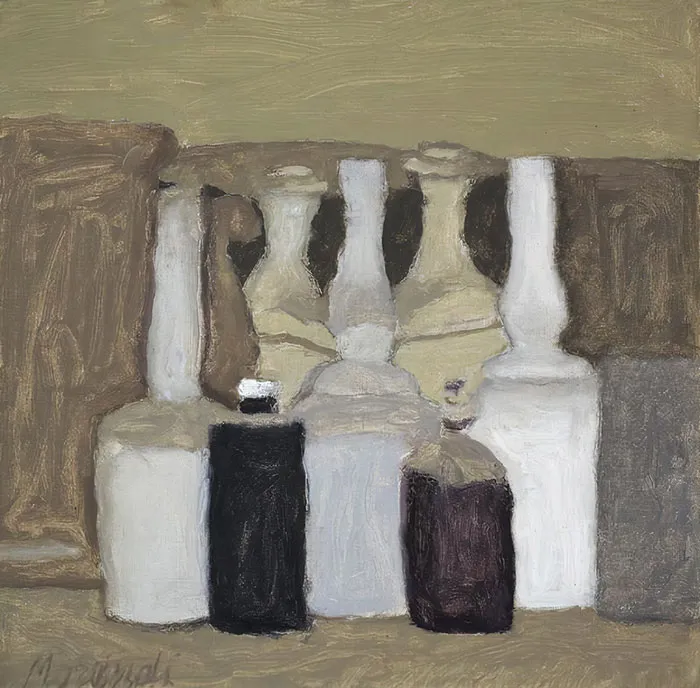
Artist: Giorgio Morandi | Year (completed): 1951 | Period: Magical Realism
Morandi's signature style was one of peace and seclusion. By 1920, he had moved away from di Chirico and fully immersed himself in his distinctive style. In this art piece, he eschewed harsh shadows and hard, angular lines in favor of gentler, ambient lighting. The absence of color in this piece focuses the viewer's attention on the shapes of the individual objects rather than their natural colors. The fact that Morandi's artwork defied categorization as a still life painting and seemed to belong to an entirely different genre has lured the attention of many critics.
Report
4points
