





Those unfamiliar with art history may wonder, what makes a painting still life? Well, a still-life painting may feature a variety of items arranged in a specific (or disorganized) way. Sure, inanimate object layouts have been depicted by artists since the beginning of time. In fact, the interiors of ancient Egyptian tombs frequently featured still-life paintings!
However, it wasn’t until Dutch and Flemish artists captured elaborate arrangements of everyday household objects in the late 16th century that still-life paintings emerged as a separate genre. It was the collective impact of the many artisans of the time who started producing artworks that today are regarded as the most famous still-life paintings in art history.
Thanks to the pioneers of still life, the genre quickly took off and gained popularity in both Europe and the US. At the beginning of the 18th century, still-life paintings as an independent genre also appeared in Russia. The 17th to 19th century was arguably the time when some of the most famous still-life paintings in the genre were created.
Whether a fruit still-life painting or a flower still-life painting, with still life, each artist was able to present a unique interpretation of the objective arrangement of multiple objects. Inspired by the novelty, some of the most famous paintings emerged from the many ateliers, inspiring both current generations of the time and the generations of artists that followed.
Below, we’ve compiled the many still-life paintings by famous artists that formed and shaped the genre and are now regarded as some of the most famous paintings in history. Any famous still-life painting that particularly caught your attention? Make sure to give it an upvote. Do you have anything else to add about the artwork or the genre? Share your thoughts in the comments!
#21 Still Life With Lilacs By Aristarkh Lentulov
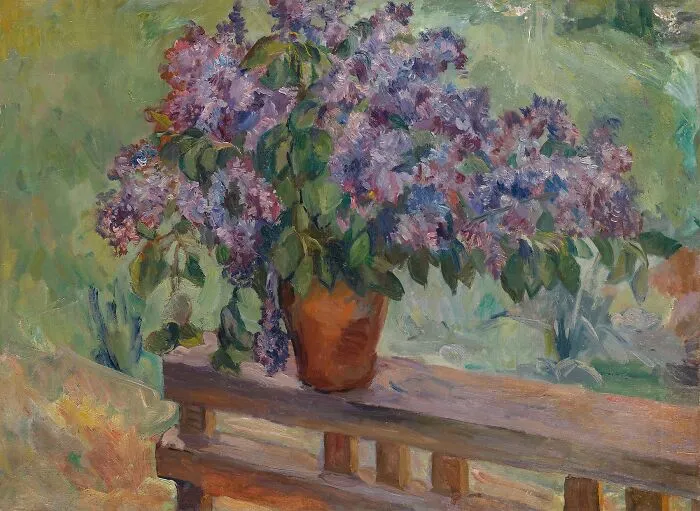
Artist: Aristarkh Lentulov | Year (completed): 1920 | Movements: Post-Impressionism, Fauvism, Cubism, Orphism, Cubo-Futurism
The works of the renowned Russian painter Aristarkh Lentulov from the 1920s stand out for their delicate style and restrained use of painting techniques. By then, the artist had long since moved on from the groundbreaking color and texture explorations that earned him notoriety as a "Russian Yarila" (Sun god) and membership in the legendary Jack of Diamonds group. Still Life with Lilacs demonstrates Lentulov's pursuit of picturesqueness and self-contained compositional structure. This piece by the artist is a remarkable departure from his earlier work while still retaining a high level of creative merit.
Report
13points
#22 Still Life With Apples, Pears, Lemons And Grapes By Vincent Van Gogh
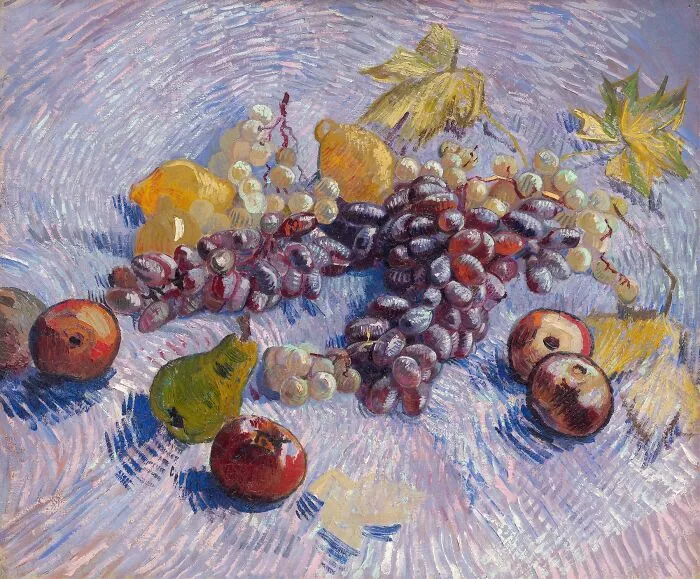
Artist: Vincent van Gogh | Year (completed): 1887 | Period: Post-Impressionism
The artist Vincent van Gogh painted a series of similar canvases in the fall of 1887 that each featured seasonal fruit. Compared to his earlier works, he used a simpler palette, more bright shades, and a thicker, broader paint application in these paintings. Here, he looked at how complementary hues, such as red and green, blue and orange, and yellow and purple, may be used to increase chromatic intensity. The pulsating pattern of brushstrokes that defines the tablecloth and forms a force field around the fruit heightens the impact of these color contrasts.
Report
13points
#23 Flowers In A Glass Vase By Rachel Ruysch
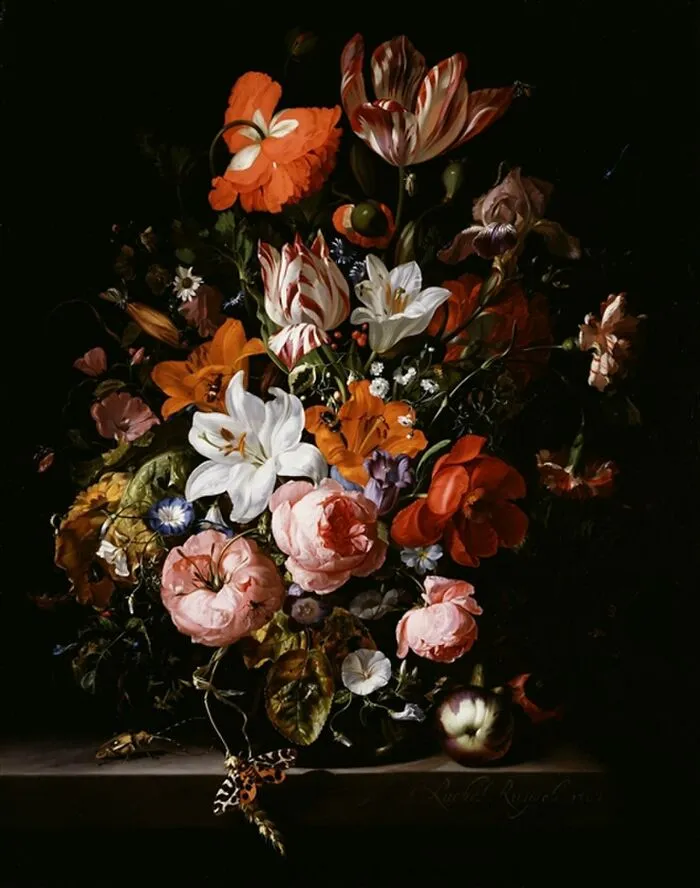
Artist: Rachel Ruysch | Year (completed): 1704 | Period: Baroque
Ruysch is well known for this masterwork, arguably representing the apex of her artistic mastery. The sweet, alluring aroma of budding flowers fills the viewer's nostrils as beetles, butterflies, and other insects hum and flutter around each bloom and each bud. While some sit comfortably on the buds and the leaves, others appear to be on the lookout for the best pollen.
Report
12points
#24 Still Life With Golden Bream By Francisco De Goya
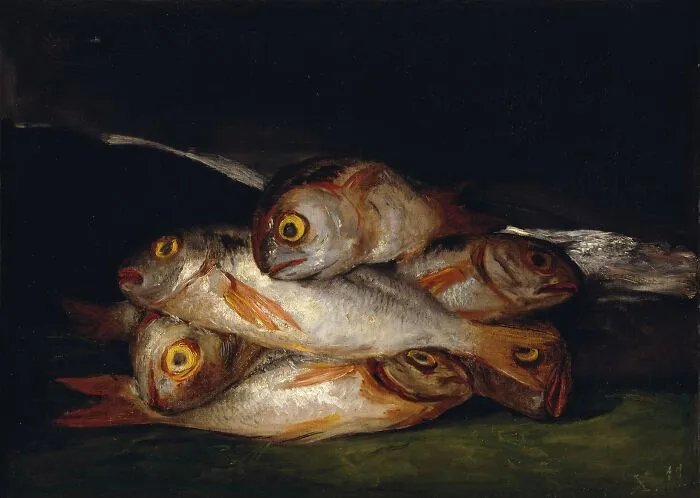
Artist: Francisco de Goya | Year (completed): 1812 | Period: Romanticism
Francisco de Goya presented gloomy psychological and political themes in his theatrical compositions, which helped to shape the development of subsequent art trends. While Goya painted swiftly, in his 60s, when he concentrated on making private paintings, he only painted around a dozen still lifes. Still Life with Golden Bream is the title of one of the most well-known. The artist depicted the beauty of the fish in this moonlit picture while suggesting that the creatures will eventually perish. The piece also acquires a tragic touch from the almost chaotic arrangement of these aquatic animals. Some have stated that the sight is emblematic of the human bloodshed brought on by Spain's war with France.
Report
12points
#25 Still Life With Melon And Pears By Luis Meléndez
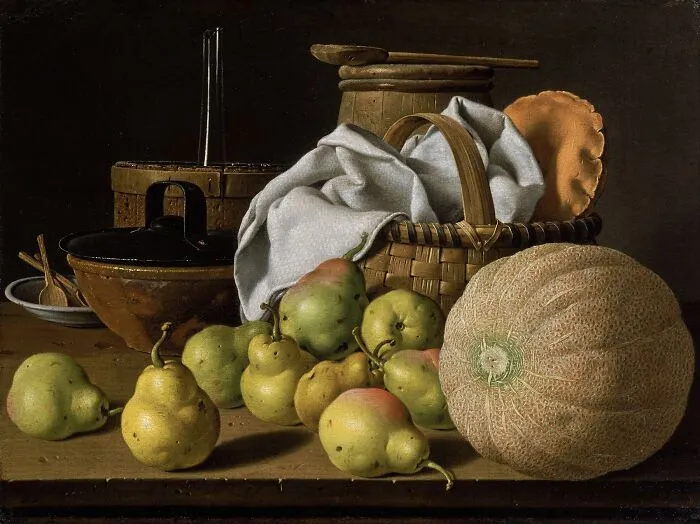
Artist: Luis Meléndez | Year (completed): 1772
Hyper-realistic still-life paintings by Meléndez depict details of middle-class daily life in Madrid during the eighteenth century. It's important to mention that the artist didn't start with finished setups. Instead, he painted each subject individually, beginning with the ones up front and working his way back to the tabletop and background. This piece of art, which features pears and a melon adjacent to standard kitchen tools painted with austere yet sensual realism, exemplifies the artist's approach to the genre. Ironically, many of these pieces were created during a period of intense food shortages. The artist once claimed that his brush was his only possession.
Report
12points
#26 The Ray (La Raie) By Jean-Baptiste-Siméon Chardin
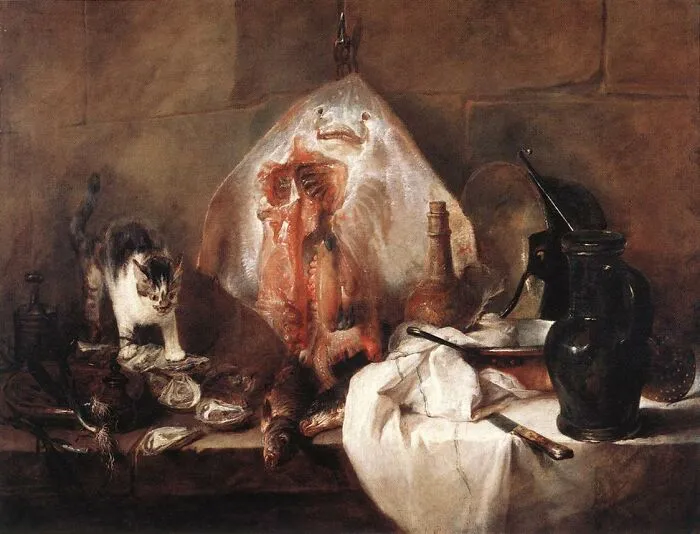
Artist: Jean-Baptiste-Siméon Chardin | Year (completed): 1728 | Period: Rococo
Jean-Baptiste Chardin is regarded as one of the greatest still-life painters of all time. His masterpiece, The Ray, inspired subsequent generations of painters to pursue still-life paintings. The painting includes a number of innovative aspects, but the incorporation of a living creature in the form of a cat especially stands out. Chardin was probably influenced by the Dutch still-life paintings of the 17th century, as this particular artwork has been widely linked to Rembrandt's painting of the Slaughtered Ox. Although Diderot referred to the strange but realistic composition as "disgusting," later painters like Matisse admired, studied and copied it in huge quantities.
11points
#27 A Table Of Desserts By Jan Davidz De Heem
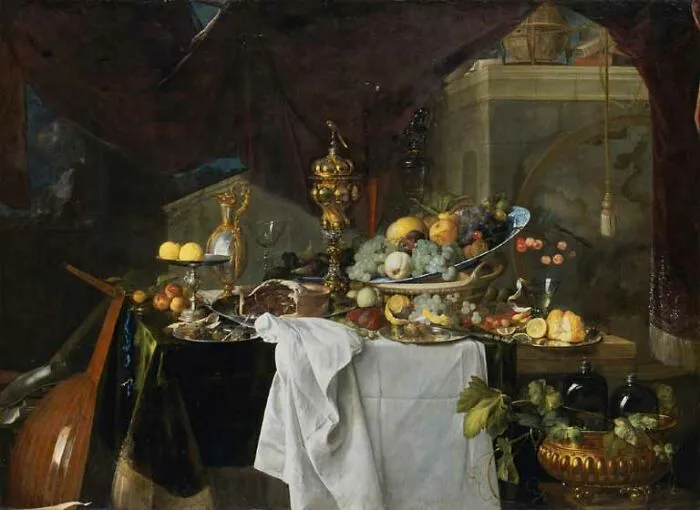
Artist: Jan Davidz De Heem | Year (completed): 1640 | Period: Baroque
Famous Dutch painter Jan Davidz de Heem's still life depicts a stunning fusion of Flemish Baroque beauty with Dutch accuracy. When it was created, the ornate still life of a sumptuous meal was quite in style. A great variety of meals, exquisite glassware, dishes, and a partially consumed pie are all arranged on the table in question. A lute is leaning against the fully loaded table and is a clear indication of joy and celebration. Although the painting's components appear to have been thrown together randomly, De Heem carefully planned their placement. The delicious items stand in for the joys of the senses, while the small blue watch on the table's edge serves as a reminder of the passing of time.
Report
11points
#28 Still Life Of Flowers, Fruit, Shells, And Insects By Balthasar Van Der Ast
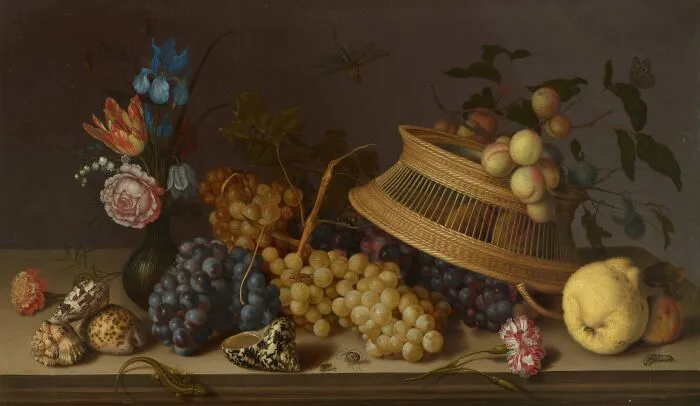
Artist: Balthasar Van Der Ast | Year (completed): 1629 | Periods: Baroque, Dutch Golden Age
Still-life paintings are an essential and well-regarded style of Dutch art from the seventeenth century. Balthasar Van Der Ast had a remarkable talent for fusing flowers, fruit, and uncommon shells into one striking image. Hence, he was regarded as a master of the "combined" still-life composition. Although the arrangement of the elements seems random, it was carefully planned. Van der Ast's fascination with his craft's virtuoso effects is evident in this painting's abundance of painstakingly painted objects with an almost tangible quality. The gently wilting flowers and grape leaves suggest that the painting also conveys a message about the fleeting nature of life on Earth.
Report
11points
#29 Eggplant And Green Pepper By Charles Demuth
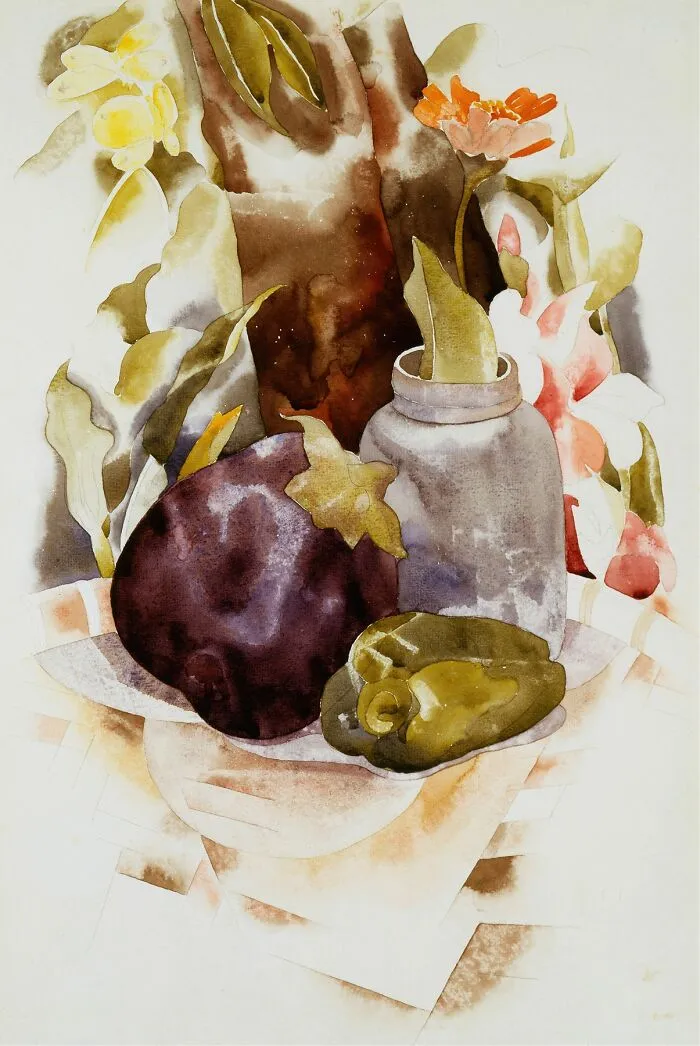
Artist: Charles Demuth | Year (completed): 1925 | Period: American modernism
The focus of this still life is an eggplant, pepper, and a flower in a vase. The work clearly shows the influence of the famous French watercolorist Paul Cézanne in its vivid color scheme, translucent layering of washes, and daring use of stark white paper. But Charles Demuth structured the patterns of the leaves, wood, and flowers that seem to be swirling around the central piece to make this painting entirely his own. He applied pigment all over the paper with a blotter, meticulously balancing shape and color. Thanks to his sparing use of line, he could emphasize the play of light as it swept across the sparkling surfaces of the vegetables. Interestingly, green peppers and eggplants were two of Demuth's favorite subjects. He thought of them as having anthropomorphic shapes. He once commented that eggplant may be compared to a human heart.
Report
11points
#30 Oysters By Édouard Manet
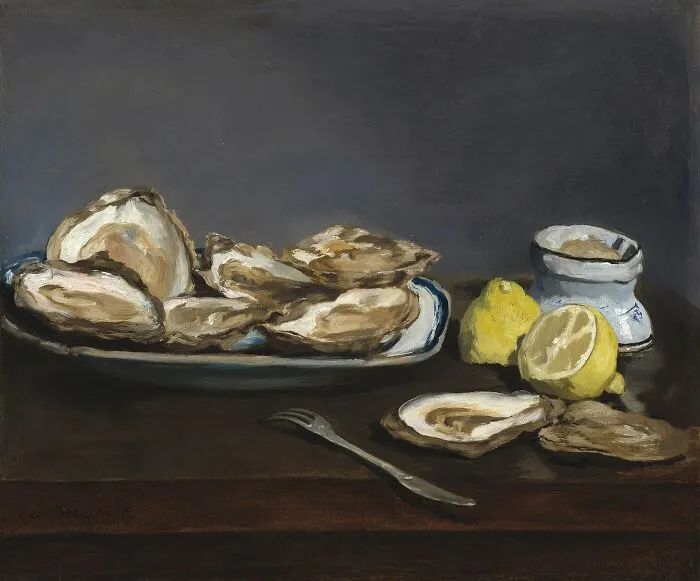
Artist: Édouard Manet | Year (completed): 1862 | Style: Realism
One of Manet's earliest still lifes, Oysters, is thought to have been painted for his fiance and has since remained in the couple's house. However, this may merely be romantic fiction since the painting was found at the artist's studio when he passed away. Manet's evolving style is seen in this early 1860s piece. Each color and brushstroke stand alone on the canvas; only in our eyes do they combine to produce form. While the moist surface of the cut fruit is smooth and level, divided by a few sparing strokes, the thick yellow paint puckers to resemble the pebbly skins of the lemons. On closer inspection, the oysters, which first appear to be plump and glossy, seem to have been created by a few quick strokes of a brush covered in heavy paint.
Report
11points
#31 Sunflowers By Vincent Van Gogh
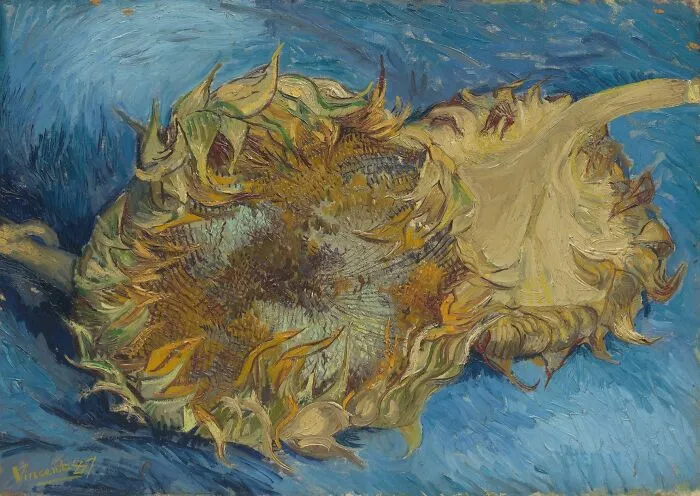
Artist: | Year (completed): 1887 | Period: Post-Impressionism
Van Gogh painted four still lifes of sunflowers in Paris in the late summer of 1887, one of which was the painting above. The sunflower, which Van Gogh first considered just decorative, for him had evolved into something nearly sacred, a representation of light itself and the ideal of life spent in harmony with nature. He described his artwork as "almost a cry of anguish while symbolizing gratitude in the rustic sunflower" in a letter he wrote to his sister in 1890. It may be that the sunflower was something that brought him solace and familiarity, and one can only imagine that it had a certain vital glow and form that could lift his spirits in trying times.
Report
11points
#32 Still Life With Mushrooms, Fruit, A Basket Of Flowers And A Cat By Simone Del Tintore
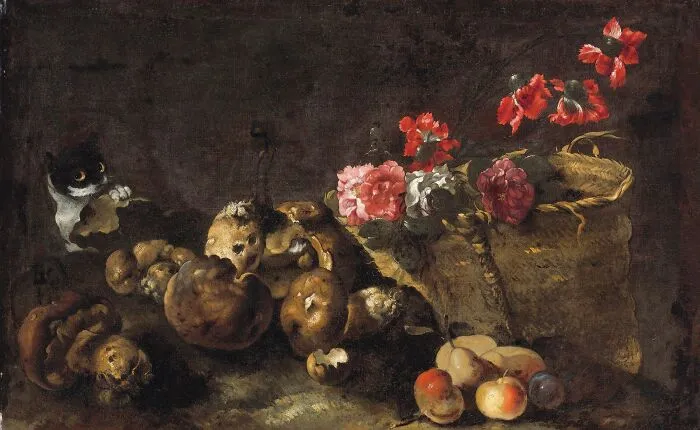
Artist: Simone Del Tintore | Year (completed): 1708 | Period: Baroque
Only in the 1960s were Simone del Tintore's artworks rediscovered once again. However, that was challenging since Tintore's work was often hard to distinguish from Tommaso Salini's. Other than that, the paintings of Del Tintore and the Master of the Acquavella Still Life have also been repeatedly mistaken for one another. Still, due to their disorganized yet harmonious compositions and a similar sense of Baroque dynamism, a small group of still lifes has been assigned to del Tintore. The still life with mushrooms and cabbage, inscribed "Simone del Tintore" on the reverse, served as the basis for the artist's attribution and rediscovery.
Report
11points
#33 Violin And Candlestick By Georges Braque
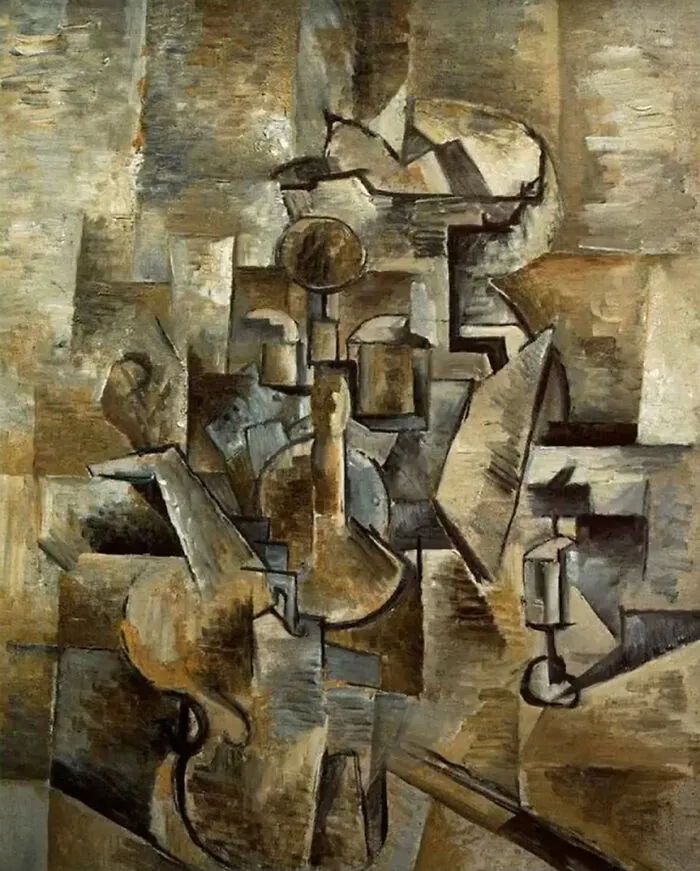
Artist: Georges Braque | Year (completed): 1910 | Period: Cubism
Violin and Candlestick, Georges Braque's masterpiece, was made in Paris in 1910. It is created in a monochromatic approach, which uses just one color but many different shades of it. While some of the items, like the violin and candle, are easily visible, it is unclear what the other things are. Braque seems to have tried to integrate the objects with the background in this painting by opening the black-outlined parts and putting earth-toned colors on top of their borders. Apparently, it has been created to be viewed from various angles.
Report
10points
#34 Still Life With Lemons, Oranges And A Rose By Francisco De Zurbaran
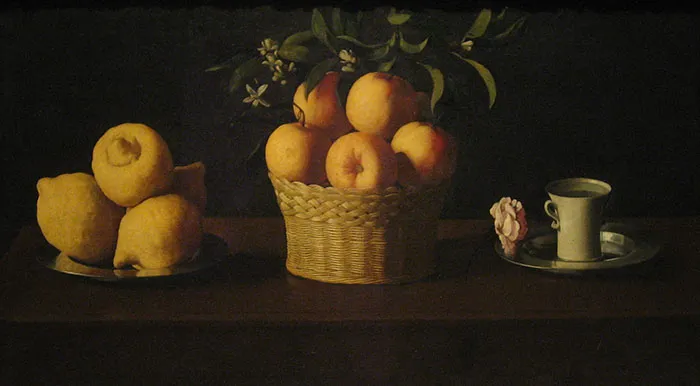
Artist: Francisco de Zurbaran | Year (completed): 1633 | Period: Baroque
Despite being one of the most important still-life painters, Francisco de Zurbaran is better known for his religious paintings. This painting, the only canvas the Spanish painter ever signed and dated, is regarded as a genre masterpiece. The three objects in the artwork are thoughtfully positioned and well-lit against a dark background. The painting is also believed to bear religious symbolism.
Report
10points
#35 Still Life With Apples, Pear, And Pomegranates By Gustave Courbet
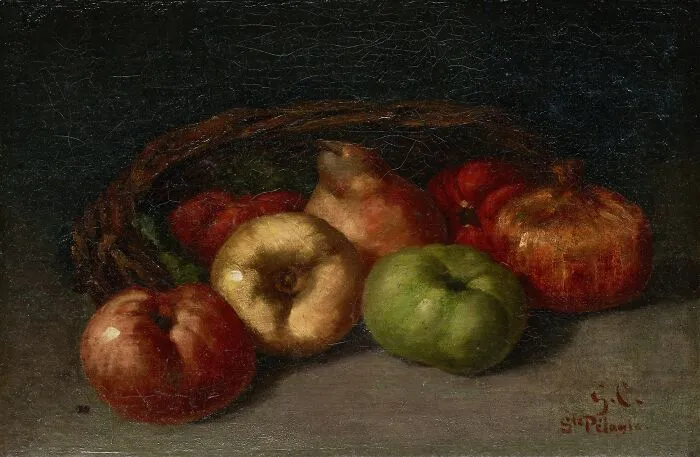
Artist: Gustave Courbet | Year (completed): 1871 | Period: Realism
In addition to being an artist, Courbet was involved in politics and even went to prison for his radical views. While imprisoned for participating in the Paris Commune, the artist made this still-life painting of apples. Flowers and fruit were brought by his sister. In contrast to standard Dutch still-life paintings where the fruits and flowers conveyed the passage of time, the apples Courbet portrayed appear ripe and fresh. A murky light fills the composition, presumably from the gloomy spot where the artist painted it. The latter, however, also relates to his fondness for artworks with shadows.
Report
10points
#36 Still Life With Meat, Fish, Vegetables And Fruit By Jacob Van Hulsdonck
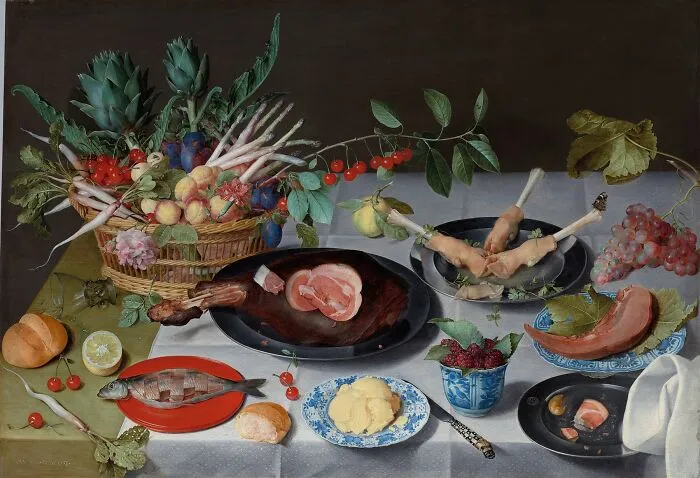
Artist: Jacob Van Hulsdonck | Year (completed): 1620 | Period: Baroque
Jacob was one of the most prominent painters of the first generation of Flemish still-life paintings. Throughout his career, he produced numerous still-life scenes that included realistic food and flower arrangements. However, almost nothing is known about Van Es' life. He must have been successful because numerous 17th-century collections in Antwerp contain descriptions of his paintings. In this particular painting, he portrayed a colorful assortment of dishes and silverware, from an earthenware trencher to beautiful Chinese porcelain. The amount and variety of meals could have symbolized an idealized world free from scarcity and hunger to observers at the time.
Report
10points
#37 Still Life With Three Puppies By Paul Gauguin
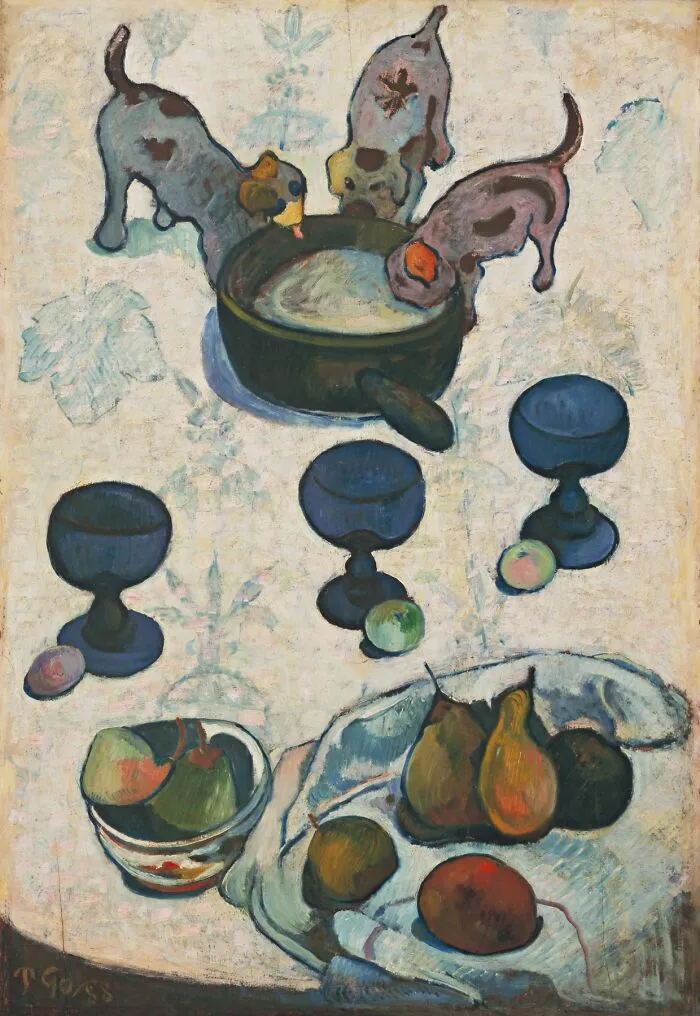
Artist: Paul Gauguin | Year (completed): 1888 | Periods: Post-Impressionism, Modern art, Synthetism
While residing in Brittany with a group of experimental painters, Gauguin created Still Life with Three Puppies. Three separate zones can be seen in this painting: a frontal still life of fruit, a row of three blue goblets with apples that cut the panel in half, and three puppies sipping from a huge pan. This composition seems confusing due to the out-of-place scale and positioning of these items on a tabletop. The Japanese prints that his friend and fellow artist Vincent van Gogh brought to him and the children's book illustrations are believed to have stylistically influenced this painting.
Report
10points
#38 Mound Of Butter By Antoine Vollon
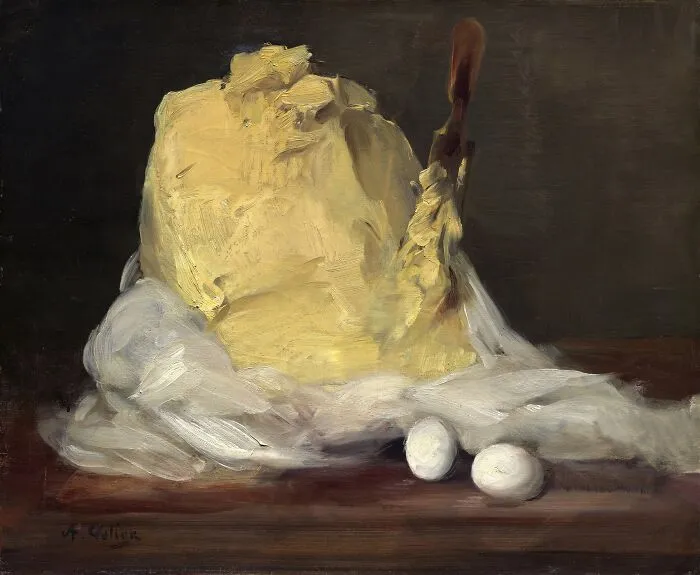
Artist: Antoine Vollon | Year (completed): 1885 | Periods: Impressionism, Post-Impressionism
When people see Antoine Vollon's Mound of Butter in the National Gallery of Art, they immediately want to spread it onto some hot bread and devour it. However, the butter and oil paint used to create this artwork are entirely unrelated. Still, no painter in history has done a better job convincing us that they may be made of the same ingredients. The painting, which features a mound of butter and is colored in a rich, deep yellow, is a beautiful example of Vollon's still-life artwork. The painting features thick lines that are likely intended to depict the marks left behind after using a butter knife or a wooden spatula.
Report
10points
#39 Still Life With Game By Willem Van Aelst
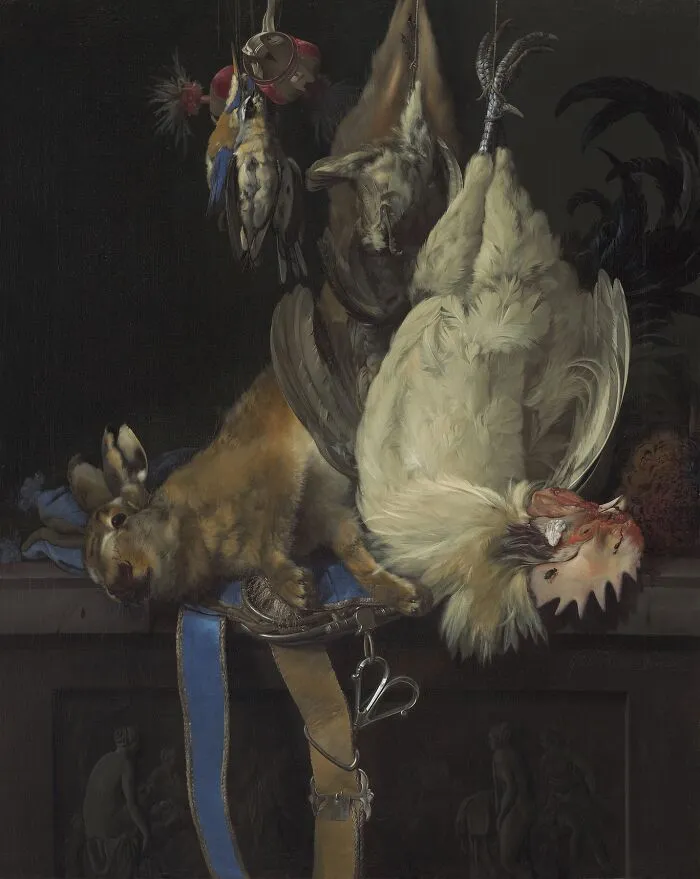
Artist: Willem van Aelst | Year (completed): 1661 | Period: Baroque
Willem van Aelst spent a lot of time in Florence painting still-life scenes that the Medici family members, including Cardinal Leopoldo de' Medici, a passionate collector, bought. Eventually, the artist made Amsterdam his home, where prestigious art patrons continued to admire him. He made various still-life paintings throughout the years and was among the first painters to use hunting trophies in his works. The style of hunting still life for which he became famous is seen well in this particular painting of his.
Report
9points
#40 Banquet Still Life With Nautilus Cup By Abraham Van Beijeren
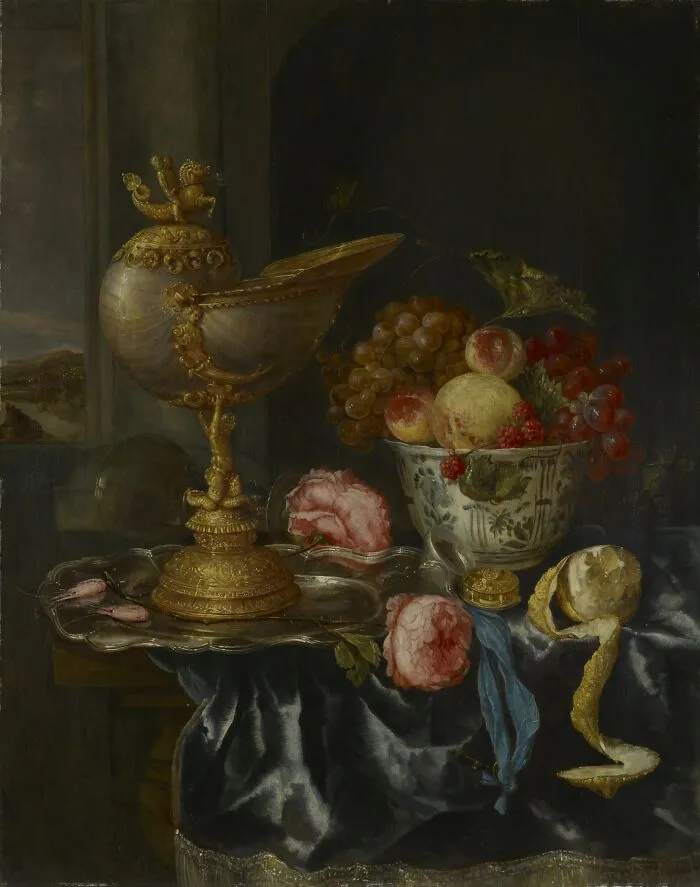
Artist: Abraham Van Beijeren | Year (completed): 1650 | Period: Baroque
Abraham Hendriksz van Beijeren was a Dutch still-life painter of the Baroque era. He was little known during his lifetime and began painting the marine, but is today regarded as one of the greatest still-life painters, mainly of fish and so-called "pronkstillevens," or lavish still lifes of expensive items. The decision to paint pronkstillevens may have been driven by a need to make more money because they could be sold to a more affluent customer. These still lifes, which frequently feature extremely ornate displays, reflect Jan Davidsz De Heem's influence. He painted numerous opulent banquet still lifes that featured pricey items like silverware, exquisite glassware, and Chinese porcelain. The loose brushstrokes he used to paint his still lifes were remarkable because they were often painted much more carefully to accurately reflect the various materials.
Report
9points
