





Following recent archaeological discoveries, the very first art subject was not a human but a warty pig, and soon after followed cave paintings of humans hunting pigs. Thus, the portrayal of humans in artworks, later followed by objects and nature, really is as old as art itself.
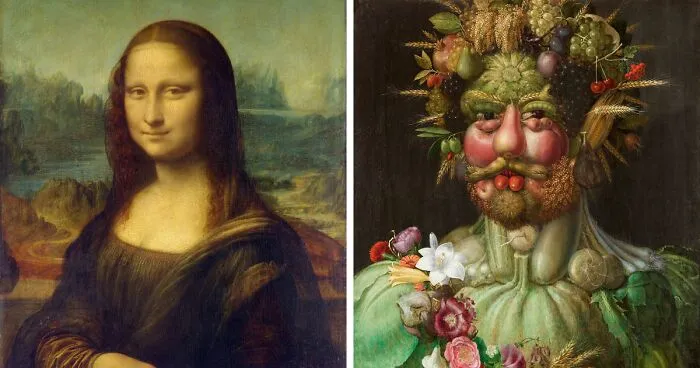
Before the invention of camera obscura and long before the selfie era, painters were entrusted with creating the most accurate depictions of people. Even today, one of the most famous paintings, painted over 500 years ago, Da Vinci’s Mona Lisa, is deemed highly realistic even by today’s portrait painting standards.
However, painted portraits can display more than just a person’s appearance. They tell us about the person’s culture and even a broader retrospective into their cultural and societal background. Whether on wooden panels, towels, napkins, or whatever canvases were available at hand, famous artists from all over the globe were responsible for immortalizing and documenting human progress by painting portraits. Thus, portrait paintings are historically regarded as some of the most important pieces of artwork.
Below, we’ve compiled a list of famous portrait paintings and paintings depicting humans that are of immense historical importance and have heavily influenced the modern art we see today. Remember to upvote your favorite portraits, and once you are done, check out our article covering the most famous works of art of all time!
#61 Lucretia
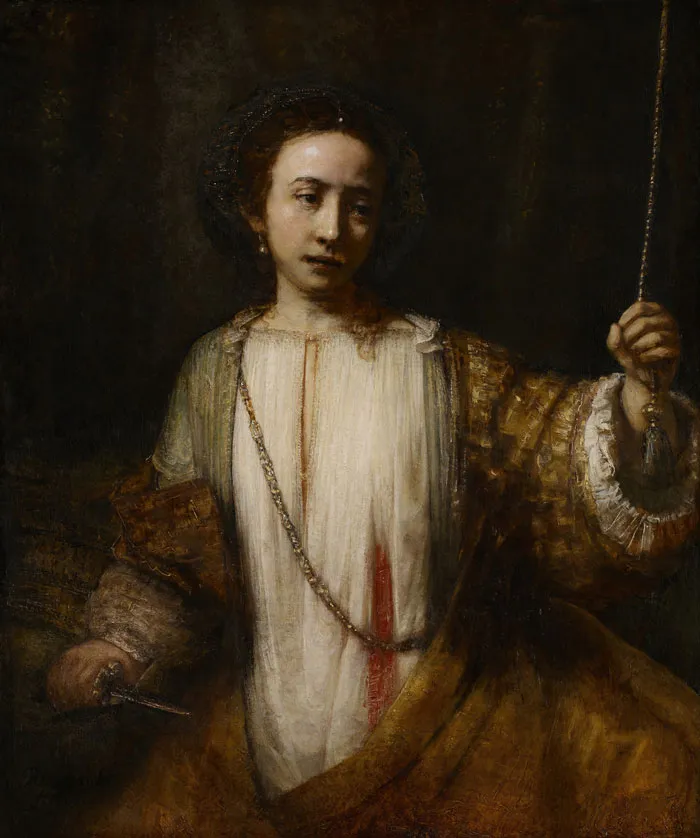
Artist: Rembrandt Van Rijn | Year (completed): 1666 | Periods: Baroque, Dutch Golden Age
Through Lucretia's melancholy and dejected expression, the bloodstains on her gown, and the dagger in her hand, Rembrandt conveys the story of Lucretia. Lucretia was a Roman nobleman's wife and was renowned for her virtue and devotion. Sextus Tarquinius, the tyrant's son, was enthralled by Lucretia's virtue and discreetly went to her house and was welcomed as an honorable guest. However, he turned on her by entering her chamber and sexually molesting her. Lucretia confessed the atrocity to her husband and father before taking her own life in front of them. At a time and place when a woman's perceived virtue was more valued than her life, she decided to end her life to avoid dishonor.
Report
7points
#62 Autoportrait À Vingt-Quatre Ans
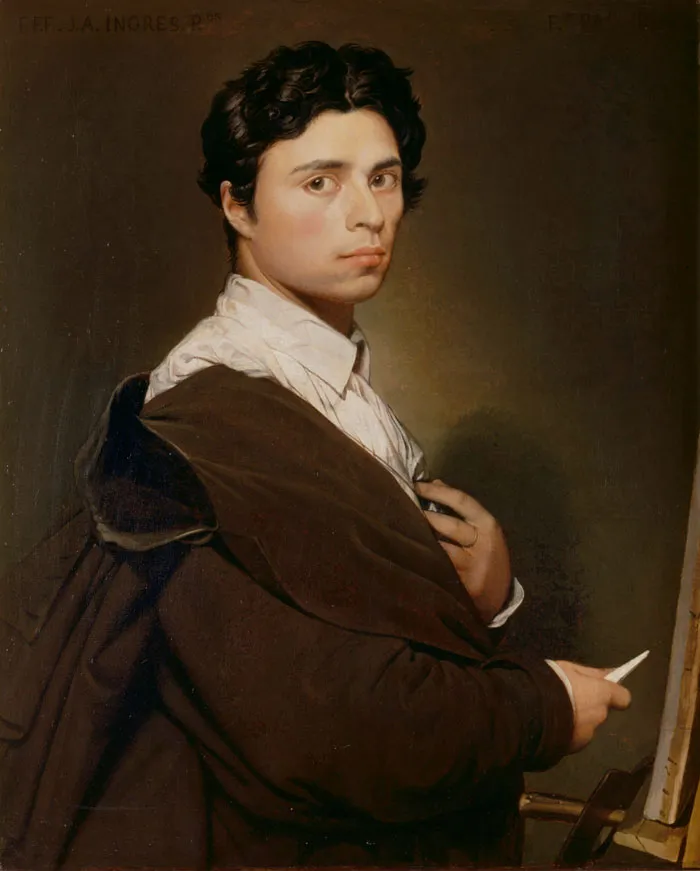
Artist: Jean Auguste Dominique Ingres | Year (completed): 1950 | Period: Neoclassicism
Ingres started this self-portrait at the age of 24, the very beginning of his artistic career in 1804. Compared to the final outcome, the artwork was very different. After the critics received it poorly in 1806, Ingres set it aside, revisited it several times, and finally finished it when he was 71 years old in 1851. Ingres polished his portrait by omitting unnecessary details and simplifying the color scheme to a few warm tones that draw attention to the face rather than the white shirt.
Report
7points
#63 Self-Portrait, Aged 21
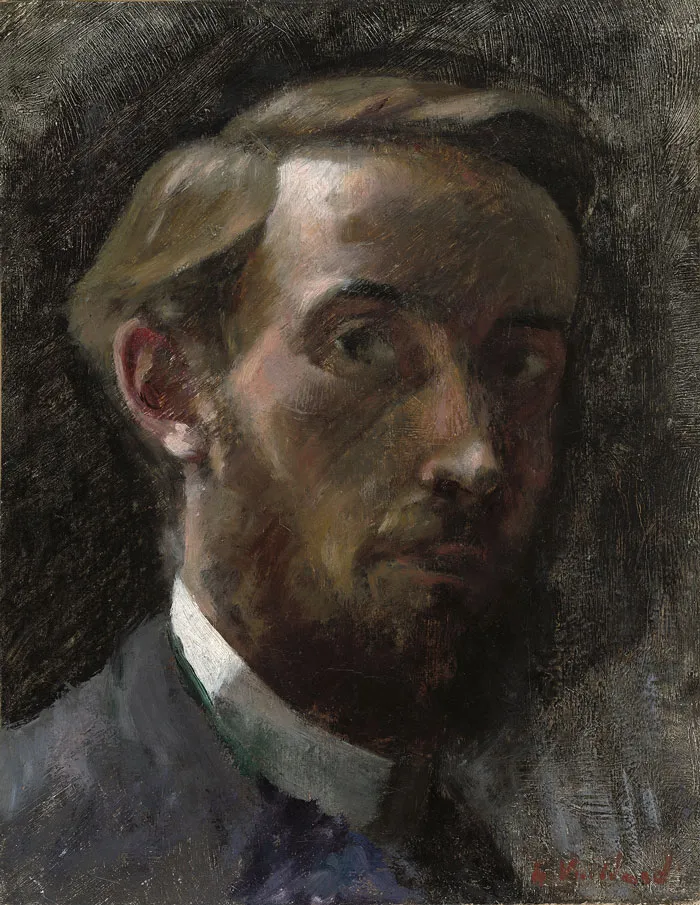
Artist: Edouard Vuillard | Year (completed): 1889
French painter, decorative artist, and printmaker Jean-Édouard Vuillard became increasingly busy drawing portraits of affluent and prominent Parisians from 1920 despite painting his own picture as early as 1889. In his later portraits, he utilized distemper, a technique to produce finer details and more vibrant color effects. He frequently displayed his subjects in their studios, houses, or backstage areas, all of which had opulently detailed backgrounds, wallpaper, furniture, and rugs. The surroundings both set the tone, provided context, and functioned as a contrast to highlight the central character.
Report
6points
#64 A Madwoman And Compulsive Gambler
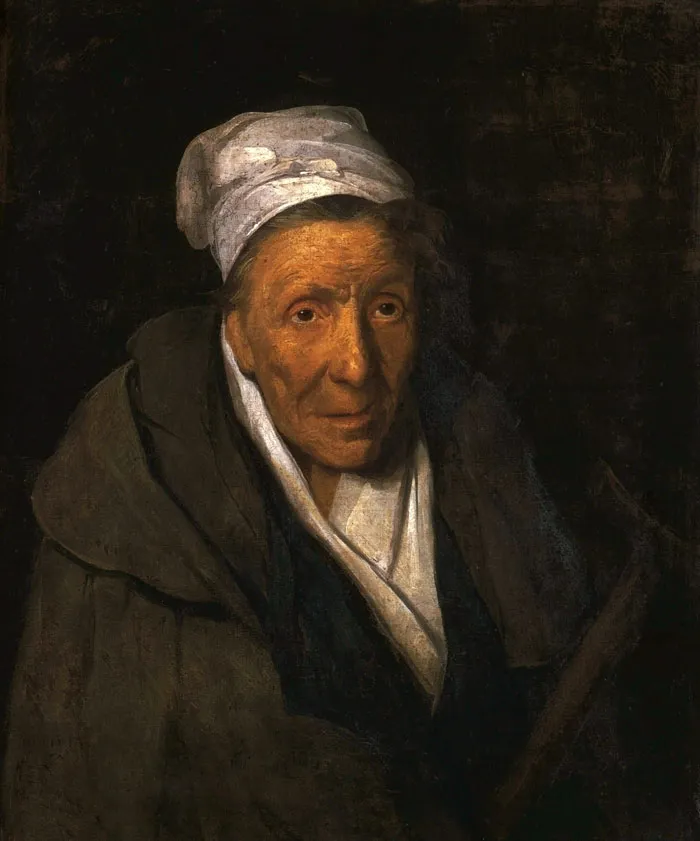
Artist: Théodore Géricault | Year (completed): 1822 | Period: Romanticism
The Woman with Gambling Mania is a part of ten portraits of individuals with distinct manias painted by Géricault between 1820 and 1824. After the controversy surrounding his painting The Raft of the Medusa, Géricault fell into depression. To help Géricault's mental state, psychiatrist Étienne-Jean Georget suggested that Géricault paint a series of paintings depicting mental patients, including The Woman with Gambling Mania. The offer was intentional at the time, as the scientific community was interested in the views of the mentally ill. Géricault's picture of a patient at a mental institution aimed to depict a specific type of insanity through facial expression and today remains a strong example of romanticism.
Report
6points
#65 Walt Whitman
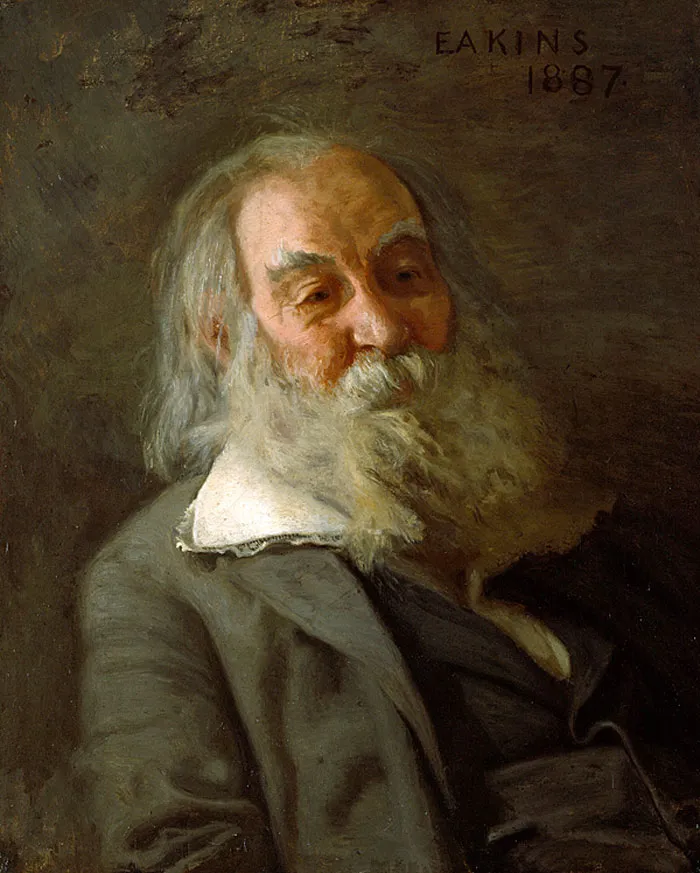
Artist: Thomas Eakins | Year (completed): 1888 | Period: Realism
Thomas Eakins spent most of his career in Philadelphia and hardly ever ventured outside the city. He is widely regarded as the greatest realist painter America has produced. The reason for Eakins' status as a radical at the time was less due to his style of portraiture and more due to his pedagogy, use of photography, and interest in the nude. Although the Whitman portrait seems radically new in its simplicity and the effect of the subject being captured in a casual moment, it is similar to the rest of Eakins' work in that it is essentially uncomplicated and gives the impression that the artist has observed and captured the subject's unvarnished, unadorned likeness. Eakins was most successful when he was familiar with or admired by his subjects. In this case, the painting honors their well-documented fondness for one another. Their friendship is not surprising, given their mutual passion for individualism, the body, and outdoor activities. In fact, Whitman considered the painting, created in the poet's house in Camden, New Jersey, to be his favorite of all the portraits of him.
Report
6points
#66 Gustave Caillebotte Self Portrait
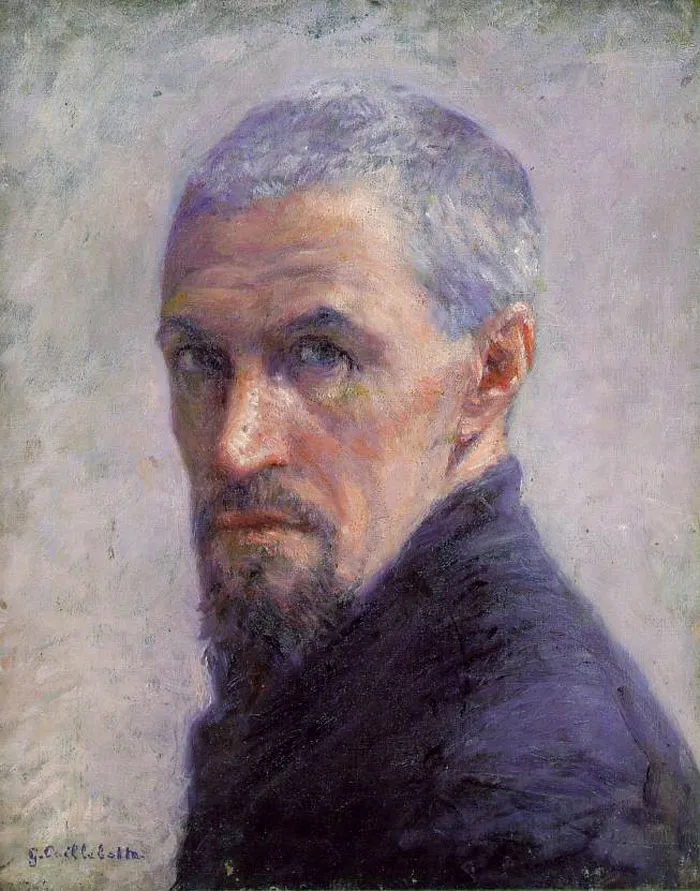
Artist: Gustave Caillebotte | Year (completed): 1892 | Period: Impressionism
Gustave Caillebotte not only embraced but also actively supported the impressionist movement. How Caillebotte painted his self-portrait also depicts the tension and conflict inside him. Although it seems to be a typical portrait of a gentleman, the contrasted, multi-hued grey background reflects the artist's rather tragic life. The man in the frame pays close attention to everything around him. He carefully considers every element of his current reality, reveals a tension in his knowledge of society, and has a critical reception of culture. His physical features are imposing and painted in dark hues, and he holds a sharp gaze. To give his work more weight, he creates depth that reflects the artist's ruminative mindset by layering wet paint over another layer of wet paint. It appears that the artist tries to move through each layer in an attempt to learn more about himself.
Report
6points
#67 Self-Portrait Of The Artist Holding A Thistle
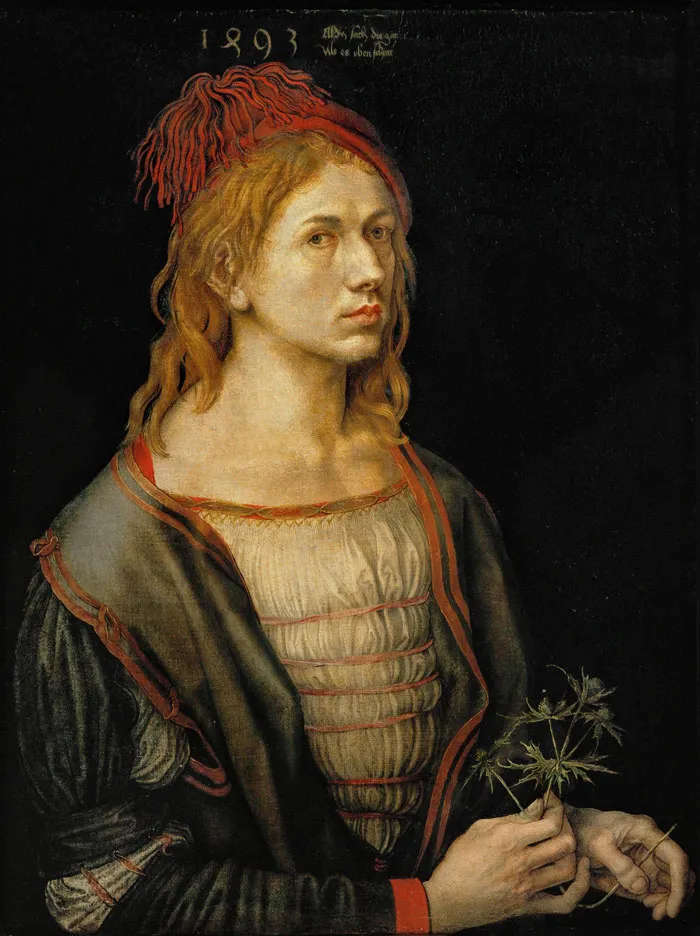
Artist: Albrecht Dürer | Year (completed): 1493 | Period: Northern Renaissance
Albrecht Dürer produced some of the earliest independent self-portraits in Western art. He was a man of ambition, talent, and not just a little vanity over his blonde good looks. While artists have occasionally used themselves as supporting figures in huge paintings, Dürer considered himself a deserving subject of his own portrait. This painting, which he finished at the age of 22, is his earliest self-portrait. His position, depicted in a three-quarter perspective against a black background, seems a little odd; you can picture the young man sitting in front of a mirror and turning his head back and forth all the time. He is dressed in a sophisticated outfit, with long, blonde hair, a red tasseled hat perched atop his head, and a blue jacket with red piping over an embroidered chemise.
Report
6points
#68 Joseph Mallord William Turner
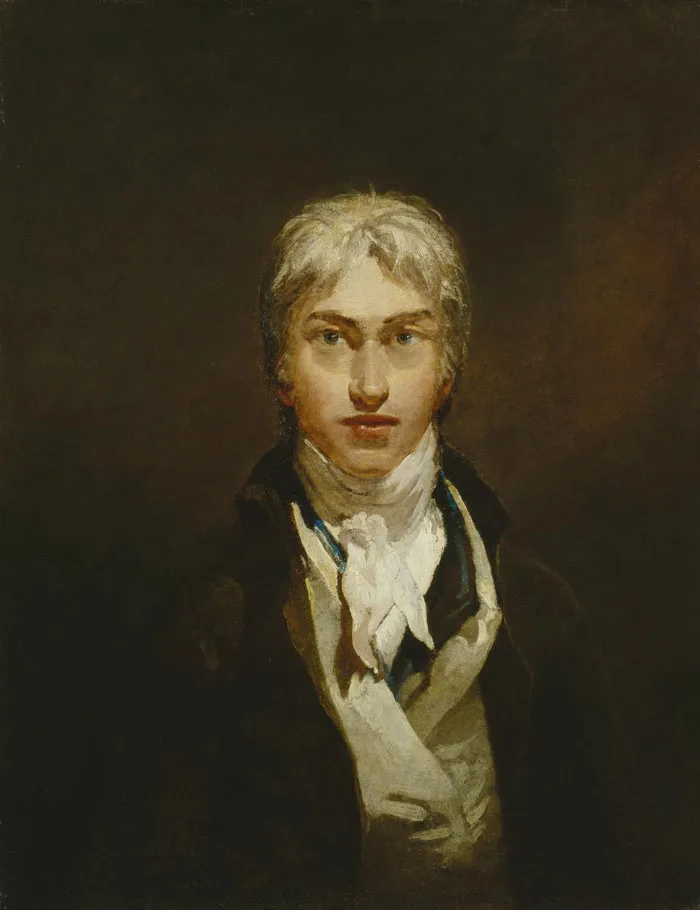
Artist: Joseph Mallord William Turner | Year (completed): 1799 | Movement: Romanticism
Turner created this self-portrait when he was 24 years old, sometime around 1799. He might have desired to announce that he had been elected an Associate of the Royal Academy. In his professional life, this was a pivotal period. It implied that he could display his artwork in the Academy without worrying about being turned down by committee members. Despite his young age, Turner had established himself as a distinctive, skilled painter with high technical competence.
Report
5points
#69 Polynesian Woman With Children
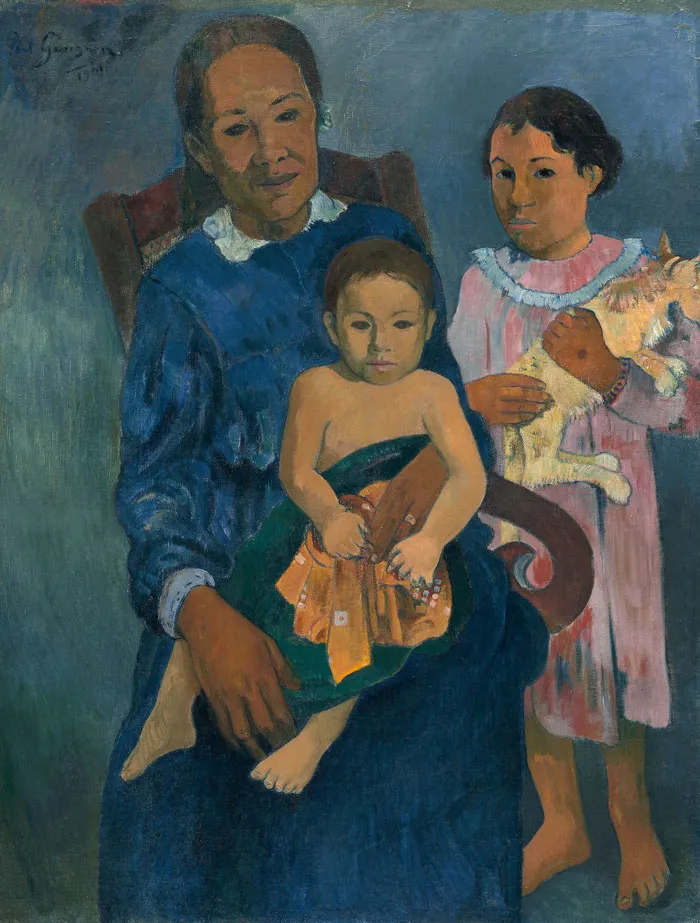
Artist: Paul Gauguin | Year (completed): 1901 | Movement: French Post-Impressionism
The identities of the three figures in this piece are unknown. Assumptions about their relationships to one another and to the artist are encouraged by their familial pose and other elements, such as the woman's gold ring and the girl's red mark on her hand. The little child in the woman's lap in this painting may represent Paul Gauguin's child, the offspring of his Tahitian girlfriend, Pahura. The older woman might be the grandma of the boy. Although the older child in this composition is probably a girl, the painting evokes the traditional Christian depiction of the Virgin Mary with the Christ Child and a youthful Saint John the Baptist. According to technical analysis, Paul Gauguin repositioned the woman's hands such that they were diagonally opposite those of the young girl standing behind her. They combine to form an upward axis strengthened by the cat, another later addition.
Report
5points