



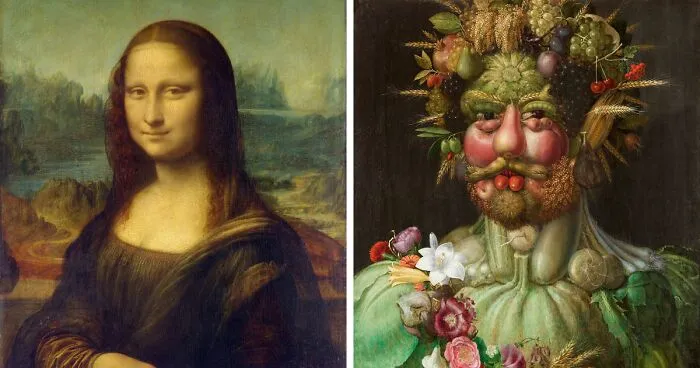


Following recent archaeological discoveries, the very first art subject was not a human but a warty pig, and soon after followed cave paintings of humans hunting pigs. Thus, the portrayal of humans in artworks, later followed by objects and nature, really is as old as art itself.
Before the invention of camera obscura and long before the selfie era, painters were entrusted with creating the most accurate depictions of people. Even today, one of the most famous paintings, painted over 500 years ago, Da Vinci’s Mona Lisa, is deemed highly realistic even by today’s portrait painting standards.
However, painted portraits can display more than just a person’s appearance. They tell us about the person’s culture and even a broader retrospective into their cultural and societal background. Whether on wooden panels, towels, napkins, or whatever canvases were available at hand, famous artists from all over the globe were responsible for immortalizing and documenting human progress by painting portraits. Thus, portrait paintings are historically regarded as some of the most important pieces of artwork.
Below, we’ve compiled a list of famous portrait paintings and paintings depicting humans that are of immense historical importance and have heavily influenced the modern art we see today. Remember to upvote your favorite portraits, and once you are done, check out our article covering the most famous works of art of all time!
#21 Self-Portrait At The Easel
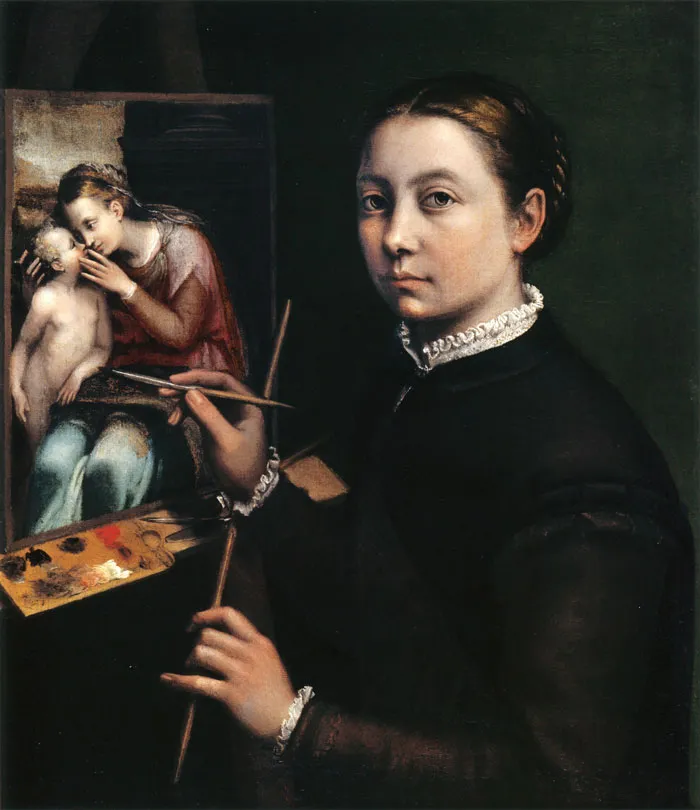
Artist: Sofonisba Anguissola | Year (completed): 1556 | Style: Mannerism (Late Renaissance)
Sofonisba portrays herself painting in this self-portrait from 1556, adding mixed colors to a canvas that features a tender kiss between the Virgin and the Christ Child. She appears to be in the middle of a stroke as she casts her gaze outward. She has a calm, collected demeanor. Her right hand is supported as she applies the brush to the canvas by a maulstick, a standard tool used to support the artist’s hand. Sofonisba likely included this intimate moment between mother and son here to portray herself as a virtuous woman - one who identifies with the ultimate virtuous woman, the Virgin Mary - even though depictions of Mary feeding, kissing, or embracing Christ as a child were common during this time.
Report
15points
#22 Portrait Of A Young Woman
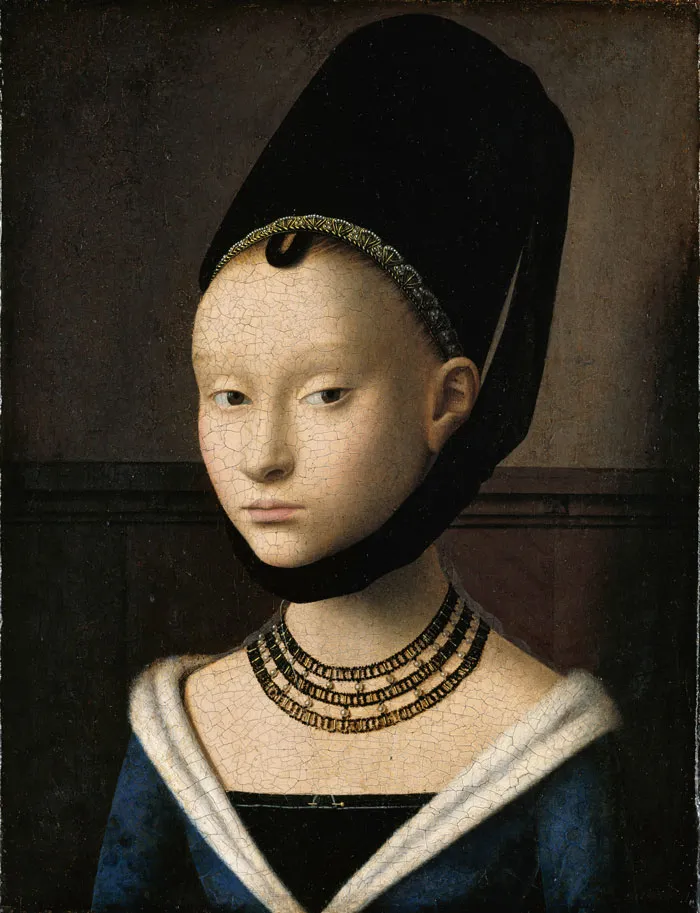
Artist: Petrus Christus | Year (completed): 1470 | Style: Northern Renaissance
The Early Netherlandish artist Petrus Christus created a modest oil-on-oak panel painting titled Portrait of a Young Woman, currently housed in Berlin's Gemäldegalerie. The portrait was finished between 1465 and 1470, towards the end of Christus' life. The subject of the portrait, a young girl, is depicted in airy, three-dimensional, realistic surroundings and looks out at the observer with a complex expression that is reserved yet clever and alert. At the time, it marked a significant stylistic advancement in portraiture. The girl has petulant lips, almond-shaped eyes that lean slightly oriental, and a pale complexion. She embodies the characteristics of the Gothic ideal, including elongated facial features, narrow shoulders, tightly pinned hair, and an almost absurdly large forehead obtained by tightly pulled-back hair gathered at the top beneath her hennin. She appears to be exceptionally elegant and is wearing pricey jewelry and clothing.
Report
15points
#23 Portrait Of Dr. Gachet
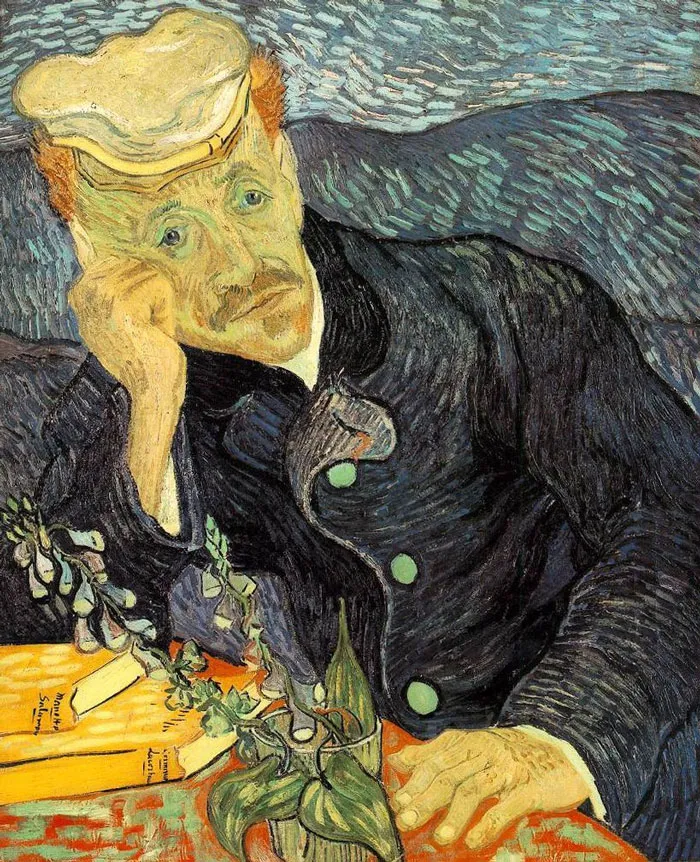
Artist: Vincent Van Gogh | Year (completed): 1890 | Period: Post-Impressionism
One of Vincent van Gogh's most admired works is his portrait of Dr. Paul Gachet, who looked after Van Gogh in his final months. Gachet is depicted by Van Gogh with his head in one hand and his right elbow resting on a red table. On the table are two yellow books and foxglove, a medicinal plant used to treat some heart conditions. Over seventy paintings were created by Van Gogh when he was staying with the doctor, including portraits of Gachet. He finished the paintings of the doctor just six weeks before he shot himself in the head and succumbed to his wounds. Van Gogh's goal with Portrait of Dr. Gachet was to produce a "modern portrait," which, as he confessed in a letter to his sister, "impassions me most—much, much more than all the rest of my métier."
Report
15points
#24 Self-Portrait
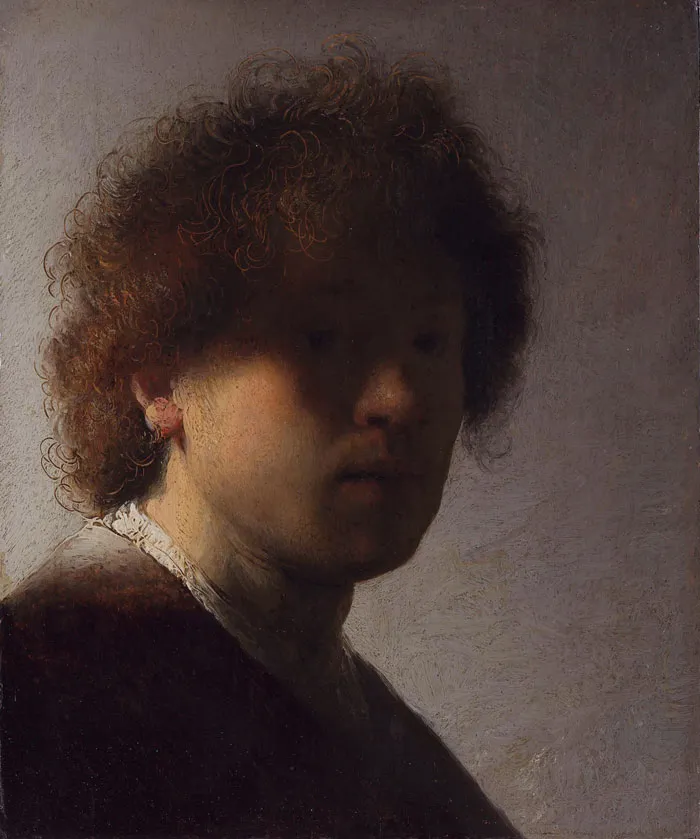
Artist: Rembrandt | Year (completed): 1629 | Periods: Baroque, Dutch Golden Age
In this Self-Portrait with Dishevelled Hair, Rembrandt exhibited himself full-face, an unusual practice at the time. While intricately styled hair really draws attention, the most crucial element of the image is how the light and shade are handled. The head appears to emerge from the surrounding darkness due to the light falling on the right side of Rembrandt's face. Yet, the sitter's three-dimensionality is ensured by softening the edges of the shoulders and carefully adjusting the background's tonality. At this point, it is hard to comprehend that Rembrandt painted himself more than fifty times, and not all of those paintings could have resulted from a lack of subjects to paint. Even though he appears to have been busy with commissions, his family, and business matters, the number of self-portraits actually increases over his life, suggesting that he never lost interest in painting himself.
Report
15points
#25 Portrait Of Giovanna Tornabuoni
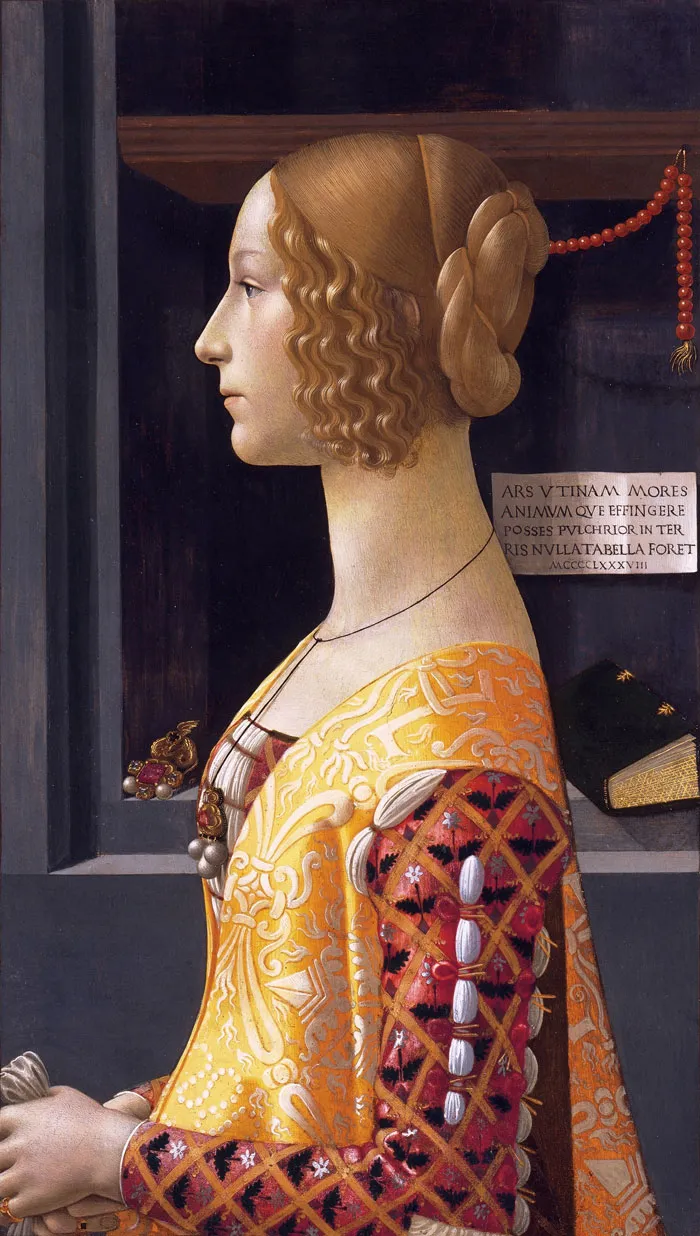
Artist: Domenico Ghirlandaio | Year (completed): 1490 | Periods: Renaissance, Italian Renaissance
Domenico Ghirlandaio's Portrait of Giovanna Tornabuoni depicts Florentine nobility Giovanna degli Albizzi, wife to Lorenzo Tornabuoni. Her husband commissioned this painting shortly after Giovanna passed away during labor giving birth to their second child to immortalize and honor her memory. However, the portrait was completed only about two years after her demise. This magnificent painting is a remarkable example of Florentine portraiture from the fifteenth century when artists of the era adhered to classical rules. The paintings idealized the subject's body proportions and the expectation that expressionless faces would transmit character. In this half-length portrait, Giovanna Tornabuoni is posed strictly in profile with her hands clasped and arms bent. A collection of personal items can be seen in the backdrop contained within a straightforward architectural frame. The many details in the painting, including two "Ls" on her shoulder, a string of coral beads, brooches, and the book seen behind Giovanna, carry symbolic meanings.
Report
15points
#26 The Milkmaid
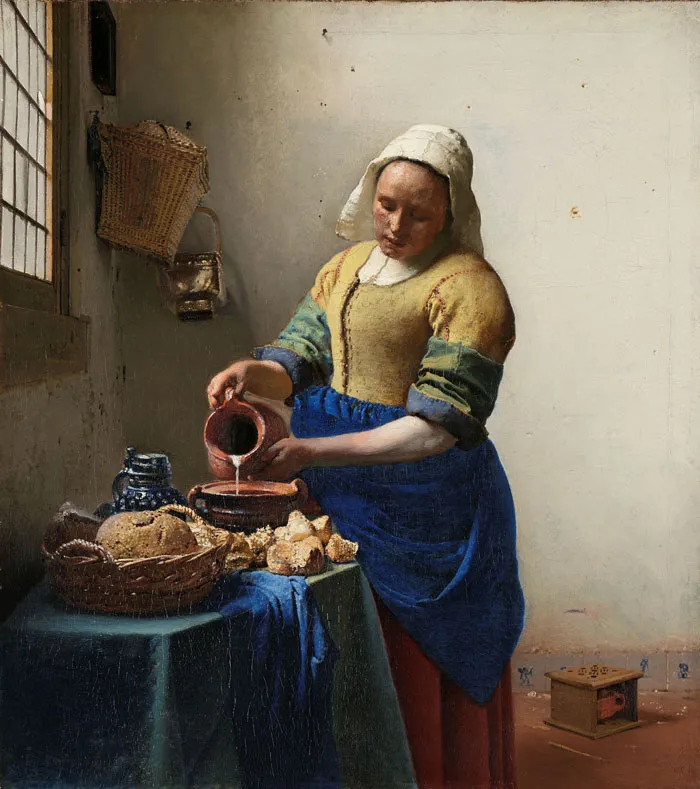
Artist: Johannes Vermeer | Year (completed): 1658 | Period: Baroque, Dutch Golden Age
One of Vermeer's best-known paintings is The Milkmaid. Vermeer is known for depicting scenes from daily life in this artwork. The Milkmaid, however, differs from Vermeer's earlier works in that it represents a robust maid at work rather than an exquisite, well-off young lady at leisure. Everything in the painting seems to be motionless except for the trickle of milk. The Milkmaid is arguably one of the first paintings by Vermeer to show a lone individual in an interior. The piece is noteworthy because of Vermeer's superb portrayal of this uncomplicated topic.
Report
14points
#27 Young Man On A Riverbank
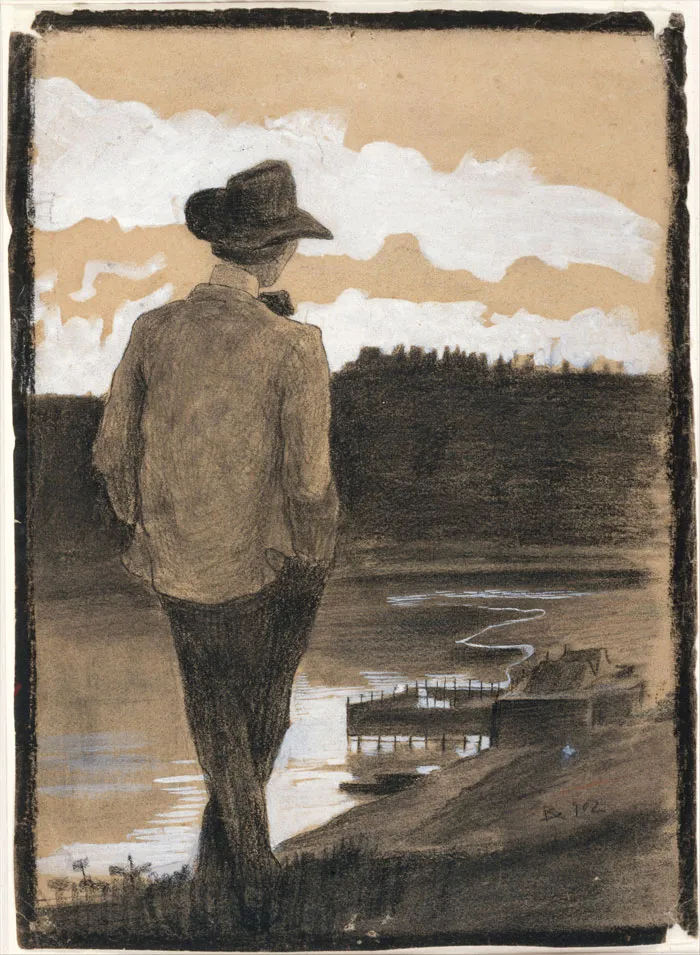
Artist: Umberto Boccioni | Year (completed): 1902 | Style: Impressionism, Realism
Umberto Boccioni is arguably the best example to represent Italian Futurism. In his brief life, he created some of the movement's most recognizable paintings and sculptures, reflecting the vibrancy and energy of contemporary life in a form he hypothesized and defended in manifestos, books, and articles. In 1902, he met fellow student Gino Severini in the workshop of renowned painter Giacomo Balla. The two young artists frequently ventured outside Rome to paint the surrounding countryside, as seen in Boccioni's Young Man on a Riverbank.
Report
14points
#28 Las Meninas
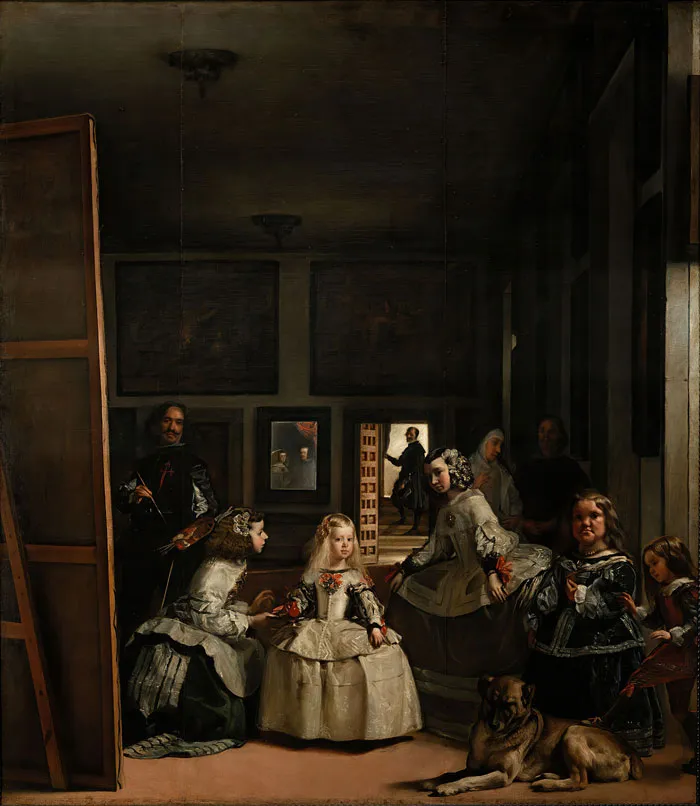
Artist: Diego Velázquez | Year (completed): 1656 | Period: Baroque
Las Meninas has captivated art lovers for more than 350 years. King Philip IV of Spain's court is vividly depicted in this intricate oil painting by Diego Velázquez. This masterwork from 1656, arguably one of the most significant paintings in the entire history of Western art, still impacts artists today. As the title translates, Ladies in Waiting is a turning point in art history for Velázquez's departure from the stiff, formal portraits that typically denoted royalty. The king's daughter, Infanta Margaret Theresa, is depicted on the enormous canvas surrounded by her entourage as Velázquez works behind an easel.
Report
14points
#29 Portrait Of Doge Leonardo Loredan
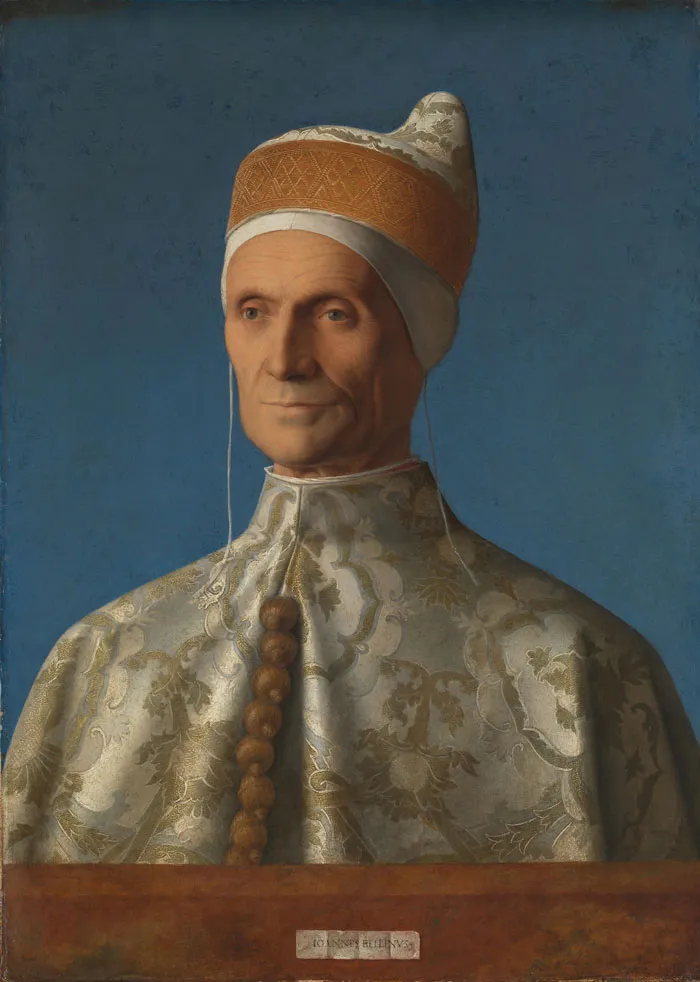
Artist: Giovanni Bellini | Year (completed): 1502 | Period: Italian Renaissance
The doge, assumably Doge Leonardo Loredan, who was elected in 1501 as the ruler of the Venetian Republic, is depicted in the image wearing the distinctive regalia of office, including the corno, a pointed hat, and a mantle made of white and gold damask silk with gold bell buttons. Bellini delicately depicts the doge's authority and humanity in this painting. Spectators' eyes are drawn to the person and his ceremonial garb due to the wisely chosen plain background. Doge Loredan's attire makes up at least half of the entire composition. Bellini intentionally evokes the power and authority of a Roman portrait bust by using the bust format in his works.
Report
14points
#30 Victorine Meurent
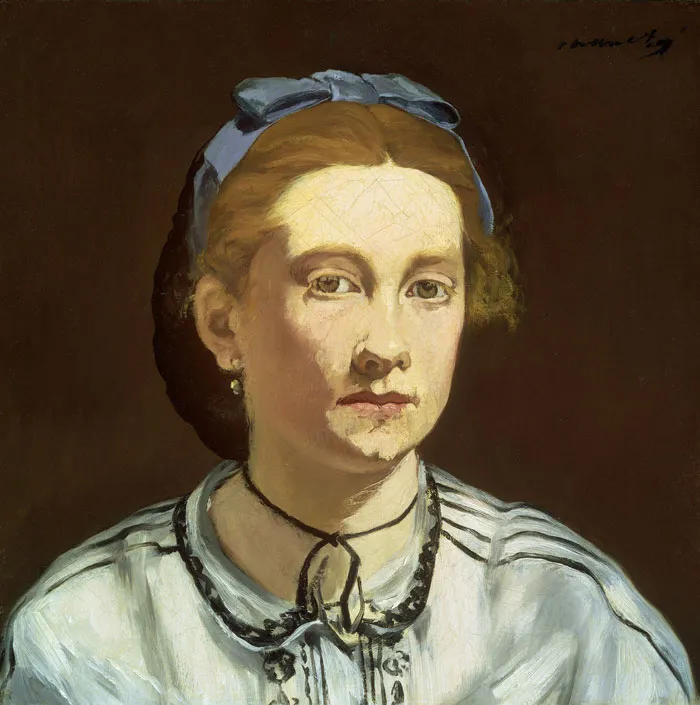
Artist: Édouard Manet | Year (completed): ~ 1862 | Periods: Impressionism, Realism, Modern art, Modernism
Victorine-Louise Meurent, a French painter herself, also served as a model for other artists. Despite being most well-known for being Édouard Manet's favorite model, she was also a respected artist in her own right. She frequently exhibited at the annual Paris Salon. While Manet's artwork was not, her paintings were chosen for the Salon's juried exhibition in 1876.
Report
13points
#31 Young Woman At A Table
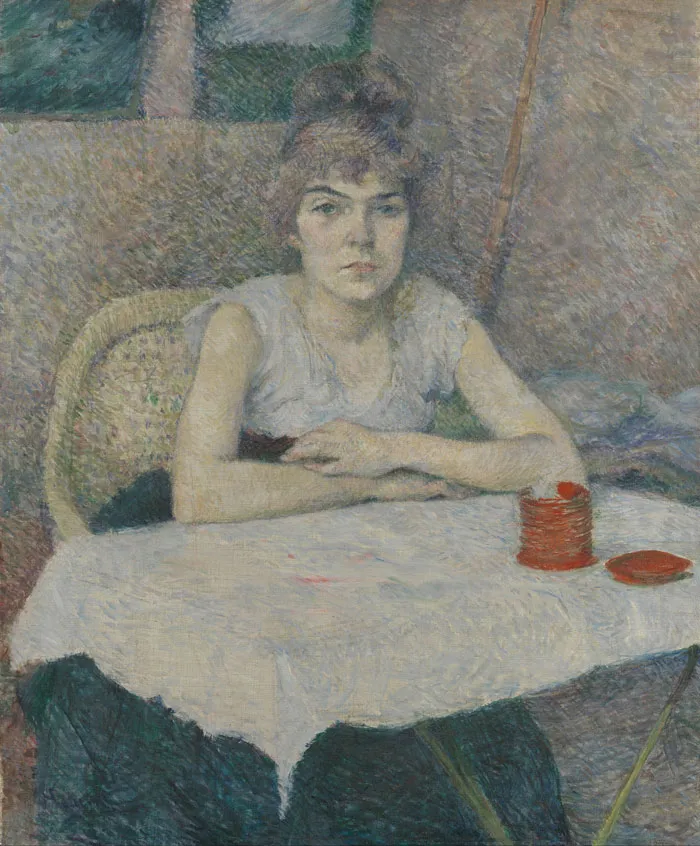
Artist: Henri De Toulouse-Lautrec | Year (completed): 1887 | Periods: Modern art, Post-Impressionism
Henri de Toulouse-Lautrec, a French painter, produced Young Woman at a Table in 1887. This portrait of a young woman sitting in the artist's studio is typical of French painting from the late 19th century. Vincent van Gogh, a close friend of Toulouse Lautrec, liked this piece and promptly told his brother Theo to buy it. At this time, artists in Paris would frequently spend time together, exchanging ideas and purchasing one another's artwork. A red container containing rice powder, used as cosmetics back then, is placed in front of the model. The details in this picture, including the rice container, are softly conveyed, generating an impression rather than an exact replica of reality. This style was initially utilized by the Impressionists several decades earlier and would significantly influence Toulouse-Lautrec. He liked the softness and thought it would perfectly suit his several intimate portraits like this one.
Report
13points
#32 Portrait Of A Young Woman
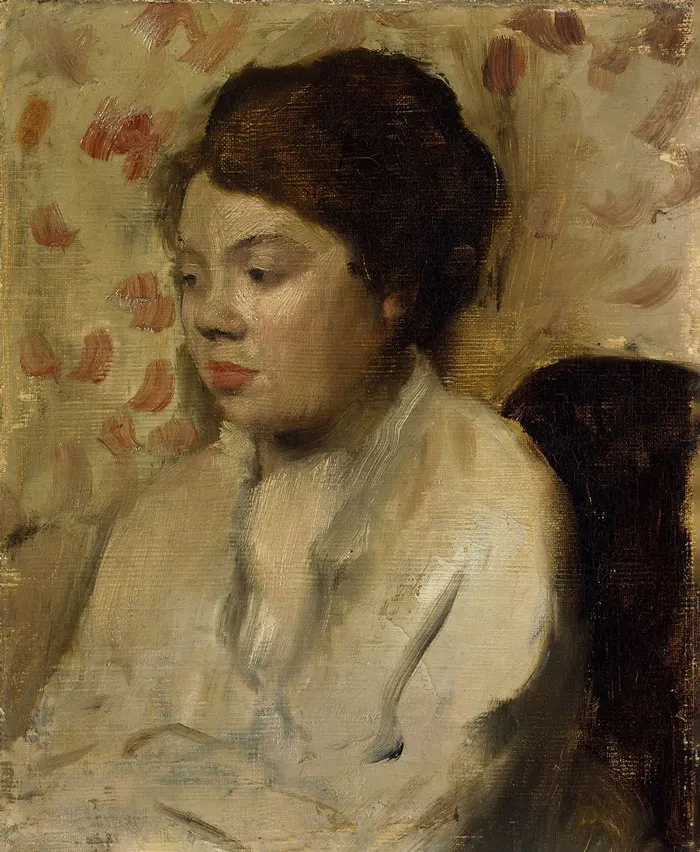
Artist: Edgar Degas | Year (completed): 1885 | Period: Impressionism
This small portrait appears to be a hastily completed study of figure type and mood. Degas, who was acutely aware of the subtleties of posture and expression, concentrated on catching the woman's thoughtful stare while portraying the background and her attire more succinctly. Degas' portraits are notable for depicting human isolation and psychological complexity.
Report
12points
#33 Girl In A Sailor’s Blouse
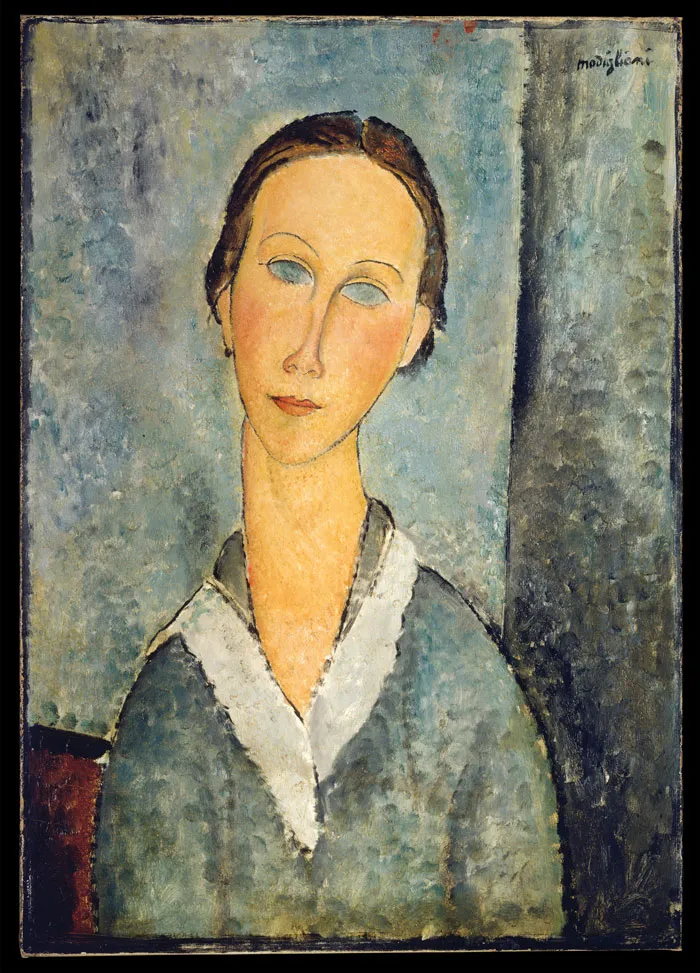
Artist: Amedeo Modigliani | Year (completed): 1918 | Period: Expressionism
For a year, in poor health, struggling with chronic illness, Modigliani resided in the south of France, primarily in Nice, hoping to recover and heal in a gentle climate, and that is where he painted Girl In A Sailor's Blouse. He didn't have his usual group of friends, so he used young local servants, shopgirls, and kids as models. Modigliani's extended portraits are easily recognizable as his distinctive style. His depiction of the sitters' faces - flat and mask-like, with almond eyes, twisted noses, and pursed mouths - reveals his interest in African masks and sculpture. His portraits capture the subject's essence with a razor-sharp perception despite their great austerity of composition and bland backgrounds.
Report
12points
#34 The Emperor Napoleon In His Study At The Tuileries
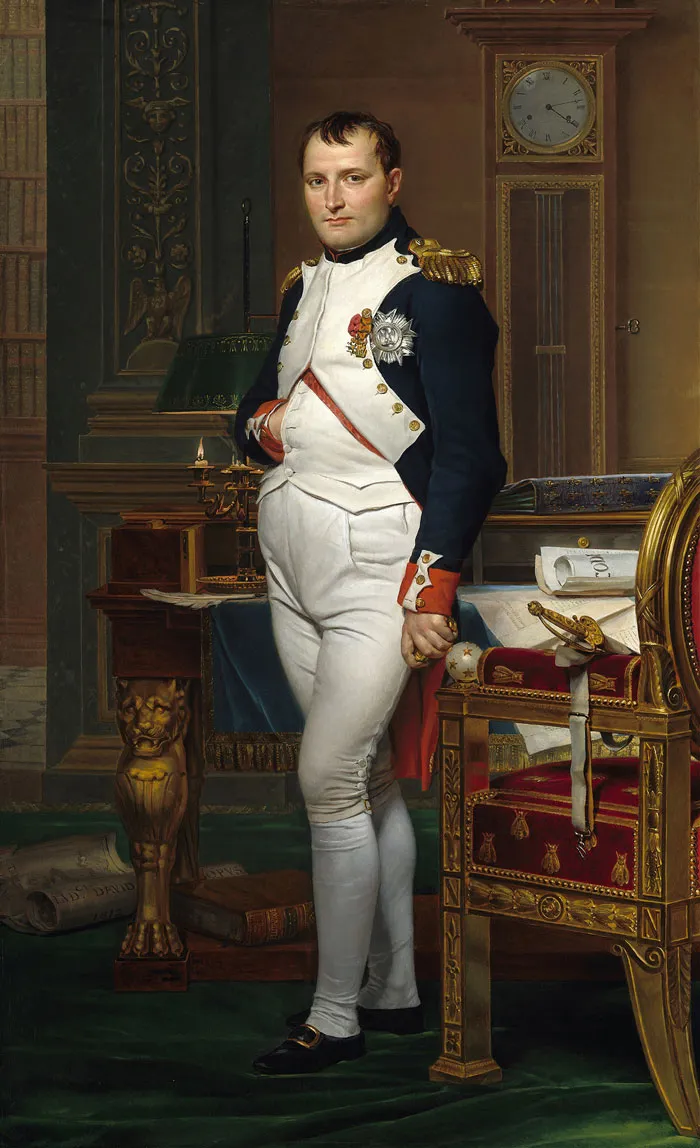
Artist: Jacques Louis David | Year (completed): 1812 | Period: Neoclassicism
In this well-known portrait by Jacques Louis David, Napoleon is posed in the middle of a vertical canvas, wearing the uniform of a colonel of the Foot Grenadiers of the Imperial Guard. His posture, which contrasts with the formality of his attire, comprises slightly bent shoulders and a hand in his vest. In addition, he has undone cuffs, wrinkled leggings, and messy hair. In a letter to the portrait's patron, Alexander Douglas, David explained that the painting intended to give the impression that Napoleon had spent the entire night writing the Napoleonic Code in his study. This impression is reinforced by small details like the flickering candles almost smothered, the quill pen and papers strewn across the desk, and the clock on the wall that reads 4:13 a.m.
Report
12points
#35 Homage To Delacroix
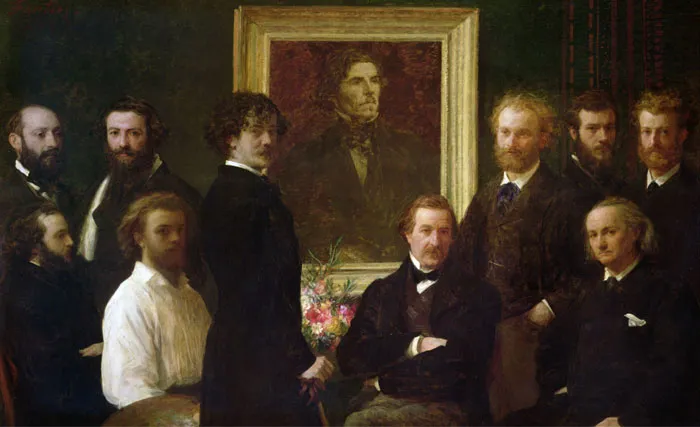
Artist: Henri Fantin-Latour | Year (completed): 1864 | Movement: Impressionism
Henri Fantin-Latour painted this group portrait in 1864, featuring a number of his contemporaries gathered around a self-portrait of Eugène Delacroix, who had passed away a year earlier. Fantin-Latour is depicted alongside nine other young French artists, all of whom went on to achieve stardom as artists. This painting is particularly noteworthy because it was completed at the start of the French Impressionism movement, to which many of the participants would make significant contributions. The person to whom the homage is being paid is Eugène Delacroix, who was widely considered to be the leader of the French Romantic School of art. He was well-regarded by his contemporaries at the time and drew inspiration from the Italian and Northern Renaissance painters.
Report
12points
#36 Portrait Of A Man With A Ring
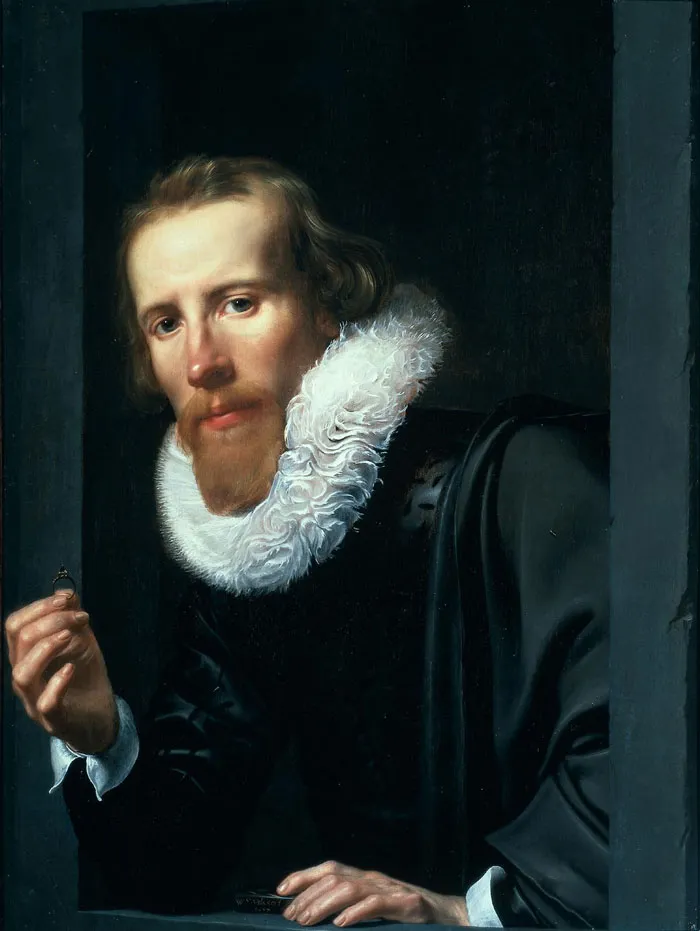
Artist: Werner Van Den Valckert | Year (completed): 1617
This perfectly preserved portrait showcases Van den Valckert's refined painting style. The illusionistic effect of the man leaning out of a nook, which looks like it fades away on the left, is mainly responsible for the image's vibrancy. The goldsmith, Bartholomeus Jansz van Assendelft, is believed to be the sitter as he was named assay-master of the Leiden goldsmiths' guild in 1617, the year the portrait was created. Thus, the gold ring the man in the portrait holds in his right hand and the touchstone, an instrument for assessing the purity of gold and silver objects, on which his left hand rests, indicate his occupation and position in society.
Report
12points
#37 Bindo Altoviti
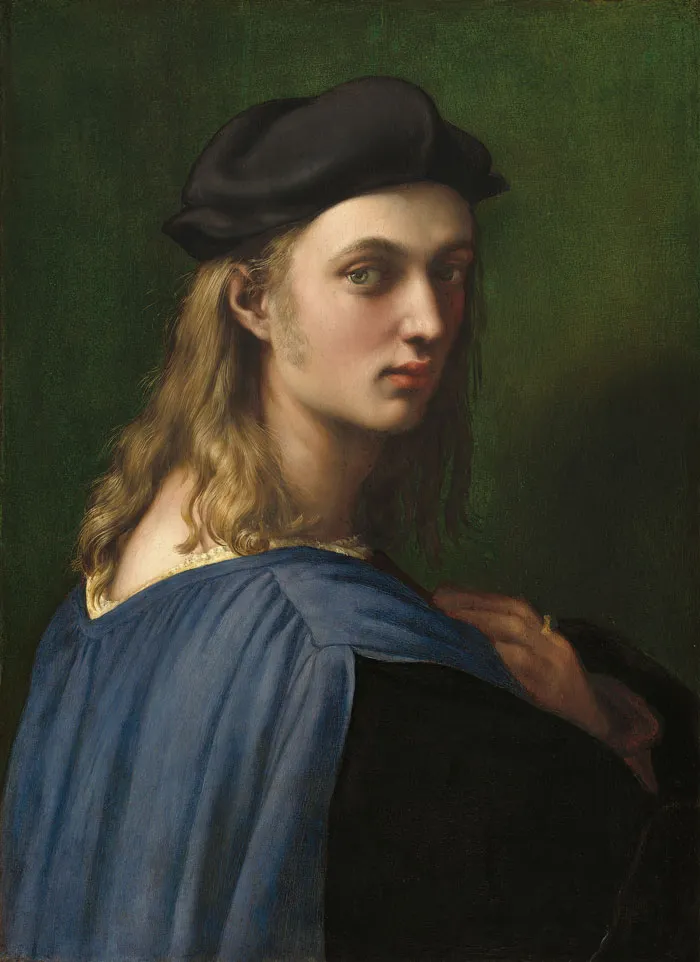
Artist: Raphael | Year (completed): 1515 | Period: High Renaissance
One of the sixteenth century's wealthiest and most influential bankers was Bindo Altoviti, who made politically astute loans to popes, the Venetian state, and French rulers. Bindo, born in Rome to a Florentine father, spent time in both places. Raphael captured his visage while he was young, and Benvenuto Cellini cast his likeness in bronze some years after this picture. Salviati must have learned the technique for this lavish portrait in Rome, where it was painted on marble and completed at the pinnacle of Bindo's career. The heavy curtain, fur trimmings, silks, and velvets, however, have a more Venetian feel to them than Roman or Florentine.
Report
11points
#38 Self-Portrait
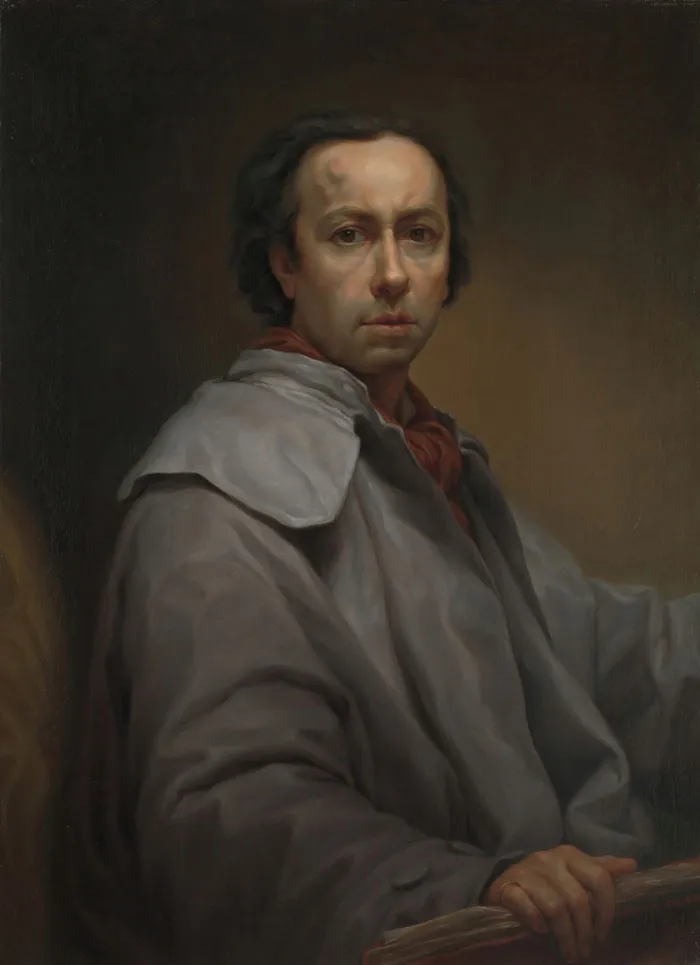
Artist: Anton Raphael Mengs | Year (completed): 1776 | Period: Neoclassicism
Mengs, born in Bohemia, the present-day Czech Republic, rose to prominence as a painter in the third quarter of the eighteenth century in Dresden, Rome, and Madrid. Mengs's self-portraits are essays in frankness, in contrast to his portraits of famous subjects, renowned for their finesse, attention to detail, and refined beauty. A physical flaw may be seen on his forehead as the discolored swelling from around 1760. In 1769, he was obliged to resign from his job as a court painter in Madrid due to ill health, but he later went back between 1774 and 1777. Three more versions of this self-portrait are also known.
Report
11points
#39 Portrait Of Jacob Meyer De Haan
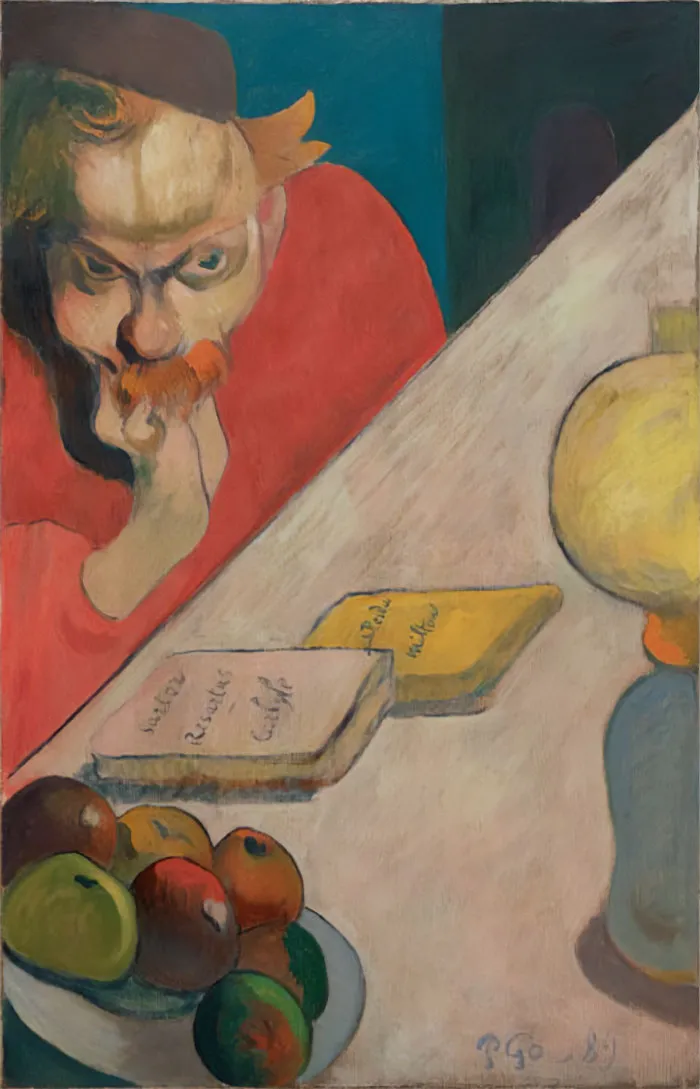
Artist: Paul Gauguin | Year (completed): 1889 | Movement: Post-Impressionism
In the painting, Meijer de Haan, a friend of Gauguin's and a Dutch painter, is portrayed brooding with his chin resting on his hand as he muses over religion and philosophy, topics alluded to in Thomas Carlyle's novel Sartor Resartus and John Milton's epic poem Paradise Lost. Meanwhile, the bowl of apples alludes to both the fruit that tempted Eve in Eden and to still life paintings by Gauguin's favorite contemporary, Paul Cézanne. The canvas is divided by the table, which is depicted as a strong diagonal. This dynamic composition, the broad swathes of vivid color, and De Haan's mask-like visage are typical of Gauguin's modern painting style.
Report
11points
#40 Self-Portrait
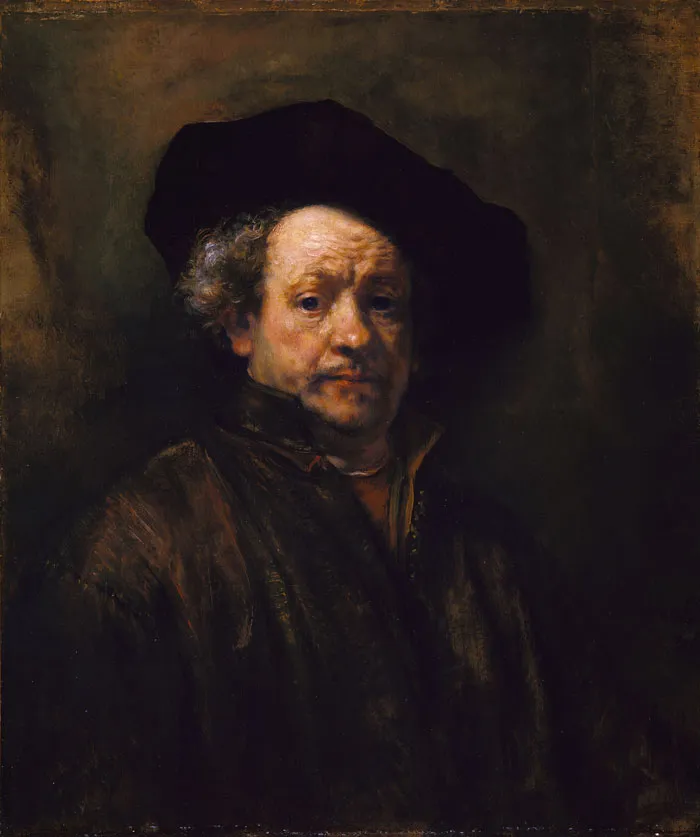
Artist: Rembrandt Van Rijn | Year (completed): 1660 | Period: Baroque
Rembrandt spent his entire life painting self-portraits, and there are currently about 40 of them. In this painting, which Rembrandt completed at 53 or 54 years of age, the artist spared no expense in capturing the effects of aging on his own face. Rembrandt is credited with painting living subjects who, through the expressiveness of their face, conveyed how they had realistically "lived" their lives, providing insight into the human condition. This particular self-portrait of Rembrandt's is regarded as one of his finest creations. He is depicted wearing a scarlet waistcoat over a thick, brown coat. His face has warm, transparent shadows. Here, Rembrandt presented himself with a creased brow and a troubled look, just as he may have appeared to other people because he was going through a difficult financial period at the time. Despite the worry lines on his forehead, the spark in his eye and a sense of pride can still be seen through the jaunty tilt of his cap and his slightly elevated head.
Report
10points