







Horses are hands-down the most majestic creatures oozing grace and mystique (as seen in the eyes of your writer, a life-long sufferer of a heavy horse addiction). The sound of their hooves on frozen ground, their velvety noses and soft snorts truly do have a profound effect on a human being, but this side has been widely documented in various phrases, aphorisms, and poems. What the poems tend to keep silent about, though, is a horse's ability to fart straight in your face and then spook at it. Right, spook at their own farts. They are also absolute masterminds at looking for trouble and champions at injuring themselves in the silliest possible ways (most often by forgetting they have four legs). And oh, the work that comes with owning one…! All very worth it, but forget about sleeping in, like, ever.
Anyway, you haven't opened this article to read a rant, but rather check out our collection of interesting facts about horses, right? So, here they are! And if you know horses from pictures only, you'll probably be surprised to know that they are highly social, very intelligent animals (remember, equestrian sports are the only Olympic sports including animals!), capable of emotions and forming strong bonds with their owners. Of course, not everything on this list is as serious as this, for there are also some fun facts about horses included. For instance, a mention of a horse's inability to puke, funny mustaches, and them being solid gluttons, eating for about 18 hours a day. See, there's so much interesting stuff to be learned about horses!
And before your writer starts ranting again about getting a rash from a piece of straw stuck under a sweater or regularly stepping into fresh piles of manure, let's end this introduction and skip straight to our list of horse facts. They are just, as usual, a bit further down. Once you are there, be sure to rank these cool facts since now they're all jumbled up. And lastly, share this fun horse trivia with anyone you'd like!
#41
Their amused expressions are not signs of laughter.
Instead, the flehmen reaction refers to this activity, which is focused on acquiring a better whiff of an intriguing scent. The process enables the transport of pheromones and other odors to the vomeronasal organ (VMO), which subsequently communicates with the brain to cause physiologic and behavioral responses.
unknown
Report10points
#42
The tallest horse ever measured was 21.25 hands tall (2.20m).
Sampson, a Shire horse, was born in Bedfordshire, England, in 1846 and measured an impressive 21.25 hands. He was over seven feet tall at the withers, which hasn't been surpassed since. Additionally, he weighed a staggering 3,360 pounds (1,524 kg)!
unknown
Report9points
#43
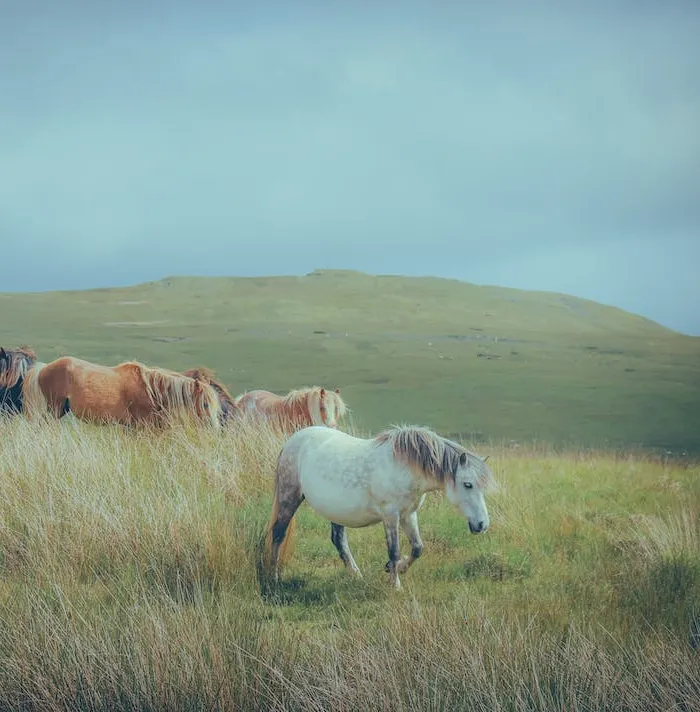
True wild horses are no longer present in the world.
The Przewalski's horse was once believed to be the sole "genuine" wild horse breed. The majority of horses that are currently thought of as wild, such as the American Mustangs and Australian Brumbies, are actually descended from domestic horses. Since truly wild horses have never been domesticated, the term "feral" is the one that best describes these animals.
9points
#44
American Quarter Horse is known for being the most popular horse breed.
Over 2.8 million horses were registered with the American Quarter Horse Association, the largest breed society in the world, in just 2020. Currently, 2.4 million Quarter Horses live in the United States, and many more are dispersed throughout the globe.
unknown
Report9points
#45
With fewer than 200 left, the Sorraia is the rarest horse breed.
These wild ponies, who were originally from Portugal, were on the verge of extinction in the early 20th century. It is believed that sorries are descended from early horses that were indigenous to southern Iberia. They have simple patterning on their legs, including zebra stripes and a dorsal line. They can have a convex profile and come in a variety of dun shades.
unknown
Report9points
#46
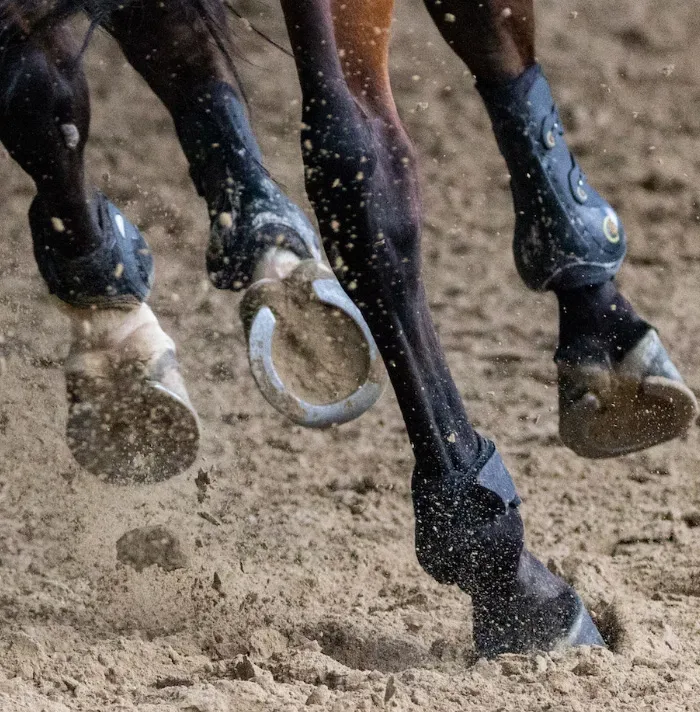
An animal's frog acts as a built-in shock absorber.
A triangle-shaped feature on the horse's foot's sole is the frog. Shock absorption and distribution to the internal digital cushion, a spongy structure under the horse's heels, is one of its many purposes. The horse's joints and bones are protected from concussive stresses thanks to the frog's inherent capacity to absorb and disperse shock.
Report
9points
#47
Horses are herbivores.
Typical traits of herbivores include the shape of their teeth (grinding molars to break down fibrous plant material), the placement of their eyes (facing to the side to be on the lookout for predators), and the sort of digestive system they have.
unknown
Report9points
#48
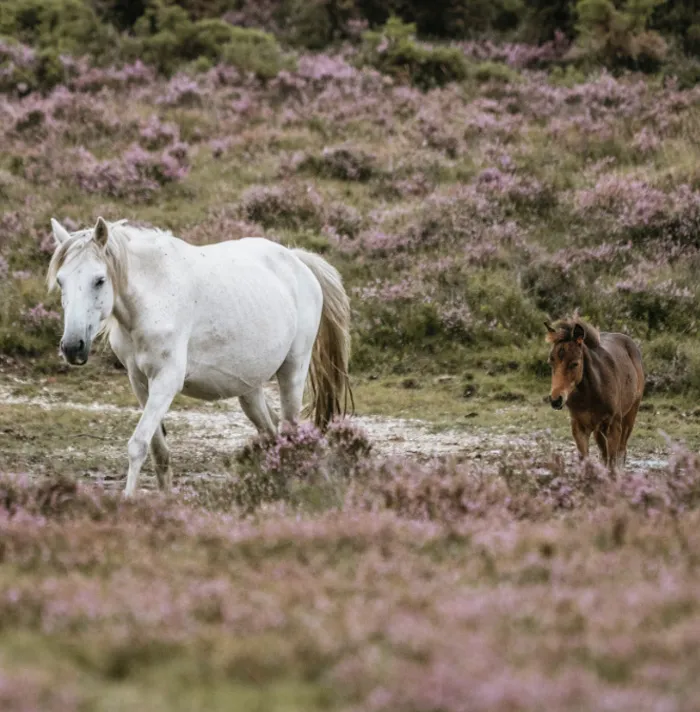
A foal is a baby horse.
What distinguishes a filly from a colt from a foal? Age and gender both play a role. A foal is typically a young horse. It is referred to as a weanling once it has been weaned from its dam. But up until the age of four, horses are still considered fillies or colts.
Report
9points
#49
There is one breed that has a metallic coat.
The coat of the Akhal-Teke horse is renowned. Many well-cared-for horses have lovely sheens, but this breed has a naturally metallic gleam. Everything has to do with the way its hair is structured. The Akhal-Teke's hair strands lack or have a very small core, unlike the opaque core found in the majority of horse breeds. It is replaced by the transparent portion of the hair, which causes each hair to appear to shimmer as light is bent and refracted as it passes through.
unknown
Report9points
#50
Horses are highly intelligent.
According to 2012 research, horses recognize and recall people using information from many senses. The horses could tell a familiar human from an unfamiliar one just by their sounds (without using sight or smell). The horses were also capable of the opposite, distinguishing between groups of people solely based on their appearance and odor rather than their voices.
unknown
Report9points
#51
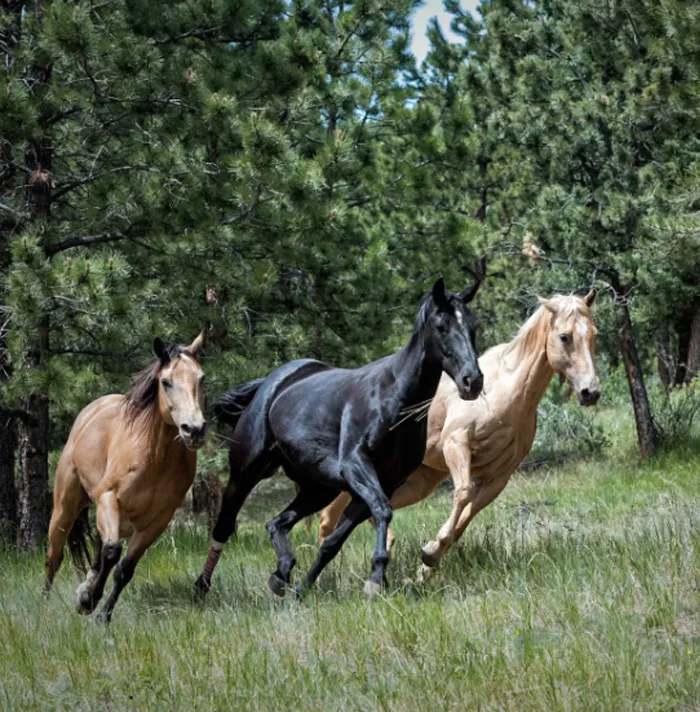
The record-breaking speed for a horse sprint is 55 MPH (88.5 KPH).
A Long Goodbye, a racing Quarter Horse, reached this astounding pace over a quarter-mile distance in 2005. (0.40 km). The horse ran parts of the race at nearly 50 mph and finished in exactly 20.686 seconds.
Report
8points
#52
Keratin makes up the hooves of horses.
Horses' hooves are formed of keratin, the same protein that makes up our hair and nails. It is crucial that your horse has frequent trims because they are continually growing. This is crucial, especially for young horses, whose legs may become twisted and whose welfare may be jeopardized by neglected hooves.
unknown
Report8points
#53
No horses with albinism exist.
Horses do not exhibit albinism. Some coat hues, such as maximal sabino, cremello, or perlino, may initially appear to be albinos. However, studies have proven that this color-causing gene is not an albino gene. Rarely, a horse may be born completely white with pink skin, giving the impression that it is an albino. Dominant white is a color that is fundamentally distinct from albinism. Albino animals have a normal number of pigment cells, whereas dominant white horses have none. Lethal White Syndrome, a disorder, is connected to a gene that some white foals will possess.
unknown
Report8points
#54
Compared to other breeds, some Arabian horses have one fewer vertebra.
The Arabian horse is the foundation of many other light horse breeds. They also possess some unique characteristics. Most Arabian horses have one fewer vertebrae, rib bone, and tail bone than other horses.
unknown
Report8points
