







Horses are hands-down the most majestic creatures oozing grace and mystique (as seen in the eyes of your writer, a life-long sufferer of a heavy horse addiction). The sound of their hooves on frozen ground, their velvety noses and soft snorts truly do have a profound effect on a human being, but this side has been widely documented in various phrases, aphorisms, and poems. What the poems tend to keep silent about, though, is a horse's ability to fart straight in your face and then spook at it. Right, spook at their own farts. They are also absolute masterminds at looking for trouble and champions at injuring themselves in the silliest possible ways (most often by forgetting they have four legs). And oh, the work that comes with owning one…! All very worth it, but forget about sleeping in, like, ever.
Anyway, you haven't opened this article to read a rant, but rather check out our collection of interesting facts about horses, right? So, here they are! And if you know horses from pictures only, you'll probably be surprised to know that they are highly social, very intelligent animals (remember, equestrian sports are the only Olympic sports including animals!), capable of emotions and forming strong bonds with their owners. Of course, not everything on this list is as serious as this, for there are also some fun facts about horses included. For instance, a mention of a horse's inability to puke, funny mustaches, and them being solid gluttons, eating for about 18 hours a day. See, there's so much interesting stuff to be learned about horses!
And before your writer starts ranting again about getting a rash from a piece of straw stuck under a sweater or regularly stepping into fresh piles of manure, let's end this introduction and skip straight to our list of horse facts. They are just, as usual, a bit further down. Once you are there, be sure to rank these cool facts since now they're all jumbled up. And lastly, share this fun horse trivia with anyone you'd like!
#21
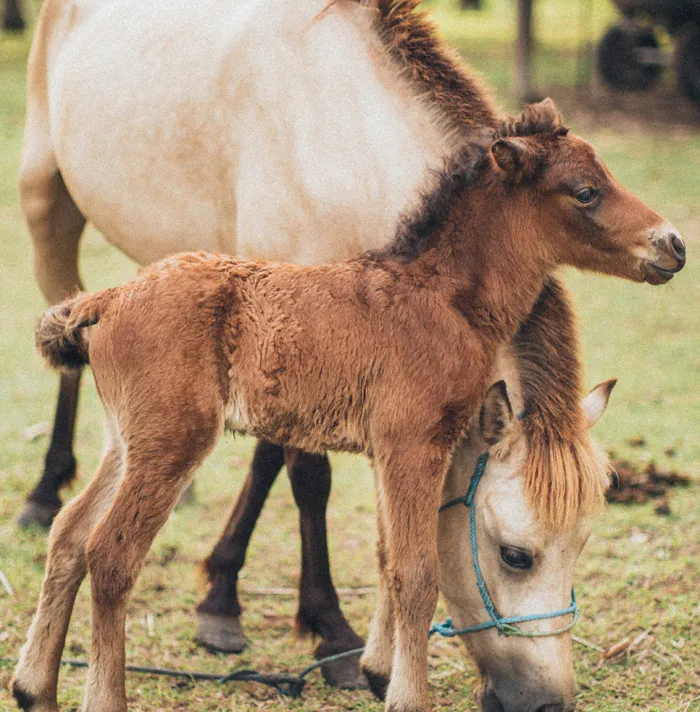
Horses are capable of walking and running within a few hours of birth.
A newborn foal's survival in the wild depends on its ability to keep up with the herd. Horses have long legs and completely developed hooves at birth because of evolution.
Report
13points
#22
Twin horses are incredibly uncommon.
Horses, unlike the majority of mammals, are not designed to support multiple fetuses. A veterinarian would typically remove the smaller embryo when an ultrasound shows that the pregnancy is twins in order to protect the mare and the other foal. Owners of mares might choose to keep both foals despite the risk if such a pregnancy is not discovered early. Most people cannot afford the expensive surgery required to remove one of the foals later.
unknown
Report13points
#23
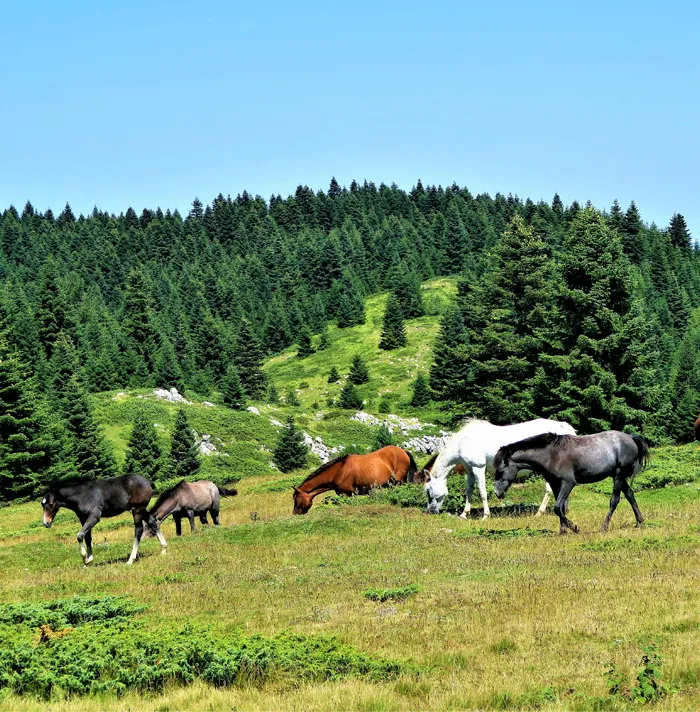
Horses typically live 25 to 30 years.
Domestic horses are living longer, healthier lives as equestrian care and veterinary medicine advance. Although the maximum age a horse can reach is still constrained by genetics, nutrition, and environmental variables. Ponies typically live longer than horses do, and many will survive past the age of 40. A few horse breeds, including the Haflinger, Appaloosa, Icelandic Horse, Quarter Horse, and Arabian types, also have longer life expectancies than the general population.
Report
12points
#24
Approximately 60 million horses exist in the world today.
Except for Antarctica, every continent has horses. The United States is the nation with the greatest number of horses in the world. The Food and Drug Administration estimates that there are about 3.8 million horses in the United States in the 2020 report. By comparison, the 2008 estimates of 9.2 million show a dramatic fall.
unknown
Report12points
#25
Horses' teeth are larger in males than in females.
Male horses frequently have 40 teeth while mares only have 36 because stallions and geldings are more likely to have wolf teeth. Approximately 70% of horses will grow wolf teeth between the ages of 5 months and 1 year, according to thehorse.com. Glennon Mays, a veterinarian, claimed that horses' ancestors were little browsers that lived in woodlands. Their major sources of food were twigs and leaves, which they chewed thoroughly using their wolf teeth.
unknown
Report12points
#26
The record-breaking miniature horse measured just 17.5 inches.
Due to her exceedingly diminutive stature, Thumbelina (2001–2018), a dwarf miniature horse, gained notoriety all over the world. Thumbelina was the tiniest horse ever, measuring just 17.5 inches (44.5 cm) tall and weighing 57 pounds (26 kg). The tiny chestnut mare was born in St. Louis, Missouri, on a farm for miniature horses. Thumbelina even went on tour in the US to meet her fans after being inducted into the Guinness Book of World Records.
unknown
Report12points
#27
The typical horse's heart measures over ten times larger than a human's.
A human heart typically weighs only 10-12 ounces (0.28-0.34 kg), whereas the average horse heart weighs 9-10 pounds (4-4.5 kg). Racehorses have even larger hearts, and many racing legends credit their success to their large hearts. If you are aware of your horse's body weight, you may quickly determine how heavy his heart is. According to research, a horse's heart weighs about 1% of his total body weight.
unknown
Report12points
#28
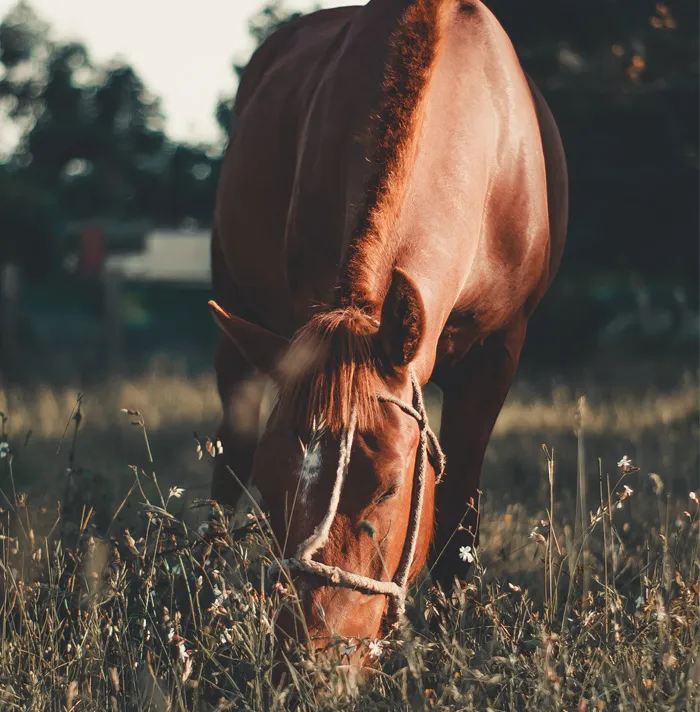
Horses have a fixed pelvis.
It doesn't allow them to do splits. However, they can move laterally, which enables them to use their rear feet to scratch their ears.
Report
11points
#29
There are over 600 horse breeds.
These five subcategories—hot-blood, warm-blood, cold-blood/draft, pony, and miniature—comprise all recognized horse breeds. Arabian, Thoroughbred, and Barb horses, which have their roots in the Middle East, are examples of hot-blooded horses. In contrast, northern Europe is where cold-blooded (heavy) horses and ponies evolved.
unknown
Report11points
#30
Cloning horses have been successful.
A genetically similar mother gave birth to Prometea, a Haflinger filly, in Italy in 2003. After the birth of a mule clone earlier in 2003, she was the first horse to be successfully cloned. The cloning of horses and other animals is still a subject of great debate. The technology might, however, be used to clone geldings and use them as breeding stallions, according to some equestrian experts.
unknown
Report11points
#31
Horses have four standard gaits.
The walk, trot, canter, and gallop are the four natural gaits of horses. Even though they are not the same, the terms "canter" and "gallop" are frequently used synonymously by laypeople. A four-beat pace called a gallop is far faster than a three-beat gait called a canter. Some horse breeds have additional gaits in addition to the four fundamental ones. For instance, the Icelandic horse is renowned for its tölt gaits and easy but quick speed.
unknown
Report11points
#32
Horses have been known to jump as high as 8 feet 1.25 inches.
On February 5, 1949, in Vina del Mar, Chile, Captain Alberto Larraguibel Morales rode Huaso ex-Faithful and cleared 8 ft 1.25 in (2.47 m). According to the FEI, jumpers must clear 2.49 meters in order to surpass the Thoroughbred's previous record. It's interesting to note that American Fred Wettach Jr. and his horse King's Own currently hold the unofficial record. In front of 25 spectators, the pair made a jump of 8 feet, 3.5 inches (2.53 meters), but it wasn't an official attempt.
unknown
Report11points
#33

The 1,000 km-long horse race.
The Mongol Derby, which takes place every year and spans 1,000 km (621 mi) of the Mongolian steppe, is the world's longest and toughest horse race. Each year, more than 45 competitors ride semi-feral native horses to the finish line. Around 1,500 Mongolian horses are reportedly trained for the race each year, according to equestrians. Before the race begins and after each part is finished, the horses are examined by a veterinarian. Only competitors with totally healthy and fit horses are allowed to continue.
Report
11points
#34
Horses can drink approximately 5 l of water per 100 kg of body weight each day.
Getting enough water in is just as important as eating the right foods. For instance, a 500 kg horse would consume about 25 l every day. Of course, other factors like the horse's age, the environment's humidity, and how it is trained also play a role in this.
unknown
Report11points
#35
According to estimates, the horse's first ancestor lived 55 million years ago.
Only the size of a Labrador retriever, its ancestor. According to evidence from archaeological sites, the domestication of horses began around 6000 years ago in the grasslands of modern Ukraine. They were initially domesticated as a source of food.
unknown
Report10points
#36
Horses don’t have collarbones.
Collarbones stabilize the shoulders and join the arms to the skeleton in the majority of animals. In contrast, the thoracic sling serves this purpose in horses. The muscles, tendons, and ligaments that connect the forelimbs to the rest of the body are collectively known as the thoracic sling. Horses and other four-legged runners don't have collarbones because it allows them to move more quickly.
unknown
Report10points
#37
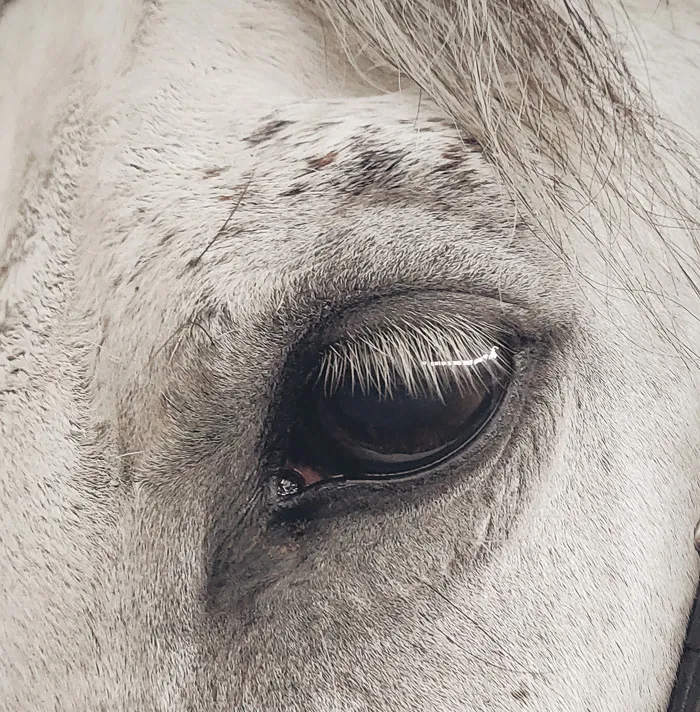
The largest eyes of any land mammal are found in horses.
In terms of raw size, horses' eyes are larger than those of all other land mammals. Horses have eyes that are eight times larger than ours! When compared to other breeds, Arabian horses have very big eyes.
Report
10points
#38
The Americas did not originally have horses.
Although the modern horse didn't originate in the Americas, its relatives did before mysteriously falling extinct between 8,000 and 12,000 years ago. Climate change and human overhunting are two potential factors that scientists are still looking into. Fortunately, about 2-3 million years ago, horses migrated from Alaska to Eurasia, where they were able to survive. Horses had vanished from America and weren't seen again until Christopher Columbus brought them back in the late 15th century.
unknown
Report10points
#39
You may determine a horse's age by looking at its teeth.
Although you can't determine a horse's exact age by looking at its teeth, you may make an educated guess. Senior horses must be fed with additional caution because they sometimes live longer than their teeth, necessitating proper equine dental care.
unknown
Report10points
#40
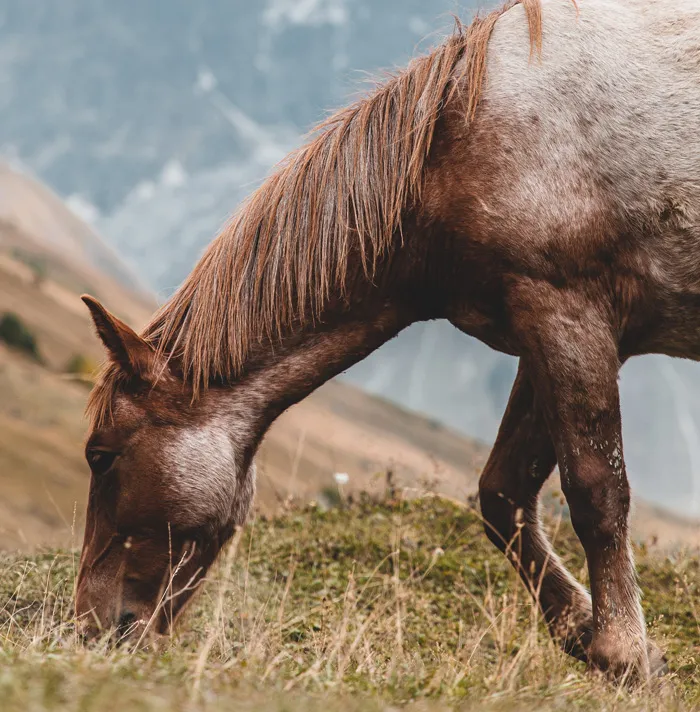
The resting respiratory rate of a horse is approximately 8–14 breaths per minute.
It's crucial to be aware of your horse's resting pulse and respiratory rate. Even though a horse's resting respiration rate might be as low as eight breaths per minute, it can swiftly rise during exertion or in times of stress.
Report
10points
