





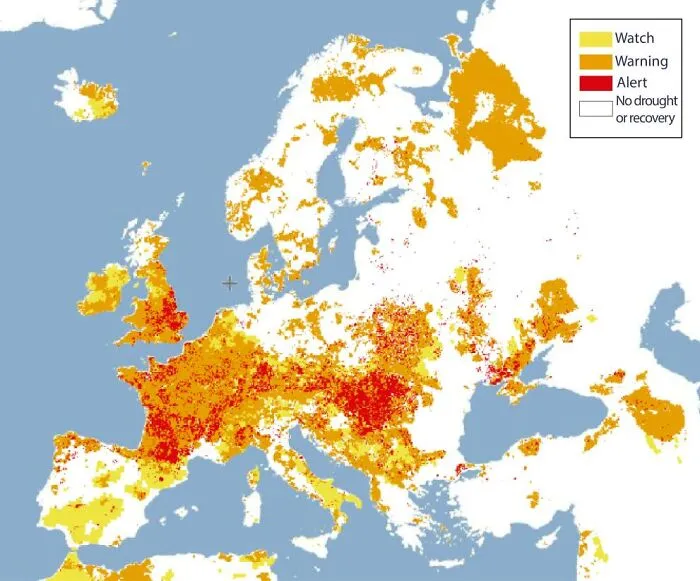
#1 Current Drought Situation In Europe (2026 July)
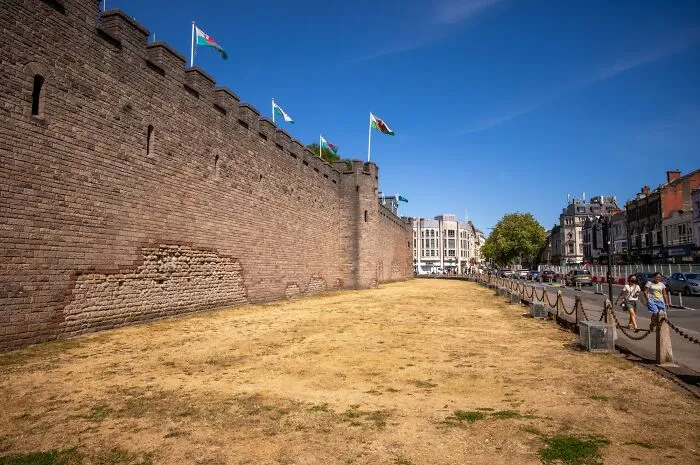
#2 Wales Daily Life 2026
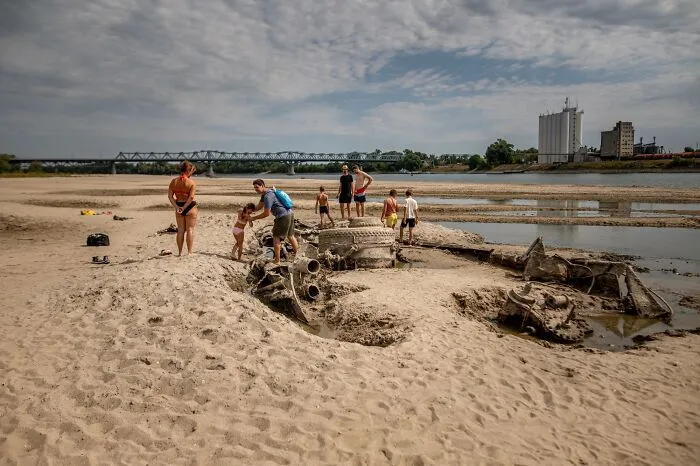
#3 Remains Of An Old World War II-Era Ship In Hungary
If you live just about anywhere in Europe, you already know the past few months have been hot, relentlessly hot—to a point well beyond pure discomfort. Amid record-breaking temperatures, some even above 40 degrees Celsius (104 degrees Fahrenheit), the European Commission’s Joint Research Centre notes, “excess mortality has risen sharply during the most extreme episodes.” With data still being collected, the World Health Organization (WHO) reported more than 10,000 excess deaths in just five countries, while data compiled by Bloomberg put the figure at 25,000.
Western Europe experienced its hottest June and July on record this year, with July marking its “third consecutive month of exceptional heat,” according to Samantha Burgess, strategic lead for climate at the European Centre for Medium-Range Weather Forecasts. In Central Europe, Slovakia’s Dolne Plachtince reached 42.2 degrees Celsius (108 degrees Fahrenheit) on August 6, while Austria’s Bad Deutsch-Altenburg hit an all-time high of 41.2 degrees Celsius (106.2 degrees Fahrenheit) on August 5.
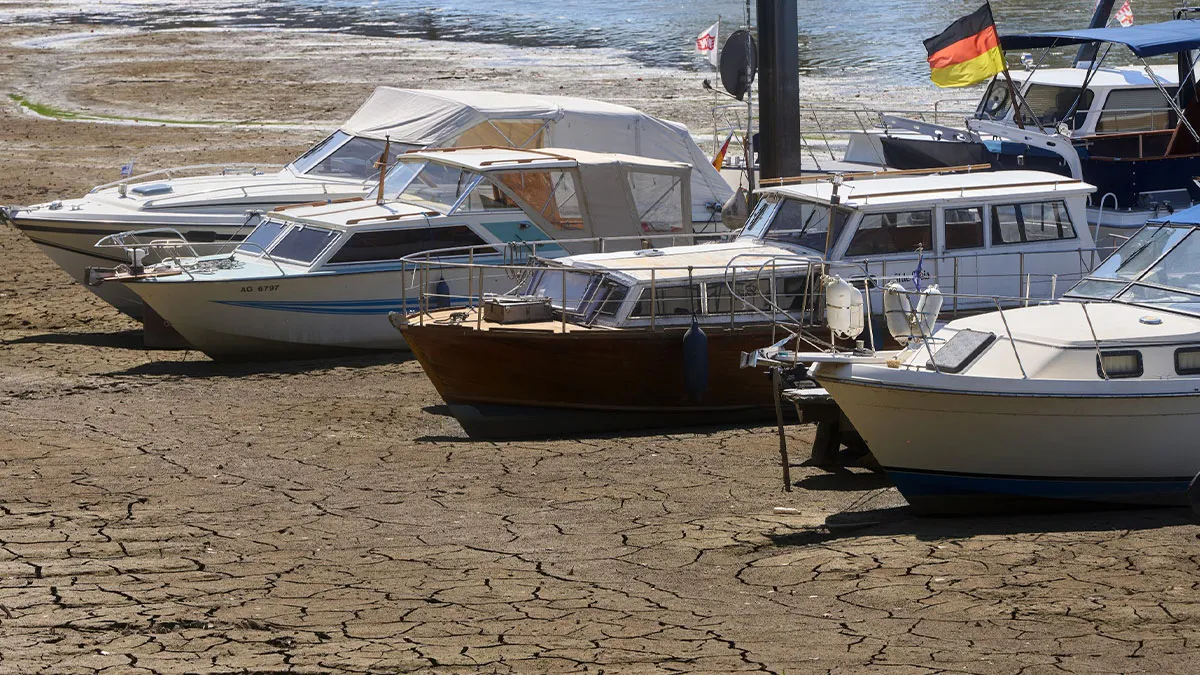
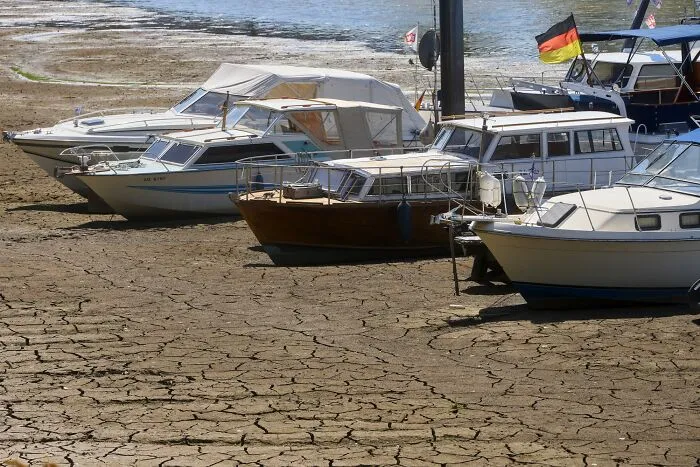
#4 Low Water: Recreational Boat Harbor Is Dry
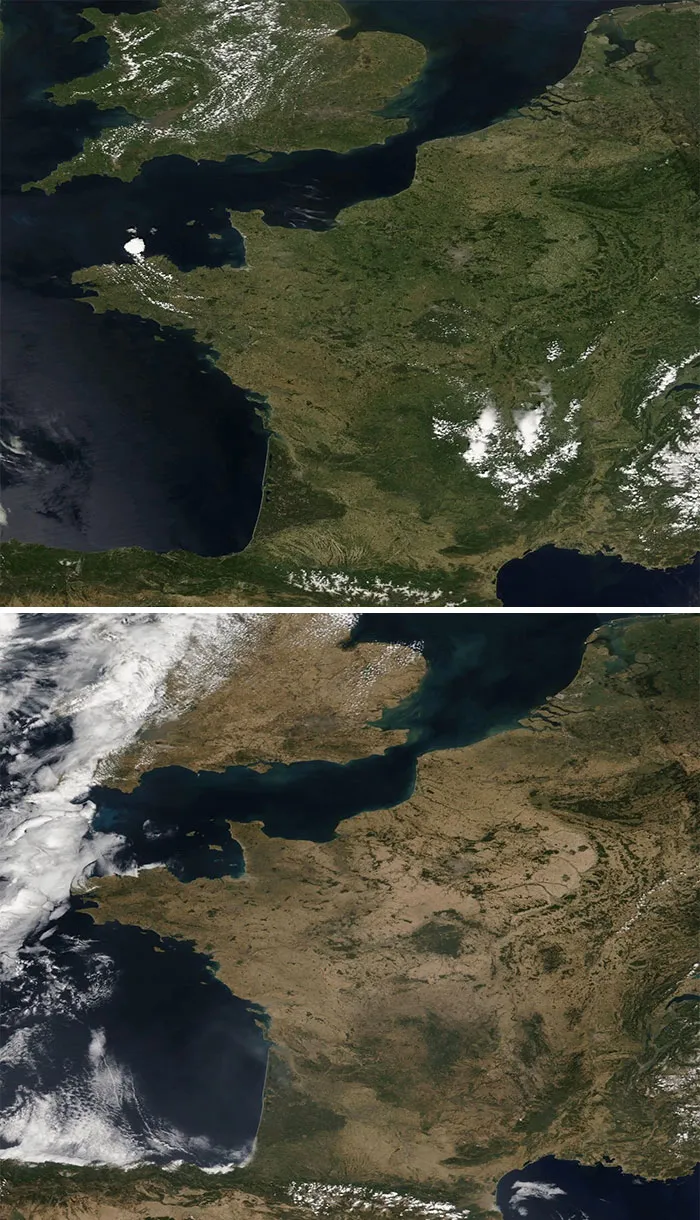
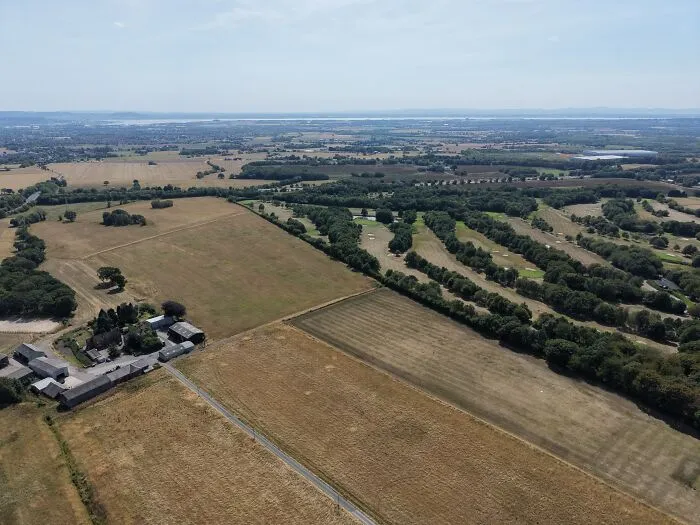
#5 England And France
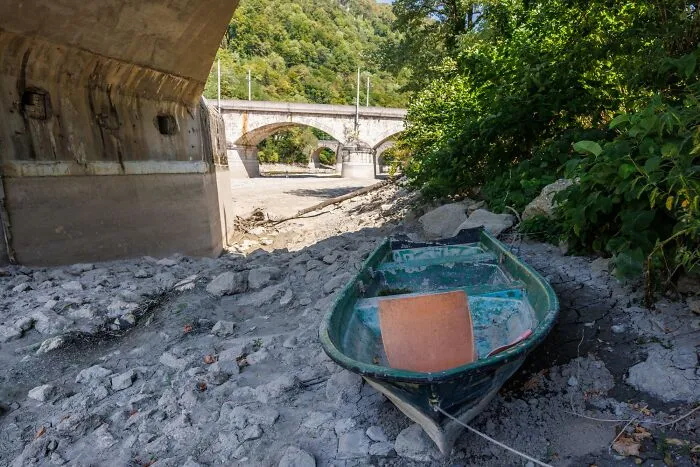
#6 A Boat Is Seen Stranded Under A Bridge In A Mostly Dry Riverbed
In Italy, also on August 6, authorities put all 27 of the country’s major cities on the highest heat alert for the first time this year. Official warnings advised people to avoid direct sunlight between 11 a.m. and 6 p.m. Even the UK was bracing for another spell of intense heat in August, with temperatures in parts of southeast England expected to reach 36 degrees Celsius (97 degrees Fahrenheit).
But these extreme temperatures, scientists warn, are not anomalies. Rather, they’re part of a recurring pattern of dry, heatwave-filled summers across Europe—a trend linked to global warming that scientists say could become increasingly normal as the climate warms. And it’s this bigger picture that brings us to the drought affecting much of Europe.
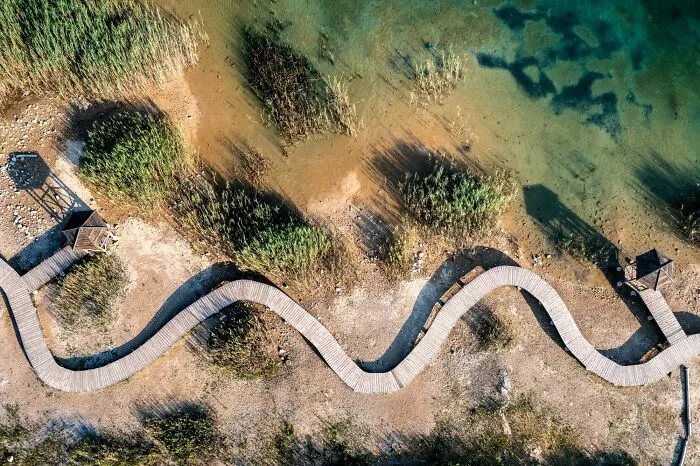
#7 The Lake With Turquoise Water Is Drying Up In Poland
#8 Drinking Water Is Becoming Scarce In The Southwest
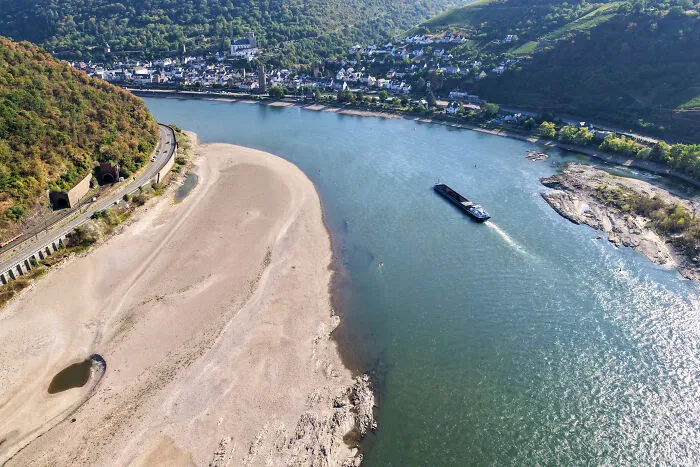
#9 Low Water Levels On River Rhine Disrupts Cargo
A sequence of extreme heatwaves, combined with lower-than-average rainfall since early spring, has compounded drought conditions across Europe. According to the European Commission’s Joint Research Centre, warning- and alert-level drought conditions were in effect in most of Europe in late July, with hotspots in France, Germany, Hungary, Romania, and the UK. The consequences are far-reaching, putting pressure on water supplies, crops, energy systems, river transport, tourism, and ecosystems, while also helping fuel an intense wildfire season.
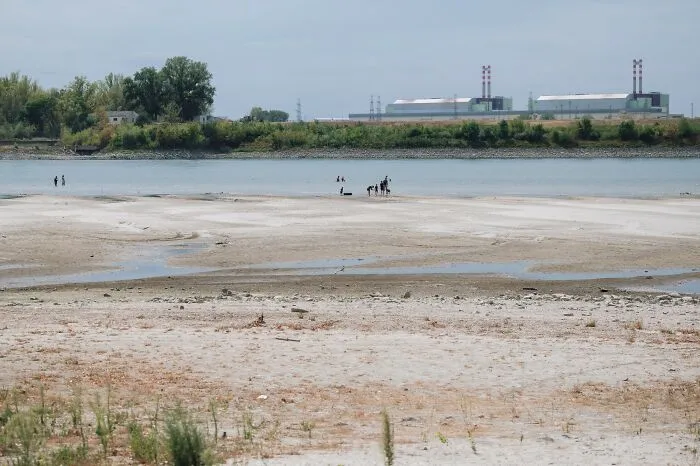
#10 Hungarian Nuclear Power Plant Paks Runs On Minimum Due To Water Shortage
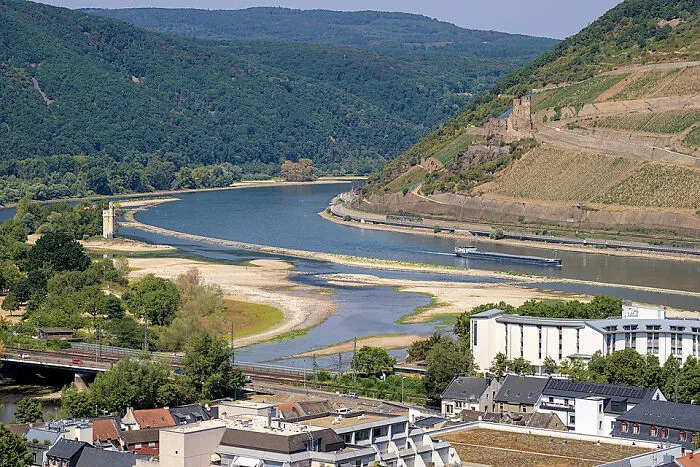
#11 Low Water Levels In August 2026 Near Bingen, At The Confluence Of The Rhine And Nahe Rivers
#12 Severe Drought Lowers Water Levels Around Nijmegen
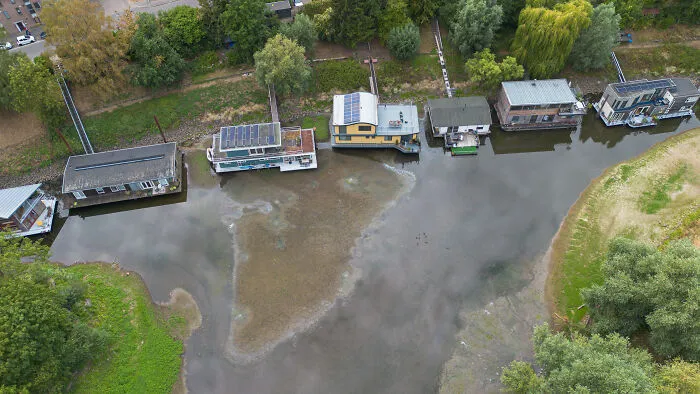
The effects are already visible in Europe’s waterways. The New York Times reports that rivers are running so low that cargo ships are being forced to reduce their loads, while hydropower generation and the cooling of nuclear reactors are also being affected. On the Rhine, a “vital economic artery” that stretches through six countries, water levels hit their lowest point since 1880, “disrupting supply chains, raising shipping costs and possibly forcing companies to scale back on production.”
Record-low water levels on the Danube, Europe’s second-longest river, are “forcing a scramble to keep electricity flowing in Hungary and Romania, which use water from the Danube to cool nuclear power reactors” while exposing the wrecks of World War II-era ships. Among other relics that have surfaced elsewhere, in Germany, the drought has even revealed a centuries-old “hunger stone” near Pirna, traditionally seen as a warning sign of the hardship that can accompany extreme dryness, when harvests are threatened, shipping is disrupted, and, in earlier times, famines could follow.
#13 Drought In London
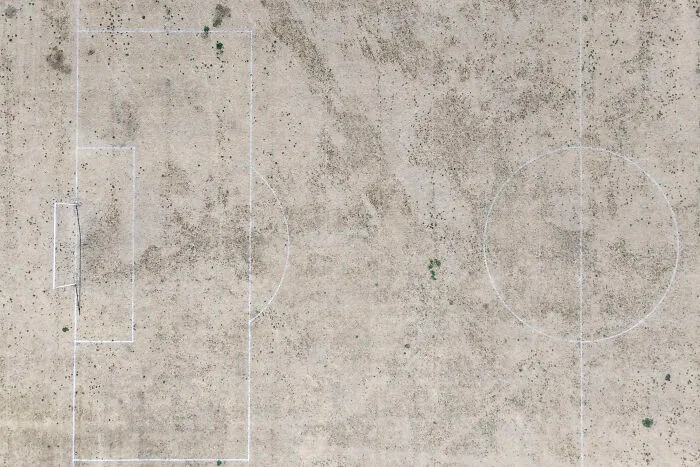
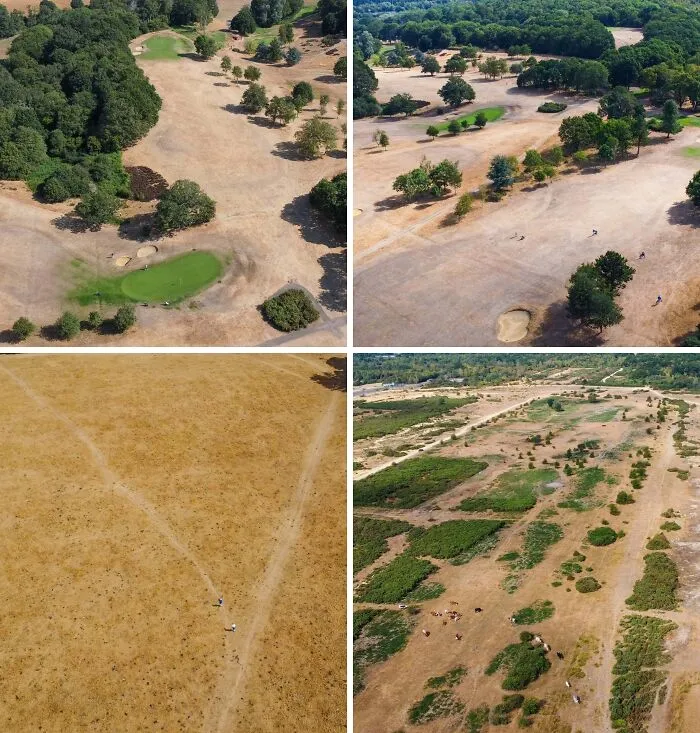
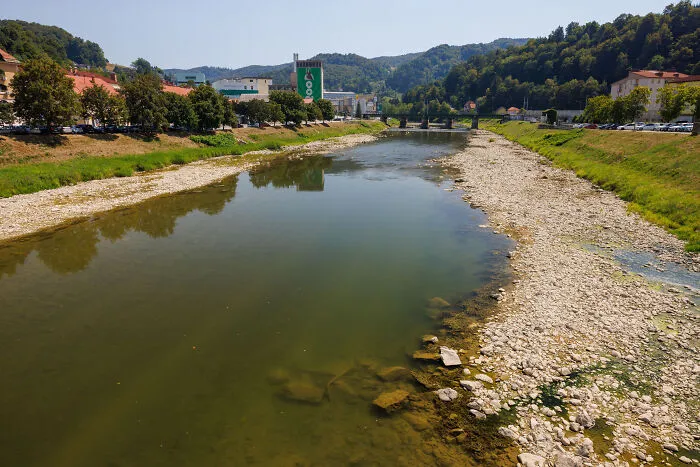
#15 The Low Water Level Of Sava River Is Seen Near Vrhovo Hydro Power Plant
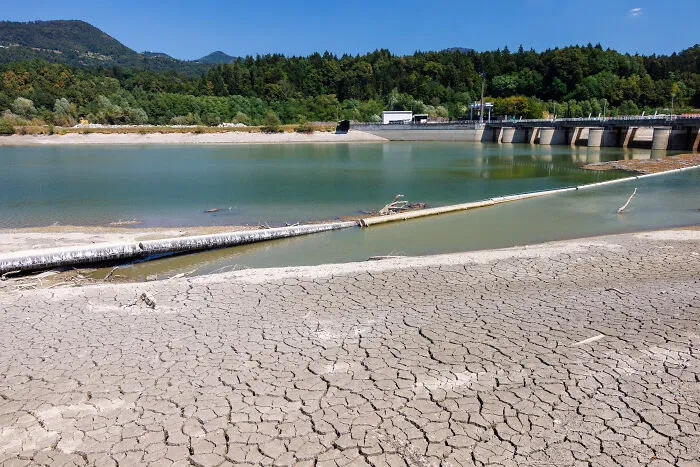
And the hardship once symbolized by those stones is becoming a modern reality, with farmers facing some of the driest soils on record and wildfires raging through Spain and France. About 9 million tonnes of grain are expected to be lost across Europe, with France facing its worst maize harvest in 50 years and Romanian farmers losing more than a million hectares of crops, Damian Carrington writes for The Guardian.
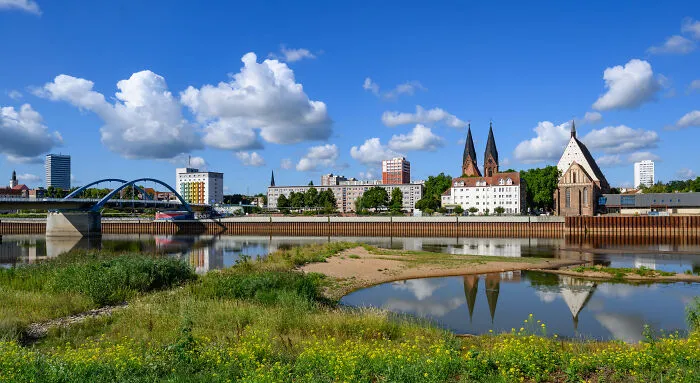
#16 Low Water Levels On The Oder River
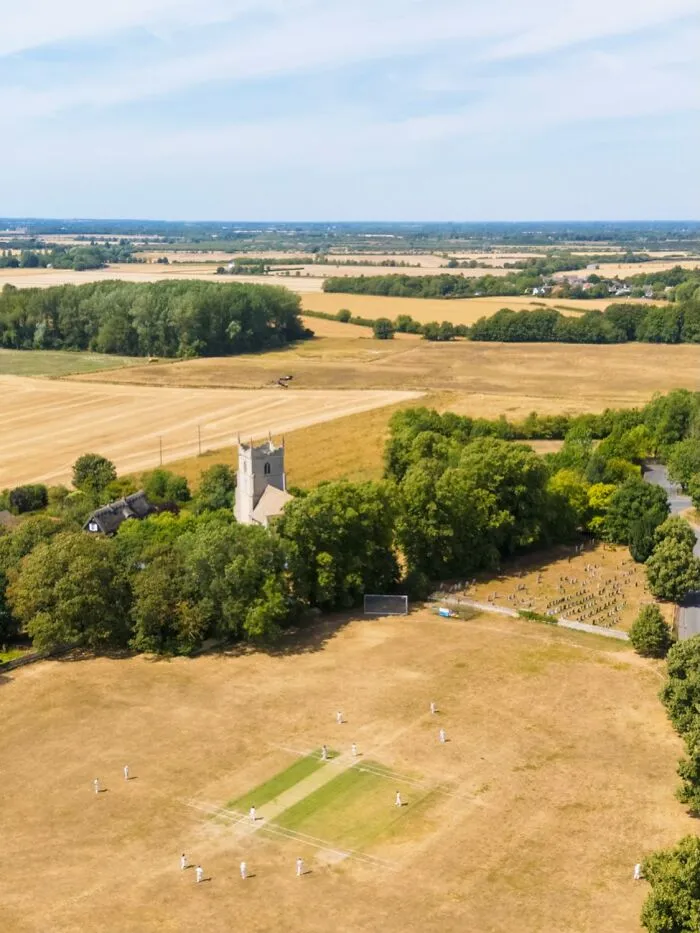
#18 Our Village Cricket Pitch Is Looking Pretty Sorry For Itself Thankfully The Game Goes On
There’s no getting around the fact that the heat—combined with a lack of rain and increased sunshine—is a key factor in all this. “Record-breaking heatwaves,” Carrington explains, “meant the hot atmosphere strongly evaporated water from rivers, lakes, soils and plants.” But climate change has amplified these drought conditions.
An analysis by World Weather Attribution found that the conditions were 80 times more likely due to global heating in Western Europe and 40 times more likely in Eastern Europe. Soil dryness was also made five times more likely by fossil-fuel pollution in the west and 11 times more likely in the east.
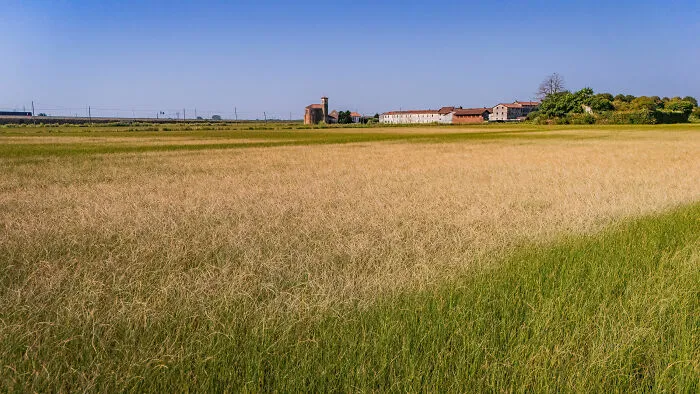
#19 Italy
#20 The Low Water Level Of Savinja River Is Seen In Lako
So no, it’s not as simple as high temperatures and low rainfall. As Carrington explains, the climate crisis is “redefining drought in Europe.” Citing the World Weather Attribution findings, he writes: “Today’s drought in western Europe is classified as ‘extreme’ but would have been ‘moderate’ in the world before the climate crisis, according to the analysis.”
Like those centuries-old hunger stones now reemerging from receding waters, worsening droughts are a warning of hardship to come. UN climate chief Simon Stiell called them “an unignorable red alert that our planet is overheating,” explaining that “until humanity stops burning huge amounts of coal, oil and gas, these brutal climate-driven droughts will only get more severe and more costly for households and whole economies alike.” The clear solution, he says, is to “move much faster to renewable energy.”