





No matter what era you’re from, the sea is both fascinating and terrifying. And when a ship gets lost at sea, or its crew mysteriously disappears, the creepy mystery continues to fascinate people for decades and even centuries to come.
Our team at Bored Panda has collected the most intriguing and disturbing ghost ship stories that might just haunt your nightmares tonight and change how you see the sea. Keep reading for a good scare, and be sure to share these real-life stories with anyone you know who is a horror fan.
#21 Santa Maria
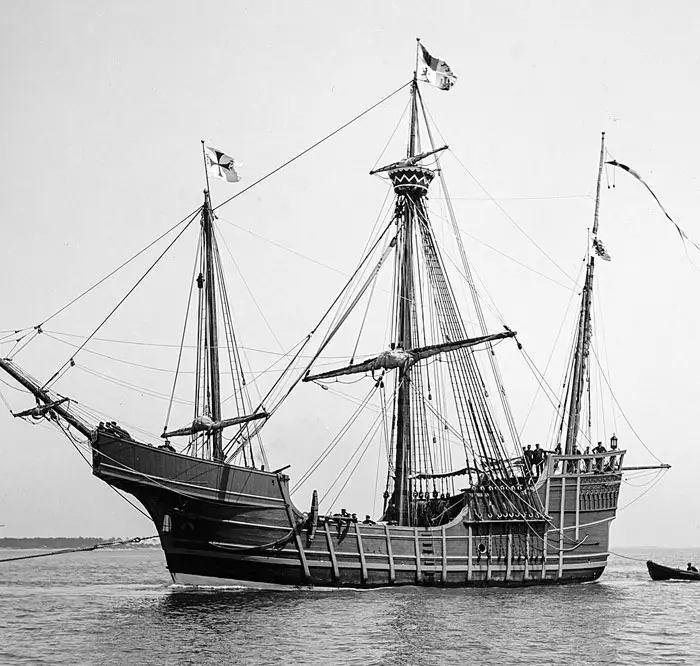
On Christmas Eve 1492, Christopher Columbus’s flagship, La Santa María, ran aground on a coral reef off the coast of Cap-Haïtien, Haiti, after an inexperienced cabin boy was left at the helm.
What Happened to the Ship:
Dismantled for Fortification: Realizing the ship couldn't be saved, Columbus ordered it stripped. Its wooden timbers and planks were repurposed to build La Navidad, the first Spanish settlement in the Americas.
Abandoned Remains: The submerged hull was left to rot, swallowed by sea life, sand, and ocean currents.
In 2014, explorer Barry Clifford claimed to have found the wreck. However, UNESCO investigators ruled it out after identifying metal fasteners dating to the 17th or 18th century. The true location of Santa María's remains stays lost to history.
Report
5points
#22 Uss Bonhomme Richard (1765)
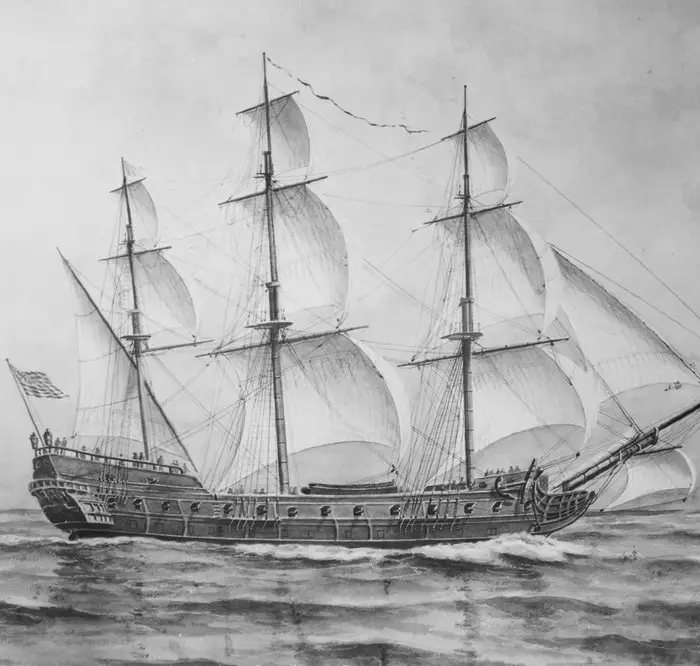
On September 23, 1779, the Continental Navy frigate USS Bonhomme Richard, commanded by John Paul Jones, engaged the British warship HMS Serapis in the Battle of Flamborough Head off the English coast.
Battle and Sinking:
Bloody Engagement: Heavily outgunned, Jones lashed his burning ship to Serapis to neutralize its advantage. When asked to surrender, he famously replied, "I have not yet begun to fight!"
Victorious Defeat: Jones's crew forced the British to surrender and seized Serapis. However, Bonhomme Richard was severely damaged, ablaze, and taking on water.
Final Resting Place: After 36 hours of attempts to save her, the ship sank into the North Sea on September 25, 1779.
Despite decades of searches off Yorkshire, the exact wreck location remains unconfirmed.
Report
5points
#23 133 Years Ago Today, On 11 February 1893, S.S. Naronic, A Livestock Carrier Owned By The White Star Line, Was Last Seen Steaming Eastward Into The Expanse Of The North Atlantic After Disembarking Its Pilot At Point Lynas, Wales. It Disappeared Soon After And Its Wreck Has Never Been Found
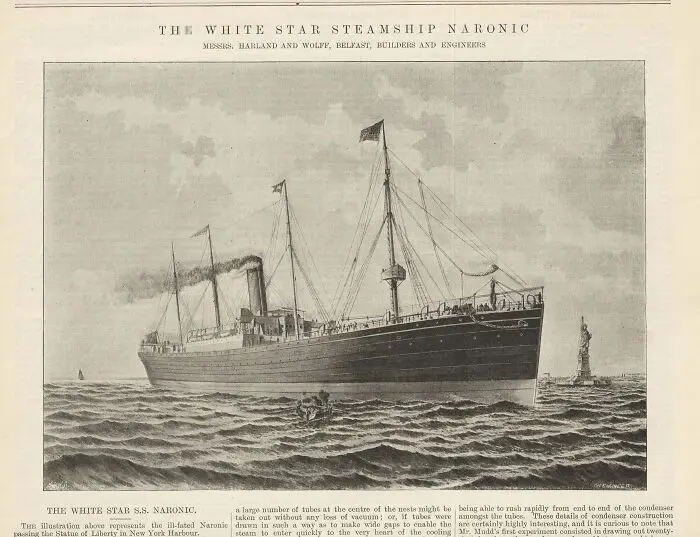
133 years ago today, on 11 February 1893, S.S. Naronic, a livestock carrier owned by the White Star Line, was last seen steaming eastward into the expanse of the North Atlantic after disembarking its pilot at Point Lynas, Wales. Sometime during the voyage from Liverpool to New York City, Naronic disappeared with the loss of all 80 souls aboard. Its wreck has never been found. S.S. Naronic was the product of the White Star Line’s increasing involvement in the transatlantic cattle trade and efforts to assert itself as a proponent of the humane treatment of livestock. As stated by John P. Eaton and Charles Haas in their 1989 book, Falling Star: Misadventures of White Star Line Ships, “the company established and maintains safety and comfort standards for livestock beyond those of other companies’ vessels.” The vessel was constructed by Harland & Wolff at Belfast, and when it was launched on 26 May 1892, “the 470 ft. 6,594 ton Naronic was the largest cargo steamer afloat. The four-masted schooner-rigged vessel was constructed of steel and had three decks, nine bulkheads, and sixteen water ballast tanks capable of holding 1.193 tons.” The White Star Line also made concerted efforts to ensure that the livestock spaces, capable of holding 1,050 cattle, were well-ventilated and that animals had access to freshwater. In addition to livestock spaces, Naronic had six cargo holds, one of which was refrigerated, along with enough accommodations for its 60 crew and 15 passengers. According to the website “Naronic Archive,” “The ship was powered by four Scotch Marine Boilers, two single-ended and two double-ended, which consumed fifty tonnes of coal daily. These boilers supplied steam to a pair of twin reciprocating engines that drove the ship's twin screw propellers, enabling her to achieve a maximum speed of 13 knots.” By the time of its final voyage, Naronic had completed 12 Atlantic crossings without issue, and during the last three transatlantic trips, had been commanded by Captain William Roberts, “an experienced officer in White Star service for twenty years… [who] held an extra master’s certificate.” Before his transfer to Naronic, Roberts had captained the Oceanic-class liner, S.S. Adriatic, and livestock carrier, S.S. Tauric. However, Roberts was not the only experienced member of Naronic’s crew. 1st Officer George Wright, 2nd Officer Herbert G. Burbidge, Chief Engineer John Duncan, 2nd Engineer Robert T. Lucock, 3rd Engineer Charles F. Pugh, 4th Engineer John B. Jolley, and all eight greasers had worked aboard Naronic since her maiden voyage on 15 July 1892. The remaining 45 crewmen had all familiarized themselves with the vessel over the last five voyages. Leading up to Naronic’s departure, the ship was loaded with 2,876 tons of various cargo, including, as per Eaton and Hass, “earthenware, steel strips, oil, glass, machinery, fish hooks. Soda ash, bleaching powder, chlorate of potash. Rice, sugar, chillies, potatoes. Tallow, cattle hair, calf skins... 'General cargo': thousands of items for nearly ninety consignees.” The ship’s coal bunkers were also filled with 1,017 tons of coal, with an additional 200 tons loaded on the deck “to permit a New York turnaround without refueling. However, over the course of the voyage, “this coal would be taken below, and it appeared its presence on deck would not materially affect stability.” Naronic’s No. 7 ballast tank was also flooded with 140 tons to bolster its stability. However, for the voyage to New York, the livestock spaces remained largely empty, with the 14 cattlemen aboard, employed by Eastman’s Cattle Yard in New York, “d**dheading back across the Atlantic under their hire’s customary terms.” As such, the only ones engaged in any tending of livestock were three of Naronic’s passengers. John J. Hollenshead and James Jackson appear to have been tasked with caring for “two horses consigned to W. Burgess, a former American diplomat residing in Trenton, New Jersey,” while Sgt. Maj. James E. K. Spence, an amateur ornithologist, tended to fifteen crates of prize-winning pigeons bound for a poultry show in America. At 6:00 A.M., on 11 February 1893, S.S. Naronic dropped her moorings and departed Liverpool. The last sighting of her was by harbor pilot, Captain William Davies, as he departed Naronic at Point Lynas, Wales, after which he watched as the ship “steamed onward into a light fog that enveloped the Irish Sea.” Numerous vessels crossing the Atlantic at the same time as Naronic reported encountering severe storms, gale-force winds of at least 60 miles per hour, and large ice fields, all of which could have potentially doomed the vessel. Although Naronic was scheduled to arrive in New York on 22 February 1893, it was not listed as overdue until 15 March 1893, by which time any hope of survival for its crew and passengers was lost. On 19 March 1893, the only confirmed remnants of Naronic were found by S.S. Coventry, with its captain reporting that “on 4 March at 2:00 A.M. in latitude 44° 02' N, longitude 47° 37' W, a ship's white-painted lifeboat had been sighted floating keel up. Twelve hours later, in latitude 34° 44' N, longitude 45° 25' W, another drifting boat was spotted. Captain Wilson steamed close alongside it. Although half full of water, the boat was in good condition and not stoved in. Its mast floated at the bows, made fast to the painter as if used for a sea anchor. The words on the bows: 'Naronic. Liverpool.'” However, neither boat was recovered, and the reasons for this are not known. Speculation about the cause of Naronic’s loss was also fueled by several messages in bottles, the veracity of which is heavily disputed to this day, given the locations where they were found and the fact that none of the signed names match any of the crew’s. Nonetheless, the causes of the ship’s sinking described in the letters range from having struck an iceberg to an explosion. Additionally, on 28 April 1893, numerous newspapers began publishing an interview with John Lucock, the younger brother of Naronic’s 2nd Engineer, Robert Lucock. According to John, “just after the vessel [Naronic] arrived at Liverpool on its last trip, he [2nd Eng. Robert Lucock] wrote a letter to his brother Thomas, who is located in Chicago, stating that the ship's boilers were in very bad shape and that they had had a hard time going over from New York to Liverpool. The writer states that unless repairs were made while the vessel was lying at Liverpool, the return trip would very likely prove to be a dangerous one. [John] Lucock was averse to talking, but said that while of course he had not the remotest idea [of] what caused the vessel to sink, from the tone of his brother's letter, he was inclined to think that the boiler had blown up. Robert, he said, was a very conservative man and would not write anything about the boilers that would be inaccurate or unreliable. As he is among the missing, it would be a difficult matter to prove that the vessel's destruction was caused in this way. The letter also stated that he was about to make his last trip and did not intend to follow the ocean any longer.” Although some may doubt the claims made in this interview, I have confirmed that Robert Lucock indeed had two younger brothers living in America, John Saul Lucock and Thomas Henry Lucock. Overall, although an official inquiry was launched in Liverpool in June 1893, no definitive cause for Naronic’s loss was found. As its wreck has never been found, the disappearance of S.S. Naronic and the 80 souls aboard it has remained a persistent, albeit lesser-known, mystery. Over the last two years, I have been researching S.S. Naronic and its crew. In the course of my research, I have definitively identified all 80 crew and passengers that were lost on its final voyage, all of whom are listed below. However, I have been able to locate a photograph of but one of them, Naronic’s carpenter, Joseph Pipes Owen, thanks to one of his descendants. Additionally, I found that only two crewmen have cenotaph headstones: Chief Engineer John Duncan Sr. at Liverpool’s Anfield Cemetery and 2nd Engineer Robert Thomlinson Lucock at Aspatria’s St. Kentigern Churchyard.
Report
4points
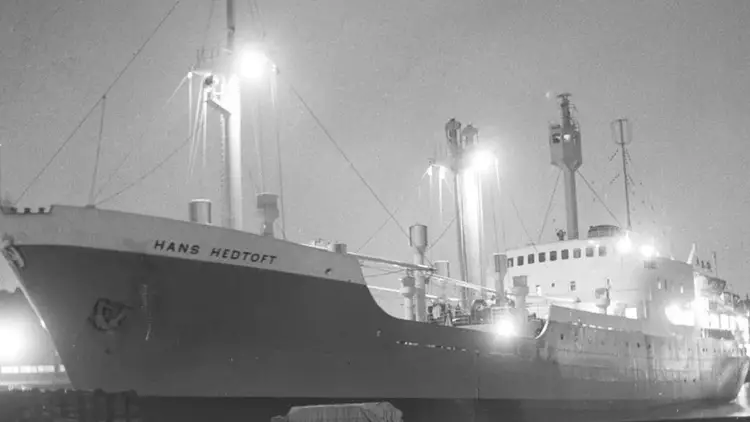
#24 January 30, 1959: The MS Hans Hedtoft Collided With An Iceberg On Her Maiden Voyage Off The Coast Of Greenland
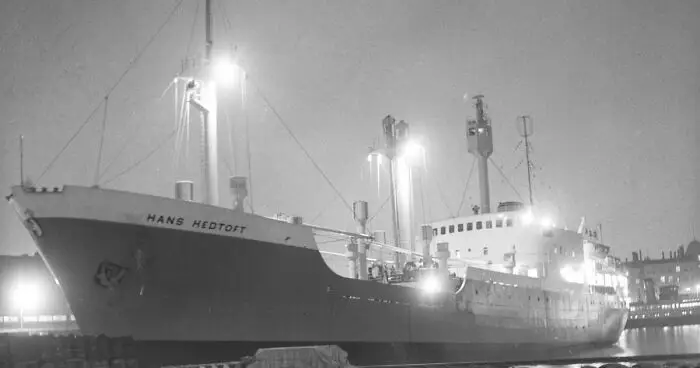
The only piece of wreckage ever found was a lifebelt
Report
4points
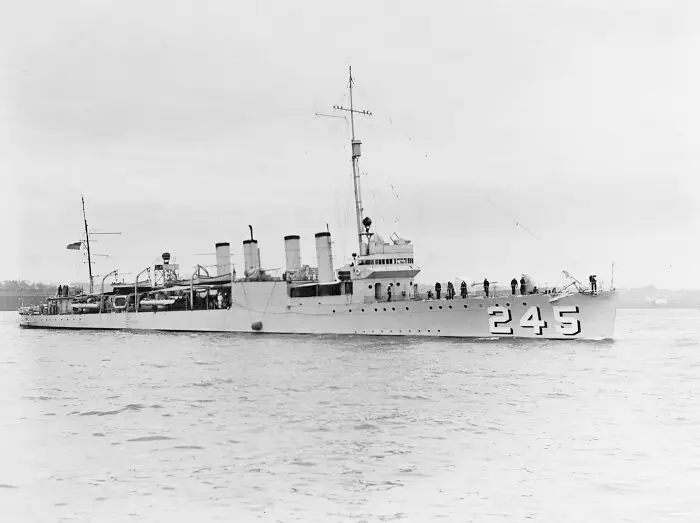
#26 The American Destroyer USS Reuben James (Dd-245) On The Hudson River On April 29, 1939
Report
4points
#27 Lake Erie's Greatest Mystery. 30-38 Perished, 9 D**d Found In Lifeboat, Clothes Of 10th Left In Lifeboat, One Occupant Was Carrying Knives On His Person, D**d Captain Found Later On With Slash Marks
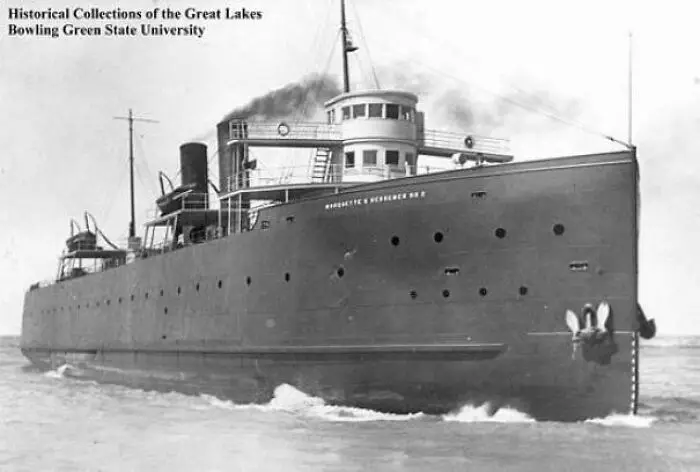
(Marquette & Bessemer No. 2, disappeared December 8th, 1909)
Report
4points
#28 What's Your Theory On Her Loss? I Personally Think A Wave Flipped Her Upside Down And The Sea Swallowed Her Shortly Afterward
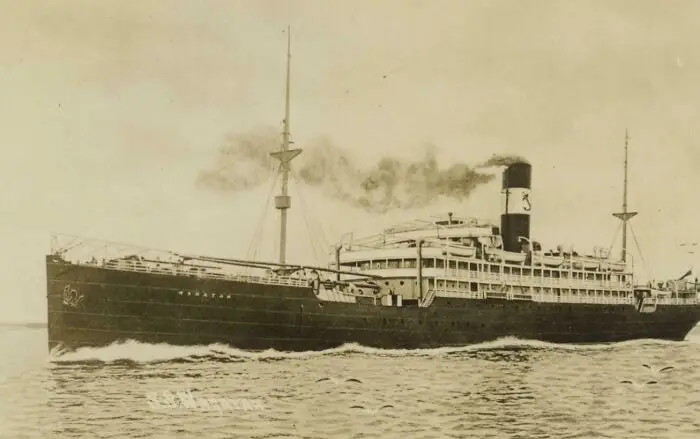
(SS Waratah, disappeared off the coast of South Africa, last confirmed sighting on July 27th, 1909. All 211 passengers perished)
Report
4points
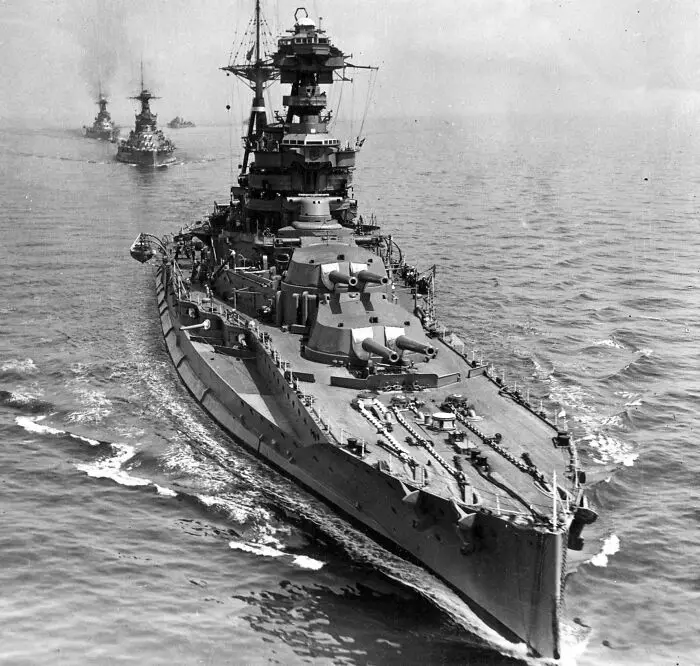
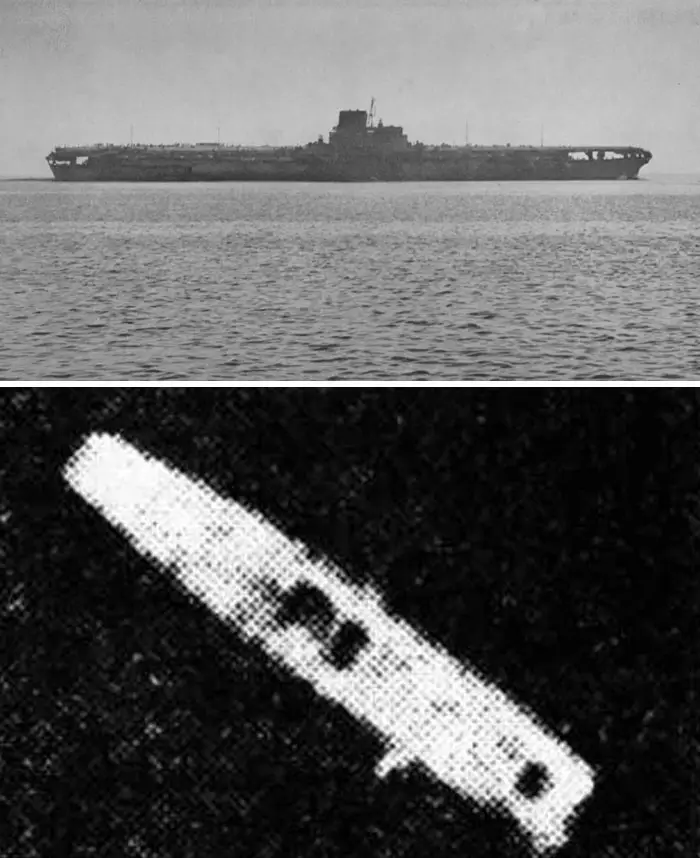
#30 A Top Down View Of Brazilian Minas Geraes Class Battleship São Paulo
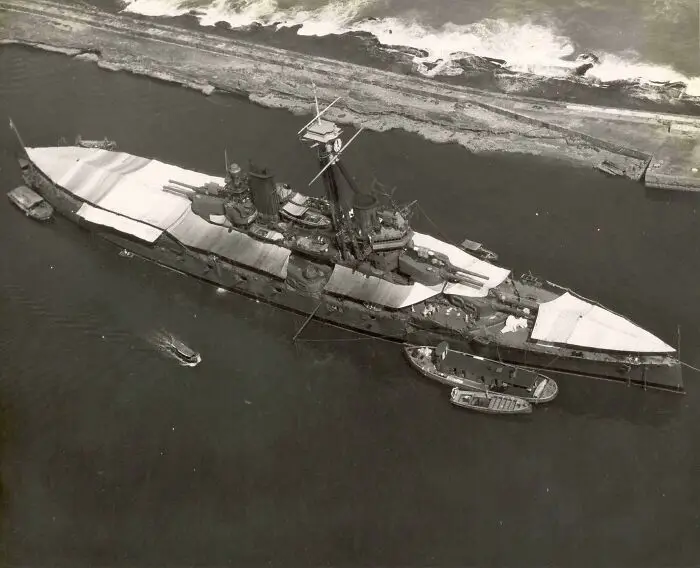
It sank in 1951 during a storm while heading to a scrapyard
Report
3points
#31 Uss Tang
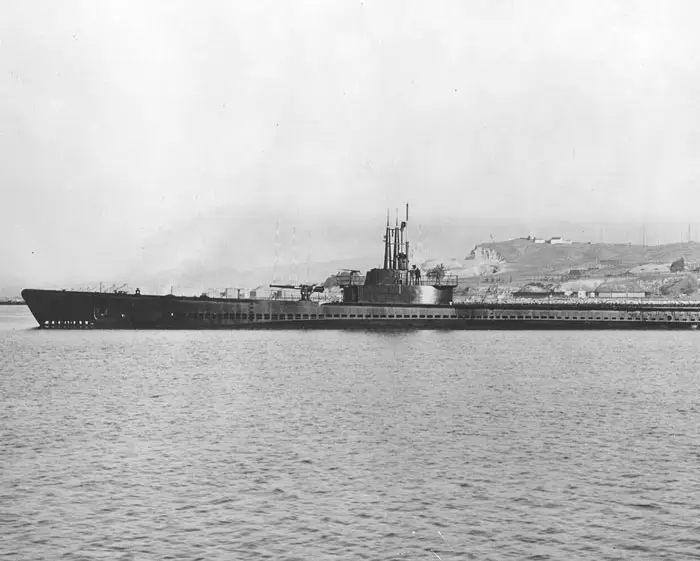
USS Tang (hull number SS-306) was a Balao-class submarine of World War II, the first ship of the United States Navy to bear the name Tang. She was built and launched in 1943, serving until being sunk by her own torpedo off China in the Taiwan Strait on 24 October 1944.
In her short career in the Pacific War, Tang sank 33 ships totalling 116,454 tons.Commander Richard O'Kane received the Medal of Honor for her last two engagements (23 and 24 October 1944).
Tang was sunk during the last engagement by a circular run of her final torpedo, going down in 180 ft (55 m) of water; 78 men were lost, and the 9 survivors were picked up by a Japanese frigate and taken as prisoners of war. This was the only known time that a Momsen lung was used to escape a sunken submarine.
Report
3points
#32 Hiryu
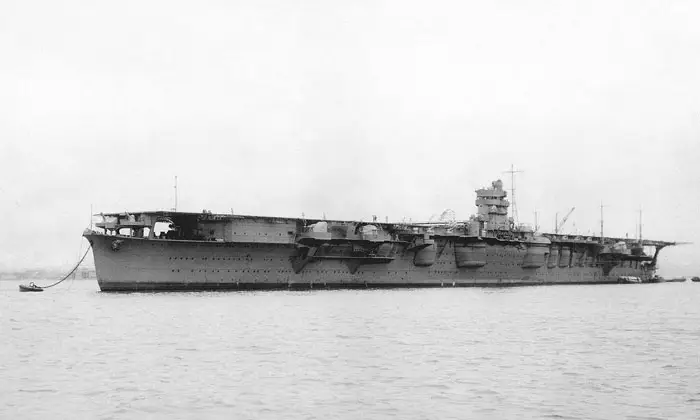
The Japanese aircraft carrier Hiryū was destroyed during the pivotal Battle of Midway on June 4–5, 1942.
Battle and Sinking:
Lone Counterattack: After three other Japanese carriers were knocked out, Hiryū launched airstrikes that severely damaged the USS Yorktown.
American Retaliation: Hours later, U.S. SBD Dauntless dive-bombers struck back, hitting Hiryū with four 1,000-pound bombs. The explosions ignited aviation fuel, destroying the flight deck and triggering uncontrollable fires.
Scuttled at Sea: On the morning of June 5, unable to control the blazes, Japanese destroyers torpedoed the crippled vessel to prevent capture. She sank into the Pacific with over 400 crew members.
In October 2019, deep-sea explorers located Hiryū's wreck sitting upright nearly 18,000 feet below the surface in the Papahānaumokuākea Marine National Monument.
Report
3points
#33 SS Marine Sulphur Queen
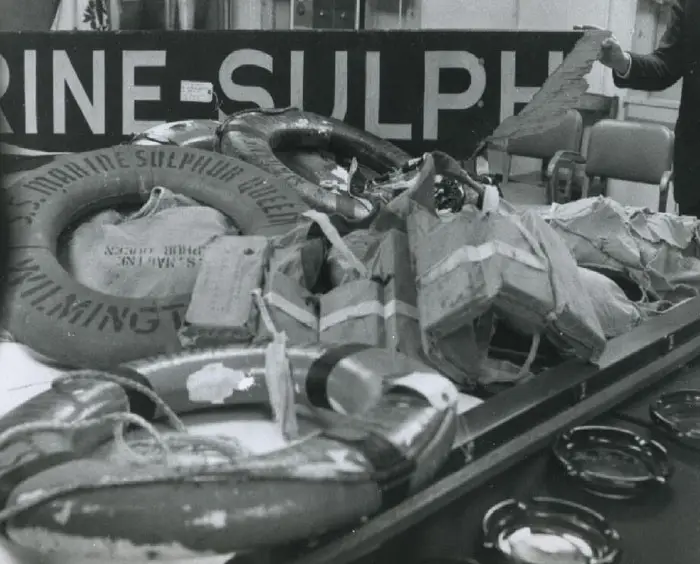
SS Marine Sulphur Queen, formerly Esso New Haven, was a T2 tanker converted to carry molten sulphur. It is notable for its disappearance in 1963 near the southern coast of Florida, taking the lives of 39 crewmen.
In the investigation, the Coast Guard determined that the ship was unsafe and not seaworthy, and never should have sailed. The final report suggested four causes of the disaster, all due to poor design and maintenance of the ship. The loss of the ship was the subject of lengthy litigation between the owner and families of the missing men.
Despite the clear cause of the disaster and its last known position being off Florida in the Gulf of Mexico, an inaccurate and incomplete version of the ship's disappearance is often used to justify Bermuda Triangle conspiracies.
Report
2points
