








Ozzy Osbourne lived a life of great excess. And when he died this year at the age of 76, many were saddened but also surprised that it hadn't happened earlier.
“[He] had lived on the edge for such a long time, the fact he lived as long as he did was a miracle,” the rocker's close friend, Tom Morello said on a radio show.
It turns out the miracle was in his genes. You see, Osbourne had a rare genetic mutation that allowed him to metabolize alcohol and other substances much faster than normal. And this, say scientists, is what kept him alive despite decades of self-destructive behavior.
That interesting fact is one of many that can be found on an Instagram page called Science. The account has amassed a cool 1.7 million followers and it's not difficult to see why. Unlike many other facts pages, which purely share fast and fun tidbits, this one fleshes out each scientific fact and gives the context, explanation and source in a detailed caption.
Bored Panda has put together a list of the best posts from the page for you to scroll through instead of watching mindless shorts this weekend. So sit back, relax and let your brain thank you later. Don't forget to upvote your favorites.
#41

Scientists at Johns Hopkins University have uncovered evidence linking a common viral infection to some of the most challenging psychiatric disorders. In a large study combining tissue analysis with health record data, researchers found that the hepatitis C virus (HCV) is present in the choroid plexus—the thin lining that produces protective cerebrospinal fluid—of people diagnosed with schizophrenia and bipolar disorder.
The team began by studying postmortem brain samples from patients with schizophrenia, bipolar disorder, and major depression, along with unaffected controls. Using a sequencing platform capable of scanning for thousands of viruses, they discovered genetic traces of 13 viral species in the choroid plexus. HCV stood out as the only virus significantly more common in people with schizophrenia and bipolar disorder compared to healthy individuals. Importantly, the hippocampus—deep within the brain and essential for memory and emotion—showed no viral presence, suggesting the infection stays at the brain’s margins while still influencing its function.
To test the strength of this link beyond the lab, the scientists analyzed TriNetX, a massive database containing health records from 285 million patients. They found HCV documented in 3.6% of people with schizophrenia and 3.9% of those with bipolar disorder. That’s nearly double the rate seen in major depression (1.8%) and about seven times higher than in the general population (0.5%). Interestingly, the virus was not always found in individuals who already had a known chronic HCV diagnosis, underscoring how unpredictable its spread to the brain lining can be.
HCV infects an estimated 50 million people worldwide, often through blood exposure, and many carriers show no symptoms. Yet this study shows the virus may play an unseen role in altering gene expression and immune activity in the brain. Although not every patient with schizophrenia or bipolar disorder has HCV, the findings open the door to exploring antiviral treatments as a way to ease psychiatric symptoms for a subset of patients—transforming how we understand and treat these conditions in the future.
Source: s41398-025-03387-3
The team began by studying postmortem brain samples from patients with schizophrenia, bipolar disorder, and major depression, along with unaffected controls. Using a sequencing platform capable of scanning for thousands of viruses, they discovered genetic traces of 13 viral species in the choroid plexus. HCV stood out as the only virus significantly more common in people with schizophrenia and bipolar disorder compared to healthy individuals. Importantly, the hippocampus—deep within the brain and essential for memory and emotion—showed no viral presence, suggesting the infection stays at the brain’s margins while still influencing its function.
To test the strength of this link beyond the lab, the scientists analyzed TriNetX, a massive database containing health records from 285 million patients. They found HCV documented in 3.6% of people with schizophrenia and 3.9% of those with bipolar disorder. That’s nearly double the rate seen in major depression (1.8%) and about seven times higher than in the general population (0.5%). Interestingly, the virus was not always found in individuals who already had a known chronic HCV diagnosis, underscoring how unpredictable its spread to the brain lining can be.
HCV infects an estimated 50 million people worldwide, often through blood exposure, and many carriers show no symptoms. Yet this study shows the virus may play an unseen role in altering gene expression and immune activity in the brain. Although not every patient with schizophrenia or bipolar disorder has HCV, the findings open the door to exploring antiviral treatments as a way to ease psychiatric symptoms for a subset of patients—transforming how we understand and treat these conditions in the future.
Source: s41398-025-03387-3
Report
19points
#42
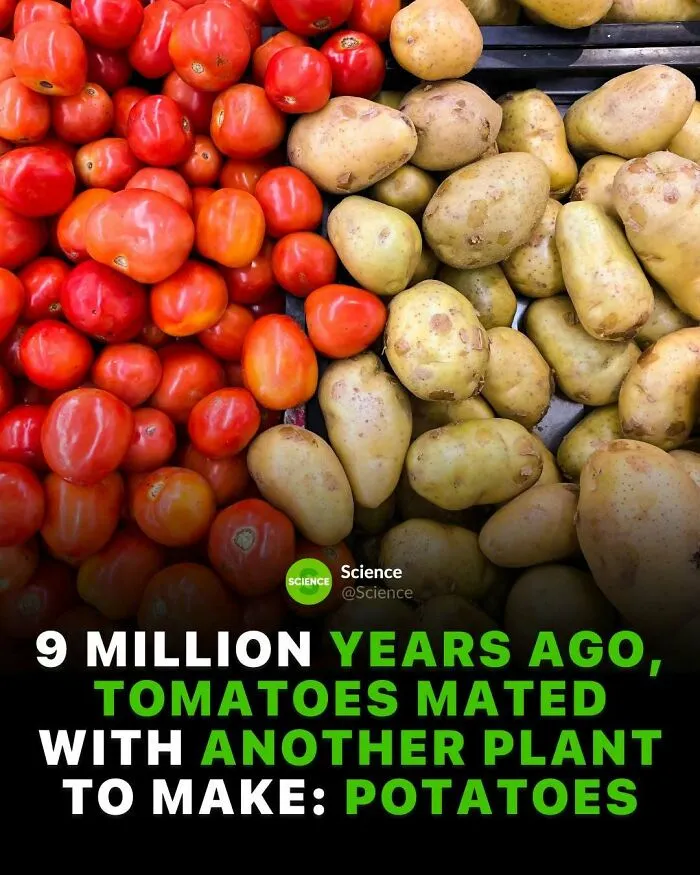
Nine million years ago, deep in the Andes, a fateful meeting between two very different plants sparked the birth of one of humanity’s most essential foods: the potato. According to a groundbreaking study published in Cell, wild ancestors of the tomato and a lesser-known potato-like plant called Etuberosum interbred, forming a brand-new lineage—the origin of modern potatoes.
Neither tomato nor Etuberosum produces tubers, the starchy underground organs that make potatoes so valuable. But when their genes merged, two crucial pieces of genetic code came together. The tomato contributed a “master switch” gene called SP6A, which initiates tuber formation. Etuberosum brought IT1, a gene that shapes underground stem development. Together, these genes created the first tuber-producing plants.
This hybridization happened during a period of rapid geological uplift in the Andes, when new h**h-altitude, cold, and dry habitats emerged. The hybrid plant’s new tubers offered an evolutionary advantage—storing nutrients, surviving harsh climates, and allowing the plant to reproduce without pollination. Over time, this sparked a wave of new potato species adapted to diverse environments.
Researchers analyzed over 450 genomes from modern and wild potatoes, tomatoes, and Etuberosum species to unravel the potato’s complex lineage. Their findings not only solve the evolutionary mystery of the spud but could help create hardier, seed-reproducing potatoes in the face of climate change and disease.
The discovery may also open the door to engineering tuber traits into other crops like tomatoes—potentially transforming how we grow food. It’s a reminder that evolution’s most delicious innovations often begin by accident.
Source: S0092-8674(25)00736-6
Neither tomato nor Etuberosum produces tubers, the starchy underground organs that make potatoes so valuable. But when their genes merged, two crucial pieces of genetic code came together. The tomato contributed a “master switch” gene called SP6A, which initiates tuber formation. Etuberosum brought IT1, a gene that shapes underground stem development. Together, these genes created the first tuber-producing plants.
This hybridization happened during a period of rapid geological uplift in the Andes, when new h**h-altitude, cold, and dry habitats emerged. The hybrid plant’s new tubers offered an evolutionary advantage—storing nutrients, surviving harsh climates, and allowing the plant to reproduce without pollination. Over time, this sparked a wave of new potato species adapted to diverse environments.
Researchers analyzed over 450 genomes from modern and wild potatoes, tomatoes, and Etuberosum species to unravel the potato’s complex lineage. Their findings not only solve the evolutionary mystery of the spud but could help create hardier, seed-reproducing potatoes in the face of climate change and disease.
The discovery may also open the door to engineering tuber traits into other crops like tomatoes—potentially transforming how we grow food. It’s a reminder that evolution’s most delicious innovations often begin by accident.
Source: S0092-8674(25)00736-6
Report
19points
#43

Colossal Biosciences' genetically modified "dire wolves" have reached a major growth milestone at six months old, with the two males now weighing over 90 pounds.
Romulus and Remus, born in October 2024, now weigh more than 40 kilograms each and measure nearly four feet in length. This represents about 20% larger size compared to standard gray wolves at the same developmental stage, indicating that the genetic modifications are producing the intended physical characteristics.
The younger female, Khaleesi, born in January 2025, currently weighs 35 pounds and tracks 10-15% larger than typical gray wolves. According to Matt James, Colossal's Chief Animal Officer, "we can really tell that the dire wolf genes are kicking in, and we're getting these nice large wolves that are much more representative of what we saw in the ancient specimens".
The animals underwent 20 genetic edits across 14 genes to replicate physical traits associated with the extinct dire wolf, which disappeared approximately 10,000 years ago. The modifications have produced wolves with distinctive white coats, broader heads, and more muscular builds compared to their gray wolf relatives.
However, the project has faced scientific criticism regarding terminology. In May 2025, company scientist Beth Shapiro acknowledged that these are "grey wolves with 20 edits" rather than true dire wolves, noting that actual de-extinction would require cloning with preserved DNA. No ancient dire wolf DNA was incorporated into the genome.
The wolves are currently housed on a 2,000-acre preserve and display natural wolf behaviors including pack dynamics, with Remus emerging as the alpha and Romulus taking a beta role. They maintain wariness around humans and exhibit hunting behaviors despite being raised in captivity.
The animals are preparing for comprehensive veterinary examinations including bloodwork and CT imaging to monitor their skeletal and muscular development as they continue growing toward an estimated adult size of six feet and 150 pounds.
Romulus and Remus, born in October 2024, now weigh more than 40 kilograms each and measure nearly four feet in length. This represents about 20% larger size compared to standard gray wolves at the same developmental stage, indicating that the genetic modifications are producing the intended physical characteristics.
The younger female, Khaleesi, born in January 2025, currently weighs 35 pounds and tracks 10-15% larger than typical gray wolves. According to Matt James, Colossal's Chief Animal Officer, "we can really tell that the dire wolf genes are kicking in, and we're getting these nice large wolves that are much more representative of what we saw in the ancient specimens".
The animals underwent 20 genetic edits across 14 genes to replicate physical traits associated with the extinct dire wolf, which disappeared approximately 10,000 years ago. The modifications have produced wolves with distinctive white coats, broader heads, and more muscular builds compared to their gray wolf relatives.
However, the project has faced scientific criticism regarding terminology. In May 2025, company scientist Beth Shapiro acknowledged that these are "grey wolves with 20 edits" rather than true dire wolves, noting that actual de-extinction would require cloning with preserved DNA. No ancient dire wolf DNA was incorporated into the genome.
The wolves are currently housed on a 2,000-acre preserve and display natural wolf behaviors including pack dynamics, with Remus emerging as the alpha and Romulus taking a beta role. They maintain wariness around humans and exhibit hunting behaviors despite being raised in captivity.
The animals are preparing for comprehensive veterinary examinations including bloodwork and CT imaging to monitor their skeletal and muscular development as they continue growing toward an estimated adult size of six feet and 150 pounds.
Report
17points
#44

A comprehensive study published in the Journal of the American Medical Association has revealed that American children became significantly less healthy across nearly every major health indicator over the past 17 years. Researchers analyzed 170 different health metrics from eight data sources and found a widespread decline in children's physical, mental, and developmental health from 2007 to 2023.
The statistics paint a troubling picture of childhood health in America. Obesity rates among children aged 2-19 rose from 17% in 2007-2008 to 21% in 2021-2023, while children in 2023 were 15% to 20% more likely to have chronic conditions like anxiety, depression, or sleep apnea compared to 2011. The proportion of children aged 3-17 with at least one chronic condition increased from 39.9% to 45.7% in pediatric health systems.
Dr. Christopher Forrest, lead researcher from Children's Hospital of Philadelphia, described the findings as particularly striking because all indicators pointed in the same direction. "The surprising part of the study wasn't any single statistic; it was that there's 170 indicators, eight data sources, all showing the same thing: a generalized decline in kids' health," Forrest explained0
The research represents the most comprehensive analysis of American children's health trends ever conducted, drawing from national surveys, mortality statistics, and electronic health records from over 2 million children across 10 pediatric health systems.
The statistics paint a troubling picture of childhood health in America. Obesity rates among children aged 2-19 rose from 17% in 2007-2008 to 21% in 2021-2023, while children in 2023 were 15% to 20% more likely to have chronic conditions like anxiety, depression, or sleep apnea compared to 2011. The proportion of children aged 3-17 with at least one chronic condition increased from 39.9% to 45.7% in pediatric health systems.
Dr. Christopher Forrest, lead researcher from Children's Hospital of Philadelphia, described the findings as particularly striking because all indicators pointed in the same direction. "The surprising part of the study wasn't any single statistic; it was that there's 170 indicators, eight data sources, all showing the same thing: a generalized decline in kids' health," Forrest explained0
The research represents the most comprehensive analysis of American children's health trends ever conducted, drawing from national surveys, mortality statistics, and electronic health records from over 2 million children across 10 pediatric health systems.
Report
17points
#45
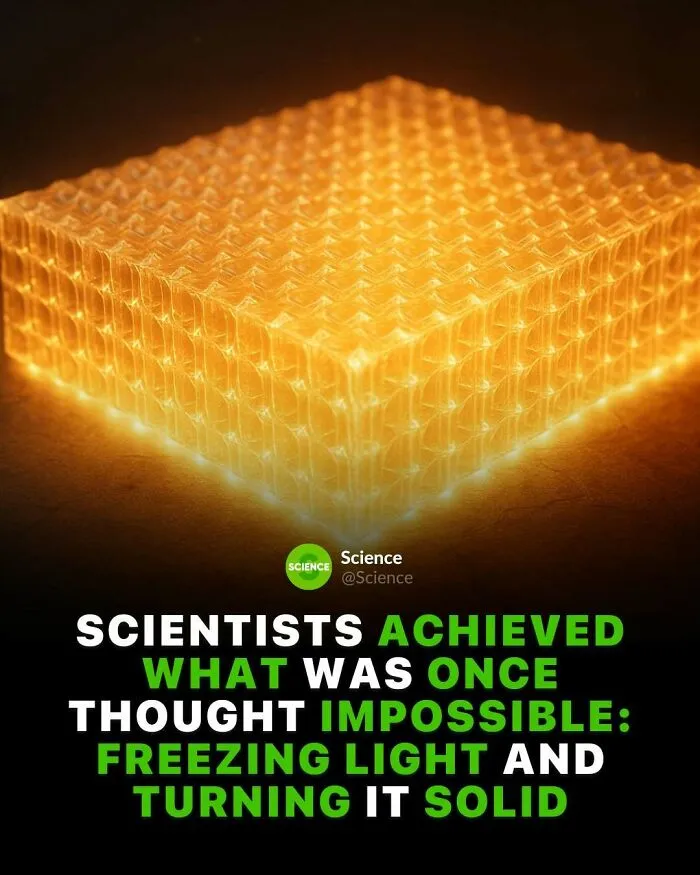
Scientists have achieved something once thought impossible: making light behave like a “supersolid,” a phase of matter that combines the ordered structure of a solid with the frictionless flow of a superfluid. ✨
Supersolids were previously only seen in ultracold gases called Bose–Einstein condensates, but Italian researchers Antonio Gianfate and Davide Nigro discovered similar behavior in light itself. They created the effect using a photonic semiconductor platform made from aluminum gallium arsenide, where photons act like electrons and can occupy multiple quantum states with equal energy.
In their setup, laser‑driven photons first condensed into a single state, but as more photons were added, pairs were pushed into adjacent quantum states, creating satellite condensates with unique wavenumbers while sharing the same energy. This spatial modulation of photon density is the hallmark of a supersolid.
The achievement required conditions near absolute zero, where quantum effects dominate and particles act collectively. Researchers describe it as “only the beginning” of exploring supersolidity, an exotic state first predicted in the 1960s and only demonstrated in ultracold atoms in 2017.
Why does it matter? Supersolid light could lead to breakthroughs in quantum computing, more stable qubits, and advanced photonic circuits. It offers new ways to control light and matter, promising future technologies that merge optics with quantum mechanics. 🌌
Source: s41586-025-08616-9
Supersolids were previously only seen in ultracold gases called Bose–Einstein condensates, but Italian researchers Antonio Gianfate and Davide Nigro discovered similar behavior in light itself. They created the effect using a photonic semiconductor platform made from aluminum gallium arsenide, where photons act like electrons and can occupy multiple quantum states with equal energy.
In their setup, laser‑driven photons first condensed into a single state, but as more photons were added, pairs were pushed into adjacent quantum states, creating satellite condensates with unique wavenumbers while sharing the same energy. This spatial modulation of photon density is the hallmark of a supersolid.
The achievement required conditions near absolute zero, where quantum effects dominate and particles act collectively. Researchers describe it as “only the beginning” of exploring supersolidity, an exotic state first predicted in the 1960s and only demonstrated in ultracold atoms in 2017.
Why does it matter? Supersolid light could lead to breakthroughs in quantum computing, more stable qubits, and advanced photonic circuits. It offers new ways to control light and matter, promising future technologies that merge optics with quantum mechanics. 🌌
Source: s41586-025-08616-9
Report
17points
#46
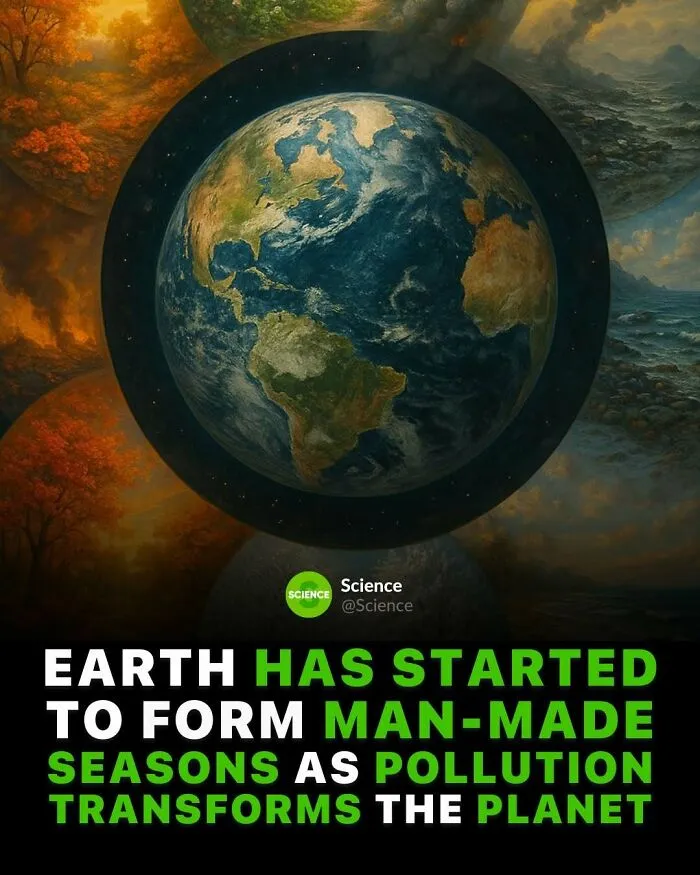
Earth is no longer governed by just four natural seasons. A wave of new research argues that human activity is creating entirely new seasons—patterns of time marked not by planetary tilt but by climate disruption, pollution, and ecological instability. These “emergent seasons” include haze season in Southeast Asia, where smoke from deforestation clouds the sky for weeks, and trash season in Bali, when ocean currents flood beaches with plastic waste. These are anthropogenic rhythms, now as regular as spring or summer.
At the same time, traditional seasons are vanishing. Seabird breeding periods in northern England have collapsed. Alpine winters, once reliable, are now so warm that ski resorts depend on artificial snow. To describe these changes, scientists have coined terms like “syncopated seasons”—erratic shifts in weather that distort familiar cycles—and “arrhythmic seasons,” where all predictability dissolves, leaving behind early springs, endless summers, and shortened winters.
These shifts are more than climate curiosities. They disrupt migration patterns, farming cycles, and cultural traditions. In Thailand, altered rainfall and upstream damming have thrown off generations of fishing and agricultural timing along the Mekong River. As seasons lose coherence, communities lose their bearings—ecologically, economically, and socially.
Scientists argue that we must rethink time itself. Today’s global timekeeping—measured in minutes and hours—has no room for rhythms shaped by tides, stars, or harvests. Indigenous and local knowledge, grounded in natural cues, may hold the key to adaptation. By blending ancient wisdom with modern science, we might better respond to the new calendar Earth is writing—one filled with fire, floods, and plastic.
Source: 27539687251348470
At the same time, traditional seasons are vanishing. Seabird breeding periods in northern England have collapsed. Alpine winters, once reliable, are now so warm that ski resorts depend on artificial snow. To describe these changes, scientists have coined terms like “syncopated seasons”—erratic shifts in weather that distort familiar cycles—and “arrhythmic seasons,” where all predictability dissolves, leaving behind early springs, endless summers, and shortened winters.
These shifts are more than climate curiosities. They disrupt migration patterns, farming cycles, and cultural traditions. In Thailand, altered rainfall and upstream damming have thrown off generations of fishing and agricultural timing along the Mekong River. As seasons lose coherence, communities lose their bearings—ecologically, economically, and socially.
Scientists argue that we must rethink time itself. Today’s global timekeeping—measured in minutes and hours—has no room for rhythms shaped by tides, stars, or harvests. Indigenous and local knowledge, grounded in natural cues, may hold the key to adaptation. By blending ancient wisdom with modern science, we might better respond to the new calendar Earth is writing—one filled with fire, floods, and plastic.
Source: 27539687251348470
Report
17points
#47

What would happen if no babies were born starting today? 🤔
The scenario sounds like science fiction, but demographers have mapped out exactly how humanity's final chapter would unfold. The timeline is more terrifying than most apocalypse movies because it's so mundane—we'd simply age ourselves out of existence.
Within 20 years, the workforce crisis begins. Power grids fail as electrical engineers retire with no replacements. Hospitals close as the last generation of doctors and nurses age out. Food production plummets when farmers can no longer maintain equipment or harvest crops at scale.
By year 40, global supply chains collapse entirely. The median human age reaches 65, meaning most people are too frail for physical labor. Military forces dissolve, governments fall, and the remaining population clusters around dwindling resources in a desperate battle for survival.
With 8 billion people today and no new births, we'd drop to under 100 million by year 60. Cities would empty as the elderly migrate to areas with functioning infrastructure—if any still exist.
Scientists studying population collapse point to historical precedents. Remote Pacific islands have experienced similar demographic crashes, but always recovered through migration or improved birth rates. Without either option, humanity faces a unique extinction scenario.
The final survivors—likely those born in 2020s and 2030s—would die of old age around 2090-2100. After 300,000 years of human history, our species would vanish not with nuclear war or climate catastrophe, but with the quiet closing of the world's last nursing home.
The scenario sounds like science fiction, but demographers have mapped out exactly how humanity's final chapter would unfold. The timeline is more terrifying than most apocalypse movies because it's so mundane—we'd simply age ourselves out of existence.
Within 20 years, the workforce crisis begins. Power grids fail as electrical engineers retire with no replacements. Hospitals close as the last generation of doctors and nurses age out. Food production plummets when farmers can no longer maintain equipment or harvest crops at scale.
By year 40, global supply chains collapse entirely. The median human age reaches 65, meaning most people are too frail for physical labor. Military forces dissolve, governments fall, and the remaining population clusters around dwindling resources in a desperate battle for survival.
With 8 billion people today and no new births, we'd drop to under 100 million by year 60. Cities would empty as the elderly migrate to areas with functioning infrastructure—if any still exist.
Scientists studying population collapse point to historical precedents. Remote Pacific islands have experienced similar demographic crashes, but always recovered through migration or improved birth rates. Without either option, humanity faces a unique extinction scenario.
The final survivors—likely those born in 2020s and 2030s—would die of old age around 2090-2100. After 300,000 years of human history, our species would vanish not with nuclear war or climate catastrophe, but with the quiet closing of the world's last nursing home.
Report
16points
#48

Scientists just c*****d one of longevity's biggest mysteries.
Ohio State University researchers analyzed data from over 66,000 U.S. census tracts and discovered that people living within 30 miles of an ocean or gulf coast live approximately one year longer than the national average of 79 years. But here's the plot twist that stunned scientists: the same isn't true for people living near inland waters in urban areas, who actually tend to die about a year earlier.
The coastal advantage appears to stem from multiple interwoven factors that create an almost perfect longevity cocktail. Coastal areas experience fewer extreme hot and cold days, maintain better air quality, offer more recreational opportunities, and typically attract residents with higher socioeconomic status. As lead researcher Jianyong "Jamie" Wu explained, "We thought it was possible that any type of 'blue space' would offer some beneficial effects, and we were surprised to find such a significant and clear difference between those who live near coastal waters and those who live near inland waters."
The darker side of the water story emerges in urban inland areas, where proximity to rivers and lakes correlates with shorter lifespans. Researcher Yanni Cao points to "pollution, poverty, lack of safe opportunities to be physically active and an increased risk of flooding" as the likely culprits. Interestingly, rural residents near inland waters do gain some lifespan benefits, just not to the degree of their coastal counterparts.
This groundbreaking study, published in Environmental Research, represents the first comprehensive examination of how different types of "blue spaces" affect American longevity—and suggests that when it comes to living longer, not all waterfront properties are created equal.
Ohio State University researchers analyzed data from over 66,000 U.S. census tracts and discovered that people living within 30 miles of an ocean or gulf coast live approximately one year longer than the national average of 79 years. But here's the plot twist that stunned scientists: the same isn't true for people living near inland waters in urban areas, who actually tend to die about a year earlier.
The coastal advantage appears to stem from multiple interwoven factors that create an almost perfect longevity cocktail. Coastal areas experience fewer extreme hot and cold days, maintain better air quality, offer more recreational opportunities, and typically attract residents with higher socioeconomic status. As lead researcher Jianyong "Jamie" Wu explained, "We thought it was possible that any type of 'blue space' would offer some beneficial effects, and we were surprised to find such a significant and clear difference between those who live near coastal waters and those who live near inland waters."
The darker side of the water story emerges in urban inland areas, where proximity to rivers and lakes correlates with shorter lifespans. Researcher Yanni Cao points to "pollution, poverty, lack of safe opportunities to be physically active and an increased risk of flooding" as the likely culprits. Interestingly, rural residents near inland waters do gain some lifespan benefits, just not to the degree of their coastal counterparts.
This groundbreaking study, published in Environmental Research, represents the first comprehensive examination of how different types of "blue spaces" affect American longevity—and suggests that when it comes to living longer, not all waterfront properties are created equal.
Report
16points
#49

The reason why that particular seating area is best, according to Steve Martz, the director of global technology at THX, is that that's where the primary microphone is placed when the audio is calibrated in a theater. Martz tells Vulture that microphone readings are taken at multiple locations in a theater and averaged across the audio spectrum, to give every seat the best possible experience, but that the primary mic sits in that spot, meaning that the system is calibrated very well for that specific area.
If you can't get that perfect spot, the recommendation is to grab a center seat and then move forward toward the screen, rather than back toward the projector. This will let the screen fill your peripheral vision better by increasing your horizontal viewing angle.
If you can't get that perfect spot, the recommendation is to grab a center seat and then move forward toward the screen, rather than back toward the projector. This will let the screen fill your peripheral vision better by increasing your horizontal viewing angle.
Report
16points
#50
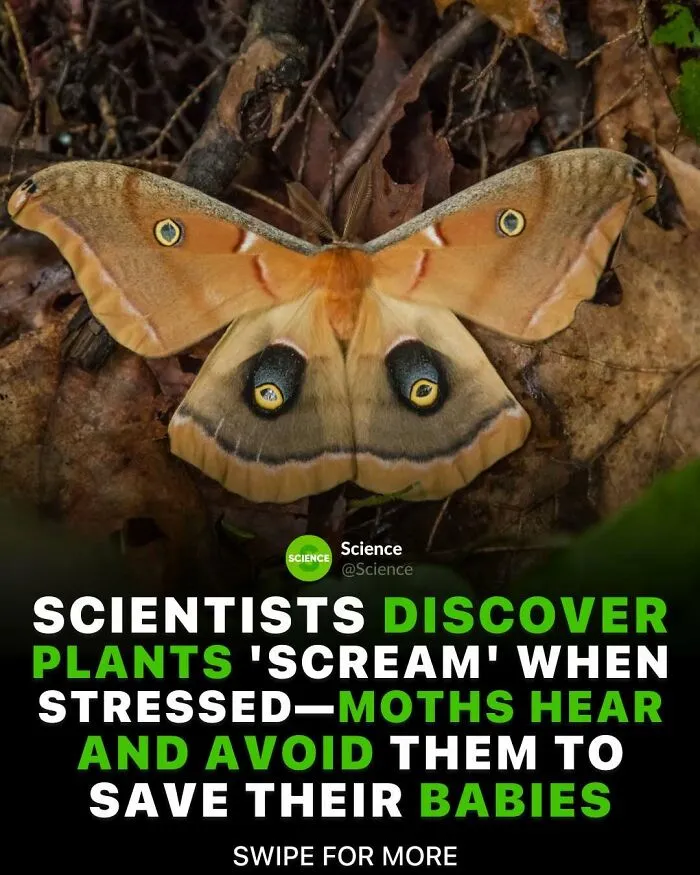
Plants are screaming—and moths are listening 🦋
Scientists at Tel Aviv University have uncovered the first evidence of acoustic communication between plants and insects, revealing that female moths avoid laying eggs on tomato plants emitting ultrasonic distress signals. When plants are dehydrated or stressed, they emit h**h-pitched clicking sounds beyond human hearing—essentially screaming for help.
The breakthrough came when researchers placed Egyptian cotton leafworm moths in controlled arenas with both healthy and stressed plants. The results were startling: moths consistently chose silent, hydrated plants over those making distress calls. Even more remarkable, when researchers played recorded plant screams through speakers next to healthy plants, moths still avoided those "noisy" locations.
This behavior appears hardwired into moth genetics. Lab-raised moths with zero plant exposure still demonstrated the same avoidance patterns, suggesting millions of years of evolutionary fine-tuning. The strategy makes perfect survival sense—caterpillars hatching on stressed plants face poor nutrition and higher mortality rates.
But tomato plants aren't alone in their vocal distress. The research builds on earlier discoveries showing that many plant species emit these ultrasonic cries when facing drought, damage, or disease. Insects, bats, and other mammals can all detect these frequencies, opening possibilities for an entire hidden ecosystem of acoustic interactions we're only beginning to understand.
The discovery could revolutionize agriculture and pest control. Instead of relying solely on chemical pesticides, farmers might someday use acoustic signals to guide beneficial insects toward healthy crops while deterring harmful ones. As climate change intensifies droughts worldwide, understanding these plant-insect conversations becomes increasingly crucial for protecting global food security.
Scientists at Tel Aviv University have uncovered the first evidence of acoustic communication between plants and insects, revealing that female moths avoid laying eggs on tomato plants emitting ultrasonic distress signals. When plants are dehydrated or stressed, they emit h**h-pitched clicking sounds beyond human hearing—essentially screaming for help.
The breakthrough came when researchers placed Egyptian cotton leafworm moths in controlled arenas with both healthy and stressed plants. The results were startling: moths consistently chose silent, hydrated plants over those making distress calls. Even more remarkable, when researchers played recorded plant screams through speakers next to healthy plants, moths still avoided those "noisy" locations.
This behavior appears hardwired into moth genetics. Lab-raised moths with zero plant exposure still demonstrated the same avoidance patterns, suggesting millions of years of evolutionary fine-tuning. The strategy makes perfect survival sense—caterpillars hatching on stressed plants face poor nutrition and higher mortality rates.
But tomato plants aren't alone in their vocal distress. The research builds on earlier discoveries showing that many plant species emit these ultrasonic cries when facing drought, damage, or disease. Insects, bats, and other mammals can all detect these frequencies, opening possibilities for an entire hidden ecosystem of acoustic interactions we're only beginning to understand.
The discovery could revolutionize agriculture and pest control. Instead of relying solely on chemical pesticides, farmers might someday use acoustic signals to guide beneficial insects toward healthy crops while deterring harmful ones. As climate change intensifies droughts worldwide, understanding these plant-insect conversations becomes increasingly crucial for protecting global food security.
Report
10points
