




You only meant to look up one quick question. The initial explanation went right over your head. Ten minutes later, you're still reading, three tabs deep and wondering how you got there. It happens because a clear, plain answer makes learning feel easy, so you keep going just to see what else you can understand.
That's the idea behind the “Explain Like I'm Five” Instagram page, where the goal is the simple version without the jargon. Just look at the explanations people have shared online, from how swimsuit colors can save a life to what shirts help actually keep you cool in the sun and why tattoos hurt more in some places than others.
#61

These plants can help repel insects because they produce strong-smelling natural chemicals called volatile oils. Many insects rely heavily on smell to find people, food or places to lay eggs, so these plant compounds can interfere with those signals.
Rosemary releases aromatic compounds such as cineole and camphor that can discourage mosquitoes, fleas and ticks.
Peppermint contains menthol and menthone, scents that many ants, mosquitoes and spiders avoid.
Catnip produces nepetalactone, a compound shown to have strong mosquito-repelling activity.
Marigolds contain compounds such as limonene and other plant chemicals that can deter mosquitoes and some aphids.
Basil gives off eugenol, linalool and other aromatic oils that can make an area less attractive to mosquitoes and flies.
Lavender contains linalool and linalyl acetate, which can interfere with the sensory systems of mosquitoes, moths, fleas and some flies.
But there’s an important catch: simply keeping one potted plant nearby usually won’t create a powerful insect barrier. Repellent effects are often stronger when the leaves are crushed or when concentrated plant oils and extracts are used. These plants can help reduce insect activity, but they shouldn’t replace proven pest-control methods when protection really matters.
Save this post if you’ve ever wondered why certain plants seem to keep bugs away, or share it with a friend who’ll never look at a garden the same way again.
Report
2points
#62
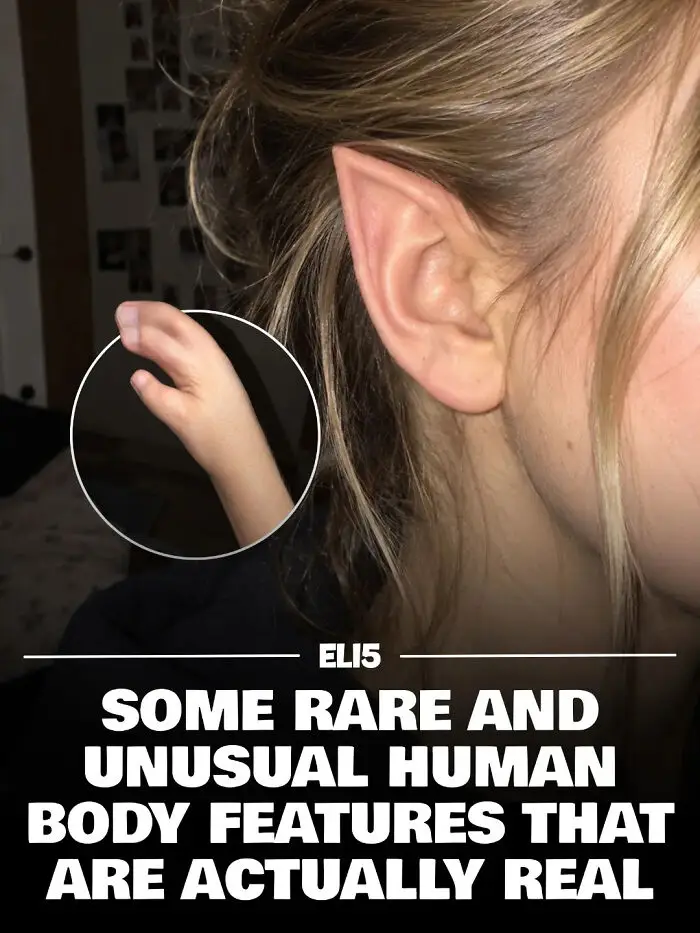
The human body has an extraordinary range of natural variations, some of which are uncommon enough to go unnoticed by most people. These differences can affect the appearance of our hands, eyes, ears, skin, and even the way our hair grows.
Some features, such as polydactyly, bifid thumbs, and congenital hand differences, develop before birth. Others, like heterochromia, involve variations in eye pigmentation, while a double crown results from two natural hair whorls growing on the scalp.
Certain medical conditions can also produce unusual physical changes. Raynaud’s phenomenon causes temporary changes in finger color due to reduced blood flow, dermatographia produces raised marks following pressure or scratching, and vitiligo causes areas of skin to lose pigmentation.
Not all these features are genetic, and not all are medically harmful. Some are harmless anatomical variations, while others may require medical attention.
Save this post if you want to recognize some of these unusual body features, or share it with someone fascinated by human anatomy.
Report
2points
#63

Astigmatism happens when the cornea or lens of the eye has an irregular shape, more like a football than a perfectly round ball. Because of this, light does not focus onto a single point on the retina. Instead, it can spread in different directions, making objects and especially bright lights appear stretched, blurred, or slightly doubled.
That is why headlights, streetlights and traffic signals may appear as long streaks or starbursts at night. Text can also have faint ghost images, while the moon or other bright objects may appear duplicated or smeared. The effect varies from person to person and depends on the severity and type of astigmatism.
Corrective glasses or contact lenses compensate for the uneven focusing, bringing light into a much clearer focus and reducing these distortions.
Report
2points
#64

Antlers are one of the most useful clues for identifying deer, but you need to look at more than just the number of points. Start with the overall shape of the antler: is it short and simple, heavily branched, repeatedly forked, or broad and palm-shaped? Then look at the main beam, brow tine and upper tines to understand how the antler is constructed.
Antlers are usually grown by males, while females generally do not grow them. But there is a remarkable exception: reindeer (caribou), where both males and females routinely grow antlers.
Different species have distinctive patterns. Chital have relatively slender, three-tined antlers; sambar have heavy three-tined antlers; barasingha can have numerous tines; muntjac have tiny antlers with a prominent brow tine; fallow deer have broad, palmated antlers; mule deer are recognized by their characteristic forked branching; white-tailed deer have individual tines rising from a main beam; and moose develop enormous, broad, shovel-like antlers.
Antlers can also provide clues about age, but more points do not automatically mean an older deer. Genetics, nutrition, health and species all influence antler development.
So when you spot a deer, don't just count the points. Look at the architecture. That's where the real identification clues are.
Report
2points
#65
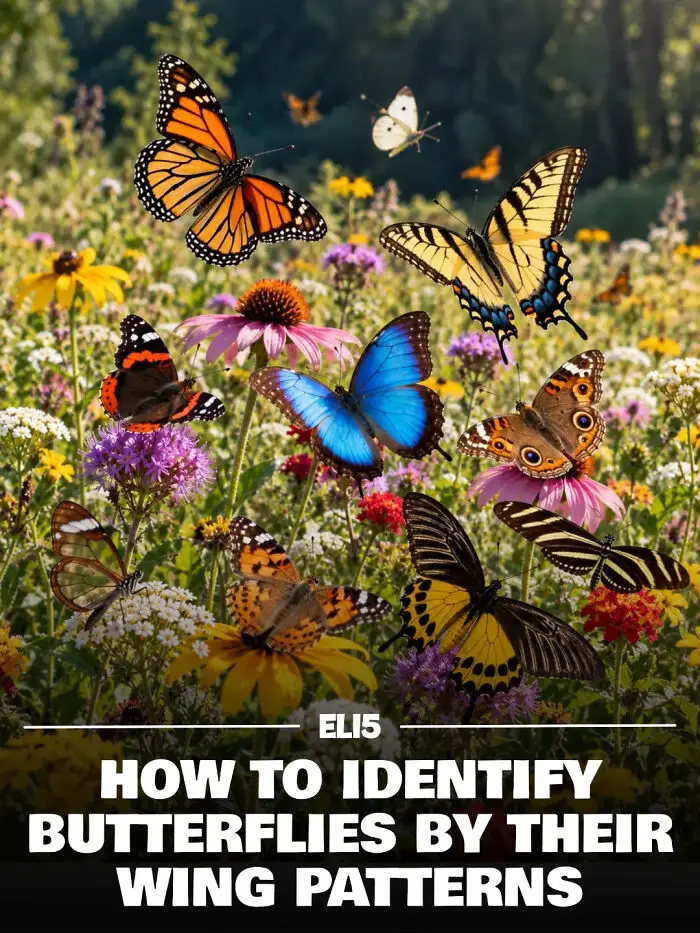
Butterflies can often be identified without seeing their entire body — their wings are like tiny natural fingerprints.
Start with the overall wing shape. Some butterflies have long, pointed wings, while others have rounded or deeply scalloped edges. Swallowtails, for example, have distinctive tail-like extensions on their hindwings.
Next, look at the dominant colour and pattern. Monarchs have orange wings crossed by black veins and bordered with white spots. Blue butterflies are recognised by their blue upper wings, while zebra longwings have bold yellow stripes across black wings.
Then look closely at spots, bands and markings. Red admirals have red-orange bands and white spots, while peacock butterflies have four large eyespots that are difficult to confuse with other species. Some butterflies, such as the glasswing, are even recognised by their transparent wings.
Also examine the wing margins. The colour, number of spots and arrangement of markings along the edges can be extremely useful for identification.
Finally, consider the pattern as a whole, rather than relying on one colour. Lighting, age, s*x and wing wear can slightly change how a butterfly looks.
The trick is simple: shape colour bands spots edges overall pattern.
Once you know what to look for, a butterfly’s wings become a field guide you can carry with you.
Report
2points
#66
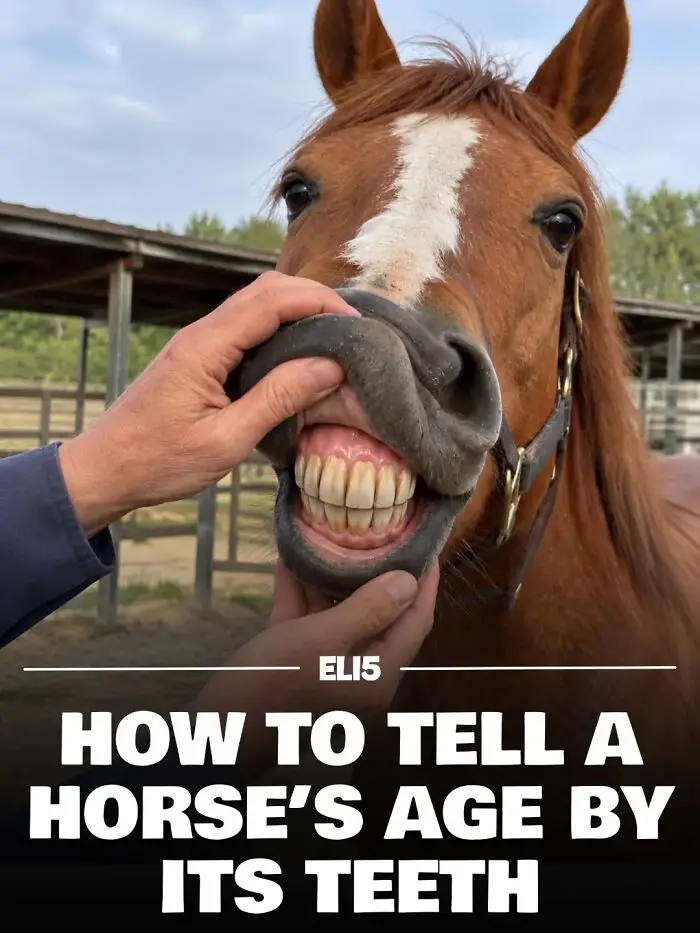
A horse’s teeth can reveal a surprising amount about its age because they continuously change as the animal grows.
Young horses first develop temporary “milk teeth.” As they mature, these are gradually replaced by permanent teeth. The permanent incisors appear in a fairly predictable sequence, which is why veterinarians and experienced horse handlers can estimate a horse’s age by examining its mouth.
But the teeth do more than simply appear. As a horse eats, its incisors gradually wear down, changing their shape and the appearance of the chewing surface. The angle of the teeth also becomes more pronounced with age. Features such as the cups, enamel patterns and Galvayne’s groove can provide additional clues in older horses.
Think of it like looking at a well-used tool: you can often tell how long it has been used by the changes caused by wear.
The illustrations show the progressive transformation of a horse’s front teeth as it matures - from newly developing teeth to increasingly worn adult teeth. This is why examining the incisors has traditionally been one of the simplest ways to estimate a horse’s age.
However, tooth wear can vary depending on diet, chewing habits, environment and individual differences, so dental examination provides an age estimate rather than an exact birthday.
Report
2points
#67

Our bones are built to handle enormous amounts of stress, but falls, accidents, sports injuries and everyday impacts can still cause fractures. The most commonly fractured regions are not necessarily the smallest or weakest bones. Areas such as the lower leg, forearm, wrist and shoulder are frequently injured because they absorb force during falls and impacts.
This ranking shows the estimated annual number of fractures across 204 countries in 2019. The figures include different age groups and combine some anatomically related bones into broader regions. The knee, shin, calf and ankle region accounted for about 32.7M cases, while skull fractures accounted for about 7.6M.
These numbers show where fractures occur most often, not how severe they are. A fracture can range from a small crack to a serious break requiring surgery and prolonged recovery.
Report
2points
#68
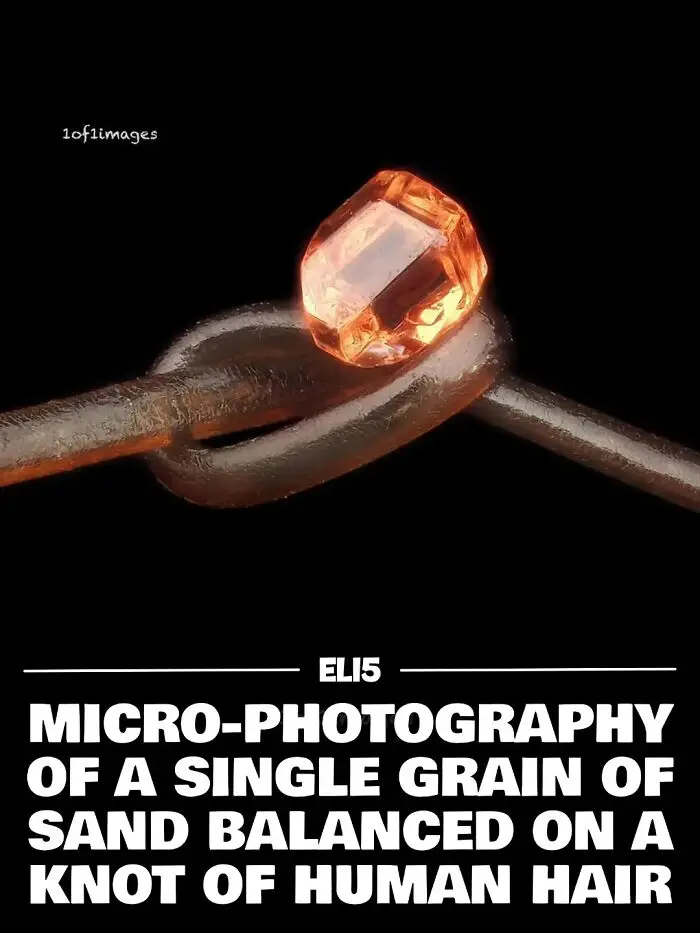
This striking macro photograph by Ethan Beckler (@1of1images) reveals a tiny world that is almost impossible to see with the naked eye: a single grain of sand balanced on a human hair tied into a tight knot.
At this scale, the hair is far from smooth. Its outer surface is covered with overlapping keratinized cells called the cuticle, arranged much like tiny roof shingles. When the hair is bent and knotted, these microscopic scales create an uneven, textured surface that can catch and hold the irregular edges of the sand grain.
The grain itself is incredibly small. In geology, “sand” is defined primarily by particle size, ranging from about 62.5 micrometres to 2 millimetres, regardless of what mineral it is made from. A grain of quartz or another silicate mineral can therefore sit securely on the hair because its tiny weight, combined with friction and the hair’s microscopic texture, helps prevent it from simply sliding away.
The image is also focus-stacked, using an OM System camera and lens to combine multiple focus points into one highly detailed photograph. What looks like a simple macro shot is actually a beautiful demonstration of physics, geology, biology and photography meeting at the microscopic scale.
Image by - @1of1images (Posted with permission).
Report
1point


