





You only meant to look up one quick question. The initial explanation went right over your head. Ten minutes later, you're still reading, three tabs deep and wondering how you got there. It happens because a clear, plain answer makes learning feel easy, so you keep going just to see what else you can understand.
That's the idea behind the “Explain Like I'm Five” Instagram page, where the goal is the simple version without the jargon. Just look at the explanations people have shared online, from how swimsuit colors can save a life to what shirts help actually keep you cool in the sun and why tattoos hurt more in some places than others.
#1
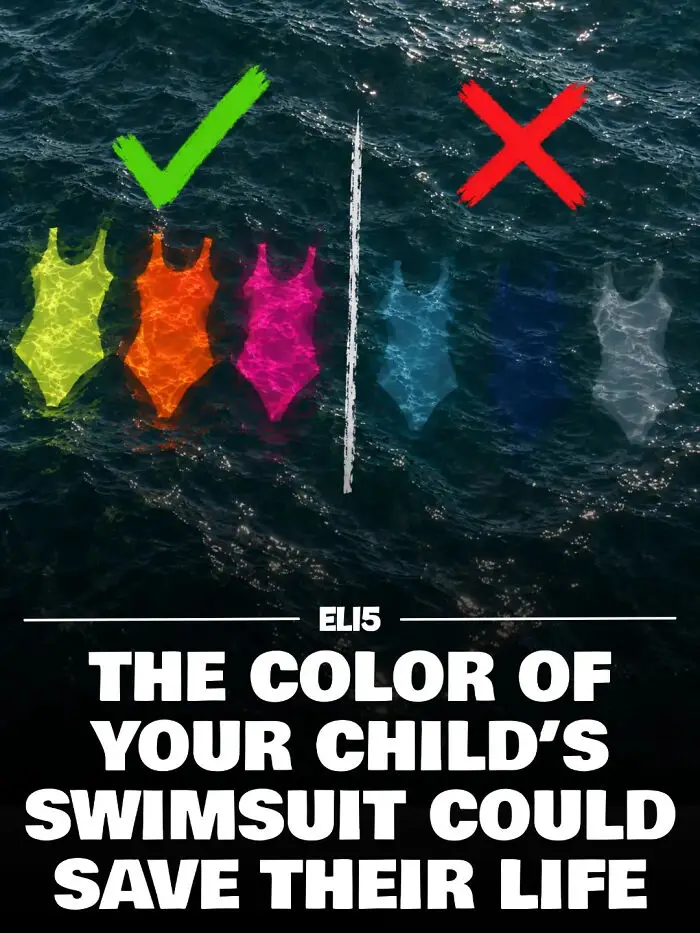
The color of your child’s swimsuit could help make them easier to spot in the water.
When choosing swimwear, most people think about style, comfort and fit. But color matters too - especially when children are swimming.
Water doesn’t always look the same. Its appearance changes with depth, lighting, weather and the surroundings. Some swimsuit colors can blend into that background, making a swimmer harder to see.
Bright neon colors such as fluorescent orange, pink, green and yellow tend to stand out against a wider range of water conditions. In contrast, blues, greens and pastel shades can blend with the water and become much less noticeable.
This doesn’t replace active supervision, swimming skills or proper water-safety measures. But choosing highly visible swimwear can make it easier to locate a child quickly.
So next time you buy a swimsuit, don’t think only about how it looks on your child. Think about how easily you’ll be able to see them in the water.
Report
12points
#2

For centuries, the Mercator map has shaped how we picture the world - but it does not show the true size of continents.
On 4 September 2026, the UN General Assembly overwhelmingly backed a resolution supporting more accurate world maps. 164 countries voted in favour, six abstained, and the United States was the only country to vote against it.
One striking example is Africa: it is roughly 14 times larger than Greenland, despite appearing much closer in size on a Mercator map.
The resolution is not legally binding, but it could influence school maps, educational materials and everyday technology, encouraging the use of projections that better represent the world’s actual land areas.
Maps do not just show the world - they shape how we understand it.
Map credits - Mapswire.com
Sources: The Guardian, Associated Press, UN News
Direct link has been shared in the broadcast
Report
8points
#3
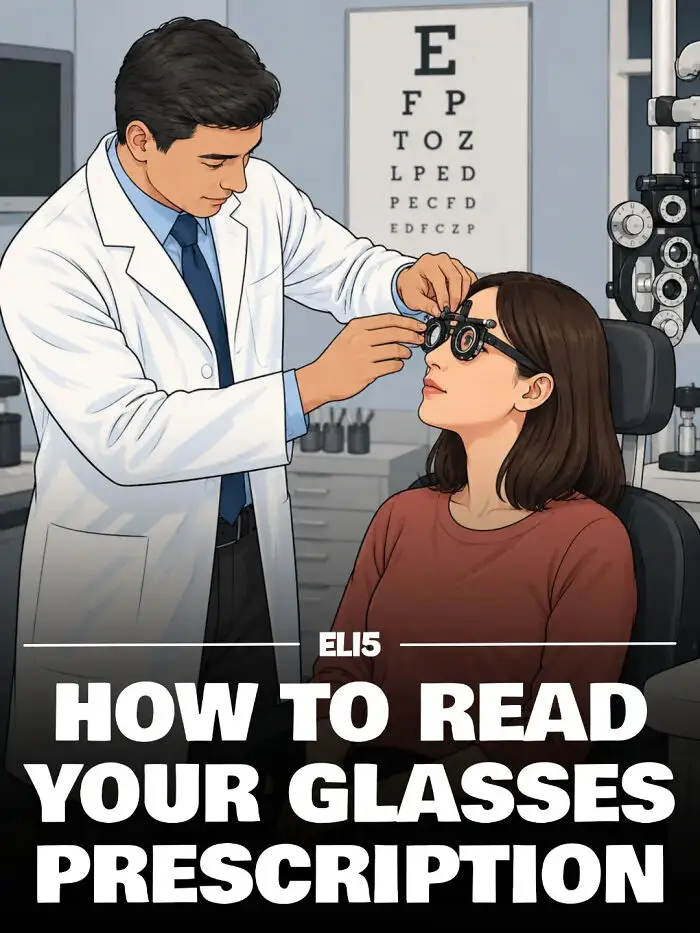
A glasses prescription may look like a collection of random numbers, but each one describes a specific correction your eyes need.
OD = right eye, while OS = left eye.
The main number is SPH (sphere), which shows the lens power needed to correct your basic focusing error.
A minus (−) number usually indicates myopia, meaning difficulty seeing distant objects. A plus (+) number generally indicates hyperopia, or farsightedness.
The farther the number is from zero, the greater the optical correction.
CYL (cylinder) shows the amount of correction for astigmatism, where the eye has unequal curvature in different directions. AXIS tells you the orientation of that astigmatism, measured from 0° to 180°.
ADD is extra lens power for near vision, commonly used in bifocal or progressive lenses. It is added to the distance prescription to provide the stronger near-vision correction.
PRISM may appear when a person needs help aligning the eyes and reducing double vision. Its direction may be written as BU (base up), BD (base down), BI (base in) or BO (base out).
PD means pupillary distance - the distance between your pupils in millimetres. It helps position the optical centre of each lens correctly in front of your eyes.
So, a prescription isn't a measure of how “bad” your eyes are. It is essentially a set of optical instructions telling the lens exactly how to bend light so your eyes can form a clearer image.
Report
8points
#4
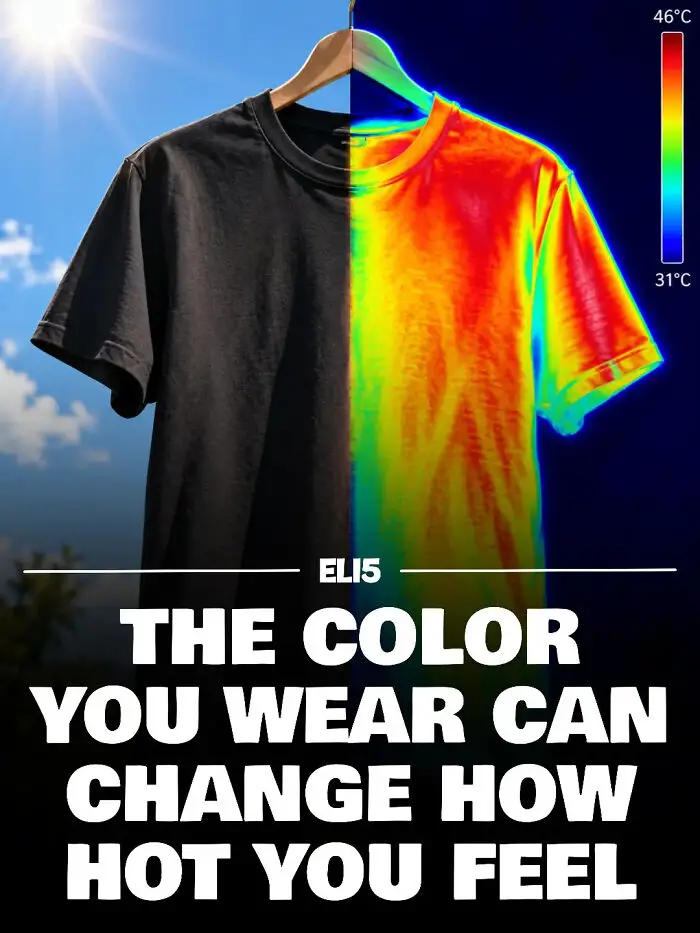
A thermal-camera experiment from Japan’s National Institute for Environmental Studies shows how strongly clothing color can affect surface temperature in direct sunlight.
After just 5 minutes of sun exposure, the white polo shirt was around 30°C, while parts of the black and green shirts exceeded 45°C. In other experiments, black and dark-green shirts have even exceeded 50°C under suitable conditions.
So why does this happen?
Sunlight carries energy. When it hits a shirt, some of that energy is reflected and the rest is absorbed. Light-colored surfaces generally reflect a larger fraction of incoming solar radiation, while dark surfaces absorb more. The absorbed radiation is converted into thermal energy, raising the shirt’s surface temperature.
Think of it like this: a white shirt sends more of the Sun’s energy back, while a black shirt keeps more of it. The hotter surface then loses heat through infrared radiation and to the surrounding air, but under strong sunlight and weak wind, it can still become much hotter than the surrounding air.
That does NOT mean wearing black will automatically make your body 15°C hotter. The experiment measures the shirt’s surface temperature, and the actual effect on your body also depends on fabric, thickness, fit, wind, humidity and how much sunlight reaches you.
Still, in hot, sunny conditions, choosing lighter, more reflective clothing can reduce the amount of solar energy absorbed by the clothing.
Source: National Institute for Environmental Studies (NIES)
Report
8points
#5
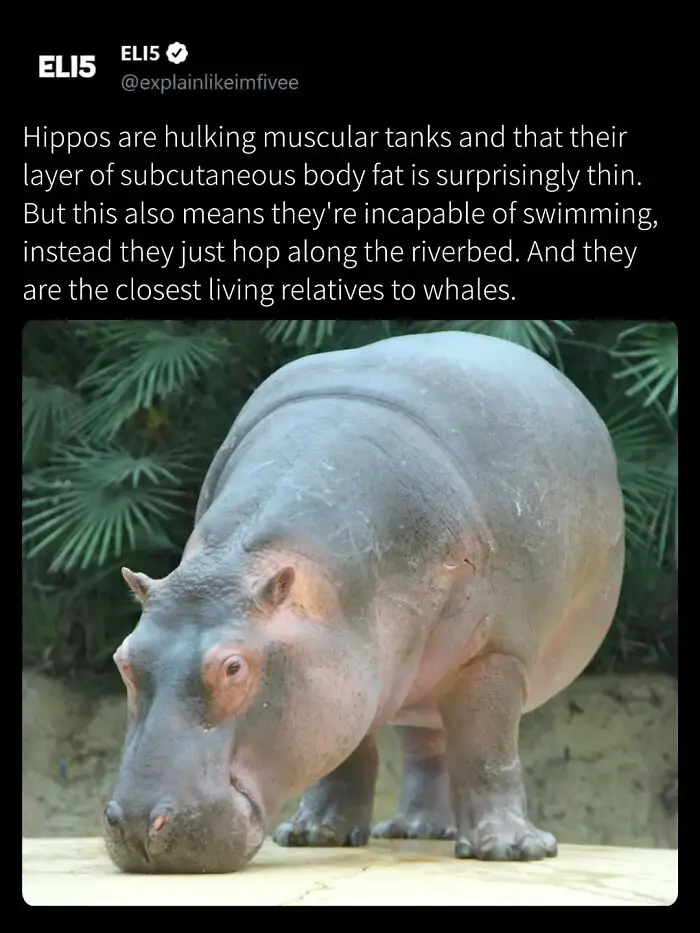
Hippopotamuses are among the largest and most powerful land mammals on Earth, with adult males often weighing between 1,500 and 1,800 kilograms (3,300–4,000 pounds). Despite their enormous, rounded appearance, their bodies contain surprisingly little fat beneath their thick skin compared with what many people might expect.
Unlike most aquatic mammals, hippos cannot swim in the conventional sense. Their dense bodies make it difficult for them to remain buoyant, so instead of paddling through deep water, they typically move by pushing off the bottom of rivers and lakes.
Using their powerful legs, hippos can walk, run, or launch themselves into a series of underwater hops, sometimes appearing to glide through the water. They can also hold their breath for several minutes, allowing them to remain submerged while traveling along the riverbed.
Their relationship with water is essential for survival. Hippos spend much of the day submerged to keep cool and protect their sensitive skin from the intense African sun, usually emerging at night to graze on grass.
Perhaps the most surprising fact is their evolutionary history. Despite their pig-like appearance, hippos are the closest living relatives of whales and dolphins. Genetic and fossil evidence indicates that their evolutionary lineages diverged from a shared ancestor approximately 55 million years ago.
This makes hippos part of an extraordinary evolutionary story connecting massive, semiaquatic African mammals with the whales that inhabit the world's oceans.
Report
8points
#6
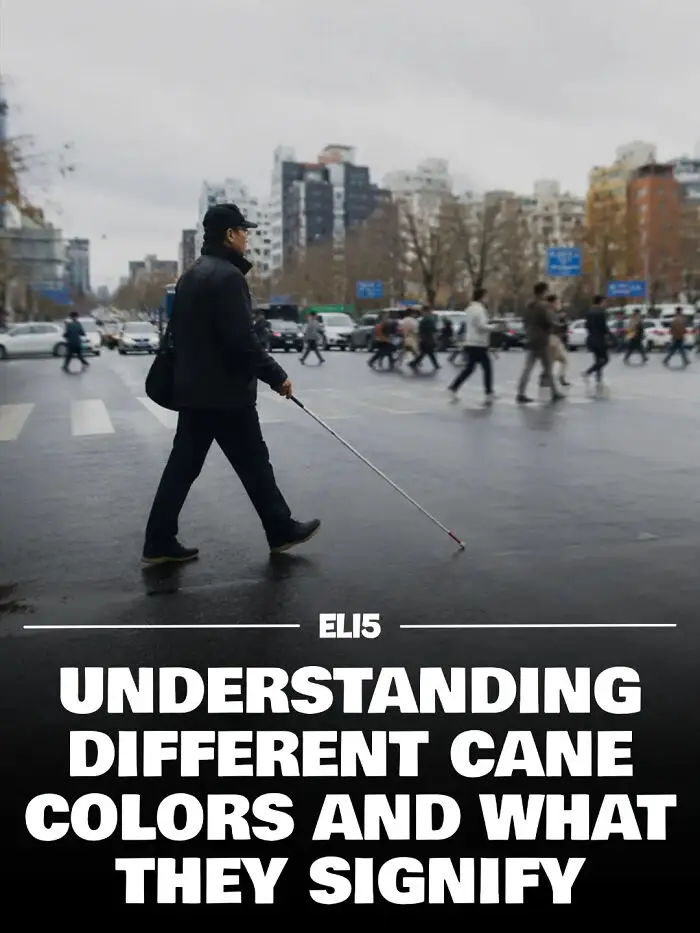
Not every cane means the same thing. The color, length, and design can give important information about the person using it.
A white cane is generally used by people who are blind or have significant vision loss. A long white cane is primarily a mobility tool, helping the user detect obstacles, steps, curbs, and changes in the ground before reaching them. It can also signal to others that the person has a visual impairment.
A white cane with a red tip is also commonly used by people with vision loss. The red section can make the cane more visible to others, but the exact meaning of a red-tipped cane can vary by country and cane type, so it should not automatically be interpreted as a specific level of vision.
A cane with alternating red and white sections or stripes has a more specific meaning in places such as the UK. It indicates that the person has both sight loss and hearing loss, known as deafblindness or dual sensory loss.
There are also guide canes and symbol canes. A guide cane is shorter and is mainly used to detect steps, curbs, and nearby obstacles, while a symbol cane is primarily carried to alert others that someone has sight loss rather than being used as a main mobility aid.
The important thing is not to assume exactly what someone can or cannot see from their cane alone. Vision loss exists on a spectrum, and many people who use white canes still have some useful vision.
Report
7points
#7
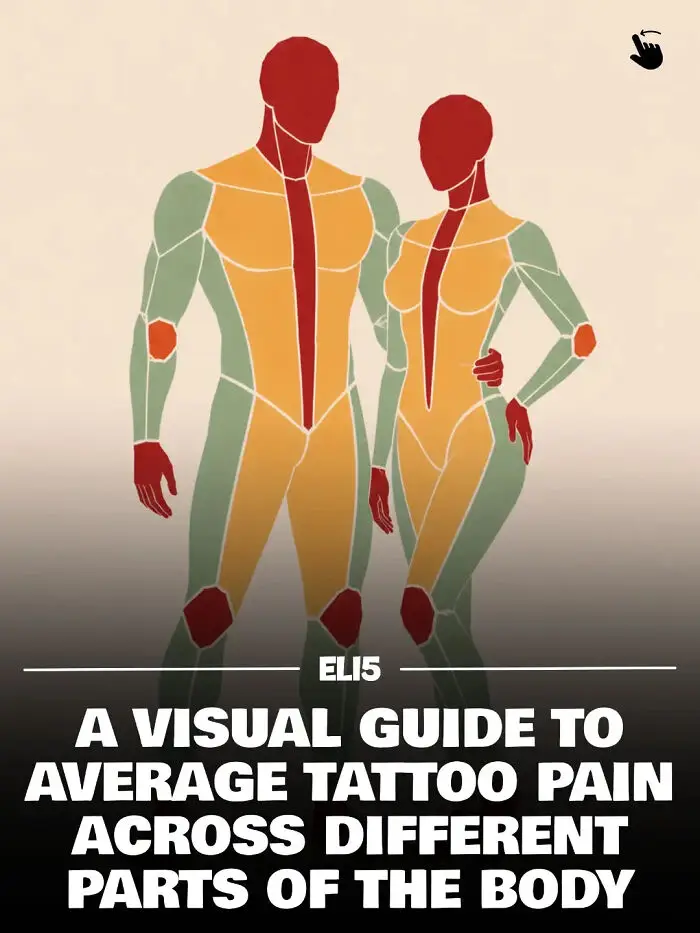
Check this chart before you get inked!
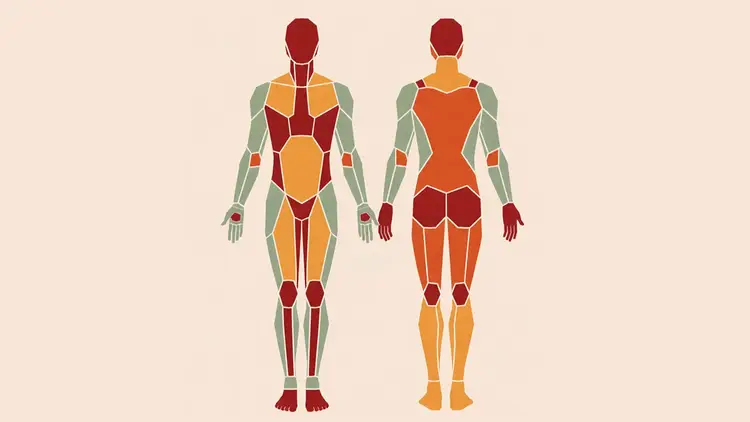
Not every spot hurts the same, and there's some real anatomy behind why. Ribs tend to be among the more painful placements, while the outer thigh or upper arm are often easier choices for a first tattoo.
A tattoo needle repeatedly punctures the skin, depositing ink into the dermis - the second layer of skin where the pigment stays. That layer contains nerves and blood vessels, so yes, tattoos hurt. The bigger question is where they hurt most.
Three main things influence it.
First, nerve density. Areas such as the ribs, spine, fingers and feet have lots of nerve endings. More nerve activity means more signals reaching your brain, which can translate into more pain.
Second, how close the bone is to the surface. Areas like the knees, ankles, shins, collarbone and elbows have less soft-tissue cushioning, so the needle's vibration can feel deeper and more intense.
Third, how much soft-tissue cushioning there is underneath. Areas such as the outer thigh, outer bicep, forearm and calf generally have more cushioning, making them more comfortable for many people.
But pain is highly subjective. Two people can get tattooed in exactly the same place and have completely different experiences. Your artist's technique, the length of the session, your sleep, stress levels and even your mood can all affect how it feels.
So use this chart as a general guide, not a guarantee. Before deciding on placement, talk to your tattoo artist -, they can factor in the exact design, size, placement and your individual anatomy and give you a more realistic idea of what to expect.
Getting your first one? Start easy. The ribs aren't going anywhere
Save this for later!
Report
7points
#8
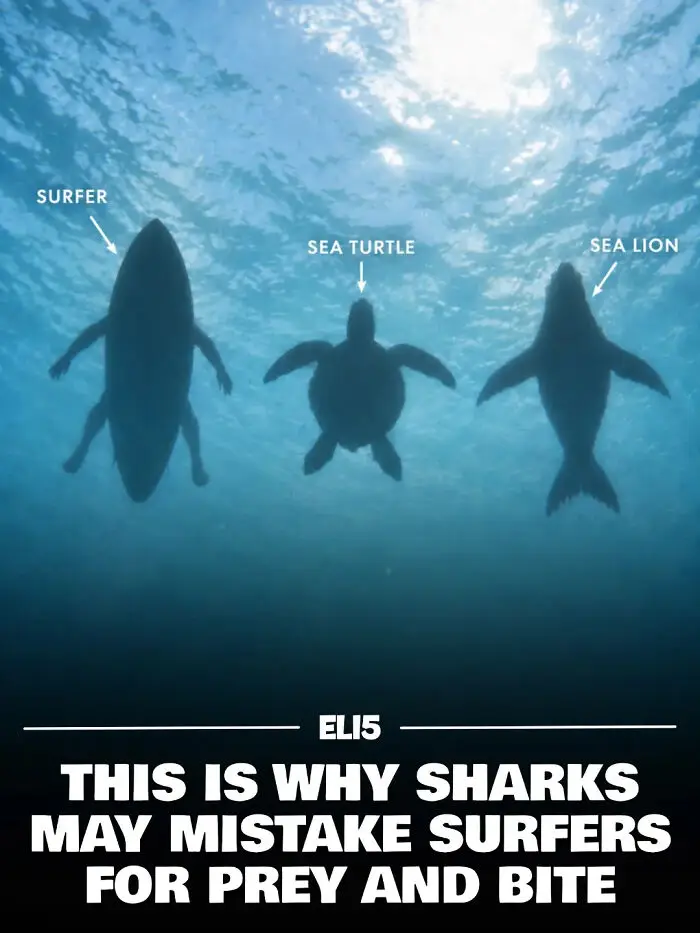
Sharks do not normally hunt humans as preferred prey. Many bites on surfers are thought to happen because, from below, a surfer on a board can resemble the silhouette of a seal or other marine animal moving near the surface.
A shark looking upward often sees a dark shape against bright water rather than every detail. The surfboard forms the main body, while the surfer’s arms and legs can resemble flippers. Think of it like seeing only someone’s shadow behind a curtain - you can recognize the general shape, but you might guess the wrong thing.
This is especially relevant to large predatory sharks such as great whites, which naturally hunt seals. A shark may approach to investigate and sometimes use a bite to identify an unfamiliar object. Unfortunately, even an exploratory bite from a large shark can cause severe injuries.
But mistaken identity is only one explanation, and scientists do not believe every shark bite happens for the same reason. Curiosity, environmental conditions, prey activity and defensive behavior can also play a role.
Save this post if you’ve ever wondered what a surfer looks like from beneath the waves, or share it with someone who thought sharks deliberately hunt humans.
Report
7points
#9

Cats and dogs don’t age at a simple “1 pet year = 7 human years” rate. They mature extremely quickly when they’re young, then their aging slows down. That means a 1-year-old cat or dog is already much more mature than a 7-year-old human.
For cats, the first year is roughly equivalent to 15 human years, and by age 2 they’re around 24 human years. After that, each additional cat year is roughly equal to 4 human years. So a 5-year-old cat is about 36 in human years, a 10-year-old cat about 56, and a 15-year-old cat about 76. Indoor cats can commonly live well into their teens, so their “human age” can reach the equivalent of someone in their 70s, 80s or beyond.
For dogs, it’s more complicated because size and breed affect how quickly they age. Like cats, dogs mature rapidly during their first couple of years. A 1-year-old dog is roughly comparable to a human teenager, and a 2-year-old dog is already a young adult. After that, smaller dogs generally age more slowly, while large and giant breeds age faster. That’s why a 10-year-old Chihuahua may be roughly comparable to a human in their 50s, while a 10-year-old Great Dane may be closer to someone in their 70s.
So “human years” are really just a way of visualizing a pet’s life stage, not an exact biological conversion. Genetics, breed, body size, nutrition, activity and veterinary care can all influence how an individual cat or dog ages.
Save this post if you’ve ever wondered how old your pet really is in human years, or share it with the friend who still multiplies their pet’s age by seven.
Report
7points
#10

In 1790, Benjamin Franklin left behind one of the most remarkable financial gifts in American history. In his will, the Founding Father set aside $2,000, divided equally between Boston and Philadelphia, with instructions designed to benefit future generations long after his d***h.
Rather than allowing the cities to spend the money immediately, Franklin established a 200-year plan. The funds would initially provide low-interest loans to young tradesmen, helping them establish businesses and become financially independent.
After 100 years, the cities could withdraw a portion of the accumulated money for public improvements, while the remaining funds would continue growing for another century.
By 1990, two centuries after Franklin's d***h, his original bequest had grown to approximately $6.5 million.
The money eventually supported educational scholarships, vocational training, scientific institutions, and charitable programs. Some grants helped fund women's healthcare, firefighting services, and assistance for children with disabilities.
Franklin's unusual arrangement demonstrated the extraordinary potential of long-term investment and compound interest. A relatively modest sum, carefully managed across generations, had grown into millions of dollars capable of supporting thousands of people.
Perhaps the most remarkable part was that Franklin deliberately planned to help people who would not even be born until long after his lifetime.
His legacy became a powerful example of how generosity, patience, and financial foresight can continue benefiting society centuries after someone is gone.
Report
7points
#11

For centuries, Japan’s samurai clans carried powerful symbols of identity, lineage, and authority. Known as Kamon, these traditional family crests appeared on battle banners, armor, helmets, clothing, and architecture, distinguishing influential families throughout Japanese history.
Each crest carries a connection to the people and traditions behind it. Some represent plants, flowers, animals, or geometric patterns, while others became closely associated with legendary commanders and powerful ruling dynasties. These emblems were not always exclusive to a single family, as different branches sometimes inherited, shared, or modified existing designs.
The tradition of Japanese heraldry has endured for centuries, with historic symbols continuing to appear in imperial and government institutions today.
Save this post to revisit the fascinating history of Japan’s traditional crests.
Sources: The Crests of the Samurai Clans, Nagoya Sword Museum, Black Silk Kyoto, Government of Japan, Touken World.
Report
6points
#12
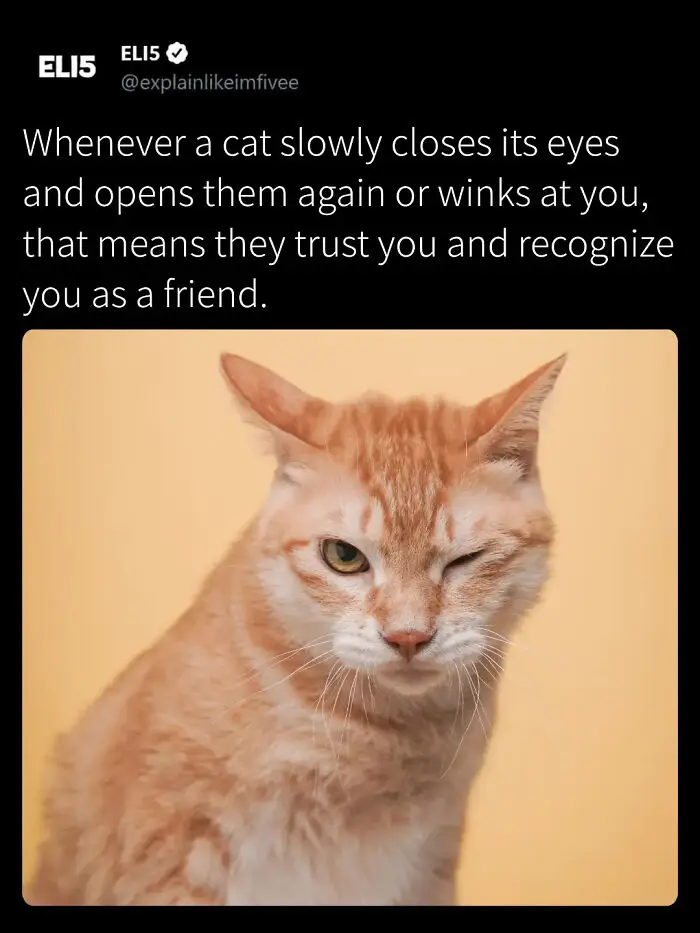
WHEN A CAT SLOWLY BLINKS AT YOU, IT MAY BE SHOWING THAT IT FEELS SAFE AROUND YOU.
Cats often communicate through body language rather than obvious gestures. A slow blink — gently closing and reopening their eyes — can be a sign of relaxed, non-threatening behavior.
In a 2020 study, researchers found that cats were more likely to slow-blink at humans who slow-blinked at them first. Cats were also more likely to approach an unfamiliar person after a slow-blinking interaction than after a neutral expression.
This suggests that slow blinking can be a form of positive communication between cats and humans. When a cat looks at you with relaxed eyes and slowly closes them, it may indicate comfort and trust.
However, a blink isn't a guaranteed declaration of love. Context matters: relaxed posture, soft facial expressions and a calm environment help you understand what your cat is communicating.
Want to try it? Look at your cat gently, slowly close your eyes for a moment, then open them again without staring. Let your cat decide whether to respond.
Sometimes, friendship doesn't need words — just a slow blink.
Report
6points
#13
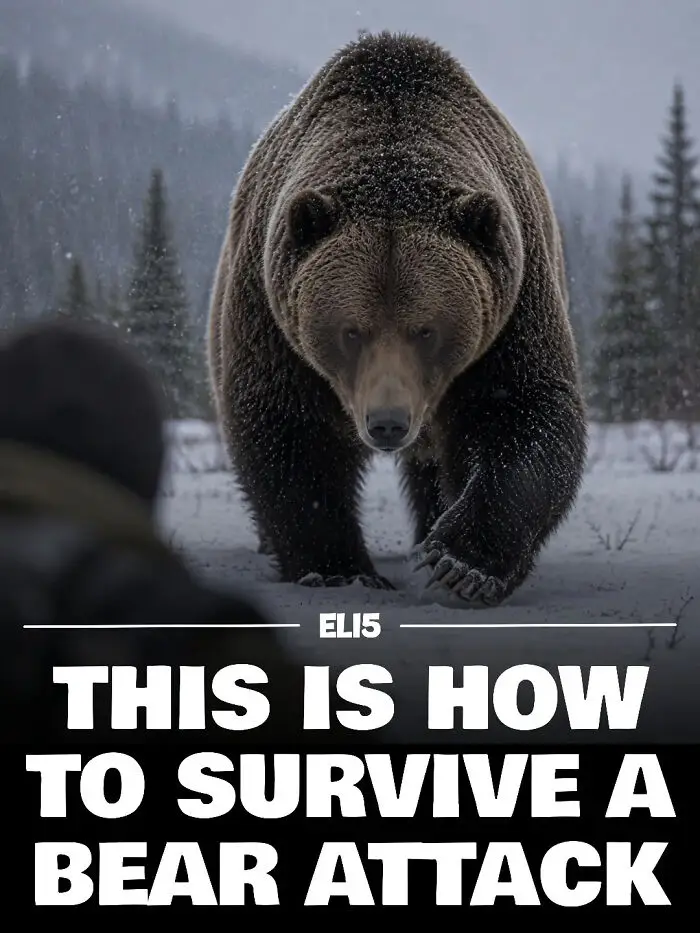
“If it’s brown, lie down. If it’s black, fight back. If it’s white, good night.”
You may have heard this catchy rhyme about surviving a bear attack, but it is only a rough memory aid - not a complete safety guide.
First, never run. If you encounter a bear, stay calm, speak in a steady voice, slowly back away, and give it an escape route. Running can trigger a chase response, and you should never try to climb a tree.
If a brown bear or grizzly makes physical contact during a defensive attack - such as when you surprised it or it is protecting cubs - play d**d. Lie flat on your stomach, spread your legs, keep your backpack on, and clasp your hands behind your neck. Stay still until the bear leaves. If the attack continues for a prolonged period, however, fight back vigorously.
With a black bear, do not play d**d. If it actually attacks you, fight back aggressively, concentrating your defense on its face and muzzle. If a bear enters your tent or appears to be stalking you, fight back regardless of species, because this can indicate a predatory attack.
And the “white means good night” part is definitely not a survival strategy. Polar bears are a different situation entirely, and avoiding an encounter is your best defense.
The safest bear encounter is the one that never becomes an attack: make noise while hiking, travel in groups, secure food and scented items, keep your distance, and carry bear spray where it is recommended and legal.
Report
5points
#14
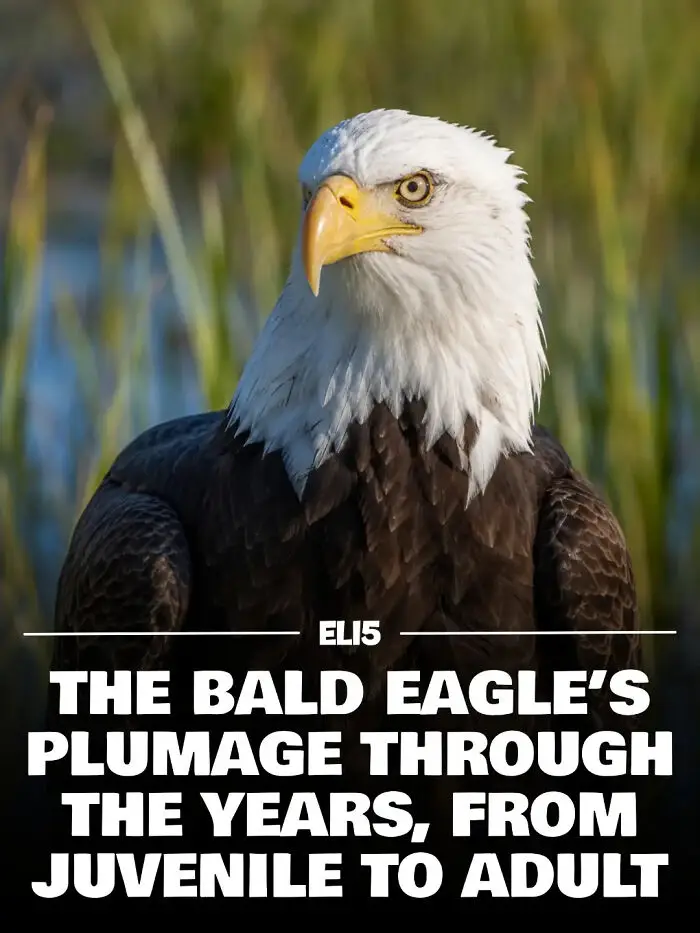
A bald eagle does not simply hatch with the iconic white head we recognize. Its plumage changes dramatically during the first several years of life, and these changes can help estimate its age. The first juvenile plumage is the darkest and least variable, with an overall dark-brown body and subtle white flecking on the belly and underwings. This first plumage is typically retained for about six months after leaving the nest.
After that, the eagle enters its immature or sub-adult stages, where things become much less predictable. Around 1½ years, lighter brown feathers and increasing white flecking begin to appear, while the beak is still mostly dark. At around 2½ years, the plumage can vary enormously between individuals, with different combinations of brown and white mottling. The eyes and beak also gradually begin changing color.
By about 3½ years, the transformation toward adulthood becomes more obvious. The head and tail begin turning white, although they remain heavily flecked with brown, while a darker band through and behind the eye can be noticeable. The beak becomes mostly yellow and the body gradually returns to a more uniform dark brown.
Around 4½ to 5½ years, the familiar adult appearance finally emerges: a dark-brown body, white head and tail, bright yellow beak, and pale yellowish-white eyes. Most bald eagles acquire their definitive adult plumage by about 5½ years, although a few brown flecks can persist longer. Once acquired, this adult plumage remains for the rest of the bird’s life.
So, the “bald” head is not something a bald eagle is born with. It is the final result of years of gradual feather and coloration changes. And because immature plumage can vary so much between individual birds, age estimates are best treated as approximate rather than exact.
Report
5points
#15

HOW TO TELL WHEN A DOG IS NEARING THE END OF LIFE
There is no single sign that can tell you a dog is d***g. Instead, several changes may appear as the body begins to slow down, especially in dogs with advanced age or serious illness.
A dog may sleep much more and lose interest in walks, play or things it normally enjoys. Appetite and water intake can decrease, and weight loss may become noticeable. Movement can become difficult, with weakness, stiffness or trouble standing and walking.
You may also notice changes in breathing, such as slower, faster or irregular breathing. Some dogs become confused, withdrawn or unusually restless. They may stop grooming themselves, have accidents indoors or seek unusual amounts of solitude or comfort.
Pain can sometimes show through panting, trembling, whining, difficulty settling, changes in posture or avoiding touch. However, dogs often hide pain, so subtle changes in behavior can be important.
These signs do NOT always mean d***h is near. Many can also occur with conditions that may be treatable. A veterinarian can assess pain, organ function and overall quality of life and help determine what is happening.
The most important question isn't simply “Is my dog d***g?” but “Is my dog still comfortable and able to enjoy life?” When comfort can no longer be maintained, a veterinarian can discuss compassionate end-of-life options.
Report
5points
#16
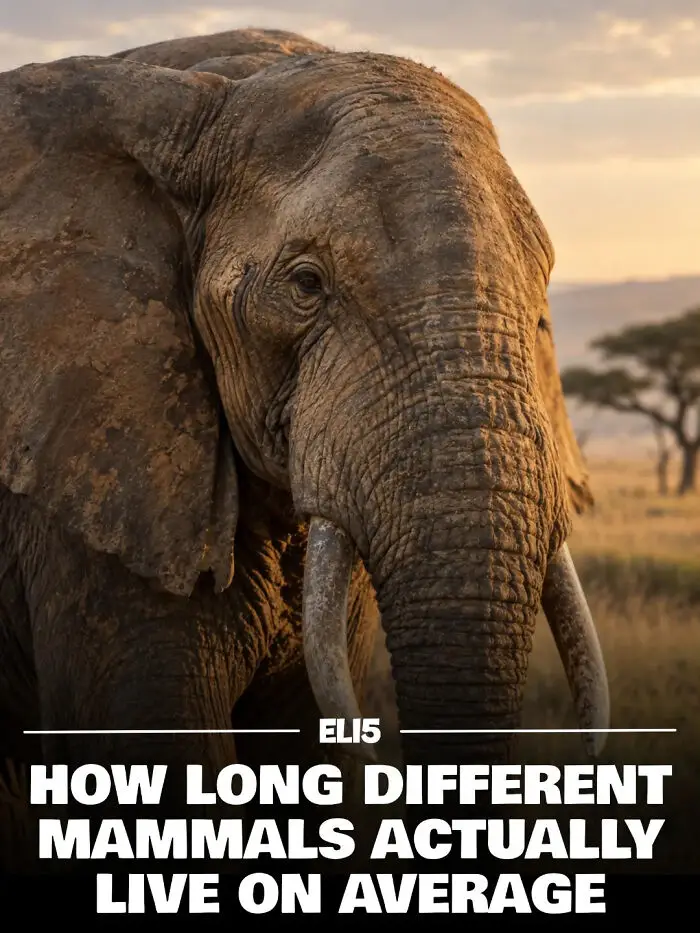
How long can a mammal actually live? The answer ranges from barely a year to more than two centuries.
Weasels are among the shortest-lived mammals, typically surviving only 1–2 years. Hedgehogs rarely make it beyond 3 years, while wolverines can reach around 12 and tigers average about 14 years.
As you move up the lifespan ladder, brown bears can live around 25 years, lowland tapirs around 30, and western gorillas around 35 years. One remarkable exception is Brandt’s bat, which can live up to 41 years despite its tiny size.
Elephants can reach about 56 years, while humans average around 80 years and are the longest-lived land mammals.
But the true mammalian longevity champion lives in the Arctic Ocean: the bowhead whale. These enormous whales can live for 200 years or more. Scientists have even found evidence of individuals surviving for well over a century.
So size doesn't automatically determine lifespan. Some tiny mammals live only a couple of years, while others, like Brandt’s bat, dramatically outperform expectations. And when it comes to mammals, nothing currently beats the bowhead whale.
Source - Discover wildlife & UN, World Population Prospects (2024).
Report
5points
#17
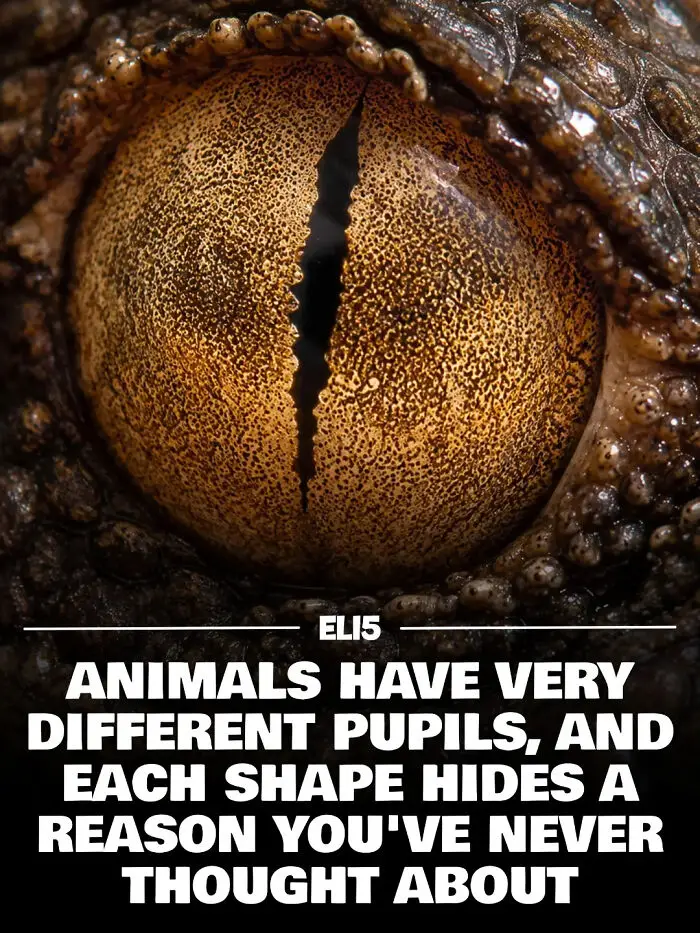
Your pupil is just a hole. It's the opening in your iris that lets light in, and it looks black because your eye absorbs that light rather than reflecting it back out. The iris opens and closes automatically, letting in more light in the dark and less in the sun.
Simple enough. Except nature didn't settle on one design.
Scientists compared pupils across hundreds of species and found something neat: the shape isn't random. It matches how the animal lives.
Prey animals get wide pupils. A sheep or a horse can scan almost the full horizon without turning its head, which means it spots the threat and knows exactly where to run.
Predators get pupils that open far wider. More light means hunting works at dusk, at midnight, in the sun. It also means they can judge exactly how far away dinner is without moving their head and giving themselves away.
But here's the part that got me.
The horizontal pupils of sheep, goats and horses rotate. When the animal lowers its head to graze, the eyes turn in their sockets to keep the pupils level with the ground. It's called cyclovergence, and it happens without the animal thinking about it.
The head moves. The view stays steady. So the moment something moves in the grass, they're already looking at it.
Swipe through for seven pupil shapes and what each one is actually for
Which one surprised you most?
Report
4points
#18
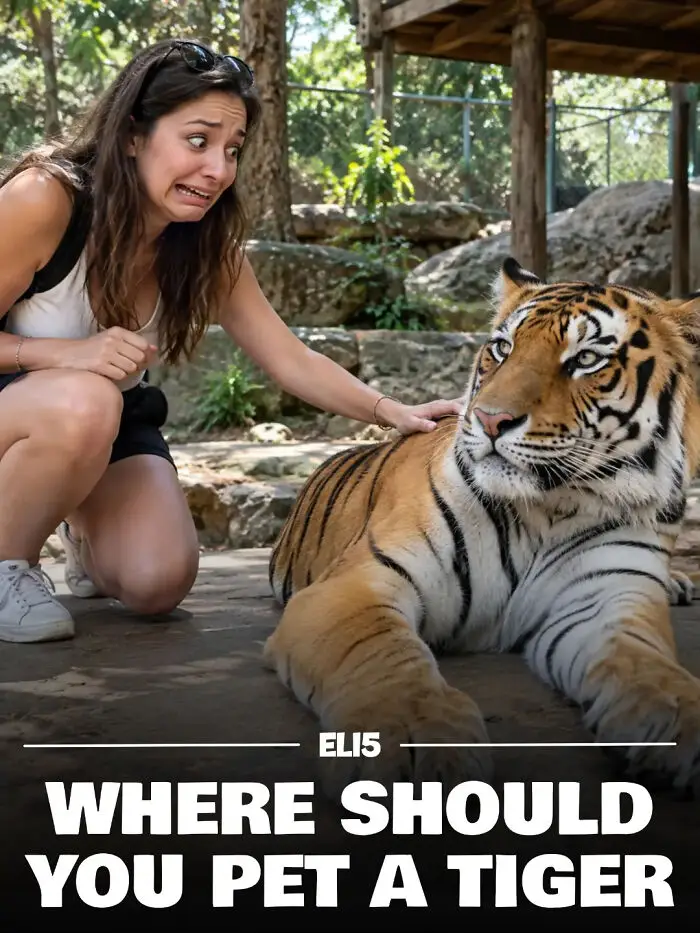
WHERE SHOULD YOU PET A TIGER?
NOWHERE.
Even if a tiger appears calm, friendly or accustomed to humans, it is still a powerful wild predator with natural instincts that can change without warning. There is no body part that is considered a safe place for an ordinary person to pet a tiger.
Tigers may tolerate human contact in some captive settings, but tolerance is not the same as domestication. A sudden movement, unfamiliar smell, loud noise, territorial response or hunting instinct can trigger an unpredictable reaction.
Unlike a domestic cat, a tiger has enormous strength, powerful jaws and claws designed for taking down large prey. Even what looks like playful behavior can cause serious injury.
The safest way to interact with a tiger is from a safe distance, following the instructions of trained wildlife professionals. Admire the animal without touching it.
The rule is simple: DON'T PET THE TIGER - not its head, back, belly, tail or anywhere else.
Report
4points
#19

There was a time when gaming wasn't about high-speed internet, online matchmaking, or massive digital libraries. It was about gathering your friends in one room, connecting computers with Ethernet cables, and spending entire nights playing together.
The 1990s and 2000s were the golden age of LAN parties. Heavy CRT monitors, tangled wires, noisy keyboards, pizza boxes, and rooms filled with laughter created memories that an entire generation of gamers still treasures.
Games like Counter-Strike 1.6, Quake III Arena, Unreal Tournament, Warcraft III, and Age of Empires II weren't just games. They were friendships, rivalries, inside jokes, and unforgettable late-night battles.
There were no Discord calls or endless online friend lists. Your teammates were sitting right beside you, celebrating every victory and making sure you never forgot a defeat.
Technology has come a long way, but something about those crowded rooms and glowing monitors can never truly be recreated.
We didn't realize we were living through the golden days. We were just having fun.
Save this post if you miss those LAN party nights, and share it with the friend you'd give anything to play one more match with.
Report
4points
#20
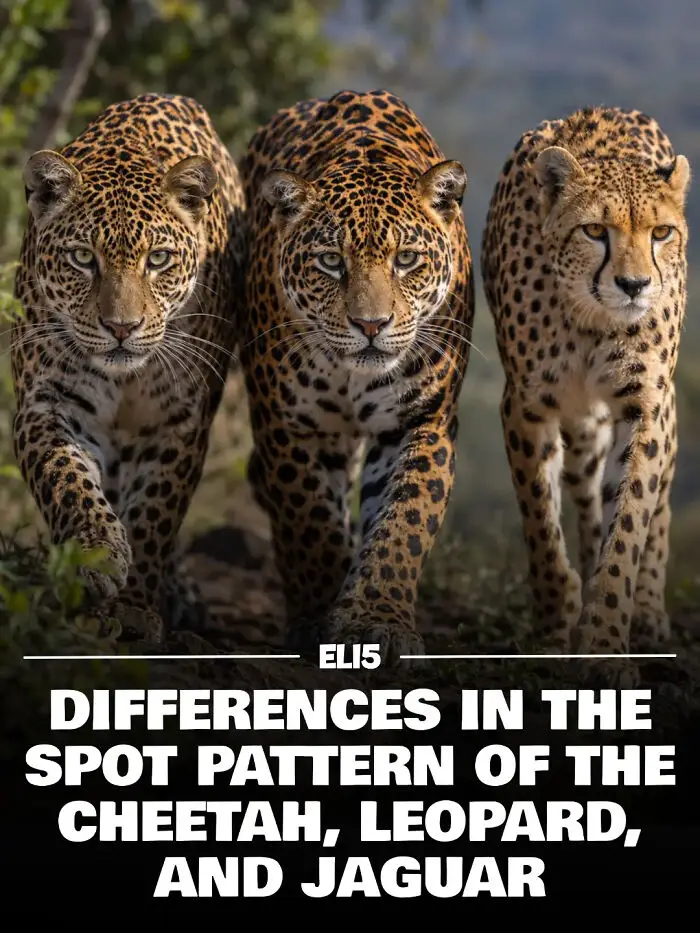
Cheetahs, leopards, and jaguars may look similar at first, but their coat patterns are one of the easiest ways to tell them apart.
Cheetahs have simple, solid black spots scattered across a golden coat. Their spots do not form rings or clusters. Think of them like black dots drawn with a marker. Cheetahs also have distinctive black “tear marks” running from the inner corners of their eyes down toward the mouth.
Leopards have spots called rosettes. These look like small black rings or flower-shaped clusters, usually with lighter fur in the middle. The rosettes are relatively small and closely packed, and they normally do not contain a black dot in the center.
Jaguars also have rosettes, but theirs are usually larger, darker, and more widely spaced. The biggest clue is that many jaguar rosettes contain one or more black spots inside the ring.
So the quick trick is: Cheetah = solid dots. Leopard = small empty rosettes. Jaguar = large rosettes with dots inside.
Save this post if you’ve ever mixed up these three big cats, or share it with a friend who’ll never look at their spots the same way again.
Report
4points


