





You only meant to look up one quick question. The initial explanation went right over your head. Ten minutes later, you're still reading, three tabs deep and wondering how you got there. It happens because a clear, plain answer makes learning feel easy, so you keep going just to see what else you can understand.
That's the idea behind the “Explain Like I'm Five” Instagram page, where the goal is the simple version without the jargon. Just look at the explanations people have shared online, from how swimsuit colors can save a life to what shirts help actually keep you cool in the sun and why tattoos hurt more in some places than others.
#1
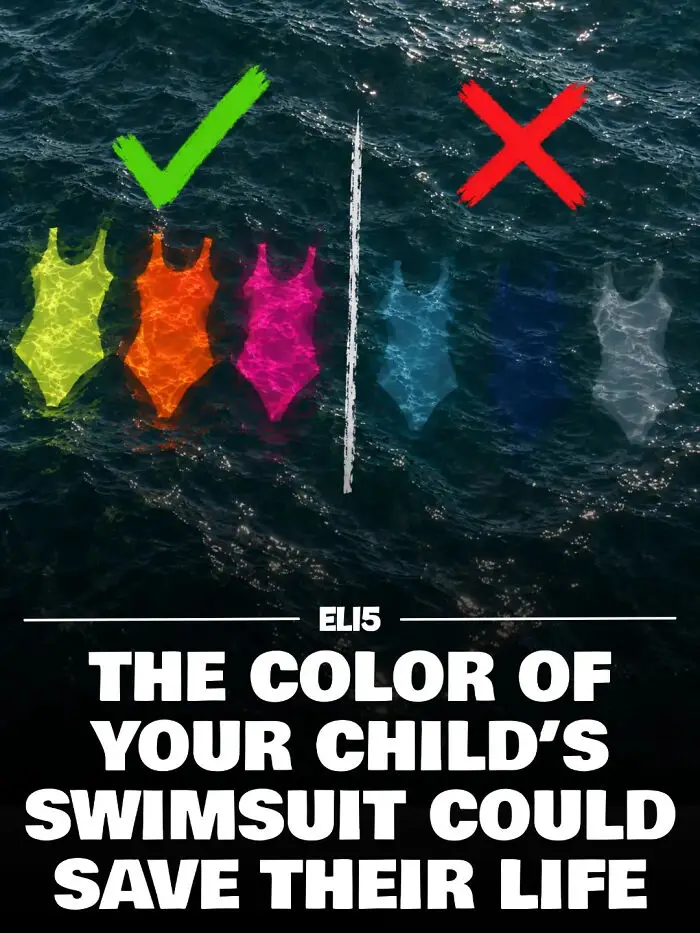
The color of your child’s swimsuit could help make them easier to spot in the water.
When choosing swimwear, most people think about style, comfort and fit. But color matters too - especially when children are swimming.
Water doesn’t always look the same. Its appearance changes with depth, lighting, weather and the surroundings. Some swimsuit colors can blend into that background, making a swimmer harder to see.
Bright neon colors such as fluorescent orange, pink, green and yellow tend to stand out against a wider range of water conditions. In contrast, blues, greens and pastel shades can blend with the water and become much less noticeable.
This doesn’t replace active supervision, swimming skills or proper water-safety measures. But choosing highly visible swimwear can make it easier to locate a child quickly.
So next time you buy a swimsuit, don’t think only about how it looks on your child. Think about how easily you’ll be able to see them in the water.
Report
6points
#2
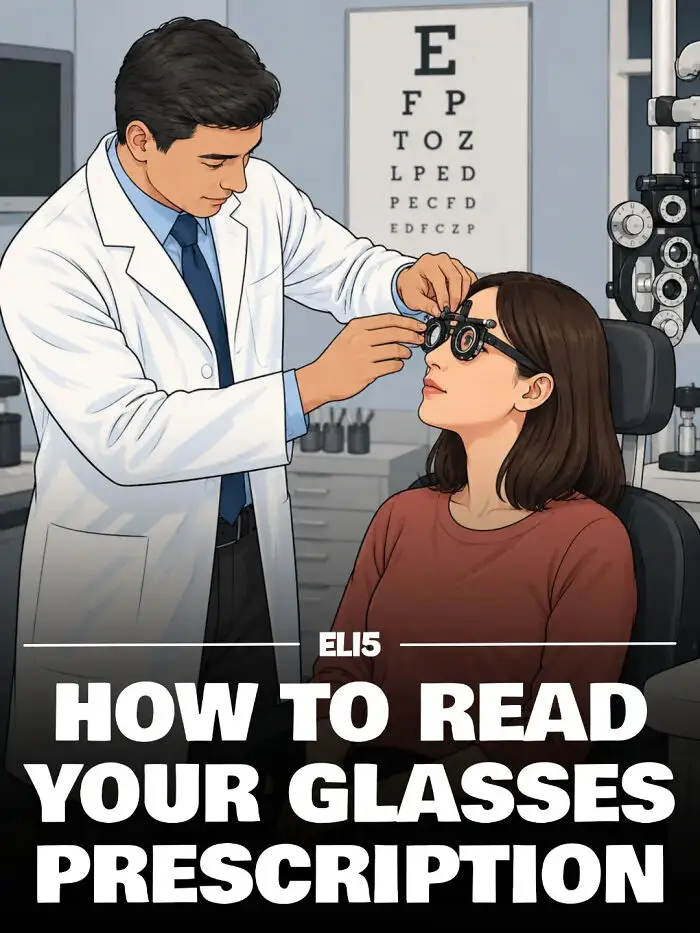
A glasses prescription may look like a collection of random numbers, but each one describes a specific correction your eyes need.
OD = right eye, while OS = left eye.
The main number is SPH (sphere), which shows the lens power needed to correct your basic focusing error.
A minus (−) number usually indicates myopia, meaning difficulty seeing distant objects. A plus (+) number generally indicates hyperopia, or farsightedness.
The farther the number is from zero, the greater the optical correction.
CYL (cylinder) shows the amount of correction for astigmatism, where the eye has unequal curvature in different directions. AXIS tells you the orientation of that astigmatism, measured from 0° to 180°.
ADD is extra lens power for near vision, commonly used in bifocal or progressive lenses. It is added to the distance prescription to provide the stronger near-vision correction.
PRISM may appear when a person needs help aligning the eyes and reducing double vision. Its direction may be written as BU (base up), BD (base down), BI (base in) or BO (base out).
PD means pupillary distance - the distance between your pupils in millimetres. It helps position the optical centre of each lens correctly in front of your eyes.
So, a prescription isn't a measure of how “bad” your eyes are. It is essentially a set of optical instructions telling the lens exactly how to bend light so your eyes can form a clearer image.
Report
5points
#3
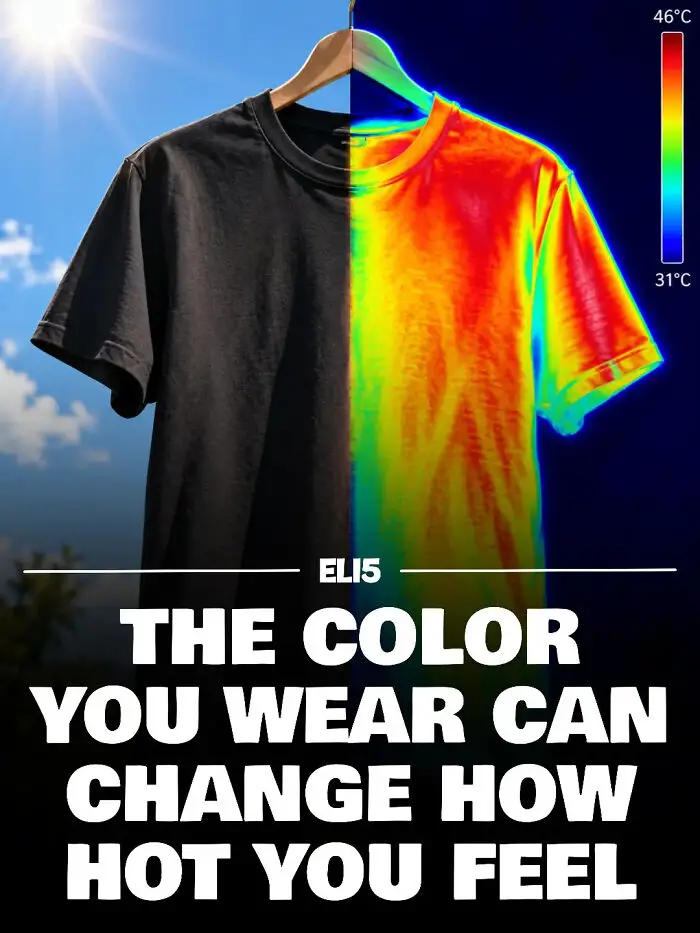
A thermal-camera experiment from Japan’s National Institute for Environmental Studies shows how strongly clothing color can affect surface temperature in direct sunlight.
After just 5 minutes of sun exposure, the white polo shirt was around 30°C, while parts of the black and green shirts exceeded 45°C. In other experiments, black and dark-green shirts have even exceeded 50°C under suitable conditions.
So why does this happen?
Sunlight carries energy. When it hits a shirt, some of that energy is reflected and the rest is absorbed. Light-colored surfaces generally reflect a larger fraction of incoming solar radiation, while dark surfaces absorb more. The absorbed radiation is converted into thermal energy, raising the shirt’s surface temperature.
Think of it like this: a white shirt sends more of the Sun’s energy back, while a black shirt keeps more of it. The hotter surface then loses heat through infrared radiation and to the surrounding air, but under strong sunlight and weak wind, it can still become much hotter than the surrounding air.
That does NOT mean wearing black will automatically make your body 15°C hotter. The experiment measures the shirt’s surface temperature, and the actual effect on your body also depends on fabric, thickness, fit, wind, humidity and how much sunlight reaches you.
Still, in hot, sunny conditions, choosing lighter, more reflective clothing can reduce the amount of solar energy absorbed by the clothing.
Source: National Institute for Environmental Studies (NIES)
Report
5points
#4

Cats and dogs don’t age at a simple “1 pet year = 7 human years” rate. They mature extremely quickly when they’re young, then their aging slows down. That means a 1-year-old cat or dog is already much more mature than a 7-year-old human.
For cats, the first year is roughly equivalent to 15 human years, and by age 2 they’re around 24 human years. After that, each additional cat year is roughly equal to 4 human years. So a 5-year-old cat is about 36 in human years, a 10-year-old cat about 56, and a 15-year-old cat about 76. Indoor cats can commonly live well into their teens, so their “human age” can reach the equivalent of someone in their 70s, 80s or beyond.
For dogs, it’s more complicated because size and breed affect how quickly they age. Like cats, dogs mature rapidly during their first couple of years. A 1-year-old dog is roughly comparable to a human teenager, and a 2-year-old dog is already a young adult. After that, smaller dogs generally age more slowly, while large and giant breeds age faster. That’s why a 10-year-old Chihuahua may be roughly comparable to a human in their 50s, while a 10-year-old Great Dane may be closer to someone in their 70s.
So “human years” are really just a way of visualizing a pet’s life stage, not an exact biological conversion. Genetics, breed, body size, nutrition, activity and veterinary care can all influence how an individual cat or dog ages.
Save this post if you’ve ever wondered how old your pet really is in human years, or share it with the friend who still multiplies their pet’s age by seven.
Report
6points
#5
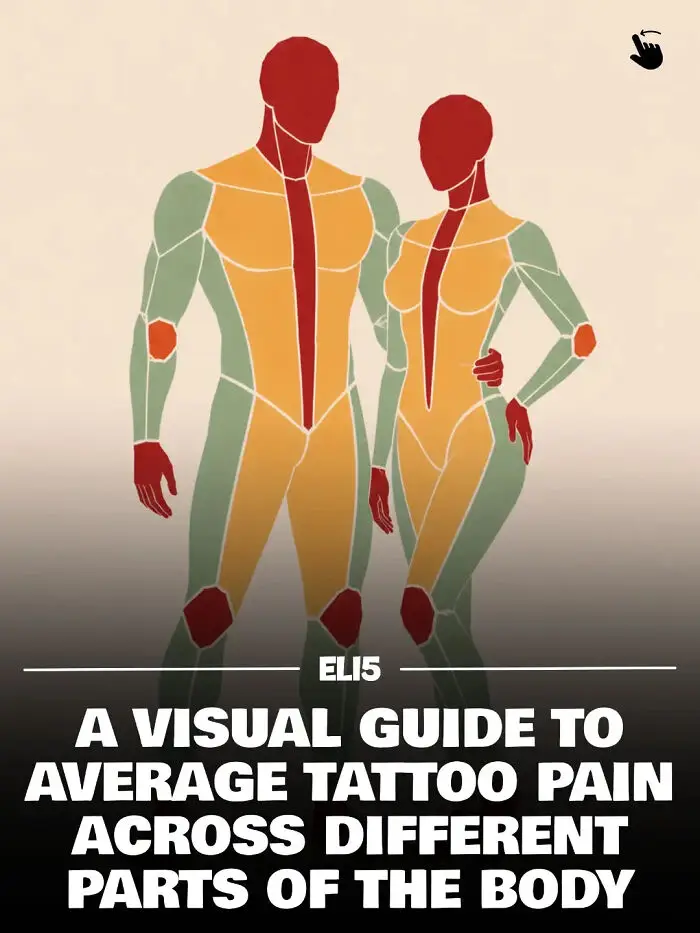
Check this chart before you get inked!
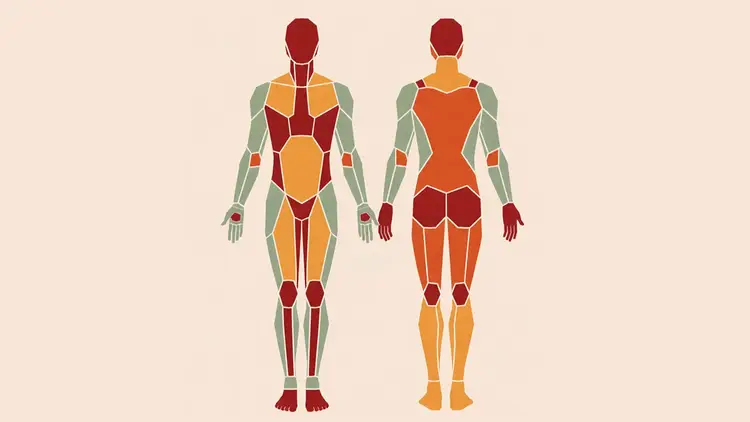
Not every spot hurts the same, and there's some real anatomy behind why. Ribs tend to be among the more painful placements, while the outer thigh or upper arm are often easier choices for a first tattoo.
A tattoo needle repeatedly punctures the skin, depositing ink into the dermis - the second layer of skin where the pigment stays. That layer contains nerves and blood vessels, so yes, tattoos hurt. The bigger question is where they hurt most.
Three main things influence it.
First, nerve density. Areas such as the ribs, spine, fingers and feet have lots of nerve endings. More nerve activity means more signals reaching your brain, which can translate into more pain.
Second, how close the bone is to the surface. Areas like the knees, ankles, shins, collarbone and elbows have less soft-tissue cushioning, so the needle's vibration can feel deeper and more intense.
Third, how much soft-tissue cushioning there is underneath. Areas such as the outer thigh, outer bicep, forearm and calf generally have more cushioning, making them more comfortable for many people.
But pain is highly subjective. Two people can get tattooed in exactly the same place and have completely different experiences. Your artist's technique, the length of the session, your sleep, stress levels and even your mood can all affect how it feels.
So use this chart as a general guide, not a guarantee. Before deciding on placement, talk to your tattoo artist -, they can factor in the exact design, size, placement and your individual anatomy and give you a more realistic idea of what to expect.
Getting your first one? Start easy. The ribs aren't going anywhere
Save this for later!
Report
4points
#6

For centuries, Japan’s samurai clans carried powerful symbols of identity, lineage, and authority. Known as Kamon, these traditional family crests appeared on battle banners, armor, helmets, clothing, and architecture, distinguishing influential families throughout Japanese history.
Each crest carries a connection to the people and traditions behind it. Some represent plants, flowers, animals, or geometric patterns, while others became closely associated with legendary commanders and powerful ruling dynasties. These emblems were not always exclusive to a single family, as different branches sometimes inherited, shared, or modified existing designs.
The tradition of Japanese heraldry has endured for centuries, with historic symbols continuing to appear in imperial and government institutions today.
Save this post to revisit the fascinating history of Japan’s traditional crests.
Sources: The Crests of the Samurai Clans, Nagoya Sword Museum, Black Silk Kyoto, Government of Japan, Touken World.
Report
4points
#7

That little symbol lighting up on your dashboard isn’t random - your car is trying to tell you something.
Some signals simply tell you that a system is active, while others can mean something needs attention immediately.
RED usually means a serious warning that may require you to stop and check the problem.
AMBER usually means a system needs attention or should be checked soon.
GREEN generally tells you that a system is operating or switched on.
BLUE is commonly used for information, such as high-beam headlights.
From low oil pressure and overheating to ABS, tire pressure, fog lights and traction control, knowing these symbols can help you understand what your car is telling you before a small problem becomes a bigger one.
Save this for the next time a mysterious light appears on your dashboard. And send it to someone who still asks, “What does that symbol mean?”
Which dashboard light confused you the most the first time you saw it?
Report
4points
#8
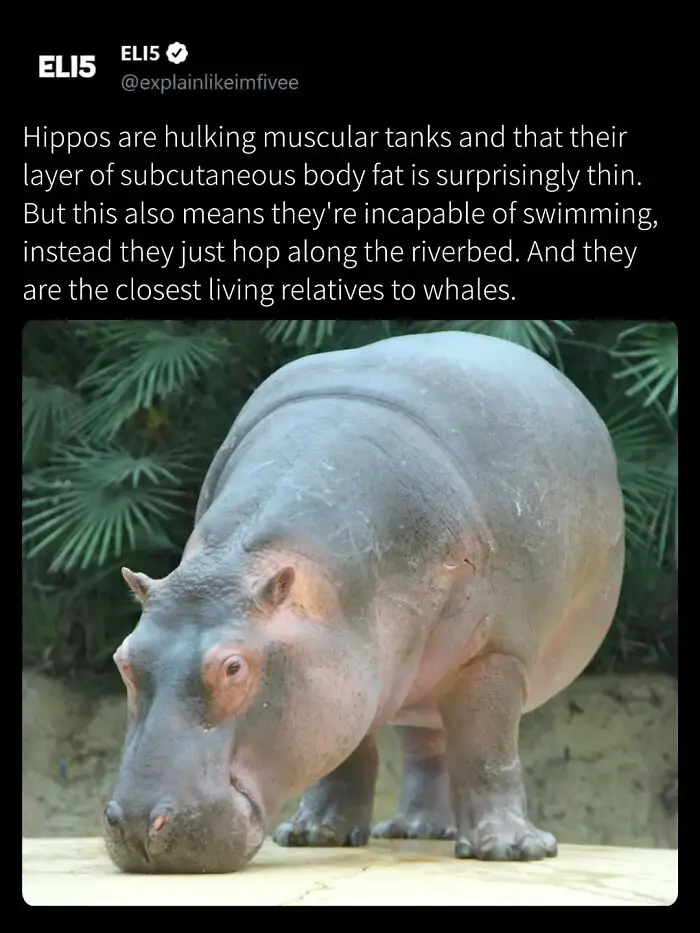
Hippopotamuses are among the largest and most powerful land mammals on Earth, with adult males often weighing between 1,500 and 1,800 kilograms (3,300–4,000 pounds). Despite their enormous, rounded appearance, their bodies contain surprisingly little fat beneath their thick skin compared with what many people might expect.
Unlike most aquatic mammals, hippos cannot swim in the conventional sense. Their dense bodies make it difficult for them to remain buoyant, so instead of paddling through deep water, they typically move by pushing off the bottom of rivers and lakes.
Using their powerful legs, hippos can walk, run, or launch themselves into a series of underwater hops, sometimes appearing to glide through the water. They can also hold their breath for several minutes, allowing them to remain submerged while traveling along the riverbed.
Their relationship with water is essential for survival. Hippos spend much of the day submerged to keep cool and protect their sensitive skin from the intense African sun, usually emerging at night to graze on grass.
Perhaps the most surprising fact is their evolutionary history. Despite their pig-like appearance, hippos are the closest living relatives of whales and dolphins. Genetic and fossil evidence indicates that their evolutionary lineages diverged from a shared ancestor approximately 55 million years ago.
This makes hippos part of an extraordinary evolutionary story connecting massive, semiaquatic African mammals with the whales that inhabit the world's oceans.
Report
4points
#9
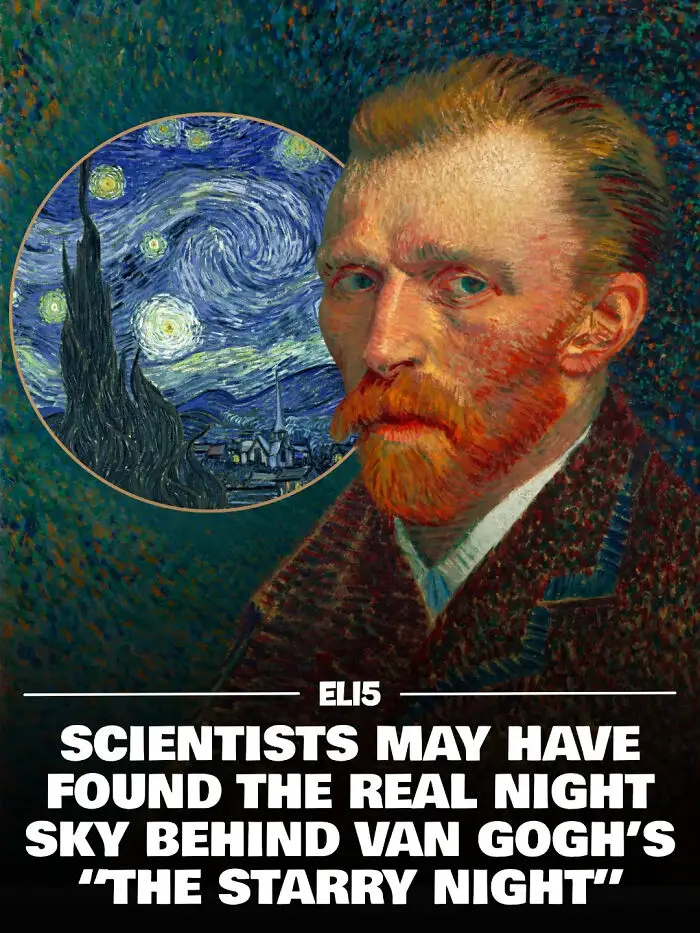
Vincent van Gogh’s iconic painting The Starry Night may have been inspired by an actual arrangement of stars visible in the sky on July 22, 1889, according to a new study published in Scientific Reports.
Researchers in South Korea used astronomical simulations, historical weather records, landscape sketches, and van Gogh’s letters to reconstruct the night sky above Saint-Rémy-de-Provence, France, where the artist created his famous masterpiece.
Their analysis revealed that the positions of the crescent Moon, Venus, and the Hyades star cluster closely resembled the celestial arrangement depicted in the painting.
The findings challenge the traditional belief that the artwork was completed in June 1889 and suggest that van Gogh may have drawn more inspiration from direct astronomical observation than previously thought.
However, researchers acknowledge that the proposed date remains a hypothesis, as the painting may combine observations from multiple nights with artistic imagination.
More than 135 years later, science continues to uncover fascinating possibilities behind one of history’s most recognizable paintings.
Report
4points
#10
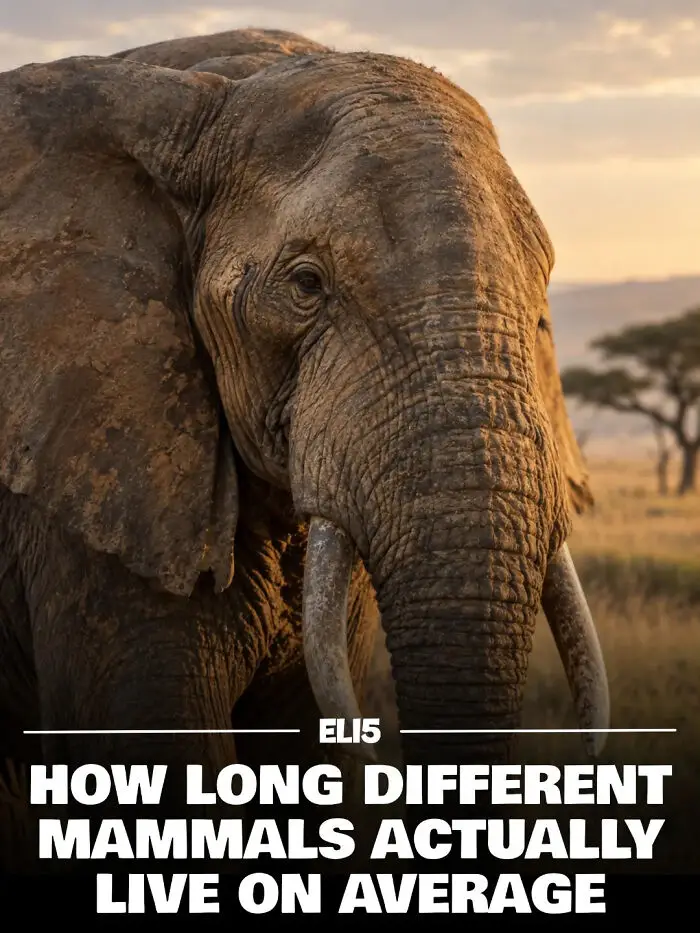
How long can a mammal actually live? The answer ranges from barely a year to more than two centuries.
Weasels are among the shortest-lived mammals, typically surviving only 1–2 years. Hedgehogs rarely make it beyond 3 years, while wolverines can reach around 12 and tigers average about 14 years.
As you move up the lifespan ladder, brown bears can live around 25 years, lowland tapirs around 30, and western gorillas around 35 years. One remarkable exception is Brandt’s bat, which can live up to 41 years despite its tiny size.
Elephants can reach about 56 years, while humans average around 80 years and are the longest-lived land mammals.
But the true mammalian longevity champion lives in the Arctic Ocean: the bowhead whale. These enormous whales can live for 200 years or more. Scientists have even found evidence of individuals surviving for well over a century.
So size doesn't automatically determine lifespan. Some tiny mammals live only a couple of years, while others, like Brandt’s bat, dramatically outperform expectations. And when it comes to mammals, nothing currently beats the bowhead whale.
Source - Discover wildlife & UN, World Population Prospects (2024).
Report
4points
#11

For centuries, the Mercator map has shaped how we picture the world - but it does not show the true size of continents.
On 4 September 2026, the UN General Assembly overwhelmingly backed a resolution supporting more accurate world maps. 164 countries voted in favour, six abstained, and the United States was the only country to vote against it.
One striking example is Africa: it is roughly 14 times larger than Greenland, despite appearing much closer in size on a Mercator map.
The resolution is not legally binding, but it could influence school maps, educational materials and everyday technology, encouraging the use of projections that better represent the world’s actual land areas.
Maps do not just show the world - they shape how we understand it.
Map credits - Mapswire.com
Sources: The Guardian, Associated Press, UN News
Direct link has been shared in the broadcast
Report
3points
#12
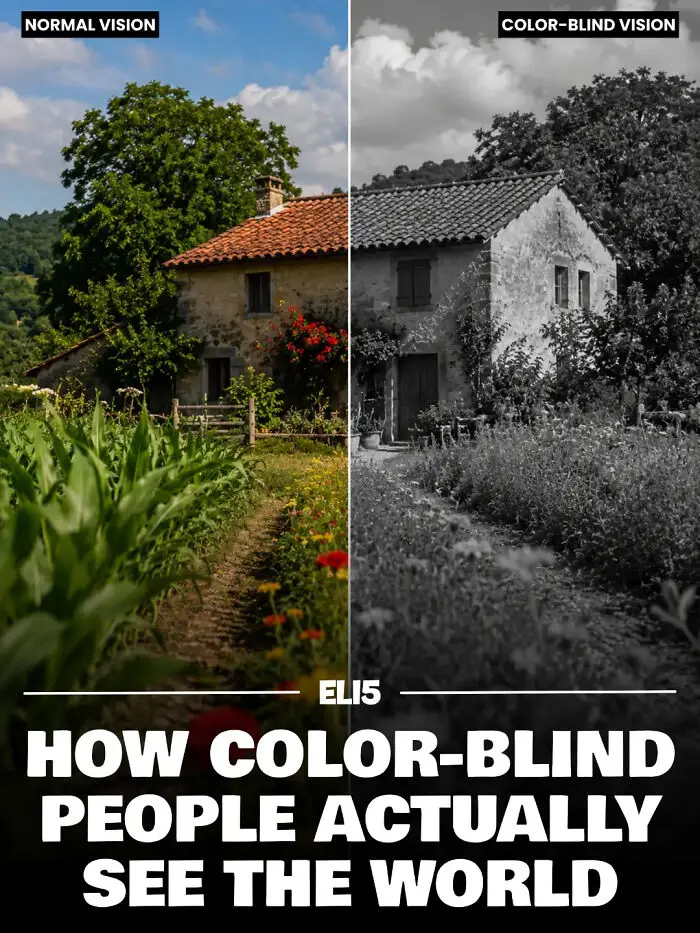
Color blindness doesn’t mean seeing the world only in black and white. It usually means certain colors are harder to distinguish because the cone cells in the retina respond differently to light. Humans normally have three cone types: L, M and S, roughly sensitive to long, medium and short wavelengths. The brain compares their signals to create our perception of color.
Protanomaly — Red appears less bright, while some reds, oranges and greens can look more similar.
Deuteranomaly — The most common type. Certain greens can shift toward red or brown, making red-green differences harder to notice.
Protanopia — L-cones are absent, so reds can appear darker and red, green and brown may become difficult to distinguish.
Deuteranopia — M-cones are absent, causing strong confusion between reds and greens.
Tritanomaly — A rare blue-yellow deficiency. Blue and green, or yellow and red, can become harder to separate.
Tritanopia — S-cones are absent. Blues and greens can look similar, while yellow and pink may also be confused.
Achromatopsia — An extremely rare condition in which cone function is severely impaired, resulting in little or no color vision. The world can appear mainly in shades of gray, often with light sensitivity and reduced visual sharpness.
Blue-cone monochromacy — A very rare condition where L- and M-cone function is absent, leaving S-cones and rods to provide vision. Color perception is severely limited, with reduced visual acuity and light sensitivity.
So the commonly shown “8 types” are really different combinations of altered, missing, or nonfunctional cone photopigments. And color blindness isn't simply seeing the same world in fewer colors — the brain is receiving a different set of signals and therefore reconstructs color differently.
Report
3points
#13
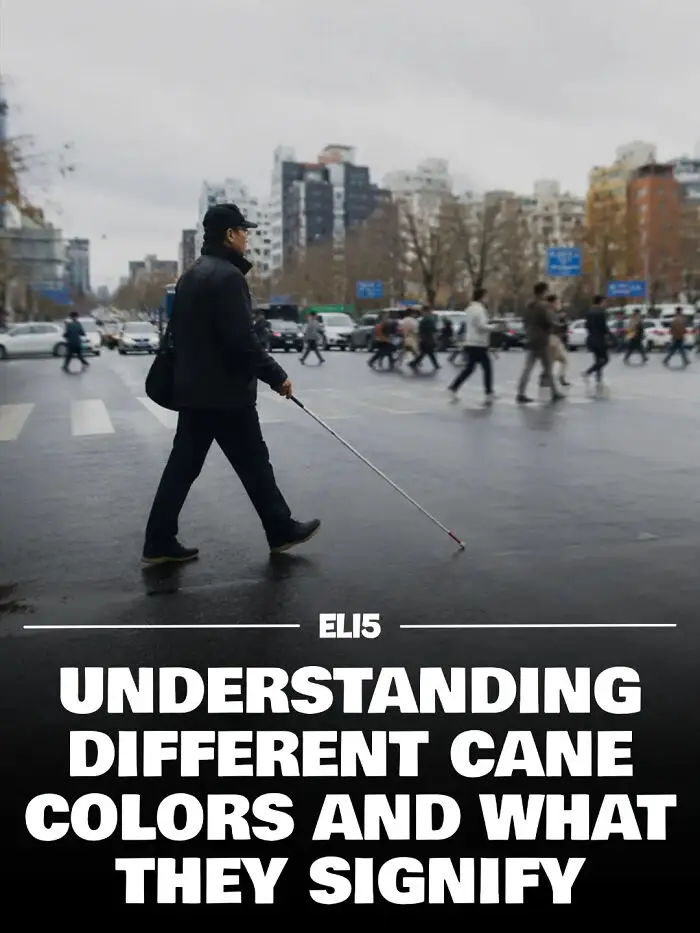
Not every cane means the same thing. The color, length, and design can give important information about the person using it.
A white cane is generally used by people who are blind or have significant vision loss. A long white cane is primarily a mobility tool, helping the user detect obstacles, steps, curbs, and changes in the ground before reaching them. It can also signal to others that the person has a visual impairment.
A white cane with a red tip is also commonly used by people with vision loss. The red section can make the cane more visible to others, but the exact meaning of a red-tipped cane can vary by country and cane type, so it should not automatically be interpreted as a specific level of vision.
A cane with alternating red and white sections or stripes has a more specific meaning in places such as the UK. It indicates that the person has both sight loss and hearing loss, known as deafblindness or dual sensory loss.
There are also guide canes and symbol canes. A guide cane is shorter and is mainly used to detect steps, curbs, and nearby obstacles, while a symbol cane is primarily carried to alert others that someone has sight loss rather than being used as a main mobility aid.
The important thing is not to assume exactly what someone can or cannot see from their cane alone. Vision loss exists on a spectrum, and many people who use white canes still have some useful vision.
Report
3points
#14

The dogs we know and love today were once bred for very different purposes. Long before they became beloved family companions, many had specific jobs that shaped their instincts, personalities, and physical characteristics.
From Dachshunds hunting badgers underground and Border Collies herding sheep to Siberian Huskies pulling sleds across frozen landscapes, every breed has a fascinating history.
Some were developed to protect livestock, retrieve game, or hunt dangerous animals, while others were bred simply to keep royalty company.
These original roles help explain why certain breeds love chasing, digging, guarding, retrieving, or staying close to their humans even today.
Save this guide for later, share it with a fellow dog lover, and tell us which breed surprised you the most!
Sources: American Kennel Club (AKC) breed histories and breed profiles, The Kennel Club (UK), and Fédération Cynologique Internationale (FCI) breed standards.
Report
3points
#15

Contour lines are the secret language of a topographic map. They show the shape and height of the land by connecting points that are at the same elevation.
Think of them like imaginary lines wrapped around a mountain. Every point along one line is the same height above sea level. The vertical difference between two neighboring contour lines is called the contour interval, which is usually given on the map.
The easiest rule to remember is: close lines = steep slope, widely spaced lines = gentle slope. If the lines form closed circles and the elevation increases toward the center, you’re looking at a hill or mountain. If the elevation decreases toward the center, it can indicate a depression.
Contour lines can also reveal valleys. When they cross a stream or valley, they form a V-shape that usually points uphill, toward the higher elevation. On a ridge, the V or U-shaped pattern points downhill.
To read a topo map, first check the contour interval and elevation numbers. Then follow the lines and watch how their spacing and shapes change. You can essentially turn a flat sheet of paper into a mental 3D model of the landscape.
In short: contour lines tell you where the land is high, low, steep, flat, and how its shape changes - all without showing the terrain in 3D.
Cover photo credits - USGS.
Report
3points
#16
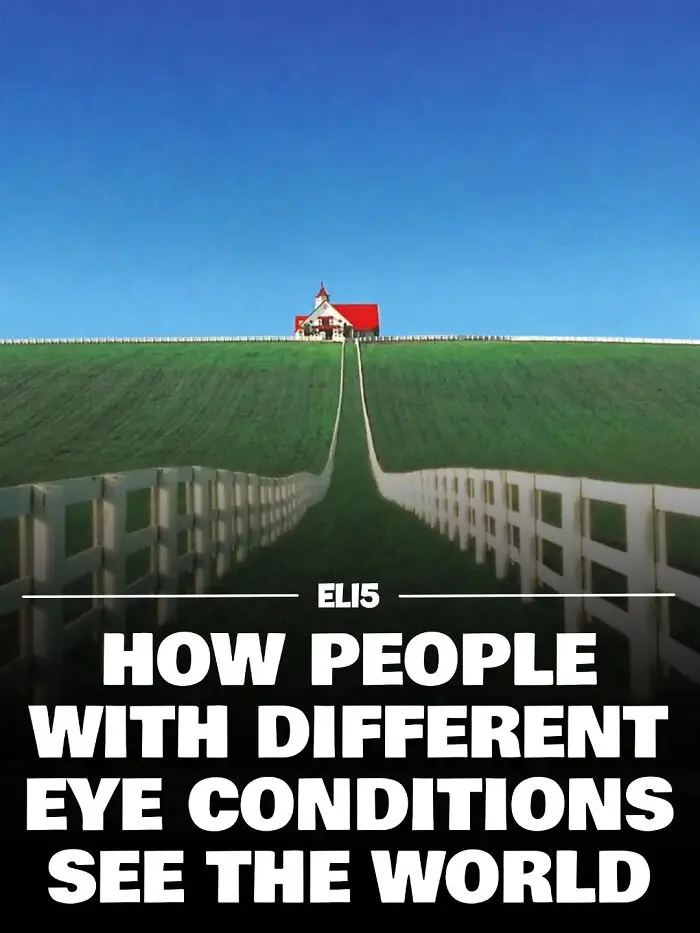
Normal vision happens when light focuses clearly on the retina, where photoreceptors turn it into signals the brain interprets as an image.
Macular degeneration damages the center of the retina, causing blurred, distorted or missing central vision.
Glaucoma damages the optic nerve and often affects peripheral vision first.
Diabetic retinopathy harms retinal blood vessels, causing blur, dark spots or floaters.
Cataracts cloud the lens, making vision hazy, dim and sensitive to glare.
Color blindness happens when certain cone cells detect colors differently, while achromatopsia can cause little or no color vision, poor sharpness and light sensitivity.
Astigmatism comes from an irregular cornea or lens, producing distorted or blurred vision. Dry eyes can blur sight because the tear film becomes unstable.
Floaters are shadows from material inside the eye’s vitreous gel. Diplopia causes double vision when the eyes do not align properly.
Migraine aura can create flashing lights, zigzags or blind spots because of temporary changes in brain activity.
Visual snow causes persistent tiny flickering dots across vision.
Complete blindness ranges from no useful vision to no light perception, while legal blindness does not always mean total darkness.
Dyslexia is not an eye disease; it mainly affects how the brain processes written language.
The exact experience can vary widely from person to person.
Save this post if you’ve ever wondered how differently the same world can look through someone else’s eyes, or share it with a friend who’ll never look at vision the same way again.
Report
3points
#17
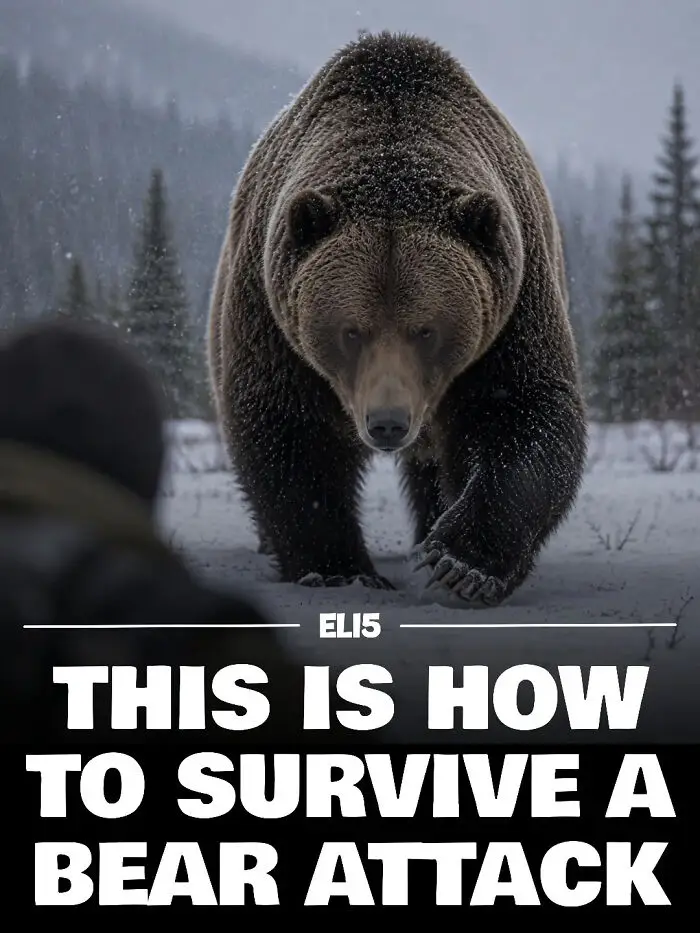
“If it’s brown, lie down. If it’s black, fight back. If it’s white, good night.”
You may have heard this catchy rhyme about surviving a bear attack, but it is only a rough memory aid - not a complete safety guide.
First, never run. If you encounter a bear, stay calm, speak in a steady voice, slowly back away, and give it an escape route. Running can trigger a chase response, and you should never try to climb a tree.
If a brown bear or grizzly makes physical contact during a defensive attack - such as when you surprised it or it is protecting cubs - play d**d. Lie flat on your stomach, spread your legs, keep your backpack on, and clasp your hands behind your neck. Stay still until the bear leaves. If the attack continues for a prolonged period, however, fight back vigorously.
With a black bear, do not play d**d. If it actually attacks you, fight back aggressively, concentrating your defense on its face and muzzle. If a bear enters your tent or appears to be stalking you, fight back regardless of species, because this can indicate a predatory attack.
And the “white means good night” part is definitely not a survival strategy. Polar bears are a different situation entirely, and avoiding an encounter is your best defense.
The safest bear encounter is the one that never becomes an attack: make noise while hiking, travel in groups, secure food and scented items, keep your distance, and carry bear spray where it is recommended and legal.
Report
3points
#18

The U.S. military uses a standardized system of letters and numbers to identify aircraft according to their purpose, design, and version. Known as the Mission Design Series (MDS), this system was introduced in 1962 to establish a common designation method across military branches.
Each designation can contain several components, including a status prefix, modified mission, basic mission, vehicle type, design number, and series letter.
For example, in F-16C, the “F” represents Fighter, “16” identifies the aircraft design, and “C” indicates its production series.
In KC-135, the “K” indicates a tanker mission, while “C” represents its basic cargo/transport designation.
Additional letters can identify aircraft types or development stages. “H” represents Helicopter, “Q” identifies an Unmanned Aircraft, and “Y” indicates a Prototype.
Aircraft also receive separate names, such as the F-22 Raptor, F-15 Eagle, and A-10 Thunderbolt II. These names are distinct from their official designations.
Save this guide to understand the codes behind military aircraft, and share it with someone interested in aviation!
Report
3points
#19
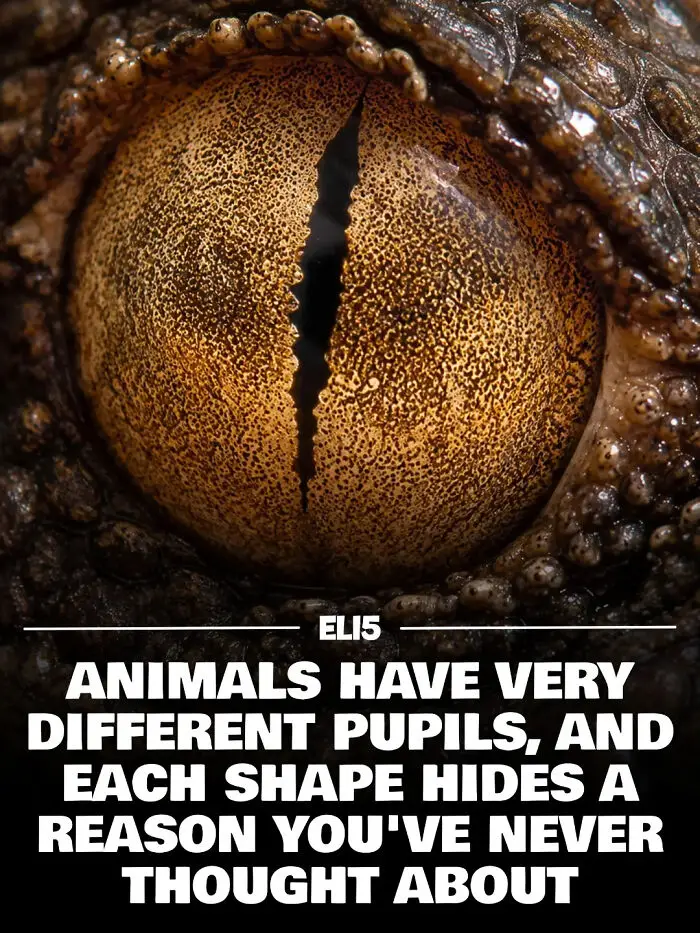
Your pupil is just a hole. It's the opening in your iris that lets light in, and it looks black because your eye absorbs that light rather than reflecting it back out. The iris opens and closes automatically, letting in more light in the dark and less in the sun.
Simple enough. Except nature didn't settle on one design.
Scientists compared pupils across hundreds of species and found something neat: the shape isn't random. It matches how the animal lives.
Prey animals get wide pupils. A sheep or a horse can scan almost the full horizon without turning its head, which means it spots the threat and knows exactly where to run.
Predators get pupils that open far wider. More light means hunting works at dusk, at midnight, in the sun. It also means they can judge exactly how far away dinner is without moving their head and giving themselves away.
But here's the part that got me.
The horizontal pupils of sheep, goats and horses rotate. When the animal lowers its head to graze, the eyes turn in their sockets to keep the pupils level with the ground. It's called cyclovergence, and it happens without the animal thinking about it.
The head moves. The view stays steady. So the moment something moves in the grass, they're already looking at it.
Swipe through for seven pupil shapes and what each one is actually for
Which one surprised you most?
Report
3points
#20
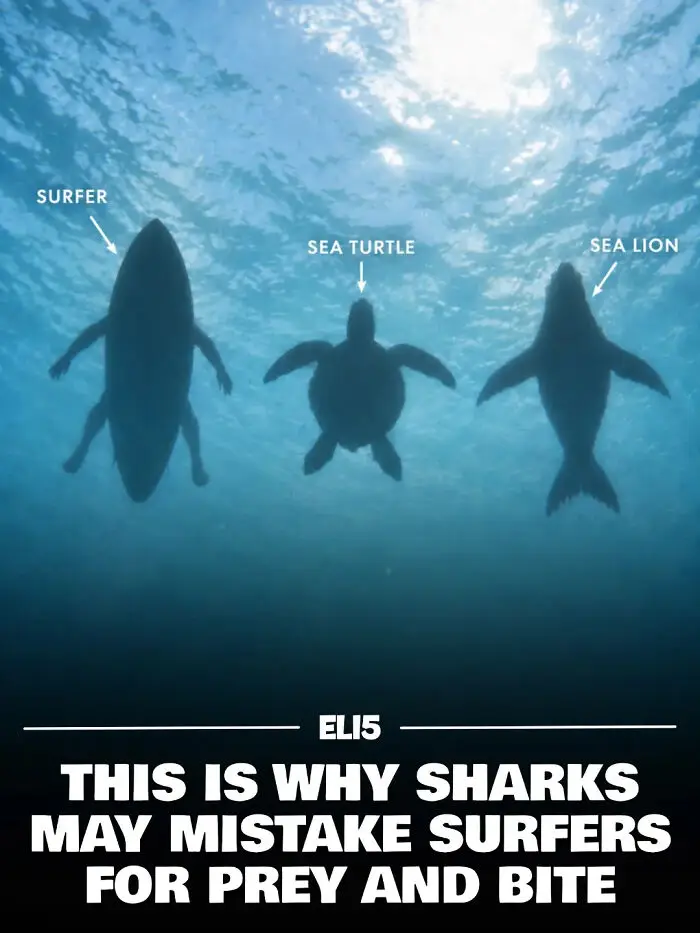
Sharks do not normally hunt humans as preferred prey. Many bites on surfers are thought to happen because, from below, a surfer on a board can resemble the silhouette of a seal or other marine animal moving near the surface.
A shark looking upward often sees a dark shape against bright water rather than every detail. The surfboard forms the main body, while the surfer’s arms and legs can resemble flippers. Think of it like seeing only someone’s shadow behind a curtain - you can recognize the general shape, but you might guess the wrong thing.
This is especially relevant to large predatory sharks such as great whites, which naturally hunt seals. A shark may approach to investigate and sometimes use a bite to identify an unfamiliar object. Unfortunately, even an exploratory bite from a large shark can cause severe injuries.
But mistaken identity is only one explanation, and scientists do not believe every shark bite happens for the same reason. Curiosity, environmental conditions, prey activity and defensive behavior can also play a role.
Save this post if you’ve ever wondered what a surfer looks like from beneath the waves, or share it with someone who thought sharks deliberately hunt humans.
Report
3points


