


Being friends with a former romantic partner isn’t automatically a red flag because sometimes a connection is genuinely worth preserving. But the real test comes when a new partner enters the picture.
A woman asked the internet for a reality check after discovering through social media that her boyfriend’s best friend and business partner was actually his former girlfriend. She said she reached her breaking point when the two went camping together.
Read on to discover the details of their secret dynamic, how the story unfolded, and what advice the internet had to offer.
A woman questioned her boyfriend's unusual relationship with his ex-girlfriend

She said the ex is going to great lengths to avoid meeting her
























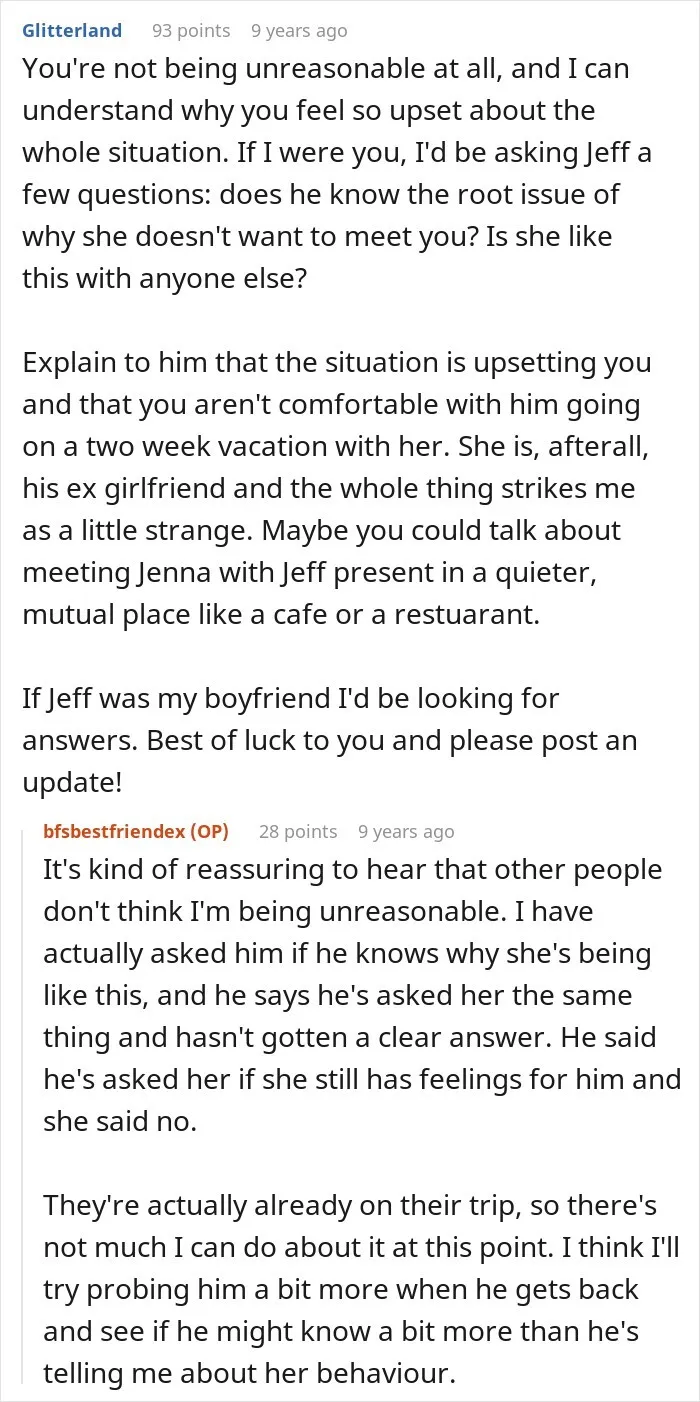
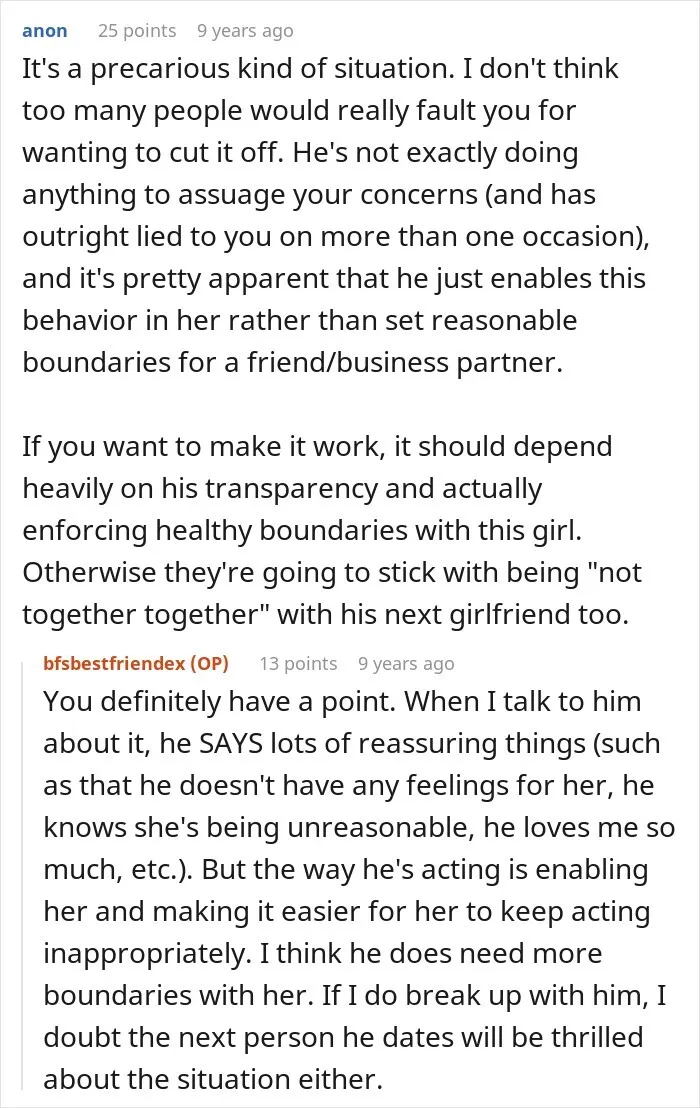
The woman gave some more info while internet users offered their two cents















Is keeping an ex in your life worth the strain it places on your next relationship?
Unless someone stays with their very first love, navigating past relationships is almost unavoidable when forming a new connection. Modern dating stats reflect just how common exes are. A recent survey of 2,300 Americans revealed that the average person has around four exes, with at least two coming from long-term relationships.
Yet, despite how common past relationships are, how we handle them remains a major source of friction. Public opinion is deeply divided on whether former lovers can ever truly become “just friends.”
Nearly six in ten Americans believe a platonic bond is possible — Baby Boomers are the most optimistic, with 66% believing exes can remain friends. Gen Z, on the other hand, is far more skeptical — more than half (55%) insist that a purely platonic friendship with an ex is impossible. In the same survey, two-thirds of Americans said they still talk to a few of their exes.
This constant attachment often creates an immediate rift when a new partner enters the picture. More than two-thirds of people report feeling uncomfortable when a significant other stays close with a former flame — a figure that spikes to 76% among Gen Z.
Plenty of practical reasons can keep people connected to a former partner — shared friend groups, co-parenting duties, workplace ties, or a history that predates the romance can all make a post-breakup friendship feel natural. In other cases, staying friends is simply a way to seek closure when a relationship ends prematurely.
Technology has also altered how these dynamic boundaries function.
“[Because of this connectivity], ending the relationship on bad terms can be more costly socially, creating animosity in the friend group or awkwardness when we see our ex,” explains Dr. Gary Lewandowski, a professor of psychology at Monmouth University, US. “Tangentially, that social media contact can also makes it harder to move on because we see the person more and, even worse, have the opportunity to monitor/snoop on their lives.”
Transitioning from lovers back to friends depends heavily on how the relationship started and how it ended. Research suggests that couples who were friends before they dated are far more likely to successfully revert to a healthy friendship after a breakup.
But dating and relationship coach Kate Mansfield emphasizes that emotional readiness is the ultimate decider. “It depends really on the way it ended, and who ended it — was it a mutual fizzle, or did one person decide it was over? This has more of an impact than time invested. You need to have processed the break-up, not just moved on logistically, but emotionally.”
Without that genuine emotional processing, the line between past and present blurs easily and doesn’t always stay platonic.
In a survey by The Matchmaking Company, nearly half of Americans (47%) admitted to getting back together with an ex after breaking up.

When an ex remains an active part of someone’s life, transparency becomes essential. The success of a post-breakup friendship depends on the motives behind it.
According to a study published in the academic journal Personal Relationships, the transition from romantic partners to friends usually has four main drivers: civility, practicality (such as working together or sharing a school or social circle), emotional security, or unresolved romantic feelings.
Not all motivators carry equal weight, though. The study found that friendships fueled by lingering romantic desires consistently yield the most toxic results. Unsupportive loved ones, a fresh relationship, and messy breakup behavior also make a healthy connection difficult.
Ties built on genuine emotional security, by contrast, produced the highest-quality, most stable friendships. Still, maintaining that stability requires strict boundaries.
Experts believe if a new partner is uncomfortable with the friendship, you should take their concerns seriously. “It’s not always insecurity; sometimes it’s a legitimate concern,” says Kate Mansfield.
She suggests talking with your ex to adjust the friendship, which could mean “less frequent contact, more group settings, or being more transparent about what you’re doing together.”
The key is to distinguish between a normal friendship and lingering reliance. “It really depends on whether the contact is very over-dependent, over-reliant on the ex-partner or actually, is it just like a normal friendship… and they have long moved on from the romantic feelings,” explains psychologist Dr. Becky Spelman.
But when in doubt, Dr. Spelman advises trusting your gut. “If something seems not right, you’re probably on the right track to thinking actually there’s something a little bit bizarre about this relationship, particularly if there’s an excessive amount of communication, perhaps communication on a daily basis.”
Ultimately, staying friends with an ex isn’t a one-size-fits-all situation — it comes down to personal boundaries and how comfortable all parties involved are.
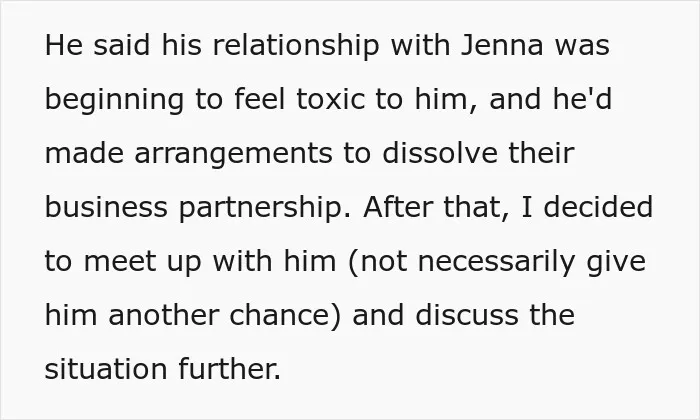
She came back with another update and thanked netizens for their advice












Here's what the internet had to say about the couple: