Photographing wildlife takes patience, a good eye, and often a lot of luck. The Nature Photographer of the Year (NPOTY) contest brings together photographers who manage to capture fascinating moments in the wild, showcasing the beauty and diversity of the animals and environments that make our planet so special.
While we wait for this year's winners to be announced, we thought it would be a good time to look back at some of our favorite wildlife photos that made the finalists' lists between 2016 and 2025. Earlier, we also shared a selection of photos from the contest's People's Choice Award, so make sure to check out that post if you haven't already!
Now, scroll down to revisit some of our favorite wildlife photography moments from the past ten years. Which one stands out to you the most?
#22 No Fear, No Mercy By Tomasz Szpila
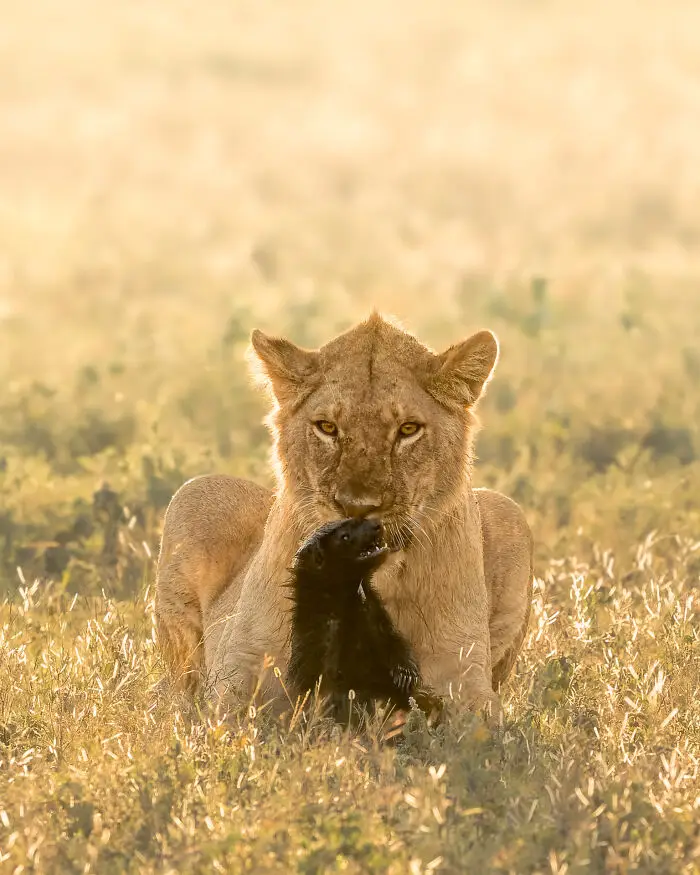
Some of Africa’s most fascinating animals are not its largest, but its smallest warriors. Among them, the honey badger (Mellivora capensis) has earned a reputation for unmatched courage and determination. Despite its modest size, this fearless predator can fend off much larger adversaries, often attacking with surprising aggression and stamina. Protected by exceptionally tough skin and a natural resistance to bites and stings, honey badgers have the tools to survive encounters that would doom most other animals. Yet, as with all creatures, youth and inexperience can tip the scales, making young individuals especially vulnerable to apex predators such as lions.
It was early one morning on the open plains near Lake Ndutu, in the southern Serengeti ecosystem, that I witnessed a dramatic and rare confrontation between these two iconic species. A young lion, full of energy and curiosity, had managed to corner a honey badger. At first glance, the scene appeared almost playful: the lion pawing, circling, and testing its opponent, as if enjoying a game. But for the honey badger, the reality was far from a game. Exhausted, breathing heavily, and with limited options for escape, it summoned all its strength and ferocity in a desperate attempt to resist.
Watching the two locked in this uneven battle was a stark reminder of the harsh realities of the natural world. The honey badger’s legendary reputation for fearlessness was on full display; it snapped, lunged, and refused to submit, even in the face of overwhelming odds. The young lion, however, held the advantage in both size and stamina, gradually wearing its opponent down. This time, the outcome was clear: the lion prevailed, asserting dominance over one of Africa’s most resilient fighters.
Encounters like this highlight the constant struggle for survival on the savanna, where even the fiercest spirit cannot always overcome sheer strength. In the end, the bravery and tenacity of the honey badger serve as a powerful symbol of wild resilience, but they also remind us that courage alone is not always enough to defeat a much stronger adversary.
42points
#25 A Curious Nose By Laura Dyer
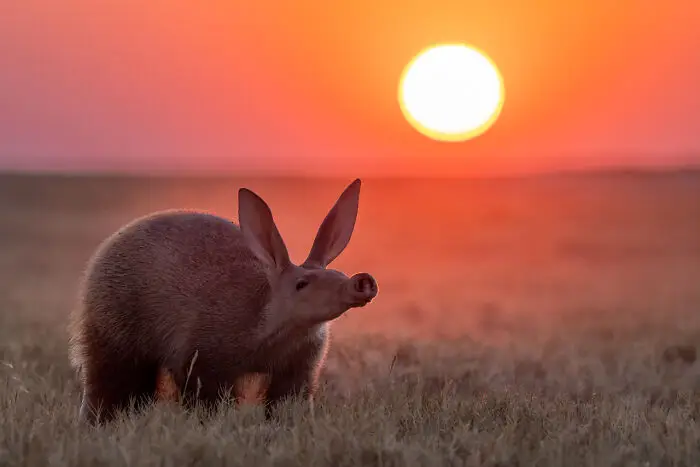
One of the rarer African finds and a lifelong dream for many is seeing an aardvark. These nocturnal creatures are notoriously difficult to spot and even rarer to photograph, as they emerge under the cover of darkness to search for ants, of which they can eat up to 50,000 in one night. Feeding at night allows them to feel safer, as they are harder to spot by predators, against whom their only defence is a quick retreat into their burrow or a battle with their very sharp claws.
Aardvarks, however, are very sensitive to the cold, feeding in bursts and returning to their burrows to both digest and keep warm. On this particular visit to the Makgadikgadi Pans, a sudden cold snap in the central Kalahari meant that night-time temperatures plummeted well below zero, lower than what the aardvark can comfortably handle. This meant its night-time feeding schedule was not long enough to meet its food requirements.
As a result, on this rare occasion, a sunset aardvark existed on Earth. He left the burrow before dark to lengthen the time he had to feed, and you can imagine my joy as I was able to spend time watching this curious-looking creature, digging for termites and using those long ears to listen intently to their underground activity. It was a truly special experience to observe an aardvark out in the open, calmly feeding and completely relaxed in our presence. It was also a once-in-a-lifetime opportunity to showcase this rare species and to see, in such sunlit detail, all that makes up one of Africa’s most remarkable mammals.
39points
#26 Curious Guanaco By Charles Janson
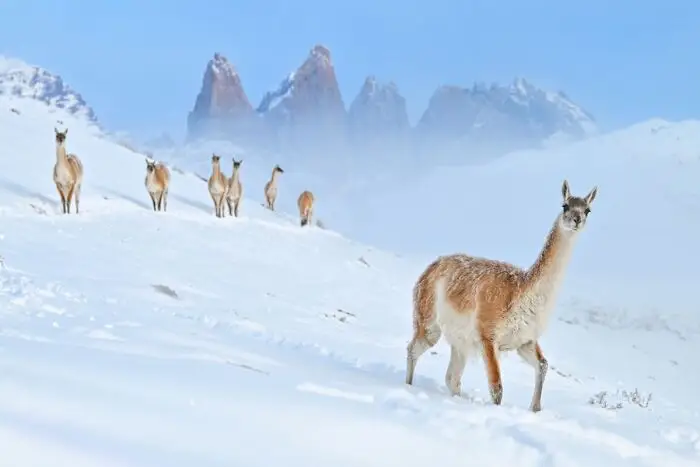
It was -20C, so cold that we were engulfed in dense frozen fog. We were driving to find a puma to photograph in a private ranch near Torres del Paine National Park in Chile. I asked our guide to stop at a beautiful vista of the famous Towers (Torres). We got out and I set up to photograph the dramatic spires nestled in frozen fog. When I was just about to take my landscape photo, a guanaco (Lama guanicoe) appeared over the crest of the hill, intruding on my pristine setting.
I waited for a few minutes to see if the animal might leave, but soon another one appeared, and then several more. Making a virtue of necessity, I thought about how the guanacos could complement the landscape. Zooming out to include the foreground, I took a series of pictures as the guanacos approached.
I had owned several llamas (the domesticated descendants of guanacos), so I was familiar with their behavior. I could tell that the animals were not stressed as we stayed still on the road. Indeed, the lead animal showed all the signs of being curious, just like llamas. As it approached, I waited for the moment that it balanced the rest of the scene and took this picture.
As often happens with wildlife photography, the moment was a mixture of preparation and luck (good and bad). The bad luck was that the previous day, I had dropped my main camera and fancy telephoto lens on the road, rendering both of them useless. I was prepared for such an event, with a backup camera body and a mid-range (70-200mm) lens. Unable to take closeup portraits or even detailed behavior images, I started to imagine compositions where the animal was a small part of a wider landscape. Having practiced this enforced perspective for a day, I was better prepared to react to the good luck of guanacos ‘spoiling’ my landscape photo.
38points
#28 Leafy Night By Scott Portelli
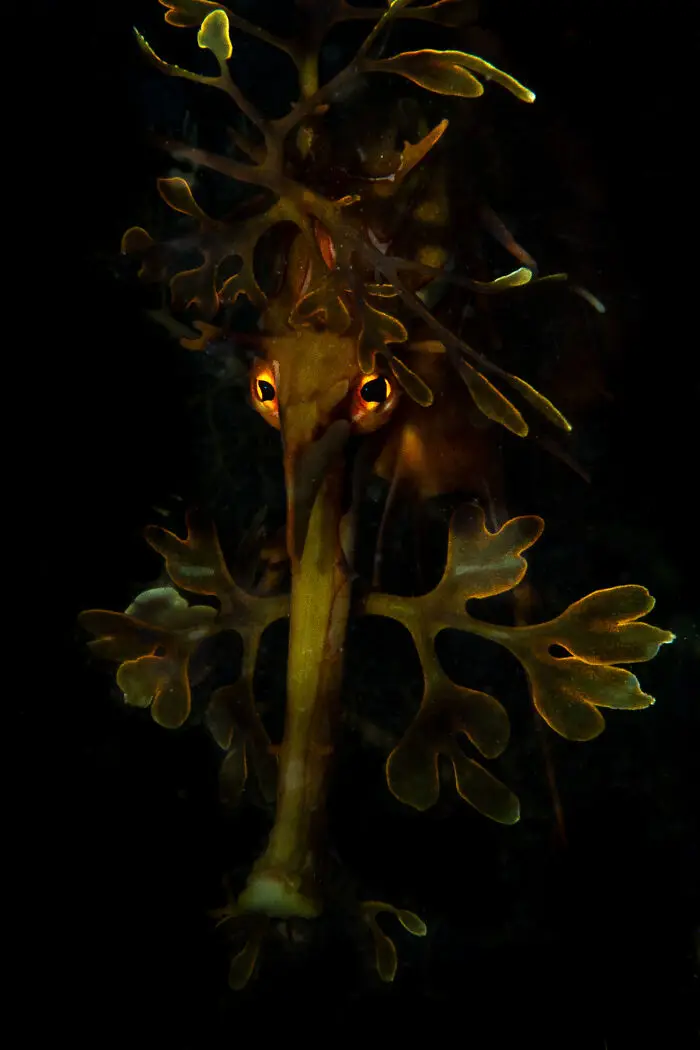
In a Covid year it has been difficult for many nature photographers to get out in the environment and continue their work. Australia is an amazing place and I think Covid has taught me that I live in one of the most incredible natural places in the world. As a nature photographer, Australia’s coast, deserts, reefs, and rainforests hold a plethora of subject matter to photograph and discover, not to mention the diversity of wildlife above and below the surface. I am passionate about the ocean and its inhabitants, and a lot of my work is centred around conservation and protection of various marine species. But I am a little obsessed with seadragons. With this image of the endemic leafy seadragon, I wanted to create something that really captured the essence of these delicate vulnerable species which are found only in the southern parts of Australia. The more we understand the ocean and its inhabitants the more people will feel connected and take action to protect our ocean creatures.
It was just after Covid was announced in March 2020, our year long journey around Australia was interrupted and my wife and I were forced into lockdown for 6 weeks in a small campground on the Fleurieu peninsula in South Australia. Because we had no fixed address, we were considered refugees and the campground owner allowed us to stay in the campground, which had only one other family for the duration of the lockdown. This ended up being a blessing in disguise, we could still exercise, and diving was allowed. I had the opportunity to dive regularly, becoming familiar with the terrain, and getting to know the dive site, I explored more and more each dive and managed to spot a few individual seadragons that I could easily identify. After several encounters with one specific seadragon, it appeared to be unperturbed by my presence. I was able to compose a shot that tightly captured its eyes, features and appendages. In the end I took only one frame when the seadragon turned towards me for just a moment. All the elements aligned and it culminated in the portrait of this beautiful creature.
This photo was taken at dusk and shot with strobes to light the subject, as the afternoon light turning into night. The image was shot with a wide fisheye lens with close focus.
36points
#31 Taken By A Ghost By Pandora Maund
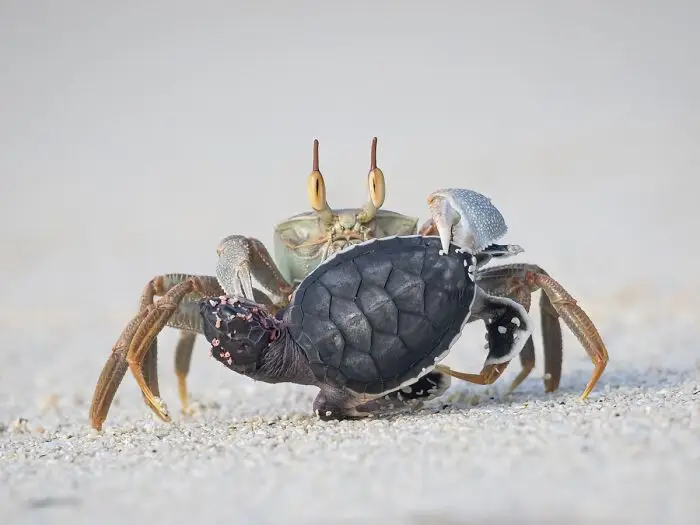
I had originally hoped to return to South Africa in 2023 for another safari, but that didn’t pan out. However, a friend invited me to join her family in the Seychelles for a couple of weeks. Having never been before, I wasn’t quite sure what to expect in terms of wildlife photography. I reached out to the ICS (Island Conservation Society) team on the island and mentioned that I would be on Desroches Island for a couple of weeks. I offered to provide any photography services and get involved with any conservation projects while I was there. After working with the Giant Aldabra Tortoises, I was invited to join an early morning beach patrol to monitor bird species and track where turtles had come from the sea overnight to lay their eggs on the beach.
I had hoped to witness and photograph turtle hatchlings making their way to the sea as the sun rose. The hatchlings instinctively wait until the sand cools, indicating nighttime, when there’s less risk of predation. As the sun rises, they use its light to guide them to the sea and as far away from shore as possible, where predation is highest. Unfortunately, only around 1 in 1000 hatchlings survive to adulthood. Once they leave the nest, predators such as birds, ghost crabs, and fish pose a significant threat.
Ghost crabs are abundant on the beach, scavenging anything from fallen fruit and plants to decaying animals—and unfortunately, live turtle hatchlings. As I walked along the beach, I spotted several horned ghost crabs. One of them had something in its claws, and I realized it had caught one of the stragglers on its first journey to the sea. I immediately lay flat on the sand and switched my lens to a 300mm (600mm equivalent) prime. The crab was scuttling along the beach, dropping its prize and picking it up again. I waited patiently until it turned to face me, capturing the shot. Though it’s difficult to identify the species of the turtle, it was likely a critically endangered Hawksbill, which can be found around this remote island.
35points
#32 Family Circle By Andrey Savin
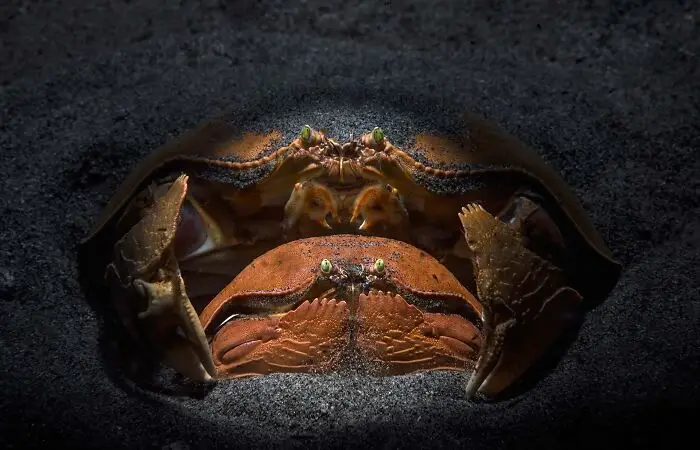
The photo was taken during a night dive almost near my house – this place is called Malatapay (Negros Island, Philippines). I was on my way back when I spotted a pair of Shy Crabs during mating season. The depth is only 3 meters but the tank was almost empty and I had to save air. A pair of crabs formed an almost perfect circle with their bodies and my idea was to use optical snoot to highlight them without getting light on the bright sand, which in turn is backlit from behind. The crabs were not very willing to pose and were moving fast, but I still managed to capture the shot just as they started to burrow into the sand. I often shoot these funny crabs because their body shape and face are very expressive. That day I took my best shot.
35points
#33 Twilight Hunters By Norbert Kovács
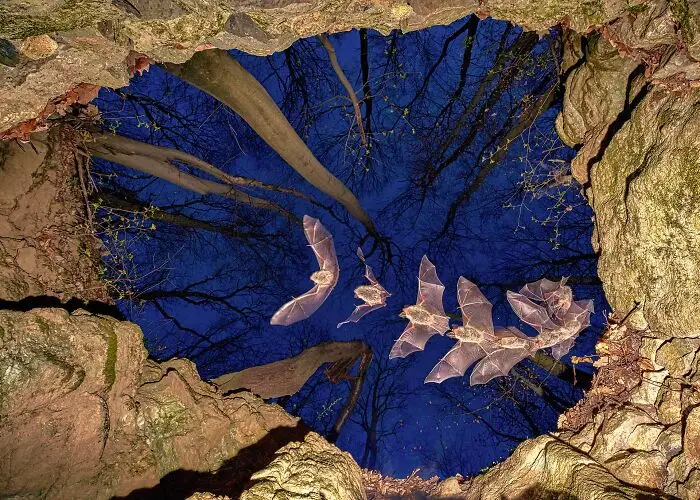
Near my place of living there is a karst mountain range called Mecsek with numerous sinkholes and caves. During one of my trips in the mountains I came across this small dolina. There and then I could see the photo in my mind’s eye.
I usually take photos in springtime before trees start leafing out. I assemble and set the equipment before sunset, take up position at the mouth of the cave and upon hearing the sound of bats I know they are about to leave their nest to hunt one by one. It is an incredible experience literally feeling the wind stirred by the flapping of their wings as they fly by me. As the bats begin their hunt, I normally wait for about two hours at the scene because later on their level of activity decreases.
Though I remain invisible to them, they can feel my body temperature when they leave the cave. Some bats are more cautious and return to the cave at first. However, when they realise I do not harm them they also fly out. Since they are an endangered species I only disturb their life cycle for two to three days in spring.
I have observed the individuals of two species so far:
1. lesser horseshoe bat (Rhinolophus hipposideros)
2. greater horseshoe bat (Rhinolophus ferrumequinum)
The photo was taken from the mouth of a karstic mountain sinkhole. Due to the long exposure time I placed the camera on a beanbag. The exposure was controlled via a wifi network by using a cell phone. I used a flash for the light source which was set in strobe mode with manual flash.
35points
#34 Disturbing Shadow By Sebastien Blomme
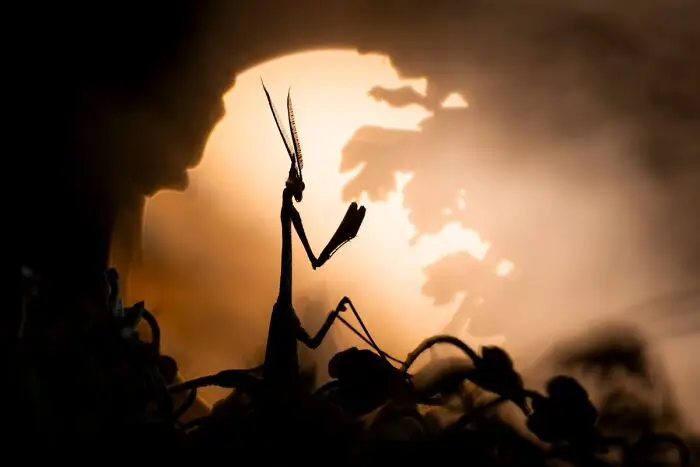
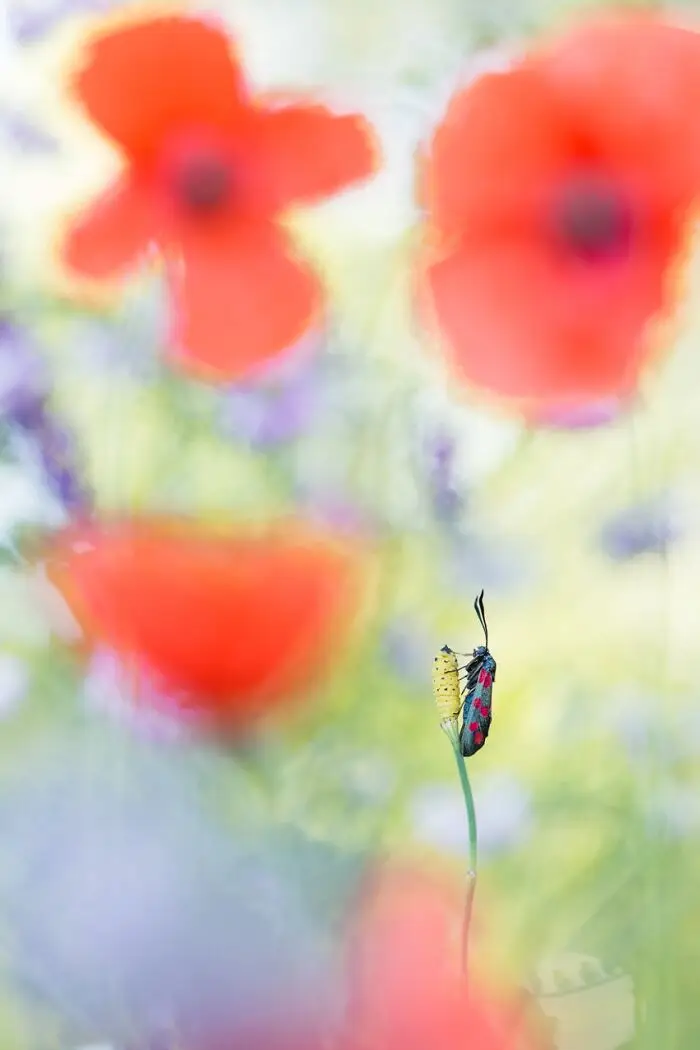
Less than 5 kilometers from my home in Toulouse, France, I am fortunate to encounter one of the most fascinating insects in our local fauna: the Empusa pennata. Throughout the year, I observe it in its larval form, watching its slow and discreet movements among the grass and branches. The camouflage it uses to blend with its surroundings is remarkable, making each sighting feel like a small triumph. Its stick-like body and subtle, calculated motions allow it to stay hidden from predators and human eyes alike, making it a challenge to spot, but a rewarding experience when found.
But when May arrives, an even more extraordinary spectacle takes place: the emergence of adult empuses. My attention turns to the males, unmistakable with their feather-like antennae. These antennae are more than just an adornment; they are highly specialized sensors, capable of detecting female pheromones in the air, essential for the species’ reproduction and survival. The beauty of their interaction, largely unseen by most, is captivating. As I document these insects, I am struck by how their delicate existence goes unnoticed in our rapidly changing environment.
For this image, I positioned myself where the sun was just rising on the horizon, casting a golden glow across the landscape. I used the soft morning light to emphasize the silhouette of the Empusa pennata, capturing a shadow that feels both majestic and slightly eerie. Its slender, elongated body is sharply outlined against the backdrop, evoking a sense of both fragility and strength, a reminder of the uniqueness of this species. No special techniques were used; this is a single exposure.
Empuses, though present even in urban settings, prefer untamed wastelands. Sadly, these spaces are increasingly disappearing due to urban sprawl. Through my photography, I hope to raise awareness of the need to protect these vital habitats.
34points
#35 Threatened By The Highway By Geoffrey Reynaud
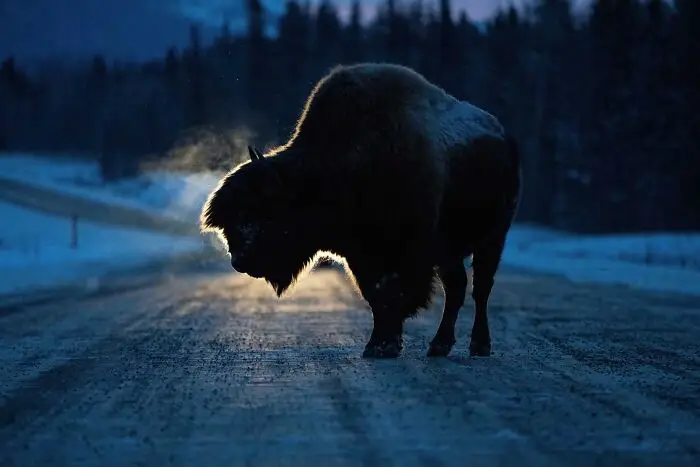
Every year a small herd of the threatened wood Bison in northern British Columbia suffer from road collision. When winter arrives, sometimes the snow is so deep the Wood Bison herds that inhabit the forest along the Alaska Highway tend to use the free-of-snow highway to move from one grazing area to another. Their journey is difficult, and many bison will succumb to the traffic. Records show that annually about 15 percent of the population in the region dies as a result of these collisions. Throughout my journeys into northern Canada, I encountered numerous distressing roadkill incidents as I ventured along this same highway. The devastating fate suffered by these magnificent creatures deeply saddened me and sparked a profound reflection, prompting me to return to this region with a renewed purpose – to intimately document the impact of this highway on this wood bison population. To capture the incredible story of the bison while ensuring their welfare and my safety, I implemented a variety of techniques. Remote triggering allowed me to photograph the bison from a safe distance without disturbing their behavior. In addition, motion sensor-triggered cameras were placed in key locations. I also utilized a drone for aerial perspectives.
34points
#36 Silverbach Chimanuka By Josef Friedhuber
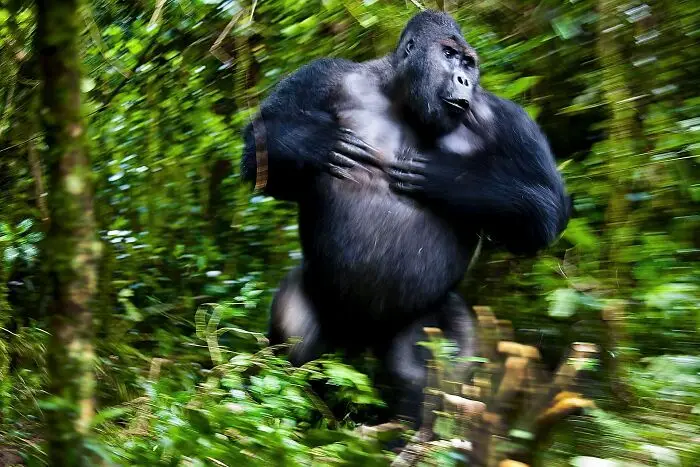
The photo was taken in the Kahuzi-Biega National Park in the DR Kongo, close to Kivu Lake. There are two habituated groups of eastern lowland gorillas in the park. Chimanuka is the silverback of one group with about 20 individuals. He is now about 35 years old and his weight is more than 240 kilos. In October 2007 I visited with a small group The Kahuzi-Biega National Park and the Chimanuka group for my second time.
After about two hours of hard walking in the dense jungle, we arrived together with the National Park Rangers in the later morning. The females were eating in the bushes out of the sight of Chimanuka. Suddenly he came out of the bush about 5 meters in front of me, drumming on his breast and showing his impressive behavior. I was frightened and fell back in a bush. While falling I took the picture, so it is blurred because of the movement. Chimanuka stopped in front of our group and nothing happened. Then he turned off and climbed up a tree for a better view on his females and children.
34points
#38 Blue Cave Crab By Martin Broen
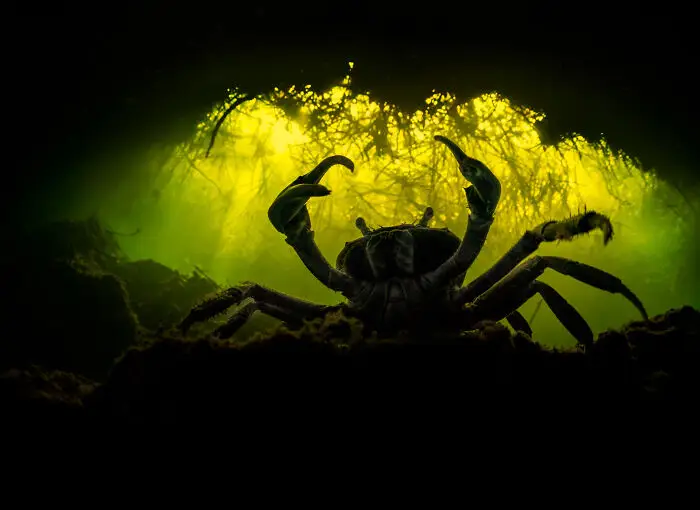
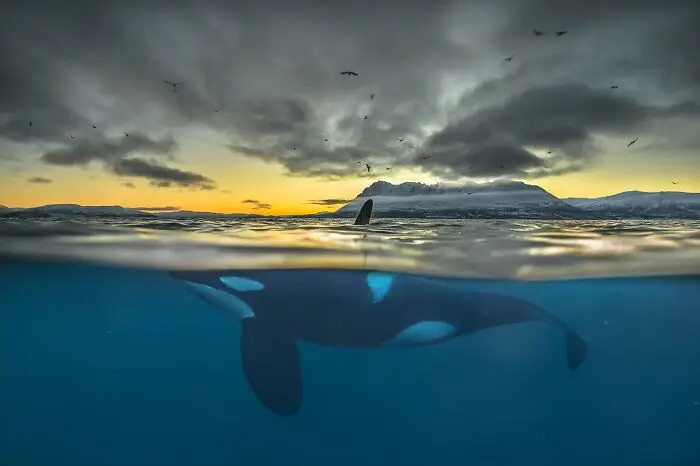
In the last couple of years, I have been fortunate to photograph over 200 different cenotes of the Riviera Maya in Mexico, capturing their surreal environments and the unexpected diversity of its caves. Looking for unique photographic opportunities of light and textures in the transition area between cave and cenote or light and darkness. During a traverse cave dive connecting seven different cenotes, we passed by this strange figure of a blue cave crab standing on a rock while fishing in the cave current, perfectly define against the background. This menacing silhouette looked like a Samurai with shiny blue armor, perfectly centered by the natural vignetting offered by the light fall-off of the cave, standing against the mangrove texture and green light of the sun passing through the tannic acid present on the surface. I got as close as possible to the subject to make him the hero of the scene and balance the elements of a perfect representation of the mangrove ecosystem .
33points
#39 Striped Hunter By Karim Iliya
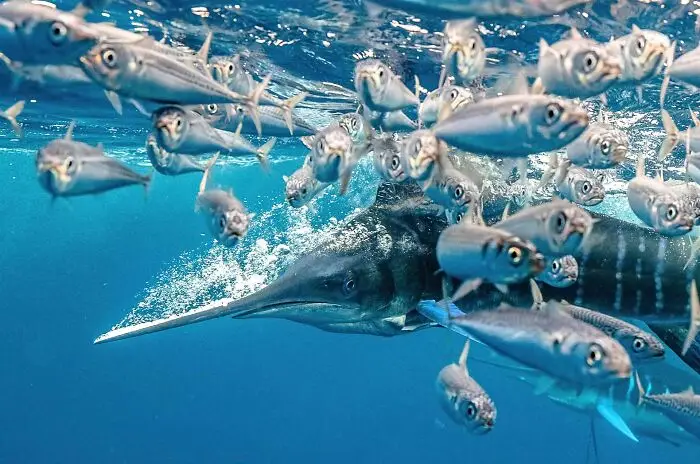
A terrifying scene for the small fish, fleeing for their lives as a striped marlin hunts them. Here, the slightest mistake means life or death as the marlin’s bill slices through the water during a high speed hunt. These fish have very little respite, as birds try to hunt from above and more than a dozen other marlin and sea lions all attacking the same small ball of fish. Marlin are one of the fastest fish in the world, a terrifying predator for a small fish in the great blue desert.
I took this photo in the Pacific Ocean off the coast of Baja, California, Mexico. A friend of mine had told me about the marlin aggregation where Marlin and Sea lions hunt together, bringing small fish up from the depths and corralling them into a ball near the surface. The marlin can turn their stripes on and off, which might be used to communicate when hunting. These bait fish stand very little chance of survival as more marlin and sea lions join the feast picking them off one by one. Watching animals hunt is one of the greatest spectacles in nature, as the line between life and death comes down to millimeters and fractions of seconds.
I spent 3 days to document these hunts and capture the visceral realities of life in the ocean. During my time in the water I watched many little mackerels and sardines being hunted, and even speared by the marlin’s bill. From afar, this struggle can look serene and peaceful as the baitfish move like a river, so I wanted to show the intensity up close, and to try and capture the relationship between the predator and the prey. This meant I had to get a little closer without getting in the way, and be ready if the opportunity came about. When I was close I could really feel the panic of these little fish, desperate to survive. If I got too close for too long, the fish would seek protection from me. To avoid this and not disturb the natural behavior, there were a a couple times that I had to dive down and away from the bait ball. Typically, there was no hope for these little fish, and every last one of them would be hunted. When it was all done, all that would be left were shiny scales as the Marlin and Sea lions disappeared back into the blue.
33points