



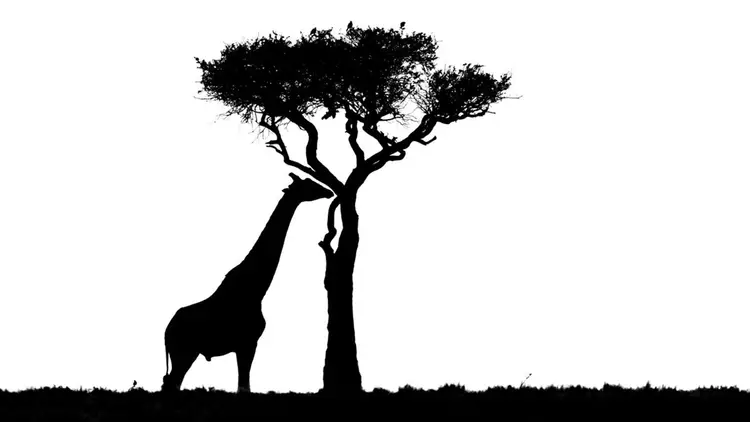

Sometimes, removing color from a photograph makes the smallest details stand out. The 2026 MonoVisions Black and White Photography Awards celebrate this approach to photography and bring together talented photographers from around the world. The international competition welcomes professionals and amateurs alike, recognizing outstanding work across 12 categories. Participants can submit individual photographs or series that explore everything from nature and architecture to human experiences and artistic concepts.
We recently featured the competition’s impressive Landscape category winners, and this time, we’re turning our attention to a broader selection of subjects. The photographs below include winners and honorable mentions from the Nature and Wildlife, People, Travel, Architecture, and Conceptual categories. From remarkable wildlife encounters and candid moments of everyday life to fascinating places and imaginative compositions, each photograph offers something new to discover.
Scroll down to explore these award-winning photographs, and let us know which ones caught your attention the most!
#1 “Spots Everywhere” By Robin Scholte
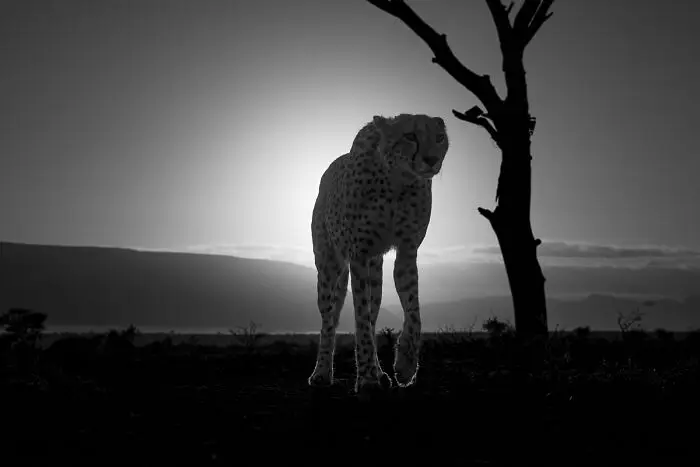
Honorable Mention (Series) in the Nature and Wildlife Category
Description: “In the dry plains of South Africa, I came to know the cheetah as more than just the fastest predator in the world. Over the years, I returned time and again to the same landscapes, often for days without seeing anything, until suddenly a glance, a movement, or a brief moment changed everything.
This series was born out of patience and silence. Not from the urge to capture action, but from the desire to get closer to the character of the cheetah. The vulnerability of cheetahs. The stillness just before the hunt. The solitude of an animal that is completely absorbed in the open landscape.
Each photo represents a different moment, spread over several years, but together they tell one story: that of an animal that is simultaneously powerful and fragile. The cheetah lives to the rhythm of attention and caution; one mistake can mean the difference between life and death.
For me, wildlife photography is not just about what is visible, but about presence — staying to look long enough until the animal accepts your presence and reveals something of itself that is not forced.”
Report
14points
#2 “Black Ink” By Khaldoon Aldway
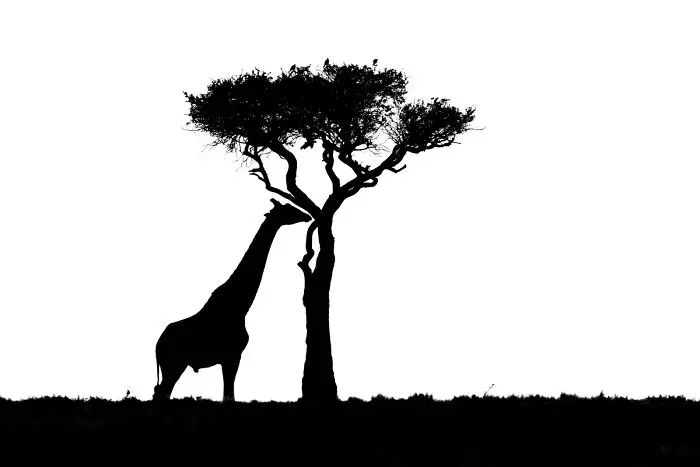
1st Place (Series) in the Black & White Nature and Wildlife Category
Description: “In “Black Ink,” the wild is reduced to its essential marks. Against bright emptiness, bodies become brushstrokes, curved necks, open wings, thorned branches drawn in pure silhouette. I made these images by stripping away color and context until only gesture remained: the line of a beak, the angle of a horn, the pause between two forms. What’s left is not a record of a place, but a visual language, minimal, bold, and quiet, where negative space carries as much meaning as the subject itself.”
Report
13points
#3 “The Summer Vigil Of Long Nose” By Preeti And Prashant Chacko
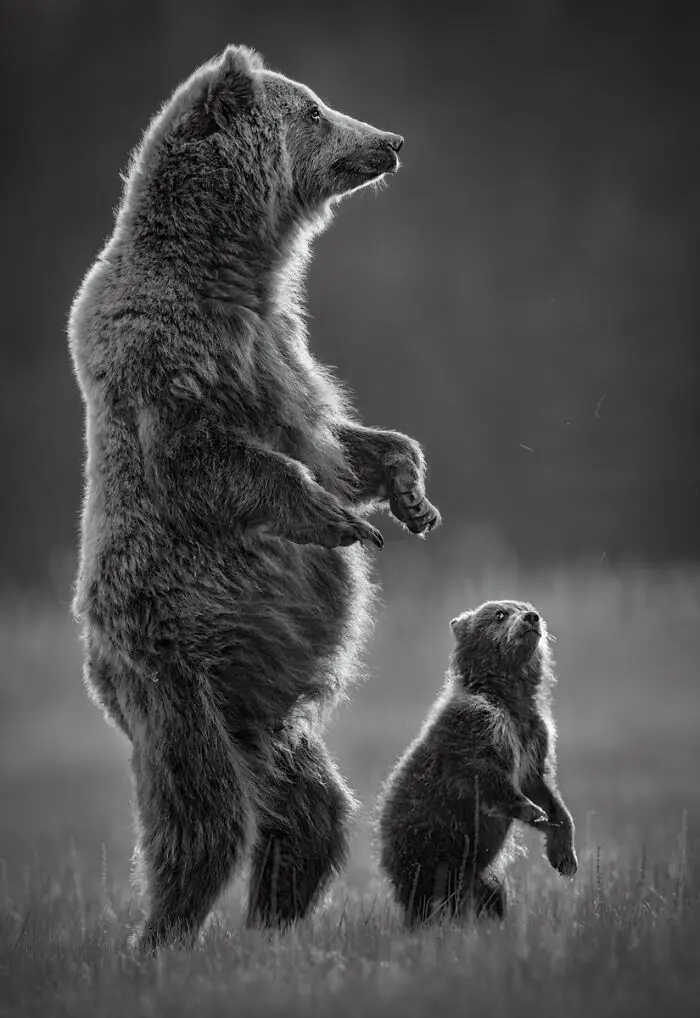
3rd Place (Series) in the Nature and Wildlife Category
Description: “Each summer, coastal brown bears gather on the tidal flats of Lake Clark National Park, Alaska, to forage for clams. Food is plentiful, as is risk.
In the summer 2025, when this photographer made this series, the margin for error was particularly narrow. Only two cubs were born in the park that year. They were both born to a female known as Long Nose, who had lost her previous litter. She has just a narrow window in which to feed her 2 cubs sufficiently to double their weight every month, a key sign of whether they will survive. Made over multiple days at close range, this series observes how she feeds, teaches, and remains ever alert as large, territorial male bears move through the same space. The work reflects on a brief season of vigilance, ending with the hope that the lessons that she has passed on, will stick.”
Report
13points
#4 “A New Polar Bear Family” By Liwen Tao
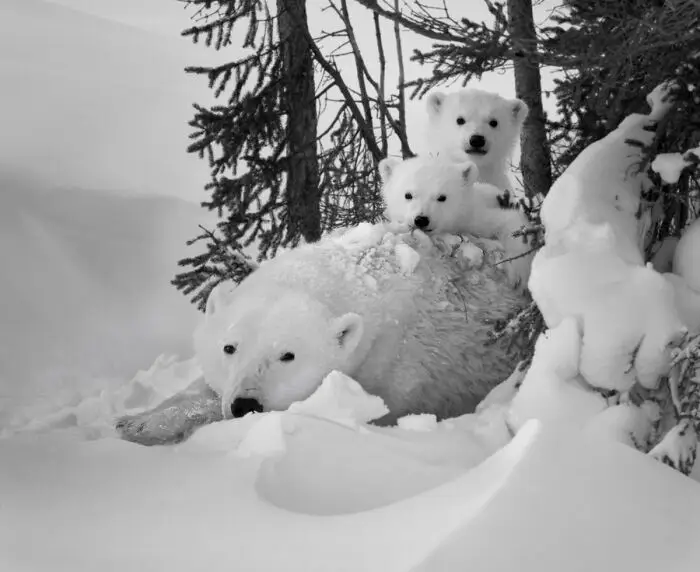
Honorable Mention (Series) in the Nature and Wildlife Category
Description: “I joined a polar bear expedition in Churchill Canada in a winter. It was very cold with temperature -5 to -30 C. After 7 days searching, the team finally located a family of three polar bears. The twin cubs were about 3-4 months old. The interactions among them were just unforgettable! They were resting, playing with each other and showing love. Though the mom was fast 4-5 months, she continued to give nursing to the cubs. Before they move on their journey of hunting, she was so alert to check surroundings. The polar bear's life is depended on the ice. The increasing warm climate is not to benefit them at all. We must act together to protect these precious wildlife!”
Report
12points
#5 “The Land That Made Us One” By James Lewin
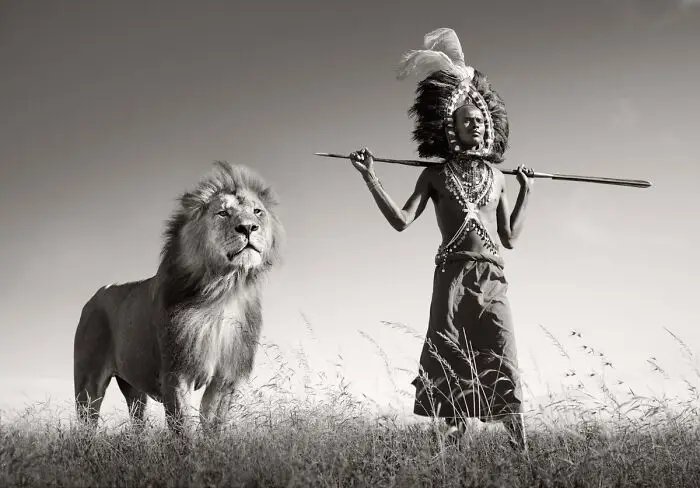
1st Place (Series) in the Conceptual Category
Description: “In an era where technology defines our daily lives and the natural world feels increasingly distant, it may be difficult to imagine that there are still people in Africa living much as they did hundreds of years ago. Deeply connected to nature, their way of life remains woven into the land, the seasons, and the animals with which they coexist. They are not separate from the natural world, but part of it.
For the opening of this series, I chose to focus on the Maasai Tribe. Much of East Africa’s remaining wilderness and iconic safari destinations are Maasai ancestral lands, making this a natural starting point for a project that honors both traditional cultures and the natural world.
This series celebrates remarkable cultures and the iconic wildlife they coexist alongside. While my work has long focused on the beauty and fragility of Africa’s wildlife, living here has revealed another equally pressing reality: the traditional ways of life for communities that have long depended on nature are now just as endangered as the natural world itself.
Each artwork features both wild animals photographed in their natural habitats and genuine Maasai individuals whose lives remain intertwined with the land. Every image is a composite made from two separate photographs, taken in the exact same location, under matching light and weather conditions.
May these images serve as quiet yet powerful testaments to the possibility that humanity and the natural world can still thrive together, side by side, just as the people in these photographs, and their ancestors, have done for generations.”
Report
11points
#6 “The Great Migration” By Anup Shah
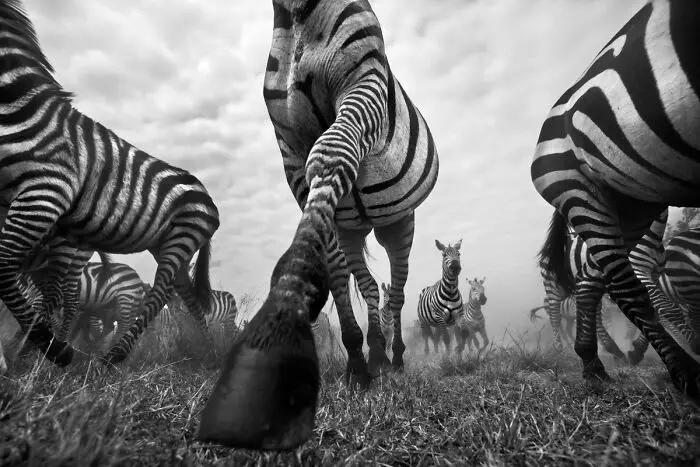
Honorable Mention (Series) in the Nature and Wildlife Category
Description: “The Great Migration” of over a million wildebeests and zebras across the East African plains lends itself to an immersive style of photography.
In this body of work, I determined to frame my response to The Great Migration as a visual series showing motion in survival. I have endeavoured to impart a feel for what it might be like to be in the thick of The Great Migration of animals across The Serengeti eco-system by using a close point of view that conveys intimacy, involvement, immersion, and immediacy. I hope the viewer can feel the frantic atmosphere, hear the drumming of the hooves, and smell the tension.
In this body of work, I determined to frame my response to The Great Migration as a visual series showing motion in survival. I have endeavoured to impart a feel for what it might be like to be in the thick of The Great Migration of animals across The Serengeti eco-system by using a close point of view that conveys intimacy, involvement, immersion, and immediacy. I hope the viewer can feel the frantic atmosphere, hear the drumming of the hooves, and smell the tension.
Sure, the cameras took a beating but also trembled with pace and energy and the very life of a migrant.”
Report
11points
#7 “The Summer Vigil Of Long Nose” By Preeti And Prashant Chacko
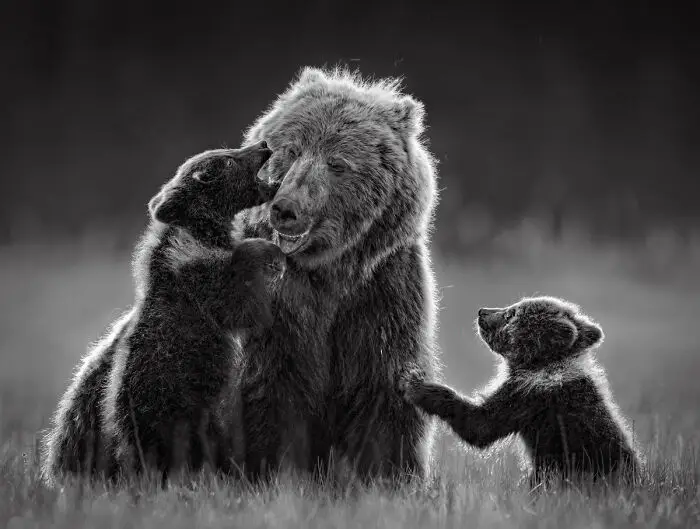
2nd Place (Series) in the Nature and Wildlife Category
Description: “Each summer, coastal brown bears gather on the tidal flats of Lake Clark National Park, Alaska, to forage for clams. Food is plentiful, as is risk.
In the summer 2025, when this photographer made this series, the margin for error was particularly narrow. Only two cubs were born in the park that year. They were both born to a female known as Long Nose, who had lost her previous litter. She has just a narrow window in which to feed her 2 cubs sufficiently to double their weight every month, a key sign of whether they will survive. Made over multiple days at close range, this series observes how she feeds, teaches, and remains ever alert as large, territorial male bears move through the same space. The work reflects on a brief season of vigilance, ending with the hope that the lessons that she has passed on, will stick.”
Report
11points
#8 “Brutalism In Transit” By Mark Stevens
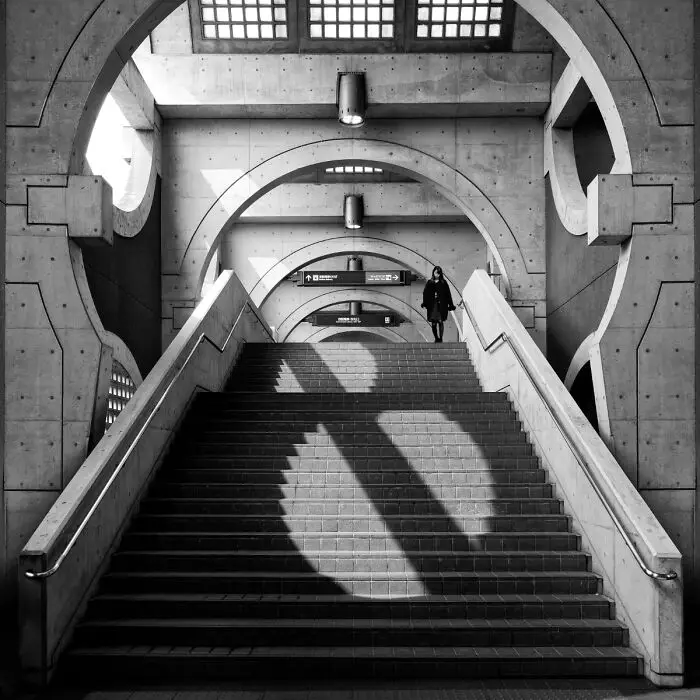
1st Place (Series) in the Architecture Category
Description: “A striking example of Brutalist architecture, Uji Station on the outskirts of Kyoto combines concrete, light, movement and sculptural form to create a memorable arrival experience for commuters. Designed by Hiroyuki Wakabayashi in 1995, the station interior is defined by repeating circular openings that filter natural light through the space, highlighting the texture, seam lines and raw honesty of the concrete construction. Sweeping arches and curved forms introduce a rhythmic flow and visual harmony, elevating the station beyond its functional purpose into a carefully crafted architectural environment.”
Report
10points
#9 “Geography Of Absence” By Jordan Keramidas
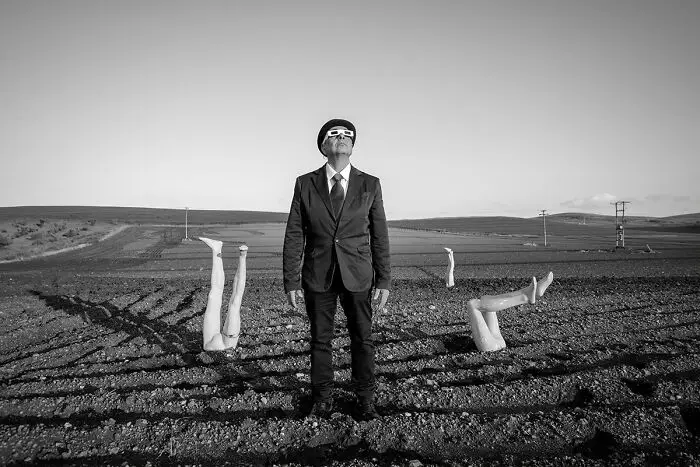
Honorable Mention (Series) in the Conceptual Category
Description: “A series of staged surreal photographs exploring emotional distance, fragile effort, and the quiet absurdity of human existence. Through symbolic interventions in empty landscapes, ordinary objects become metaphors for communication, isolation, memory, and survival.”
Report
10points
#10 “Memories In Mist” By Laura Arlau
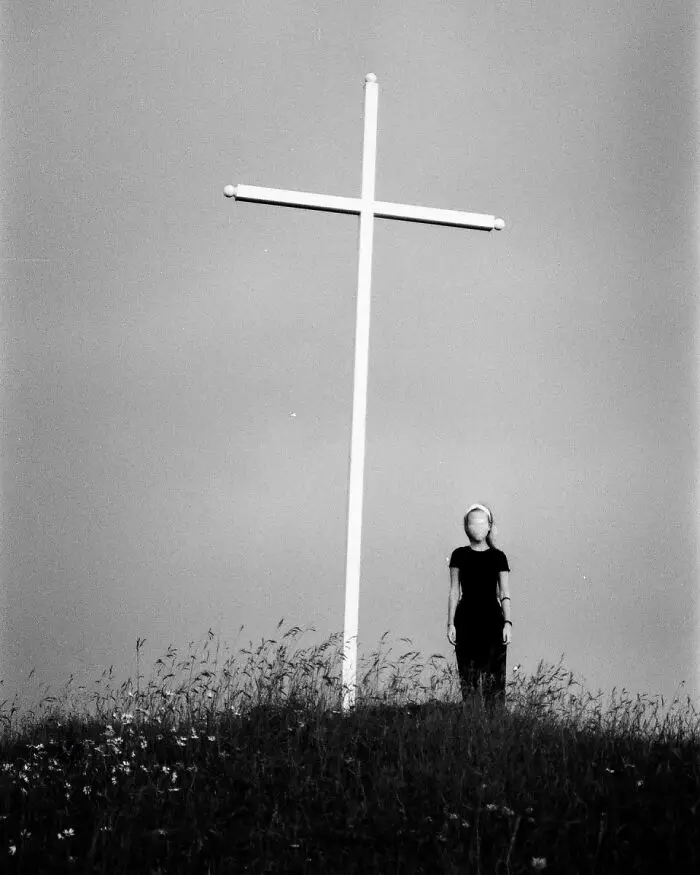
Honorable Mention (Series) in the Conceptual Category
Description: “Through photography that oscillates between sight and disappearance, Memories in Mist series explores the elusive nature of memory—personal, collective, and mythological.
Mist takes on a key role as the atmosphere and picture, acting as a living veil through which human presence, faith, and natural forms flicker and fade. The pieces traverse the brittle lines separating the visible from the invisible, the holy from the earthly, and the moment from its passing. The self-portrait that occurs frequently in these pictures is not a declaration of identity but rather a subdued presence, a person moving through mist and merging with its surroundings.
Within this series I consider how the self can disappear, adapt, and briefly belong to the environment it views through this blending of body and landscape. Every picture alludes to the conflict between belonging and alienation, wonder and fear. Memories in Mist highlights the human position in the enormous memory of being within this interplay: small, trembling, yet highlighted by transient beauty.”
Report
10points
#11 “Still Lifes And Vanitas” By Bernard Drouillet
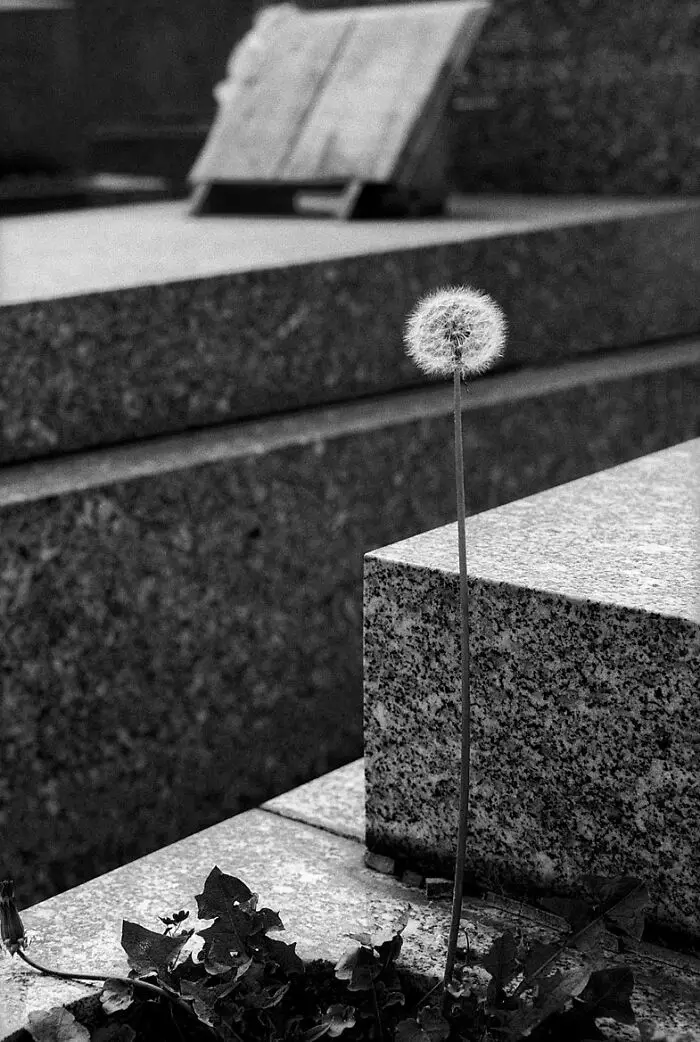
Honorable Mention in the Street Photography Category
Description: “Despite the apparent contradiction, it didn't seem so absurd to me, when I began this project in early 2009, to practice still life by taking snapshots.
Indeed, this genre requires the artist to carefully arrange various elements and choose lighting, which I decided to let be presented to me, and, on the contrary, not to intervene at all in the creation of these still lifes. Cemeteries in Paris and the provinces met my expectations, and it was Père-Lachaise that first revealed to me, amidst the bustle, the particular charm emanating from the bouquets of artificial flowers and the impromptu arrangements created by visitors.
In this way, I freed myself from the constraints of a purely stylistic exercise and also gave myself the opportunity to "compose" Vanitas paintings, very much in vogue in 17th-century art, which served to remind ordinary mortals of the precariousness and vanity of our condition. However, one will not find skeletons or skulls, at least not superficially, in this work to remind us of our inevitable end, but rather evocations of our fragility or the brevity of youth and life, using objects, plants, shadows, or fruits framed in eloquent situations.
Here, all the flowers are artificial, except for those produced by chance. They lie with a certain charm, and, strangely, it is the oldest ones that seem the most real to me. These flowers participate in the ritual of "passage" and serve as "true-false" passports to the afterlife.
Along the way, it became clear to me that I was treading on delicate ground: we live in a sanitized world where death is taboo. We cultivate the paradox of displaying it constantly, as violently as possible, while simultaneously remaining silent about it, even banishing it from family life through the hospital.”
Report
10points
#12 “Morondava” By Nakheon Choi
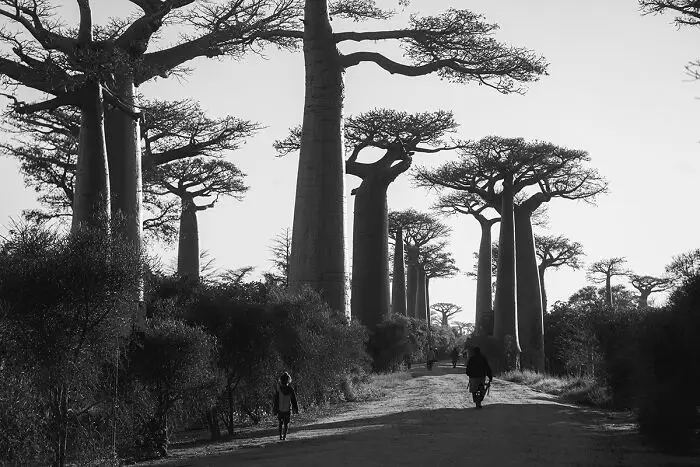
Honorable Mention (Series) in the Travel Category
Description: “This series was captured in Morondava, a coastal city in western Madagascar, where I traveled to see the Baobab trees.
The scenes here evoke a complex mix of emotions unique to this land: people gathering on the seemingly relaxed beach; others embarking on an eight-hour round trip in pitch-black darkness, starting at 2 AM just to walk; and young children running over from their goats to sell handmade crafts to travelers while their parents are away at work.
The Baobab tree possesses a phenomenal lifespan, making it one of the oldest living organisms on Earth. Carbon dating has confirmed that some specimens have lived for over 2,000 to 3,000 years.
The allure of the Baobab lies in how it transforms throughout the day. Whether at sunrise, in broad daylight, at sunset, or at dawn, you encounter a completely different tree at each moment.
There is a vast difference between seeing a photograph and witnessing it with your own eyes. If the opportunity arises, I highly recommend planning a trip to Madagascar.”
Report
10points
#13 “For The S(N)ake Of Spirit” By Philipp Schmieja
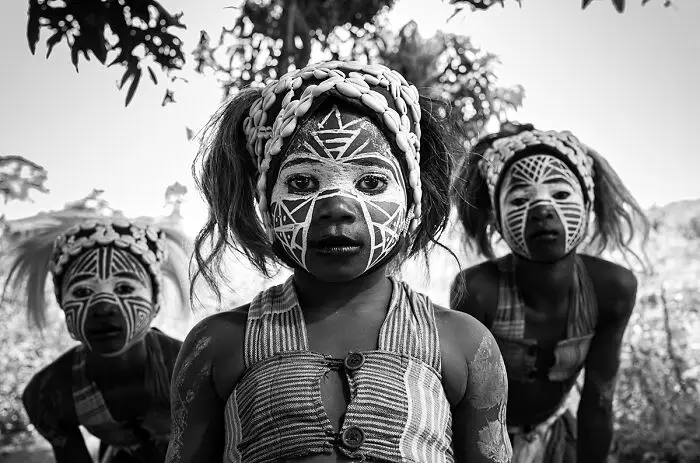
2nd Place (Series) in the Travel Category
Description: “Sometimes eyes speak louder than words. They contain a quiet strength that reminds us that true beauty lives in the depth of tradition and the pride of one's own roots.
Young Guéré girls protect the village by the animal spirits of the forest, particularly snakes. The so-called snake girls begin their initiation at the age of three. The community's shaman 'Simbo' teaches them to capture the essence of nature, in the form of the soul of a snake. Moreover, the girls were trained and drilled to perfect the technique of the snake dance - dance of the Jugglers. They are neither allowed to speak, communicate, nor to smile. During the dance the girls mimic snake movements, supposedly while in trance, and demonstrate spiritual protection. When they turn 10 years old, their relationship with this brotherhood ends, and they are released to live a normal life. The snake girl ritual is usually celebrated in communities that live in isolated and difficult-to-access regions in Ivory Coast and Liberia.”
Young Guéré girls protect the village by the animal spirits of the forest, particularly snakes. The so-called snake girls begin their initiation at the age of three. The community's shaman 'Simbo' teaches them to capture the essence of nature, in the form of the soul of a snake. Moreover, the girls were trained and drilled to perfect the technique of the snake dance - dance of the Jugglers. They are neither allowed to speak, communicate, nor to smile. During the dance the girls mimic snake movements, supposedly while in trance, and demonstrate spiritual protection. When they turn 10 years old, their relationship with this brotherhood ends, and they are released to live a normal life. The snake girl ritual is usually celebrated in communities that live in isolated and difficult-to-access regions in Ivory Coast and Liberia.”
Report
10points
#14 “Future” By Zhong An Yu
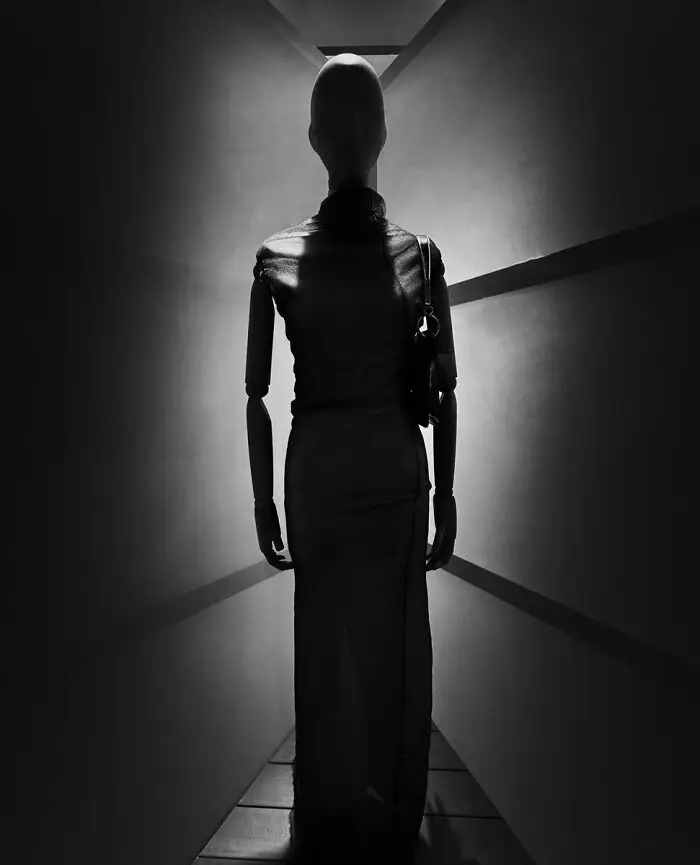
Honorable Mention (Series) in the Conceptual Category
Description: “The future will be the era of artificial intelligence, and it is highly probable that robots will become deeply integrated into our human lives. This series of black-and-white photographs, through an interplay of virtual and real, motion and stillness, evokes the concept of robots replacing human activities in daily life. The images include scenes of robots in action as well as static details of robots, employing a subtle and evocative visual tonality to provoke reflection on the age to come.”
Report
9points
#15 “City Center In Black And White” By Rui Gonçalves
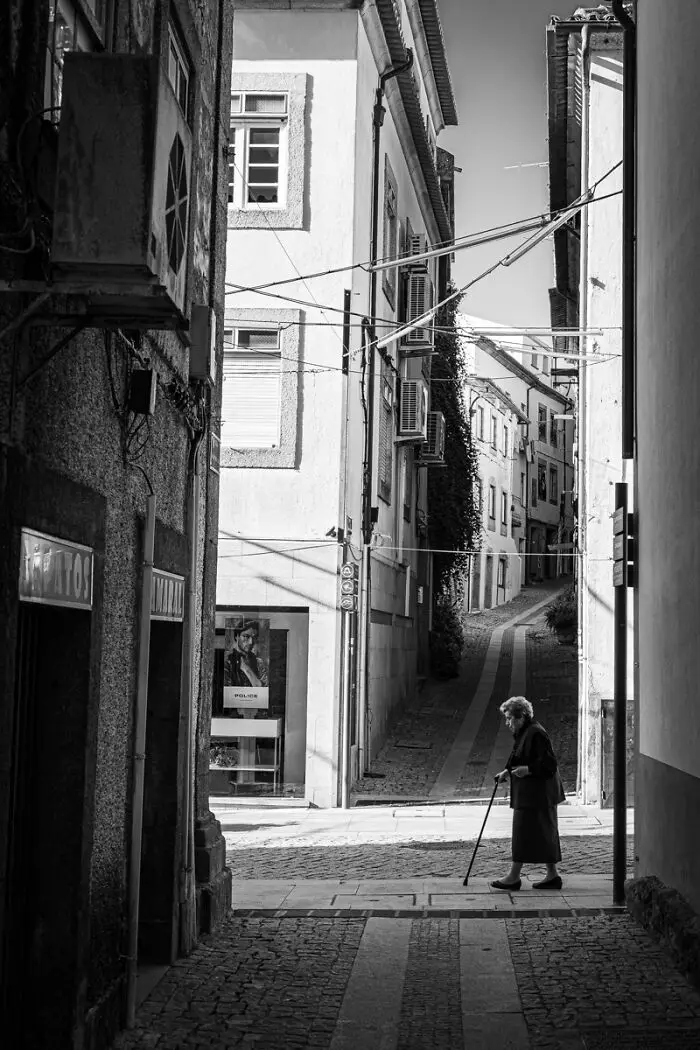
Honorable Mention in the Street Photography Category
Description: “A series of photos from my hometown, Guarda, in Portugal.”
Report
9points
#16 “UK Streets” By Lee Aspland
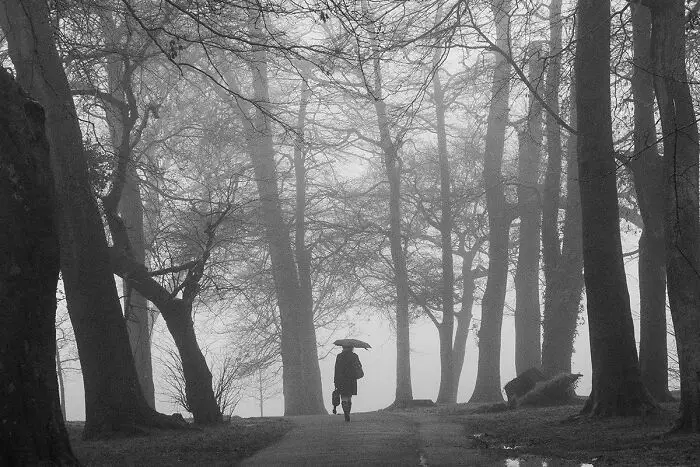
Honorable Mention in the Street Photography Category
Description: “These photos were created over a three year period in Birmingham, London and my home town, Swansea. All the images use the surrounding environment of architecture or nature, to frame a person in context and highlight their small presence.”
Report
9points
#17 “Between Stone And Sky: A Pallas's Cat Allegory” By Elizabeth Yincheng Shen
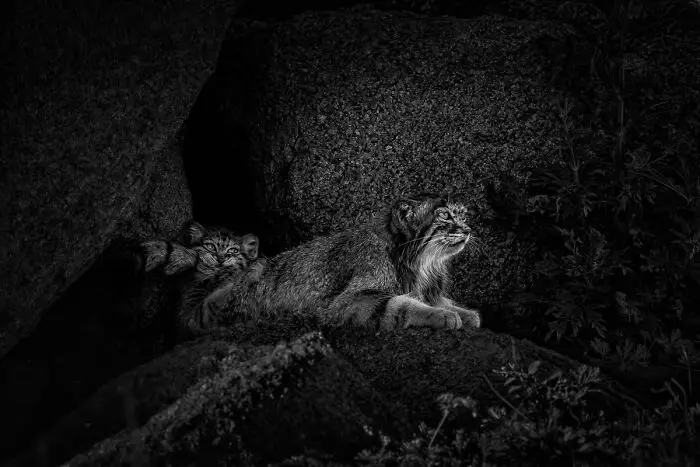
Honorable Mention (Series) in the Nature and Wildlife Category
Description: “This series chronicles the spiritual and physical journey of a Pallas’s cat family in the rugged wild. I employed a dual-tonality approach to mirror the duality of their existence. Low Key images capture the “Gravity of Survival”—the raw, shadowy reality of hiding, hunting, and sheltering within the ancient rock crevices. High Key images represent the “Ascension of Life”—the ethereal moments of nurturing and courage atop the boulders, where the young meet the vastness of the sky. It is a visual narrative of life’s transition from the heavy shadows of the earth to the weightless grace of the horizon.”
Report
9points
#18 “Silhouettes Of Mundari” By Svetlin Yosifov
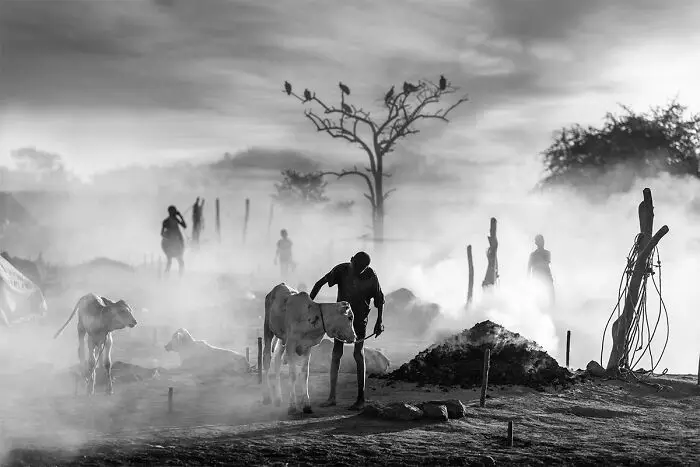
Honorable Mention (Series) in the People Category
Description: “Silhouettes of Mundari” is a series of photographs taken in South Sudan in 2021 and 2024. The Mundari tribe are unique in every aspect of their nomadic existence. And although civilization is already beginning to change them and make their lives easier, they will never stop being the true Mundari. And the true, strong Mundari are created through years of work and deprivation. The children who do not go to school, and start working as early as 5 years old from morning to night, are the true legacy for preserving traditions. As in 2021, when I first visited Mundari, this year, Mundari children are still working from a very early age. They and adults don't know when they were born or how old they are. In appearance, the youngest workers are between 6-8 years old. A number of them were born in other cattle camps, away from their parents, and it is thought that they may have been sold or given away for breeding. “BREEDING” is figurative because they have to work to be able to get food. The cubs' job is to get up at 05.00 every morning, clean up after the cows and goats, milk them, send them off in the morning and welcome them in the evening.”
Report
8points
#19 “Where It All Began” By Giandomenico Veneziani
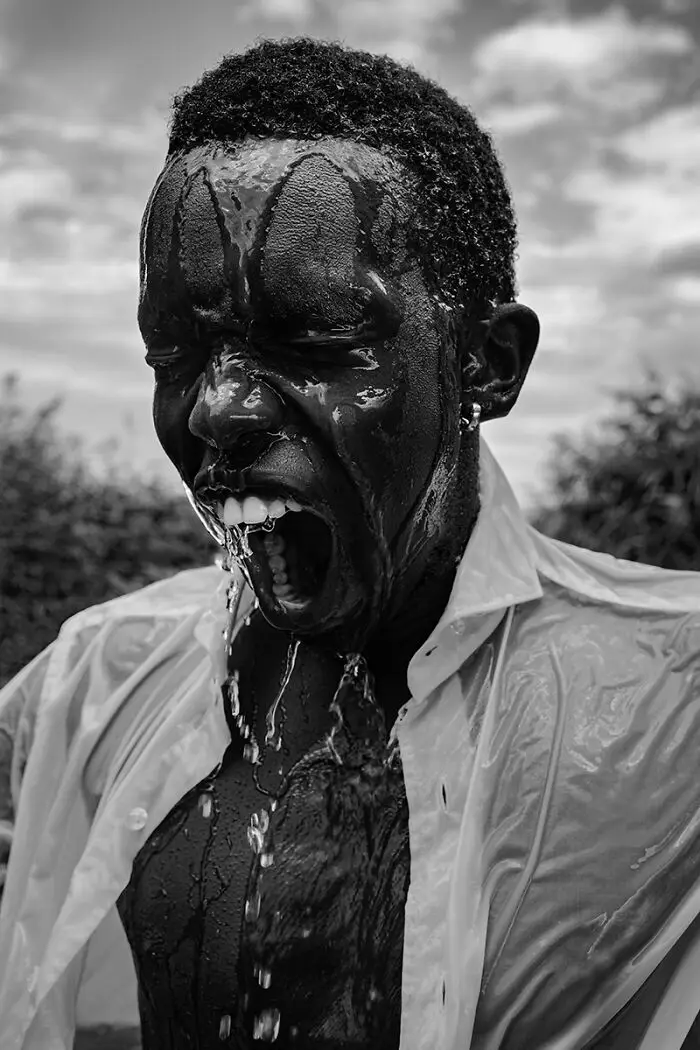
2nd Place (Series) in the People Category
Description: “Human beings are rich in inner complexity. Hidden beneath our skin are ancestral anguish, anxiety, and fears that we keep hidden from the eyes of those who look at us.
Humans nurture these emotions day after day. They remain latent and subtle within each of us and manifest themselves every time our eyes close. Thus, in our deepest sleep, they become our darkest ghosts that haunt us in the darkest night.
Liberation comes only through the sea, the water that purifies, that makes us dream, washing away with its waves everything that afflicts the soul. Only then will we be truly free to dream, love, or simply live.”
Report
8points
#20 “Rhythm And Form” By Byenggoo Kim
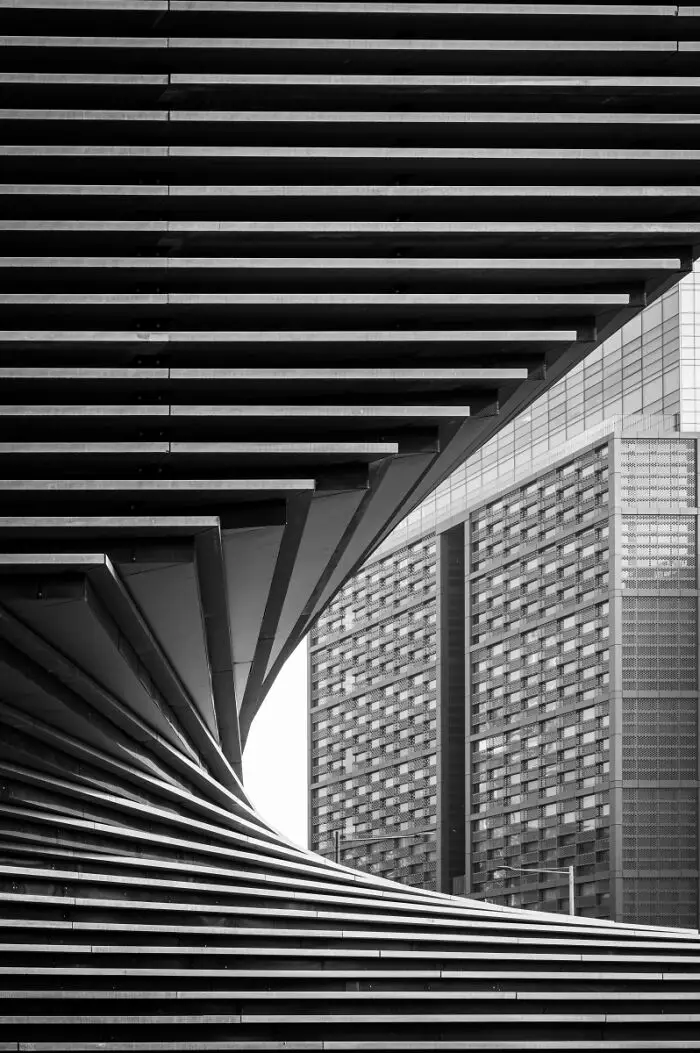
Honorable Mention in the Architecture Category
Description: “Architecture is not merely structure — it is rhythm. Louvers repeat in precise cadence, grids multiply across facades, volumes stack in relentless geometric progression. This series explores the visual language of contemporary urban architecture through the interplay of pattern, shadow, and form. A solitary sculptural figure appears within this geometry — not as a narrative subject, but as a formal counterpoint. Organic against orthogonal. Curved against grid. The human form becomes one more shape in a composition governed by architectural order, asking quietly: within all this precision, where does the human fit?”
Report
7points

