



Saying that our planet is beautiful almost feels like an understatement. We often forget to appreciate the nature around us, but if we take a moment to look closer, we can see just how complex and incredible it really is. For many photographers around the world, this beauty is a constant source of inspiration and the reason they dedicate their work to capturing it.
Nature Photographer of the Year (NPOTY) brings together photographers from around the world who capture everything from breathtaking landscapes and remote corners of the planet to the incredible wildlife that inhabits them. Looking through the competition's photos, it's hard not to be amazed by the moments these photographers manage to capture.
While we wait for this year's People's Choice Award winner to be announced, we thought it would be the perfect time to look back at some of the most remarkable wildlife photos featured in the competition between 2021 and 2025.
Scroll down to check out these captivating shots, and get ready to be reminded of just how wonderful our planet is!
#1 Greeting A Friend By Dewald Tromp
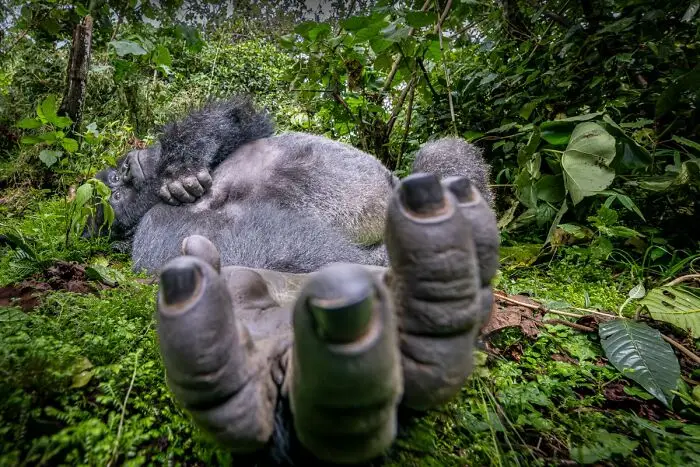
The conservation of the critically endangered Mountain Gorillas in Rwanda is one of Africa’s rare success stories and serves as a beacon of hope for the continent. Fewer than 1,000 individuals remain in the rainforests that border Rwanda, Uganda, and the DRC. During gorilla trekking, visitors are allowed to approach within 7-10 meters of individual gorilla families, though maintaining a safe distance is not always easy for the gorillas themselves.
The dominant Silverback casually flopped down directly in front of me, observing his reflection in my lens. Surrounded by thick vegetation, I had nowhere else to move and adopted a submissive posture, keeping my eyes downcast. He reached out his hand to touch his reflection, and for the briefest moment, I imagined him extending his hand to greet me as an old friend—a moment in time I will cherish for the rest of my life.
Image taken in Rwanda at Volcanoes National Park
Mountain Gorilla (Gorilla beringei beringei)
13points
#2 Reflection By Geza Szabó
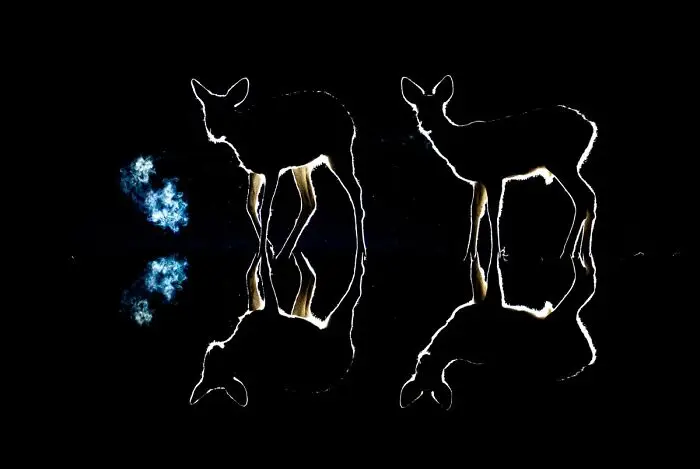
I took this photo in Hungary during the winter. Deer are quite common here and primarily inhabit forest edges, with scattered fields and meadows. As food becomes scarcer in winter, many deer visit crop fields to feed. To help, experts (such as forest officers and national park staff) set up feeding stations in various locations throughout the forests, making food more accessible to the deer.
I took the photo from a bird hide in a small, secluded field within the forest. There were lights positioned in front of the hide and others installed behind the “scene,” where seeds were scattered, waiting for the deer. A small birdbath was also placed nearby, where the reflection of the deer appeared. All I had to do was wait for the deer to show up.
13points
#3 Touch By Tomasz Szpila
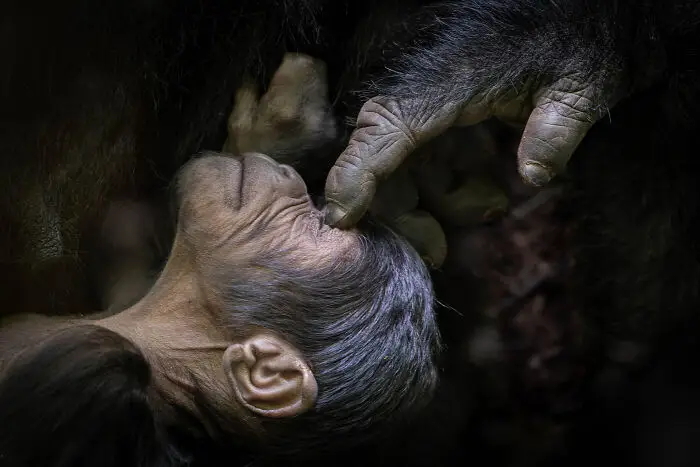
During our stay in Uganda, the guides wanted to take us to the gorillas and the Nshongi family, among which they suspected the birth of a new group member. The guides mentioned such a possibility, but they were not sure. The female, which the guides had seen pregnant before, had been hiding deep in the bushes for many days and did not allow anyone to come closer to be observed.
When my other companions walked away, looking for a convenient position to observe and take photos hoping that the female would show them her newly born offspring, I stayed where I was, watching a group of gorillas hidden in dense bushes. This tactic paid off because, for a short moment, the female turned towards me, showing her gorilla, which was a few days old. I only had to be quick to find the gap between the branches crossing in all directions and get a reasonably clear frame. I was successful, and the birth of a new gorilla has been confirmed. This seven-day-old toddler, cuddled against his mother’s breast, is tenderly touched by his much older brother.
13points
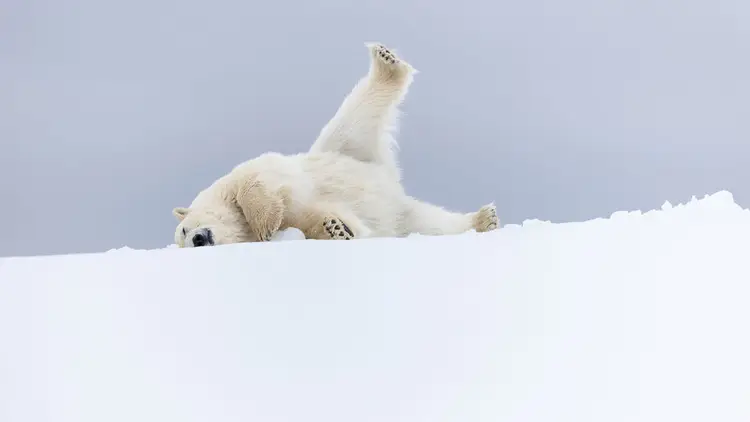
#4 Just Chilling By Brian Hammond
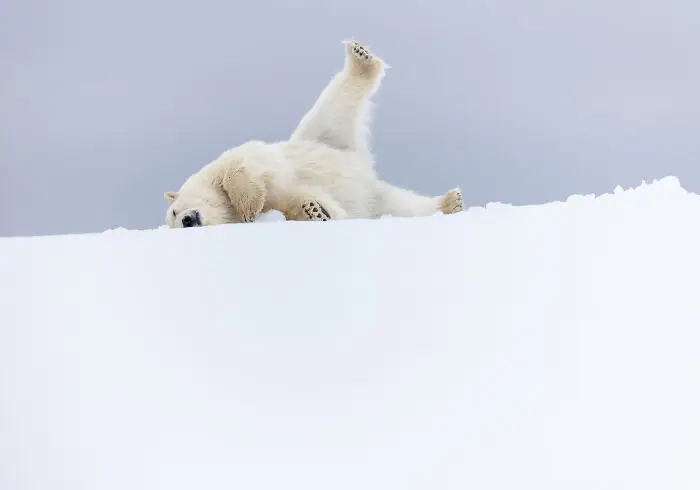
I had travelled to Svalbard seven years previously, but wanted to return with better equipment and on a much smaller vessel, finally doing so last year.
We had enjoyed a few polar bear sightings, some at a considerable distance while exploring the archipelago, but on the penultimate day in the North of the islands, we came across this female who had located a Walrus carcass on the rocky shoreline. She had obviously been there with it for some time, by the size of her distended belly and the marks in the snow.
We then watched her repeat a cycle of sleeping in a snow hole she had dug above the shoreline, emerging to stretch, before then making her way down to eat her fill of the carcass. She would look up from time to time, with her head and chest smothered in blood. It was very difficult to find a clear angle and frame a composition, as the carcass was nestled amongst large rocks and the idling Zodiac was being tossed up and down in the offshore swell, often causing the images to be clipped, or have the horizon at very extreme angles. However, once repleat, she would briefly wade into the sea to wash the worst of the blood from her coat, before returning to the snow slopes above the carcass to snow bathe. Here she would snow plough, roll and toboggan, in order to return her coat to its pristine condition, which she could achieve surprisingly quickly. She would then return to her snow hole and sleep, repeating the process several hours later.
This snow bathing and later play presented the best opportunity to photograph her, but when we first found her the light was poor, and from our lower angle on the sea she was often partly obscured by the largest rocks. Returning later in the evening, we found her higher on the slopes, clear of all obstruction, just playing in the snow as she was already spotlessly clean. Over the course of the next twenty minutes, we watched as she snow ploughed, slid down the slopes, rolled, or just lay on her back chilling out in the sun before we left her to her evening, and this is when this image was taken.
11points
#5 Descending By Hannes Lochner
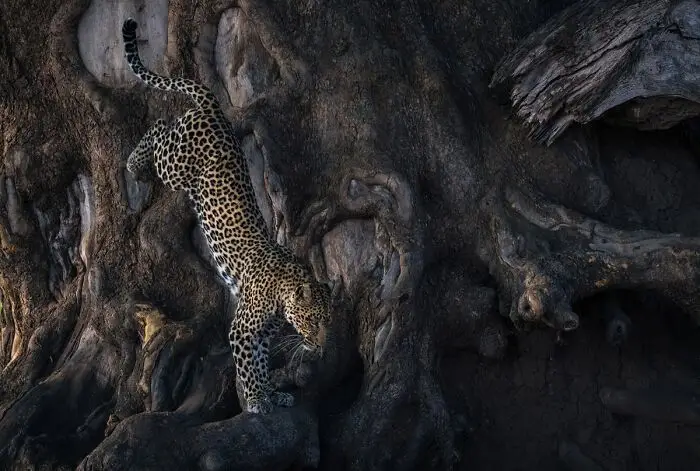
Emerging from a day-long slumber, a youthful leopard awakens atop a majestic Mashatu tree. As it descends, the leopard seamlessly melds with the tree’s sinuous roots, almost blending into the landscape from a distance. The beauty of the scene lies in how effortlessly the leopard integrates with the tree’s base, appearing as an extension of the intricate, winding roots. Its sleek form gracefully merges with the organic pattern of the roots, creating a mesmerizing camouflage that makes the majestic creature nearly imperceptible against the natural backdrop. The harmonious blend of the leopard’s coat and the tree’s roots exemplifies the seamless unity between the animal and its environment—an exquisite display of nature’s artistry and the innate ability of creatures to adapt and merge with their surroundings.
Species name: Leopard (Panthera pardus)
Location: Mashatu Private Game Reserve, Botswana
11points
#6 Glorious Hunting By Panos Laskarakis
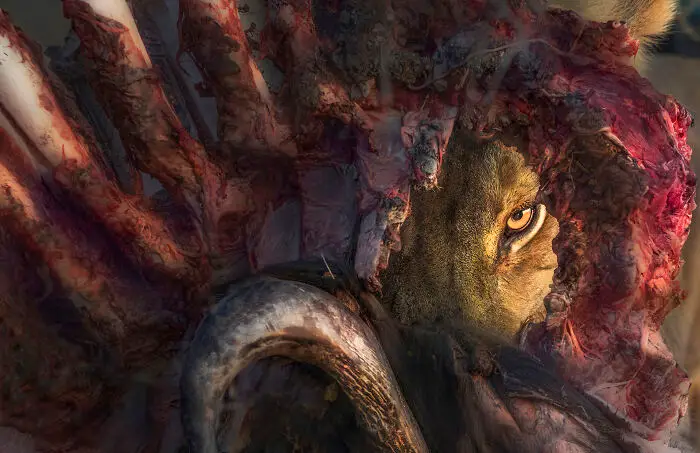
The toughest photograph I took was when I witnessed an extraordinary hunting in the wild nature of the Okavango Delta in Botswana during the dry season in August. It started with dozens of powerful lions attacking buffaloes in the middle of the day. At this point, the scene was already a little difficult to capture, as the attack was very intense and the battle between the lions and the buffaloes was dramatic, with lots of blood and blood-curdling screams just before the kill!
But this is normal in nature, so this isn’t the reason why I say it was the toughest. The best part still had to come through. In the middle of the next night, the lions came under attack by almost 30 hyenas trying to steal the kill from them! It was a rare and cruel scene that I, the guide on the safari, and clients, of course, had never seen before. The ferocity, the sounds of terror coming from everywhere, and the intense darkness made the shots very tough to get.
The next morning, this large male lion returned and peered through the bones, creating this portrait. That was the moment I felt the power of the king in my heart!
11points
#7 Bounced Out And Into Care By Douglas Gimesy
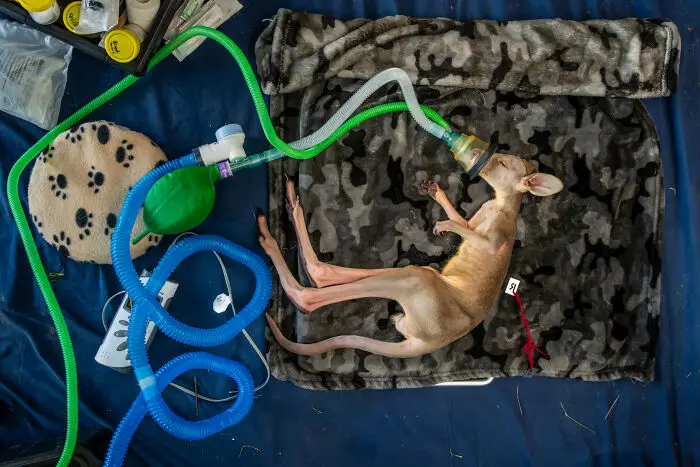
In the home of wildlife carer and founder of Bunurong Wildlife Carer (Inverloch, Victoria, Australia), an anesthetized Eastern Grey kangaroo joey (Macropus giganteus) lies on the floor ready to be examined for broken bones and other injuries.
Anaesthetised by Wildlife Victoria’s Travelling Veterinary team, named Donald, he came into care when he was bounced out of his mother’s pouch as she was chased by a dog off-lead.
Despite some grazes and bruising from hitting the hard road surface, after the X-ray, Donald was cleared of any injury. At the time of taking this photo, Donald was only a few Kgs in weight and remained with Bunurong Wildlife Care until he had steady weight gain and then was buddied with another joey for same species comfort. Both were then relocated to another carer to continue their rehabilitation journey.
This image forms part of a larger series I decided to create to show the wonderful and important work of wildlife rescuers, carers, and Wildlife Victoria’s Travelling Veterinary team: A team that provides free veterinary support to volunteer wildlife rehabilitators in Victoria, as well as a rapid response during major emergencies.
10points
#8 Adelie Side-Eye By Roie Galitz
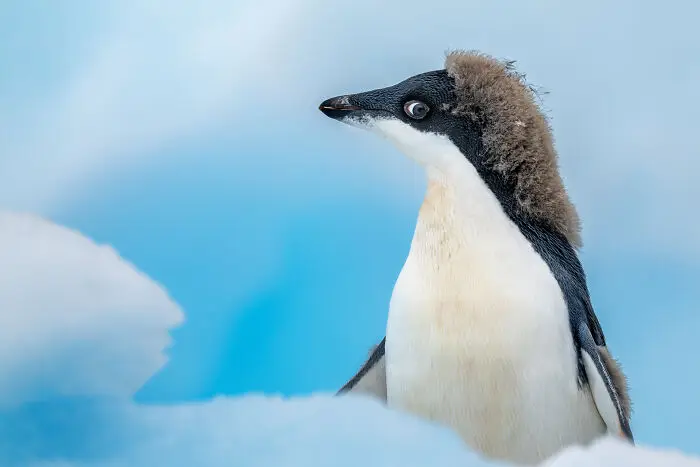
The photo shows a young Adélie penguin in Antarctica in the final stages of molting. He’ll soon be jumping into the water and flying out. The photo was taken on the Antarctic Peninsula, south of Peterman Island. I saw a group of molting youngsters at the water’s edge, and they looked very interesting, especially this male with his hairdo.
10points
#9 Stormy Seal By Peter Van Der Veen
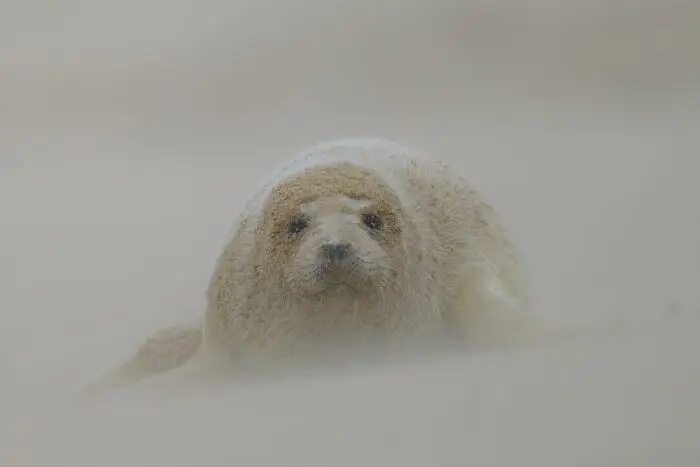
The weather forecast predicted a windy day, and my friend knows a place where a young seal had been seen. It was on the coastline of the Netherlands.
10points
#10 Parakeet Bitting Monitor Lizard By Hira Punjabi
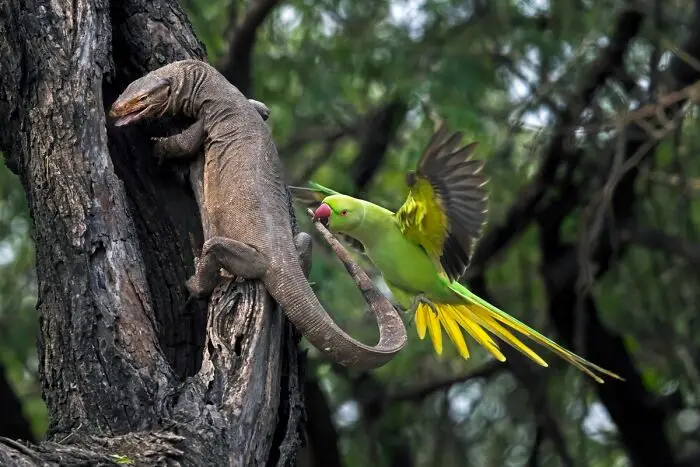
The image was taken at Keoladeo National Park in Bharatpur, Rajasthan, India. The park is considered one of the best in India for observing and photographing both resident and migratory bird species.
I have been visiting this park for the last 33 years, always making two trips each winter to photograph the migratory birds. The parakeets are resident birds of the park, and I’ve often observed conflicts between these birds and reptiles. The monitor lizards frequently invade the parakeet nesting sites, and on this occasion, a pair of parakeets managed to call in other parakeets. Together, they attacked the lizard.
In January of this year, I was fortunate to witness this dramatic scene for nearly 45 minutes, capturing some incredible behavioral shots of the species. It was truly a dream shot for me.
10points
#11 Unhealthy Treats By Daniela Anger
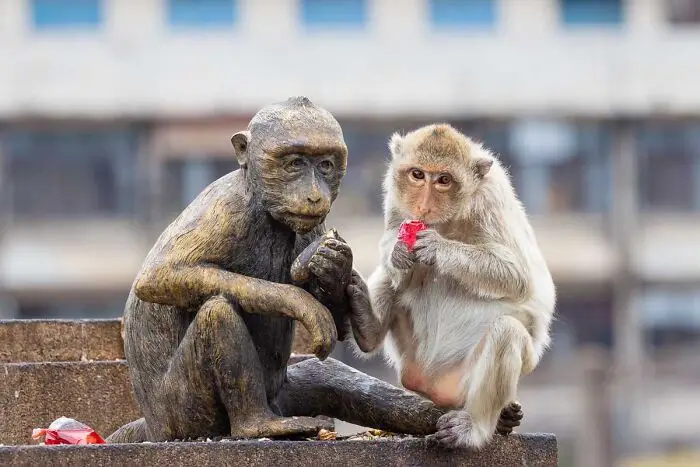
Crab-eating macaques, also called long-tailed macaques (macaca fascicularis), have a long history alongside humans in Lopburi, a city north of Bangkok in central Thailand. They are the symbol of the province and are a popular tourist attraction. These highly social animals live in huge groups in temples, abandoned houses, and city parks. For me, the most fascinating aspect is the complex relationships with the people of this area. On the one hand, they are sacred animals that are believed to bring prosperity and luck into the province. On the other hand, their exploding population causes conflicts.
I spent one entire day in the town and observed that locals supported the monkeys by delivering food like vegetables and fruits all day long in huge amounts. This kind of food belongs to their natural diet.
Stalls were selling treats that visitors fed to the animals. The sold treats contained not only healthy and appropriate food, but also sweets like little plastic bags with colored sugar water. They were very much welcomed by the monkeys, which grabbed as many as they could. One individual brought its prey next to one of the monkey statues, which were built in honor of the furry inhabitants in the center of the city, to enjoy the sweets. Of course, consumed in huge amounts, these sweets cause health problems like illnesses and can also lead to aggressive behavior towards humans.
To find a way for peaceful coexistence, many challenges need to be overcome.
Authorities and conservation organizations are working hard on solutions to protect the charismatic little monkeys, which have been listed as endangered on the IUCN list since this year (2023). One is to educate the public on how to treat and protect the animals. It may need some time but efforts are done already.
I took the image of the scene to combine the many aspects of the human-macaque interaction like mutual interferences, conflicts, admiration, thoughtlessness, tradition, and vulnerability to make the viewers thoughtful like it happened to me.
10points
#12 Why The Fulmar?! By Tomáš Grim
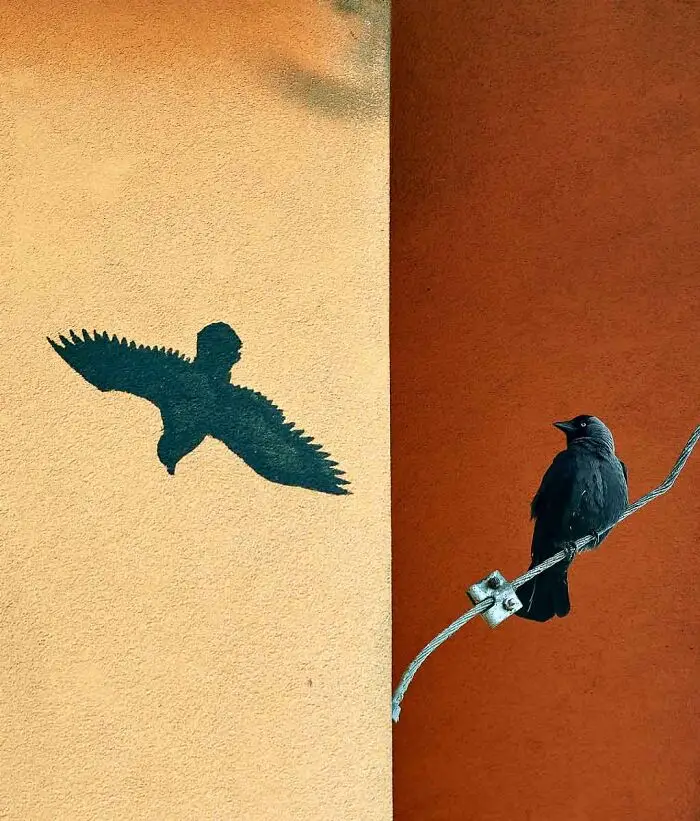
In the Czech Republic, including here in the city of Olomouc, Eurasian jackdaws commonly breed in abandoned holes excavated in housing insulation by woodpeckers. Silhouettes of birds, usually raptor-shaped, are used to deter birds from buildings. Here, the jackdaws were breeding above a fulmar silhouette, as seen by the abraded area at the top of the picture. I cropped the image to eliminate the nest cavity, for a minimalist and effective composition. The jackdaw’s puzzled expression says it all: ‘Why the fulmar?!’
10points
#13 Smooth By Rafael Armada
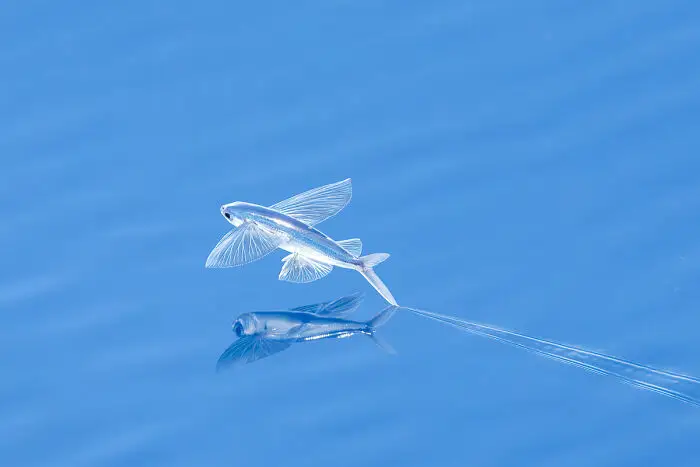
To evade their underwater predators, flying fish jump to the surface of the sea and swiftly glide, using their fins as sails and their tails as a rudder. However, once they’re out of the water, they are not out of danger, as seabirds stalk them from above. These fish inhabit the shallower strata of tropical oceans around the world and serve as the intermediary link between zooplankton, their primary food source, and larger predators. This fish, almost transparent, was photographed in the Solomon Sea, in the Pacific Ocean to the east of Papua New Guinea.
When I’m taking pictures of really fast animals like flying fish, I don’t just want to freeze them in one frame. I want to show their movement. The trail they leave behind is part of the composition. For this reason, I took this picture at 1/125 s; It captures the fish, its trail, and a smooth background. Getting this shot means taking lots of pictures in continuous shooting mode, and paying close attention for a moment that you can’t predict. This picture was taken from a boat, employing a telephoto lens.
10points
#14 Unexpected Guest By Krisztina Mácsai
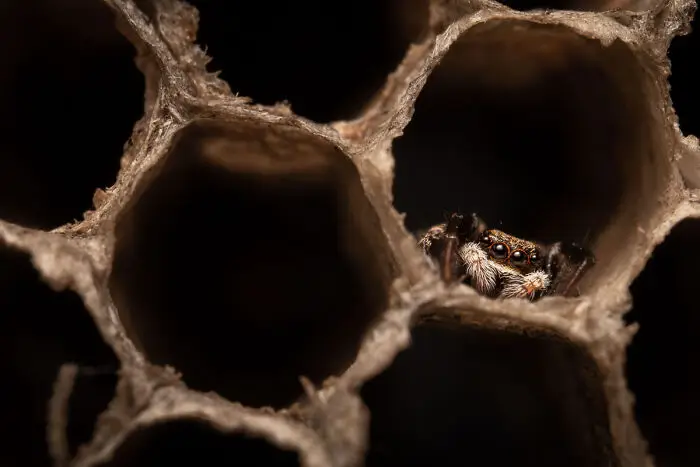
I found this abandoned wasp nest in my garden. Jumping spiders love to hide in small places, so I thought it might be interesting to introduce the nest to the spider, who was wandering on my backyard patio. As expected: he loved it!
The spider was exploring the wasp nest with confidence, and after a little while, he settled down in one of the abandoned tubes and turned his attention to me. Jumping spiders are very attentive, they like to observe my gear, especially the diffuser. I always find it fascinating how they are looking around curiously, trying to decipher what they are staring at. Usually, I like to portray spiders in vivid, colorful environments, but in this case, I especially liked that the colors of the spider matched the colors of the nest, making it a good hiding spot for the spider.
10points
#15 Curiosity By Wim Van Den Heever
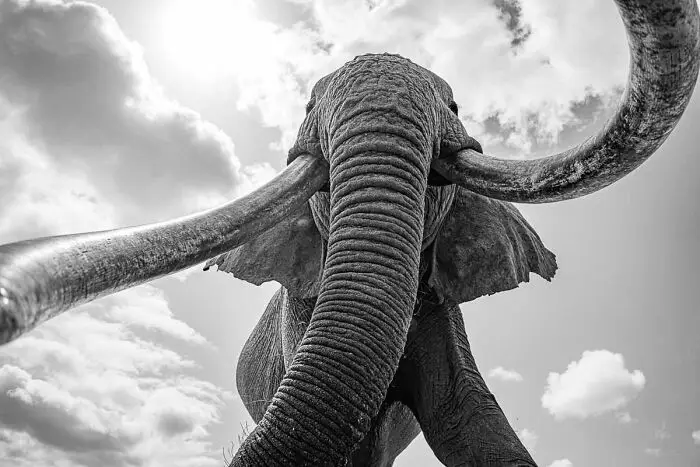
I spend a couple of weeks in the Amboseli region of Kenya each year working and photographing some of the huge tuskers of Africa. I specifically enjoy working with this one huge iconic bull, named Craig. This magnificent gentle giant is such an amazing animal to be around, with his gentle demeanor and awe-inspiring presence. Knowing the general route he was moving towards, I placed a camera on a ground pod and waited for him to approach. I was lucky when he stopped and stared at the camera when walking past it. With a remote control, I managed to trigger the camera and capture this scene. An absolute highlight of my life for me!
10points
#16 Itching Sight By Andres Novales
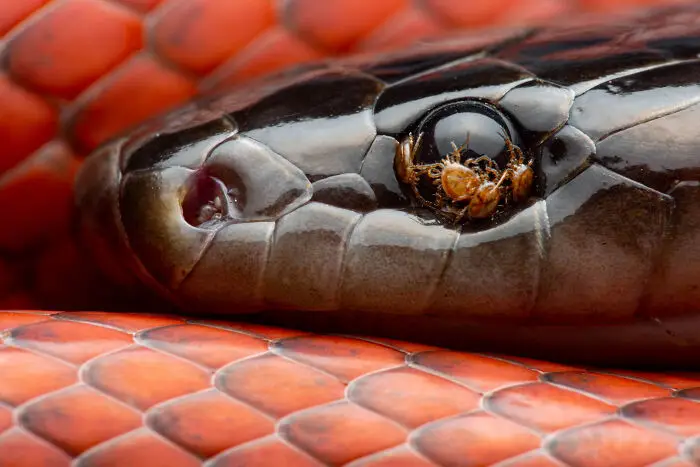
The very first thing that stood out when finding this Amazon Scarlet Snake (Pseudoboa coronata) was its bright red coloration, setting it apart from the dark leaf litter. I got low, trying to frame the snake for some up-close portraits. At first, nothing seemed out of the ordinary; I was really focusing on capturing the beautiful red and black contrast. It wasn’t until some minutes later that I noticed something off with the snake’s eye. It was so small that I couldn’t really tell what was going on. After going through my previous images, I could see that several mites were wedged between the snake’s eye and scales. I immediately looked back at the snake and saw the mites moving. That was the moment when this itching sight was captured. This took place a couple of kilometers off the Mazan River located in Iquitos, Peru.
10points
#17 Your Protection Is My Home Pollution By Nicholas Samaras
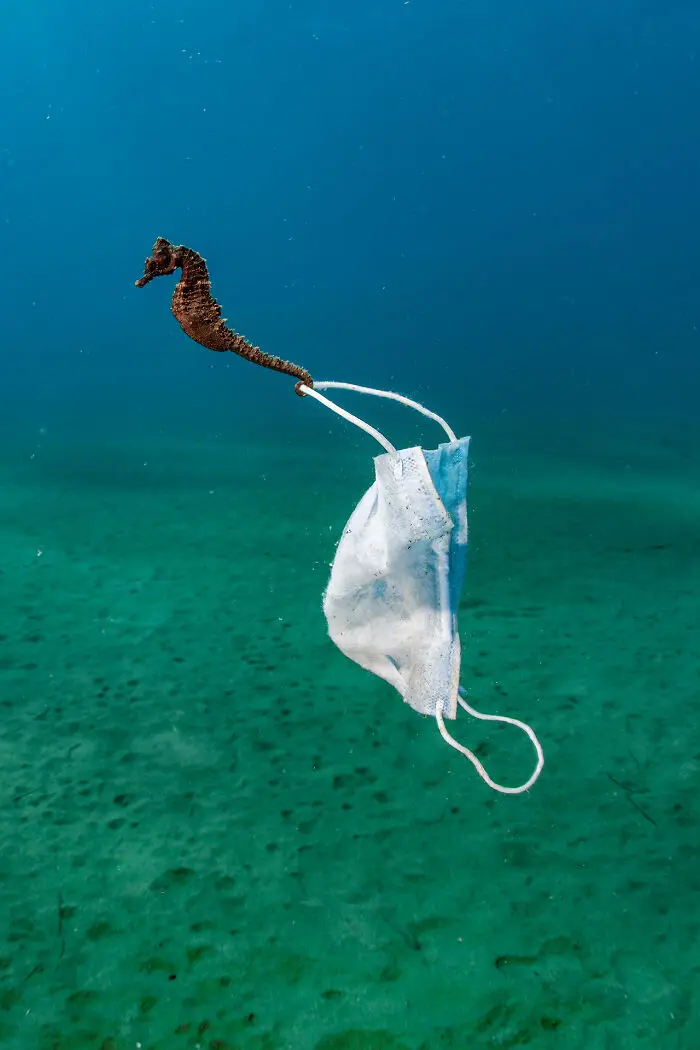
“Stratoni” is a small seaside village on the Halkidiki peninsula in northern Greece, which was abandoned many years ago by swimmers and most divers because of the gold mine on the edge of the Gulf. It is a place where I have regularly dived over the past 10 years to observe and photograph the local seahorse population (Hippocampus hippocampus, short-snouted seahorse) that lives in the small bay and is perhaps the only known colony of seahorses in Greece. You can meet them more easily in large numbers during the summer months if you dive to a depth of 8-17 meters. The area where they live is a large area consisting of sand without the presence of seagrass or rock formations. It looks like a large desert, and the only places that can be protected and support feeding are some carried materials such as leaves that end up in the sea from the nearby mountain, branches, and even litter.
However, for some reasons that have not yet been discovered, seahorses continue to live there and multiply at a steady rate. All this time in Stratoni, I have witnessed some amazing scenes with seahorses, watching them swimming, peacefully floating, achieving amazing camouflage, flirting, and mating. Over the years, the seahorse’s colony has survived enormous natural disasters, overfishing, waste thrown into the sea from the village pipelines, and interventions by the adjacent gold mine.
When you regularly dive at a point, you have the opportunity to observe the changes that occur at that point and how much the human presence affects the environment. The COVID-19 virus in 2020 and the mandatory use of plastic gloves, disposable masks, and sanitizers have led (and still lead) to an even greater contamination of the already polluted sea. It’s the promise of pollution to come if nothing is done. Unfortunately, the already burdened bay has to face another problem, the “Covid waste”.
10points
#18 Giraffe In An IKEA Parking Lot By Jo-Anne Mcarthur
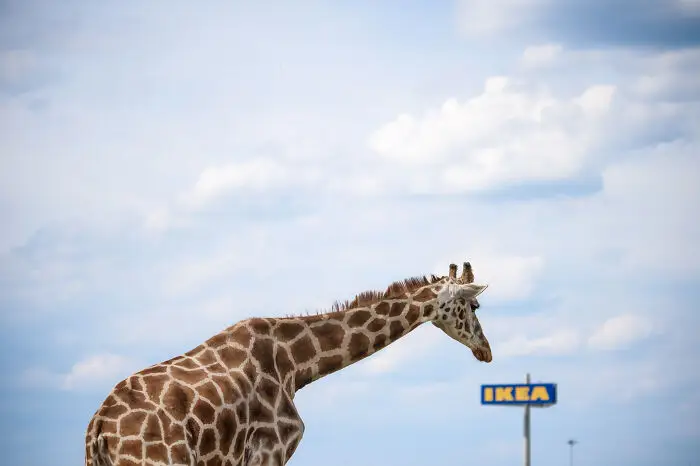
In 2016 I was commissioned by the Born Free Foundation to document a cross-section of zoos in Europe. I encountered this Rothschild’s giraffe in Germany, owned by a company that seemed to be part zoo, part circus. Their event space was set up next to an Ikea, and I saw that I could photograph one of the giraffes with my lens pointing up towards him or her, with the Ikea sign in the background. I knew that this would be a good way of showing the absurdity of keeping wild animals where they do not belong.
It can be difficult to convey the life of a wild animal in captivity through a photograph. There is so much that the photo cannot reveal. Was the animal wild-caught and transported from overseas? Were they taken from their families? Did any friends or family members die in the process? Were they born in captivity, and have they been sold between zoos and circuses? Have they ever had enough room to run? Do they wish they could choose other foods to eat? Are they happy, or lonely?
This image became one of the many in my book about zoos and aquaria, called Captive, which was published in 2017.
9points
#19 Muddy Trick By Tomasz Szpila
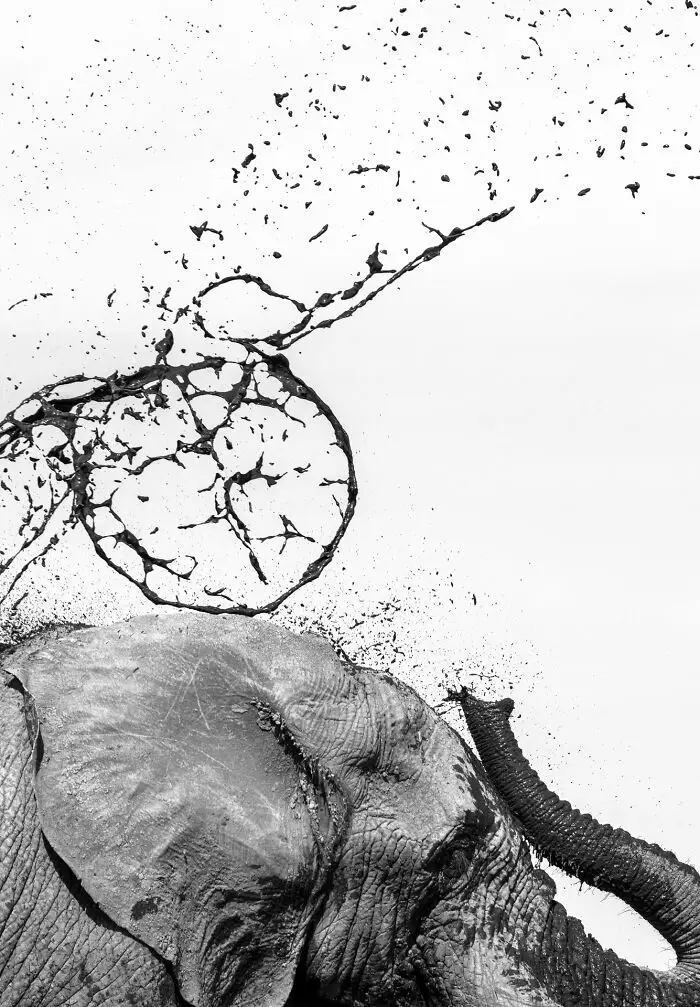
During safaris, photography in the middle of the day is usually avoided because of the harsh light and the reduced activity of animals that tend to rest in the shade. But on this occasion, while relaxing after the morning drive, we noticed elephants visiting the waterhole only about 300 meters from our tents. Instead of letting the opportunity slip by, we asked our guide to take us closer by vehicle, so I could try for a tighter composition. My goal was to capture only the head, the trunk, and the spray of mud suspended in the air.
The subject was a solitary bull African elephant (Loxodonta africana) in the Okavango Delta, Botswana. In the late morning heat, he was fully engaged in his natural skincare routine, scooping up mud and flinging it across his massive body. To the eye, the mud seemed to fly in a random, chaotic pattern, but when frozen by the camera, it revealed unexpected and almost sculptural shapes. The elephant spent only a few minutes at the waterhole before continuing on his way, leaving us with a fleeting but powerful reminder of how even the simplest behaviors can become extraordinary when seen through the lens.
9points
#20 Parenting Goals By Thomas Vijayan
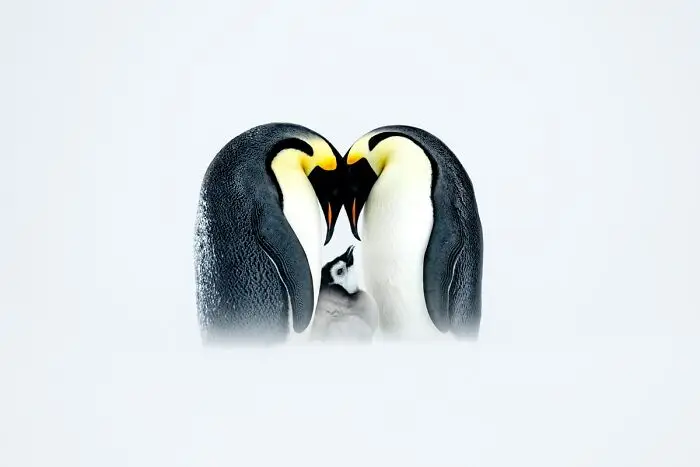
Emperor penguins, native to Antarctica, display remarkable family dynamics. These majestic birds engage in an intricate dance of cooperation and nurturing to ensure the survival of their chicks in the harsh polar environment. Both parents actively share the responsibilities of caring for their offspring, taking turns incubating eggs and braving the cold conditions to secure food. Parental care is crucial for the chicks’ survival, with each chick always being looked after by one of its parents.
Before capturing this image, I spent hours lying flat on the sea ice, allowing the penguins to become accustomed to my presence. Gradually, I began photographing them from different angles. This image is especially dear to me as it depicts the deep family love and affection between the penguins, highlighting the strong bond they share. In their synchronized warmth, these fluffy youngsters find comfort and strength in the heart of the frigid wilderness.”
9points

