Photographing wildlife takes patience, a good eye, and often a lot of luck. The Nature Photographer of the Year (NPOTY) contest brings together photographers who manage to capture fascinating moments in the wild, showcasing the beauty and diversity of the animals and environments that make our planet so special.
While we wait for this year's winners to be announced, we thought it would be a good time to look back at some of our favorite wildlife photos that made the finalists' lists between 2016 and 2025. Earlier, we also shared a selection of photos from the contest's People's Choice Award, so make sure to check out that post if you haven't already!
Now, scroll down to revisit some of our favorite wildlife photography moments from the past ten years. Which one stands out to you the most?
#23 Blue Cave Crab By Martin Broen
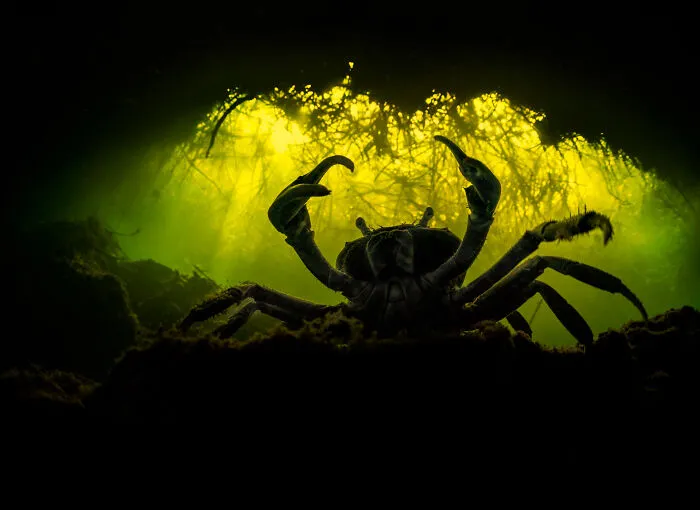
In the last couple of years, I have been fortunate to photograph over 200 different cenotes of the Riviera Maya in Mexico, capturing their surreal environments and the unexpected diversity of its caves. Looking for unique photographic opportunities of light and textures in the transition area between cave and cenote or light and darkness. During a traverse cave dive connecting seven different cenotes, we passed by this strange figure of a blue cave crab standing on a rock while fishing in the cave current, perfectly define against the background. This menacing silhouette looked like a Samurai with shiny blue armor, perfectly centered by the natural vignetting offered by the light fall-off of the cave, standing against the mangrove texture and green light of the sun passing through the tannic acid present on the surface. I got as close as possible to the subject to make him the hero of the scene and balance the elements of a perfect representation of the mangrove ecosystem .
5points
#24 Leafy Night By Scott Portelli
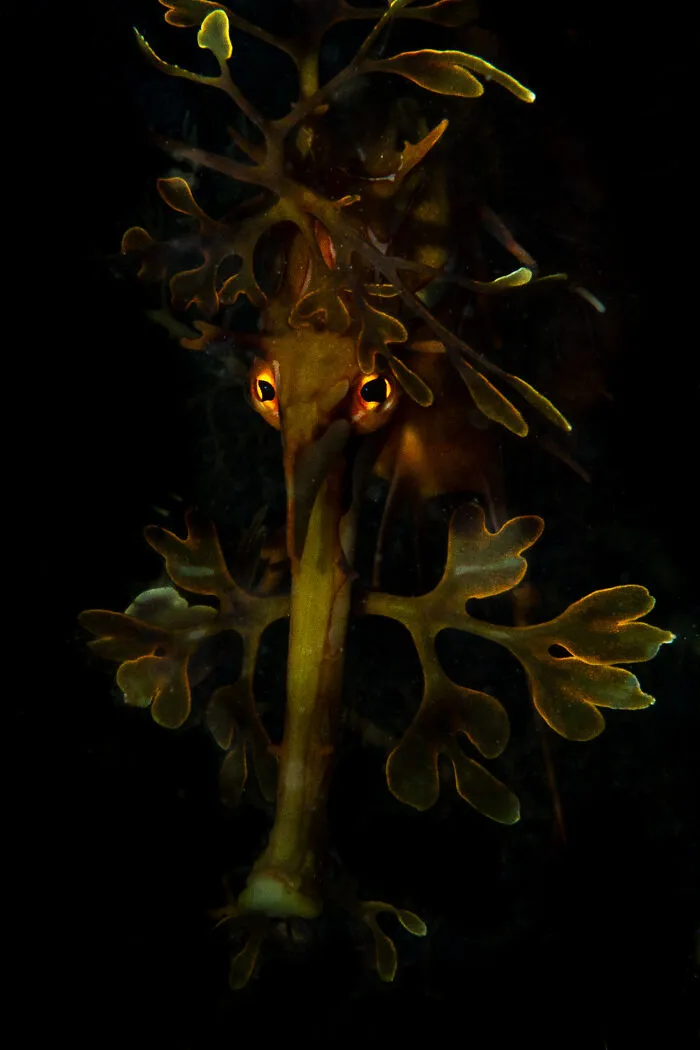
In a Covid year it has been difficult for many nature photographers to get out in the environment and continue their work. Australia is an amazing place and I think Covid has taught me that I live in one of the most incredible natural places in the world. As a nature photographer, Australia’s coast, deserts, reefs, and rainforests hold a plethora of subject matter to photograph and discover, not to mention the diversity of wildlife above and below the surface. I am passionate about the ocean and its inhabitants, and a lot of my work is centred around conservation and protection of various marine species. But I am a little obsessed with seadragons. With this image of the endemic leafy seadragon, I wanted to create something that really captured the essence of these delicate vulnerable species which are found only in the southern parts of Australia. The more we understand the ocean and its inhabitants the more people will feel connected and take action to protect our ocean creatures.
It was just after Covid was announced in March 2020, our year long journey around Australia was interrupted and my wife and I were forced into lockdown for 6 weeks in a small campground on the Fleurieu peninsula in South Australia. Because we had no fixed address, we were considered refugees and the campground owner allowed us to stay in the campground, which had only one other family for the duration of the lockdown. This ended up being a blessing in disguise, we could still exercise, and diving was allowed. I had the opportunity to dive regularly, becoming familiar with the terrain, and getting to know the dive site, I explored more and more each dive and managed to spot a few individual seadragons that I could easily identify. After several encounters with one specific seadragon, it appeared to be unperturbed by my presence. I was able to compose a shot that tightly captured its eyes, features and appendages. In the end I took only one frame when the seadragon turned towards me for just a moment. All the elements aligned and it culminated in the portrait of this beautiful creature.
This photo was taken at dusk and shot with strobes to light the subject, as the afternoon light turning into night. The image was shot with a wide fisheye lens with close focus.
5points
#28 Games Between Siblings By Paolo Della Rocca
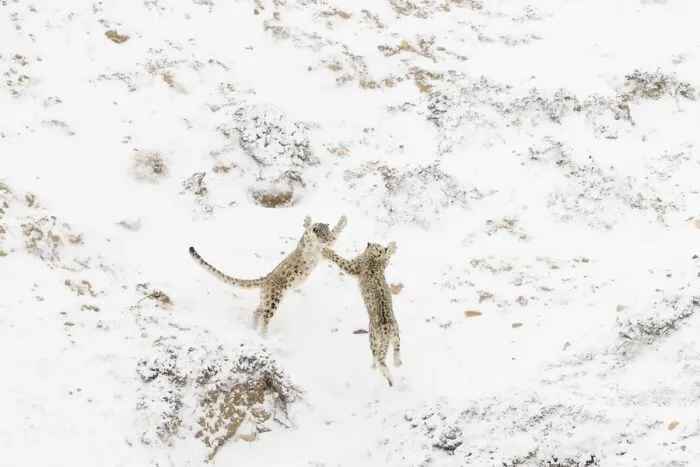
In northern India lies Spiti Valley, a land of rugged beauty and home to one of the most elusive creatures on Earth: the snow leopard. For me, this journey has been a lifelong dream, as the snow leopard has always been my favorite wild animal.
This year, my dream came to life during an unforgettable encounter with a pair of sub-adult snow leopard siblings. I had the privilege of observing and photographing them at various moments in their lives, capturing their grace and playfulness through my lens.
The pinnacle of this extraordinary adventure came on the first of February. Achieving the image I had envisioned was no easy feat. I waited for over six hours at the edge of a canyon, braving temperatures plummeting to -25°C and a relentless snowstorm that chilled me to the bone. The two siblings had been resting in a cave, and I could only hope they would eventually emerge.
When the storm subsided and calm returned, they began to stir. What unfolded next was beyond my wildest imagination. They climbed upward, chasing each other along snowy slopes, playing with a joy and vitality that left me awestruck. I remember whispering to myself repeatedly, “This can’t be real, it’s too incredible to be true!”
And then came the moment. A frame so perfect, so alive, that even in my wildest dreams, I couldn’t have imagined capturing it. This image, and the experience behind it, will forever remain etched in my memory as one of the most magical days of my life.
4points
#29 Threatened By The Highway By Geoffrey Reynaud
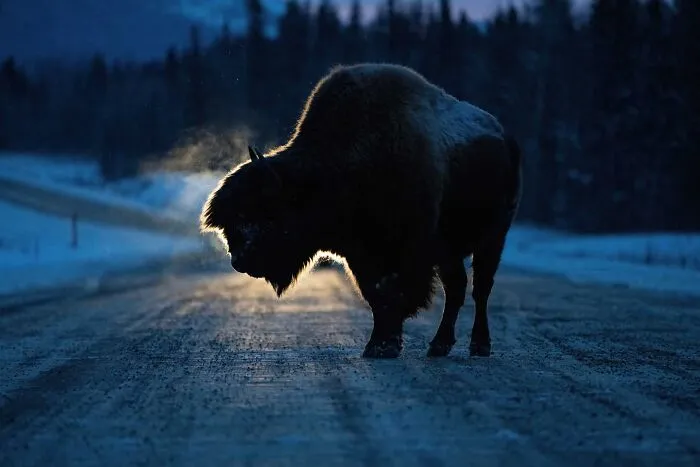
Every year a small herd of the threatened wood Bison in northern British Columbia suffer from road collision. When winter arrives, sometimes the snow is so deep the Wood Bison herds that inhabit the forest along the Alaska Highway tend to use the free-of-snow highway to move from one grazing area to another. Their journey is difficult, and many bison will succumb to the traffic. Records show that annually about 15 percent of the population in the region dies as a result of these collisions. Throughout my journeys into northern Canada, I encountered numerous distressing roadkill incidents as I ventured along this same highway. The devastating fate suffered by these magnificent creatures deeply saddened me and sparked a profound reflection, prompting me to return to this region with a renewed purpose – to intimately document the impact of this highway on this wood bison population. To capture the incredible story of the bison while ensuring their welfare and my safety, I implemented a variety of techniques. Remote triggering allowed me to photograph the bison from a safe distance without disturbing their behavior. In addition, motion sensor-triggered cameras were placed in key locations. I also utilized a drone for aerial perspectives.
4points
#30 He Looks To The Heavens By Jacquie Matechuk
Spanning more than 8,000km, the Andean Mountain range occupies more than a quarter of the land surface in Ecuador. Rich in biodiversity, it’s also home to a unique species called the Spectacled bear. Until planning this trip, I knew nothing of them. But as a certified bear guide, I was excited to expand my knowledge and understanding of a new species and to compare behavior and their interactions to those of our grizzly, polar, black, and brown bears.
As we drove from Quito to the Andean mountains, through villages and farming communities, the extraordinary conditions and fertility of this land were inescapable. Hours of winding roads and stunning landscapes later, we pulled into a small community where we were greeted by a local farmer/guide. A gentle-natured man who’s worked tirelessly for decades to observe, learn, and advocate for this endangered species. His family’s hospitality reaching far beyond opening his home, opened a door to a whole new world.
For 11 days at roughly 8,000 feet above sea level, we hiked vertical paths up and down the canyon walls, trekking through creeks, ducking out of torrential downpours, and often clambering through mud to observe these beautiful bears. In their natural habitat and with our guide’s intimate knowledge of each bear, we were quickly accepted by them. We kept a respectful distance to ensure their comfort and it paid off in spades. They would nurse, fall asleep, cuddle, forage, and play, seemingly more oblivious to our presence with each passing encounter.
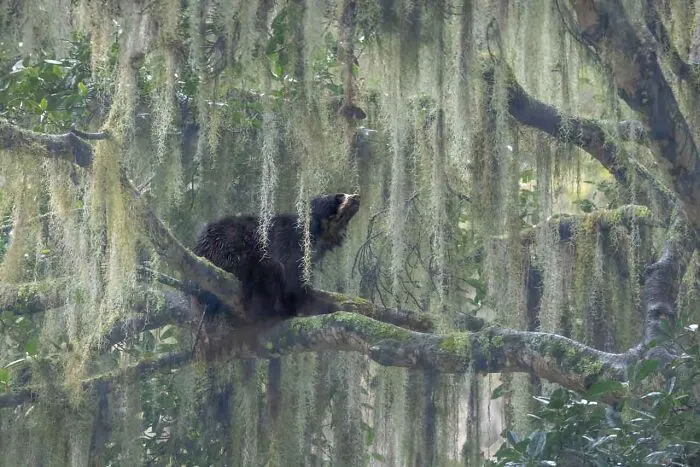
In this image, Tony (a large male spectacled bear), and frequent traveler through these parts had climbed into a century-old fig tree seeking refuge from the midday sun. It was draped in Spanish moss, gently swaying with each breath inhaled and exhaled by the canyon walls. He sauntered effortlessly across a burly branch and sat peacefully against the tree’s trunk. When a gentle rain began to fall across the valley, he stood and turned to look up as though embracing the cool moisture on his speckled face. And for a fleeting moment, the warmth of muted sunlight falls across his face as ‘He Looks to the Heavens’.
4points
#31 The Night Watchman By Prathamesh Ghadekar
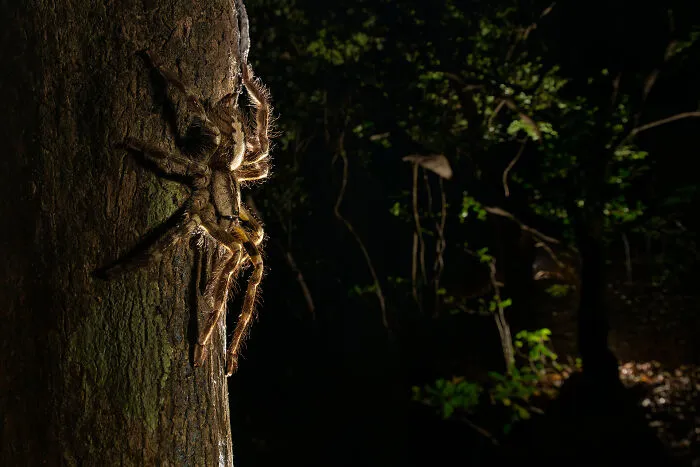
The Indian Ornamental Tarantula (Poecilotheria regalis) is a species of arboreal tarantula and is found in parts of India. The common name for this spider is Indian ornamental tree spider. It is a pretty big Tarantula with a leg span exceeding 7 inches sometimes. Poecilotheria regalis is a popular pet among tarantula enthusiasts. Despite its speed and potent venom, this tarantula is often sought for its distinctive appearance. As with most other tarantulas in captivity.
I was on a night trip with my friends and fellow photographers to a place called Matheran near my home. Due to the Corona pandemic, I was restricted to travel only a few kilometers from home and this place is very near to where I stay. Previously I have observed a good population of this Tarantula here. So I was consciously looking to spot one, which I did in the next couple of hours after I reached there. These huge spiders live on trees at a height of 7-10 feet from the ground in natural burrows. I wanted to showcase the habitat along with this beautiful spider, but the extremely dense coverage made it impossible to light up the background properly. I took this image with the ICDE (In Camera Double Exposure) technique by first taking an image of the Tarantula with 2 flashes and then taking a wide image of its habitat lighting it up with 4 flashes.
4points
#32 Silverbach Chimanuka By Josef Friedhuber
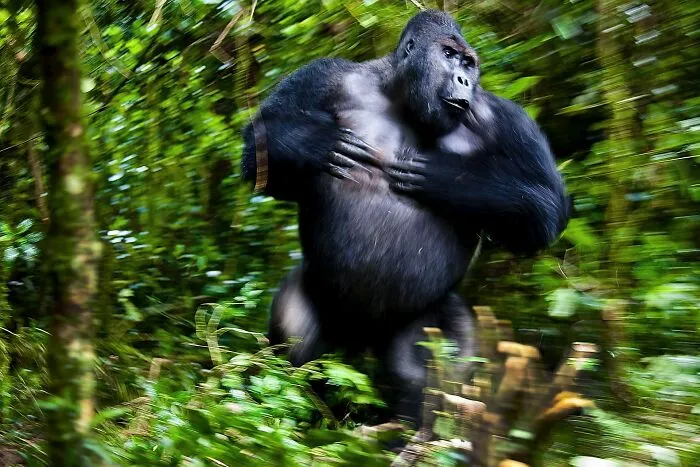
The photo was taken in the Kahuzi-Biega National Park in the DR Kongo, close to Kivu Lake. There are two habituated groups of eastern lowland gorillas in the park. Chimanuka is the silverback of one group with about 20 individuals. He is now about 35 years old and his weight is more than 240 kilos. In October 2007 I visited with a small group The Kahuzi-Biega National Park and the Chimanuka group for my second time.
After about two hours of hard walking in the dense jungle, we arrived together with the National Park Rangers in the later morning. The females were eating in the bushes out of the sight of Chimanuka. Suddenly he came out of the bush about 5 meters in front of me, drumming on his breast and showing his impressive behavior. I was frightened and fell back in a bush. While falling I took the picture, so it is blurred because of the movement. Chimanuka stopped in front of our group and nothing happened. Then he turned off and climbed up a tree for a better view on his females and children.
4points
#33 Twilight Hunters By Norbert Kovács
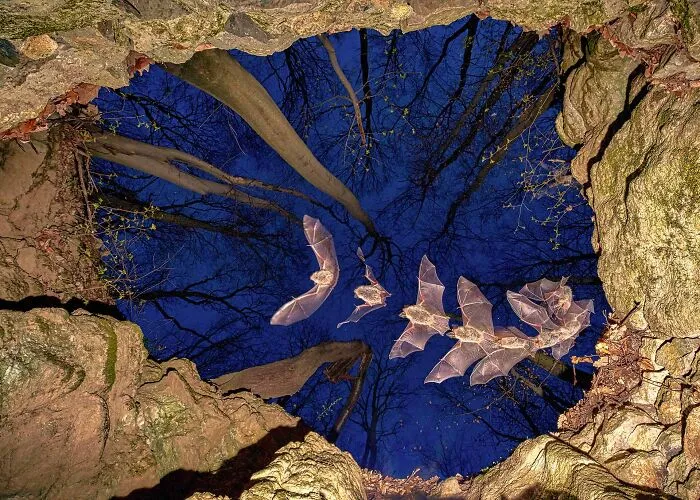
Near my place of living there is a karst mountain range called Mecsek with numerous sinkholes and caves. During one of my trips in the mountains I came across this small dolina. There and then I could see the photo in my mind’s eye.
I usually take photos in springtime before trees start leafing out. I assemble and set the equipment before sunset, take up position at the mouth of the cave and upon hearing the sound of bats I know they are about to leave their nest to hunt one by one. It is an incredible experience literally feeling the wind stirred by the flapping of their wings as they fly by me. As the bats begin their hunt, I normally wait for about two hours at the scene because later on their level of activity decreases.
Though I remain invisible to them, they can feel my body temperature when they leave the cave. Some bats are more cautious and return to the cave at first. However, when they realise I do not harm them they also fly out. Since they are an endangered species I only disturb their life cycle for two to three days in spring.
I have observed the individuals of two species so far:
1. lesser horseshoe bat (Rhinolophus hipposideros)
2. greater horseshoe bat (Rhinolophus ferrumequinum)
The photo was taken from the mouth of a karstic mountain sinkhole. Due to the long exposure time I placed the camera on a beanbag. The exposure was controlled via a wifi network by using a cell phone. I used a flash for the light source which was set in strobe mode with manual flash.
4points
#34 Fishing Trip At Sunrise By Miquel Angel Artús Illana
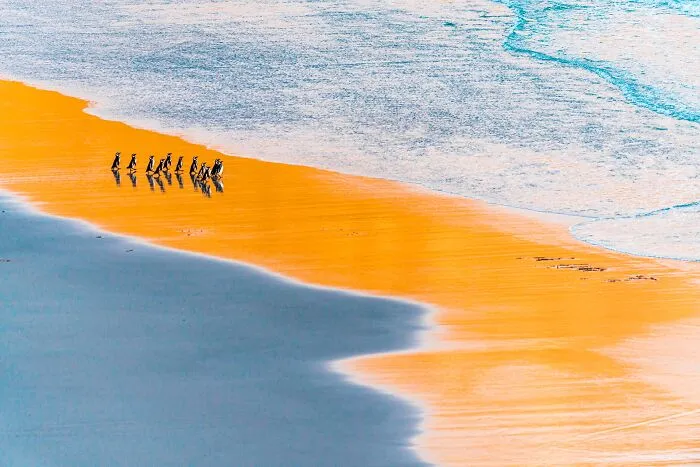
A group of Magellanic penguins (Spheniscus magellanicus) head out to sea in the early morning, just as the sun rises over the horizon. They will spend the whole day fishing and eating in the sea. When they return they will have to feed their hungry young, that will wait for them on the beach.
The image was taken in The Nec – Saunders Islands – Islas Malvinas, where for five days I was isolated with a small group of photographers, only with the company of penguins and oysters, species of birds and mammals.
Since the best light was at sunrise, I stood on a small hill at five in the morning and waited for the penguins to appear in groups as they usually do. The light and the surroundings did the rest.
4points