Photographing wildlife takes patience, a good eye, and often a lot of luck. The Nature Photographer of the Year (NPOTY) contest brings together photographers who manage to capture fascinating moments in the wild, showcasing the beauty and diversity of the animals and environments that make our planet so special.
While we wait for this year's winners to be announced, we thought it would be a good time to look back at some of our favorite wildlife photos that made the finalists' lists between 2016 and 2025. Earlier, we also shared a selection of photos from the contest's People's Choice Award, so make sure to check out that post if you haven't already!
Now, scroll down to revisit some of our favorite wildlife photography moments from the past ten years. Which one stands out to you the most?
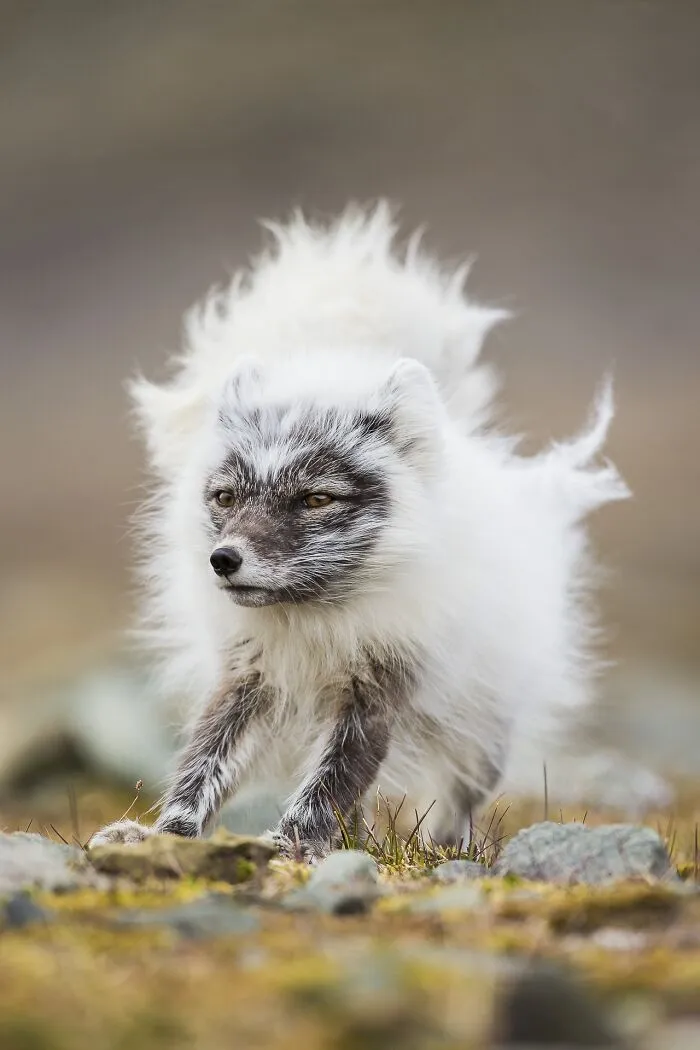
#2 Shared Wonder By Mary Schrader
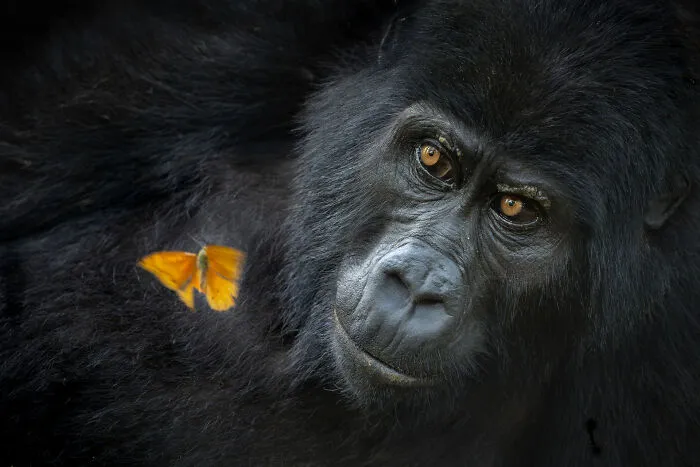
Beneath the lush canopy of Bwindi Impenetrable Forest in Uganda, I observed a young female mountain gorilla from the Binyindo family gently nestled against the protective bulk of a silverback. The atmosphere was serene, filled with the soft sounds of the forest, until a sudden burst of delicate color broke through the calm.
An unexpected visitor, a vibrant butterfly, appeared out of nowhere, fluttering through the air. Captivated, the young gorilla’s eyes widened, and a beautiful interaction began to unfold. I held my breath, waiting for the butterfly to drift closer, knowing the image would only hold its power if the two were captured together. Patiently, I tracked its graceful movements until, at last, it entered the same frame as the gorilla’s face. In that fleeting alignment, where wild strength met fragile beauty, I pressed the shutter. My heart raced quietly as I realized how rare and precious the moment was, an instant that united them in a shared world of curiosity.
As the butterfly circled the gorilla, it seemed to embody the delicate balance and fragile interconnectedness of our natural world. This photograph captures not just the gorilla’s gentle curiosity but also a brief moment where two creatures paused, noticing each other, bound by wonder and discovery.
26points
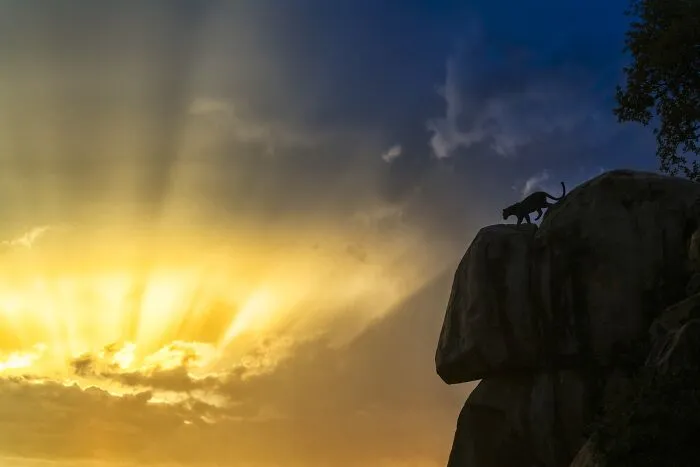
#3 Dawn’s Whispers: Graceful Hoopoe Silhouette At Sunrise By Hermis Valiyandiyil
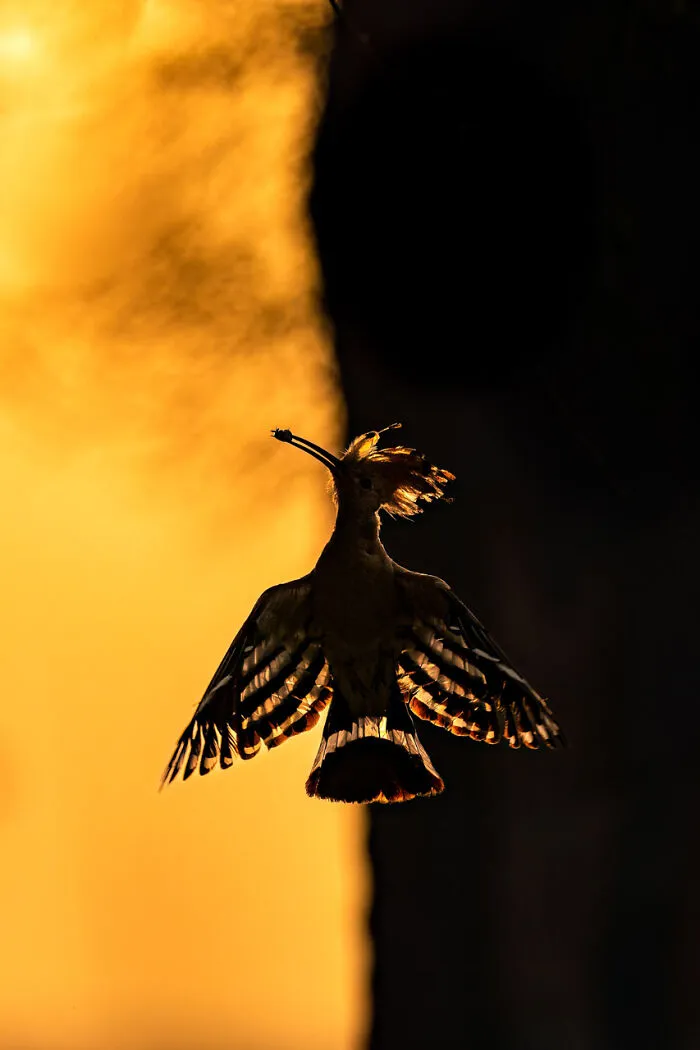
This picture of Hoopoe was taken in Dubai from Al Qudra Lakes. I spend most of my weekends taking pictures of the birds in Al Qudra Lakes. I wanted to test my new Nikon Z8 camera. So, my friend and I traveled to the lake where I noticed a Hoopoe occasionally catching its prey in the air and at other times on the ground. Additionally, I observed that each time it caught a prey, it flew in the same direction to a nearby tree. I spent a few days photographing this bird, and when I got home and looked over the pictures, I got the idea to photograph the bird against a background with light and dark sides to represent the dark and light sides of existence. The following day, I arrived a little earlier at the same location and waited for the ideal shot to occur.
26points
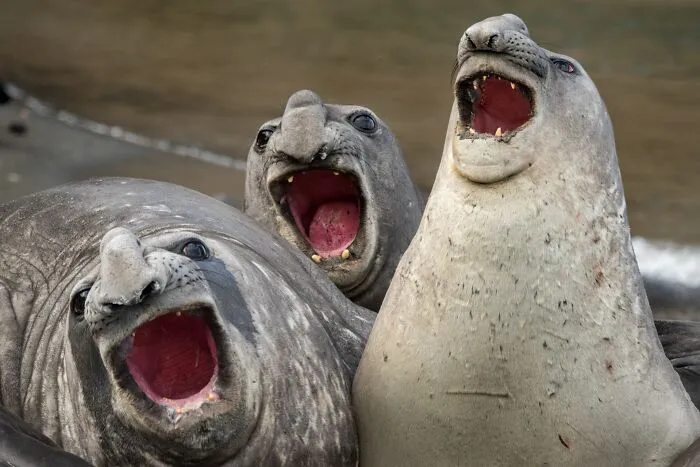
#6 In Mothers Arms By Dvir Barkay
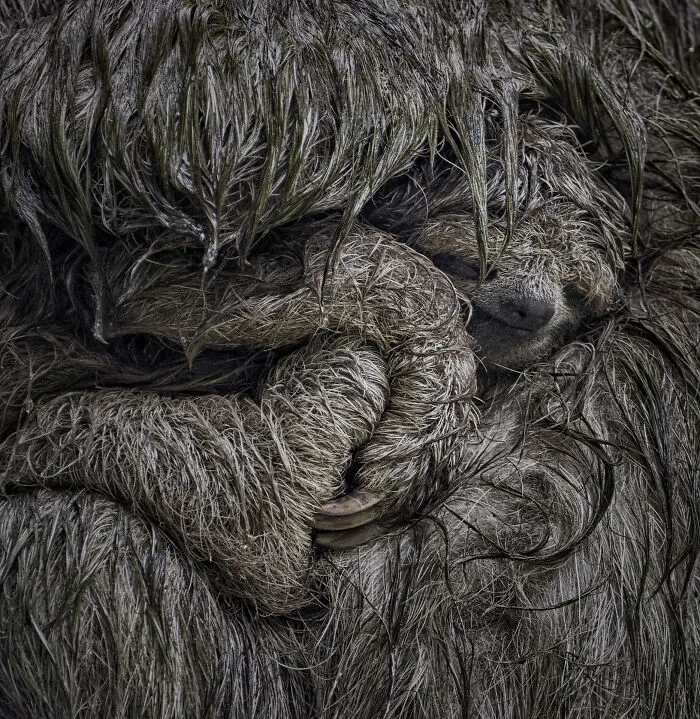
The image was captured at the La Selva Biological Research Station in Costa Rica. It is part of a series of photographs I took of this mother and her offspring, a Three Toed Sloth. I spent a week with the pair as they moved from tree to tree, about one tree per day, capturing thousands of images in different weather and circumstances.
In this moment, a rain shower had just begun, and the mother covered her baby as it slept, cradled safely in her embrace.
20points
#7 Giant Octopus Dofleini By Andrey Shpatak
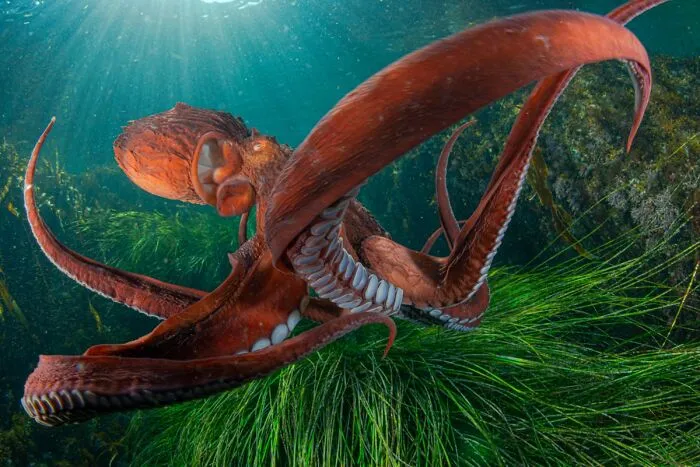
Sea of Japan. Russia. North Primorye. Rudnaya bay.
The Giant Pacific Octopus (Enteroctopus dofleini) stands out strikingly from other octopus species. It is highly intelligent and almost person-like in its behavior. Underwater, I’ve encountered both aggressive octopuses that attempted to defend their territory and sociable ones that even demonstrated their hunting techniques.
Once, at a depth of 20 meters, I encountered an octopus lying calmly on the seabed. It noticed me, seemed to realize that I had seen it as well, and began to swim toward the surface. Naturally, I didn’t follow it.
In this instance, the reef wasn’t particularly deep, and the octopus wasn’t especially large, about 1.5 meters in arm span and weighing around 5-7 kg. During the day, they often attach themselves to the reef wall, blending in by mimicking its color, and they rest while occasionally snacking on leftovers from their nighttime hunts. On this occasion, upon noticing me, the octopus decided to flee, swimming away while I managed to capture a few photos.
20points
#8 House Of Bears By Dmitry Kokh
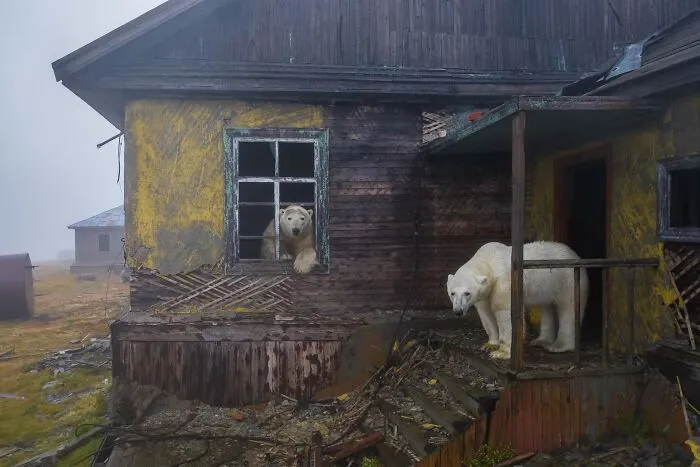
In September ’21 we went on a long-awaited trip to Chukotka and Wrangel Island. We sailed along the coast and covered more than 1200 miles of untouched landscapes, villages lost in time, spots with various fauna, and seas full of life. One day, bad weather was expected, so our captain approached a small island, Kolyuchin, to take shelter from the storm. Kolyuchin is known for the polar weather station that operated on it in Soviet times. Though the station was closed in 1992, the abandoned village still stands on the island. The stormy wind, rain, and neglected buildings on the rocky shores all made everything appear super surreal. Suddenly, we noticed movement in the windows of the houses. Someone took out some binoculars and we saw the heads of polar bears!
The fog, a place long deserted by people, and polar bears was the perfect setting. Bears are very curious by nature so they walked around houses, and checked every door, window, nook, and cranny. There were about 20 animals inside at the same time, mostly males. The females kept to the side with their cubs, closer to the shores of the island. The bears may look calm and sweet in these photos, but one must not forget that they are smart and incredibly powerful animals! As they probably thought the drone was some sort of bird, they did not let it out of their sight. Never one to miss a meal, they were probably ready to strike at any moment, even when seemingly chilling out on the grass!
I shot from a drone equipped with low-noise propellers to not disturb them. I was very careful and very patient, and let the bears slowly get used to the drone so that eventually I was able to get closer and closer. Bears are very curious and were probably intrigued by this ‘”weird-looking bird”, which was amazing for me as they looked right into the camera. I think that these images of the polar bears on Kolyuchin island are very timely, they are like snapshots of a premonition reflecting what could be in our not-so-distant future. The world as we know it is very fragile, and the current state of the world – from political conflicts and nuclear tension to the climate crisis – means that the end could very well be nigh. These things are real, and if they continue as they are, the outcome will be catastrophic.
20points
#11 The World Is Going Upside Down By Thomas Vijayan
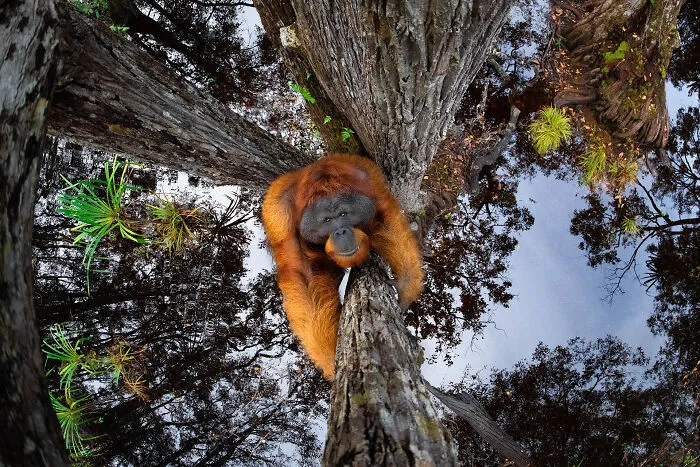
After spending few days in Borneo, I got this frame stuck in my mind. Firstly, to get this shot, I selected a tree that was located in the water so that I could get a good reflection of the sky and its leaves on the tree on the water surface. It created a mirror effect that made the photo look upside down. Then I climbed up on the tree and waited for hours. This is a regular path for the orangutans to cross to a small island on the other side. I was sure to get this frame if I would wait patiently. Hence I waited and waited for a long time and finally, I got this beautiful frame. This frame confuses the viewer at the first glance and that makes the photo unique. It was indeed a tough task but the end result paid it off in double fold.
19points
#14 Games Between Siblings By Paolo Della Rocca
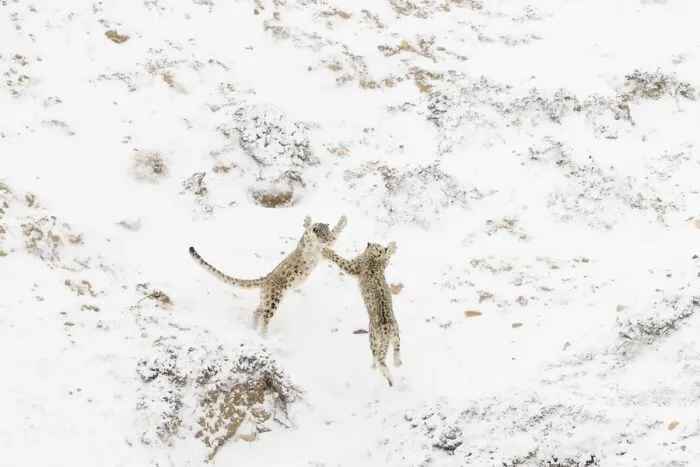
In northern India lies Spiti Valley, a land of rugged beauty and home to one of the most elusive creatures on Earth: the snow leopard. For me, this journey has been a lifelong dream, as the snow leopard has always been my favorite wild animal.
This year, my dream came to life during an unforgettable encounter with a pair of sub-adult snow leopard siblings. I had the privilege of observing and photographing them at various moments in their lives, capturing their grace and playfulness through my lens.
The pinnacle of this extraordinary adventure came on the first of February. Achieving the image I had envisioned was no easy feat. I waited for over six hours at the edge of a canyon, braving temperatures plummeting to -25°C and a relentless snowstorm that chilled me to the bone. The two siblings had been resting in a cave, and I could only hope they would eventually emerge.
When the storm subsided and calm returned, they began to stir. What unfolded next was beyond my wildest imagination. They climbed upward, chasing each other along snowy slopes, playing with a joy and vitality that left me awestruck. I remember whispering to myself repeatedly, “This can’t be real, it’s too incredible to be true!”
And then came the moment. A frame so perfect, so alive, that even in my wildest dreams, I couldn’t have imagined capturing it. This image, and the experience behind it, will forever remain etched in my memory as one of the most magical days of my life.
18points
#17 No Fear, No Mercy By Tomasz Szpila
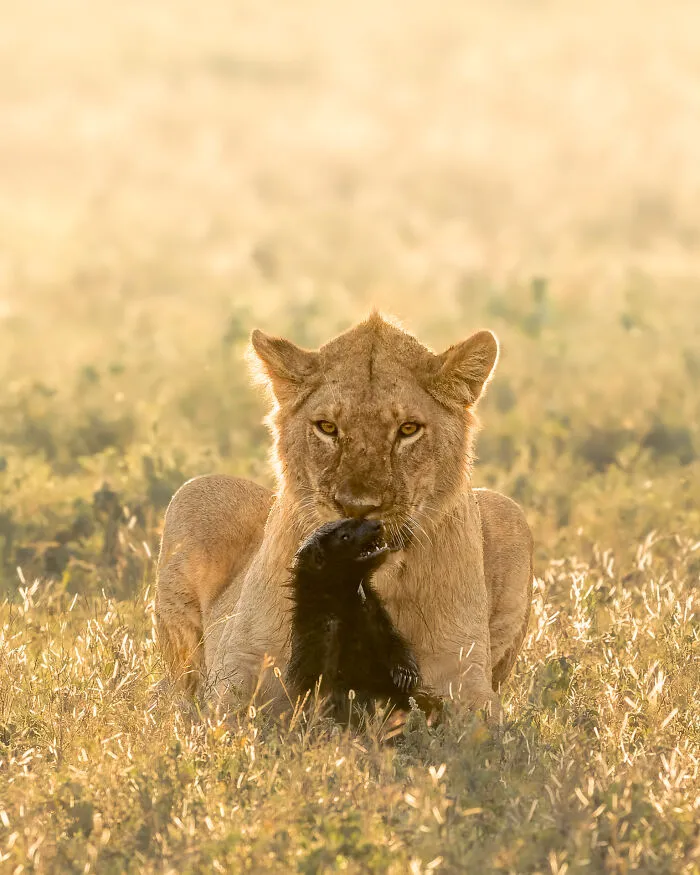
Some of Africa’s most fascinating animals are not its largest, but its smallest warriors. Among them, the honey badger (Mellivora capensis) has earned a reputation for unmatched courage and determination. Despite its modest size, this fearless predator can fend off much larger adversaries, often attacking with surprising aggression and stamina. Protected by exceptionally tough skin and a natural resistance to bites and stings, honey badgers have the tools to survive encounters that would doom most other animals. Yet, as with all creatures, youth and inexperience can tip the scales, making young individuals especially vulnerable to apex predators such as lions.
It was early one morning on the open plains near Lake Ndutu, in the southern Serengeti ecosystem, that I witnessed a dramatic and rare confrontation between these two iconic species. A young lion, full of energy and curiosity, had managed to corner a honey badger. At first glance, the scene appeared almost playful: the lion pawing, circling, and testing its opponent, as if enjoying a game. But for the honey badger, the reality was far from a game. Exhausted, breathing heavily, and with limited options for escape, it summoned all its strength and ferocity in a desperate attempt to resist.
Watching the two locked in this uneven battle was a stark reminder of the harsh realities of the natural world. The honey badger’s legendary reputation for fearlessness was on full display; it snapped, lunged, and refused to submit, even in the face of overwhelming odds. The young lion, however, held the advantage in both size and stamina, gradually wearing its opponent down. This time, the outcome was clear: the lion prevailed, asserting dominance over one of Africa’s most resilient fighters.
Encounters like this highlight the constant struggle for survival on the savanna, where even the fiercest spirit cannot always overcome sheer strength. In the end, the bravery and tenacity of the honey badger serve as a powerful symbol of wild resilience, but they also remind us that courage alone is not always enough to defeat a much stronger adversary.
16points
#18 The Cry Of Pain By Francisco Negroni
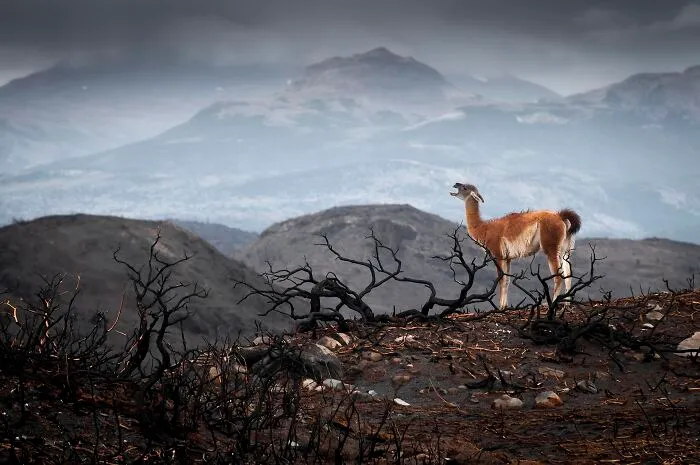
I made this picture on early morning in Torres del Paine National Park in Chile (chilean Patagonia, Magallanes and Chilean Antarctica region). The Scream of Pain is a testament of how human carelessness can destroy an environment, even a protected one. In 2011 due to the negligence of a tourist, a fire started and 17,600 hectares were burned.
As a freelance photographer, I traveled to Chilean Patagonia to do some reports on the fire, I toured the Park, shocked seeing the devastation. I was surrounded by the silence between ashes and the remains of some dead animals. On a slope I felt the cries of a guanaco (Lama guanicoe, characteristic animal of the area). Withy my camera in my hand I hurried to discover what was happening and there it was; a guanaco shouting to the horizon in search of his family or herd, a cry that never got answered.
16points