






If we’re being completely honest with you, growing up, some of us really wanted to be archeologists. Inspired a little bit by history books (and a lot by Indiana Jones and Lara Croft), we thought that working as an archeologist would be all about non-stop adventures. And though the real job is much more low-key, the discoveries that professionals make are astounding.
‘Archaeology News & Architecture’ is a Facebook group run by the ‘Archaeology News Network’ that’s dedicated to sharing interesting information about discoveries both old and new. We’ve collected some of their most intriguing featured finds to pique your interest. Scroll down to check them out!
More info: Facebook | ArchaeologyNewsNetwork.com
#41 A Remarkable Discovery Has Been Made In Tuscany: 24 Perfectly Preserved Bronze Statues, Dating Back 2,300 Years

The statues, hidden for centuries, owe their exceptional condition to the mud and mineral-rich boiling waters of the thermal springs that once filled the baths.
This extraordinary find offers a rare glimpse into Etruscan artistry and daily life. The bronzes, likely depicting deities, athletes, or nobles, showcase the sophistication of a civilization that thrived long before Rome's dominance. Archaeologists are thrilled by the level of detail preserved, from facial expressions to intricate clothing folds.
The site, a sprawling network of baths, highlights the Etruscans' advanced engineering and their appreciation for thermal therapy. The mud's protective layer shielded the statues from oxidation, leaving them nearly untouched by time.
This discovery not only enriches our understanding of Etruscan culture but also promises new insights into ancient metallurgy and religious practices. As experts continue to study the artifacts, the world eagerly awaits more revelations from this stunning archaeological treasure.
This extraordinary find offers a rare glimpse into Etruscan artistry and daily life. The bronzes, likely depicting deities, athletes, or nobles, showcase the sophistication of a civilization that thrived long before Rome's dominance. Archaeologists are thrilled by the level of detail preserved, from facial expressions to intricate clothing folds.
The site, a sprawling network of baths, highlights the Etruscans' advanced engineering and their appreciation for thermal therapy. The mud's protective layer shielded the statues from oxidation, leaving them nearly untouched by time.
This discovery not only enriches our understanding of Etruscan culture but also promises new insights into ancient metallurgy and religious practices. As experts continue to study the artifacts, the world eagerly awaits more revelations from this stunning archaeological treasure.
36points
#42 The Colossal Statue Of Mars (Pyrrhus), Housed In The Capitoline Museums And Dating Back To The 2nd Century Ad
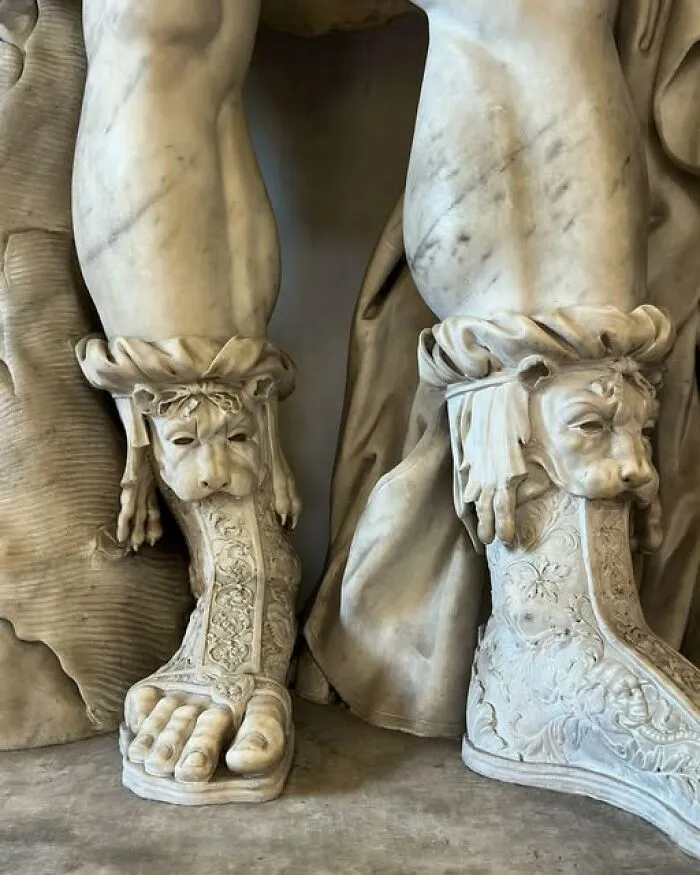
This impressive sculpture reflects the extraordinary talent of Roman craftsmen, particularly evident in its elaborate features, including the 'Calcei of Mars'—the intricately designed shoes embellished with sophisticated patterns.
As the deity of warfare, the depiction of Mars encapsulates the cultural values and ideals that were significant during that time.
As the deity of warfare, the depiction of Mars encapsulates the cultural values and ideals that were significant during that time.
36points
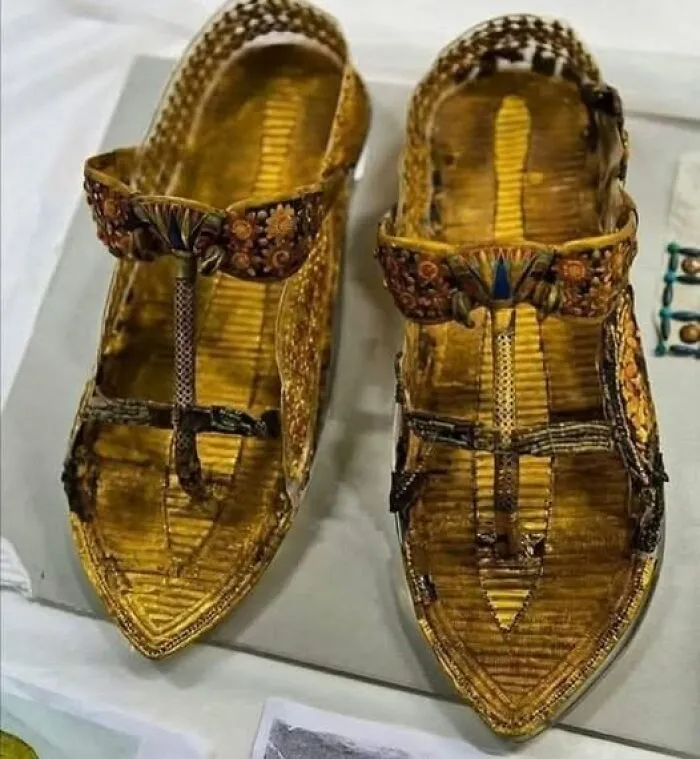
#43 Golden Sandals Of 👑king Tutankhamun’s 18th-Dynasty . Egyptian Museum Of Antiquities, Cairo
36points
#44 Cave Of Agia Sophia Of Mylopotamos, On Island Of Kythira, Located Near Villages Kapsali And Mylopotamos, Greece
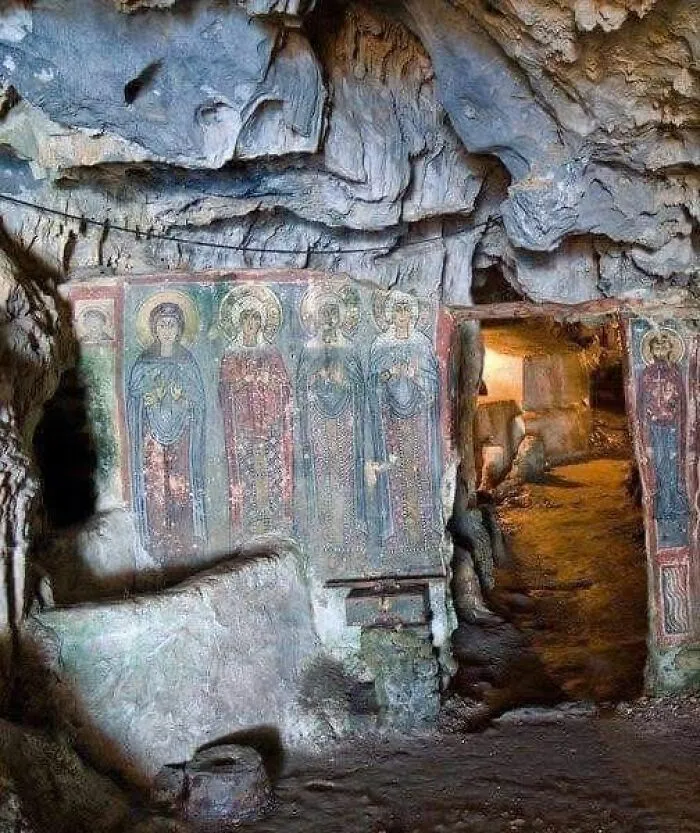
Inside the cave, there is a nice church with an open roof dedicated to Saint Sofia. A legend says that her dead body was found there and residents of Mylopotamos village built a chapel in 1875 CE, to honor her.
This church has some holy icons and fine frescoes (dated 13th Century CE), such as fresco with figure of Agia Sofia (wisdom) and her three daughters (Love, Faith, and Hope) - Elpida (Hope), Pisti (Faith) and Agapi (Love), right at the entrance.
Some remains of early Christian era have also been found in the cave, indicating that Christian cults were held there.
This church has some holy icons and fine frescoes (dated 13th Century CE), such as fresco with figure of Agia Sofia (wisdom) and her three daughters (Love, Faith, and Hope) - Elpida (Hope), Pisti (Faith) and Agapi (Love), right at the entrance.
Some remains of early Christian era have also been found in the cave, indicating that Christian cults were held there.
35points
#45 The Voronya Cave, The Closest Point To The Center Of The Earth, Represents One Of Jules Verne's Most Desired Dreams As Imagined In His 1864 Novel Journey To The Center Of The Earth
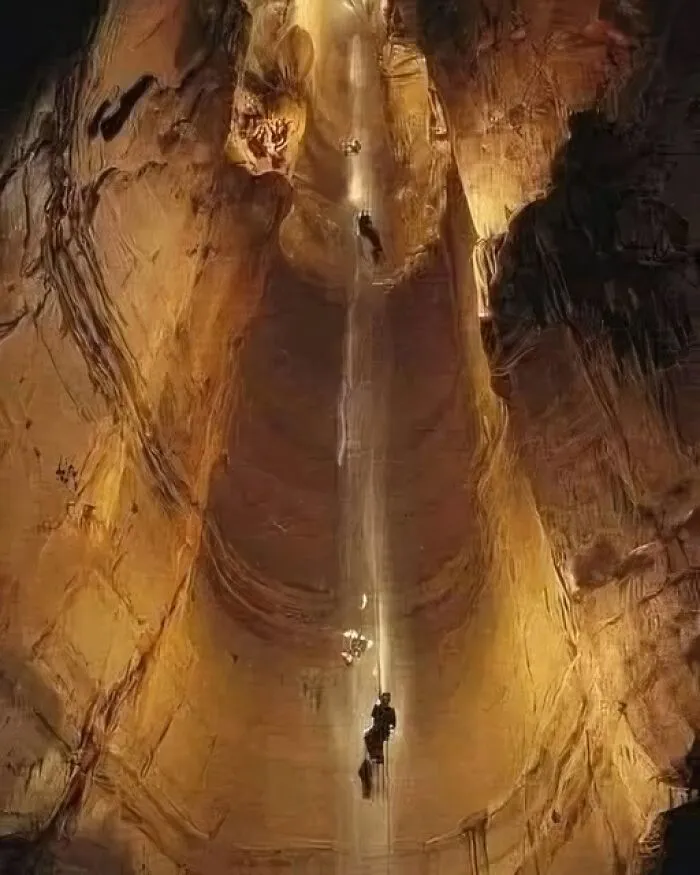
While Veryovkina Cave may not lead us that far, it does bring us remarkably close to the planet’s core. At approximately 2,212 meters deep, Veryovkina Cave holds the title of the deepest cave in the world.
It is located at the intersection of Mount Krepost and Mount Zont in the region of Abkhazia, a self-declared independent nation that is officially recognized as part of Georgia. The cave was discovered in 1968 by speleologists from the city of Krasnoyarsk, who managed to reach a depth of 115 meters. By 1986, a new team from Moscow, led by Oleg Parfenov, reached a depth of 440 meters.
Since 2015, a series of expeditions by the Perovo-Speleo group continued to push the limits of exploration, reaching deeper levels repeatedly until achieving the record-breaking depth of 2,212 meters in March 2018. The cave system is now known to include more than 6,000 meters of underground tunnels.
It is located at the intersection of Mount Krepost and Mount Zont in the region of Abkhazia, a self-declared independent nation that is officially recognized as part of Georgia. The cave was discovered in 1968 by speleologists from the city of Krasnoyarsk, who managed to reach a depth of 115 meters. By 1986, a new team from Moscow, led by Oleg Parfenov, reached a depth of 440 meters.
Since 2015, a series of expeditions by the Perovo-Speleo group continued to push the limits of exploration, reaching deeper levels repeatedly until achieving the record-breaking depth of 2,212 meters in March 2018. The cave system is now known to include more than 6,000 meters of underground tunnels.
33points
#46 While Romans Did Not Invent Footwear, They Were First Society To Develop A Varied Selection, And To Craft Specialty Shoes
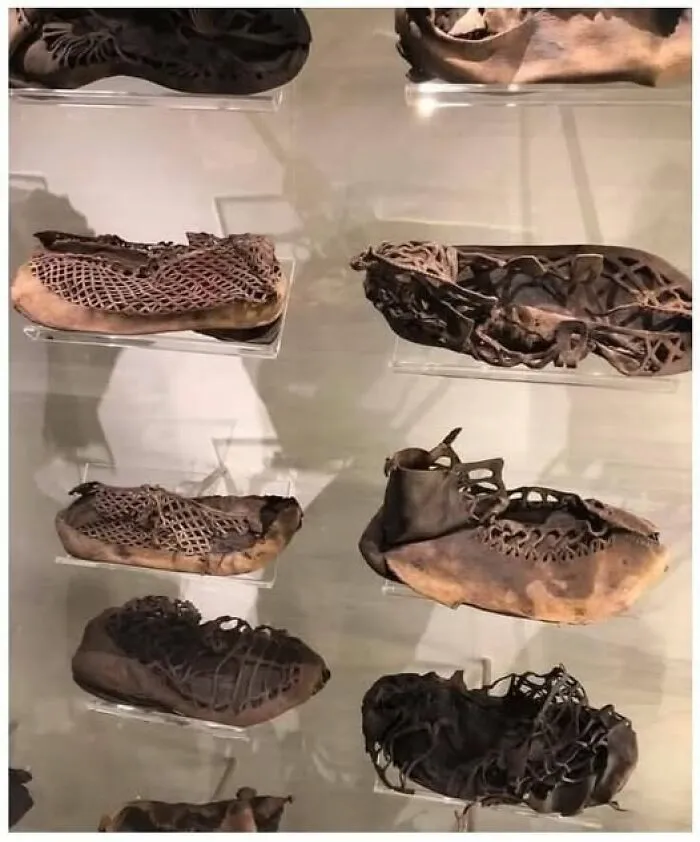
Greeks and Egyptians developed simple sandals appropriate for their relatively warm climates. However, Italian Peninsula's temperate yet varied climate, along with ever-growing reach of Empire, required ancient Romans to develop a way to protect their feet. Their advancements in footwear played an often overlooked part in their eventual expansion; healthy feet, combined with their comprehensive network of roads, enabled Roman army to cover more ground than their predecessors or enemies. Both civilians and soldiers wore sandals. Basic style and form of sandals were, in main, fairly consistent across different social classes. Particular design concepts were used to add stylistic flourishes or functionality.
Romans wore both open sandals, similar to modern-day flip-flops, and enclosed sandals, which were still breathable but provided increased protection and traction. A key component of Roman soldiers' equipment was their footwear, called caligae. These were heavy-soled and durable sandals worn as the primary footwear. Romans designed them to be mass-produced, comfortable and functional.
Roman legions had to cover vast distances by foot to stage, mobilize and fight as Empire expanded. Soldiers' feet needed to be protected to ensure they could battle effectively after long marches. Caligae were open-toed sandals that enveloped the foot and ankle with straps that covered instep and lower leg. Soldiers wore metal shin guard armor on top of laced part of their sandals for protection of legs. Soles were made of three layers of durable leather bound together with iron nails. While bottom layer was rugged, inner layer was soft. This construction prevented blistering and trench foot while guarding soldier from rough terrain. Foot integrity was critical for army's ability to travel and fight.
Unlike the basic footwear of earlier civilizations, ancient Romans cut theirs to account for differences between the left and right feet. This customization added to their functionality and comfort. Sutors or shoemakers, were esteemed craftsmen who were financially successful throughout Rome. Armies often traveled with sutors, who could craft and repair shoes on go to keep military agile. These artisans used forma, a foot-shaped wooden block, to craft shoes and an iron block to turn and flatten nails used to fashion soles.
Archeologists unearthed excellently preserved footprints made by caligae at Hippos-Sussita archaeological site near Sea of Galilee, dated 1st Century AD. They were almost identical in design to shoeprints found at a separate archeological site in Britain, indicating precision of Roman design and skill of sutors.
As mentioned above, Roman Empire's diverse topography forced soldiers to march across rugged terrain. Unlike civilian sandals, sutors studded the soles of military sandals with metal spikes. They provided extra traction for mountainous or uneven treks. Spikes also had a combat application. A typical Roman legion marched ten men deep. As it advanced during battle, the spikes allowed soldiers to stomp their fallen foes. This ensured enemy would not get up to continue fight and attack advancing Romans from behind. spikes also made a distinct sound as a legion, which consisted of more than 1000 men, approached. The clacking acted as an early type of psychological warfare for approaching Roman armies.
Romans wore both open sandals, similar to modern-day flip-flops, and enclosed sandals, which were still breathable but provided increased protection and traction. A key component of Roman soldiers' equipment was their footwear, called caligae. These were heavy-soled and durable sandals worn as the primary footwear. Romans designed them to be mass-produced, comfortable and functional.
Roman legions had to cover vast distances by foot to stage, mobilize and fight as Empire expanded. Soldiers' feet needed to be protected to ensure they could battle effectively after long marches. Caligae were open-toed sandals that enveloped the foot and ankle with straps that covered instep and lower leg. Soldiers wore metal shin guard armor on top of laced part of their sandals for protection of legs. Soles were made of three layers of durable leather bound together with iron nails. While bottom layer was rugged, inner layer was soft. This construction prevented blistering and trench foot while guarding soldier from rough terrain. Foot integrity was critical for army's ability to travel and fight.
Unlike the basic footwear of earlier civilizations, ancient Romans cut theirs to account for differences between the left and right feet. This customization added to their functionality and comfort. Sutors or shoemakers, were esteemed craftsmen who were financially successful throughout Rome. Armies often traveled with sutors, who could craft and repair shoes on go to keep military agile. These artisans used forma, a foot-shaped wooden block, to craft shoes and an iron block to turn and flatten nails used to fashion soles.
Archeologists unearthed excellently preserved footprints made by caligae at Hippos-Sussita archaeological site near Sea of Galilee, dated 1st Century AD. They were almost identical in design to shoeprints found at a separate archeological site in Britain, indicating precision of Roman design and skill of sutors.
As mentioned above, Roman Empire's diverse topography forced soldiers to march across rugged terrain. Unlike civilian sandals, sutors studded the soles of military sandals with metal spikes. They provided extra traction for mountainous or uneven treks. Spikes also had a combat application. A typical Roman legion marched ten men deep. As it advanced during battle, the spikes allowed soldiers to stomp their fallen foes. This ensured enemy would not get up to continue fight and attack advancing Romans from behind. spikes also made a distinct sound as a legion, which consisted of more than 1000 men, approached. The clacking acted as an early type of psychological warfare for approaching Roman armies.
32points
#47 The Château De Vaux-Le-Vicomte Is A Grand French Château Located In Maincy, Near Melun, France
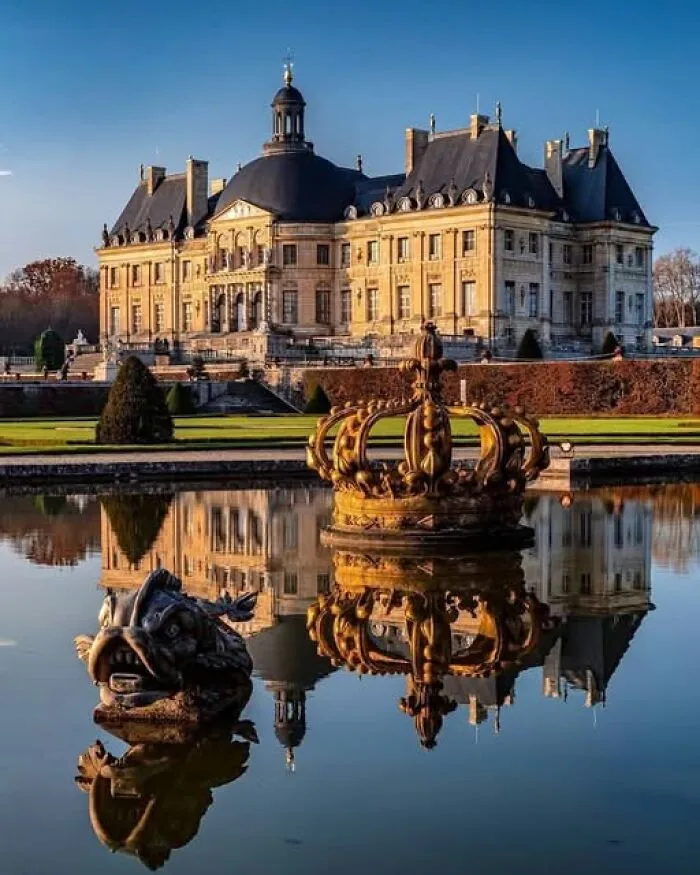
It was commissioned by Nicolas Fouquet, the superintendent of finances to King Louis XIV. The construction of the château began in 1658 and was completed in 1661.
This architectural masterpiece was designed by the architect Louis Le Vau, the landscape was designed by André Le Nôtre, and the interior decoration was created by Charles Le Brun. The château is renowned for its elegant design and the lavish gardens surrounding it, which later influenced the design of the more famous Palace of Versailles.
This architectural masterpiece was designed by the architect Louis Le Vau, the landscape was designed by André Le Nôtre, and the interior decoration was created by Charles Le Brun. The château is renowned for its elegant design and the lavish gardens surrounding it, which later influenced the design of the more famous Palace of Versailles.
31points
#48 Bronze Statuette Of The Goddess Nike
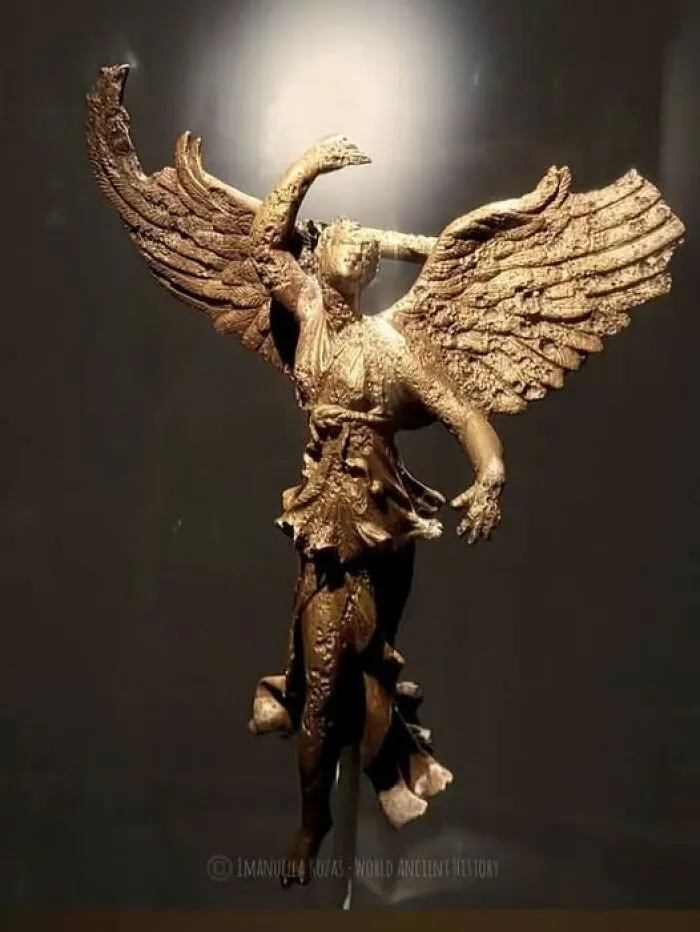
The Statuette was discovered in the Vani Archaeological Site, which was part of the ancient Kingdom of #Colchis (modern-day Georgia).Vani was a vibrant urban settlement from the 8th century down to the mid-1st century BC. The ancient name for Vani is unknown: two hypotheses identify the site with the Surium of Pliny the Elder or the Leucothea of Strabo.
Colchis is known in Greek mythology as the destination of the Argonauts, as well as the home to Medea and the Golden Fleece. It was described as a land rich with gold, iron, timber and honey that would export its resources mostly to ancient Hellenic city-states.
Colchis is known in Greek mythology as the destination of the Argonauts, as well as the home to Medea and the Golden Fleece. It was described as a land rich with gold, iron, timber and honey that would export its resources mostly to ancient Hellenic city-states.
30points
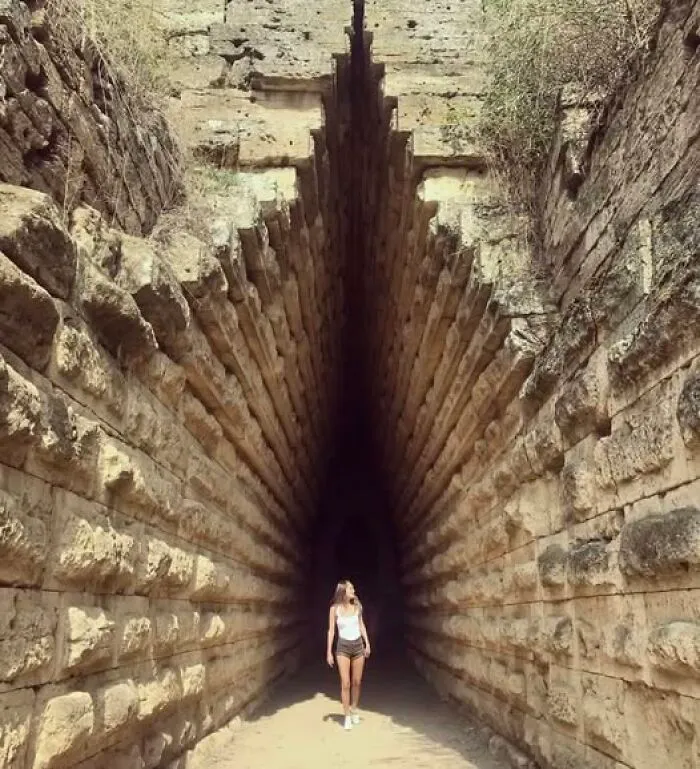
#49 Archaeologist Anton Ashik And His Tired Team Of Explorers Finally Unveil The Concealed Entrance To One Of The Most Remarkable Megalithic Marvels Ever Found Between Europe And Asia
28points
#50 The Castillo De Loarre, Located In The Province Of Huesca In Northeastern Spain, Is A Stunning Example Of Romanesque Military Architecture

Built in the 11th century, it stands proudly atop a hill overlooking the vast plains of the Hoya de Huesca, with the Pyrenees forming a dramatic backdrop. This castle is among the best-preserved fortresses in Spain, offering visitors a glimpse into medieval life. Its origins date back to the reign of King Sancho III of Navarre, who strategically positioned it to defend against Muslim forces and assert control over the Aragon region. Over time, Castillo de Loarre was expanded, with additional defensive structures added by subsequent rulers.
The castle complex includes a chapel, a tower, and a crypt, each contributing to its imposing presence. Its sturdy stone walls and towers demonstrate medieval military ingenuity, designed to repel invaders and provide a safe haven. The intricate stonework and frescoes within the chapel showcase Romanesque artistry and religious devotion. Visitors can explore winding staircases, narrow corridors, and hidden passages that evoke a sense of mystery and adventure. Castillo de Loarre’s panoramic views and historical significance have made it a popular filming location, notably featured in the 2005 film Kingdom of Heaven. It remains a captivating destination for history enthusiasts and travelers alike.
The castle complex includes a chapel, a tower, and a crypt, each contributing to its imposing presence. Its sturdy stone walls and towers demonstrate medieval military ingenuity, designed to repel invaders and provide a safe haven. The intricate stonework and frescoes within the chapel showcase Romanesque artistry and religious devotion. Visitors can explore winding staircases, narrow corridors, and hidden passages that evoke a sense of mystery and adventure. Castillo de Loarre’s panoramic views and historical significance have made it a popular filming location, notably featured in the 2005 film Kingdom of Heaven. It remains a captivating destination for history enthusiasts and travelers alike.
28points