





As kids, many of us treated history like that one school subject we couldn’t wait to escape. It seemed packed with endless dates, unfamiliar names, and events that felt far removed from our everyday lives. But somewhere along the way, something changes. As adults, we begin to realize that history is much more than memorizing timelines—it's the story of how our world came to be, how civilizations rose and fell, and how people lived, loved, built, and survived long before us.
That’s why today we took a dive into an Instagram page dedicated to sharing fascinating glimpses into the past. From hidden temples to breathtaking 2,000-year-old mosaics that have somehow survived the centuries, these posts reveal just how incredible human history can be. Some will leave you amazed, others might make you curious, and a few may completely change how you look at the past. Keep scrolling, Pandas—the history books never looked this interesting.
#41
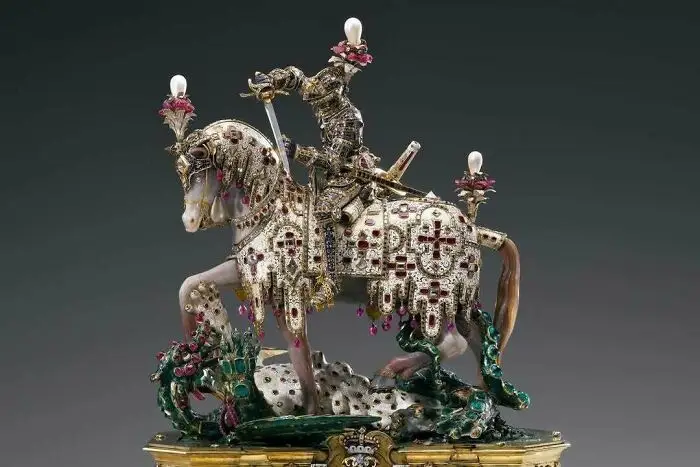
This statuette was made to house a relic of St George that Archbishop Ernst of Cologne sent in 1586 to his brother Duke Wilhelm V of Bavaria. In the seventeenth century, the statuette was displayed on important feast days on the altar of the Ornate Chapel in the Munich Residence. The bearded face of the saint behind the movable visor is carved from boxwood and resembles that of the man who commissioned the statuette, Duke Wilhelm V.
Report
20points
#42
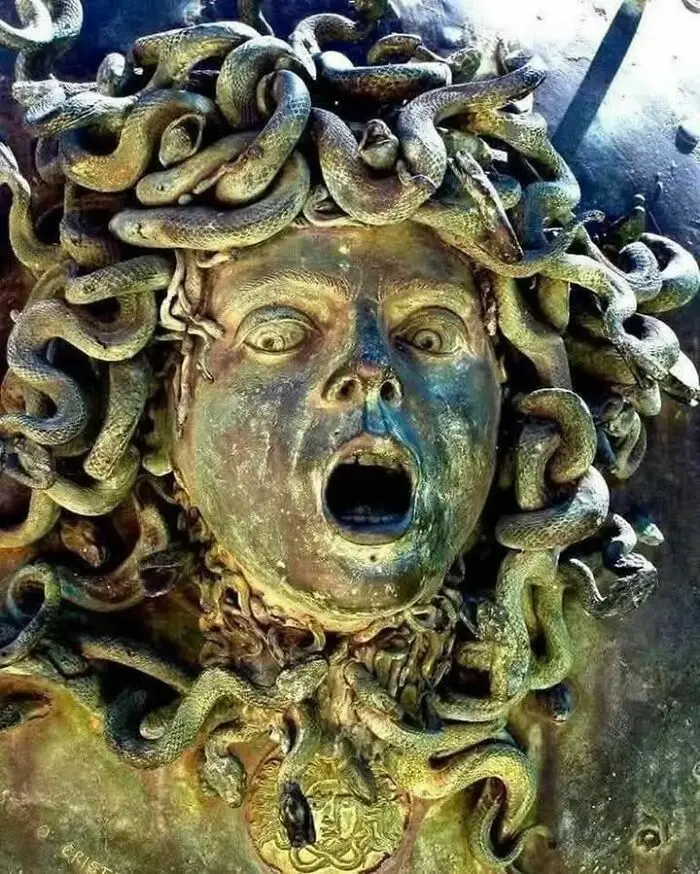
Perseus with the Head of Medusa is a bronze sculpture made by Benvenuto Cellini in the period 1545–1554. The sculpture stands on a square base which has bronze relief panels depicting the story of Perseus and Andromeda, similar to a predella on an altarpiece. It is located in the Loggia dei Lanzi in the Piazza della Signoria in Florence, Italy.
Report
20points
#44
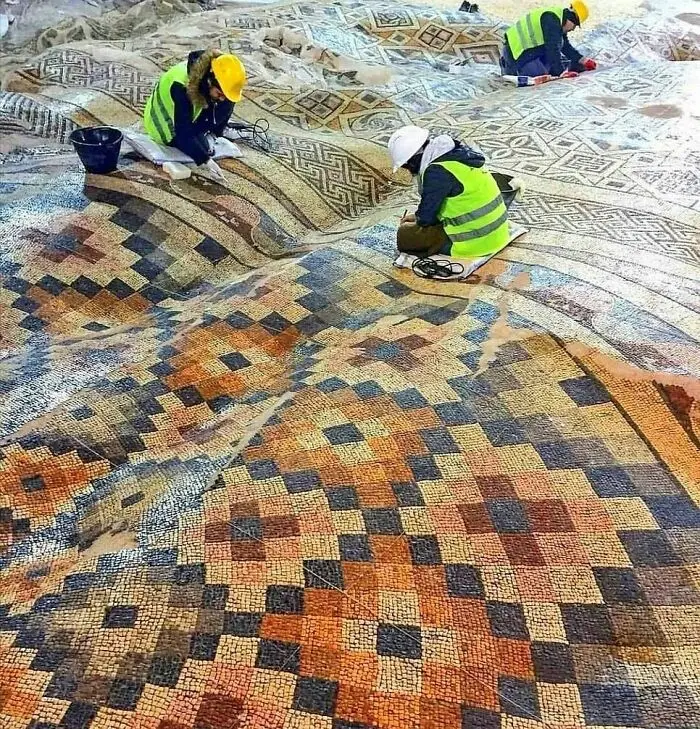
A 9,000-square-foot mosaic was discovered in 2010 during the construction of a new hotel in Antakya, Turkey. Turkey. Archaeologists at the site believe the geometric work once decorated the floor of a public building in the previous city of Antioch, one of the most important cities in the Seleucid Empire. Although vast segments of the original mosaic are still intact, others have rippled and disappeared due to a series of earthquakes in 526 and 528 A.D.
Report
20points
#45
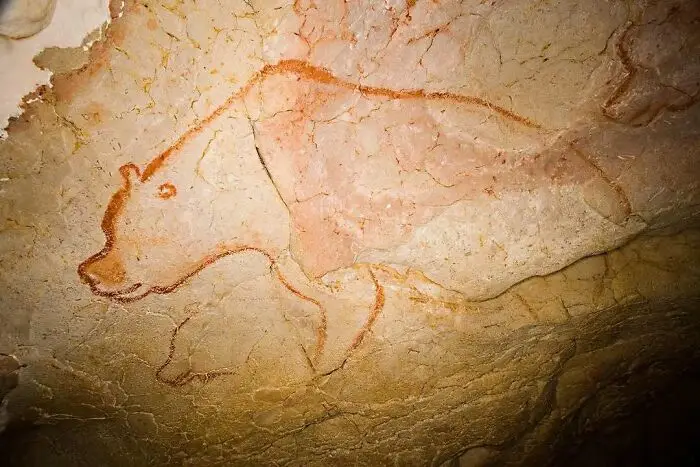
This painting of a cave bear, at the Chauvet Cave in France, was drawn with 14 lines around 32,000 years ago. The artist used a technique known as 'stump-drawing' - the use of fingers or a piece of hide to paint the muzzle and to emphasize the outlines of the head and forequarters.
Report
20points
#46
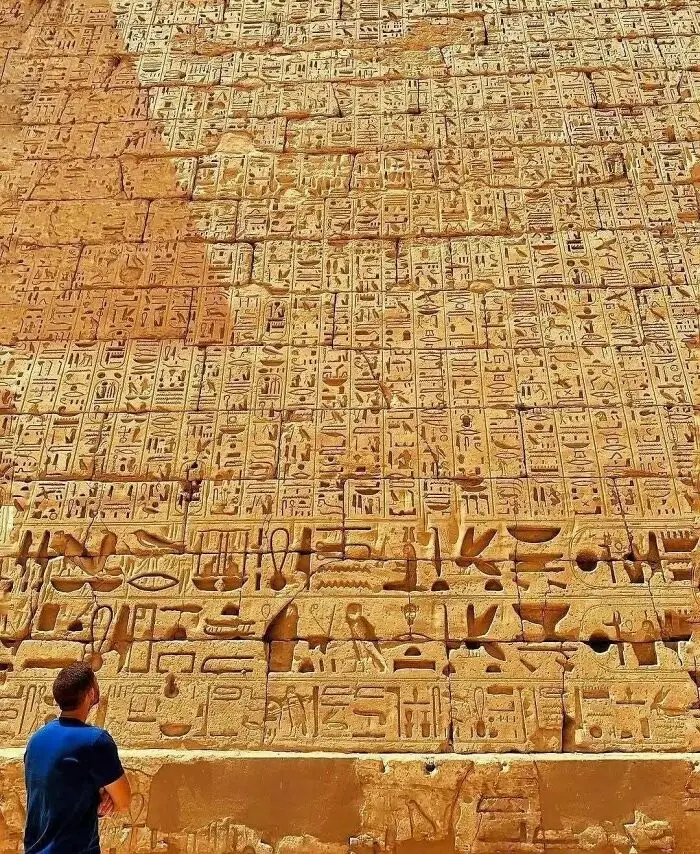
Hieroglyphic inscriptions on the walls of the temple of Ramesses III (1186–1155 BC) at Medinet Habu, on the West Bank of Luxor, Egypt.
Report
20points
#47
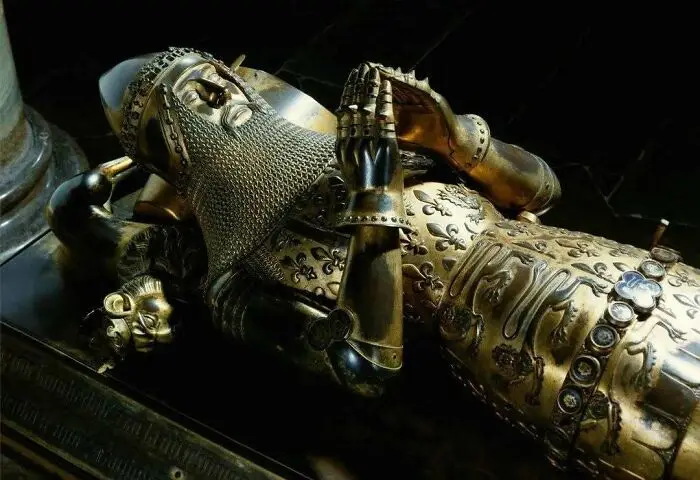
The gilt bronze effigy of Edward, the Black Prince, dated to 1376 CE and housed at Canterbury Cathedral. Its remarkably detailed armor makes it one of the most important examples of English medieval funerary art, especially since so few surviving pieces of contemporary armor remain.
Report
19points
#48
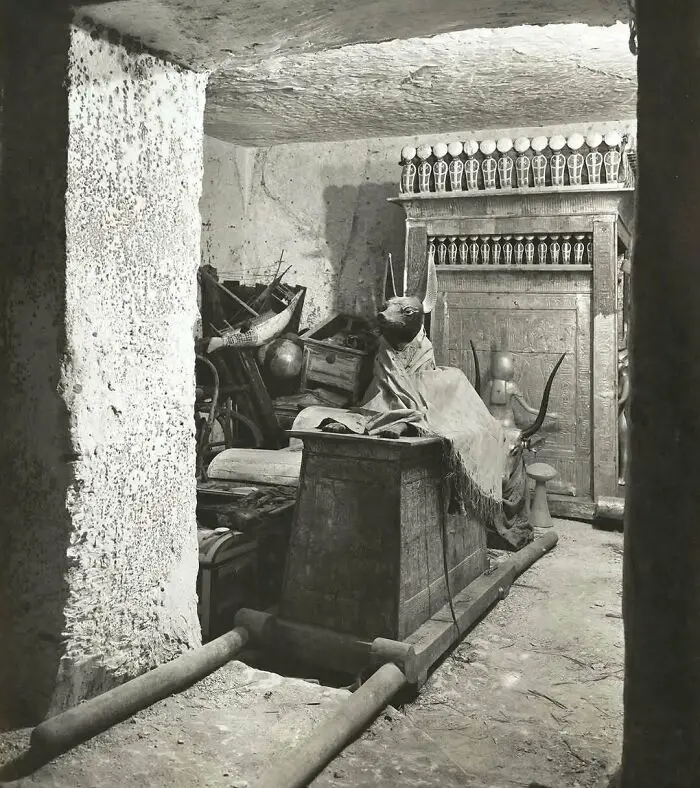
A statue of Anubis in Tut Ankh Amun's tomb, taken during the Carter expedition in 1922.
Report
19points
#49
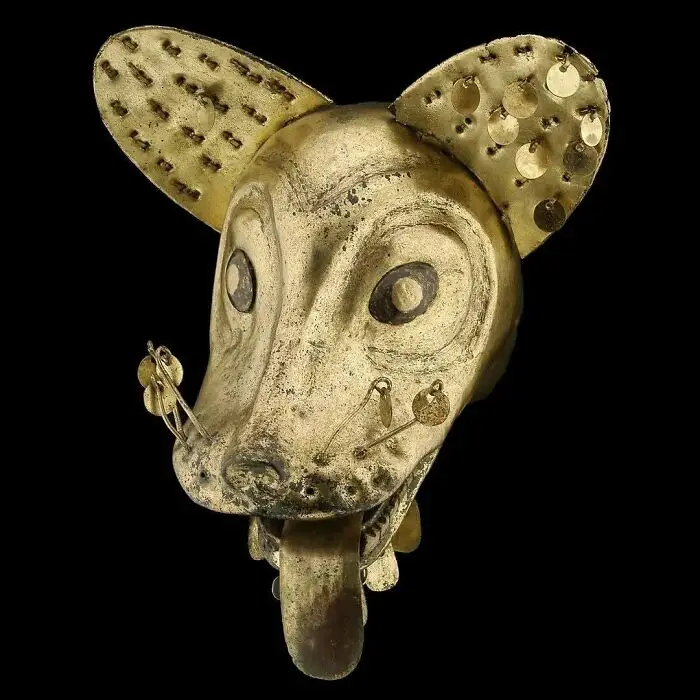
The gilded copper head of a fox. Huaca de la Luna, Peru, Moche civilization, 1st-3rd century AD.
Report
19points
#50
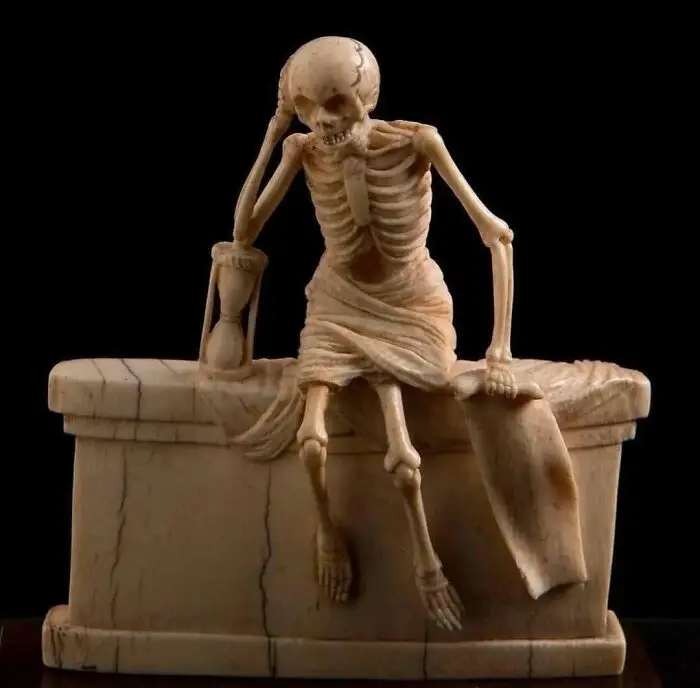
Photographed is an ivory sculpture of a skeleton in a shroud seated on a tomb with an hourglass. This amazing work of art was created in France in 1547.
Report
18points
#51
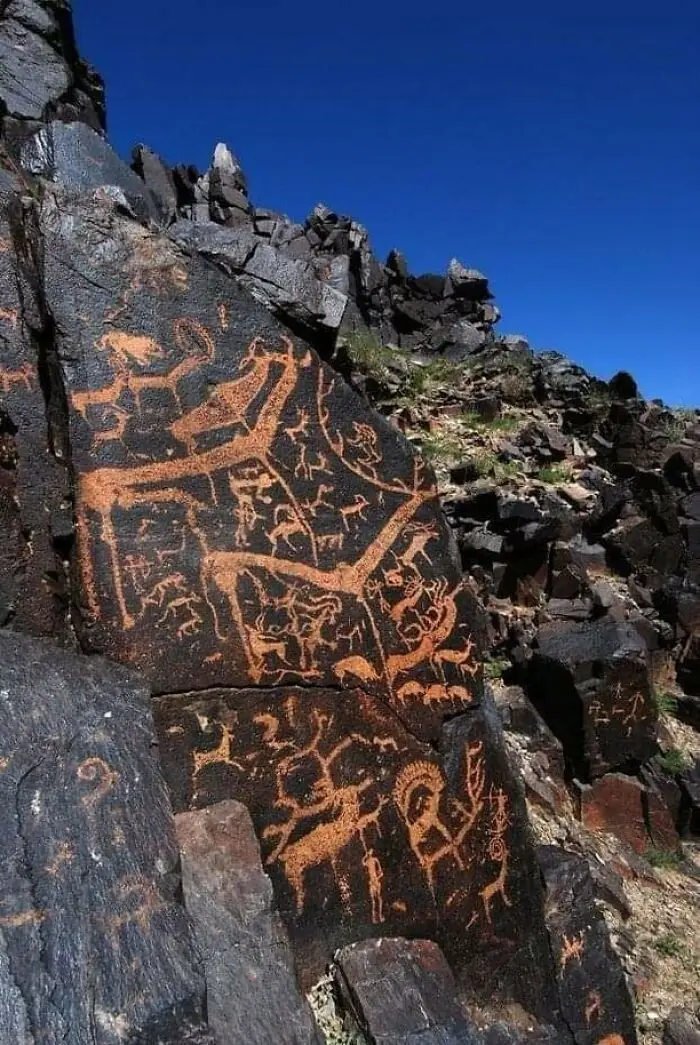
Prehistoric rock carving of a whole bunch of deer. Bayankhongor, Mongolia.
Report
18points
#52
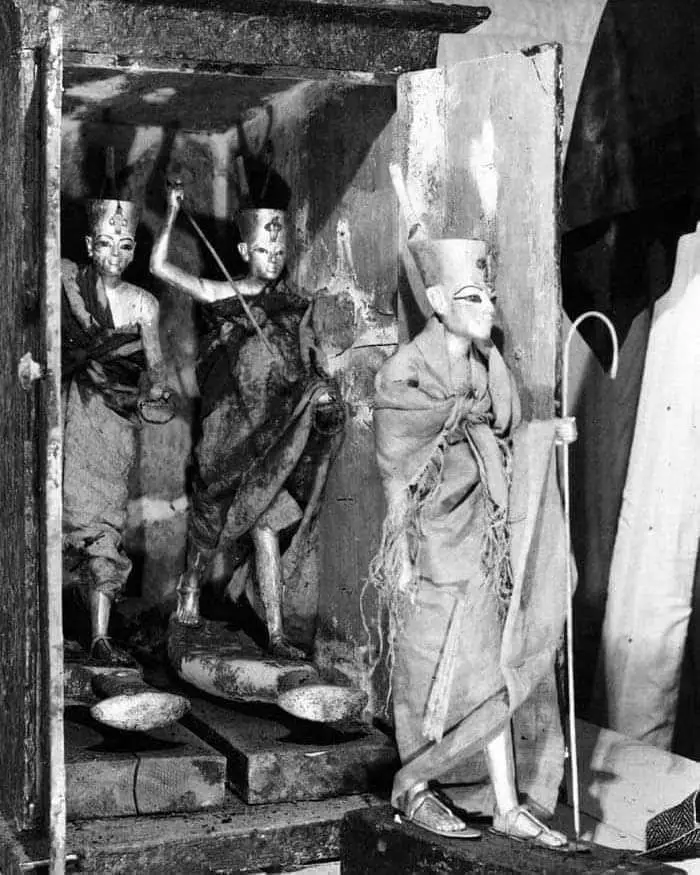
A photograph taken during the discovery of Tutankhamun's tomb in 1922.
Report
18points
#53
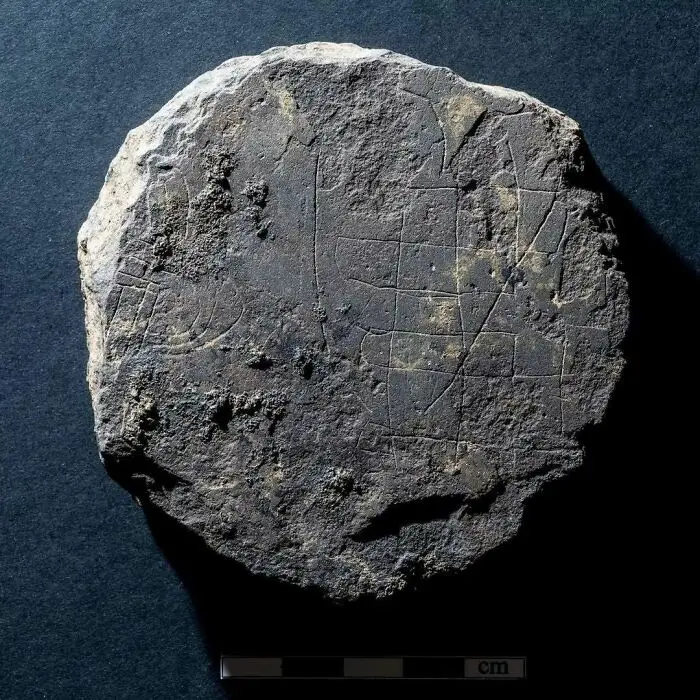
Archaeologists in Aberdeenshire, Scotland, have discovered a medieval gaming board they believe may be a clue to the location of the long-lost Monastery of Deer, whose monks created the famed illuminated manuscript the Book of Deer, believed to be from the first half of the 10th century. The board, which was found near the village of Old Deer, would have been used to play the Norse strategy game Hnefatafl. “It is a very rare object and only a few have been found in Scotland, mainly on monastic or at least religious sites,” archaeologist Ali Cameron told The Scotsman. “These gaming boards are not something everyone would have had access to.” Layers under the gaming stone have been carbon dated to the 7th and 8th centuries, according to the BBC. Archaeologists have been on the hunt for the site of the Monastery of Deer for several years, and believe that the discovery of the gaming board means they are getting close. Photograph by Michael Sharpe and information from Artsy.
Report
18points
#54
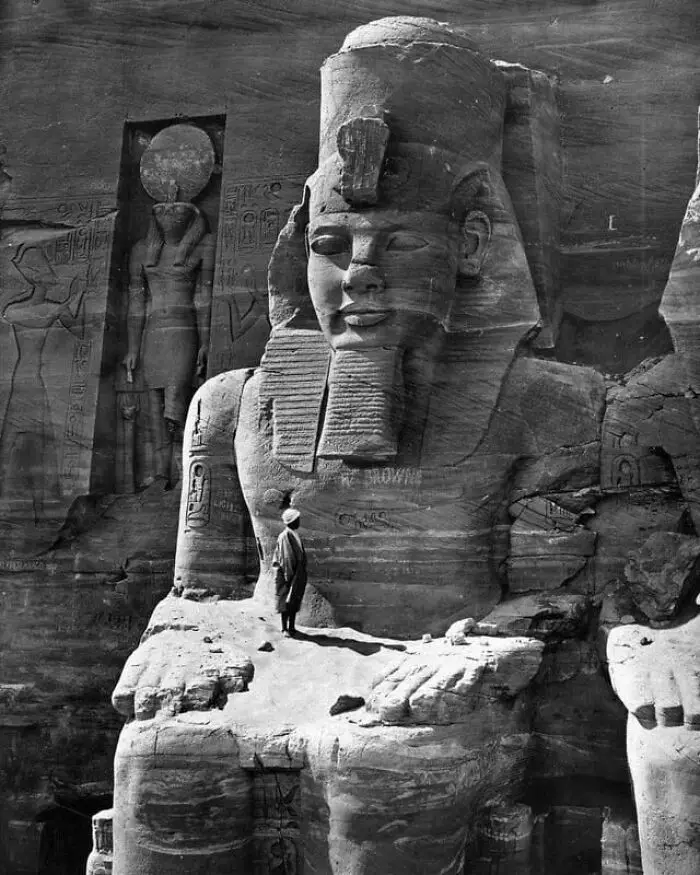
A photo of a man standing on the lap of a statue of Ramesses in Egypt, 1856.
Report
17points
#55
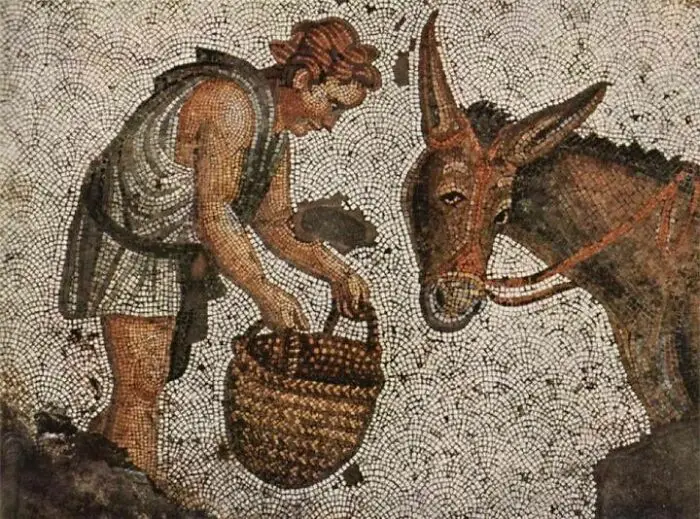
A 1,550-year-old Byzantine mosaic found in Istanbul depicts a scene from rural life. It is on display at the Great Palace Mosaic Museum.
Report
17points
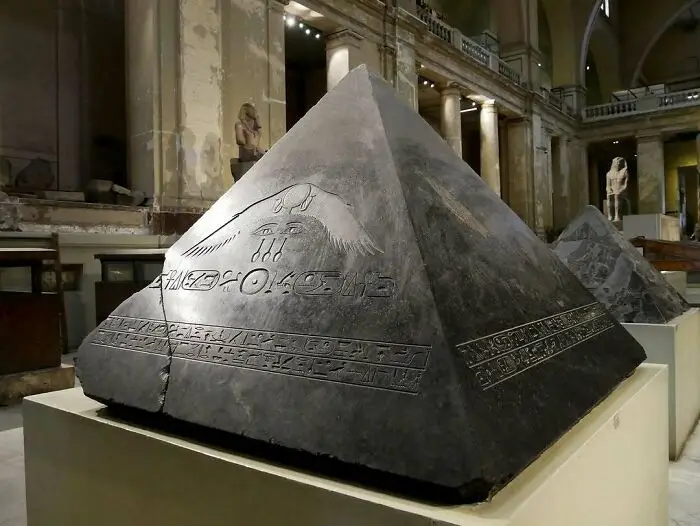
#57
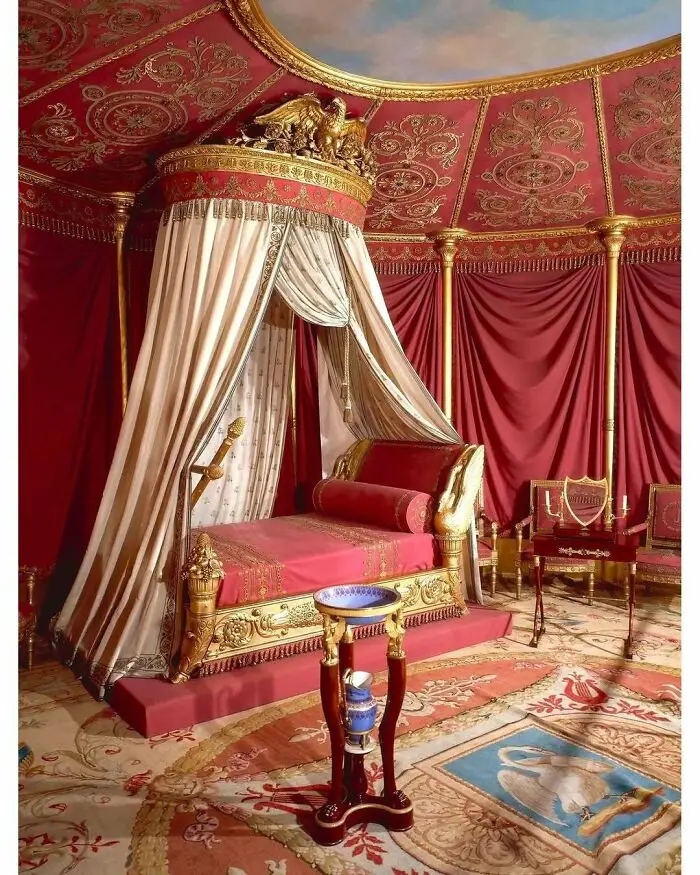
The bedroom of Napoleon Bonaparte and Josephine de Beauharnais within the Château de Malmaison.
Report
17points
#58
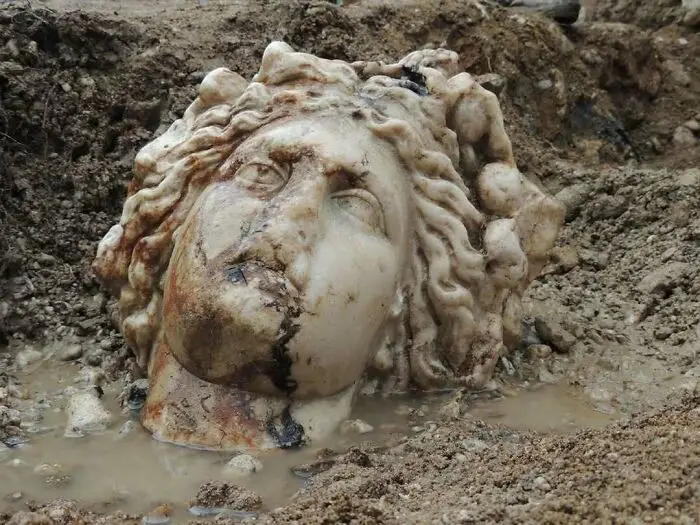
The head of Dionysus, the god of wine, is uncovered in an archaeological dig in the ancient city of Aizanoi, Turkey.
Report
16points
#59
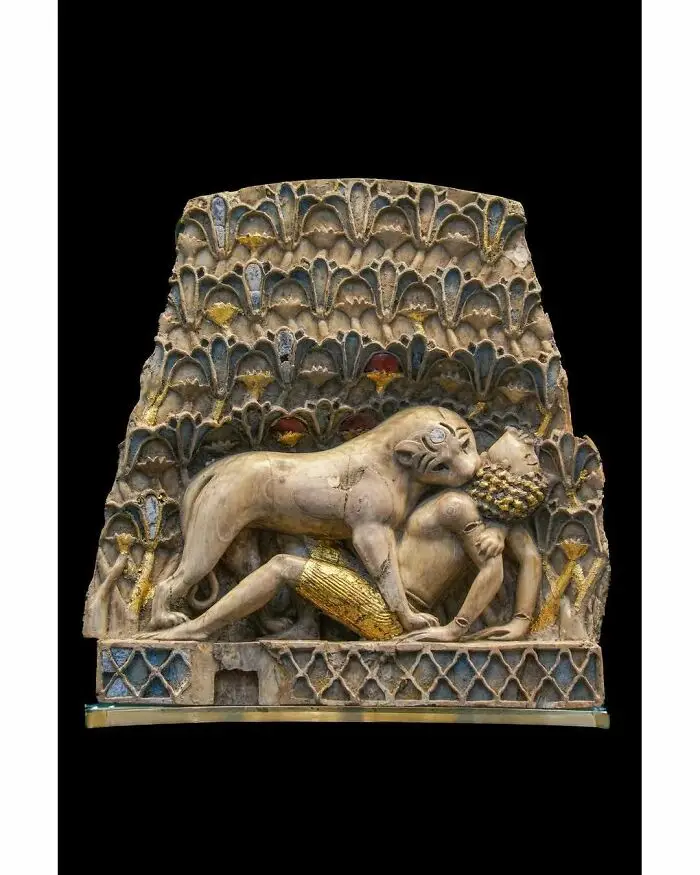
Lioness Devouring a Man, Phoenician Ivory Panel, c. 9-th-8th century BCE. From the palace of Ashurnasirpal II, Nimrud, northern Mesopotamia, Iraq.
Report
16points
#60
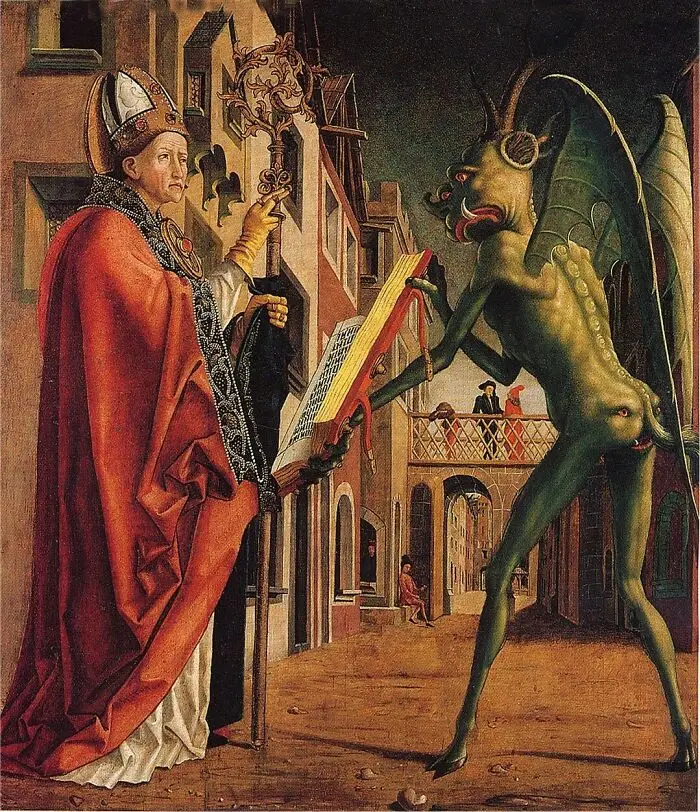
Artwork From The Middle Ages
Name of Artwork: St. Wolfgang and The Devil
Artist: Michael Pacher
Year: 1471-1475
Technique: Tempera on Wood
This interesting painting portrays St. Wolfgang standing with the Devil, who is showing him an agreement that they contracted up. The deal was that the Devil was going to help St. Wolfgang build his church, on the condition that the Devil would be able to take the first soul that walked through the entrance. St. Wolfgang, knowing the devil’s condition, cleverly ensured that a pig entered the church first, fulfilling the deal without sacrificing a human soul.
Report
16points