





It’s unsettling how some foolish humans never take history seriously and keep repeating the same mistakes over and over. I mean, there are still ongoing wars in many parts, and it just makes me question how they have not learned anything from the massively destructive World Wars.
Those were truly horrifying days, and it’s really a wonder how people survived them. Alas, we can only know about it from stories, so these folks asked their grandparents to share their World War II experiences. Some of these tales are honestly quite brutal, so scroll down at your own risk!
More info: Reddit
#21
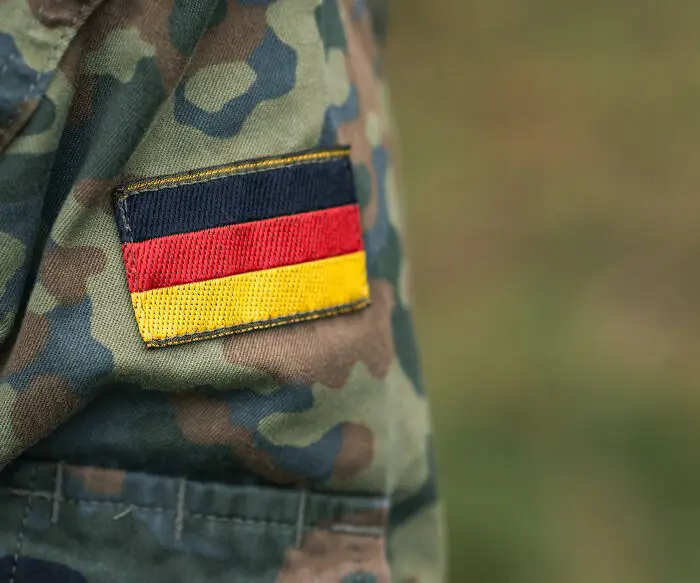
My grandfather was a paratrooper and the translator for his squad.
When paratrooping in to, I believe, France his entire squad was either shot out of the sky or captured and k****d except for my grandfather. He hid until he came across a patrol that was looking for him, k****d them and stole a uniform. Putting one of the Germans in his uniform and dragging them back to the nearest base so they would stop trying to find him, he spent the rest of the war pretending to be a German soldier and relaying information to the allies anonymously.
My grandmother had been told, when his squad was shot down, that he was KIA and not to expect him back.
In 1948 there was a knock at my grandmother's door, when she answered is there stood my grandfather who, after walking all the way back from Berlin, just said to her: "What's for dinner? It has been a frightfully long day."
**Edit: For those of you questioning legitimacy**, I can only give the information I have. My grandfather was a paratrooper in the British army, the story was told to me by my uncle after my grandfather p****d and was told to him by my grandmother when he was sent to the Merchant Navy by my grandfather as a kid. My grandmother, prior to her d***h, confirmed that she was told he was KIA and that he showed up again in 1948 with the what's for dinner line because that was the "how your mother came to be" story.
As for actual legitimacy, I have no sources to follow up with to corroborate anything as all that is left of my family is myself, my mother (whom does not speak to me), my two brothers (who have the same information I do), and my aunt (who I have not spoken to since before I moved to the US 10 years ago).
The post asked for his story, this is his story as it is known to me and what remains of his family.
16points
#22
Posted this already in another thread some time ago:
My German grandpa fled from what is now Poland. He's born in 1937. His dad owned a larger farm estate and they were some of the wealthier farmers in the region (they owned a car for instance, which was a luxury). When worst came to worst in 1944/45, his dad was drafted in the Volkssturm (n**i recruitment of children and elders). But because he was a stubborn farmer, he said f**k the n***s and hid out in a forest nearby.
One day the Red Army arrived and my grandpa (who is still alive right now) recalls it that they literally parked in front of the main house, knocked down the door and yelled in broken German to them to pack their things in 10 minutes and leave or they'll all be shot. So my grandpa (about 7 or 8) had to flee with barely anything. They marched for weeks through war-torn wastelands, burning villages, all while artillery and tanks were roaring in the distance and war planes flew over their heads. He recalls playing with some gas masks they had found on their way (probably next to some burned out vehicles). They rejoined the larger streams of refugees and made it to east Germany, where my grandpa's dad was "re-educated" into socialism and lived bitter and angry until his d***h. My grandpa eventually fled East Germany in the 1950s with nothing but his rusty bike and the stars above his head to the west.
To this day, my grandpa refuses to visit Russia (my grandma always wanted to go to St. Petersburg). He doesn't hate on the Russians as a people, but he has never lived down this childhood trauma.
Report
16points
#23
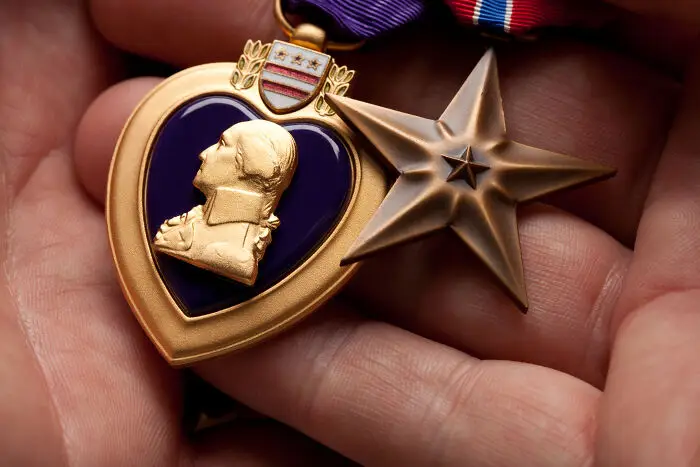
My Great Grandfather never talked about the war until he had his stroke. We knew he had a Purple Heart and a Bronze Star, but we didn't know how he got them. He was just a Private, and he'd had enough of the military when the war was over.
After the stroke, he seemed to loosen up. He laughed about sighting rifles in by shooting at chickens. He showed us pictures of him in front of the Eiffel Tower. Turns out he was occupation force. Ended up occupying an area near Berlin that became involved in the Battle of the Bulge.
Apparently, while he was fighting, some sort of explosive blew off his buddy's leg, so grandpa "did what anyone else would do" and threw his buddy over his shoulder to get him to the med tent. This included running across a field in the line of sight of a German machine gun nest. He was shot in the leg and some more shrapnel ended up in his chest. Somehow, Grandpa and his buddy survived.
We thought he was embellishing it, but the Bronze Star paperwork included a report that we found after he p****d a**y. Two higher ups signed that the story was true, so I guess I have to believe it. He told us it wasn't that big of a deal and that he didn't deserve all those medals for what he did. What a b****s. RIP, Gramps.
Edit: words
Edit 2: people are pointing out the this battle didn't happen in Berlin. He never said Berlin, just Germany. I said Berlin because I'm not good at history. Sorry.
14points
#24

Not my grandparents but remembering interviewing a women about her experience during WW2 and she told me she loved it. As her father and brother was away, she got to run her family's shoe shop in London and she felt she had a real sense of purpose for the first time in her life.
Report
13points
#25
My dad told me his grandpa used to help jews flee. One of the people he worked with told him that if the jews got caught, they were k****d. He didn’t believe it because: how can you k**l that many people? It was after the war he learned that it was all true.
Report
13points
#26
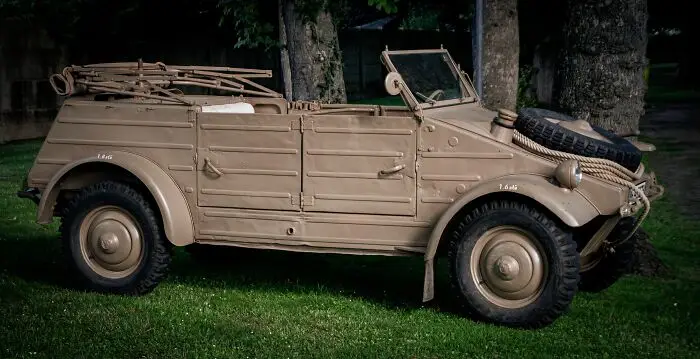
My great grandad was, along with his soldier mates, captured by the Germans in North Africa (He was German born himself but his family emigrated to Britain in the early 30s so he could converse with his captors).
The German guards had to leave the area (I think he said cave) they were detained in, because an alarm went off, and so my great grandad and the others ran out and stole a car, making it back to friendly lines lol.
The German guards had to leave the area (I think he said cave) they were detained in, because an alarm went off, and so my great grandad and the others ran out and stole a car, making it back to friendly lines lol.
Report
13points
#27
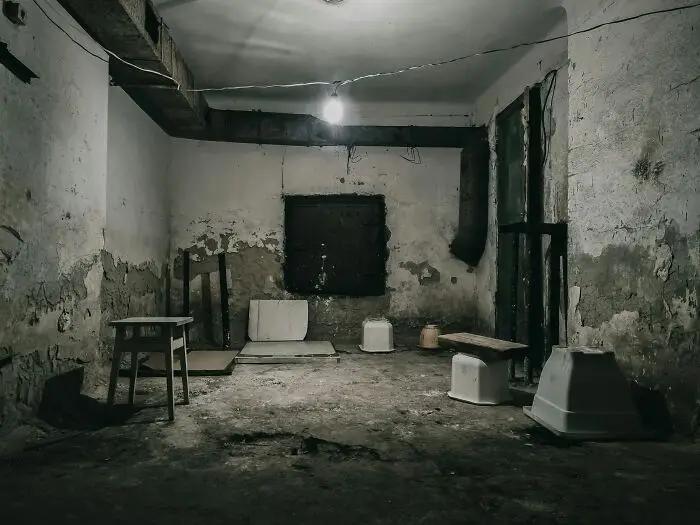
One of my grandfathers (german but not n**i) told me about the time, he and his family was hiding in the basement of a building in Leipzig (Ger). American planes where flying over the city and he was the one looking up the chimney and every time he heard the sound of b***s dropping he shouted "Runter da kommt noch eine!" ("Get down another one is coming!")
He is still alive and I love to listen to WW2 stories first hand. These memories are so expensive...
He is still alive and I love to listen to WW2 stories first hand. These memories are so expensive...
Report
13points
#28
Got two stories.
Grandmother on my moms side told me this story: " I remember first time when the Germans came in to my village, I was outside playing with my cousin when my mom came and pulled us in to the house and said 'ssh, be silent the Germans are here' ... We stood by the window that had a little opening and saw how German soldiers walked on the road with tanks and knocked on peoples doors and pulled some of them out, I saw my neighbor get shot on the spot... I was 5 years old and still remember it clearly".
Grandmother on my dads side: "We live just by the Danube and I remember seeing the Germans on the other side of the stream. They started to board some small boats to cross the river. After some min they started to shell and shoot towards us and I took my little brother in my arms and started to run for my life I was 9 years old and my brother 4". They didn't care how we look like or not, they hated us because we are Slavs and not Germans.
My grandmother on dads side was red head, irish red head.
My grandmother on moms side was blond and green/blue eyes.
Two stories that stuck the most.
Report
12points
#29
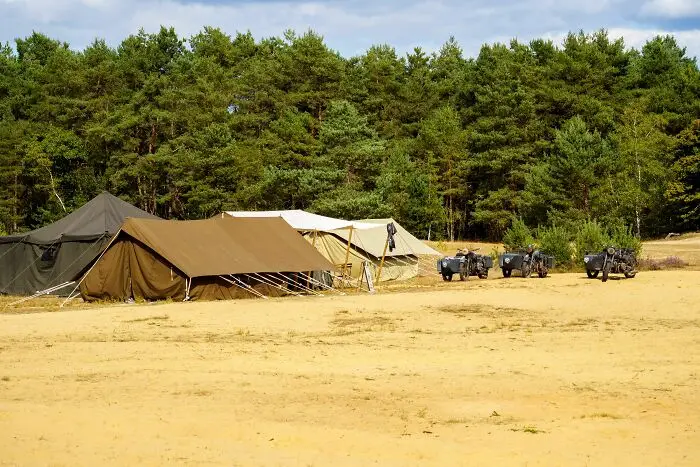
My father was an orphan who joined the army at age 16 with a forged birth certificate in January 1944. He was sent to the Pacific with a crew of SeaBees. He ended up in a Japanese POW camp after the tiny island where they landed to build an air strip was a secret Japanese base. He lost two finger tips and several toes to frostbite. He said it was mostly extremely boring, punctuated by horror.
Report
12points
#30
My grandfather served on a destroyer for the US and saw action in the Pacific Theater and Korea. One story I vividly remember is him telling me they had to assist in recovering downed US pilots from the ocean. He said many times the pilots were already d**d and had been mutilated by sharks. He said he would never forget pulling those men out of the water.
Report
12points
#31
He never said much but he did talk once about throwing explosives of some kind in a river to catch fish. He was in the south Pacific as a Marine.
I just remembered another one, he did not smoke so he traded his cigarettes till he had enough for a typewriter so he could type his letters to his wife and my mom his daughter who was born after he went to war.
I just remembered another one, he did not smoke so he traded his cigarettes till he had enough for a typewriter so he could type his letters to his wife and my mom his daughter who was born after he went to war.
Report
11points
#32
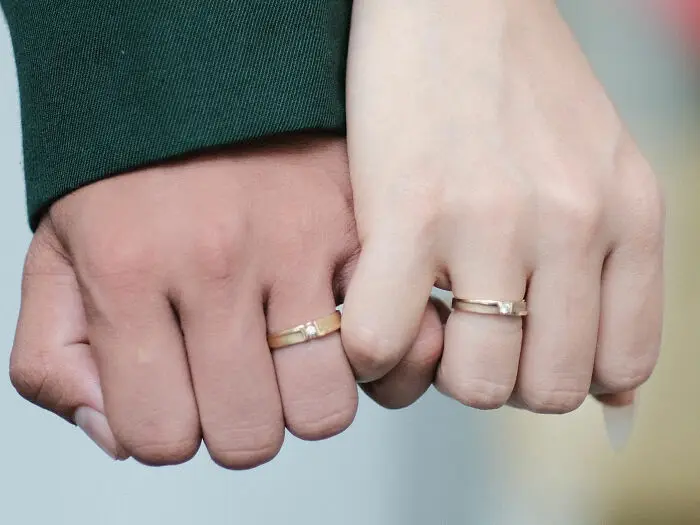
The only thing my grandpa ever said about the war was how he made his engagement ring out of a quarter using a tablespoon.
I assume he saw some s**t.
I did however meet a N**i airplane mechanic. 90 years old and dude still had all his wits about him. Interesting convo.
I assume he saw some s**t.
I did however meet a N**i airplane mechanic. 90 years old and dude still had all his wits about him. Interesting convo.
Report
11points
#33
Light-hearted story:
My Grandpa was an MP (Military Police). When the soldiers got in bar fights and they needed to call the MP, he would get sent out to break it up, load them into the Jeep and take them back to base.
He said, they would drop them off at the gate. If they were sober enough to walk back to barracks on thier own, they were free to go. If they were too drunk they would have to take them to the brig.
These soldiers were under a lot of stress. I think it's a pretty cool thing that he bent the rules for some of these guys.
Report
11points
#34
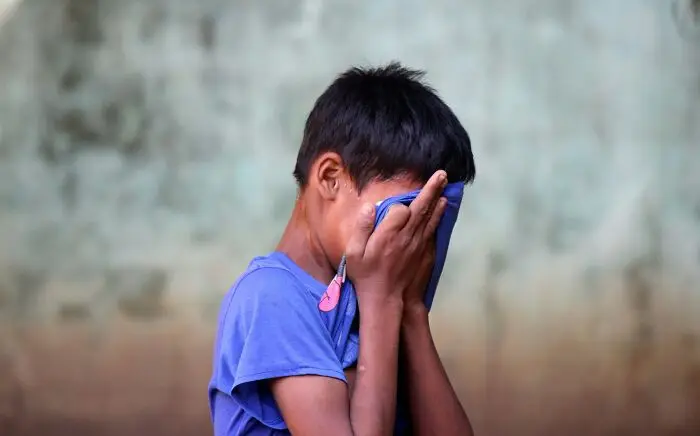
Pacific theatre, south east Asia. Japanese occupation.
Grandad was a small boy. At the beginning of the occupation, he didn’t know he has to bow to any soldiers he passes. One day, the soldier called him over, gave him one tight slap across his cheek and ear, he went permanently ~~d***h~~ _deaf_ in that ear.
Grandad was a small boy. At the beginning of the occupation, he didn’t know he has to bow to any soldiers he passes. One day, the soldier called him over, gave him one tight slap across his cheek and ear, he went permanently ~~d***h~~ _deaf_ in that ear.
Report
11points
#35
My grandpa went to Annapolis during the war and ended playing piano for the uso. It might not be bad a*s but its still kind of cool.
Report
11points
#36
My grandmother didn't like to talk about the war (she lost several brothers - to this day we don't know where exactly two of them are buried).
She told me that life was pretty much normal, especially in the first years, and continued to be normal until the b******s started (she lived in West of Germany, a small town). Farm life has to go on, war or no war.
She did tell small things though. For example, she saw a friend of her pick up a g*****e, not knowing what it was. The girl lost both hands. Or how they hid in the woods when the sirens for air b******s started.
The first black person she saw was a "Tommy". Most of them were friendly and asked for water or some potatoes when they arrived came though her town. She was afraid though - the Germans had lost, after all, the soldiers carried guns (stories about the brutality of the russians had reached her), and they didn't understand each other due to the language barrier.
Report
11points
#37
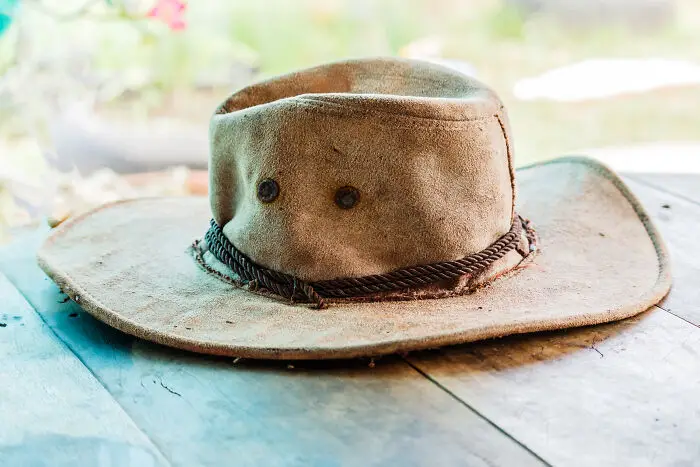
My grandpa on his feet vs a Japanese in his plane. He trips and gets a bullet through his hat instead of his head. *He never kept the hat!*.
11points
#38
My great-grandfather was resistant. He lived in Lorraine (a region of France, very close to Germany). When the N**i regime wanted to force the soldiers of Alsace and Lorraine to enroll, he refused to join the N**i army. He will be imprisoned, but will later manage to escape with his family to Toulouse in the free zone. To avoid being found by the N***s, he joined the Maquis (rural guerrilla bands) until the end of the war.
His son, my grandfather, was also kind of a resistant in a way : he put fat mixed with sand to sabotage the rail ball bearings. One day, he wanted to give a bottle of water to a deportee and was slapped by a German officer. The officer was then punished for this slap.
There's an amazing french video subtitled in english with a lot of great testimonies of people telling their grandparents' stories about awful, touching, disgusting, amazing things N***s did while occupying their village. It's a must-watch : [https://www.youtube.com/watch?v=ukAdEciKNA0](https://www.youtube.com/watch?v=ukAdEciKNA0).
Report
9points
#39
My grandmother was told to hide under the bed when the g*****o came for her father as a perceived spy for the French resistance.
Report
9points
#40
You know, now that I think about it, I don’t remember my grandma ever telling me about WWII and her life through it. I know my dad was born a year after, so she must’ve done some celebrating when it ended. Lol
Edit: my dad was born 6 months after the war ended.
Edit: my dad was born 6 months after the war ended.
Report
8points


