







#1

Instead, she got me suspended for a week on the first day back after the funeral. She also refused to let me (and another girl with other issues) sleep in a room w/o a chaperone on our class trip to Boston, because she thought "we might try something".
She described my d**d best friend to our 8:00 am class as "you know, the little girl with the pacemaker?"–which, like, NO ONE knew about, *A*, and *B*, my d**d best friend was not somehow smaller than the rest of us 12 & 13 year-olds.
It will have been 33 years this coming December, and I still hate that fat old b***h. She never, *ever*, got so much as a polite nod from me the second I was no longer under her control. I hated her then, and I hope she was sad and lonely for a very large proportion of the rest of her stupid, heartless life.
#2

#3

There is more but suffice to say I wouldn't p**s on him if he was on fire.
Trust between teachers and students is one of the less visible parts of education, but Inner Drive describes it as a foundation that allows learning to happen in the first place. When students trust their teachers, they are more willing to ask questions, attempt difficult assignments, admit when they are confused, make mistakes, and accept criticism.
Without that sense of security, students can become more concerned with avoiding embarrassment or protecting themselves than with understanding the material. Trust therefore affects more than whether a student likes a particular teacher; it can determine how willing they are to participate, persevere, and take the intellectual risks that learning requires.
#4

#5

#6

"Bahahahah you're absolutely wrong! Let me degrade you in front of the entire class in a cheap attempt to look cool in front of the students.".
That trust also changes how students respond when things do not go well. A student who believes a teacher is acting in their interest may be more willing to hear that their work needs improvement or to try again after getting something wrong. Someone who expects ridicule or unfair treatment may instead avoid asking for help, stop participating, or decide that there is little point in trying.
Inner Drive also notes that trust is particularly important because students have to rely on teachers for information and guidance before they can independently verify everything they are taught. When that relationship is damaged, even useful feedback or accurate information can be met with resistance.
#7
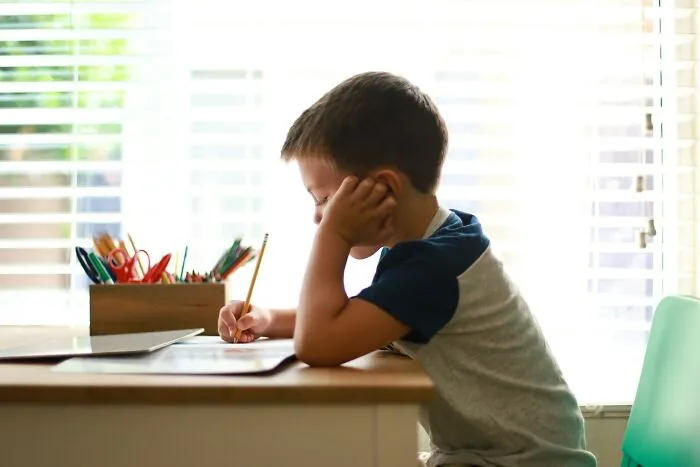
I spent all of my elementary school years at a desk in the corner because I talked too much. (Believe it or not, lecturing for hours at 6 year olds doesn't bode well). I would get 3-ish hours of homework every night and that probably took me 6+ hours to do because I was a mental nutcase after spending all of my energy sitting still and being quiet. I would lose my homework constantly, was told I was lazy, and then I'd miss the recess I so desperately needed to function like human being.
5th grade was horrible. My teacher would cover an entire blackboard with tiny cursive print and have paragraphs upon paragraphs we were supposed to copy verbatim into our notebook. It would take me so long to read the d**n thing because I a) needed glasses and b) my eyes don't track smoothly so I often skip lines when I read. I would read the board and not take the notes. We would have tests on this material and could use our notes for the test, but the notes themselves were not graded. I'll never forget being told I was cheating on every single test I ever took that was muilple choice because "I didn't take the notes". I got sent to the principal's office to have him watch me take tests. He couldn't figure it out so they would make me go to the nurse, take off my shoes, socks, jacket, roll up my sleeves, empty my pockets, etc because they couldn't figure out how I was cheating. I was disabled and so I couldn't know the information and that was that. Never mind I just needed to read the information once. My 5th grade teacher failed me on every written assignment because I (to this day mind you) can't spell and I invert my letters when I am tired/over thinking. (e.g. I'll spell the word work "wokr"). Any and all spelling errors resulted in a 0 on that question.
I will never forget that woman sitting there at a parent teacher conference, with me there, telling them they shouldn't be saving money for college because I'll be lucky to make it through high school. That hurt.
There's a lot that happened afterwards, but being told that college would be a waste of money because I couldn't broke me in a lot of ways. I ended up going to public schools, getting the accommodations I needed and did very well. As in, took 9 AP classes and passed all 9 AP test and walked into college with 36 college credits. I finished my bachelor's degree in 3 years, with a 3.9 and went to get my master's at my dream graduate school.
I work in an elementary school now with kids who have disabilities. I walk in those doors everyday determined to make sure no kid I ever work with feels what I felt. I also tell my kids all of my disabilities, every year. They need to know people like them grow up and have happy normal lives. I needed that when I was a kid and I didn't have it.
#8

#9

The professor refused to listen to anyone who disagreed with or brought up counterarguments to what she believed. She'd either interrupt or just completely ignore students, and if you were white she'd basically say your opinion didn't count because of your privilege (she was also white).
She asked for a midyear review, in which I told her all of that, and then she gaslit me in front of the class for "not being brave enough to speak up for my beliefs" by telling a story about how she took a parking ticket to court one time.
The relationship can go further than improving a student's experience of a particular class. Greater Good explores how one supportive teacher can sometimes change the way a student understands school, themselves, and what might be possible in the future.
Students who have come to see themselves as poor students, troublemakers, or people who simply do not belong in school can develop a different view when an adult consistently treats them as capable and worth investing in. A teacher who combines high expectations with genuine care can give a student a reason to reconsider an identity they may have carried for years.
#10

-she was a terrible teacher who woukd sometimes just decide we had been good and could play cards. She would hand out decks of cards to tables and we would think "this is great". Then my friend dropped one of the cards on the floor by accident and she proceeded to then take all.the cards from everyone and resumed teaching maths as punishment.
-she had a magnetic dart board in the room and made each person in the class come up.and have a go. One girl came up and missed the dart board so she then stopped the game and continued teaching maths as punishment. Poor girl was humiliated and people too stupid to see the weird manipulative s**t the teacher was doing blamed her
-me and three others forgot our scientific calculators one lesson, and instead of lending some to us like a normal teacher, she made the 4 of us sit at the back of the class, facing the back wall doing work completely different than the rest of the class.
-generally making students feel uncomfortable to ask questions and making us feel stupid if we did. "What do you mean you don't get it, I've just told you xyz".
-having blatant favourites
When we got to year 11 she had left the school and we got.a new teacher. He could not believe how little of the syllabus we knew and had to go through the whole few years of maths with us in order for us to pass our exams.
She had previously worked in other schools in my town and worked in other schools after. Friends from those schools said the same sort of stories about her.
I struggled with maths much more than I should should because of her.
#11

She'd tell all of us kids that we were all going to be k****d by an invasion of k**ler bees in a couple of years, but also any day now the earth was about to suddenly flip upside down and k**l everyone.
This was back in the day of overhead projectors for transparencies with a big glass surface. She got mad at a student and threw hers in the direction of a student, breaking it so she needed a new one.
School did not care at all.
#12

That shift can also affect how students understand authority itself. For a young person who has experienced inconsistent adults, harsh discipline, or relationships in which mistakes were met with anger, a teacher who is both firm and respectful can demonstrate that authority does not have to involve humiliation.
Students can learn that disagreement does not automatically lead to punishment and that criticism can address their behavior or work without attacking their worth. Over time, being treated as someone with potential rather than as a problem to be managed can influence how students approach challenges and whether they can imagine themselves succeeding beyond the classroom.
#13

#14

Her favouritism was so disgusting, she would actively humiliate the quieter, weaker students and make them stand in their place if they didn't know an answer, but would joke and laugh when her favourites didn't know the answer.
Worst part? A good majority of the class loved her because she was sarcastic and quirky. In reality she was a terrible, toxic person who fed off of the misery of the quiet kids and openly mocked them in front of the class.
Like s**t, dude, imagine being a quiet kid who dreads being called on, and someone who's supposed to help you in life just makes you stand up and starts mocking you, and the entire class laughs along. S**t stays with you.
#15
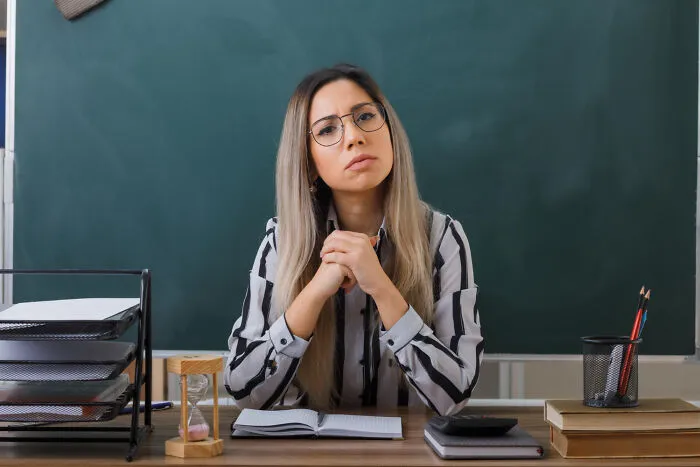
Edit: I forgot to mention she now teaches my younger brother, I feel sorry for him.
There is, however, a structural reason why a teacher's behavior can have such a powerful effect. Psychology Today points out that the teacher-student relationship is inherently unequal: teachers assign grades, enforce rules, make recommendations, control classroom privileges, and can initiate disciplinary consequences.
Students generally have far fewer options for challenging those decisions, particularly when they are young or dependent on the school system. That authority becomes problematic when it is used to intimidate, humiliate, silence, or manipulate rather than to support learning and safety.
#16
On the other hand though, the strict and less loved history teacher stayed after school with me multiple times, encouraged me and told me I was strong for seeking out help. I'm now in graduate school with a full time job and hopefully looking toward a Ph.D. He is the reason why.
#17

One time I forgot the textbook, and she made me (and 2 others) stay after class to copy 15 pages by hand as a punishment.
Yes, that punishment came from a teacher who didn't even come to her own casses.
#18

The imbalance can become particularly noticeable when students believe rules are being applied differently to different people. A teacher who gives one student repeated chances while punishing another for similar behavior can make fairness itself feel uncertain. The same applies when teachers publicly criticize students, use embarrassment as discipline, or allow personal preferences to influence rewards and consequences.
Favoritism, intimidation, blurred boundaries, and fear-based control are examples of authority being used in harmful ways. Because students cannot simply walk away from the relationship, these experiences can carry more weight than a disagreement between two people with equal power.
#19
#20

She was American and a feminist which doesn’t sound bad at the start of the year until she morphed into a sexist, homophobic terf. She always tried to put down the boys in the class but always treated us girls like we were better. Called a kid a spastic. called people the f-word (f*g) a bit. Made peanut butter chocolate cookies and expected people to think she was nice.
idk what happened to her after because i moved schools but i think someone said that she was moved to a local grammar school.