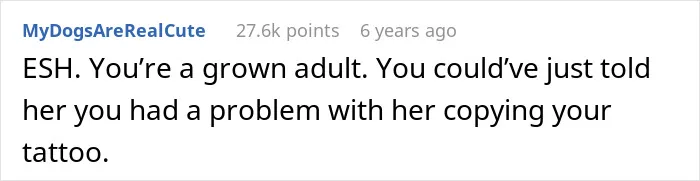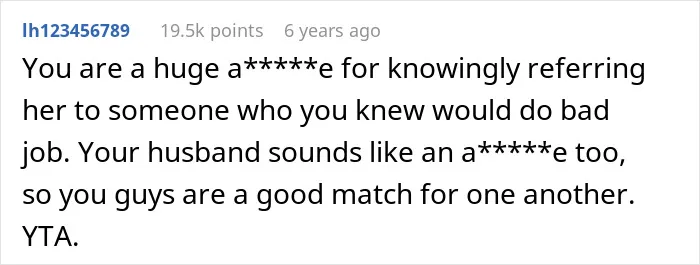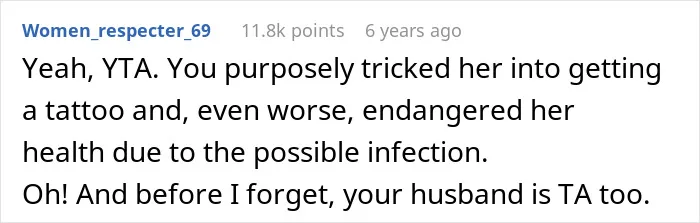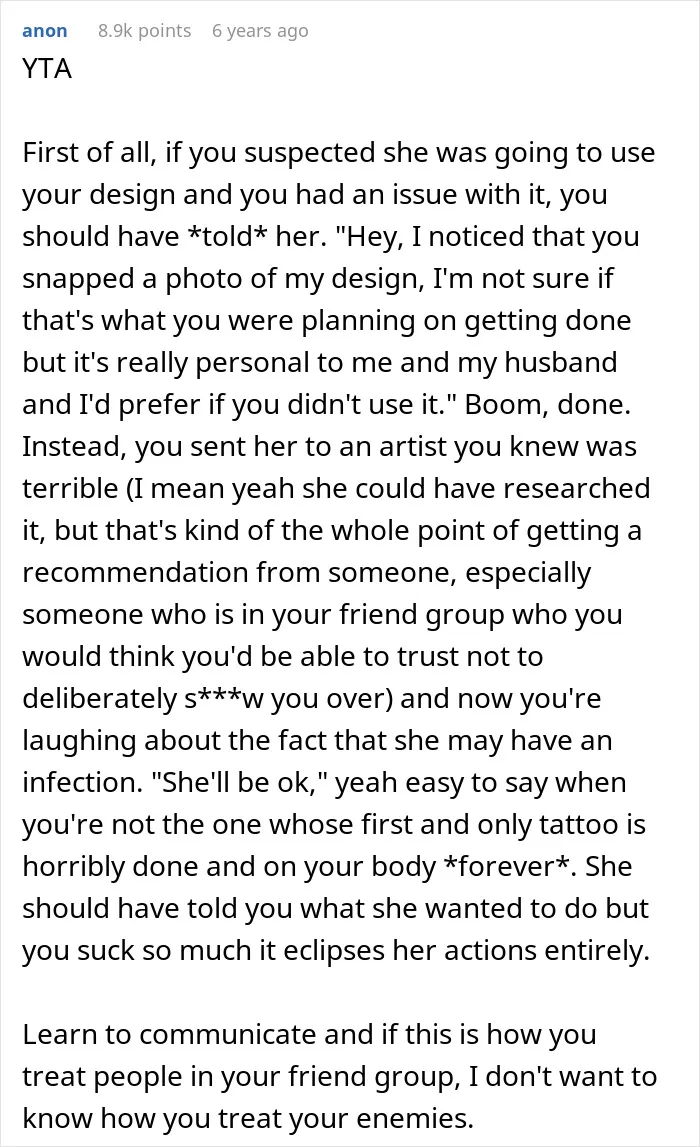


You need to do a lot of homework before getting a tattoo. You need to find a design that really speaks to you, research a good artist so that it's top quality, and then save up the money — tattoos are kind of a luxury nowadays. Yet, it seems not everyone gets this memo.
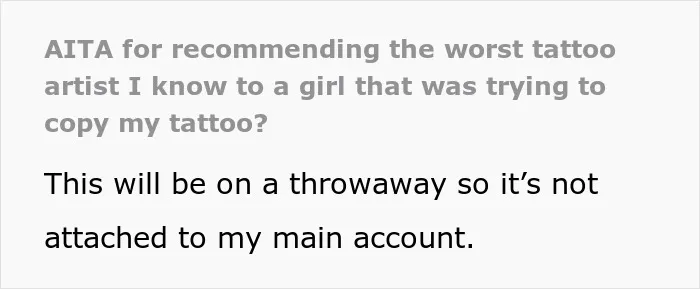
This woman got a bad tattoo because her friend got petty about recommendations. Since she wanted to copy her tattoo, the woman sent her to the worst tattoo artist who inked people out of his garage. When the tattoo turned out terribly, the woman was thrilled, but people's opinions online after she shared the story didn't quite align with her thinking she was the hero in this story.
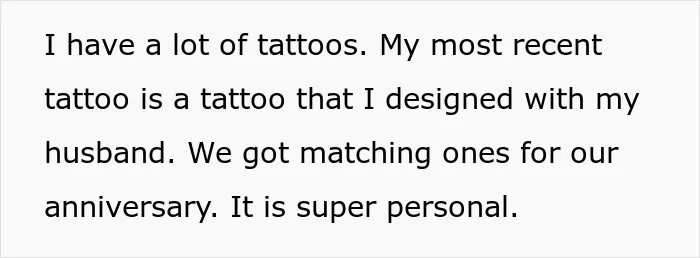
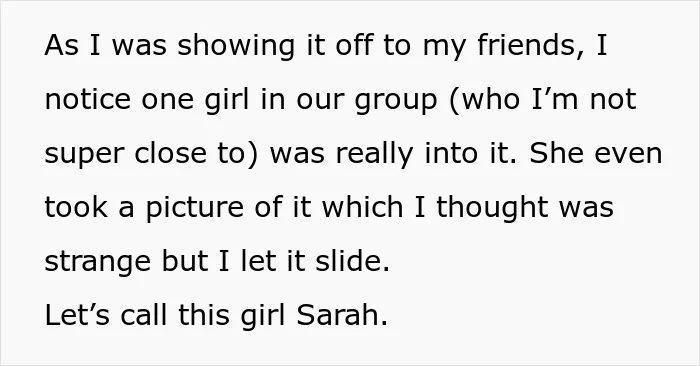
A copycat friend wanted the same tattoo as a woman had with her husband

So, in an act of petty revenge, she recommended her the worst tattoo artist she knew

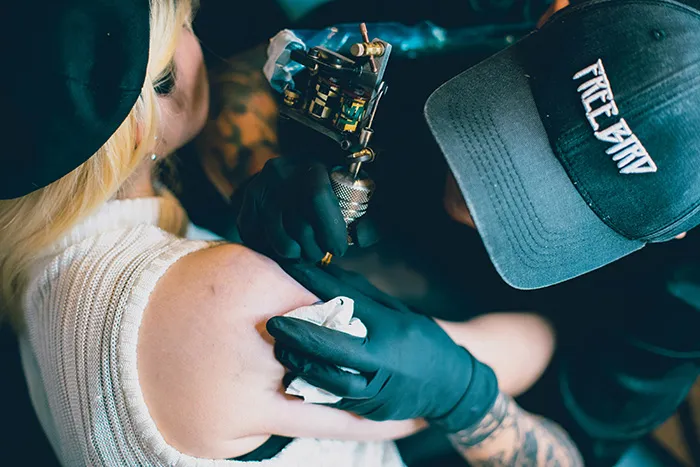
Respectable artists don’t copy other artists’ work, and sometimes they might even get into legal trouble for it
They say that imitation is the most sincere form of flattery, but does that apply to such personal and one-of-a-kind things like tattoos? If we really think about it, probably none of us are 100% authentic in everything we are and do. We might borrow elements of style from a fashionable person that we admire, but still, copying a tattoo that is personal and meaningful to a particular couple seems at least slightly inappropriate.
Certain tattoo trends come and go, of course, but they mostly still are highly personal and individualistic to the person who gets it. According to a 2010 Pew survey, 69% of tattooed Americans say that their tattoos commemorate a person or something that’s especially meaningful to them. 47% say their tattoos are statements about what they believe in, and for 32%, it's about improving their appearance.
In the tattoo world, copying someone else's work is also pretty taboo. Respectable artists often refuse to tattoo works that belong to other artists, no matter their level of intricacy. According to artist Ryan Jenkins, "Asking a tattoo artist to copy another artist’s work isn’t just a small mistake. It crosses ethical lines, minimizes creativity, and can even set you up for long-term disappointment with your tattoo."
It's even possible to get into legal trouble by stealing someone else’s tattoo. While the person whose body the tattoo is inked on doesn’t own it, the design is owned by the artist who came up with it. Some artists avoid tattooing famous characters because they can be subject to copyright, too.
Mimicking and copying one another is actually the social glue that holds friendships and social circles together
Ask yourself this: how much of your personality is just you, and how much of it is borrowed from the people you admire or just spend a lot of time with? While copying someone else in the way they speak, dress, and the things they like can seem like an infringement on their privacy and identity, it’s much more common than we might realize.
Psychologists call this phenomenon the Chameleon Effect. Apparently, we mimic people’s expressions, posture, and verbal expressions without even realizing it. The more “in tune” we feel with someone, the more likely we’re to do it. “The chameleon effect helps us feel part of the group and connect with the person we're mirroring,” licensed counselor and professor Northern Illinois University, Suzanne Degges-White, Ph.D., writes for Psychology Today.
For some people, imitating others is a strategy of survival in communities: by copying others, we try to fit in. “If you feel like someone is imitating you on purpose, oftentimes it’ll make you really angry,” psychology professor Jim Coan explains. “It’s a powerful way to bond. It’s also a powerful way, if it’s thought to be not genuine … to foster antagonism.”
No matter how hard the OP’s friend might try to copy her in other things, they will still always be different individuals in some way. Humans are not genetically identical, unlike, say, ants or bees.
“There’s no ‘self’ organ in the brain,” Coan said. “It’s a constantly provisional estimate of what your body can do and what the demands on it are. The self is constituted of your experiences, but also your experiences with others.”
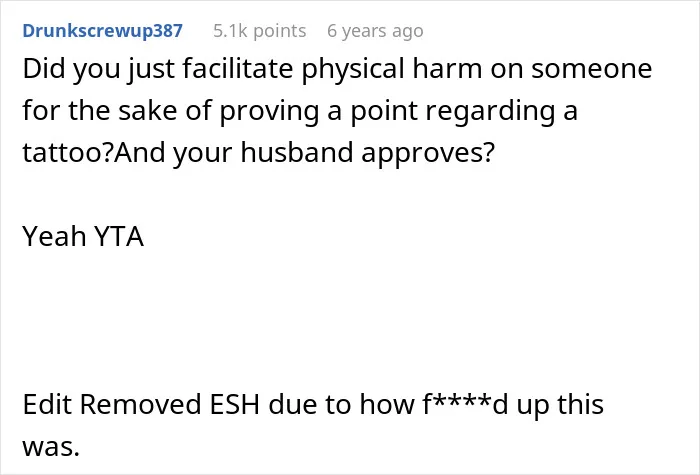
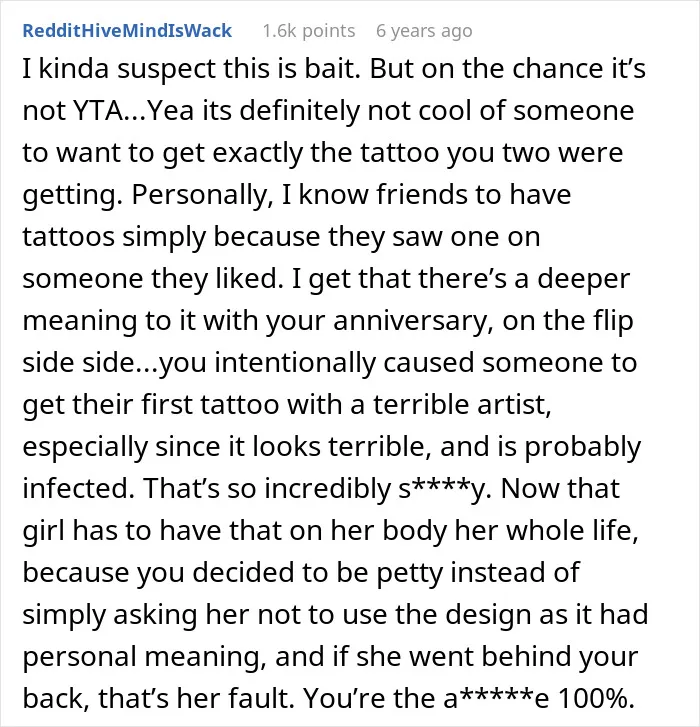
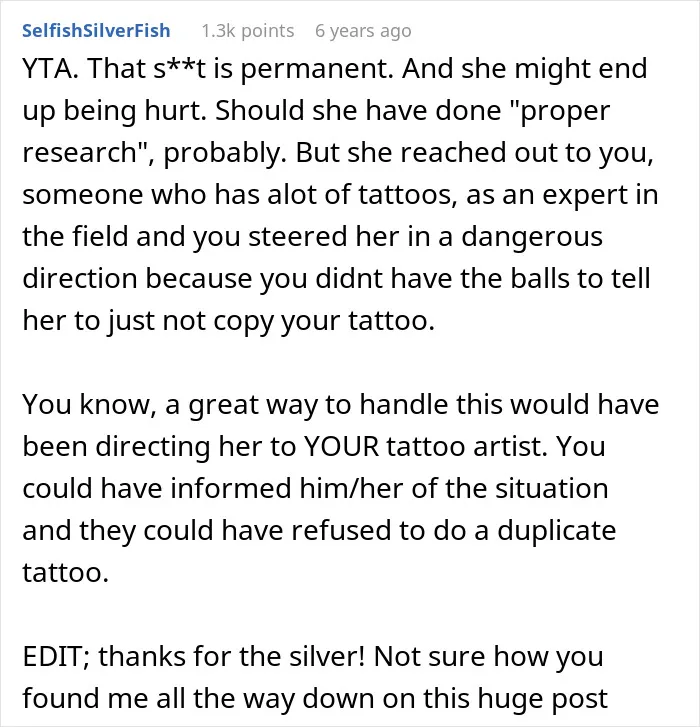
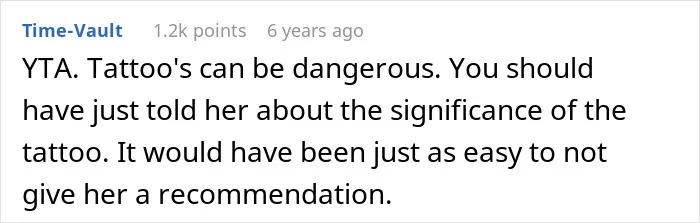
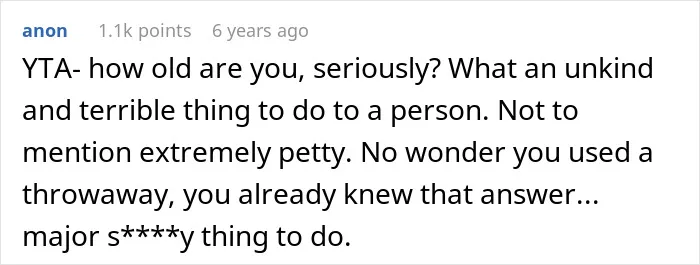
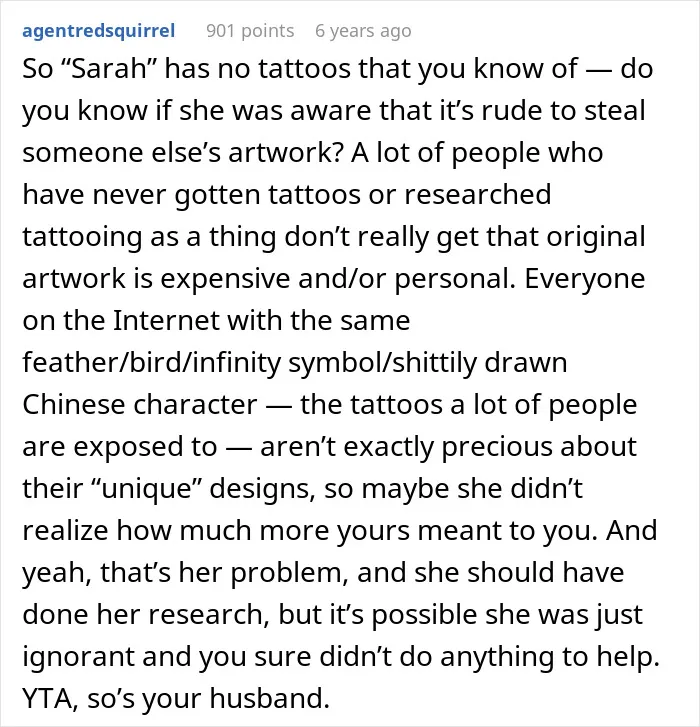
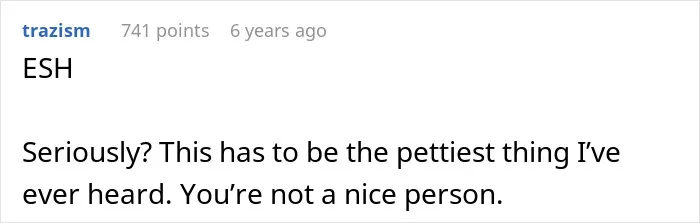
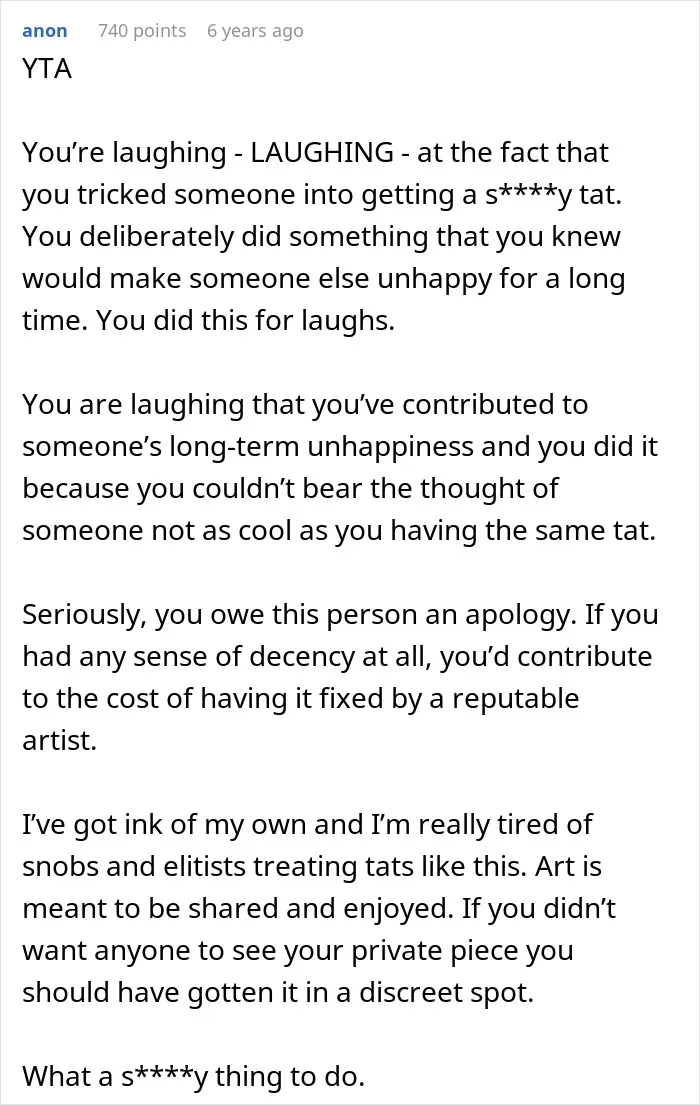
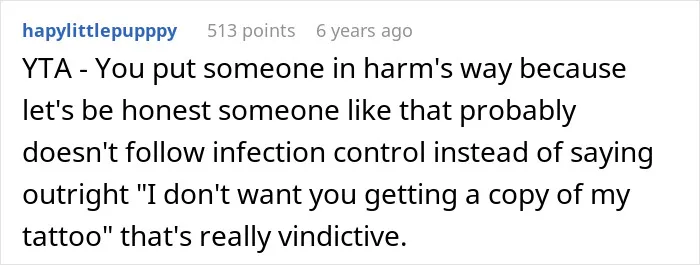
Commenters called the OP out for thinking she just did something cool: "You put someone in harm's way"