





World War I took place from July 28, 1914, to November 11, 1918. The brutal war ended over a century ago, but it’s still an incredibly important part of modern history. And one page that’s dedicated to making sure that people never forget what took place during that time is WWI Stories on Instagram.
We took a trip to this account and compiled a list of their most haunting posts below. We’ll warn you right now, pandas, that some of these images and stories are quite disturbing and upsetting. But these moments from the past deserve to be remembered, so we hope that you learn something new while scrolling through this virtual history museum.
#2
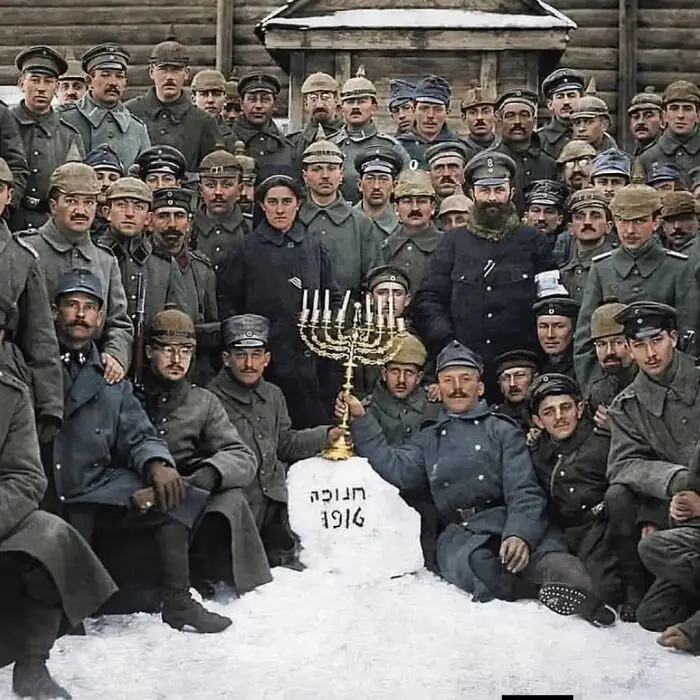
Jewish soldiers in the German Army celebrate Hanukkah on the Eastern Front, 1916, during WW1.
Report
6points
#4
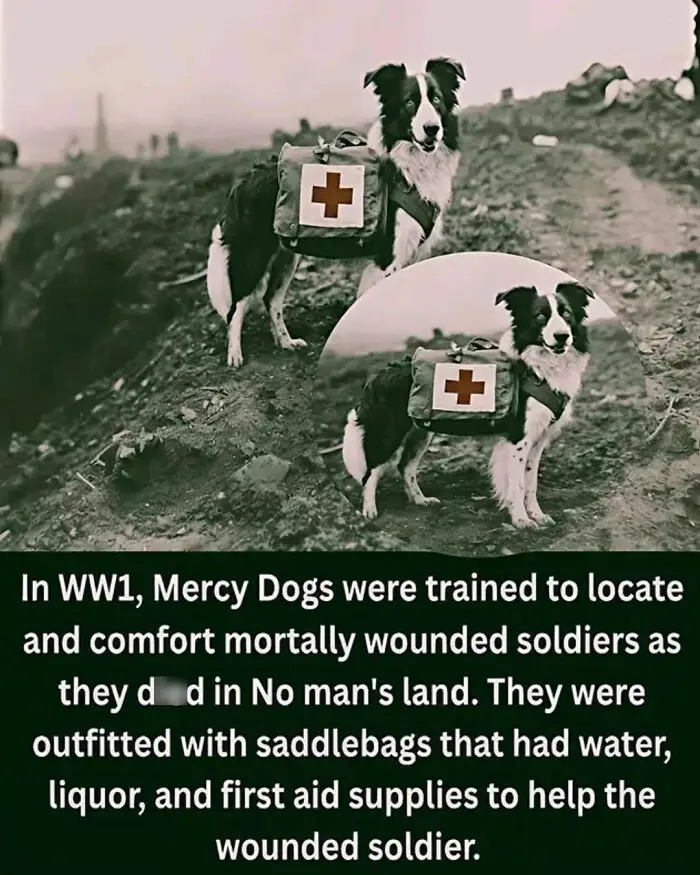
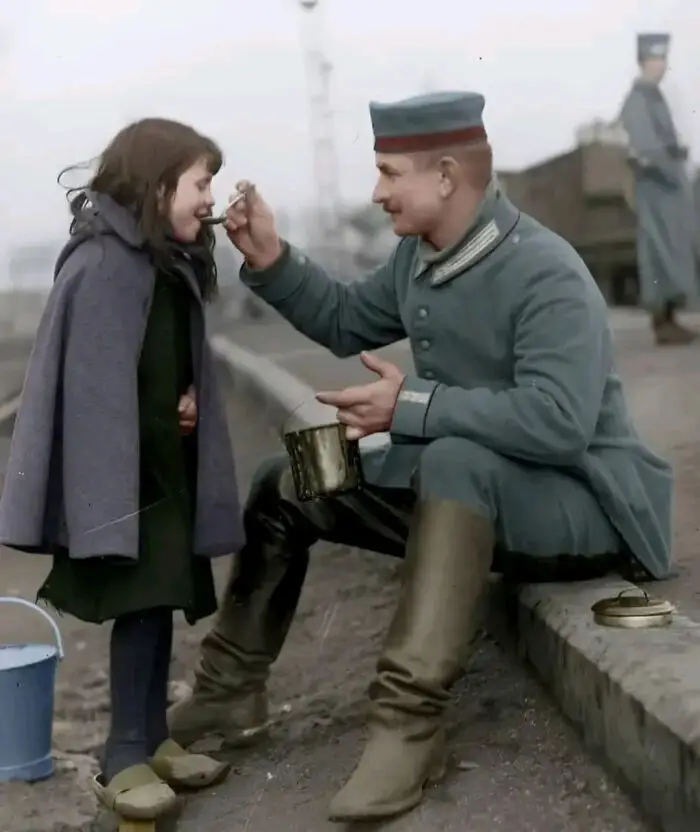
WW1, Mercy Dogs were trained to locate and comfort mortally wounded soldiers as they d**d in No man's land. They were outfitted with saddlebags that had water, liquor, and first aid supplies to help the wounded soldier.
Report
5points
#5
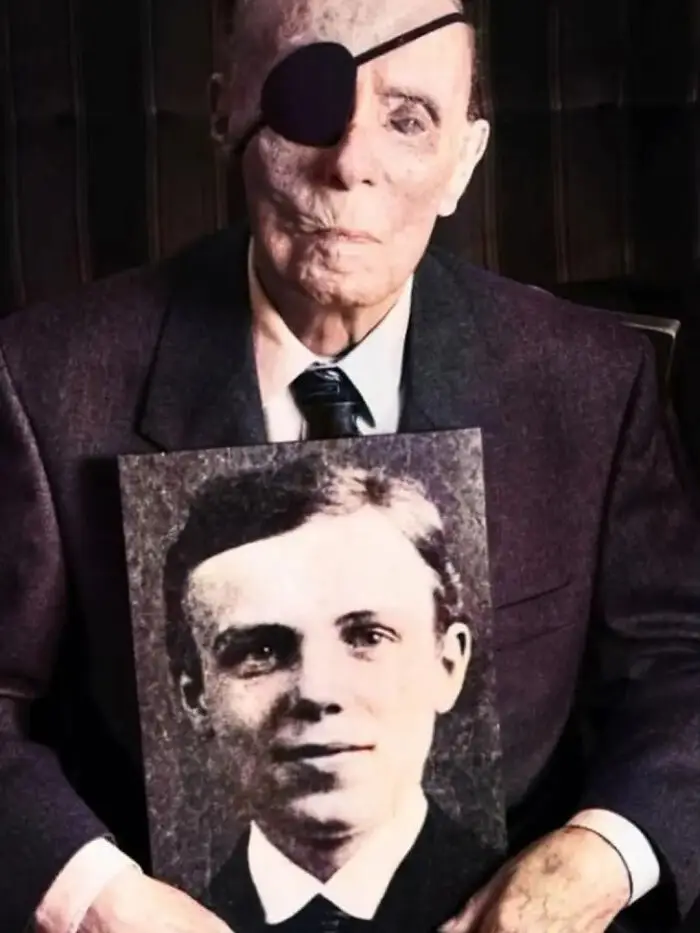
German WW1 veteran Hans Lange holds a portrait of himself as a 19 year old in 1918. Born in 1899, Hans was wounded by a g*****e during the war, gradually losing his sight. This photo was taken in 1998, Hans passed away in 1999.
Report
5points
#7
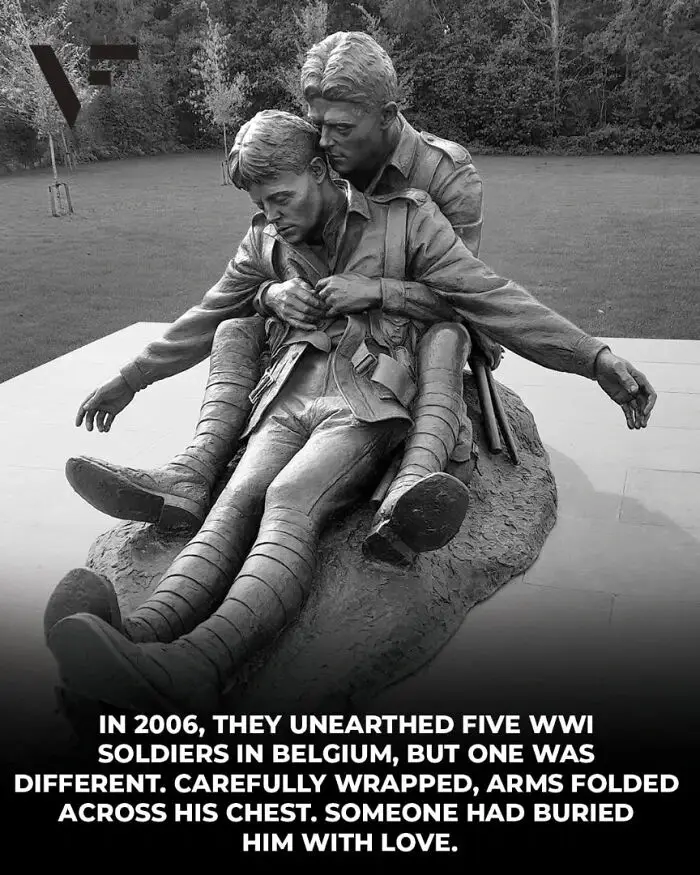
In 2006, construction workers digging near Polygon Wood in Belgium uncovered what remained of the First World War: fragments of uniforms, rusted equipment, and the skeletal remains of five Australian soldiers lost during the fighting of 1917. Most had been swallowed by a century of soil and silence, the kind of battlefield discovery that is tragically familiar in Flanders. But one of the bodies stood apart.
He had been wrapped carefully in a military groundsheet. His arms had been folded across his chest, not by chance or by the shifting earth, but with unmistakable intention. Someone, in the chaos of war, had stopped long enough to bury him with gentleness.
Archaeologist Johan Vandewalle was called to examine the site. He’d seen hundreds of battlefield recoveries over the years, but this one felt personal. Soldiers in the Great War often d**d where they fell, left in the open as battles moved on. A careful burial during the firestorm of Polygon Wood was something extraordinary.
DNA testing, uniform fragments, and surviving service records eventually led to a name: Private John “Jack” Hunter, 23 years old, 55th Battalion, Australian Imperial Force. He had d**d on 26 September 1917, in the brutal opening days of the Battle of Polygon Wood, where thousands of Australian soldiers were k****d or wounded.
When Johan contacted the Hunter family in Australia, they told him something he hadn't expected. Jack Hunter hadn’t been anonymously buried by stretcher-bearers or medics. He had been buried by his younger brother, Private James “Jim” Hunter, who had enlisted with him, marched with him, and fought beside him from Egypt to Belgium.
On that September morning in 1917, amid machine-gun fire, artillery bursts, and the churn of mud and smoke, Jack was hit. Jim saw his brother fall. He fought on until he could reach him, then knelt in the shell-blasted earth and wrapped Jack’s body in a groundsheet. He folded his brother’s arms across his chest. And in one of the most violent battles of the war, he gave Jack a burial shaped by love, not orders.
Report
5points
#8
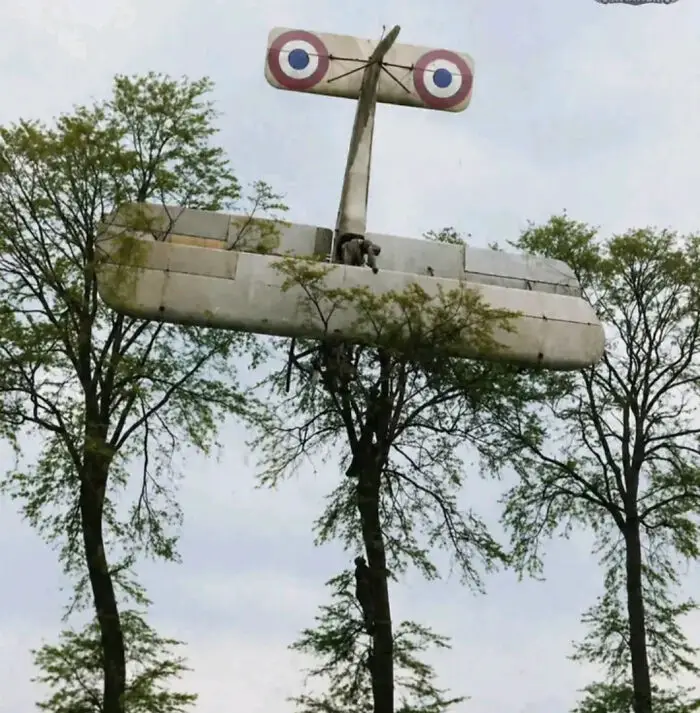
WW1, 1915. After a failed attack on a Zeppelin hangar near Brussels, Belgium, this French pilot flew too low and was caught in tree tops. Note the soldiers climbing the tree to get to the pilot.
Report
5points
#9
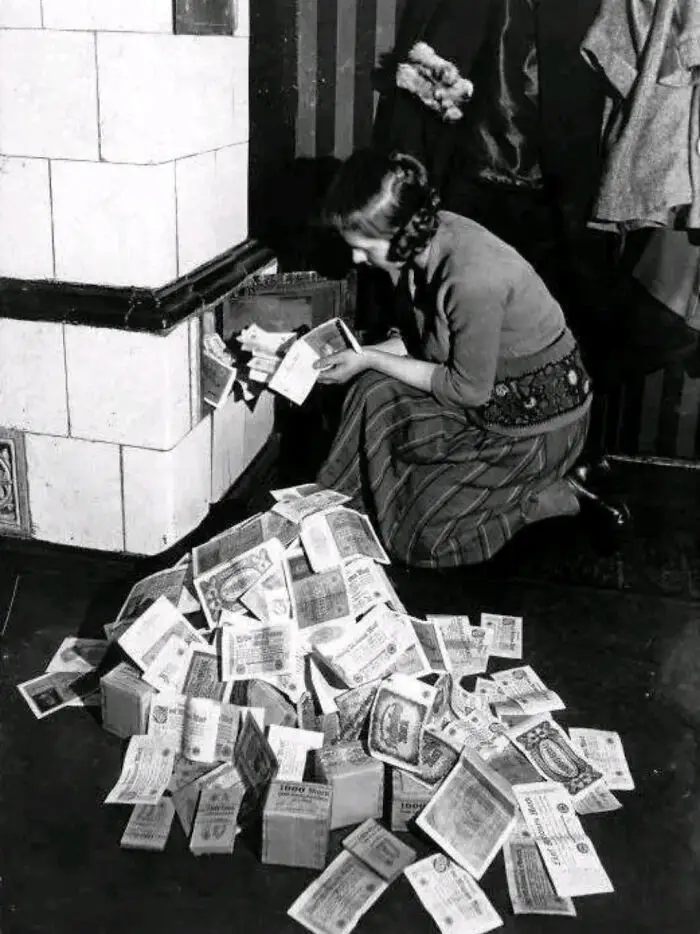
A German woman burning tons of legal paper money during the hyperinflation of German currency in the 1920s. The paper money was cheaper than wood or coal, and families used it to fuel their fires during the crisis.
Report
5points
#10
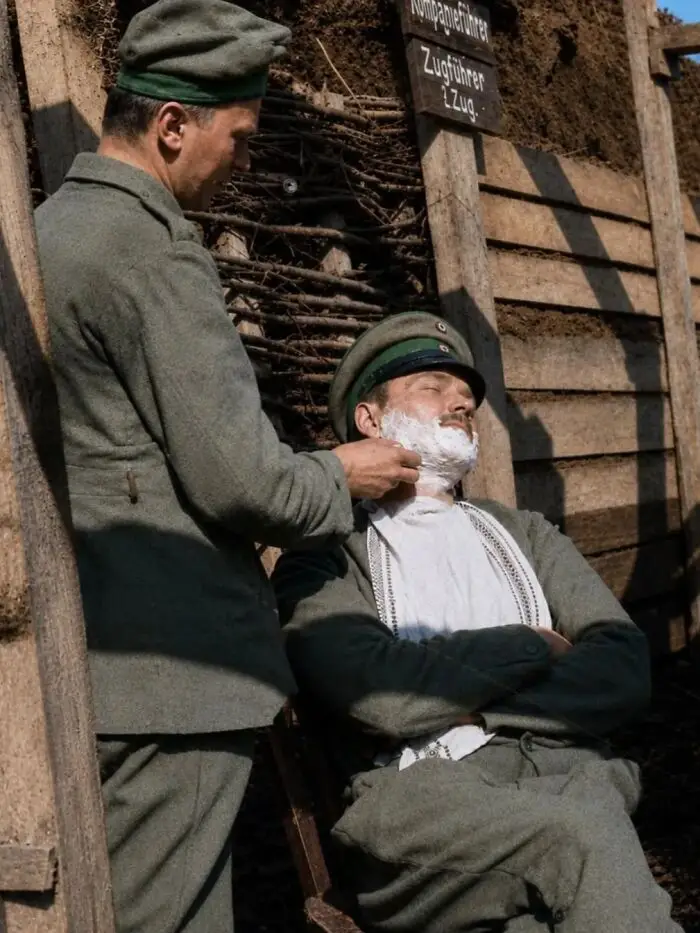
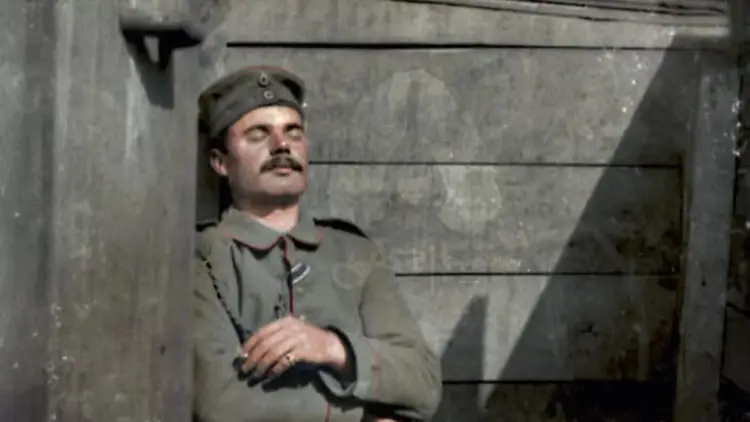
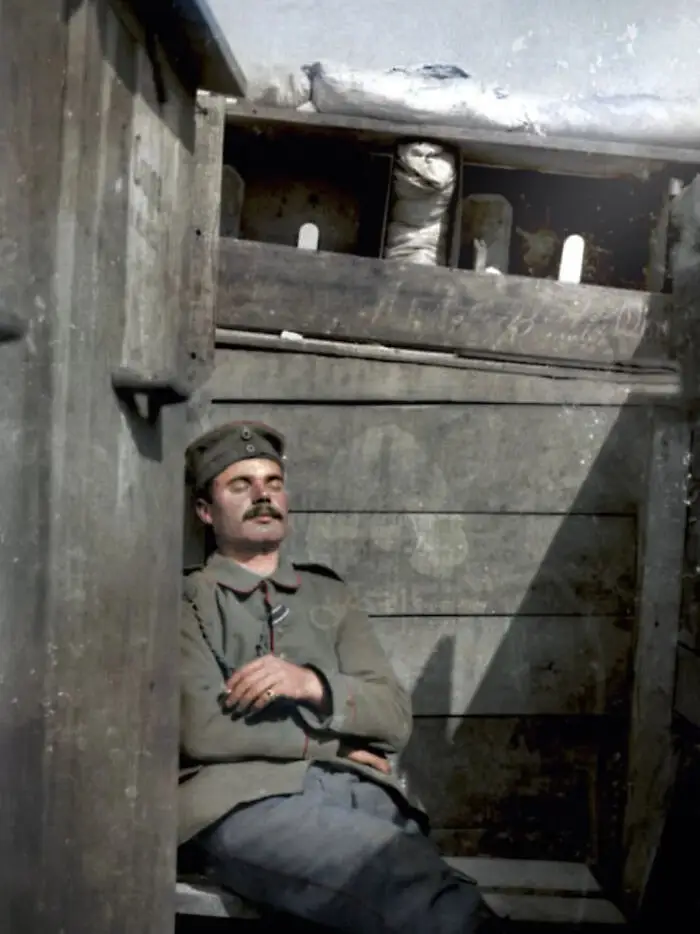
March 1916 — Life in the trenches.
By this point in the war, Lt. Alexander Pfeifer had fought on the Western Front at Neuve-Chapelle, Festubert and Loos, becoming an experienced company commander in the process.
After time away from the frontline, he had returned to the trenches and was settling back into daily life. His diary and this photo of him captures a surprisingly ordinary moment amid the war:
“I have now been in the trench again for two days. I am doing well, and I am already completely used to the activities again. The weather has also gotten slightly better. I sat in front of the shelter in my sleeved vest almost all day today and even had myself shaved outdoors.”
This small moment, recorded in March 1916, is one of many personal details preserved in his wartime diary, published in The Other Trench / Der andere Graben
Report
5points
#11
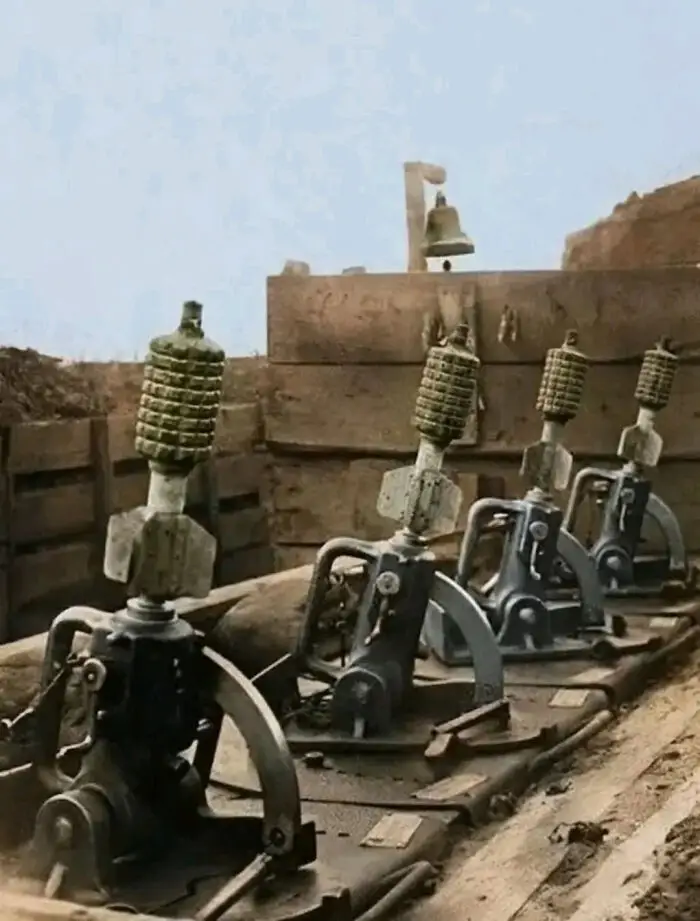
The Granatenwerfer 16 was a German light trench mortar introduced during World War I in 1916. Designed to provide close infantry support, it fired 46 mm fin-stabilized grenades in a high-angle arc, allowing crews to strike enemy trenches, dugouts, and barbed wire positions beyond the reach of rifles and machine guns.
With an effective range of around 250–300 meters, the weapon could be quickly transported and operated by a small crew, making it well suited to the trench warfare conditions of the Western Front. The Granatenwerfer 16 helped bridge the gap between hand-thrown grenades and larger artillery systems, becoming a widely used support weapon during the war.
With an effective range of around 250–300 meters, the weapon could be quickly transported and operated by a small crew, making it well suited to the trench warfare conditions of the Western Front. The Granatenwerfer 16 helped bridge the gap between hand-thrown grenades and larger artillery systems, becoming a widely used support weapon during the war.
Report
4points
#12
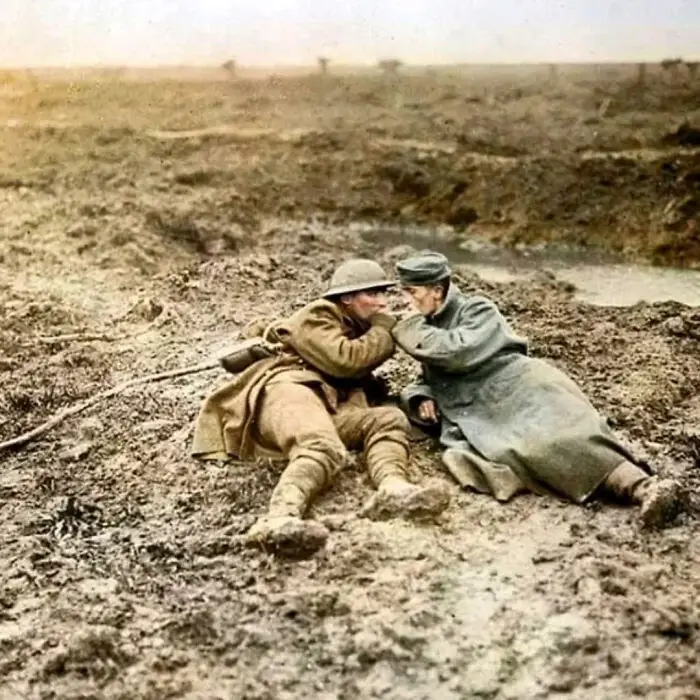
"Enemies and comrades"
Two wounded soldiers, A Canadian and a German soldier lights cigarettes on the muddy Passchendaele battlefield in Belgium, 1917.
Two wounded soldiers, A Canadian and a German soldier lights cigarettes on the muddy Passchendaele battlefield in Belgium, 1917.
Report
4points
#13
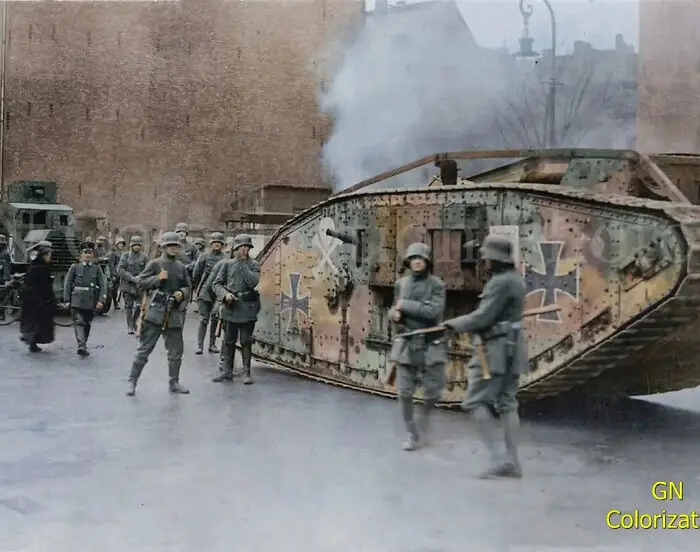
Freikorps utilize a captured British Mk IV tank to put down the Spartacist Uprising, Berlin, 1919
The Spartacist uprising (German: Spartakusaufstand), also known as the January uprising (Januaraufstand) or, more rarely, Bloody Week, was an armed uprising that took place in Berlin from 5 to 12 January 1919. It occurred in connection with the German revolution that broke out just before the end of World War I. The uprising was primarily a power struggle between the supporters of the provisional government led by Friedrich Ebert of the Majority Social Democratic Party of Germany (MSPD), which favored a social democracy, and those who backed the position of the Communist Party of Germany (KPD) led by Karl Liebknecht and Rosa Luxemburg, which wanted to set up a council republic similar to the one established by the Bolsheviks in Russia. The government's forces were victorious in the fighting.
The Spartacist uprising (German: Spartakusaufstand), also known as the January uprising (Januaraufstand) or, more rarely, Bloody Week, was an armed uprising that took place in Berlin from 5 to 12 January 1919. It occurred in connection with the German revolution that broke out just before the end of World War I. The uprising was primarily a power struggle between the supporters of the provisional government led by Friedrich Ebert of the Majority Social Democratic Party of Germany (MSPD), which favored a social democracy, and those who backed the position of the Communist Party of Germany (KPD) led by Karl Liebknecht and Rosa Luxemburg, which wanted to set up a council republic similar to the one established by the Bolsheviks in Russia. The government's forces were victorious in the fighting.
Report
4points
#14
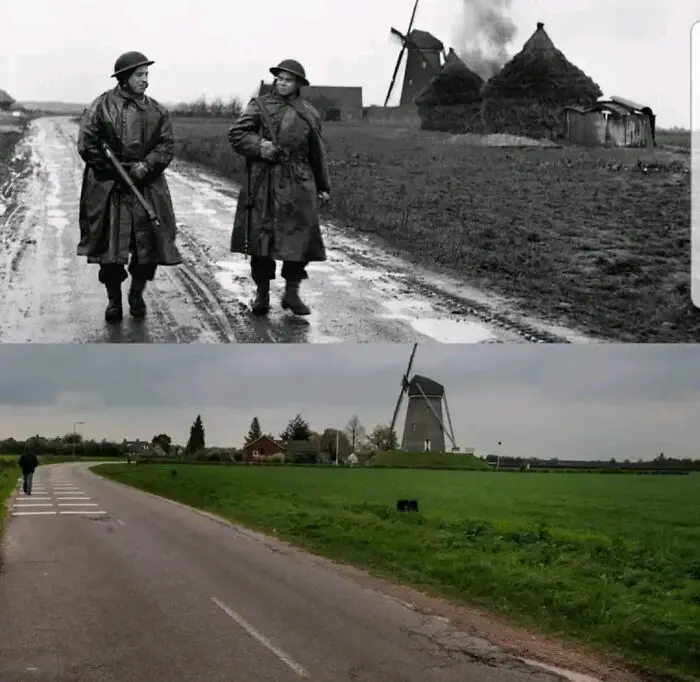
"Wet and Mud"
Scottish soldiers of the 53rd Highland or Welsh Division walking accross the typical Dutch countryside with her windmills near Meijel, The Netherlands. October 1944.
Scottish soldiers of the 53rd Highland or Welsh Division walking accross the typical Dutch countryside with her windmills near Meijel, The Netherlands. October 1944.
Report
4points
#15
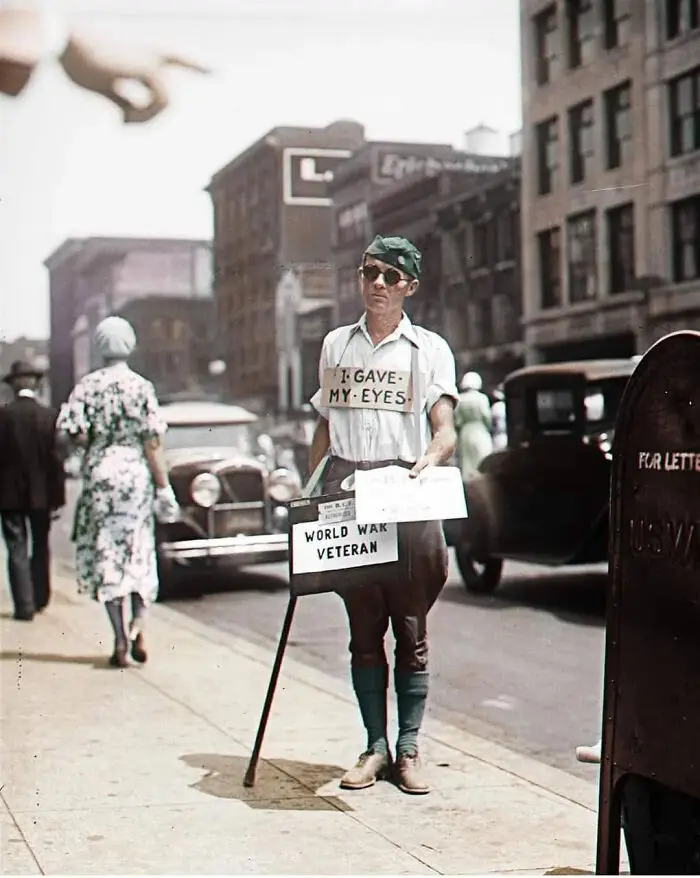
Blind World War I veteran selling newspapers on sidewalk in WashingtonDC.
"I gave my eyes." - World War Veteran. 1932, USA.
He gave his eyes in the "war to end all wars."
"I gave my eyes." - World War Veteran. 1932, USA.
He gave his eyes in the "war to end all wars."
Report
4points
#16
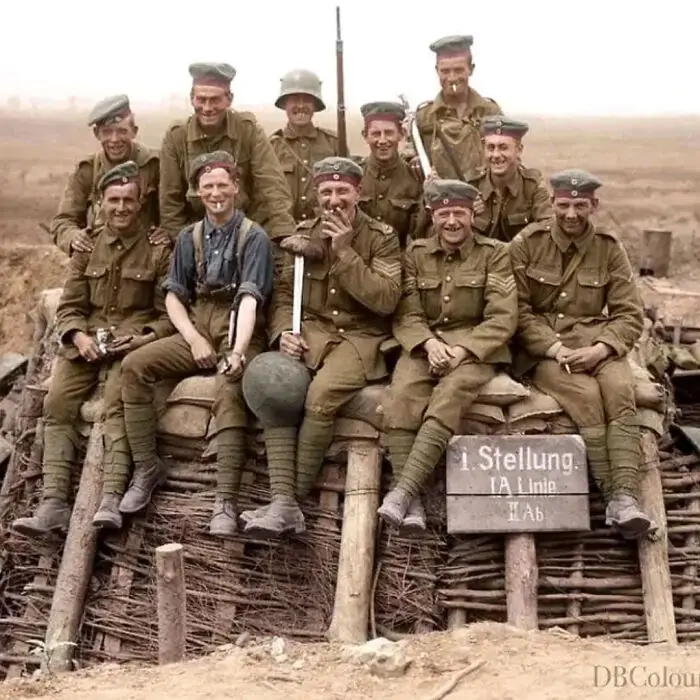
Soldiers of the Duke of Cornwall's Light Infantry wearing German helmets and caps in a captured trench. Note a board with a sign "I.Stellung. IA Linie. II AB". Battlefield near Messines, Belgium, 11th June 1917.
Report
4points
#18
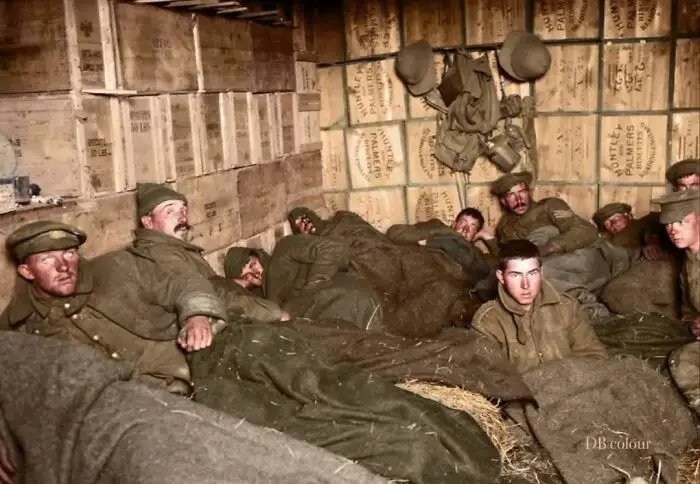
Frost-bitten Allied soldiers lying on straw in shelters constructed of biscuit boxes (Huntley & Palmer) at a store dump at Sulva, Gallipoli, after the frost at the end of November 1915.
Report
4points
#19
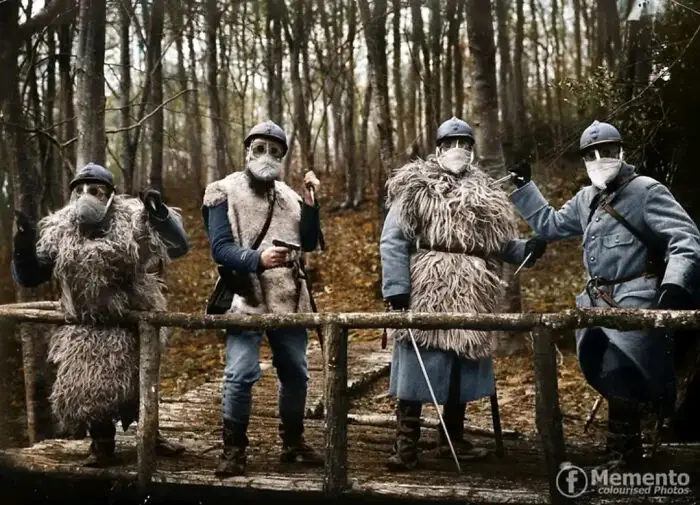
January 1916, forest of Bezange, Lorraine, France,
Four 257th Infantry Regiment Officers with TN gas masks, Coutrot Daggers No. 1, M1892 Revolver and a PA Ruby Gun.
At the beginning of the war, the French soldier had only his bayonet, but it was not adapted to the fighting in the trenches. To be able to face the German daggers (Nahkampfmesser), the French army decided to buy some but the knives were too small (3in / 8cm). To cope with the needs, all the butcher's knives were requisitioned and the French navy gave boarding weapons.
Approved in mid-1915 as a standard military infantry weapon after its development by Lt. Col. Coutrot of the French Army, the “Poignard-Baïonnette Lebel” consisted of a long, needle-pointed, stiletto-profile blade with wood handle and an integrated knuckle guard made of steel. Up to three trench knives could be constructed from a single M1886 Lebel bayonet.
Report
4points
#20
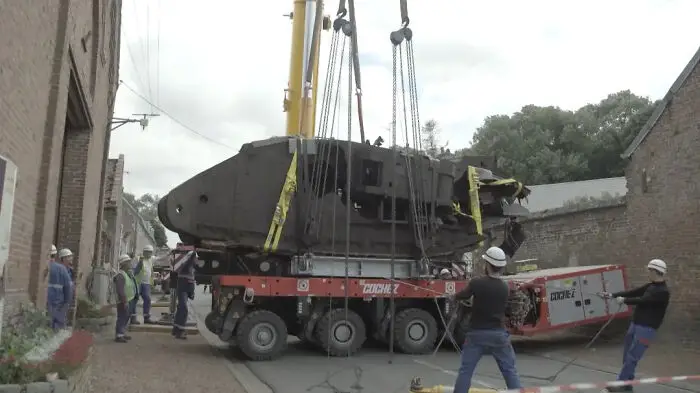
After more than a century, a first world war tank makes its final journey. History is still alive.
This is Deborah, a surviving British Mark IV tank from the First World War, carrying the scars of one of the darkest chapters in human history.
This is Deborah, a surviving British Mark IV tank from the First World War, carrying the scars of one of the darkest chapters in human history.
Report
3points
