






World War I took place from July 28, 1914, to November 11, 1918. The brutal war ended over a century ago, but it’s still an incredibly important part of modern history. And one page that’s dedicated to making sure that people never forget what took place during that time is WWI Stories on Instagram.
We took a trip to this account and compiled a list of their most haunting posts below. We’ll warn you right now, pandas, that some of these images and stories are quite disturbing and upsetting. But these moments from the past deserve to be remembered, so we hope that you learn something new while scrolling through this virtual history museum.
#41
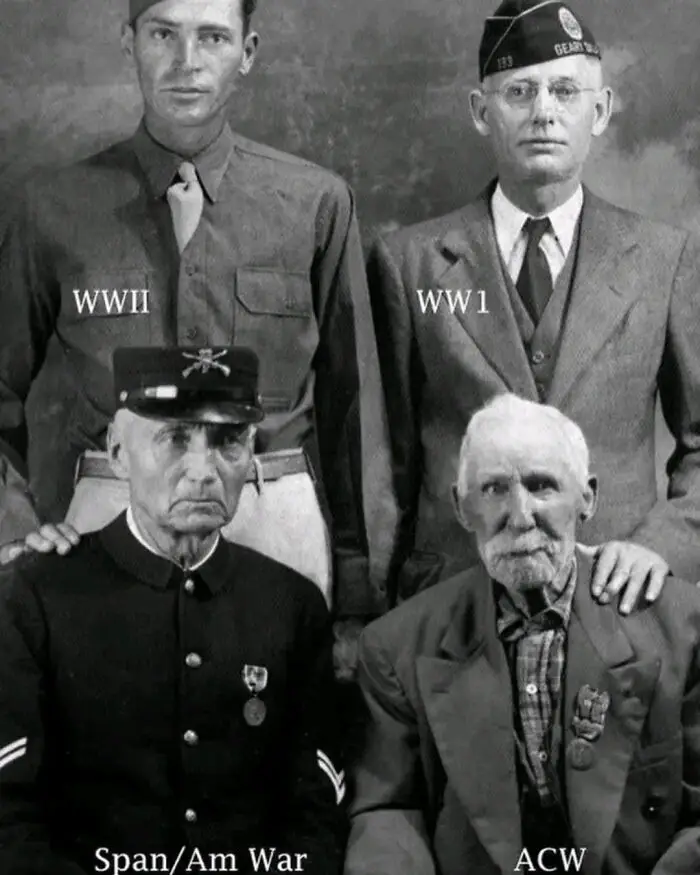
Veterans of four wars from Geary, Oklahoma.
Front: O.P. Ruth, Spanish-American War (1898) and Mr. Everest, American Civil War (1861-1865). Back: Pearl Johnson, World War II (1941-1945) and "Red" Young, World War I (1917-1918). All dates are from the period which the United States was in a state of war.
Report
7points
#42
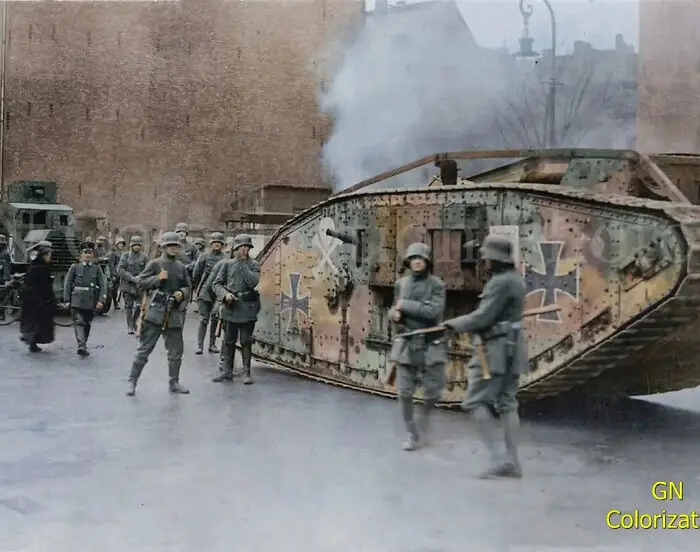
Freikorps utilize a captured British Mk IV tank to put down the Spartacist Uprising, Berlin, 1919
The Spartacist uprising (German: Spartakusaufstand), also known as the January uprising (Januaraufstand) or, more rarely, Bloody Week, was an armed uprising that took place in Berlin from 5 to 12 January 1919. It occurred in connection with the German revolution that broke out just before the end of World War I. The uprising was primarily a power struggle between the supporters of the provisional government led by Friedrich Ebert of the Majority Social Democratic Party of Germany (MSPD), which favored a social democracy, and those who backed the position of the Communist Party of Germany (KPD) led by Karl Liebknecht and Rosa Luxemburg, which wanted to set up a council republic similar to the one established by the Bolsheviks in Russia. The government's forces were victorious in the fighting.
Report
7points
#43
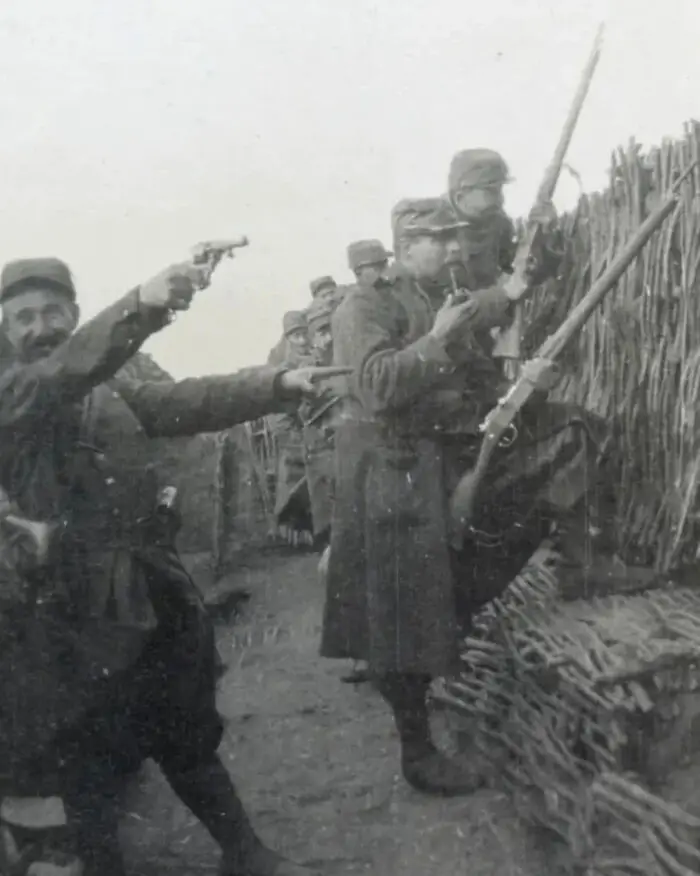
French soldiers in a trench posing as if ready to go over-the-top, 1915.
Report
7points
#44
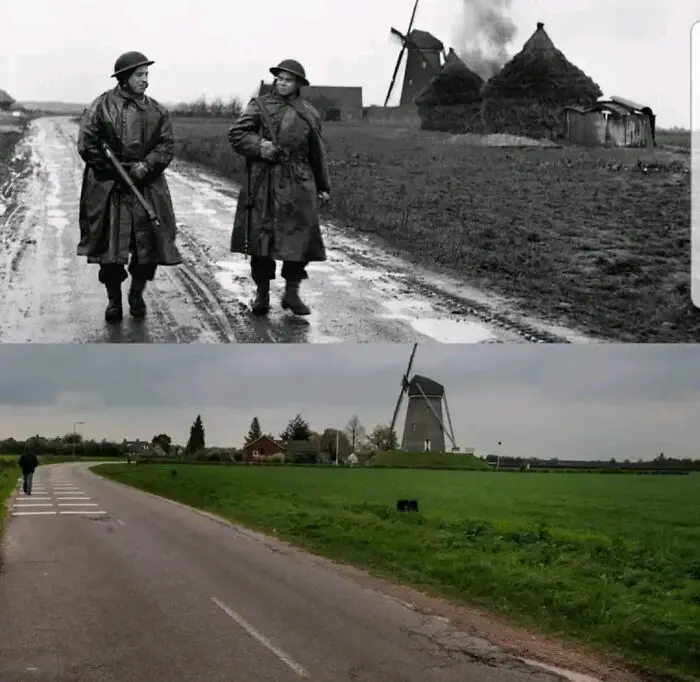
"Wet and Mud"
Scottish soldiers of the 53rd Highland or Welsh Division walking accross the typical Dutch countryside with her windmills near Meijel, The Netherlands. October 1944.
Report
7points
#45
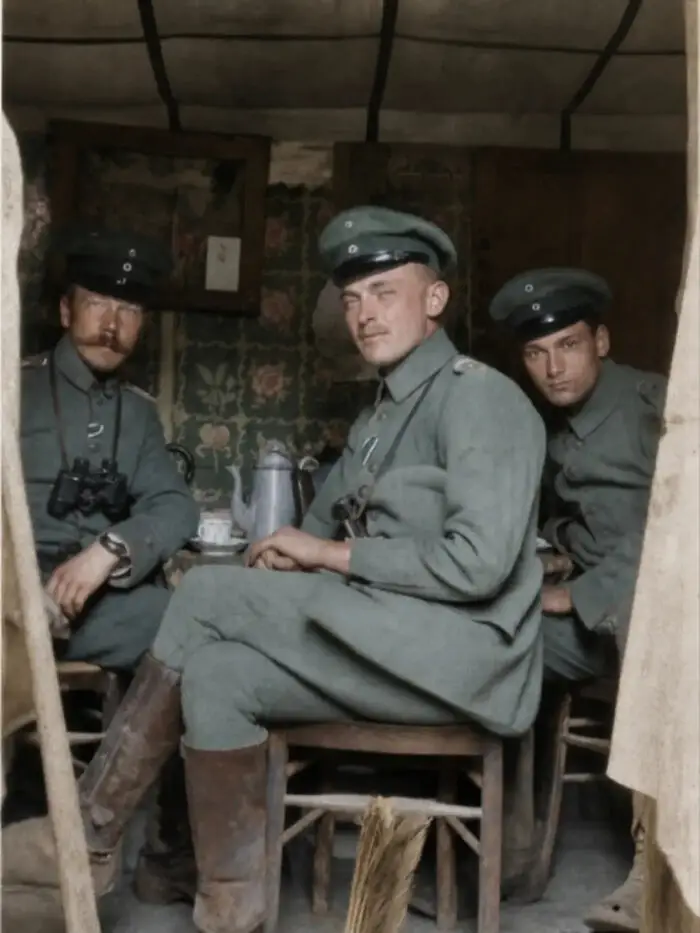
German soldiers in the trench - 1915
By the time this photograph was taken, Lt. Alexander Pfeifer already had numerous battles and war experiences behind him.
After some time away from the front, he returned to the trenches and was struck by how much they had developed in a short period.
Alexander recorded:
“Anyone who hasn’t seen them or helped build them has no idea of the work that goes into these trenches, which are over two metres deep. The walls are covered from top to bottom with thick planks and wicker and braced with beams to prevent them from caving in. The ground is covered with duckboards.”
It is these everyday details that make Alexander’s diary so remarkable — showing not just the battles, but how soldiers actually lived between them.
His diary and hundreds of photographs are preserved in The Other Trench: The WW1 Diary & Photos of a German Officer.
Report
7points
#46
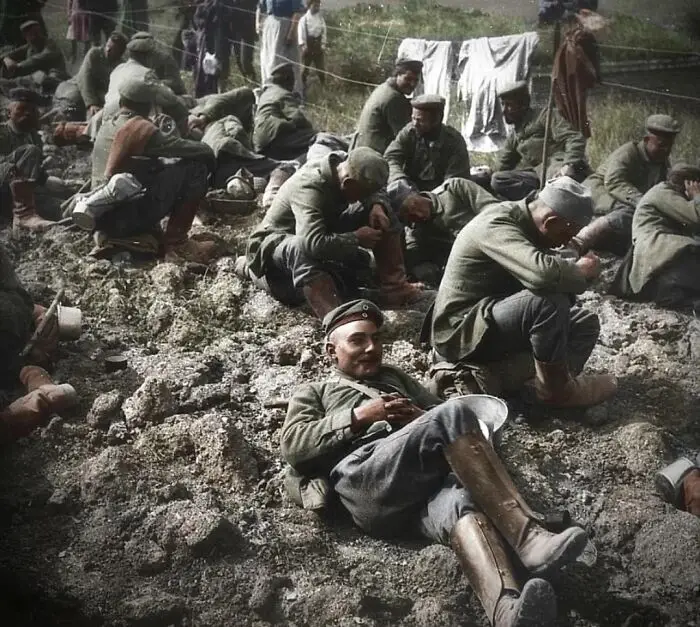
These German prisoners seem content in a field near Villers - Bretonneux in July 1916 early in the Battle of The Somme. On the first day alone 8,000 Germans lost their lives defending the Allied advance which cost 21,000 British soldiers their lives.
Report
7points
#47
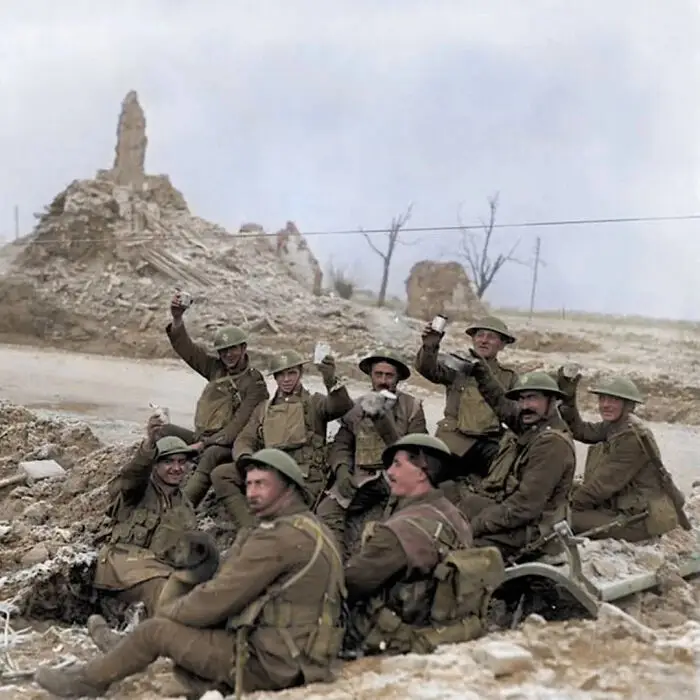
December 1917.
Pioneers of the 11/Liverpool enjoying an alfresco meal in exposed conditions near Ypres.
Report
7points
#48
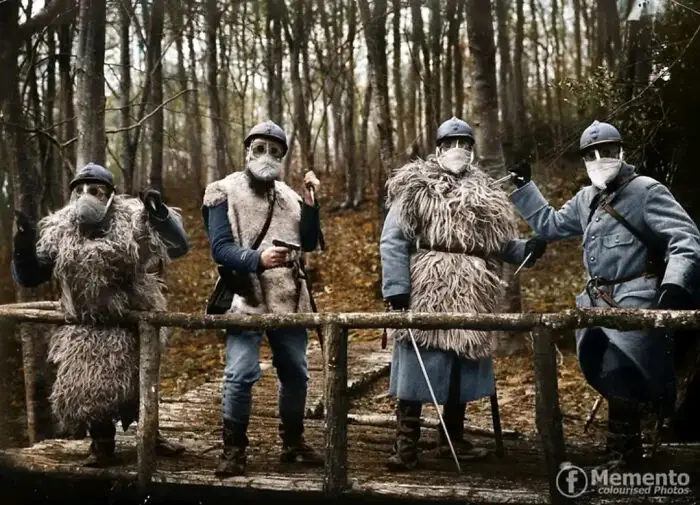
January 1916, forest of Bezange, Lorraine, France,
Four 257th Infantry Regiment Officers with TN gas masks, Coutrot Daggers No. 1, M1892 Revolver and a PA Ruby Gun.
At the beginning of the war, the French soldier had only his bayonet, but it was not adapted to the fighting in the trenches. To be able to face the German daggers (Nahkampfmesser), the French army decided to buy some but the knives were too small (3in / 8cm). To cope with the needs, all the butcher's knives were requisitioned and the French navy gave boarding weapons.
Approved in mid-1915 as a standard military infantry weapon after its development by Lt. Col. Coutrot of the French Army, the “Poignard-Baïonnette Lebel” consisted of a long, needle-pointed, stiletto-profile blade with wood handle and an integrated knuckle guard made of steel. Up to three trench knives could be constructed from a single M1886 Lebel bayonet.
Report
7points
#49
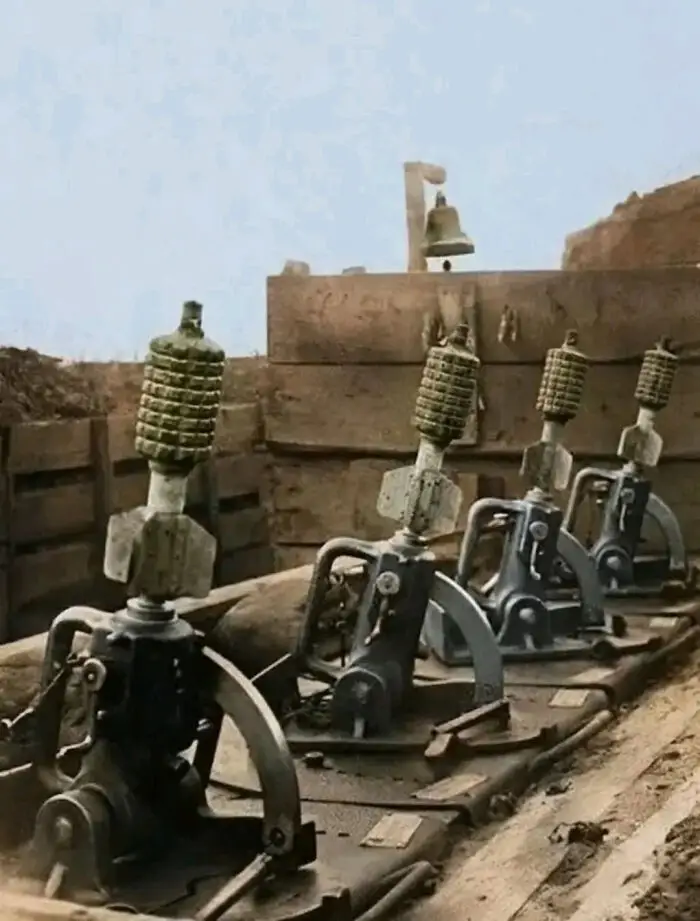
The Granatenwerfer 16 was a German light trench mortar introduced during World War I in 1916. Designed to provide close infantry support, it fired 46 mm fin-stabilized grenades in a high-angle arc, allowing crews to strike enemy trenches, dugouts, and barbed wire positions beyond the reach of rifles and machine guns.
With an effective range of around 250–300 meters, the weapon could be quickly transported and operated by a small crew, making it well suited to the trench warfare conditions of the Western Front. The Granatenwerfer 16 helped bridge the gap between hand-thrown grenades and larger artillery systems, becoming a widely used support weapon during the war.
Report
6points
#50
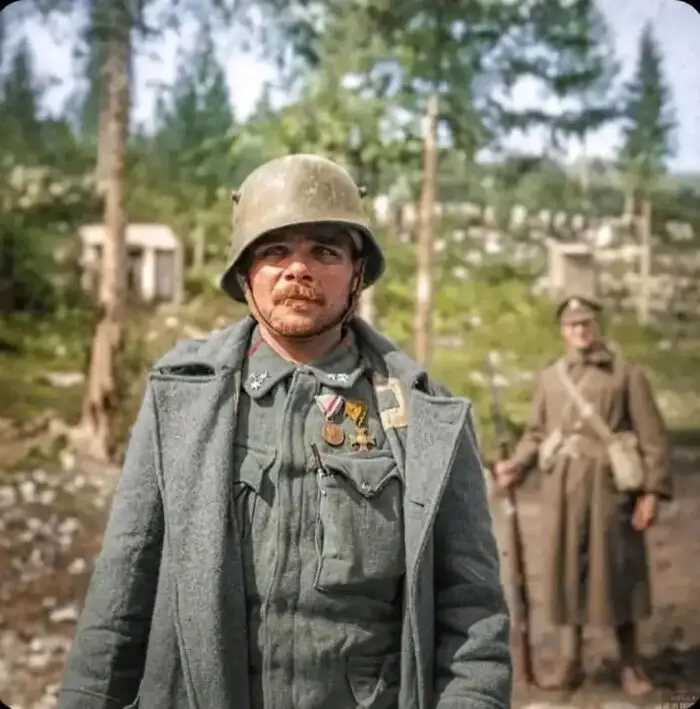
An austro hungarian prisoner of war.
The Austro-Hungarian Empire mobilized approximately 7.8 million soldiers over the course of the war. Because they were heavily outnumbered and fighting a multi-front war, the empire suffered a massive 90% casualty rate (including d**d, wounded, and captured soldiers), forcing them to rely heavily on German reinforcement.
Report
6points
#51
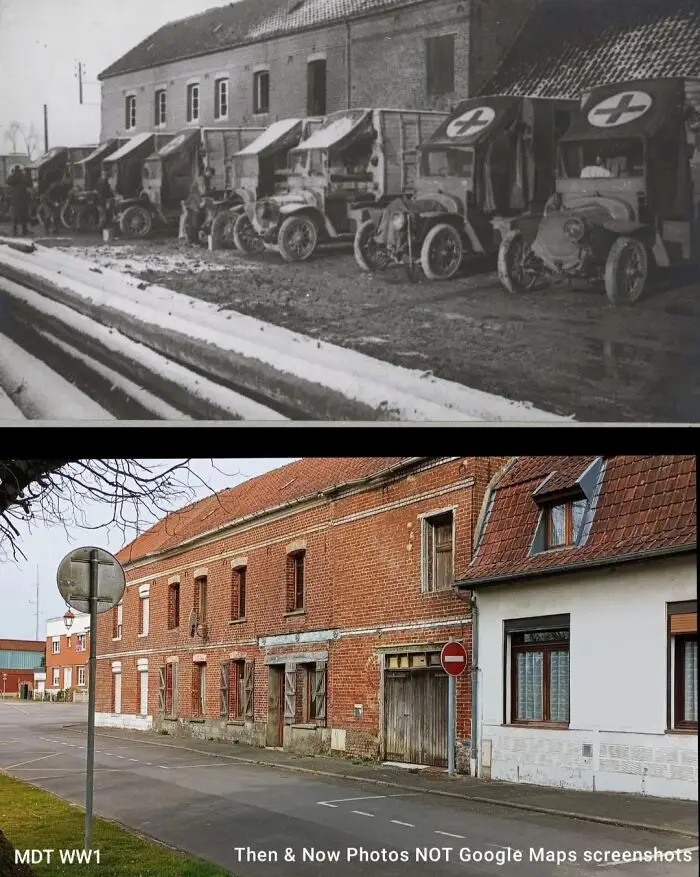
Ww1 then and now, Avesne-le-Comte on November 26, 1915.
Ambulances on what is now Place Louis Mexandeau
Report
6points
#52
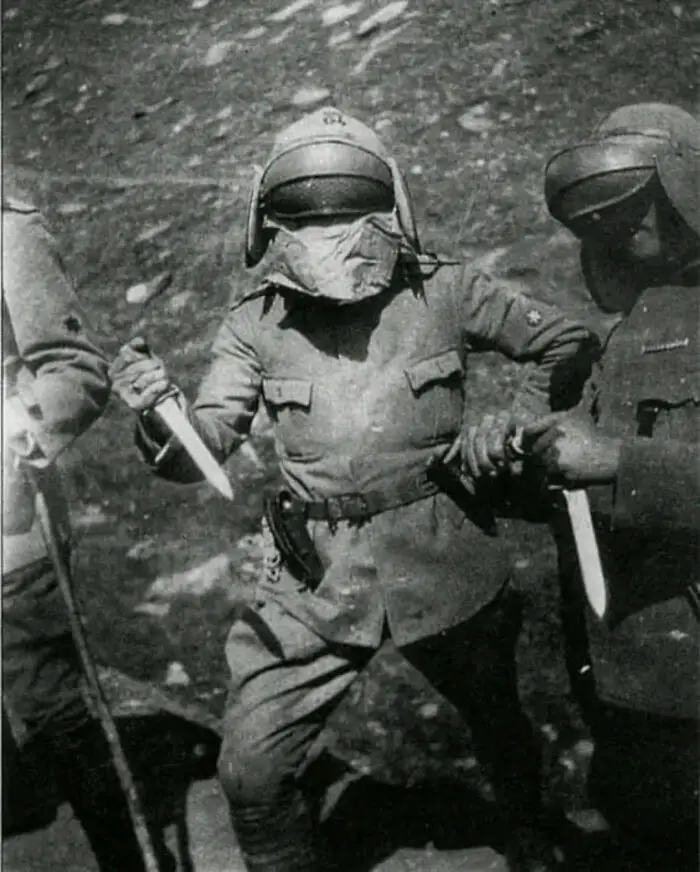
An armoured Italian Arditi trench raider during late WW1 posing with a knife.
Arditi (from the Italian word ardire, which means "to dare," and translates as "The Daring [Ones]") was the name given to an elite special unit of the Royal Italian Army during World War I. They were the first modern shock soldiers, along with the German Stormtroopers, and have been described as "the most feared corps by enemy armies."
Colonel Bassi organised the Reparti d'assalto (A*****t Units) in the summer of 1917 and assigned them the tactical duty of shock troops, shattering enemy lines to clear the way for a broad infantry advance. The Arditi were not considered infantry division units, but rather an independent combat arm.
Report
6points
#53
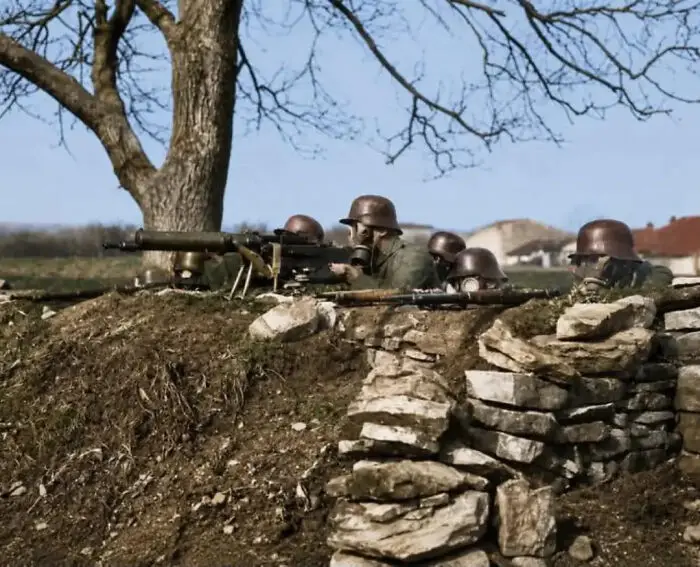
France, 1918. Lt. Alexander Pfeifer photographed men of his shock-troop MG squad in position.
By this stage of the war, Pfeifer was a veteran Stormtrooper company commander who had fought on the Western Front, Eastern Front and Italian Isonzo Front, including the Battle of Caporetto, before returning to France in 1918.
The photograph offers a rare glimpse of the men under his command — part of the personal photographic record preserved alongside his wartime diary in “The Other Trench.”
Report
6points
#54
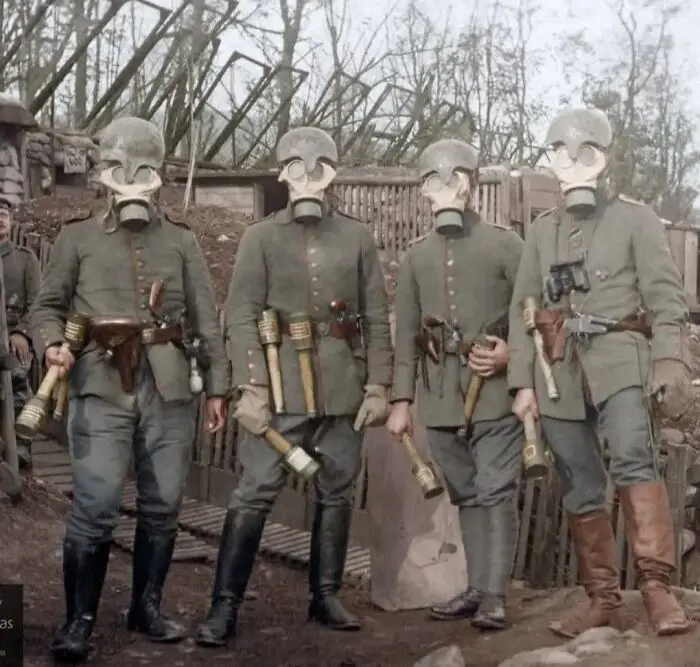
Four German officers in the Vosges sector, 1915
Besides the helmets, these men sport an interesting assortment of weapons:
From left to right, the 1st soldier has a Luger’s holster and a Hebel Model 1894 flare gun tucked in his belt; the 2nd and 3rd soldiers have M1883 Reichsrevolvers and the 4th man has a holster for a Reichsrevolver and another flare gun from the same model as the first soldier. The gas masks are the 1915 ‘Gummimaske’ model and as far as I know, weren’t used during raids and were worn here probably for display purposes only. There is also an assortment of daggers and metal pieces I was unable to identify. Many times these men made use of makeshift weapons so these might be examples of such weaponry. In their hands the most devastating of a*****t weapons: the hand g*****e. The small white device visible at the waist of the left most officer is called a Portepee.
Report
5points
#55
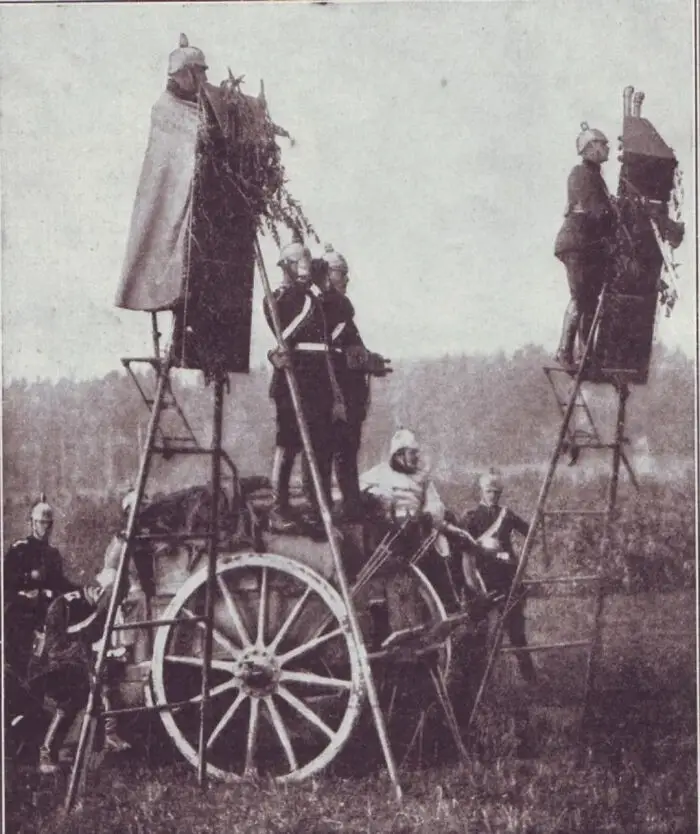
Battle of the Aisne
The battle, fought from 10th to 13th September 1914 in the First World War, that saw the end of mobility and the beginning of four years of trench warfare on the Western Front.
Report
5points
#56
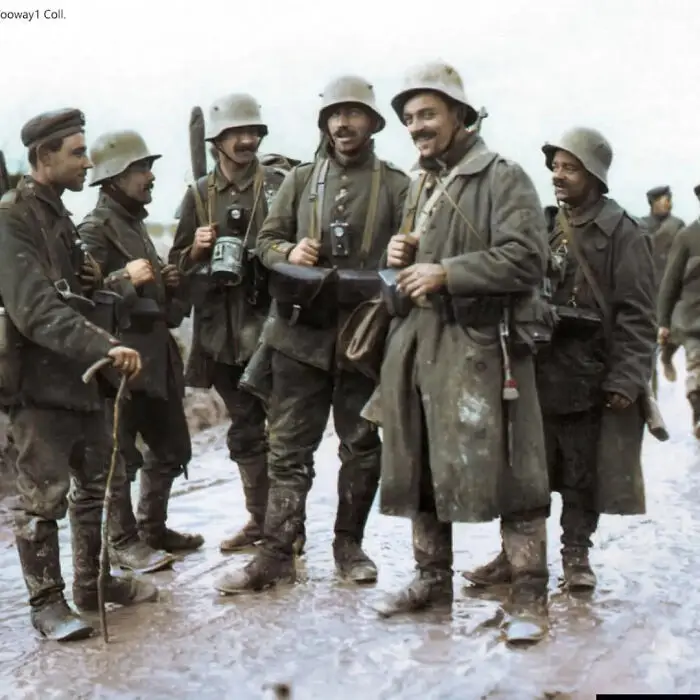
An informal photograph of a mud-covered German squad, likely just out of the trenches during World War I (c. 1916–1918), probably closer to 1916 based on the early-war M1907/1910 tunics and Stahlhelm helmets.
Notable details include a possible Leutnant in the center carrying a large leather map case and wearing reflective officer's shoulder boards while otherwise blending in with the enlisted men.
Two gas mask containers feature rare keyhole-shaped clips that allowed soldiers to wear the canister on their belt during trench raids, reducing noise while protecting the mask. Also visible are rifle covers and cloth-covered shoulder-board numerals used to conceal unit identification.
Report
5points
#57
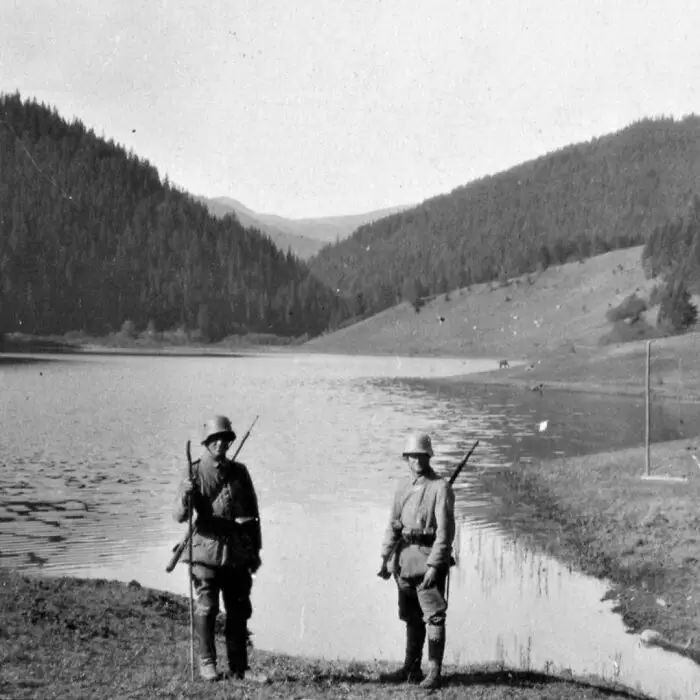
It was June 1916 when Alexander Pfeifer was trained as a stormtrooper company commander and sent to the Carpathian Mountains to fight the Russians. As a specialised mountain unit, he battled the most unfavourable conditions as well the enemy. It was here that he also was awarded his Iron Cross 1st Class. Despite the unfavourable conditions, he writes in his diary how he preferred it here to the Western Front:
“The opinions about our new theatre of war are very varied. Most are thrilled about this wild, adventurous, and truly jäger-like life, yet there are several who long for the cushy and less strenuous life in the West. Anyway, I am happy that I am here.”
His diary and photographs have now been published for the first time in both English and German: The Other Trench / Der Andere Graben.
Report
5points
#58
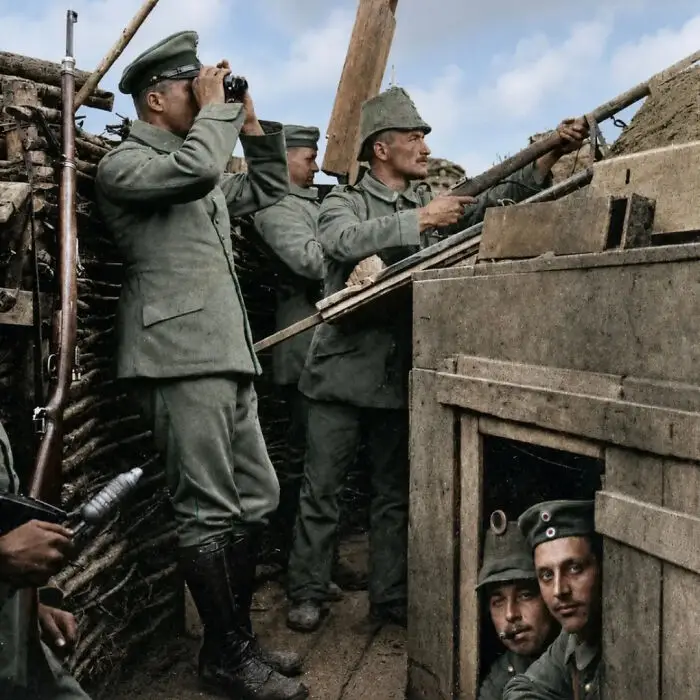
The Western Front, 1915 — German soldiers in the trenches
Taken by Lt. Alexander Pfeifer, an officer of the 11th Kurhessian Jäger Battalion, this photograph offers a rare glimpse into the trenches where he and his men lived and fought.
While being on the frontline, he recorded in his diary:
“Anyone who hasn’t seen them or helped build them has no idea of the work that goes into these trenches, which are over two metres deep. The walls are covered from top to bottom with thick planks and wicker braced with beams to prevent them from sliding together. The ground is covered with duckboards. And yet, this entire huge work has been accomplished only in the d**d of night, under the most unfavourable weather conditions and under enemy fire.”
His wartime diary and hundreds of photographs remained in the family for more than a century before being published in The Other Trench: The WW1 Diary & Photos of a German Officer.
Report
5points
#59
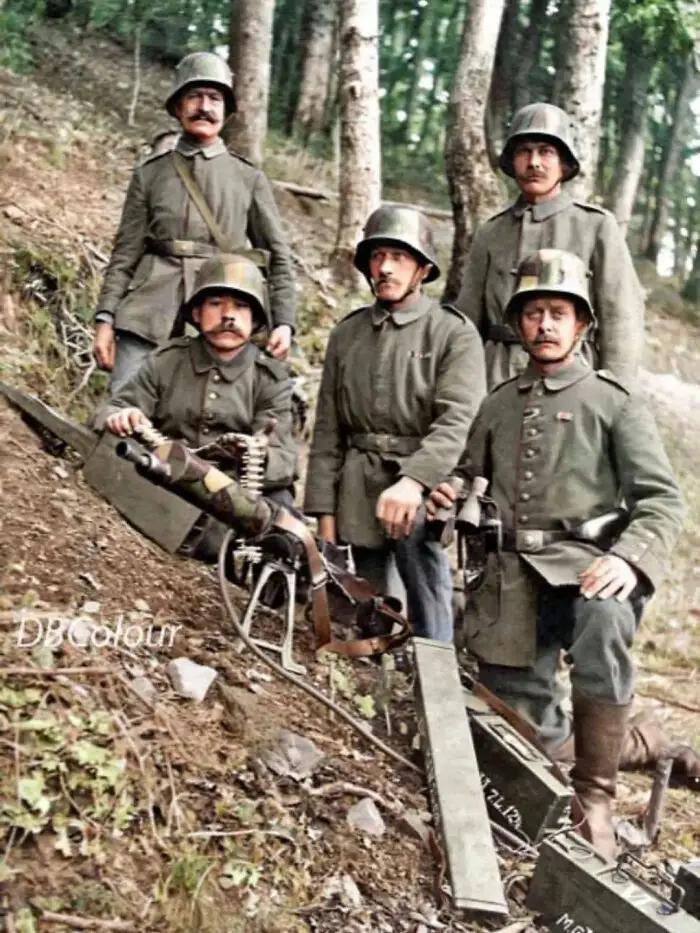
German machine gunners with camouflaged M16 Stahlhelm and MG08/15, summer of 1918.
Report
4points
#60
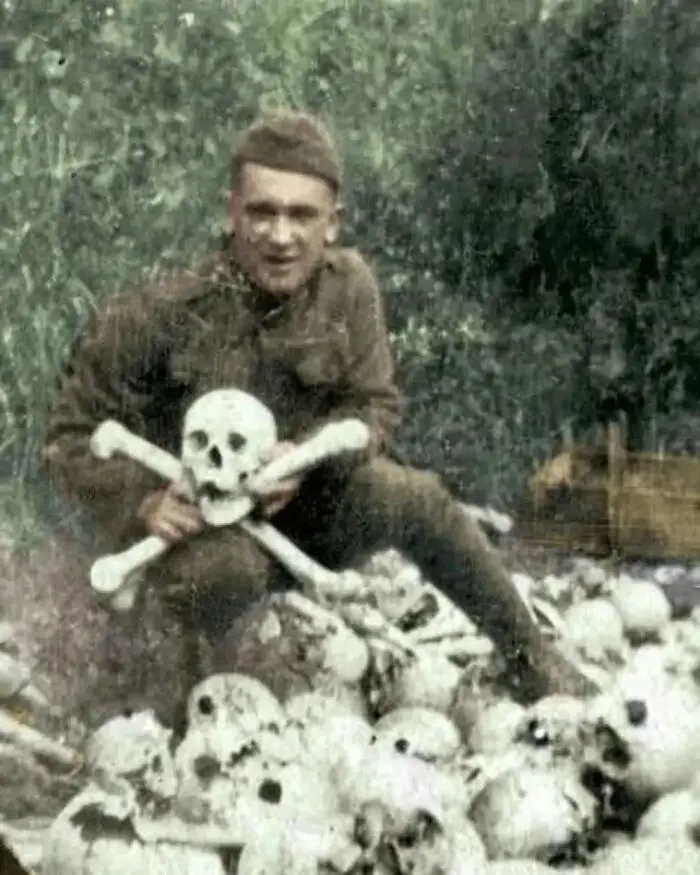
U.S. soldier making the skull and crossbones symbol with bones from an ossuary, 1918.
Report
-1point
