




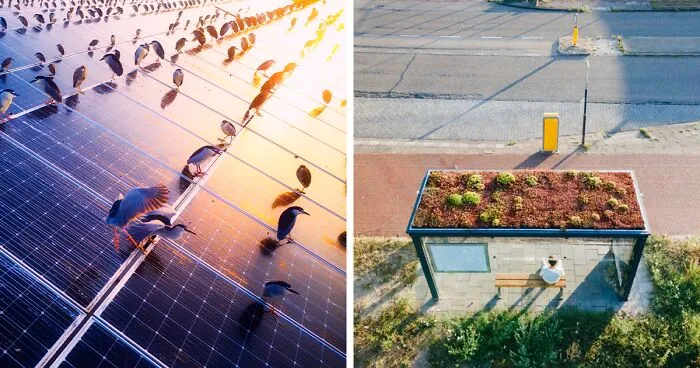


Climate change is having a profound impact on our world, causing widespread destruction through events such as fires, floods, and intense storms. The ramifications of a changing climate are being felt globally, leaving many wondering what the future holds. Despite warnings from experts and advocates, it seems that many are still not heeding the call to take action and reduce their carbon footprint. Perhaps it will take more than words to drive home the urgency of the situation. Images of the devastating effects of climate change might be the wake-up call needed to inspire change and protect our planet.
Having taken place yearly for 15 years, the Environmental Photographer Of The Year (EPOTY) competition showcases some of the world’s most inspirational environmental photography, as well as "provides an international platform to raise awareness for the issues that put our planet at risk." Scroll down to see the EPOTY winners of 2022! If you're interested, check out the best shots of the 2021 contest here.
#21 "Clearing In Binning Woods" By Andrew Smith, 2022
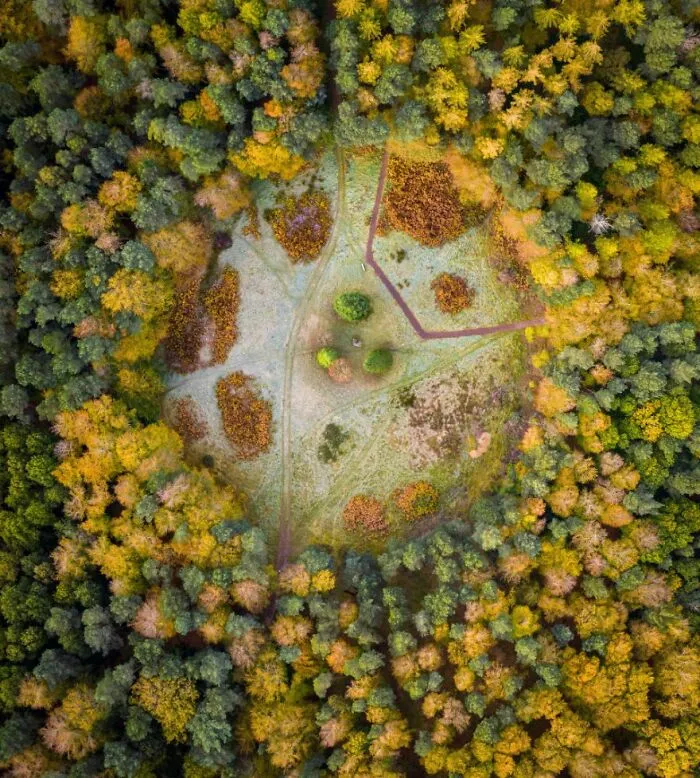
East Linton, Scotland
"These woods were originally planted in 1707 but were clear felled between 1942 and 1945 to fuel the war effort. Afterward, rather than turning the land into farmland, in what is rich agricultural soil, it was replanted in 1960 to be enjoyed by the public and as a haven for wildlife. They now team with badgers, rabbits, hares, buzzards, deer and all manner of insects, birds and small animals. The ponds are well-maintained and include frogs, dragonflies and small fish. Part of the wood is also a green burial site, offering an environmentally sound alternative to a traditional cemetery."
Report
36points
#22 "Glacial Cityscape" By Jonas Beyer, 2022
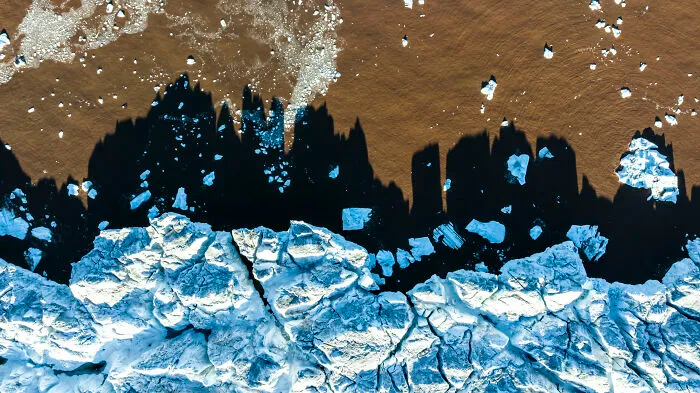
Svalbard, Norway
"Looking straight down on a glacier front you can see the shadow from the glacier almost depicting a cityscape, skyscraper, or a huge city. I find the changes we see in the arctic scary, how fast the ice melts in the spring, how fast the glaciers are retreating, just how warm the summers get."
Report
34points
#23 "Mutual Assistance Between Man And Nature" By Alex Cao, 2021
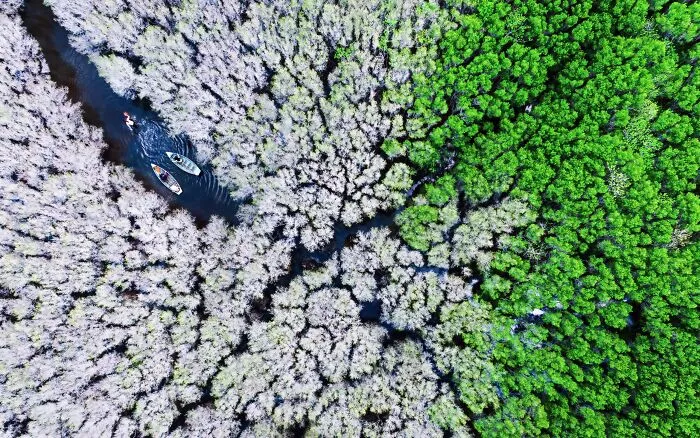
Binh Thuan, Vietnam
"Bau Ca Cai is an old white-flowered mangrove, planted in the natural breakwater to improve the ecological environment under climate change and sea-level rise. This project is sponsored by the Green Climate Fund and UNDP (United Nations Development Programme), and helps to strengthen resilience to the impacts of climate change for vulnerable communities. The project supports ecotourism and contributes to income improvement and sustainable poverty reduction."
Report
33points
#24 "Beautiful But Hostile Colours On Earth" By Fayz Khan, 2022
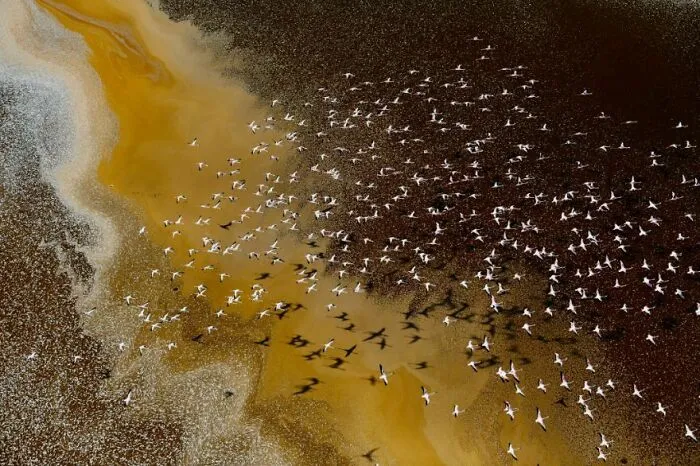
Southern Rift Valley, Kenya
"Lesser flamingoes photographed over Lake Magadi and Lake Natron. The two water bodies were once a single freshwater lake but today the two lakes are highly concentrated salt pans, severely alkaline and toxic to most forms of animal and plant life.
The lesser flamingoes are an exception because of their biological makeup, and the birds love to feed on the algae that thrive on the surface. As beautiful as the colors may be, the different hues relate to the algae which change in color as a result of reacting to the differing levels of the alkaline content of the lakes."
Report
32points
#25 "Clean Energy" By Pedro De Oliveira Simões Esteves, 2022
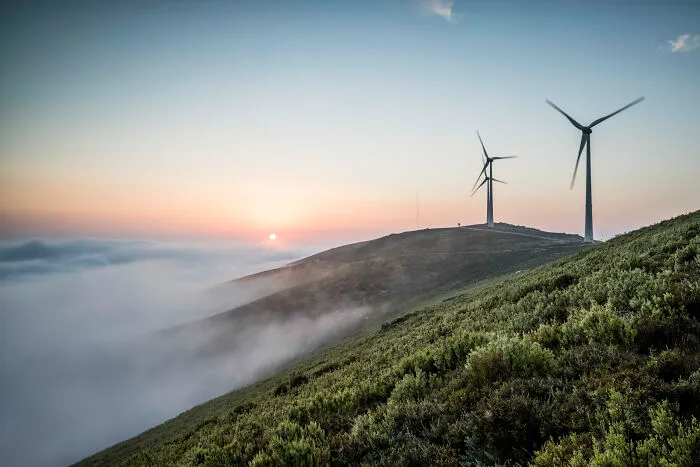
Serra da Arada, Portugal
"Up on the mountains in Portugal near some wind turbines watching the sunrise over a sea of clouds."
Report
31points
#26 "The Climate Change Effect" By Solayman Hossain, 2021
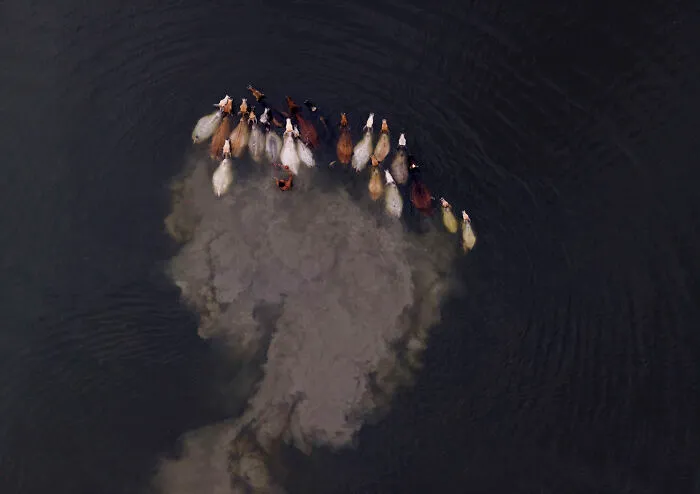
Kushtia District, Bangladesh
"During the monsoon season, the river rises and the village is flooded. The flood also means there is a shortage of food for the animals, which have to be guided to look elsewhere."
Report
29points
#27 "The Environmental Cost Of Fast Fashion" By Muntaka Chasant, 2022
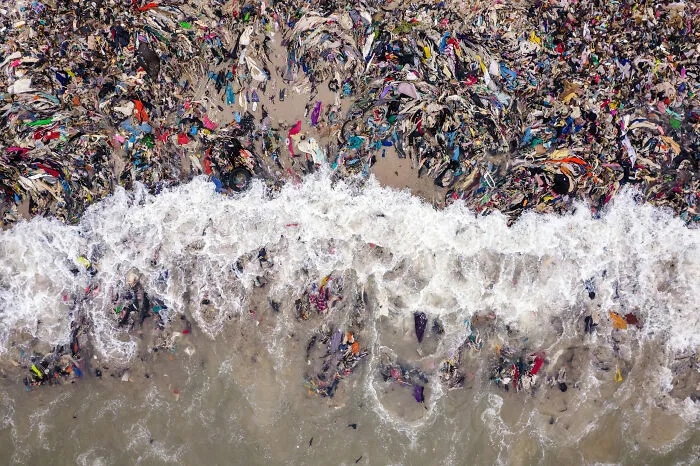
Accra, Ghana
"Thousands of discarded pieces of fast fashion waste washed up on the coast of Jamestown in Accra, the capital of Ghana. The vast bulk of the cheap trend-driven mass-produced clothes arrive in Ghana as waste and are unsellable. On the beaches, they decompose and emit methane gas, worsening the climate crisis.
According to McKinsey, the fashion industry accounted for 4% of the global greenhouse gas emissions in 2018: the same amount of emissions as Germany, France, and the United Kingdom combined."
Report
28points
#28 "Lithium Evaporation Ponds" By Matjaz Krivic, 2022
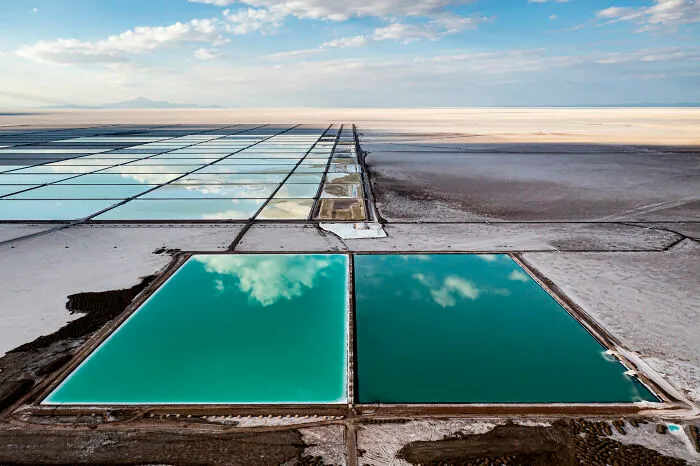
Salar de Uyuni, Bolivia
"Bolivia's YLB industrial lithium production plant pumps lithium-rich brine into these large evaporation pools on the southern edge of the Salar de Uyuni, where it is left to evaporate for many months. Lithium is the core component of modern batteries. The supply of lithium is not fast enough to accommodate the demand, with Chinese, Australian and American corporations buying lithium mines around the world. Locals are amongst the most vocal critics.
Evaporation ponds draw heavily on the already scarce water resources in a dry and high-altitude region. Lithium pollution is an increasing problem wherever it is mined."
Report
26points
#29 "Drying Paddy" By Dibyendu Biswas, 2021
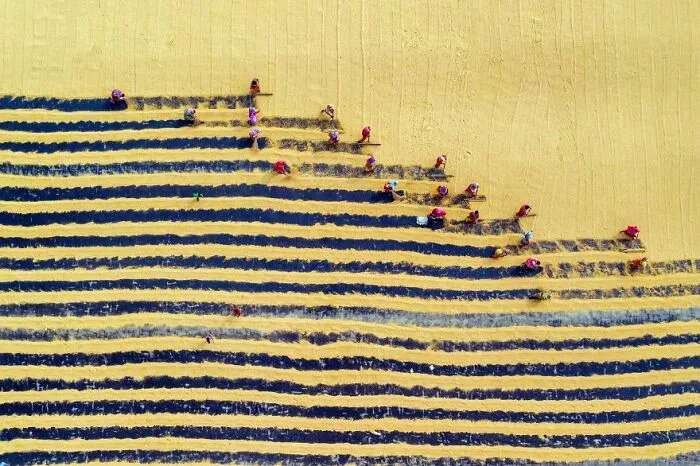
Kalna, India
"Manual paddy drying has become a very rare thing, but it is still practiced by the people of Kalna Village. Modernization would mean that all these manual laborers become jobless. This method of manual paddy drying is also environment friendly."
Report
23points
#30 "Aceredo" By Brais Lorenzo Couto, 2022
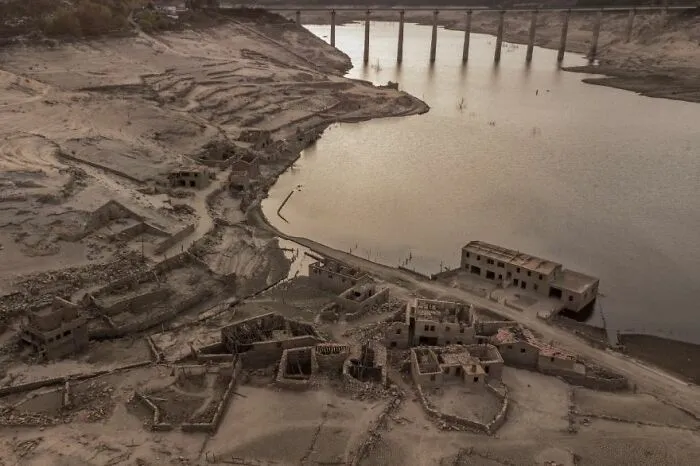
Aceredo, Spain
"The village was buried in the 1990s by the waters of the Lindoso reservoir, near Lobios, Ourense. Four other villages were flooded in this Galician region: A Reloeira, Buscalque, O Bao and Lantemil. The normally submerged ruins of Aceredo emerged due to the low water level of the reservoir. Scientists warn that Europe could be suffering its worst drought in 500 years, with its most important rivers drying up."
Report
23points


