




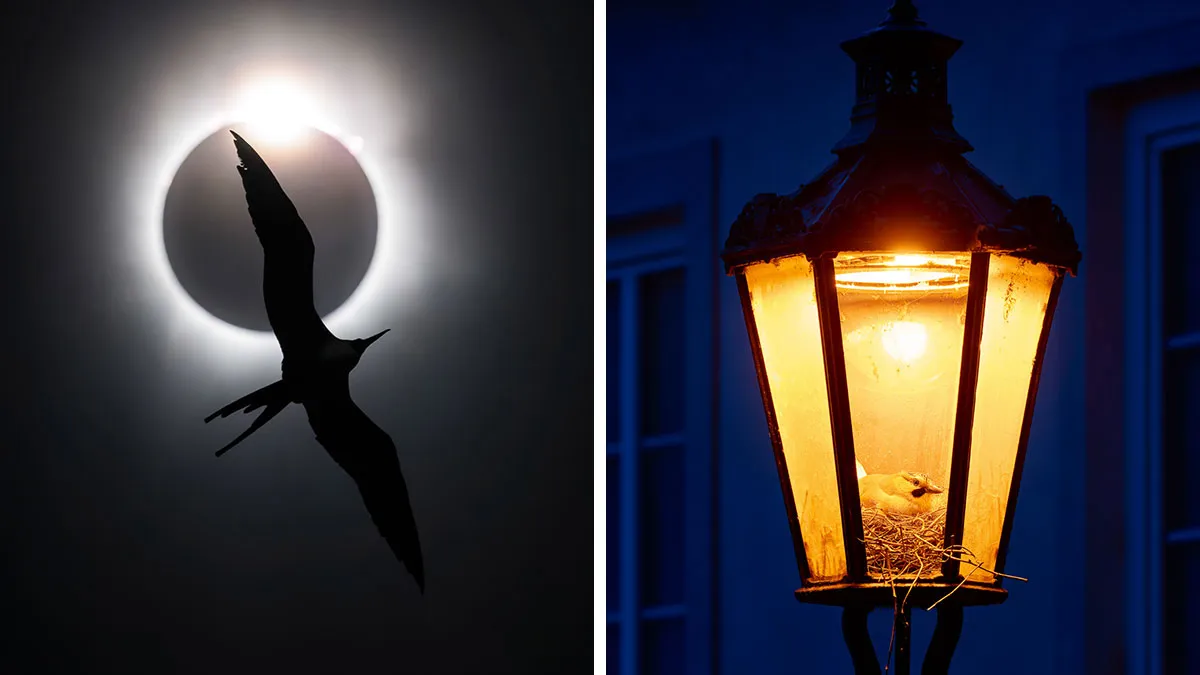

The winners of Bird Photographer of the Year 2025 have been announced, and the grand prize goes to an astonishing shot of a magnificent frigatebird silhouetted against a total solar eclipse. From over 33,000 entries submitted by photographers around the world, Liron Gertsman from Canada captured this breathtaking moment in Mexico, earning the £3,500 top prize in the world’s largest bird photography competition.
Check out the winning images across 11 categories, showcasing the stunning beauty of nature and the remarkable birds that inhabit it.
#21 Best Portrait, Gold Award: Bloody Petrel By Steffen Foerster, Germany
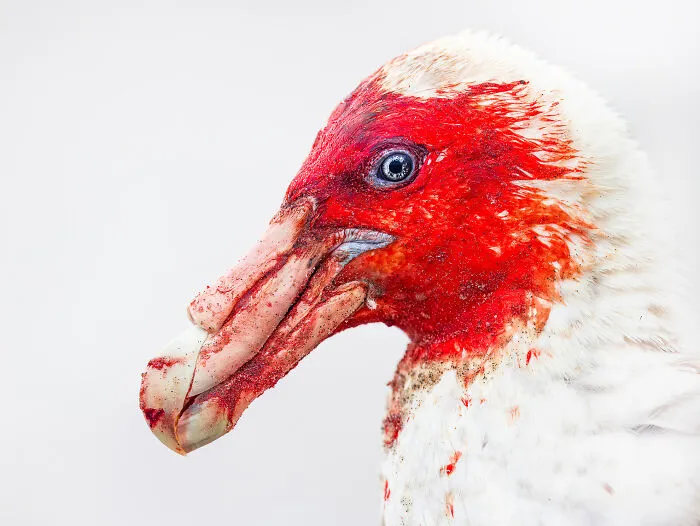
Giant petrels are the scavengers of the Southern Ocean, often seen feeding on carrion. This individual’s head is stained red from a recent meal.
Although their feeding habits may seem gruesome, these birds play a vital role in the ecosystem by preventing the spread of disease. Despite their appearance, giant petrels are devoted parents, with both males and females taking turns incubating their single egg and guarding their chick for weeks.
Once heavily persecuted for their oil, their populations have rebounded thanks to conservation efforts, though they still face threats from fishing practices and climate change.
Canon EOS R5 with Canon RF 400mm f/2.8 lens. 400mm; 1/3,200s; f/2.8; ISO 1,000
9points
#22 Conservation (Single Image), Gold Award: Radiographing By Sarthak Agrawal, India
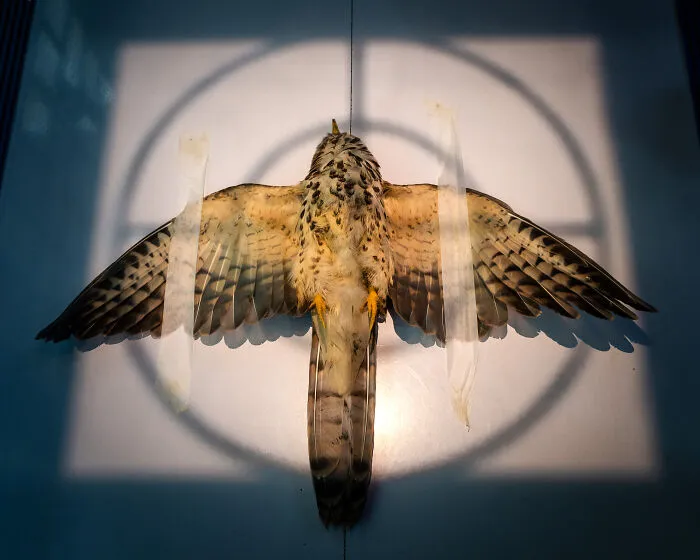
This picture shows an injured juvenile Common Hawk-Cuckoo that was rescued after being hit by a vehicle in the city. The bird had taken shelter under a parked car before being rescued by the ManwithIndies Foundation and sent for treatment under the guidance of the forest department. To assess the damage to its wings, a radiograph was obtained after anesthetizing the bird.
Common Hawk-Cuckoos are brood parasites, laying their eggs in the nests of smaller urban birds like sunbirds, prinias, and tailorbirds. While these smaller birds have adapted well to urban environments, the much larger hawk-cuckoo struggles to navigate and survive. Every year, several cuckoo chicks are found in similar circumstances, and foundations like ManwithIndies rescue many of them.
Nikon D5600 with Nikon 18–55mm f/3.5–5.6 lens. 18mm; 1/60s; f/5.6; ISO 320
8points
#23 Creative Perspectives, Bronze Award: Under Your Nose By Jim Lee, Singapore
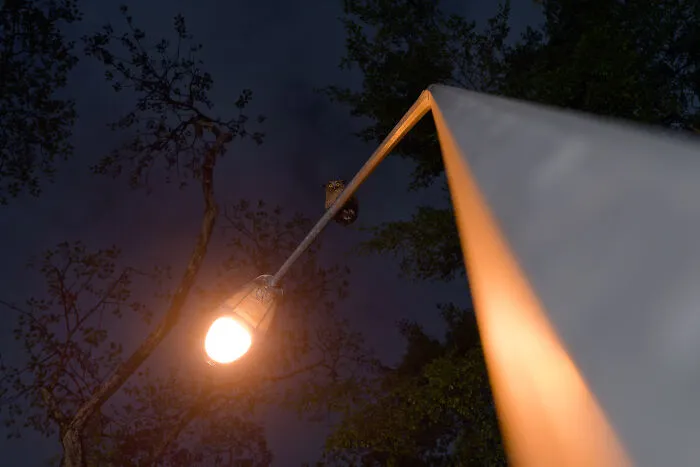
This photo shows a Buffy Fish Owl perched atop a streetlight, a common hunting spot for these birds. The contrast between the dark night sky and the bright light makes the owl go unnoticed by most passersby.
To capture a unique perspective, I positioned myself directly beneath the bird, using a wide-angle lens and pointing my camera upwards. The lamppost acts as a leading line, drawing attention to the owl at the center of the frame. The combination of the streetlight and treetop branches creates a striking blend of urban and natural elements, highlighting the owl’s adaptability to city life.
Sony a1 with Sony 16–35mm f/2.8 II lens. 35mm; 1/20s; f/2.8; ISO 1,600
8points
#24 Creative Perspectives, Gold Award: Photo Art By Philipp Egger, Italy
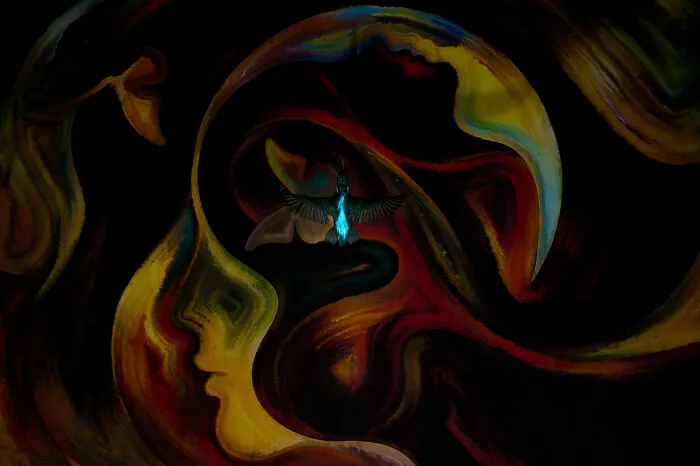
The idea behind this photograph was to capture a kingfisher flying over a piece of artwork so that the two elements would merge. To achieve this, I mounted my camera on a fallen tree across a small stream and pointed it vertically downward at the artwork positioned just above the water’s surface. I then waited for days in a camouflaged tent nearby, triggering the camera with a radio remote release whenever the bird flew over the picture.
Nikon Z7 II with Nikon Z 24–70mm f/4 lens. 36mm; 1/200s; f/11; ISO 125
© Philipp Egger / Bird Photographer of the Year
7points
#25 15 - 17 Years, Gold Award And Young Bird Photographer Of The Year 2025: Minimalist Wings By Tomasz Michalski, Poland
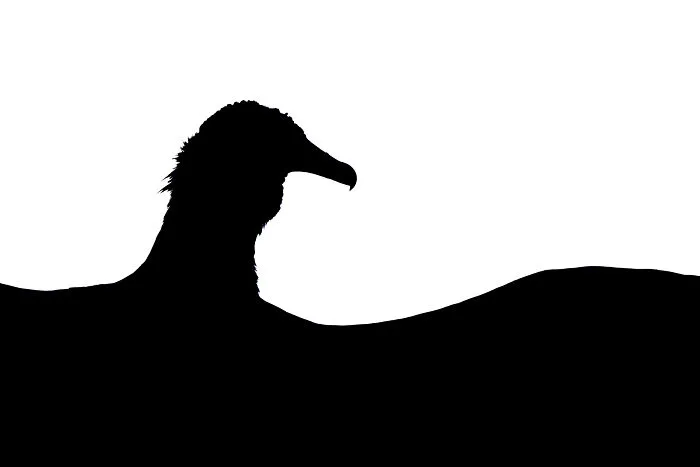
I took this photo during the biggest trip of my life, a journey to Central America in July 2024, starting in Nicaragua. I spotted this large vulture drying its wings on a pole near our hotel.
The bird was calmly watching me, giving me plenty of time to photograph it. The surrounding scenery wasn’t very appealing, so I chose to frame the shot with only part of the bird in the photo. I experimented with several compositions, and this one became my favorite.
Olympus E-M1 Mark II with Leica 100–400mm f/4–6.3 lens. 400mm; 1/320s; f/22; ISO 125
7points
#26 Conservation (Single Image), Silver Award: Trapped By Charlotte Keast, United Kingdom
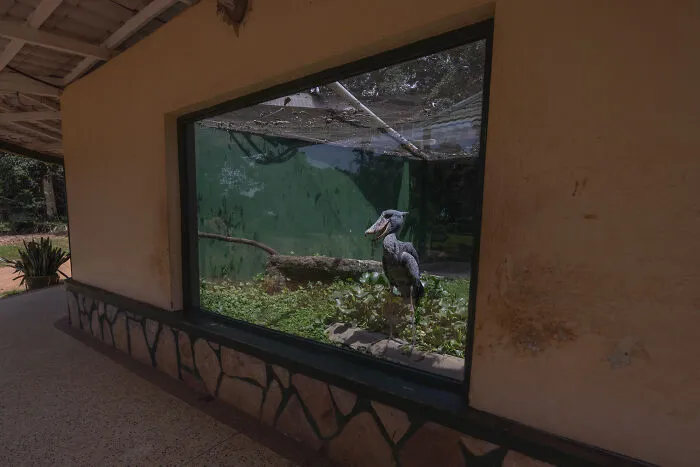
In heartbreaking contrast to its wild peers, this Shoebill stork is confined in a small, dirty cage at a zoo in Entebbe, Uganda. Known for their solitary and elusive nature, Shoebills thrive in vast wetlands, hunting silently and soaring gracefully over open landscapes. Here, trapped behind glass all day and constantly on display to the public, this majestic bird is deprived of space to fly, hunt, or retreat from the endless gaze of visitors. Just a few miles away, its wild counterparts enjoy the freedom of Uganda’s marshes—a stark reminder of the unnatural conditions captivity imposes on such extraordinary creatures.
Canon EOS R5 with Canon RF 14–35mm f/4 lens. 14mm; 1/2,500s; f/4; ISO 160
6points


