





Last year, the Natural History Museum announced their spectacular winning images selected from 50,000 submissions. A further 25 memorable images were shortlisted by the judges and the Natural History Museum, from which the public had a chance to select their favorites.
Well, fast forward to today, and we already have a winner, a picture of a sleeping polar bear taken by photographer Nima Sarikhani. Titled "Ice Bed," Nima’s photo was voted for by a record number of 75,000 people. Nima's picture sends a powerful yet sad message regarding global warming. But the photographer herself also sees hope and believes that we can still fix this.
So, without further ado, we invite you to admire beautiful, funny, and sometimes heartbreaking shortlisted pictures that reflect our natural wildlife today.
#21 "Incoming Cuckoo Wasp" By Frank Deschandol
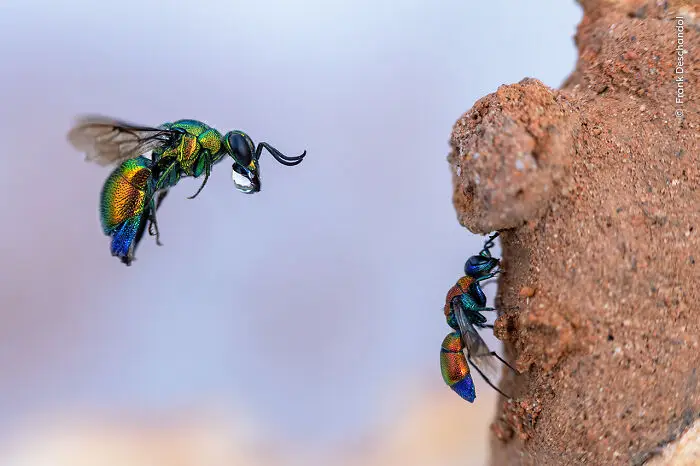
"Near Montpellier, France, a cuckoo wasp is captured mid-air trying to enter a mason bee’s clay burrow as a smaller cuckoo wasp cleans its wings below.
Frank set up near the mason bee’s burrow hoping to photograph the rare cuckoo wasp that parasitises these bees. He was in luck, when not one but two cuckoo wasps appeared. While Frank was taking some shots, the larger cuckoo wasp flew off, returning seconds later with a drop of water at its mouth. The wasp uses water and saliva to soften the clay so it can dig into the bee’s sealed-up burrow. Once inside it lays its own egg, then closes the burrow up again. When the cuckoo wasp’s egg hatches, it feeds on mason bee larvae inside the burrow."
9points
#22 "Bull In A Garbage Dump" By Brent Stirton
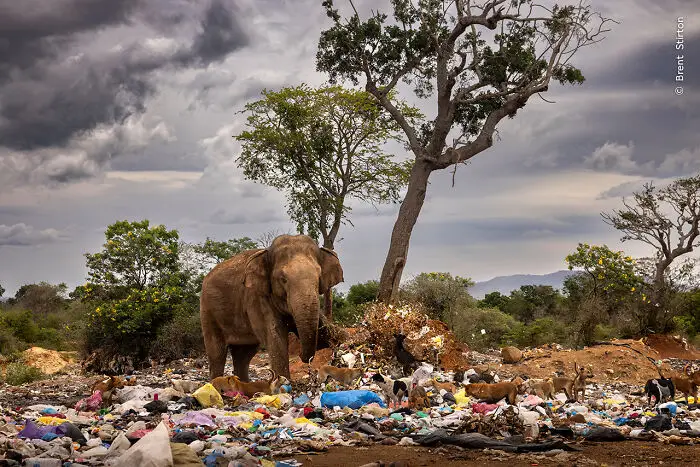
"A bull elephant kicks over garbage as it scavenges for rotten vegetables and fruit at a dump in Tissamaharama, Sri Lanka.
A number of elephants are attracted to this location not only by the rubbish but also by nearby crops. The scar from a gunshot wound on the upper part of this elephant’s left front leg and another wound high on its back indicate it’s an insistent crop raider. Human-elephant conflict often escalates from shouting to frighten the elephants away from crops and people to firing warning shots. The shots are seldom fatal but only deter the elephants for a couple of months at a time."
8points
#23 "Duckling Huddle" By Charles Davis
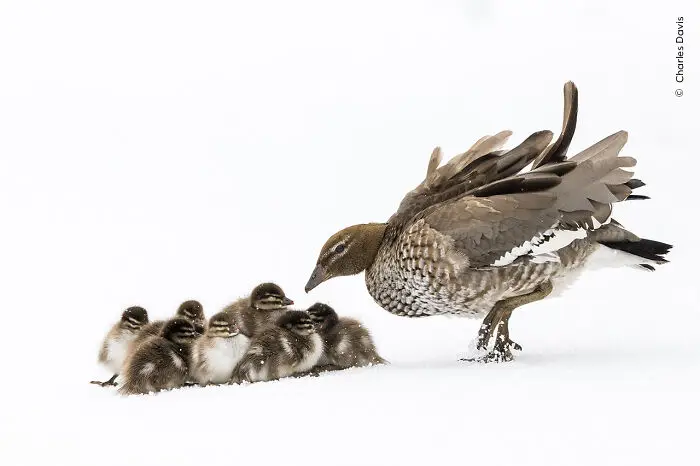
"A wood duck and its brood are caught in a late spring snowstorm in Smiggin Holes, New South Wales, Australia.
It would normally be warm and sunny when these ducklings hatch from their nest high up in a tree hollow, but thanks to the La Niña effect things were a bit different this year. Warmer waters in the western Pacific meant more precipitation, resulting in more rain than normal in eastern Australia and cooler and wetter springs and summers. Despite the conditions, the ducklings chose to exit their nest, dropping down into a frozen world. Upon landing, they quickly became lost in a snowstorm as their mother tried to lead them to open water."
8points
#24 "Fashion Victims" By Britta Jaschinski
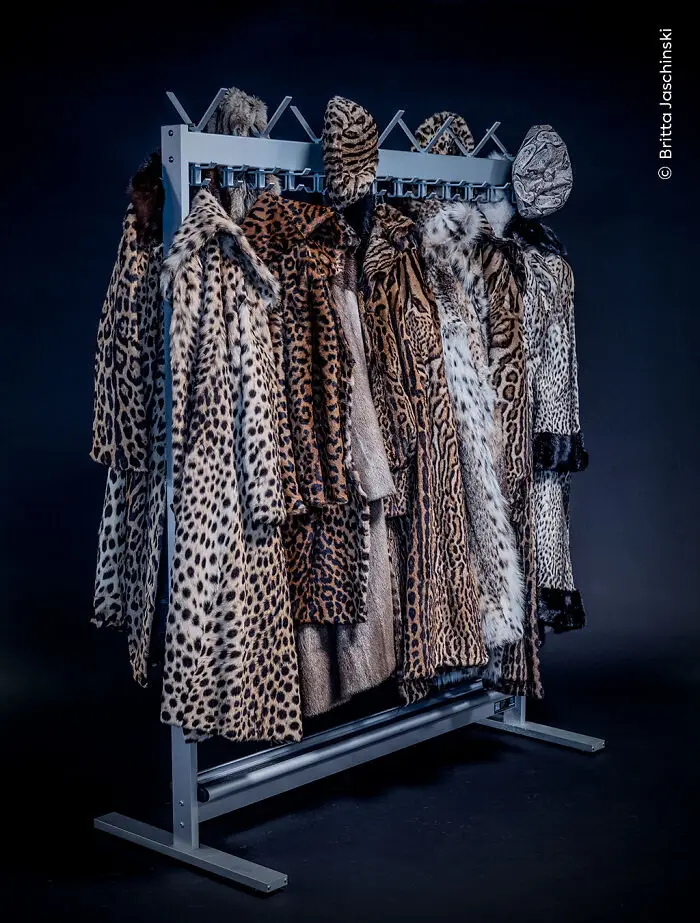
"A rack of coats made from the skins of some of the most endangered big cats on Earth, including snow leopard, jaguar and ocelot, is displayed.
Confiscated by customs officers across Europe, the coats were held in Hamburg’s Leibniz Institute for the Analysis of Biodiversity Change for forensic tests before being used at educational events to ensure they never return to the black market. During the photoshoot, Britta learnt that on average the fur industry uses 12 animals to make one coat. Together with a biologist, she tried to identify how many cats were killed to produce the fashion items in this image, but they stopped counting, as it was just too shocking."
7points
#25 "Hope" By Roberto García-Roa
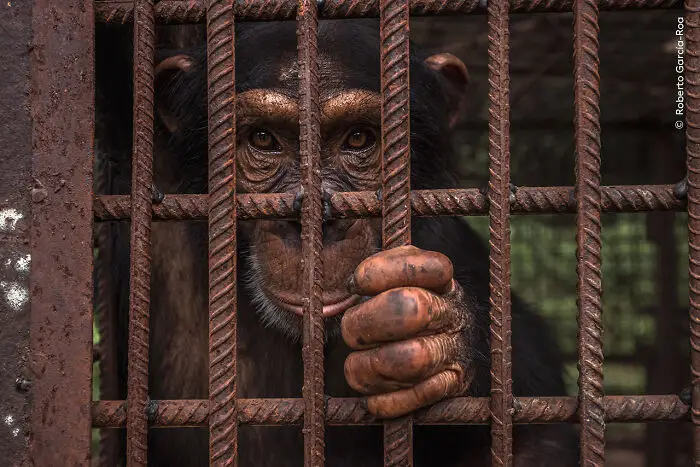
"While photographing rescued chimpanzees at the Chimpanzee Conservation Center in the Republic of Guinea, Roberto captured this pensive portrait.
Located in the National Park of Upper Niger, the center houses orphaned chimpanzees that have been rescued from being sold as pets after their mothers were killed for bushmeat. Once abundant in Guinea, the western chimpanzee population is declining, and the species is now classified as Critically Endangered. The center rehabilitates the chimpanzees with the aim of releasing them back into the national park. It also works with local communities to show them why it’s important to protect the rainforest and its inhabitants."
7points


