






The Wildlife Photographer of the Year is an internationally renowned competition that recognizes, rewards, and celebrates the work of talented photographers, from amateurs to professionals. A couple of months ago, we had the contest's overall winners, and now the public is invited to have its say in the Natural History Museum's competition by voting for the winner of the People's Choice Award.
"Fans of wildlife photography around the world can choose their favorite from 25 images. The images were shortlisted by the Natural History Museum from over 49,000 image entries from across the world," the organization wrote in its press release. "This year's selection of images includes two endangered Iberian lynx kittens making an abandoned hayloft their playground, a family of beavers in their favorite feeding spot, a distinctive portrait of a Japanese warbonnet, and a group of burrowing owls living in harmony with their human neighbors in Florida's Ten Thousand Barrier Islands."
Voting ends on February 2nd, 2021.
More info: nhm.ac.uk
#21 "Bushfire" By Robert Irwin
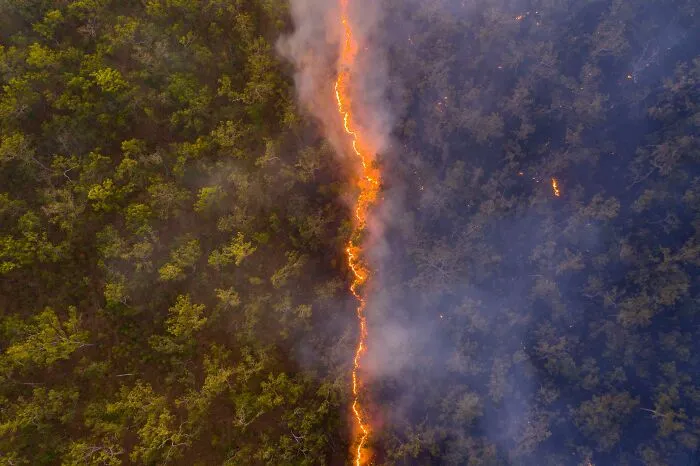
A fire line leaves a trail of destruction through woodland near the border of the Steve Irwin Wildlife Reserve in Cape York, Queensland, Australia.
The area is of high conservation significance, with over 30 different ecosystems found there, and is home to many endangered species. The fires are one of the biggest threats to this precious habitat. Although natural fires or managed burns can be quite important in an ecosystem, when they are lit deliberately and without consideration, often to flush out feral pigs to hunt, they can rage out of control and have the potential to devastate huge areas.
Report
91points
#22 "White Danger" By Petri Pietiläinen
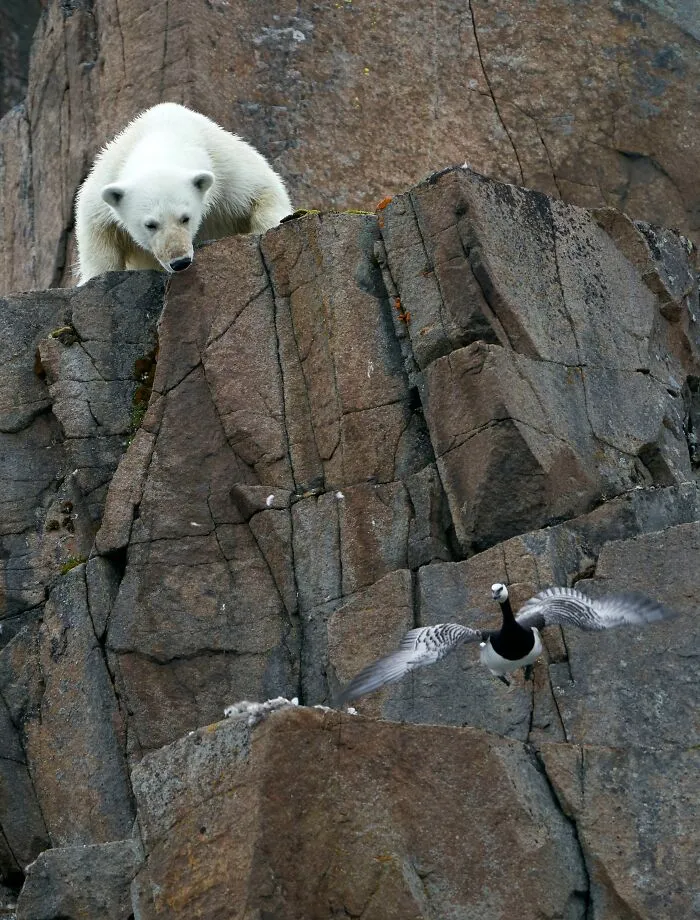
While on a photography trip to the Norwegian archipelago, Svalbard, Petri had hoped to spot polar bears.
When one was sighted in the distance on a glacier, he switched from the main ship to a smaller rubber boat to get a closer look. The bear was making its way towards a steep cliff and the birds that were nesting there. It tried and failed several routes to reach them, but perseverance, and probably hunger, paid off as it found its way to a barnacle goose nest. Panic ensued as the adults and some of the chicks jumped off the cliff, leaving the bear to feed on what remained.
Report
77points
#23 "Licence To Kill" By Britta Jaschinski
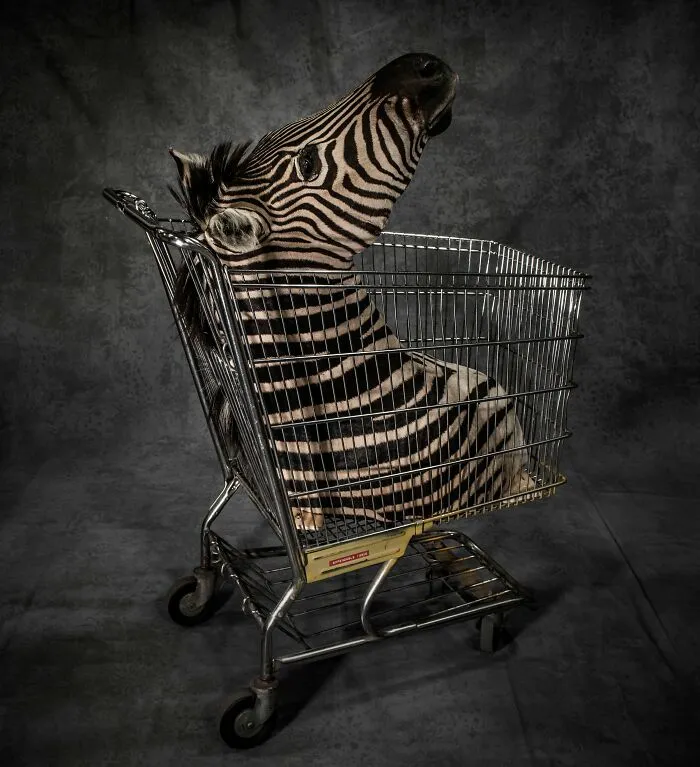
Britta’s photographs of items seized at airports and borders across the globe are a quest to understand why some individuals continue to demand wildlife products, even if this causes suffering and, in some cases, pushes species to the brink of extinction.
This zebra head was confiscated at a border point in the USA. Most likely, the hunter was not able to show proof that the zebra was killed with a license. Britta found the use of a shopping trolley to move the confiscated item ironic, posing the question: wildlife or commodity?
Report
77points
#24 "Drawn And Quartered" By Laurent Ballesta
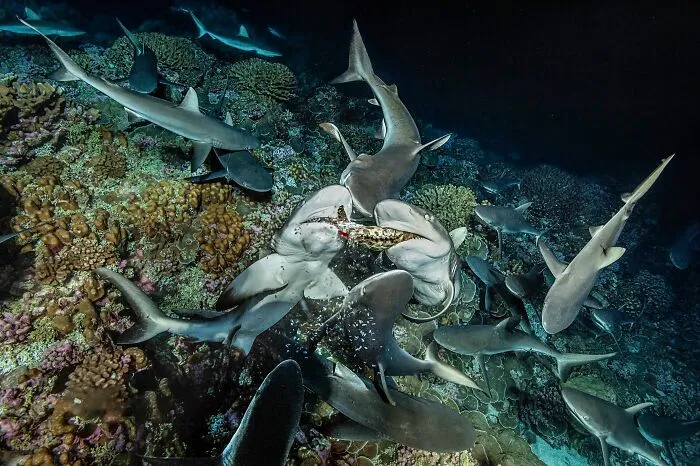
Scraps of grouper flesh fall from the jaws of two grey reef sharks as they tear the fish apart.
The sharks of Fakarava Atoll, French Polynesia, hunt in packs, but do not share their prey. A single shark is too clumsy to catch even a drowsy grouper. After hunting together to roust the grouper from its hiding place in the reef, the sharks encircle it, but then compete for the spoils – only a few sharks will have a part of the catch and most of them will remain unfed for several nights.
Report
67points
#25 "Backstage At The Circus" By Kirsten Luce
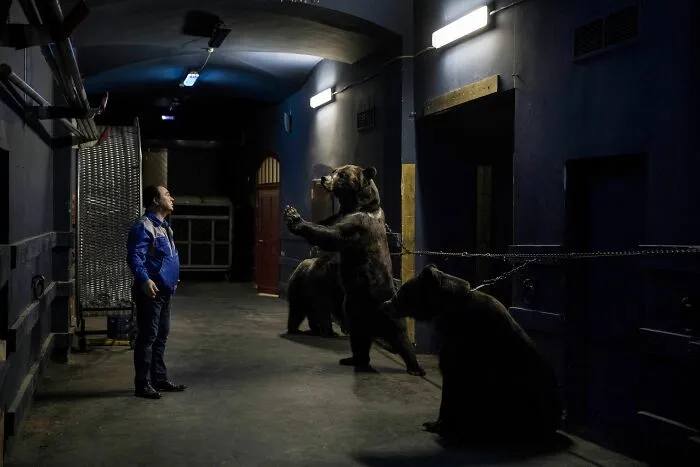
At the Saint Petersburg State Circus, bear trainer Grant Ibragimov performs his daily act with three Siberian brown bears.
The animals rehearse and then perform under the lights each evening. In order to train a bear to walk on two feet, Kirsten was told that they are chained by the neck to the wall when they are young to strengthen their leg muscles. Russia and Eastern Europe have a long history of training bears to dance or perform, and hundreds of bears continue to do so as part of the circus industry in this part of the world.
Report
-43points


