

Passion projects aren’t as easy as they sound. They might come from a love for the game and a passion for the craft, but in reality, like any other job, they require a lot of work.
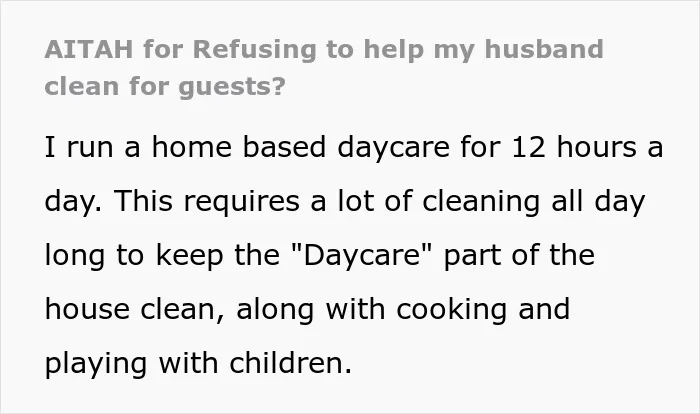
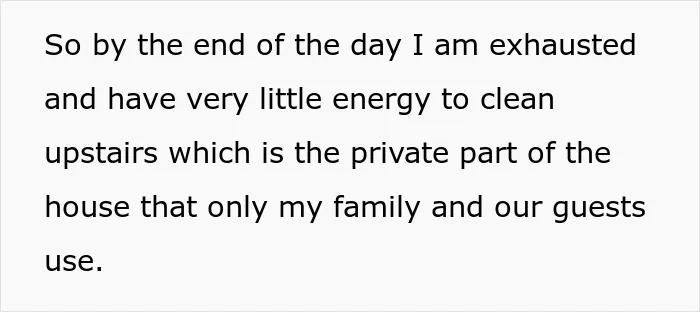
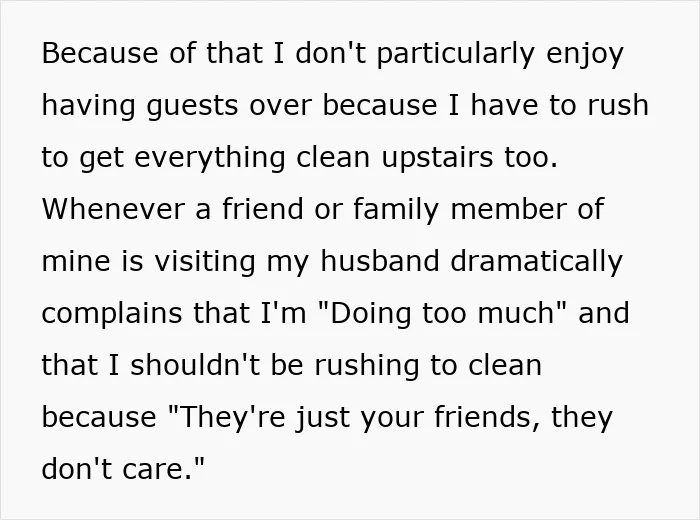
Especially if you’re doing it alone, and setting up a business isn’t for just anyone. But sometimes, things work out, just like in a story shared on r/AITAH. A woman runs a daycare on the lower floor of her property for 12 hours a day. But that’s not the problem. Apparently, the main culprit is her husband, who insists they don’t need to clean before guests arrive, until they actually do.
After 12-hour work shifts, people are understandably exhausted, and all it takes is one small trigger for things to crumble down fast

A woman's husband keeps insisting his wife doesn't need to clean every time guests come over, but once his friends are arriving, everything changes







There are tasks that many men often forgo due to gendered social expectations
Unfortunately, we’re all familiar with gendered social expectations in their many forms. So it’s hardly surprising to see them in this story, not only through the husband’s behavior but also through the narrator’s mom. By criticizing the narrator for not keeping the house clean, her mom reinforces a gendered expectation that research shows affects women more than men: people tend to judge female hosts more harshly than male hosts.
This also helps explain why the husband insists that his wife is stressing for “no reason.” Contrary to what some people might believe, men do notice the mess, too. Sociologists Sarah Thébaud and Leah Ruppanner found that men and women were equally likely to notice clutter and dirt. However, because women fear judgment more, they often end up doing more cleaning. This is partly because society tends to tie a woman’s moral worth and competence to the state of her living space.
Unfortunately, this distribution of household responsibilities shows up in how much housework men and women do. Research shows that in dual-income households — which isn’t the case here, making the situation all the more concerning — women spend an average of 2.3 hours per day on housework and caregiving, compared to only 1.6 hours for men.

There is a lack of appreciation from the husband for what is often called by sociologists "invisible labor"
This workload can also easily lead to burnout, a common issue that discussions about household responsibilities often overlook. Studies examining home-based care workers have found that daycare workers face unique burnout-related challenges, including high levels of emotional exhaustion and depersonalization.
By refusing to take responsibility for these domestic tasks and even expecting the narrator and their kids to help, the husband also displays behavior researchers often describe as “weaponized incompetence.” By telling her that her cleaning standards are unrealistic, he justifies his lack of participation and leaves her to shoulder more of the burden. Over time, this can even contribute to marital dissatisfaction and emotional resentment.
So, what should the woman do? Well, relationship experts often recommend setting boundaries rather than constantly stepping in to fix a partner’s unfinished work. The narrator did just that by leaving and taking her kids to the movies instead of cleaning up after her husband. But what do you think, Pandas? Was the narrator right to stand her ground, or should she have handled the situation differently? Let us know in the comments!
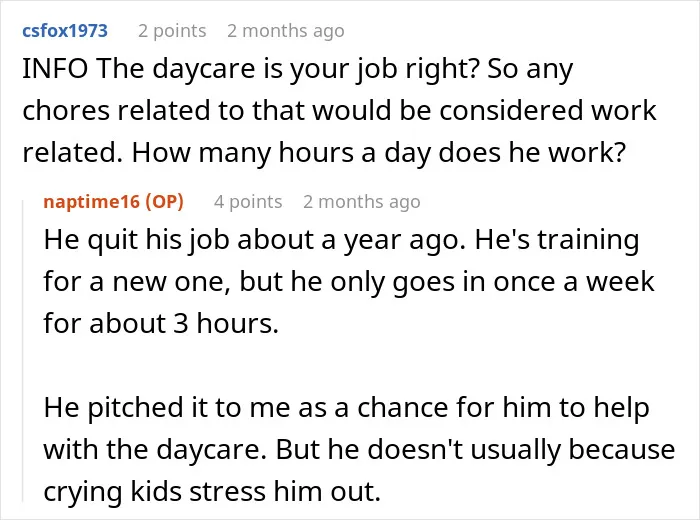
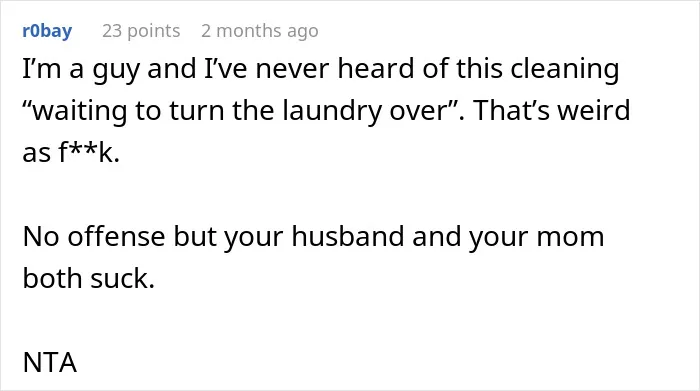
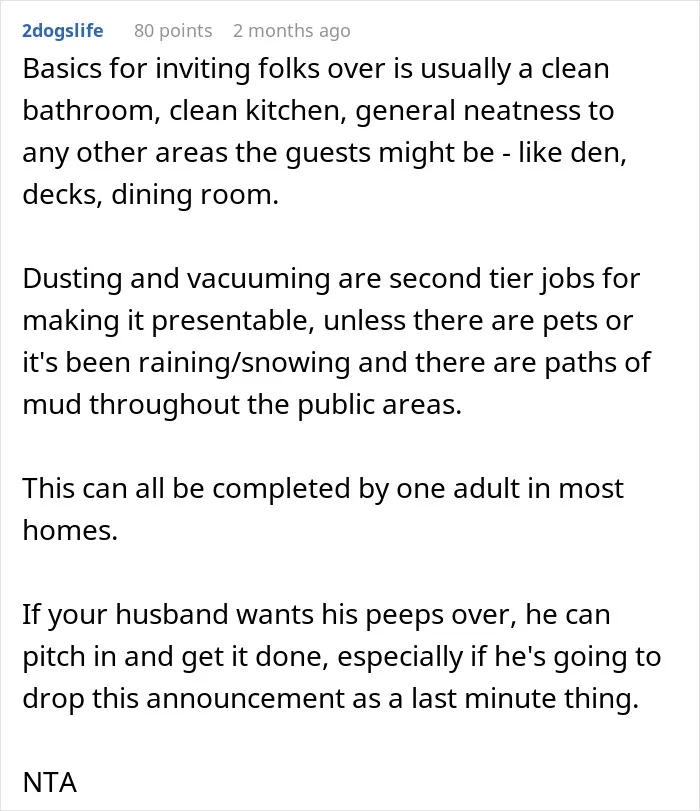
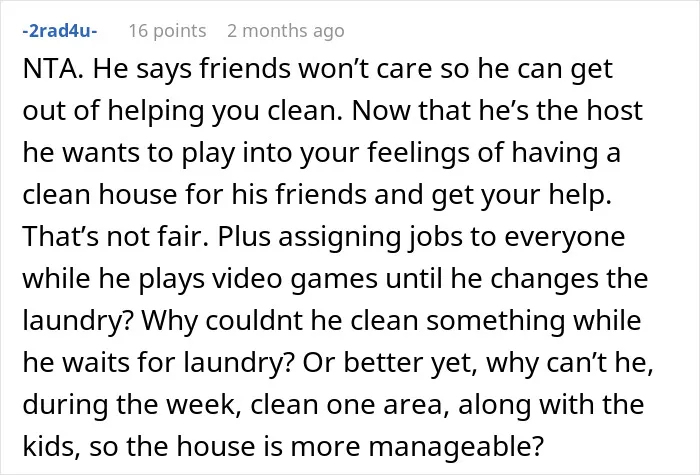
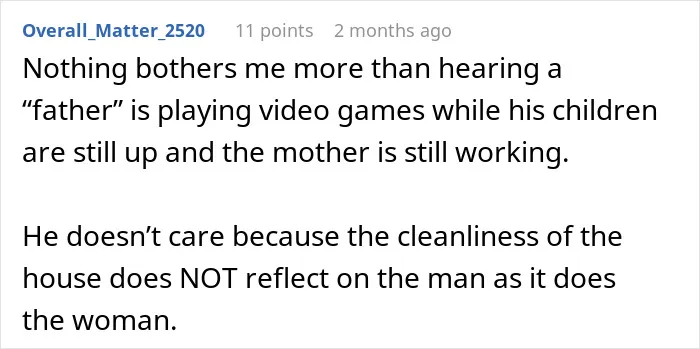
Netizens clearly declared the husband as the jerk in this situation, and a little more context was added in the comments