

There are probably few things as frustrating as having to repeatedly tell someone to stop doing something, and them persisting anyway. It’s bad enough when it happens in the wild, but in your own home, among people who should have your back? That can be downright infuriating.
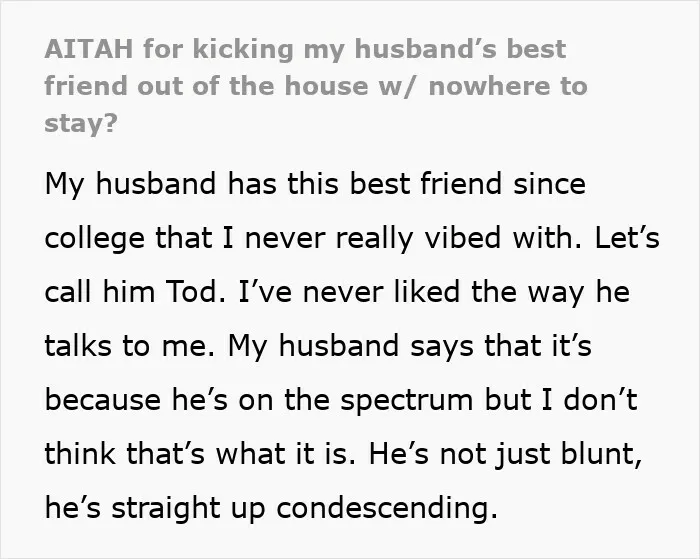
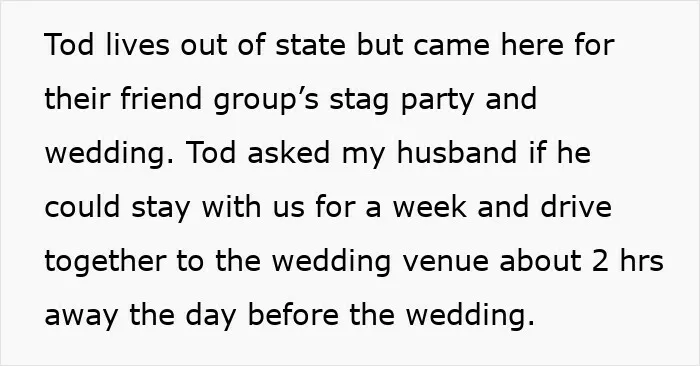
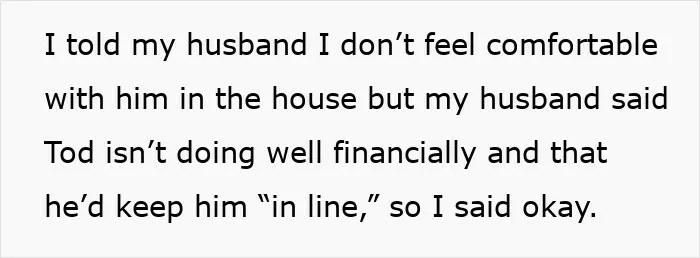
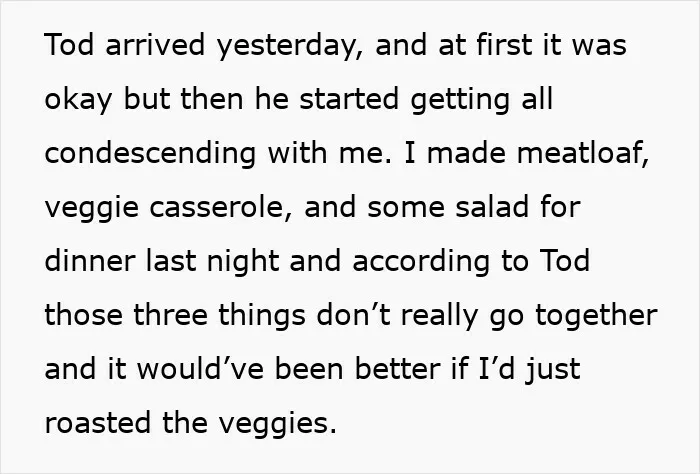
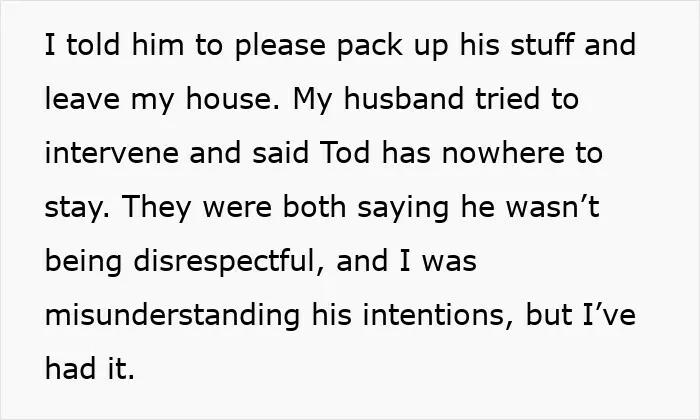
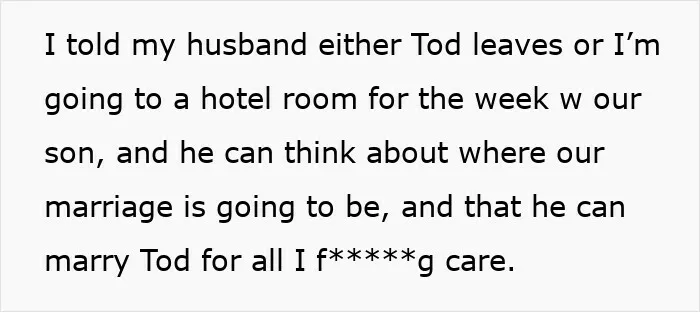
That’s exactly the position one woman found herself in after she reluctantly agreed to let her husband’s best friend stay with them. She’d never really “vibed” with him and didn’t like the way he spoke to her, but her husband said he’d keep him “in line.” Unfortunately, that turned out to be easier said than done. Between unsolicited critiques and one “hon” too many, what was supposed to be a week-long stay quickly turned into a full-blown standoff.
A woman reluctantly let her husband’s best friend stay with them, even though she’d never liked the way he talked to her
It didn’t take long for his condescending comments to push her to her limit



When ‘hon’ comes with a side of sexism
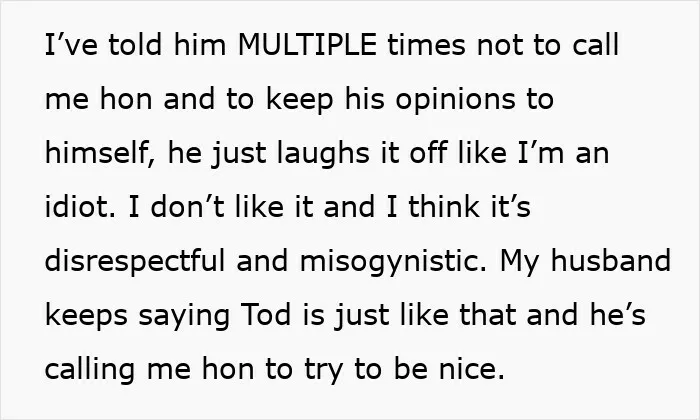
Personally, being called “hon” by anyone other than a very close friend is enough to set my teeth on edge. And it turns out there may be more to that irritation than personal preference. In a series of four studies, researchers found that terms of endearment used toward adult women outside of close relationships can “communicate, reflect, and reinforce sexism.”
As one of the researchers explained, women felt more agitated and less positive than men when addressed with terms of endearment. In one study, a mock job interview, women who rejected benevolent sexism (the seemingly kind but patronizing belief that women need to be protected or cherished) reported feeling less warm and less competent when addressed this way. Another found that participants perceived a man who used such terms as holding more sexist attitudes than one who didn’t. In other words, words like “honey,” “sweetie,” and “dear” may seem harmless, but they can quietly reinforce everyday sexism.
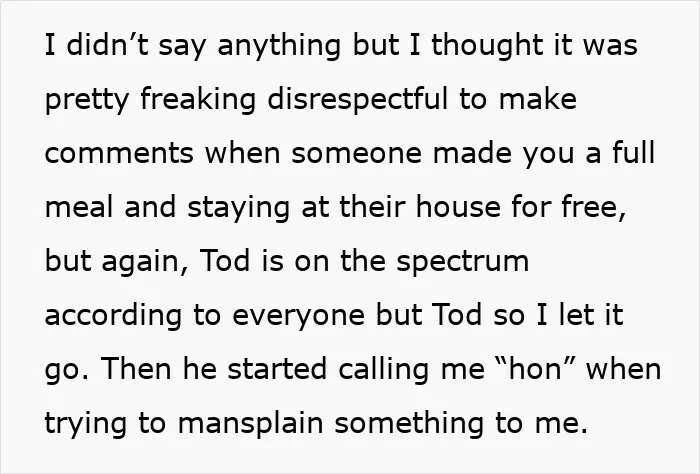
That said, context can make all the difference. As Susan Hooper wrote in Psychology Today, “waitresses calling both female and male customers ‘Hon’ seem to be as much a part of the ambiance as Formica tabletops, Naugahyde benches, and glass sugar dispensers” in New Jersey diners. But when the word is tacked onto the front of a correction or precedes an unsolicited lecture, it takes on a decidedly more condescending tone, one that brings another familiar frustration to mind: mansplaining.
According to Merriam-Webster, mansplaining means explaining something to a woman “in a condescending way that assumes she has no knowledge about the topic.” Researchers at Carleton University offer a broader definition, including unsolicited or persistent explanations that question someone’s knowledge or assume they lack it, whether or not the explanation is even correct.
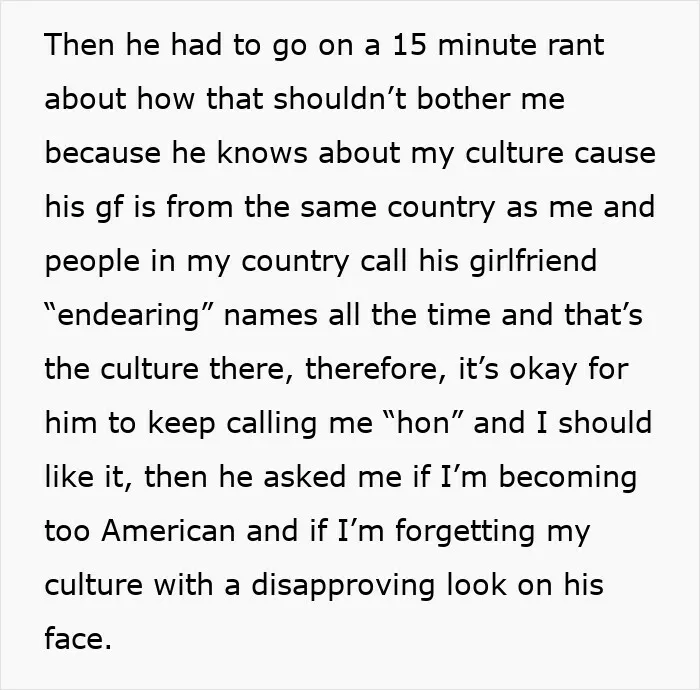
“Umm, hon, that’s not how you’re supposed to do blah blah” sure seems to fit the bill, as does a 15-minute lecture on why a woman should enjoy a nickname she’s repeatedly asked them to not use.
And really, it’s not like his cultural argument even holds up. Sure, pet names really are a part of everyday speech in some places. As Patricia Garcia, writing for Vogue, notes, pet names are common in parts of the American South, while in South America, where she is from, going without a nickname can almost feel like a snub. But a cultural norm isn’t a universal rule, and having a girlfriend from the same country doesn’t make him an authority on how the poster should feel. Suggesting she was “becoming too American” for objecting to him calling her “hon” turned her drawing a simple boundary into an insult to her identity.
Ultimately, though, this is all beside the point. The poster asked him to stop, and that should have been the end of it.

When a partner doesn’t have your back
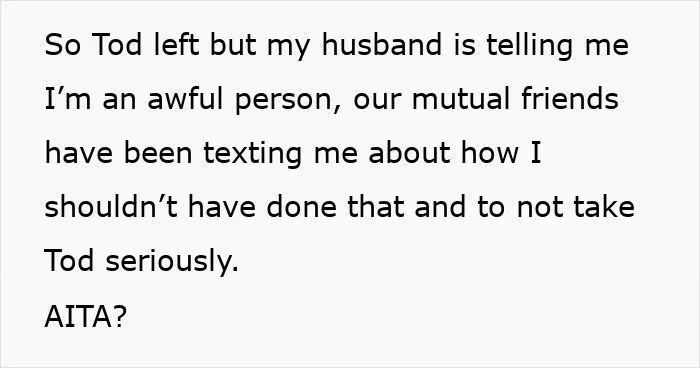
And that brings us to the poster’s husband, the person who invited Tod into their home and said he’d keep him “in line.” Once again, he brushed off his friend’s behavior as a result of being on the spectrum, a label that the poster says is used by “everyone but Tod.” But even if that were the case, it wouldn’t excuse Tod’s refusal to respect her wishes. The poster had told him plainly and repeatedly to stop, yet her husband did nothing to rein him in. Instead, he insisted she had misunderstood his friend’s intentions and called her an “awful person” after she kicked Tod out.
Psychologist and relationship expert Abby Medcalf, PhD, explains that this kind of response can do real damage. She explains that when a partner repeatedly defends others or minimizes your feelings, it undermines the emotional safety in the relationship and erodes trust over time. In her view, it specifically cracks what she calls the “goodwill” pillar of trust: the sense that your partner is on your team and invested in your well-being. Left unchecked, she warns, that can breed resentment and disconnection.
That doesn’t mean couples have to agree on everything. In fact, Medcalf stresses that validation isn’t the same as agreement. But when someone is being belittled in her own home, she shouldn’t have to fight to get her partner in her corner, too.

The poster explained that her husband usually has her back, just not when Tod is involved
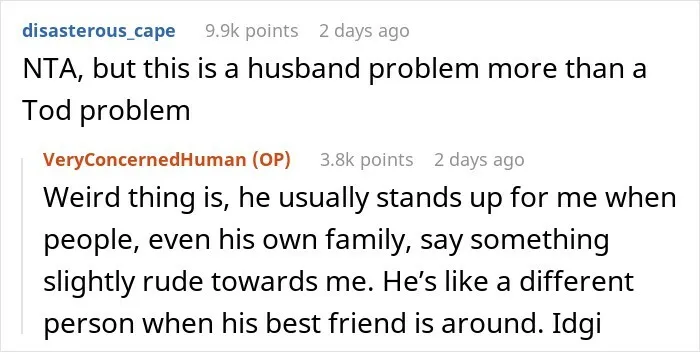
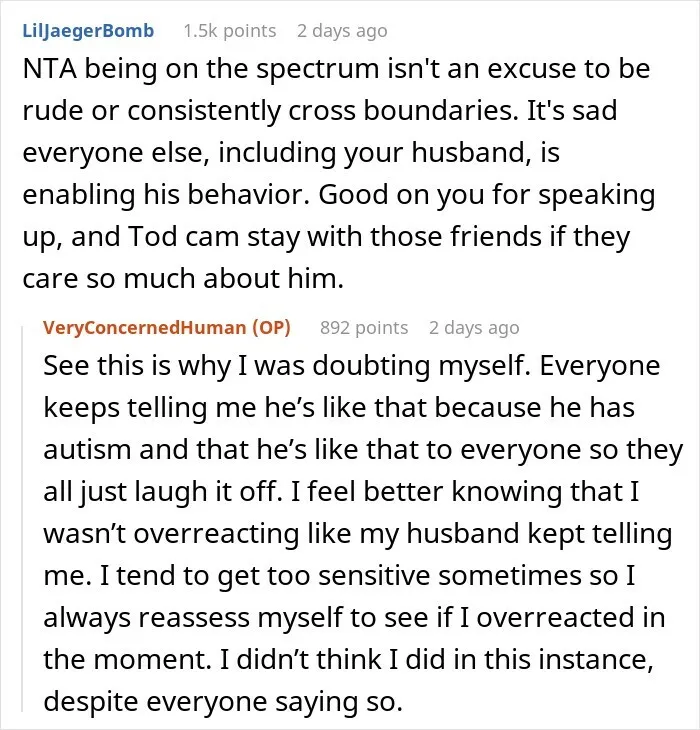
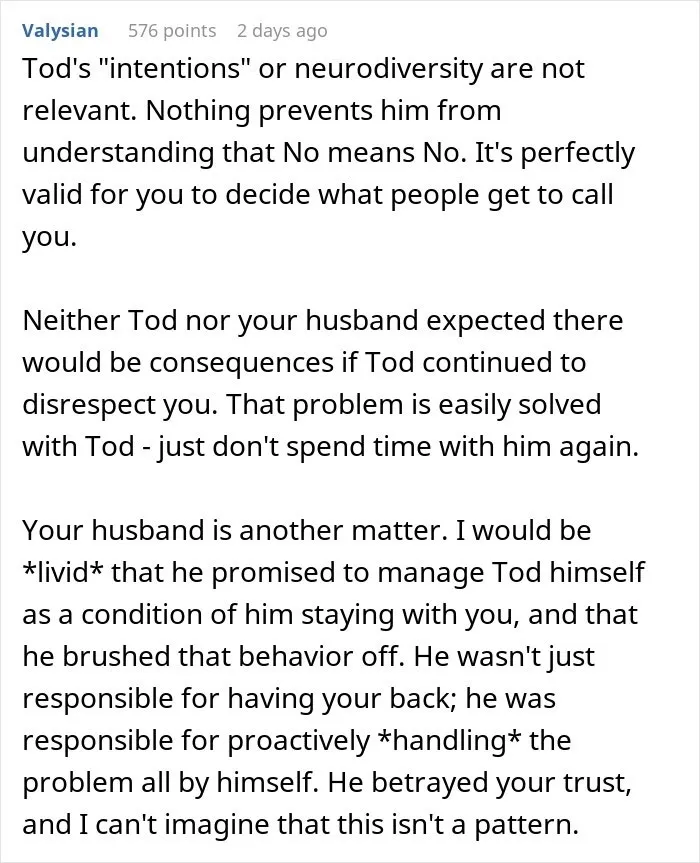
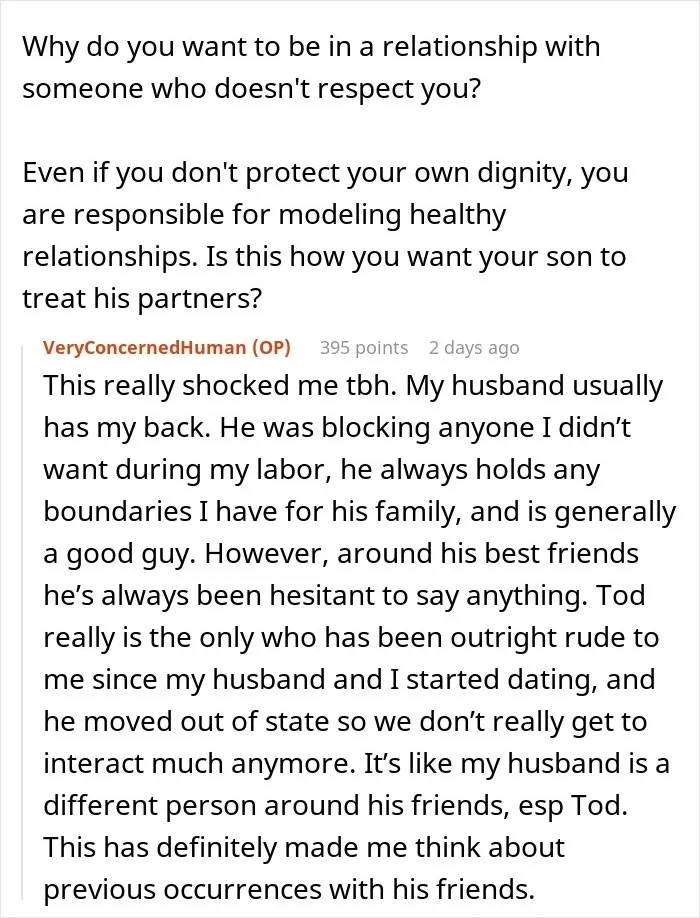
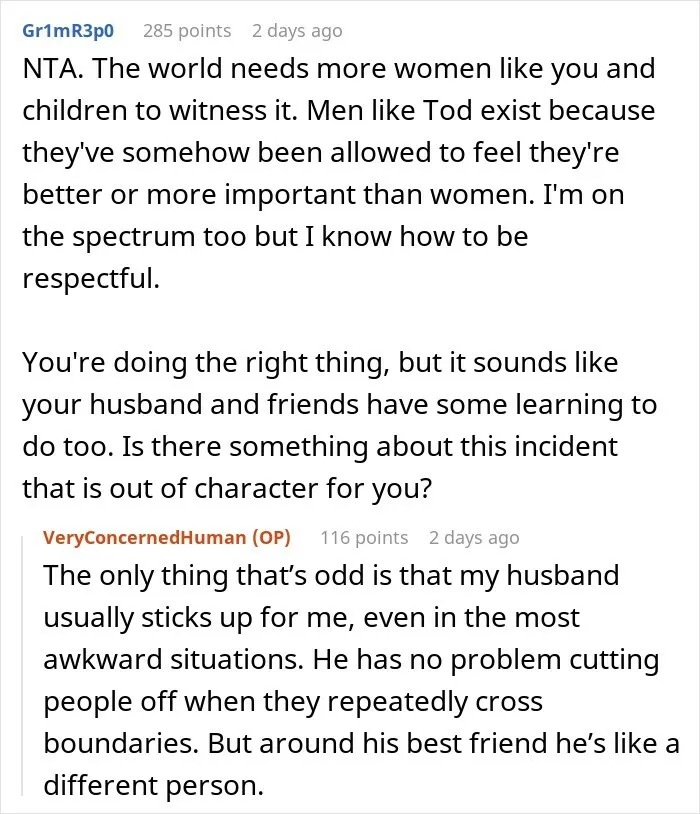
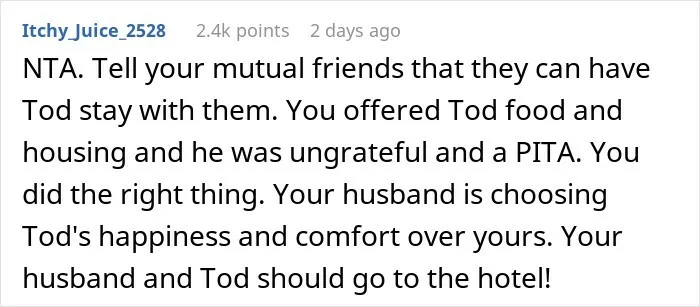
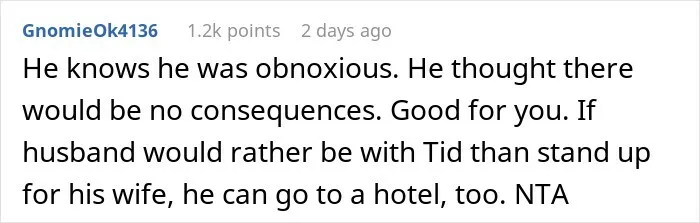
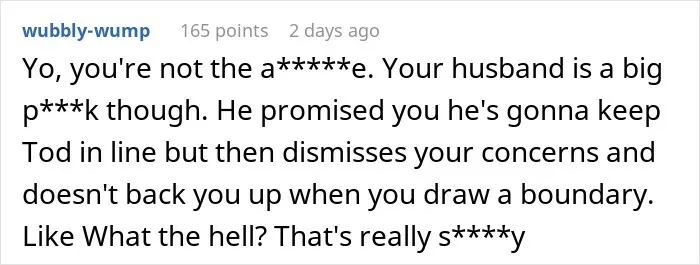
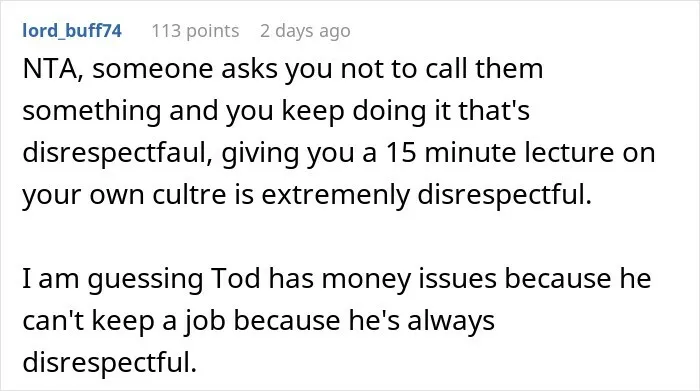
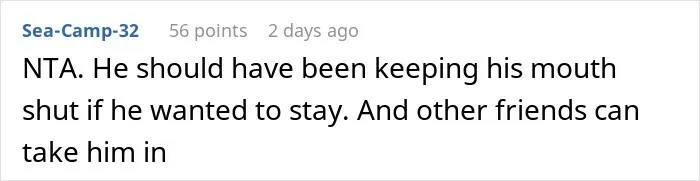
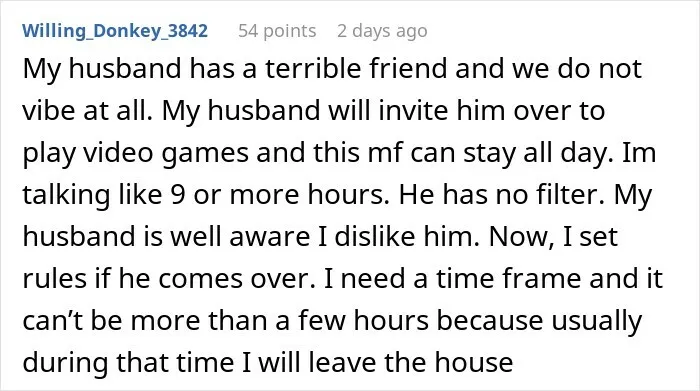
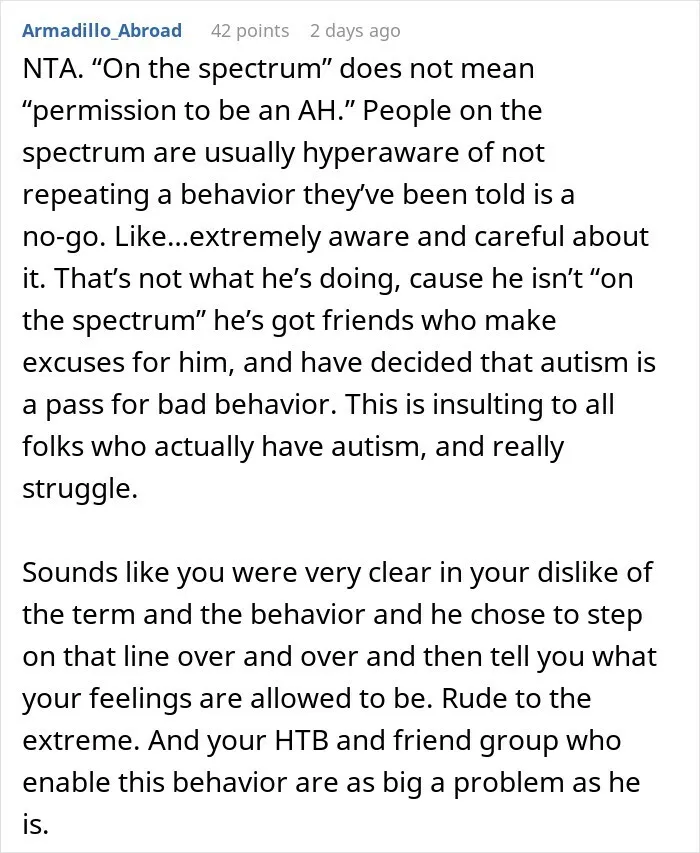
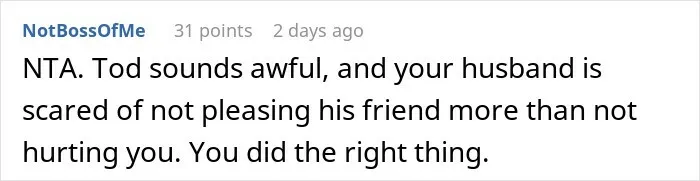
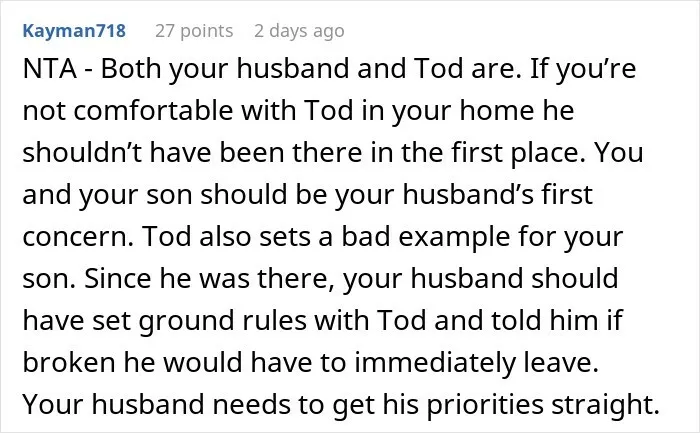
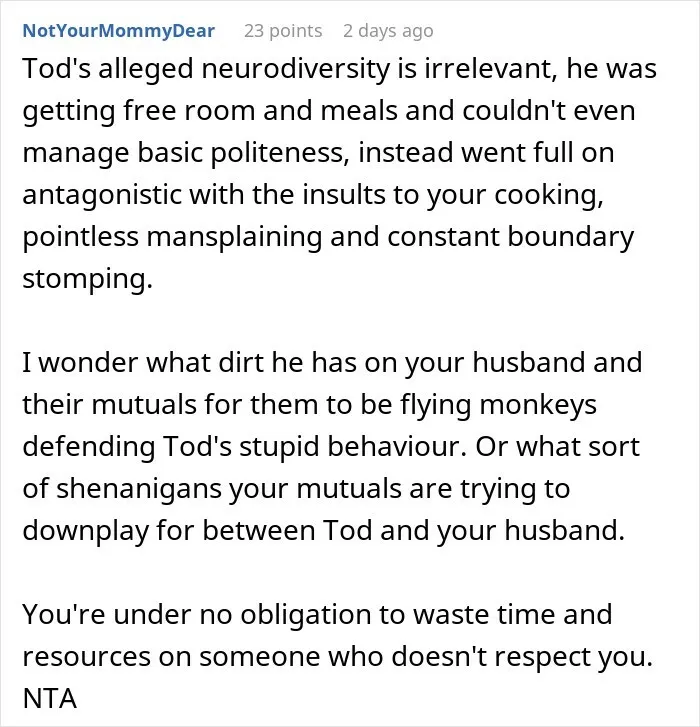
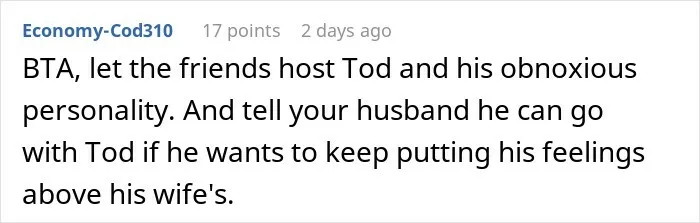
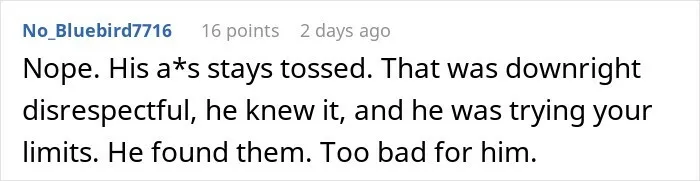
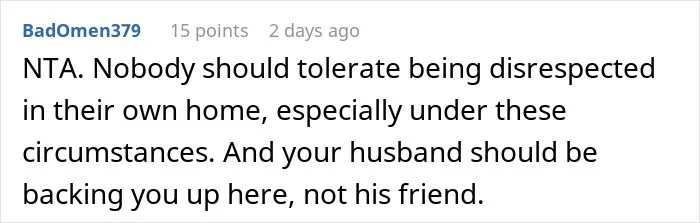
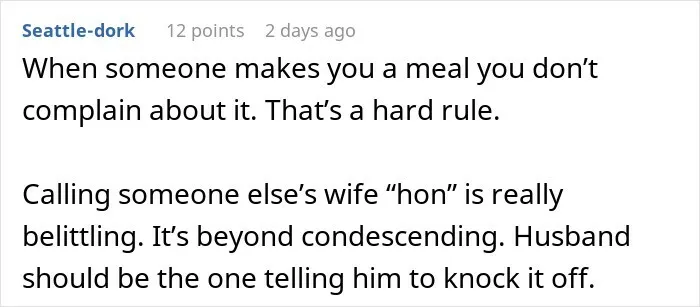
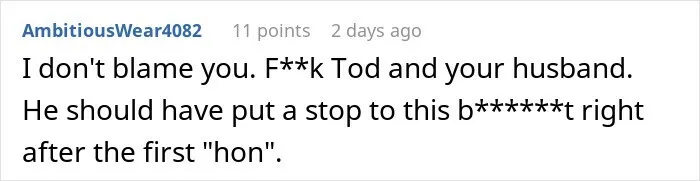
Commenters sided with the poster, agreeing she wasn’t the jerk in the situation