




#21 Dracula Parrot
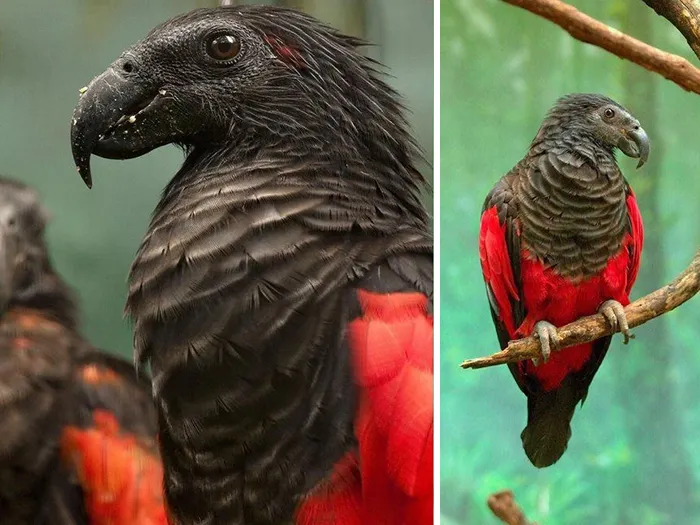
New Guinea’s rainforest canopy is home to a bird from a horror story. The Dracula parrot sports inky-black feathers draped over a crimson chest and a bald, vulture-like head.
LiveScience describes its scream as piercing enough to echo through the jungle.
Despite the haunting looks and name, its diet is surprisingly tame, mostly figs. But its appearance makes it a target. Hunted for its striking plumage, it is now listed as Vulnerable by the IUCN.
If real vampires wore feathers, would this be their mascot?
Report
0points
#22 Cassowary

This flightless dinosaur-like bird is native to Australia’s rainforests. Its 5-inch dagger claws and a prehistoric helmet of bone complete its colourful look. Its electric-blue neck completes its look.
Though it primarily eats fruit, it is very territorial and aggressive, according to the San Diego Zoo.
So don’t be fooled by the appearance, because the cassowary can deliver talon tears capable of disemboweling predators, including humans, in seconds.
Does this evolutionary throwback deserve dinosaur-level dread?
Report
0points
#23 Komodo Dragon

The Komodo dragon is the largest monitor lizard on Earth, a 10-foot, 300-pound predator that rules Indonesia’s volcanic islands. It bites with venom that triggers massive blood loss, then follows its prey until it collapses.
Though often solitary, Komodo dragons have been seen hunting in groups to bring down larger animals. BBC Wildlife adds that adult dragons eat their own young, forcing juveniles to live in treetops to avoid becoming dinner.
Would this cold-blooded giant earn your vote as nature’s most ruthless reptile?
Report
0points
#24 Coconut Crab

The coconut crab is the largest land-dwelling arthropod on the planet. It prowls remote tropical islands from the Indian to the Pacific Ocean, using massive pincers to crush coconuts like brittle shells.
The BBC reports that its claw strength measures up to 3,300 Newtons, on par with a lion’s bite. This crab doesn’t stop at coconuts, either. It scales trees to plunder bird nests and has been known to snatch chicks in mid-air.
Local legends speak of missing pets and children lured too close to burrows, only to be dragged in by claws strong enough to lift them.
Would this nocturnal climber make you think twice before wandering the beach at night?
Report
0points
#25 Vampire Squid
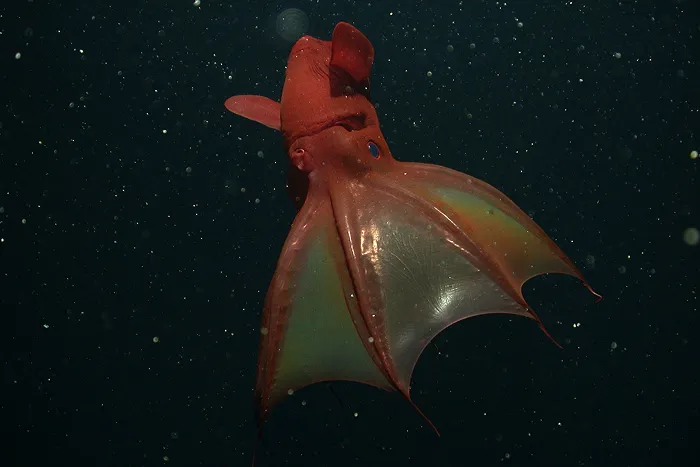
Neither true squid nor octopus, the vampire squid is a unique deep-sea cephalopod that haunts the oxygen-deprived midnight zone. The Monterey Bay Aquarium identifies it as a creature from its own lineage.
When threatened, it pulses with ghostly blue bioluminescence and unfurls a webbed cloak lined with spiny arms, creating a nightmarish display.
It doesn’t need to bite or sting. Instead, it releases glowing clouds of mucus that confuse predators long enough for it to disappear into the dark.
Is this deep-sea phantom the ocean’s most eerie escape artist?
Report
0points
#26 Skeleton Shrimp

These stick-thin crustaceans vanish into seaweed and coral with bodies so transparent they’re nearly invisible. They cling to marine plants using hooked legs, imitating drifting debris to escape detection.
But camouflage is not their only unsettling trait. After hatching, the young latch onto their mother and feed off her tissue. Eventually, she scrapes them off to avoid starving herself.
Would you crown this ghostly parasite the ocean’s most sinister shape-shifter?
But camouflage is not their only unsettling trait. After hatching, the young latch onto their mother and feed off her tissue. Eventually, she scrapes them off to avoid starving herself.
Would you crown this ghostly parasite the ocean’s most sinister shape-shifter?
Report
0points
#27 Candiru

This tiny parasite, often no bigger than a finger, hides in the cloudy shallows of the Amazon River (via FishBase).
It follows blood trails to find larger fish, slipping into their gills and biting into arteries with sharp teeth. As it feeds, its stomach expands with blood pumped directly by the host’s heartbeat.
Britannica notes that it is infamous for sometimes mistaking human urine for fish gill currents. When this happens, it can enter the urinary tract and lock itself in place with spines, causing severe pain and bleeding.
Could this invasive little parasite be the most unsettling creature in the Amazon?
- You might also like: 50 ‘Weird Facts’ About The World That Might Give You A Fresh Perspective
0points