

Bored Panda
47 Human Body Facts So Unbelievable That You Might Want To Fact-Check Them, And They Still Hold Up

47 Human Body Facts So Unbelievable That You Might Want To Fact-Check Them, And They Still Hold Up

32
1
We still don't know so much about ourselves. Our brains, in particular, are still a mystery even to the most knowledgeable neuroscientists. Despite all the progress we’ve made, we still can’t explain everything.
But over time, we keep learning more about ourselves. And no, we’re not just talking about personal growth or personality traits; we're also talking about how our bodies actually work. Frankly, we are kind of creepy. And some people on Threads have even shared discoveries that made them see their own bodies a little differently, and here’s what they had to say.

#1

A woman holding a glass of water, highlighting fascinating human body facts about hydration.
That menopause isn’t just shifting hormones, it’s an entire endocrine system change.
The lack of research in women’s health is pathetic.
21points

#2

Close up of hands on a person stomach, illustrating human body facts about digestion.
Here’s another amazing fact! Your liver is the only internal organ that can regenerate much of its lost tissue. Even after a large portion is surgically removed, it can grow back toward its original size. The human body is truly remarkable!
18points

#3

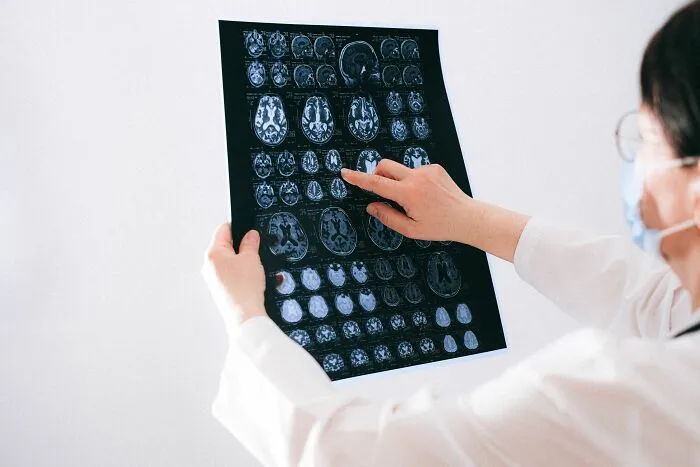
Doctor looking at brain scans, highlighting human body facts about the nervous system.
Ooh I have 2:
Recently scientists discovered that the brain stem and the forebrain (lobes) are made of genetically different materials. We essentially have 2 brains.

Also each time we access a memory, you are actually remembering the last time you remembered it, not the actual event.
14points

Evolution is a fascinating thing. As humans evolve, we gain or lose certain traits based on our changing needs. For instance, about 35% of people are born without wisdom teeth, partly because our jaws have changed over time. These teeth are becoming less necessary, showing how our bodies continue to adapt to our environment.

Before cooking tools became widespread, our ancestors ate a rough diet consisting of roots, nuts, seeds, and raw meat. Naturally, chewing these foods required strong jaw muscles, and wisdom teeth provided extra grinding power. Today, our diets have changed dramatically, and we can even survive on liquids alone- funny how it works.

#4

A woman blowing her nose with a tissue, illustrating human body facts about illness.
You can temporarily get someone’s allergy from a blood donation!
I 100% think they should be monitoring that like they do what blood type it is!!!!!!!
12points

#5

A happy young child playing with a smiling older man, illustrating interesting human body facts.
The trauma your ancestors experienced can manifest in autoimmune disorders in you.
12points

#6

Detailed close-up of light blue eyes representing human body facts about vision.
That little pink bit in the corner of your eye..it's the remains of a third eye lid called vestigial leftovers.
11points

#7

Woman drinking water from a plastic bottle showing human body facts about hydration.
Dehydration can cause temporary brain shrinkage.
10points

Similarly, if you have a particularly unique body, you might even be able to flex your tensor tympani! This tiny muscle in your ear can produce a deep, rumbling sound inside your head when flexed.

This doesn't necessarily mean it serves a physiological purpose like wisdom teeth once did. Instead, it comes down to neuromuscular control. Experts say about 16% of the population can trigger this reflex on command, like some people can wiggle their ears or raise one eyebrow. We're all just a little quirky.

#8
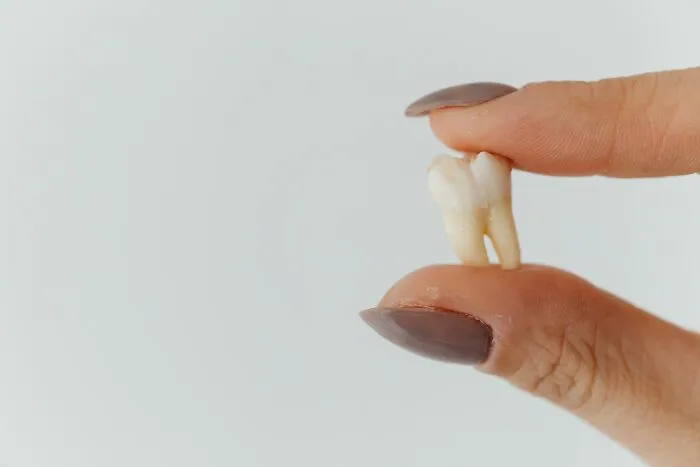
Fingers holding an extracted human tooth, showcasing human body facts about teeth.
The brain has no pain receptors.
You can live with only one lung.
A tooth can restore your eyesight.
9points

#9

A woman stretching her back on a mat indoors, demonstrating movement and human body facts.
Unchoreographed dynamic stretching aka morning stretch with yawn, is called pandiculation and it provides pain relief, improved balance, stress reduction and more.
9points

#10

Swirling abstract view looking up into tree canopy illustrating human body facts and brain perception.
You have little rocks in your inner ear and if they get knocked loose you'll get debilitating vertigo. Doctors fix it by rotating your head in particular way.
9points

#11

A woman holding flowers near her face exploring human body facts and senses
Ovaries and fallopian tubes aren't connected. Ovulation is basically a game of catch.
9points

Many of these discoveries and changes have happened throughout history. Others arose because we didn't know any better. For instance, until the 17th century, medical science was still catching up, and some physicians believed the liver controlled the body's circulation.

Similarly, people once considered the appendix a useless piece of tissue. But later, researchers discovered it could serve as a safe house for beneficial gut bacteria. But these discoveries didn't happen overnight. As we do today, our ancestors had to learn more about the human body, but with far fewer resources at their disposal.

#12

Close up of a newborn baby's feet in a hospital highlighting human body facts
When you have a c-section, they sometimes they pull the whole uterus out and flop it on mom’s belly and then cut the uterus open and take the baby out. Then they close it and pop it back inside before sewing up the first incision. I had no idea until I was in the OR for one. Whew.
9points

#13

Extreme macro view of a human eye showing human body facts
When you have cataract surgery, they put an artificial Lens in to replace the one you were born with.

It’s made of silicone or plastic. Goes in folded in half, and then unfolds inside your eye.

And no stitches afterwards. Not a single one.
9points

#14

A pregnant woman holding her belly, representing human body facts during pregnancy.
Here’s another one: when you’re pregnant, you actually grow a whole new organ — the placenta — from scratch. Your body builds it, uses it as a life‑support system, and then discards it like it’s no big deal. Humans are wild.
8points

#15

A woman sleeping in bed wearing an eye mask, representing human body facts about sleep.
You have to pretend to sleep in order to fall asleep.
8points

#16

A person holding their chest demonstrating human body facts about internal organs
Rumbling sounds in your belly is called borborygmi.
8points

#17

Our lungs go all the way up to our shoulder. Don’t know why this surprised me. The anesthesiologist told me that when they put the central line in for my son’s heart surgery. When putting the central line in there is a chance of knicking the lung.
8points

Our genetic makeup also makes it difficult to understand our body's physiology. Funnily enough, researchers say that humans share around 99.9% of their DNA. However, that remaining 0.1% helps explain many of the physical differences between us, including height, eye color, blood type, and facial structure.

We're all born with a unique DNA combination, and medical researchers must account for these small genetic differences when studying the human body. Even so, we still discover people with unique traits that we never knew were possible.

#18

Elderly woman knitting yarn, showing human body facts about aging and motor skills.
A woman, even as a fetus, already has all the eggs she ever will have. Therefore, she existed initially in her grandmother’s womb.
7points

#19

A person holding their knee illustrating human body facts
People aren’t born with knee caps (patellas). It’s cartilage at first, are gradually turns to bone (ossification).
7points

#20

A fork lifting steaming hot spaghetti, illustrating human body facts related to taste and digestion.
When my Mom had her vericose veins removed she said they pulled em out like a spaghetti noodle.
6points
32
1