






#1
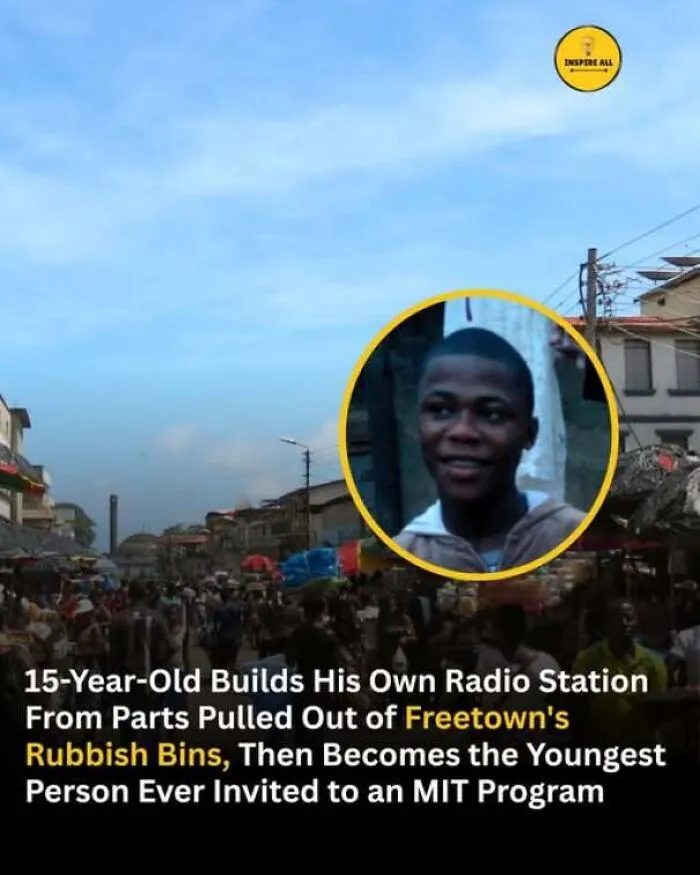
At fifteen, Kelvin Doe was broadcasting to his community in Sierra Leone through an FM transmitter he had built from salvaged electronics.
On air, he called himself DJ Focus. He played music and shared local news, bringing schoolmates into the project to help gather stories from their neighborhood.
His experiments began with an everyday frustration: batteries for radios and flashlights were expensive. So he taught himself to make his own using discarded materials. He also built a generator.
In 2012, his work caught the attention of David Moinina Sengeh, a Sierra Leonean doctoral student at MIT who helped run the Innovate Salone competition.
Sengeh arranged a trip to the United States. That October, Kelvin spent time working alongside people at the MIT Media Lab and presented at New York’s World Maker Faire.
Here’s another remarkable detail: the schoolmates helping him gather news were, on average, just twelve years old.
A teenager’s experiments had become a project other young people could contribute to.
But the invitation to MIT came after the hardest part had already begun. How did Kelvin turn discarded pieces into a working transmitter, and who helped his ideas reach beyond his neighborhood?
#2
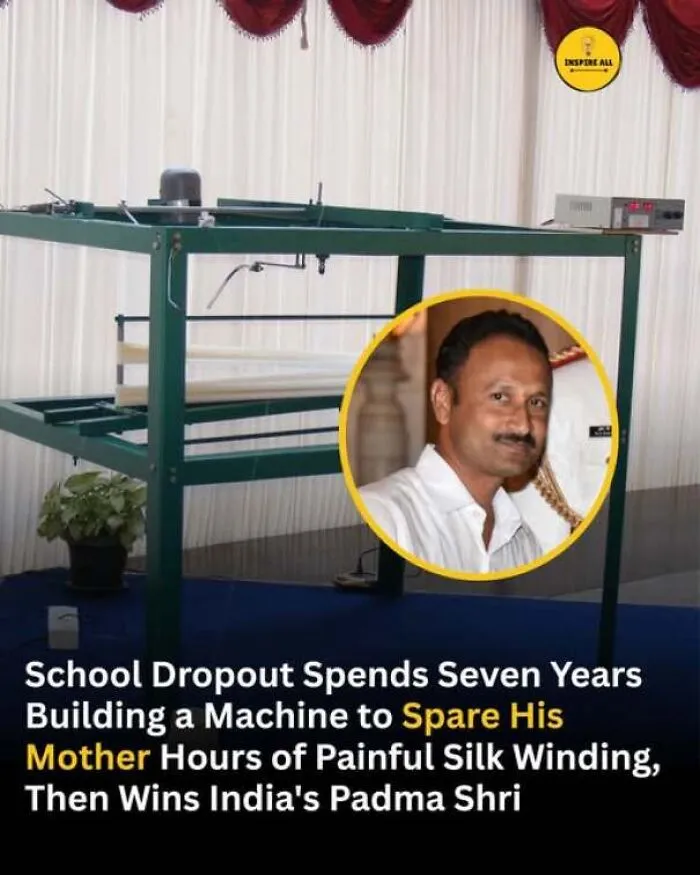
Chintakindi Mallesham grew up watching his mother, Laxmi, spend hours preparing yarn for Pochampalli saris in India.
The process, called Asu, required thousands of repeated hand movements. Her shoulders and elbows hurt. She told him she could not keep doing it.
In 1992, at twenty, Mallesham began trying to build a machine that could help.
He had no formal engineering training. He divided the task into separate movements, bought parts when he could afford them, and kept experimenting.
His savings ran low. He moved to Hyderabad for paid electrical work and continued developing the unfinished machine. His wife, Swarna, contributed money to help him keep going.
In 1999, seven years after he started, the first machine was complete.
He named it the Laxmi Asu machine after his mother. It reduced the demanding yarn-preparation stage to about ninety minutes, while leaving the wider craft of sari making in the weavers’ hands.
In 2017, he received India’s Padma Shri. His journey later became a film.
A task his mother had endured for years became the problem he refused to leave unsolved. But what happened between those first experiments and the working machine?
#3
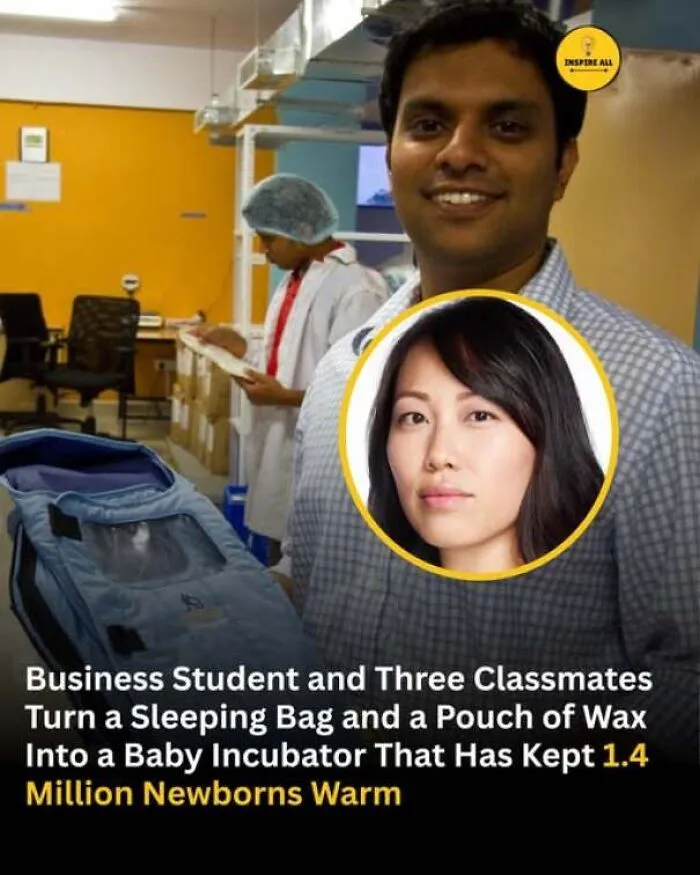
While studying at Stanford, Jane Chen’s team received a challenge: design a baby incubator for less than one percent of the usual cost.
Their research pointed toward something portable that could provide warmth without a continuous electricity supply.
The answer looked more like a tiny sleeping bag than a hospital machine.
Inside was a pouch of specially designed, wax-like material. After heating, it releases warmth as it slowly becomes solid again.
Embrace says the pouch can provide warmth for up to four to six hours before needing reheating. It supports temperature care, rather than replacing every function of a hospital incubator.
One intriguing detail: the same pouch can be reheated hundreds of times.
Since 2011, Embrace Global reports helping keep more than 1.4 million newborns warm across over 30 countries.
What began as a class assignment grew through conversations with parents, doctors and healthcare workers.
But why does the pouch release warmth gradually instead of simply cooling down like a hot-water bottle?
It's hard to escape the bad news these days. Turn on the television, open social media, or check your phone, and there's always another report about conflict, disasters, or something else going wrong somewhere in the world.
According to psychologists, being constantly exposed to negative news can take an emotional toll on you, contributing to stress and anxiety. Staying informed matters, but you don't have to spend every waking moment absorbing everything that's going wrong.
#4

Ann Makosinski learned that a friend in the Philippines had no electricity at home and struggled to finish her schoolwork before daylight faded.
She began exploring another way to provide light.
Her idea became the Hollow Flashlight, a prototype that used the temperature difference between a warm hand and cooler surrounding air to generate electricity.
Thermoelectric tiles captured that difference, while a circuit helped provide usable power for an LED.
In 2013, her project won the 15–16 age category at the Google Science Fair.
One intriguing detail: the hollow tube was part of how it worked. Cooler air inside helped maintain the temperature difference across the tiles.
The prototype needed suitable conditions, so its performance could change with the surrounding temperature.
But it gave Ann a way to test a thoughtful question: could some of the heat leaving our bodies become useful light?
How did she turn that tiny energy supply into enough power for an LED?
#5
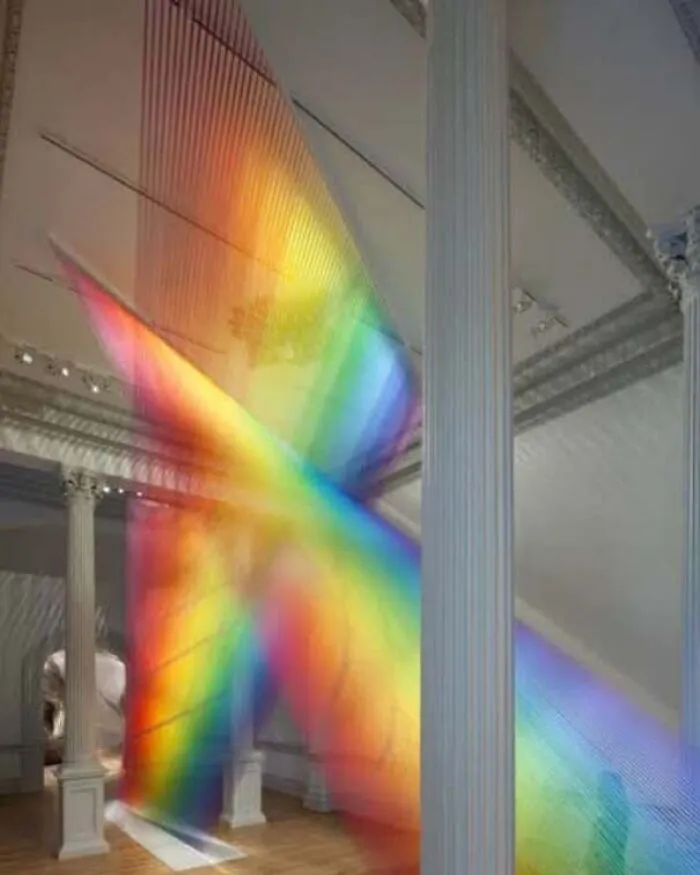
The Magical Art of Gabriel Dawe
Mexican-born artist Gabriel Dawe, now based in Dallas, Texas, creates extraordinary works of art that seem to transform ordinary sewing thread into beams of colourful light.
He is best known for his breathtaking *Plexus* series, featuring large-scale installations made from thousands of carefully arranged, colourful threads. Inspired by the visible spectrum of light, these intricate creations resemble rainbows suspended in midair.
From a distance, the threads blend together to create the illusion of glowing light. But step closer, and the incredible detail of each individual strand becomes visible.
Although the *Plexus* installations brought him widespread recognition, Dawe also explores other materials and artistic techniques, including works on paper.
His creations are more than beautiful visual displays. They explore connections between light, architecture, textiles, and identity.
It's amazing how something as simple as sewing thread can be transformed into something that looks almost otherworldly.
#6

In 1847, as Ireland faced the devastating Great Famine, thousands of families struggled with hunger, poverty, and the loss of loved ones.
Across the Atlantic, the Choctaw people heard about the suffering in Ireland. They had endured terrible hardship themselves, including the forced removal from their ancestral homeland known as the Trail of Tears.
Yet, despite their own struggles, they came together and donated approximately $170 to help the starving Irish people.
Think about that for a moment.
They didn't have to help. They were struggling, too. But they understood what it meant to suffer, and they chose compassion over indifference.
More than a century later, Ireland honored this extraordinary act of generosity with a sculpture called *Kindred Spirits*, located in Midleton, County Cork.
The artwork features nine enormous stainless-steel eagle feathers arranged in a circle. Together, they form the shape of a bowl, symbolizing food offered to those who were hungry.
It's more than a beautiful sculpture. It's a reminder of a moment when one people, despite their own suffering, reached across an ocean to help another.
Sometimes, the people who understand suffering most deeply are the ones who recognize it in others.
**The world doesn't need us to have everything before we help someone. Sometimes, it simply needs us to care.**
The Choctaw people's generosity has never been forgotten.
What a powerful lesson in humanity: you don't have to be wealthy, comfortable, or free from hardship to make a difference in someone else's life.
**What do you think the world needs more of today: kindness, compassion, or the courage to help even when we're struggling ourselves?**.
Sometimes, taking a break from all that noise can do you a lot of good. It allows you to shift your attention to the good things happening around you, which can bring a little joy and lift your spirits.
Psychologist Barbara Fredrickson explains that positive emotions such as joy, interest, and contentment can broaden our thinking and help us develop better ways of coping with life’s challenges. They can also help us approach life with a more open and hopeful mindset.
#7
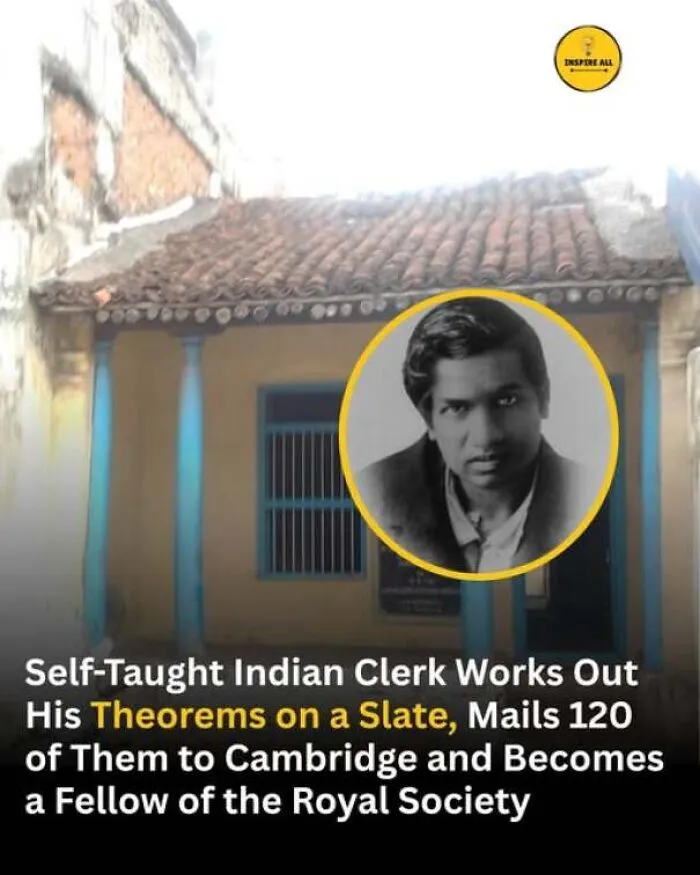
In January 1913, Srinivasa Ramanujan wrote to Cambridge mathematician G. H. Hardy with a selection of mathematical results.
He was working as a clerk at the Madras Port Trust, studying and developing ideas outside a conventional university course.
Books had helped him learn. Local supporters had recognized his ability. Now he was asking someone far away to examine his work.
Hardy and fellow mathematician J. E. Littlewood studied the results.
On February 8, Hardy replied with interest and asked to see proofs.
That exchange helped bring Ramanujan to Cambridge in 1914, where collaboration gave his ideas a wider audience.
In 1918, he became a Fellow of the Royal Society and later a Fellow of Trinity College, Cambridge.
One remarkable detail: notebooks he left behind continued to inspire mathematical research long after his passing in 1920.
His story connects extraordinary curiosity with the importance of someone taking unfamiliar work seriously.
#8
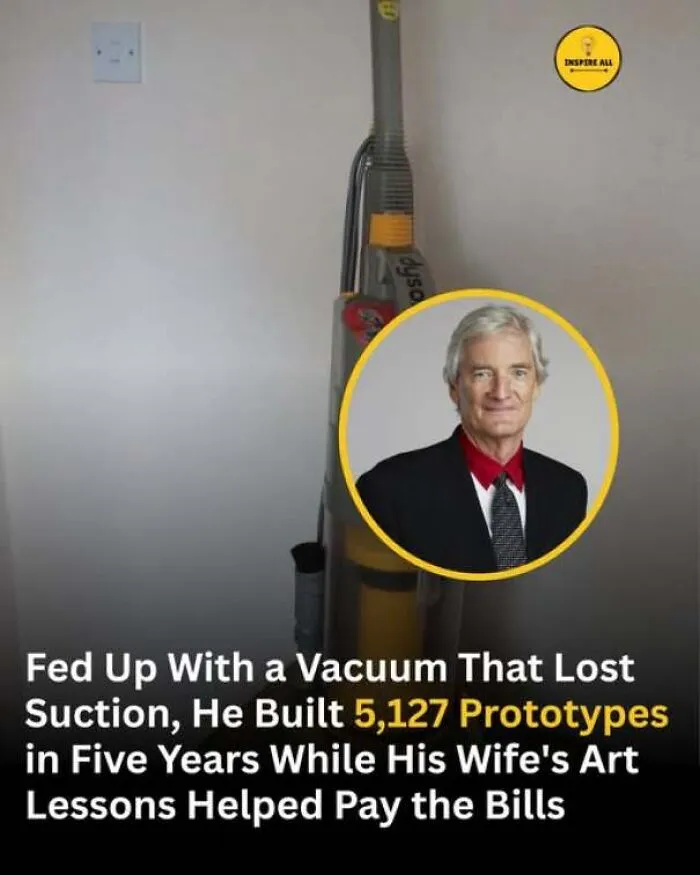
It began with a familiar frustration: a vacuum cleaner that stopped picking up dirt properly as its bag clogged.
James Dyson wondered whether cyclone technology could separate dust from the airflow without relying on a bag.
He built a crude prototype from simple materials. It showed promise, but making the idea work reliably took much more.
In his own account, Dyson describes 5,127 prototypes and a longer journey that led to the DC01 reaching the market in 1993.
Each version gave him something else to investigate, adjust and test.
One intriguing detail: the cyclone did not trap dust in a filter bag. It used spinning airflow to separate dirt, changing how the machine collected it.
A working experiment was only the beginning. It still had to become an appliance people could use in their homes.
His story shows how much work can sit between having an idea and making it dependable.
But if the first rough model showed promise, why did thousands more versions follow?
Discover what Dyson’s prototype count reveals about the work behind his bagless vacuum.
#9
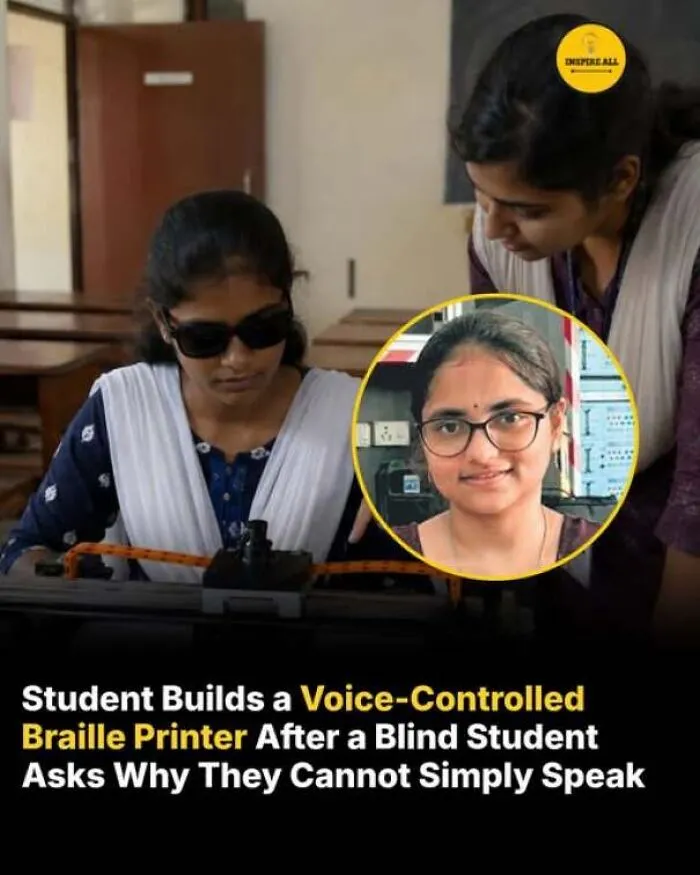
A simple question changed the direction of Lingampalli Himaja’s invention.
During a school visit, she saw students using a slate and stylus to punch Braille dots into paper by hand.
Her first prototype used six buttons. But when students tested it, one asked why they needed to press buttons when they could speak.
Himaja listened.
RUDHRA evolved into a system that converts spoken words into text, then embosses readable Braille onto paper. Users can check the text before printing, helping catch speech-recognition mistakes.
The project is still under development, but it has already won India’s 2026 James Dyson Award and reached the global Top 20 shortlist.
Sometimes, the most useful step in inventing is listening to the people who will use what you build.
But turning speech into text is only half the challenge. How does RUDHRA turn those words into raised dots that someone can read by touch?
It feels really good to come across something so extraordinary that it makes you forget everything else for a moment. Psychologists call this feeling awe. It happens when you see an incredible natural wonder, witness an impressive human achievement, or encounter something you never imagined existed.
Research has found that experiencing awe can make people less focused on themselves and more inclined to act generously toward others. Little moments of wonder can inspire kindness and help make the world a better place.
#10
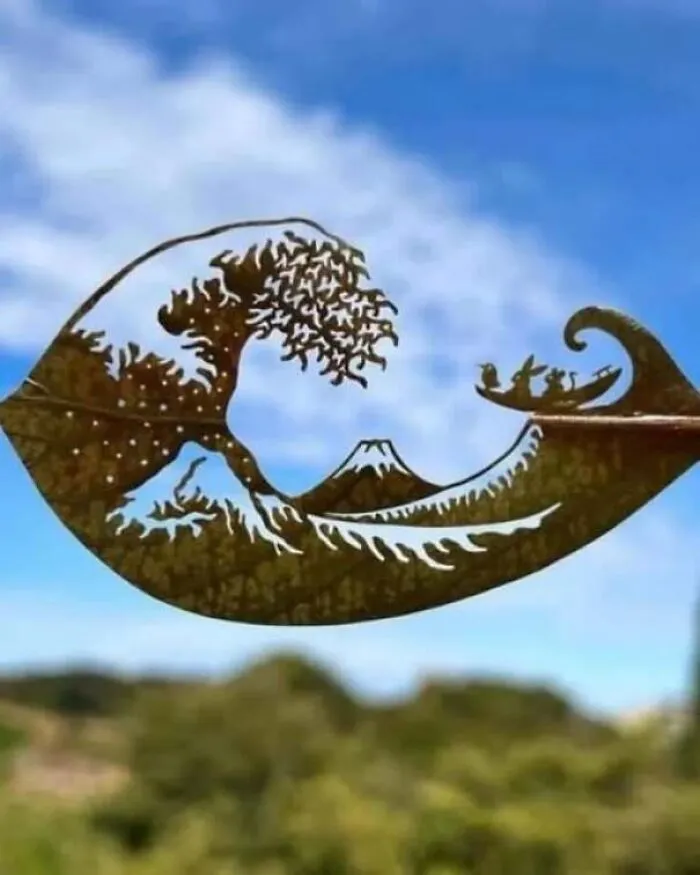
**The Story of Lito**
What most people see as an ordinary fallen leaf, Japanese artist Lito transforms into something truly extraordinary.
Born in 1986 in Japan's Kanagawa Prefecture, Lito is a self-taught leaf-cutting artist whose intricate creations have captured the imagination of people around the world.
His artistic journey began in 2020. After receiving an ADHD diagnosis as an adult, he decided to channel his intense concentration and attention to detail into something creative. He began experimenting with leaf-cutting art, developing his own unique style.
Soon, his delicate creations began attracting attention on social media. His work was featured on Japanese television, in newspapers and magazines, and eventually in media outlets around the world.
In 2021, he published his first collection, *Always Beside You: A Small, Gentle World*, sharing his imaginative creations with an even wider audience.
His journey continued to grow, and in 2024, a dedicated museum showcasing his art opened in Fukushima, Japan.
Using nothing more than carefully selected leaves and incredible precision, Lito creates tiny worlds filled with animals, stories and imagination.
His story is a beautiful reminder that sometimes our greatest strengths emerge when we discover a creative way to embrace the things that make us different.
#11
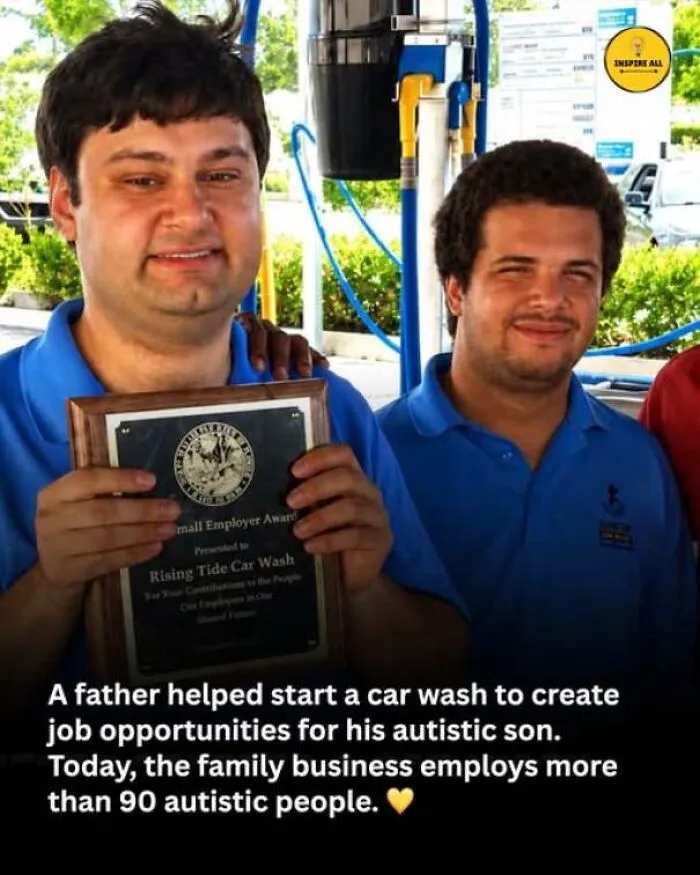
As Andrew approached adulthood, the family saw how difficult finding that opportunity could be.
So John and his other son, Thomas, helped create it.
In 2013, they opened the first Rising Tide Car Wash in Parkland, Florida. Their goal was to build a successful business where Andrew and other autistic adults could develop skills and pursue meaningful work.
That meant paying attention to how people were hired, trained, and supported.
Rising Tide uses practical job auditions to assess applicants’ abilities and teaches new employees the work from the ground up. Its career paths include car wash operations, sales, and leadership roles.
The business has since expanded to Margate and Coral Springs.
In 2026, the company reports employing more than 90 autistic people, representing about 80% of its workforce. It also reports having helped launch more than 250 careers.
For the D’Eri family, the idea began with Andrew’s future. It grew into a workplace where many more people could earn a paycheck, gain experience, and contribute to a team.
Their story shows what can happen when employers recognize ability and build the support people need to succeed.
#12

Scientists have not yet determined whether this beautiful animal has leucism or albinism, two different conditions that can affect pigmentation.
Either way, this rare sight is a beautiful reminder of the extraordinary diversity found in the natural world.
You don't always need a grand spectacle to find something worth appreciating. Sometimes, it could be a beautiful sunset on your way home, a stranger doing something kind, or a funny little moment that makes your heart all warm and fuzzy.
A study on savoring positive moments in everyday life found that taking time to appreciate pleasant experiences was associated with greater psychological well-being. It's easy to rush through the day without noticing these little moments, but sometimes they’re all that counts.
#13
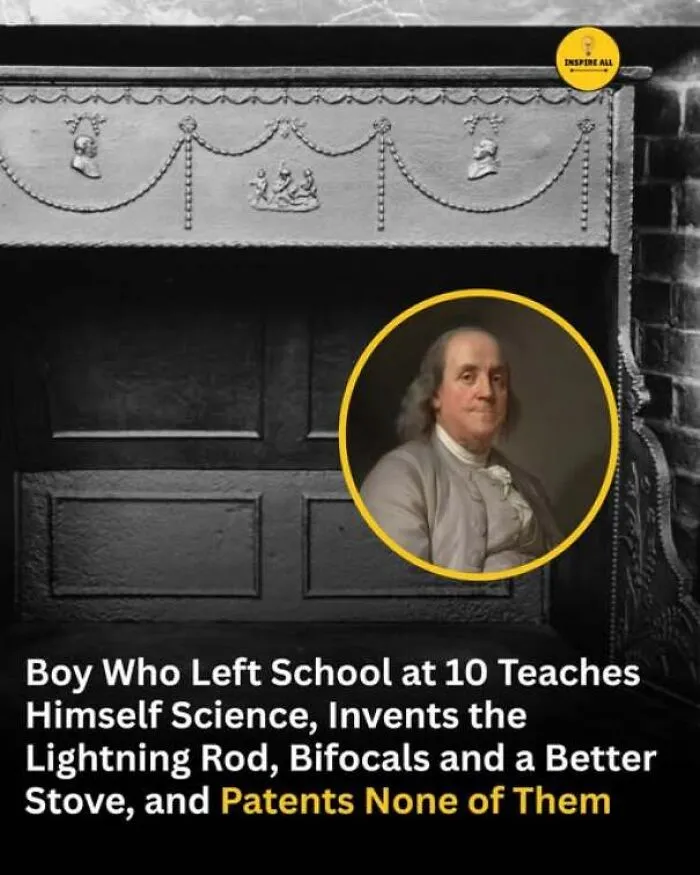
Benjamin Franklin’s formal schooling ended when he was ten. At twelve, he became an apprentice in his brother’s print shop. His classroom years were over, but his learning continued through books, work and experiments.
His curiosity started early. At eleven, he made wooden swimming fins that he held in his hands. They helped him move faster through the water, but tired his wrists.
He kept testing ideas.
In 1742, he designed a fireplace that provided more useful warmth while producing less smoke. His electrical research helped him develop the lightning rod to protect buildings and the people inside.
When switching between reading glasses and distance glasses became inconvenient, he combined both types of lenses in one frame: bifocals.
His inventions tackled problems people faced every day. Yet Franklin chose not to patent them.
He believed that benefiting from other people’s discoveries gave him a reason to share his own.
The inventions are familiar. The thinking behind that decision is just as remarkable. What did Franklin believe people owed one another when they discovered something useful?
Read More... https://trendingamerican.com/benjamin-franklin-inventions-school-patents/.
#14
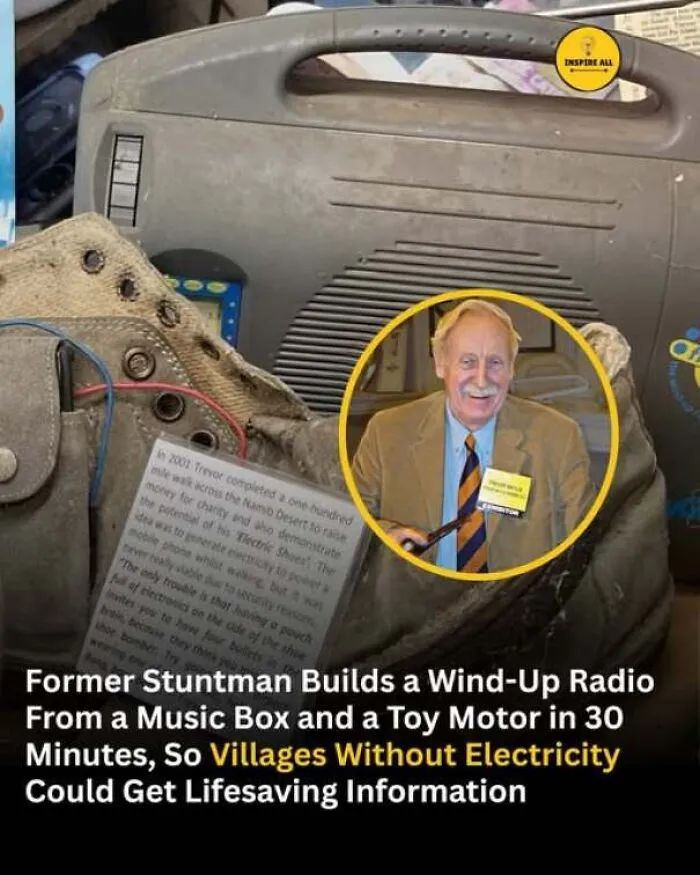
In 1991, Trevor Baylis watched a television programme about the spread of AIDS in Africa.
Radio could help carry vital health information. But for people without electricity, keeping a receiver running meant finding and paying for replacement batteries.
He began working on another way.
His design used a handle to wind a clockwork spring. As it unwound, the spring drove a small generator that powered the radio.
The idea reached BBC’s Tomorrow’s World in 1994 and earned design recognition in 1996.
One remarkable detail: a radio Baylis later donated to the Institution of Mechanical Engineers remains in its collection, preserving the mechanism behind his idea.
His achievement began with noticing that access to information depended on something beyond the broadcast itself.
Someone still needed power to hear it.
But how could a spring keep a radio playing after a person stopped turning the handle?
Discover the mechanism, experiments and milestones behind Baylis’s wind-up radio.
Read More... https://trendingamerican.com/trevor-baylis-wind-up-radio-invention/.
#15
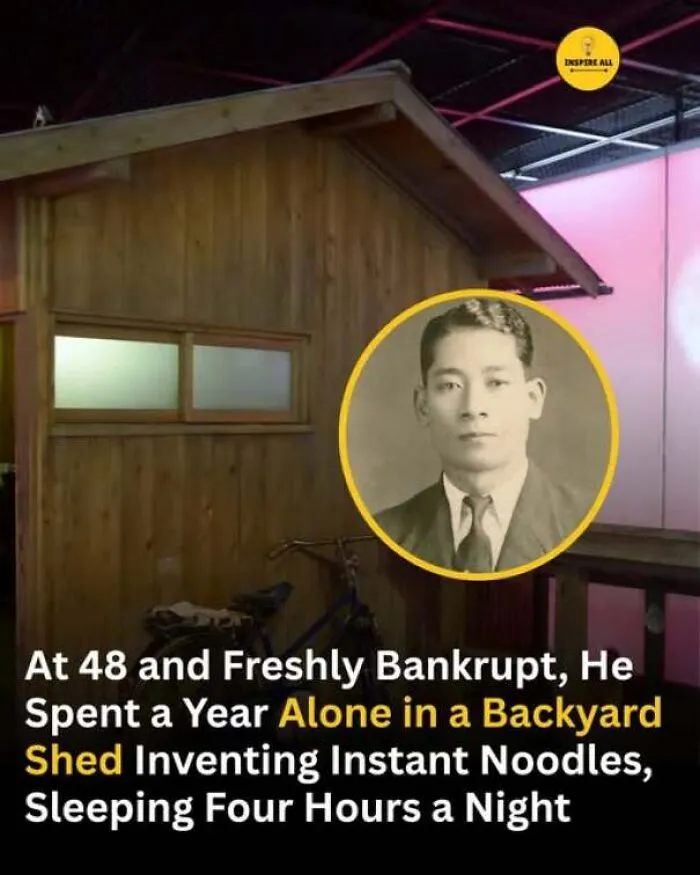
In 1958, Momofuku Ando introduced Chicken Ramen after working in a small shed behind his home in Ikeda, Japan.
Just a year earlier, a credit union where he served as a director had collapsed. According to Nissin’s history, he lost nearly everything except his rented home.
He began again with a practical goal: noodles that could be stored and prepared simply by adding hot water.
The company’s account describes a year of experiments, without days off and with only four hours of sleep a night.
Batch after batch brought another problem to solve. The noodles needed to taste good, keep well and soften quickly.
Then an ordinary moment in his kitchen suggested a way forward.
One surprising detail: Chicken Ramen launched at 35 yen a serving, while a bundle of udon cost just six yen. The convenience we now take for granted initially came at a premium.
His story connects starting over with the patient work of making an idea useful.
But how could noodles stay dry in a packet, then soften again in minutes?
Something Ando noticed while his wife was cooking helped unlock the answer. Discover the kitchen observation behind his breakthrough.
Read More... [https://trendingamerican.com/momofuku-ando-backyard-shed.../](https://l.facebook.com/l.php?u=https%3A%2F%2Ftrendingamerican.com%2Fmomofuku-ando-backyard-shed-instant-noodles%2F%3Ffbclid%3DIwZXh0bgNhZW0CMTAAcGRvZgNicmlkETFuTlhsNzVtam5GUE5jUWo3c3J0YwZhcHBfaWQPNTE0NzcxNTY5MjI4MDYxAAEf6EMqAcDD443qzM5gwKAt1LA4E-q5ynpWEez79a9JXoiHJHTl642I-26OFio_aem_M1BnbOfhAJ49A1gNqyz0bA&h=AUBHmYcFrGMOCdB2B9zgvIt_IrJxwnYgRElU_GvjZ789Qiub5ES2PoIC05er6lNWy9qGAAeUFUWET1tDemieczgCfrOjmYPiTvHULALTM06QJpPAWxKUPTC0_Tthva2NzTh13HV_PbxKWRiO&__tn__=-UK-R&c[0]=AUBF65cFDTxiIf-7QoQI89Lt2Ys9dZPfspxB4WxlQUKMaxSDlVnmAosFFLmuEkqd0W8ijtz4tEhRnXxeDWTWWIGFoP7LzuHA3PP5qJl72T2g51tVXI-IKcI-KuAMcjQ0kzM9iwdkhPSgy4Fg15Eabg-rcYH4QW53k33WsRNtDQ).
Kindness is another thing that makes the world feel a little less gloomy. Seeing someone help a stranger or go out of their way to make another person happy can restore a little of your faith in humanity.
Interestingly, research on watching kindness videos found that viewers reported feeling happier, calmer, and more grateful afterward. In the study, participants who watched the kindness videos were also more likely to donate their participation reward to a family in need. It seems that watching someone do something good can inspire a little goodness in us too.
#16

Arunachalam Muruganantham learned that buying sanitary pads would mean cutting back on other essentials.
His wife told him the cost would take money from their family’s milk budget.
That conversation made him ask why a necessary product should remain out of reach.
His first attempts brought difficult questions. Testing was challenging in a community where menstruation was rarely discussed openly, and finding people willing to give feedback was not easy.
He kept experimenting.
His work eventually produced a low-cost sanitary-pad-making machine, with a wider purpose: helping women manufacture pads closer to the communities that needed them.
One thoughtful part of the idea was that women could operate the machinery themselves, connecting access to menstrual products with an opportunity to earn income.
A household difficulty had become a reason to rethink how something essential was made.
But why build a machine instead of simply making cheaper pads?
That decision is at the heart of his story. Discover how a conversation with his wife grew into an approach to local production.
Read More... https://trendingamerican.com/arunachalam-muruganantham-affordable-sanitary-pad-machine/.
#17
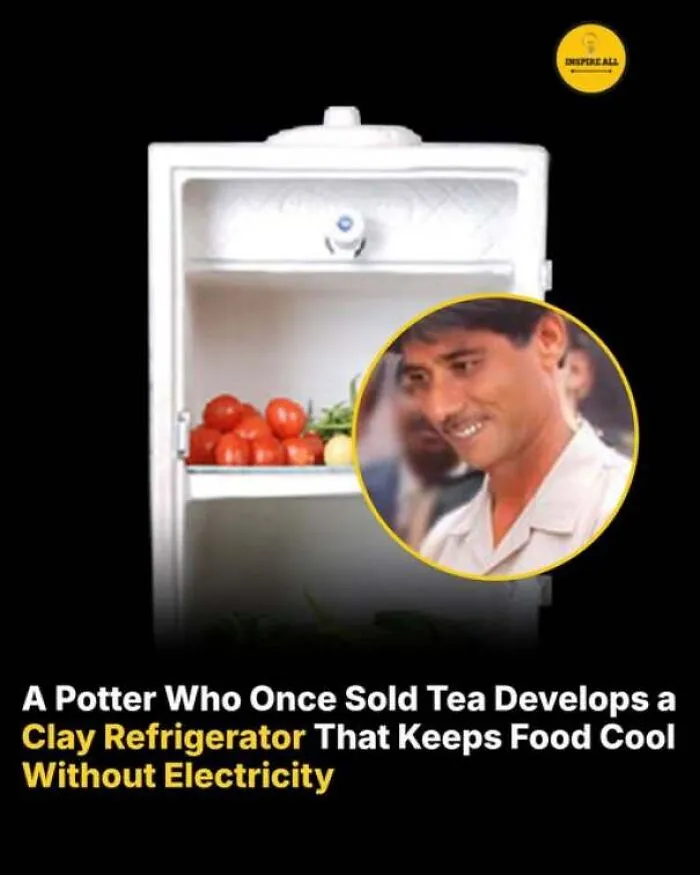
Before Mansukhbhai Prajapati became known for his inventions, he worked at a tea stall and later in a factory.
But clay, the material his family had worked with for generations, offered him another path.
After the 2001 Gujarat earthquake, he began exploring an idea: could he make a refrigerator that needed no electricity?
The result was Mitticool. It uses water and evaporation to cool the food stored inside, with performance depending on the surrounding temperature and humidity.
Getting there took years of experiments. One intriguing detail: he tested clay mixtures containing sand and sawdust to create the porous structure needed for cooling.
His journey shows what can happen when traditional skills meet a practical question.
But what did he see after the earthquake that made him think of building a refrigerator from clay?
An unexpected newspaper description helped spark the idea.
#18
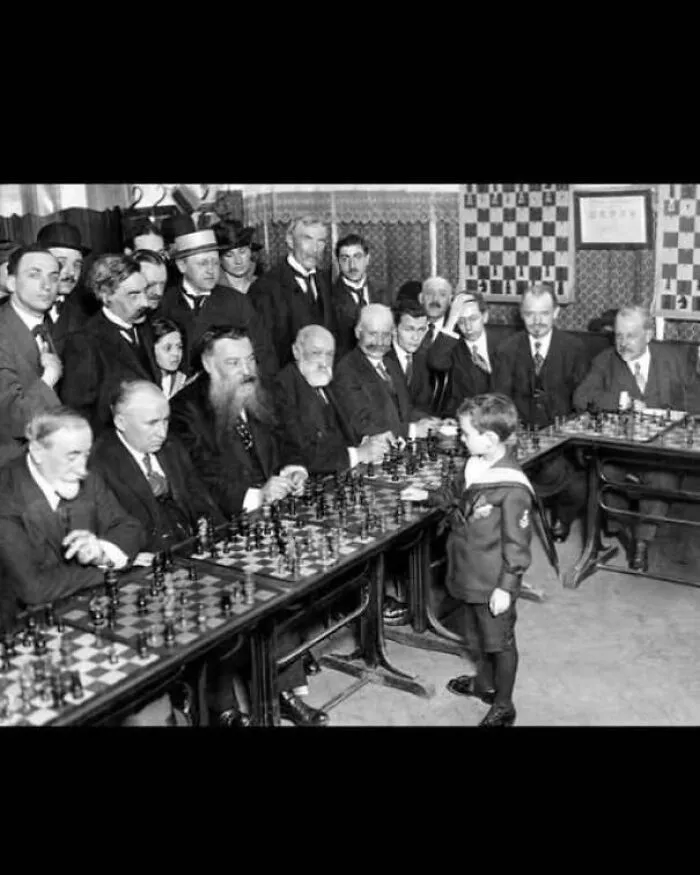
In 1920, an extraordinary young chess player amazed audiences in Europe.
His name was Samuel Reshevsky, and he was only about eight or nine years old.
While most children his age were busy playing ordinary childhood games, Samuel was facing grown men across multiple chessboards at the same time.
He would walk from board to board, studying each position, making his moves, and challenging experienced adult players.
And the most astonishing part?
He had already become famous for his chess abilities before reaching his teenage years.
Born in Poland in 1911, Samuel learned to play chess at around four years old. By the time he was a young child, he was defeating adult opponents and performing simultaneous exhibitions that attracted enormous attention.
That remarkable childhood talent was only the beginning.
Samuel eventually moved to the United States, where he became one of the country's strongest chess players. He won the U.S. Chess Championship multiple times and competed against legendary players, including Bobby Fischer.
His career continued for decades, proving that the little boy who once amazed European audiences was no passing sensation.
Looking at that famous photograph today, it's difficult not to be amazed.
A small child standing among rows of adult opponents, relying not on physical strength or size, but on concentration, memory, patience, and extraordinary strategic ability.
**Sometimes, greatness doesn't wait until adulthood to reveal itself.**
What amazes you more about this story: that Samuel mastered chess at such a young age, or that he went on to become one of America's greatest chess players?
Learning to notice the good things around you doesn't mean pretending the difficult stuff isn't happening. It just means permitting yourself to appreciate what is going right, too.
Research found that brief gratitude exercises improved positive mood and optimism. You don't have to force yourself to be cheerful all the time. But acknowledging that something beautiful, interesting, or kind still exists is enough to give you a better view of life.
#19
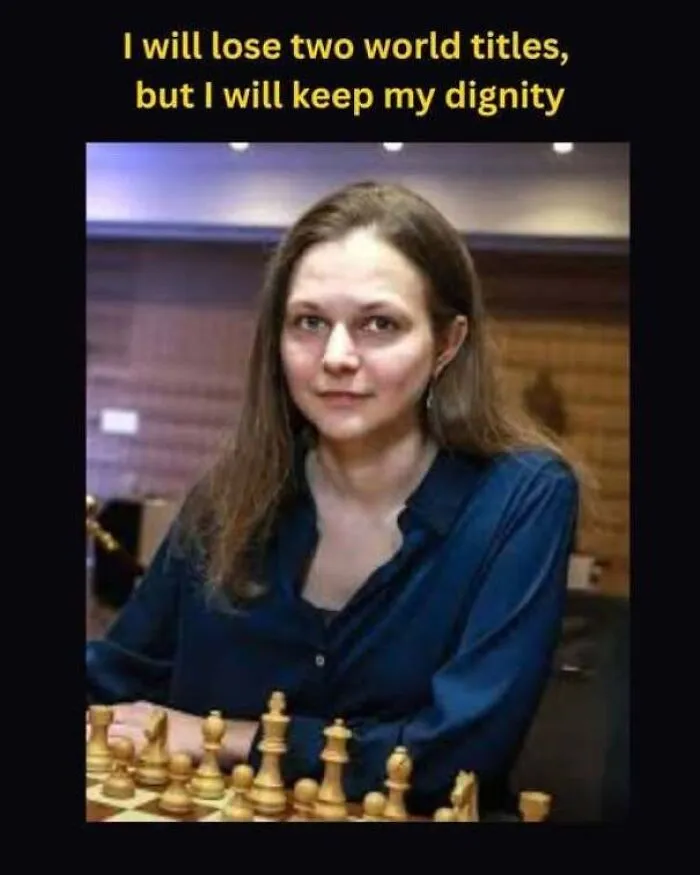
Then came an invitation to defend her titles in Saudi Arabia. The prize money was huge. The spotlight, global.
But to compete, she’d have to follow rules that stripped her of freedom a strict dress code, limited movement, and expectations she couldn’t accept.
So, she made a choice few could make.
“I will lose two world titles,” she wrote, “but I will keep my dignity.”
And she walked away.
No trophies. No stage. Just the quiet strength of standing by her beliefs.
Years later, people still remember not what she won but what she refused to surrender.
*Because sometimes, true victory isn’t about conquering opponents it’s about staying undefeated in your own heart.*.
#20
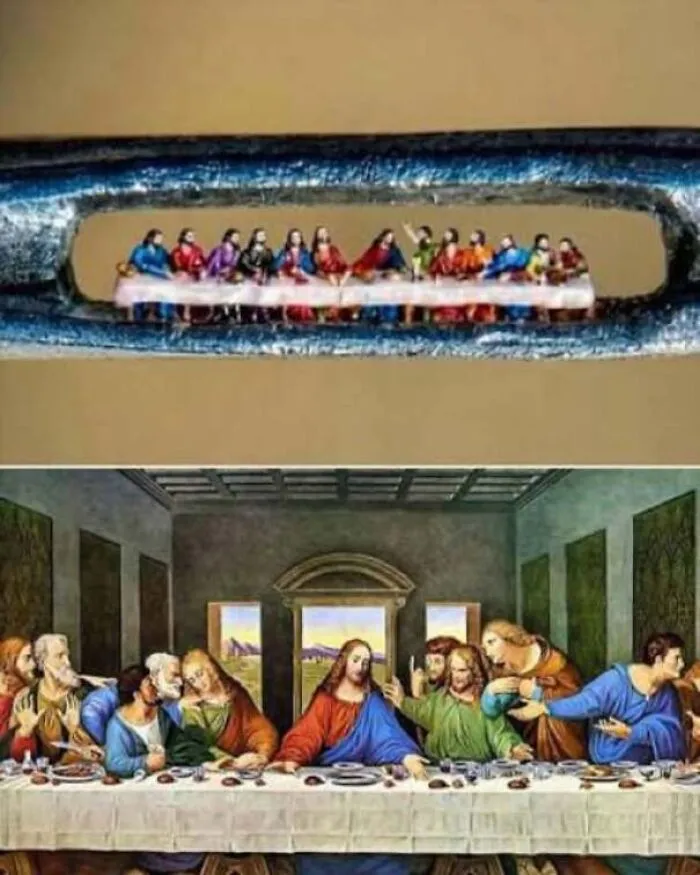
What looks like an ordinary sewing needle holds an extraordinary work of art.
British artist Willard Wigan created a microscopic recreation of Leonardo da Vinci's famous painting, *The Last Supper *complete with Jesus and all 12 apostles inside the eye of a needle!
Yes, all 13 figures fit into a space so tiny that you need powerful magnification to see the incredible details.
But the real wonder isn't just the size. It's the patience and precision required to create something so delicate.
Wigan works under a microscope using specially crafted tools. He carefully controls his breathing and times his movements between heartbeats to minimize the slightest tremor.
One tiny movement at the wrong moment could ruin hours of painstaking work.
The result? A miniature masterpiece that transforms an ordinary sewing needle into something extraordinary.
His creation is a powerful reminder that incredible talent doesn't always come in a big package. Sometimes, the smallest things require the greatest patience, imagination, and skill.
**Could you imagine spending four months creating a masterpiece too small to see with your naked eye?**.
