




Some facts are fun for a moment. You know the type. Those well-worn favorites that pop up in every quiz night or pop out of every Christmas cracker. Others come with a story attached—a name, a face, some texture. Those, in my mind at least, are the ones that really stick. Maybe it’s a remarkable moment that almost slipped through history’s cracks. A small win that deserves more attention than it ever got. A record that’s finally been set straight. Or maybe a strange, unexpected reminder that humanity isn’t completely horrible after all.
These are exactly the kinds of interesting facts shared by the “Weird Facts” accounts on Instagram and Threads. From lessons hidden in history to straight-up curiosities, we’ve rounded up some of the best. Keep reading for a few you might just find weirdly hard to forget.
Click here & follow us for more lists, facts, and stories.
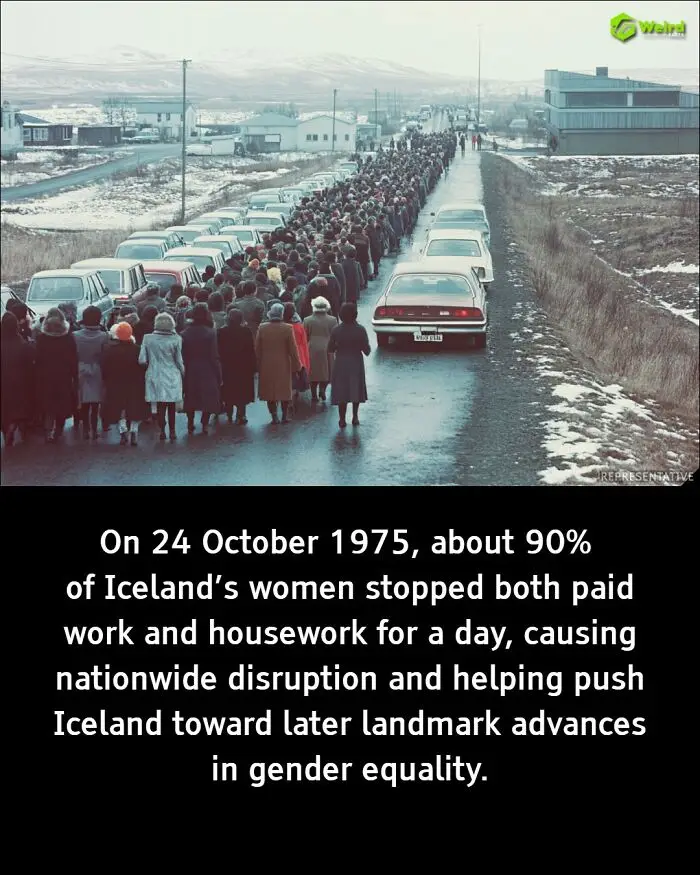
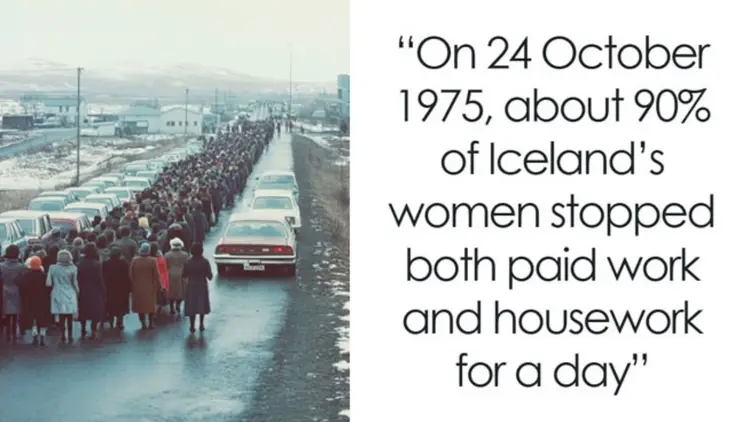
On 24 October 1975, women across Iceland took part in a mass walkout known as Women’s Day Off.
About 90% stopped both paid work and unpaid domestic labor to protest inequality and show how essential women were to Icelandic society. The action caused widespread disruption: schools and nurseries were affected, many workplaces ran at reduced capacity, and fathers often had to bring children to work.
In 1976, Iceland passed its first Gender Equality Act, establishing a formal framework for equal rights and opportunities for women and men. Five years after the strike, in 1980, Iceland elected Vigdís Finnbogadóttir, the world’s first democratically elected woman president.
Today, Iceland ranks first in the World Economic Forum’s Global Gender Gap Index.
Credits: factsweird
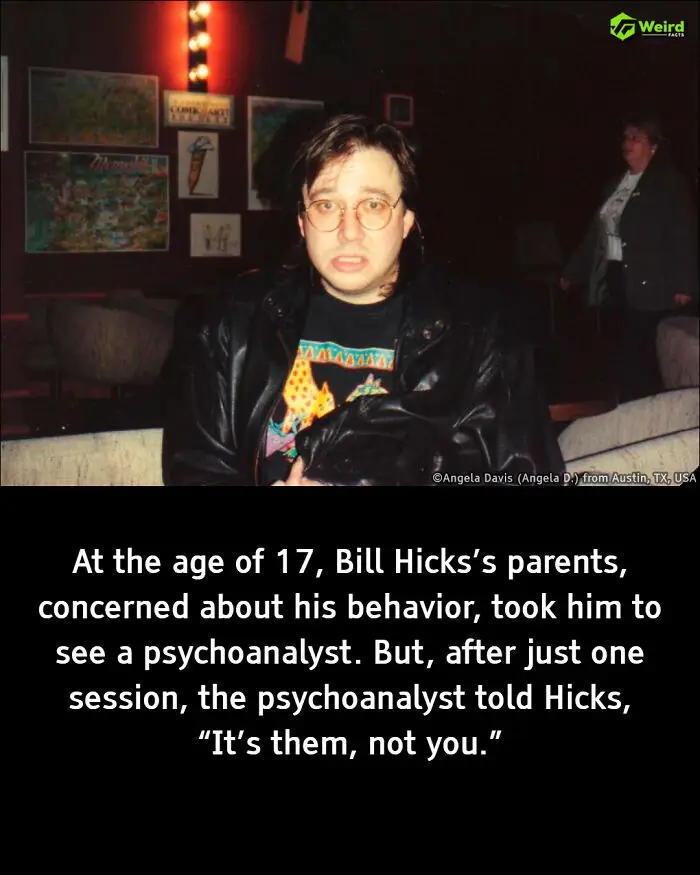
When comedian Bill Hicks was about 17 years old, his parents, concerned by his rebellious behaviour, brought him to see a psychoanalyst. After the initial session with the family and Hicks, the analyst pulled Hicks aside and told him: “You can continue coming if you want to … But it’s them, not you.”
The remark resonated with Hicks’s feelings of alienation from his upbringing and family environment, and he later referenced it as a turning point in accepting his outsider identity and focusing on his comedy.
Credits: factsweird, Angela Davis / Flickr, CC BY 2.0

In the late 1950s, Sun Ra played a music-therapy set at a Chicago psychiatric hospital. According to John Szwed’s biography, staff said one woman in the group hadn’t moved or spoken in years. During the performance, she stood, walked to the piano, and broke her silence by asking, “Do you call that music?” Sun Ra later repeated the story as proof that challenging sounds can still reach people and provoke a response, even in difficult clinical settings.
Credits: factsweird

At the Clarendon Laboratory of the University of Oxford, a small device known as the Oxford Electric Bell has been operating since it was set up in 1840.
It uses two early “dry pile” batteries to drive a 4 mm metal ball that swings between a pair of bells about twice per second, producing billions of rings over its lifetime. Oxford’s records note the label “Set up in 1840,” and researchers report that, apart from short pauses caused by humidity, it has rung continuously since then.
The exact internal construction of the batteries is still uncertain, though documents suggest a Zamboni-type stack of metal and paper discs sealed in sulphur. Because opening the device could end the run, scientists plan to leave it intact until the bell eventually stops, even though it currently holds a Guinness World Record as the world’s most durable battery.
Credits: factsweird, DavidCWG / Wikimedia Commons, CC BY-SA 3.0
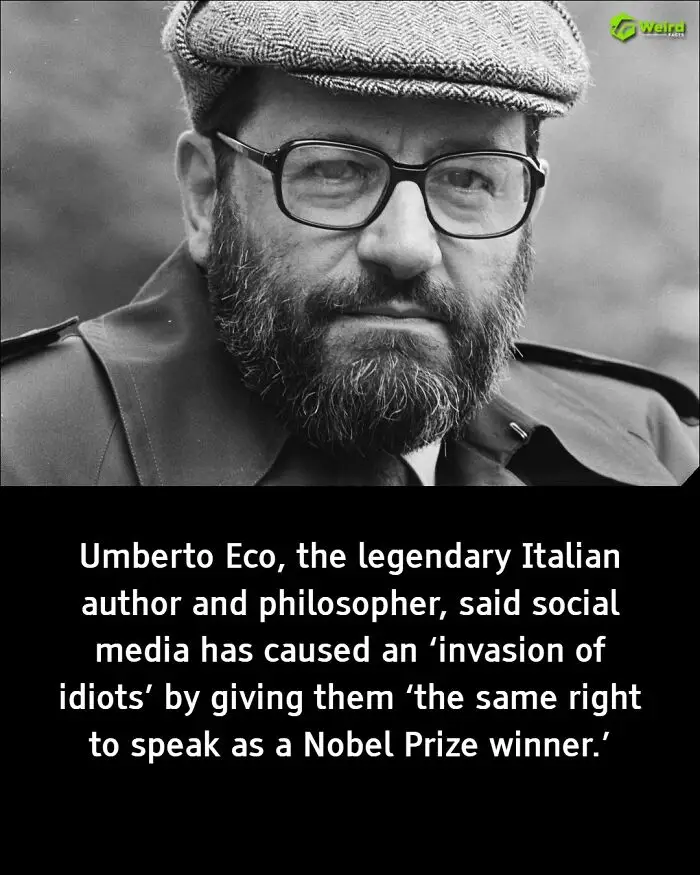
Umberto Eco, the legendary Italian author and philosopher, had a blunt warning about social media back in 2015: it caused an “invasion of idiots.”
He said it gave everyone, even those with zero expertise, the same right to speak as Nobel Prize winners. Before, those folks only spoke in bars after a glass of wine and were quickly silenced. Now their voices are amplified far more widely. He shared this right after getting an honorary degree in Turin.
Spot on then, even more relevant today.
Credits: factsweird, Rob Bogaerts / Anefo / Nationaal Archief, CC0
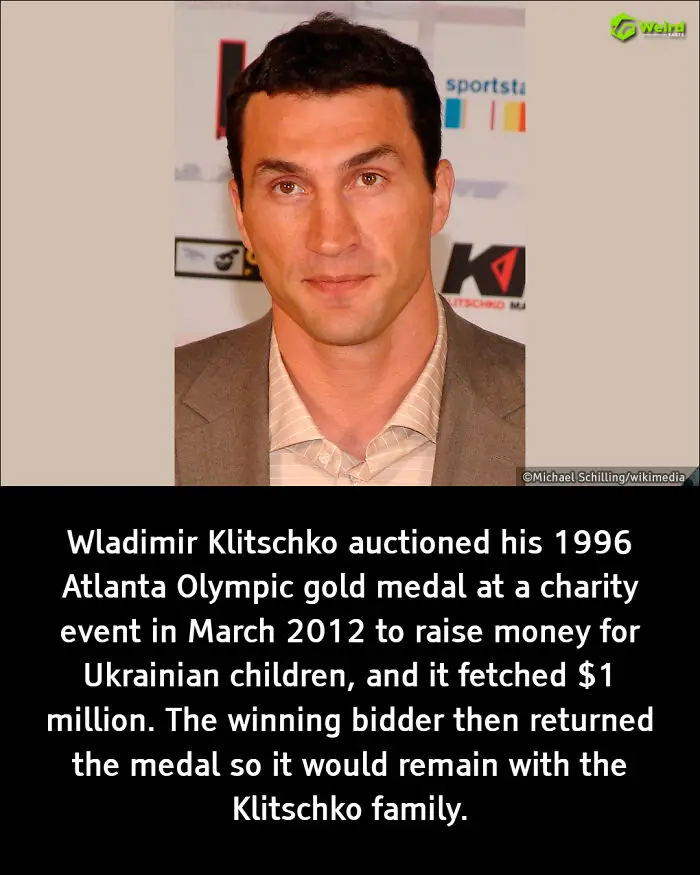
Wladimir Klitschko auctioned his 1996 Atlanta Olympic gold medal at a charity event in Kyiv in March 2012 to raise funds for Ukrainian children. The winning bid was $1 million, with proceeds going to the Klitschko brothers’ charitable work focused on supporting and inspiring young people.
Shortly after the sale, the buyer’s representative said the medal should remain with the Klitschko family, and the medal was returned to Wladimir. The story is often shared as an example of both Klitschko’s commitment to children’s causes and the donor’s symbolic show of respect.
Credits: factsweird

You know those days you’re watching Dr. Oz, and he drops some “miracle” tip that sounds too good to be true?
Turns out… a lot of them kinda are.
A team of Canadian doctors from the University of Alberta analyzed 40 full episodes. Their verdict? Almost 4 out of every 10 recommendations lacked any real scientific backing, and another 15% went directly against established medical evidence.
It’s wild how one of the most watched health shows on TV was pushing advice that didn’t always hold up.
Have you ever tried a “Dr. Oz recommendation” that turned out to be total hype… or actually worked...
Credits: factsweird
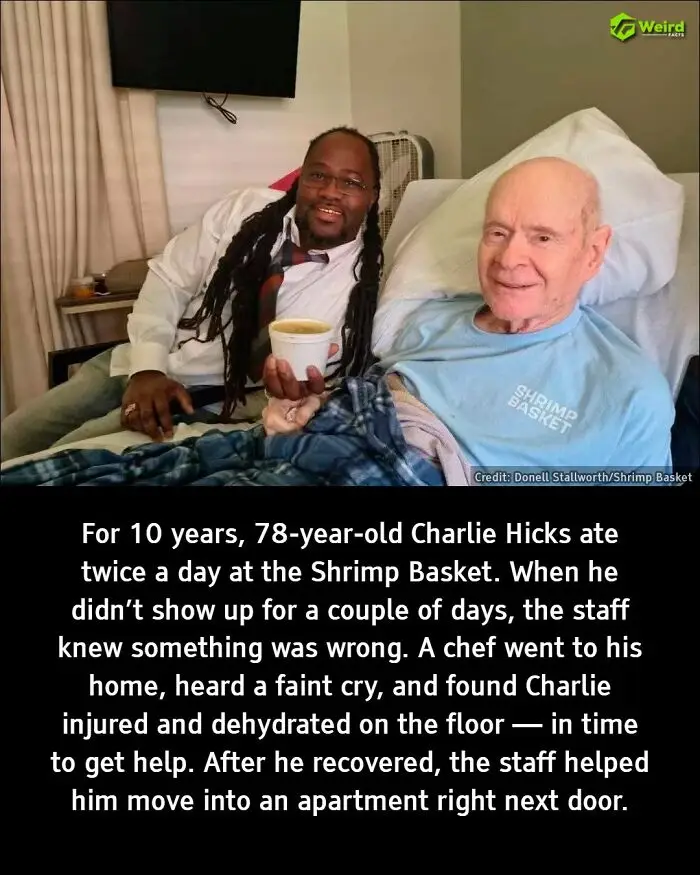
Charlie Hicks wasn’t just a customer at the Shrimp Basket — he was part of the daily rhythm. For nearly a decade, the 78-year-old veteran stopped in every day for lunch and dinner.
Staff knew his order, his routine, and the fact that he never missed a day. So when Charlie didn’t show up for a couple of days, Chef Donnell Stallworth felt uneasy. Trusting his instincts, Stallworth went to Charlie’s apartment to check on him.
Inside, he heard a faint cry for help. Charlie had fallen and been lying on the floor— it was unclear how long — suffering from broken ribs and severe dehydration. Charlie was rushed to the hospital and eventually recovered — and the story didn’t end there.
Wanting to make sure he was never isolated again, the restaurant staff helped him relocate to an apartment right next door to the Shrimp Basket, where familiar faces could keep an eye on him every day.
It’s a reminder that sometimes the people who save our lives aren’t doctors or paramedics — they’re the ones who notice when you don’t show up.
Photo courtesy: Donnell Stallworth/Shrimp Basket.
Credits: factsweird

In 2024, 9-year-old Remi Bateman from Utah was denied health insurance coverage for a ~$24,000 Hero Arm bionic prosthetic.
Her family started a GoFundMe that quickly raised more than $30,000. Shortly afterward, Andy Schoonover, CEO of CrowdHealth, offered to pay the full cost of Remi’s arm.
With her prosthetic now covered, Remi and her family chose to redirect the GoFundMe donations to help another child facing the same problem: Tyraun “Taj” Johnson of Maryland, whose insurance had also refused to cover his Hero Arm.
The kind act helped get both children’s Hero Arms funded and spotlighted how often insurers deny coverage for high-tech limbs that families say greatly improve daily life and long-term health.
Credits: factsweird
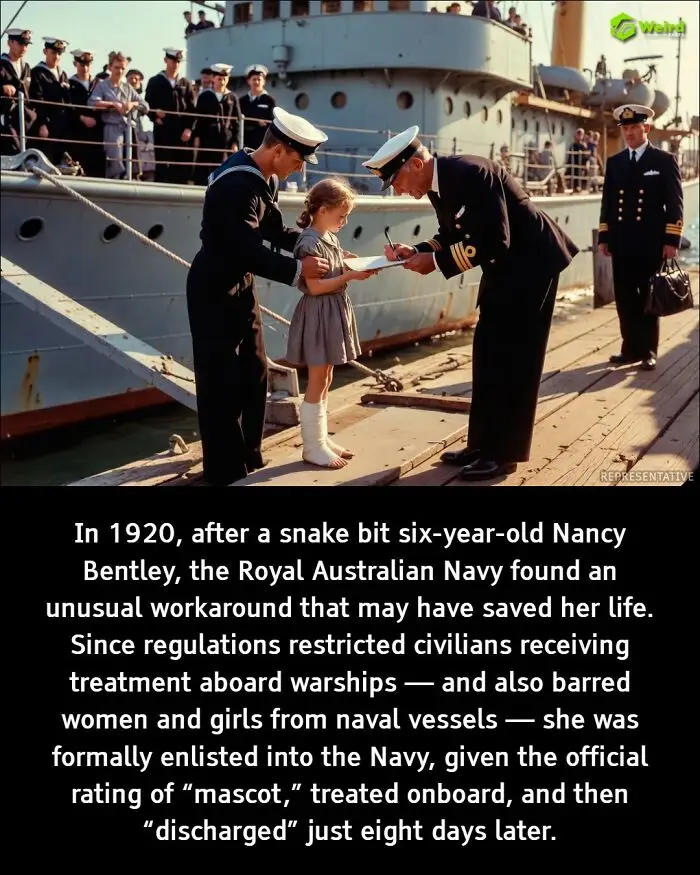
The incident involving Nancy Bentley took place in 1920, when she was just six years old. After being bitten by a snake near a coastal area, she urgently needed medical care. At the time, Australian naval regulations were strict: civilians were not permitted to receive treatment aboard naval vessels.
Faced with a child’s life at risk, the Royal Australian Navy improvised an unusual solution. Nancy was formally enlisted so she could legally remain onboard and receive treatment from the ship’s medical staff. She was given the official naval rating of “mascot,” making her, on paper, the youngest person known to have been enlisted in the Australian forces.
She stayed onboard for eight days, during which she received care from the ship’s medical staff. She was formally “discharged” from service after eight days, completing an eight-day “career” that remains a record for the youngest known enlistment.
The story is often cited as an example of how rigid rules were bent, turning a bureaucratic loophole into a potentially lifesaving act.
Credits: factsweird
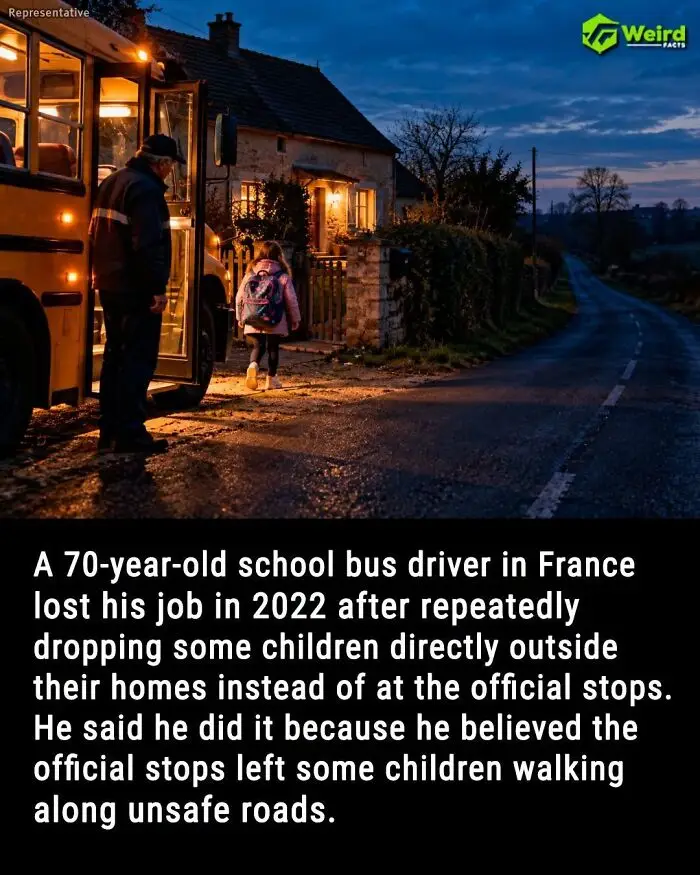
For 17 years, Damien Tabard drove children through the rural roads around Les Billanges in central France.
Then a new operator took over the school-bus contract in 2022. A new GPS system revealed something Tabard said had previously been tolerated: he was sometimes stopping outside children’s homes instead of using only the official stops.
One 12-year-old girl otherwise had to walk about 650 meters in darkness along a road with no pavement or street lighting. Her mother had twice asked authorities for a new stop and been refused. Tabard said his stops were on the existing route and that he made them for safety.
His employer disagreed, calling them unauthorized. After warnings to stop, the company dismissed him for serious misconduct. Parents rallied behind him. Tabard challenged the dismissal, but a court ruled against him, finding that he had disobeyed his employer’s instructions.
Credits: factsweird

In early March 2026, Tom Chan, a math teacher at Lowell High School in San Francisco for over 20 years, was placed on indefinite leave after parents raised concerns about the content of his ninth-grade Algebra I quizzes.
The quizzes included problems that calculated the monetary cost of dating girls based on their weight (e.g., “A typical girl that weighs 120lbs will cost you $55” - derive the variation equation, then calculate for someone weighing 220lbs or what weight you could afford for $5).
He also ran a YouTube series “Grades vs. Dignity” where students performed dance routines in class in exchange for extra credit points.
Former students say this kind of content had appeared on his quizzes for years and they feared he could hurt their grades or college recommendations if they complained.
The incident sparked widespread discussion about appropriate classroom content and teacher accountability.
Credits: factsweird

In September 2014, during Chinese President Xi Jinping’s state visit to India, an English-language news bulletin on India’s state broadcaster DD News went viral for an embarrassing slip.
The casual newsreader on a late-night or early-morning bulletin misread Xi’s name, shown in all caps on the teleprompter, and pronounced it as “Eleven Jinping,” apparently mistaking “XI” for the Roman numeral eleven.
Senior officials at DD called it an “unpardonable” or “big” mistake; the anchor, a part-time casual employee, was promptly removed from the newsreader panel, with some describing the move as sacking her and others as de-barring her from newsreading for a period.
The gaffe drew widespread media coverage and social-media jokes, becoming one of the better-known on-air bloopers in Indian television news.
Credits: factsweird
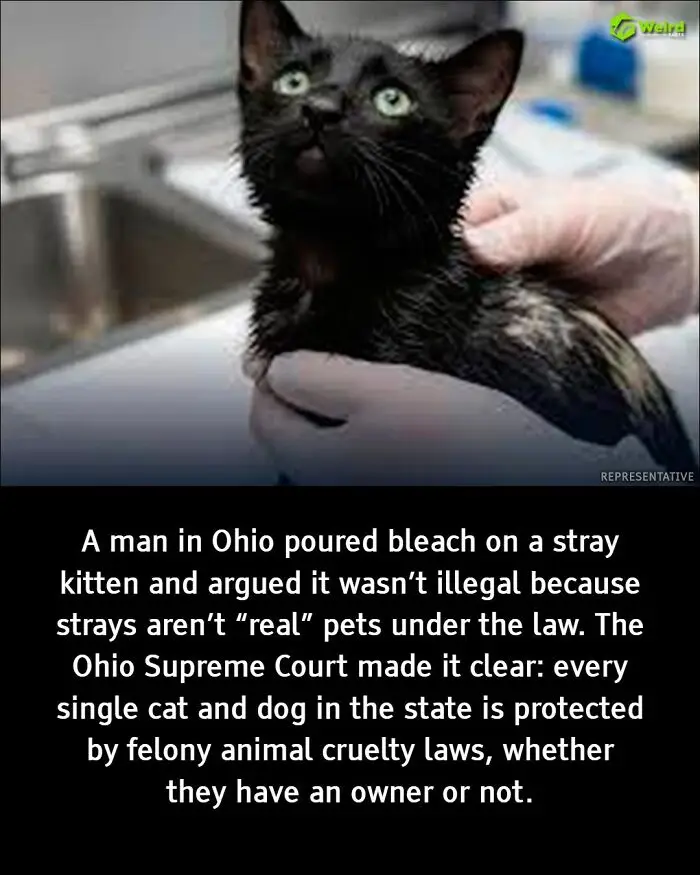
In 2021, a Cleveland man poured bleach down basement stairs to chase away a stray kitten, causing chemical burns to its paws.
He was convicted of felony cruelty under Ohio’s Goddard’s Law… but an appeals court overturned it, claiming strays didn’t count as “companion animals.”
On October 23, 2024, the Ohio Supreme Court unanimously said NO.. in a 7-0 decision they ruled the law protects any dog or cat, owned or stray.
A huge loophole is now closed, making Ohio one of the stronger states for protecting every animal from serious harm.
This is the kind of justice that actually makes a difference.
Credits: factsweird
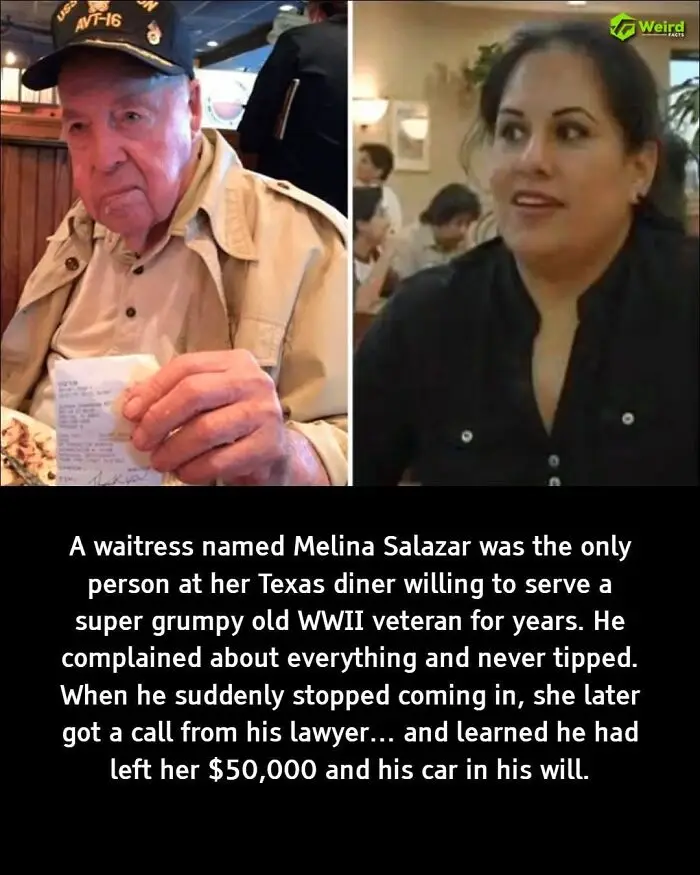
For nearly seven years, Melina Salazar was a waitress at Luby’s Cafeteria in Brownsville, Texas.
She regularly served Walter “Buck” Swords, an 89-year-old WWII veteran known for being grumpy and demanding about his food. Despite his difficult behavior, Salazar treated him with patience and kindness.
Swords passed in July 2007. About five months later, just before Christmas, Salazar learned from his lawyer that he had left her $50,000 and his 2000 Buick in his will, apparently as thanks for the kindness she had shown him.
Credits: factsweird

U.S. Navy sailor Douglas Hegdahl fell overboard from the USS Canberra in 1967 and was captured by North Vietnamese forces.
Held at the infamous Hanoi Hilton, he pretended to be illiterate and slow-witted. His captors nicknamed him “The Incredibly Stupid One” and gave him more freedom around the camp.
Using that access, Hegdahl secretly memorized the names, capture dates, and personal details of 256 fellow American POWs by setting them to the tune of the children’s song “Old MacDonald Had a Farm.”
Released early in 1969 with the support of senior officers among the POWs, he returned to the United States and provided the list from memory.
His information helped confirm that dozens of men were alive and exposed prison conditions, making it one of the most remarkable acts of quiet resistance in the Vietnam War.
Credits: factsweird

Along the U.S.–Mexico border in the Imperial Valley, the California city of Calexico sits directly across from Mexicali, the capital of the Mexican state of Baja California.
Calexico’s name is a portmanteau of “California” and “Mexico,” while Mexicali reverses the order of the same two words, reflecting their twin-city relationship on either side of the border. A reinforced border fence separates the two urban areas, but economically and socially they function as a single transborder agglomeration, often referred to as Calexico–Mexicali, with intense cross-border commuting, trade, and cultural exchange.
Mexicali is far larger and serves as a regional industrial and commercial hub, while Calexico is a smaller U.S. port-of-entry city whose economy is closely tied to its Mexican neighbor.
Credits: factsweird
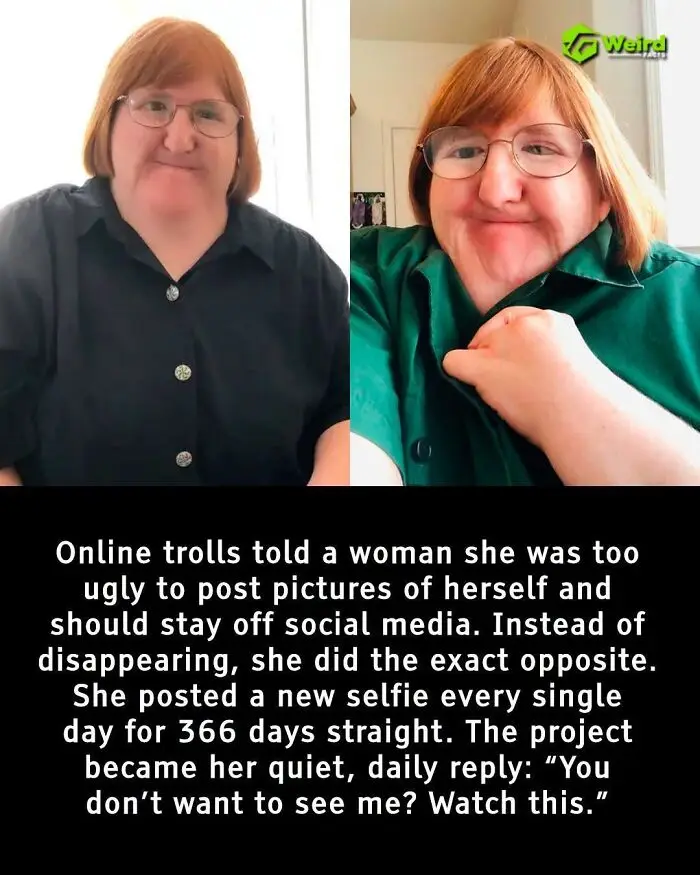
In 2019, writer and disability advocate @melissablake81 published an op-ed online. Instead of debating her ideas, some people attacked something far more personal: her appearance.
Trolls flooded social media with cruel comments. Some said Blake was “too ugly” to post photos of herself and suggested she should stop sharing selfies altogether.
She could have disappeared from view. Instead, she did the opposite.
Blake began posting a selfie every single day under the hashtag #MyBestSelfie. What started as a response to online cruelty soon became a year-long project.
Day after day, she showed up on social media exactly as she was. No hiding. No giving strangers the power to decide whether she deserved to be seen.
She kept going for 366 days, a full year that included February 29, 2020.
Later, Blake explained that taking and sharing those daily photos changed the way she felt about herself. The project helped her become more comfortable with her body and challenged the idea that people with disabilities should make themselves less visible simply because others may judge their appearance.
Her selfies also reached far beyond her own social media accounts. News outlets covered the project, and many people responded with messages of encouragement and support.
The people trying to make her hide ended up inspiring her to make herself more visible.
Credits: factsweird
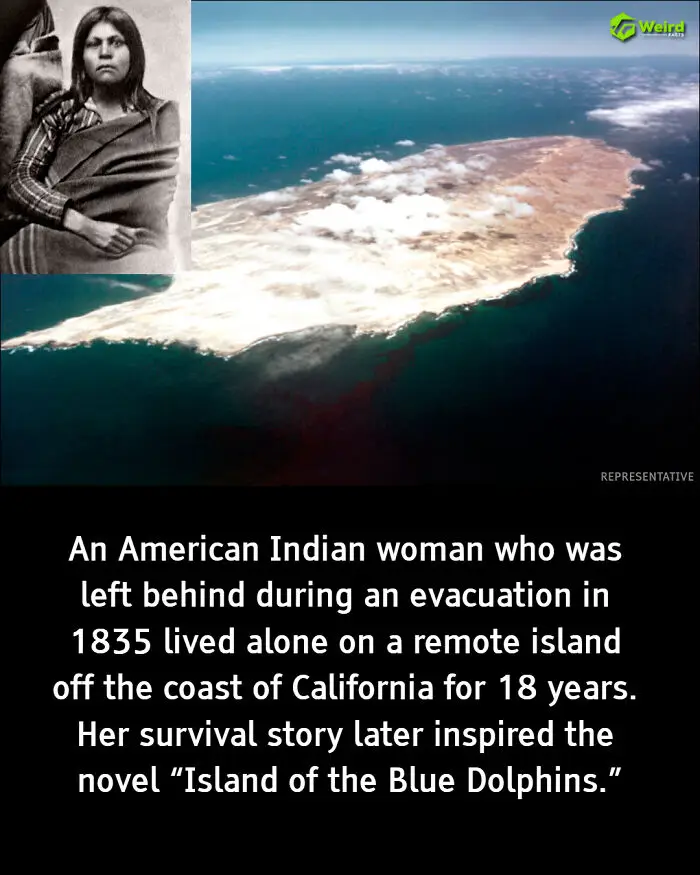
In 1835, missionaries evacuated the Native Nicoleño people from San Nicolas Island, one of California’s Channel Islands. In the confusion, a woman was accidentally left behind. Known later as the “Lone Woman of San Nicolas Island,” she survived entirely alone for about 18 years, living off seafood and crafting tools from what washed ashore.
In 1853, she was discovered and brought to the mainland, where she was baptized Juana Maria, but she passed just seven weeks later. Her real name was never recorded, and much of her life remains a mystery. Her extraordinary survival inspired Scott O’Dell’s classic children’s novel Island of the Blue Dolphins (1960), which introduced her story to generations worldwide.
Credits: factsweird
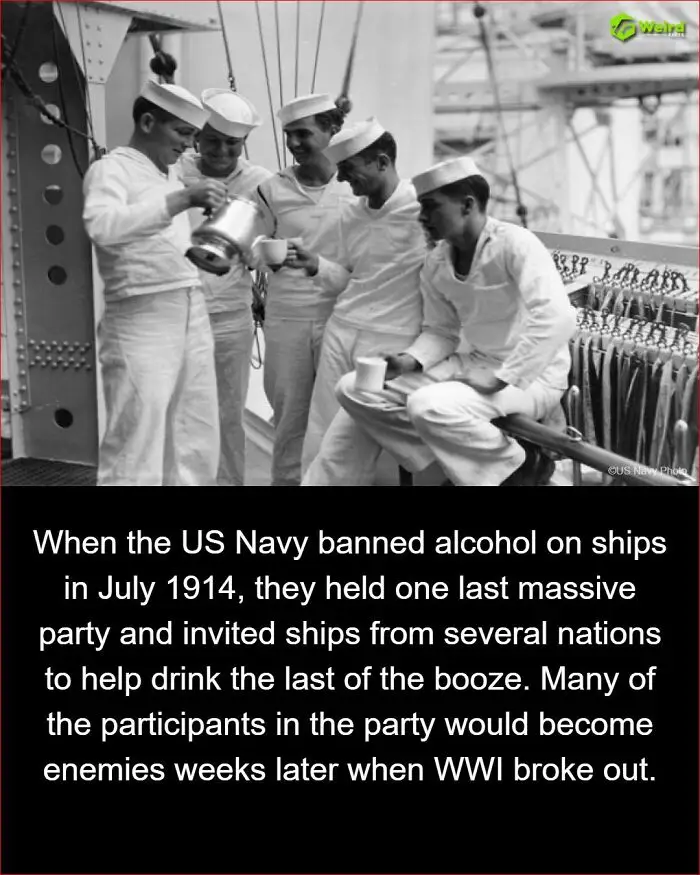
In 1914 the U.S. Navy ended alcohol at sea with General Order No. 99, effective July 1. With much of the fleet off Veracruz, Mexico, sailors staged a final send-off the night before the ban. U.S. ships hosted themed parties and even mock “burials” for liquor.
Crews from nearby British, French, German, Spanish, and Dutch vessels joined in, moving from ship to ship to help empty American stores before the deadline. It became a last moment of camaraderie among sailors who, within weeks, would face each other as enemies when World War I began on July 28, 1914.
The order’s text barred bringing or using alcohol aboard naval vessels or at navy yards, closing a long chapter of naval drinking traditions.
Credits: factsweird

Henry Symeonis: The Mystery Villain of Oxford's Lost Tradition
In 1264 Oxford inserted an unusual clause into its statutes: any Bachelor proceeding to a Master of Arts had to swear never to be reconciled with Henry Symeonis. Symeonis, a wealthy Oxford townsman, had been involved in the 1242 fatal attack of a student, fined and banished.
In March 1264 King Henry III suspended the university (for security reasons amid war) and two weeks later pardoned Symeonis, ordering that the university not withdraw on account of his return—stoking town-gown resentment. Over time Oxford forgot who Symeonis was; a 1651/2 bid to delete the oath failed, and it survived until February 1827, when Convocation finally abolished it.
Archivist Reginald Lane Poole rediscovered Symeonis’s identity in 1912. The episode shows how a medieval quarrel can echo in rules long after its meaning is lost.
Credits: factsweird

In Texas, Alamo Drafthouse hosts “Jaws on the Water,” a screening where you don’t sit in theater seats—you float.
People watch Jaws at night while bobbing on inner tubes in Lake Travis, with the movie playing on a huge inflatable screen set up along the shore. Some events even add playful scares, like scuba divers lightly tugging at swimmers’ feet during key moments.
It’s a real, organized movie night designed to make the classic shark film feel a lot more immersive.
Credits: factsweird
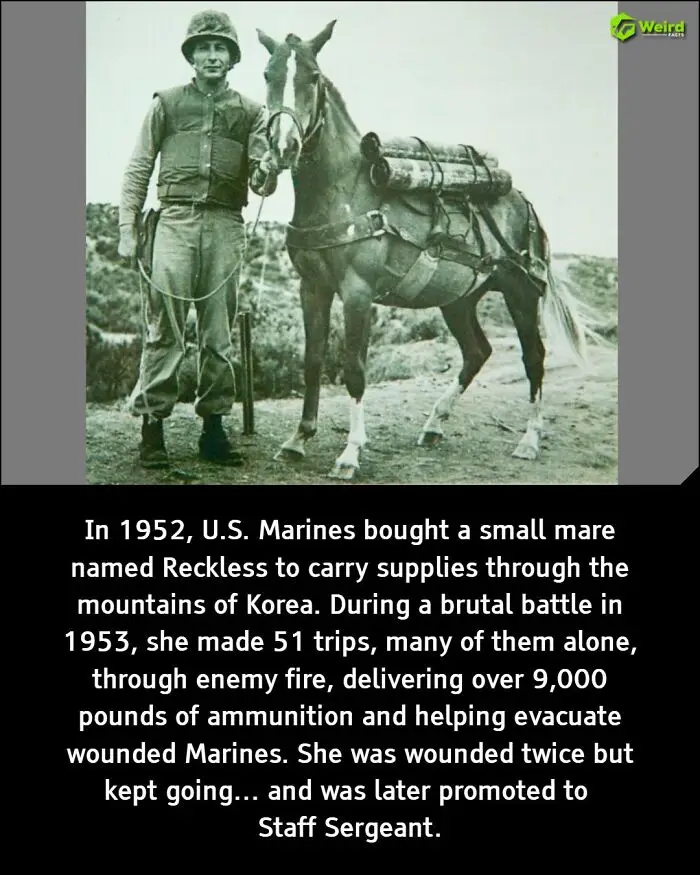
In 1952, U.S. Marines needed a way to move heavy ammunition through the steep mountains of Korea. They bought a small Mongolian mare named Reckless for $250.
During the brutal Battle of Outpost Vegas in 1953, Reckless made 51 trips, many of them alone, through intense enemy fire, carrying over 9,000 pounds of ammunition to the front lines. She even learned the route so well that she continued making runs without guidance, and on her way back, she helped carry wounded Marines to safety.
Reckless was wounded twice but kept going.
She later became an officially promoted horse in the U.S. Marine Corps.. eventually reaching the rank of Staff Sergeant.
A small horse…with a hero’s courage.
Credits: factsweird
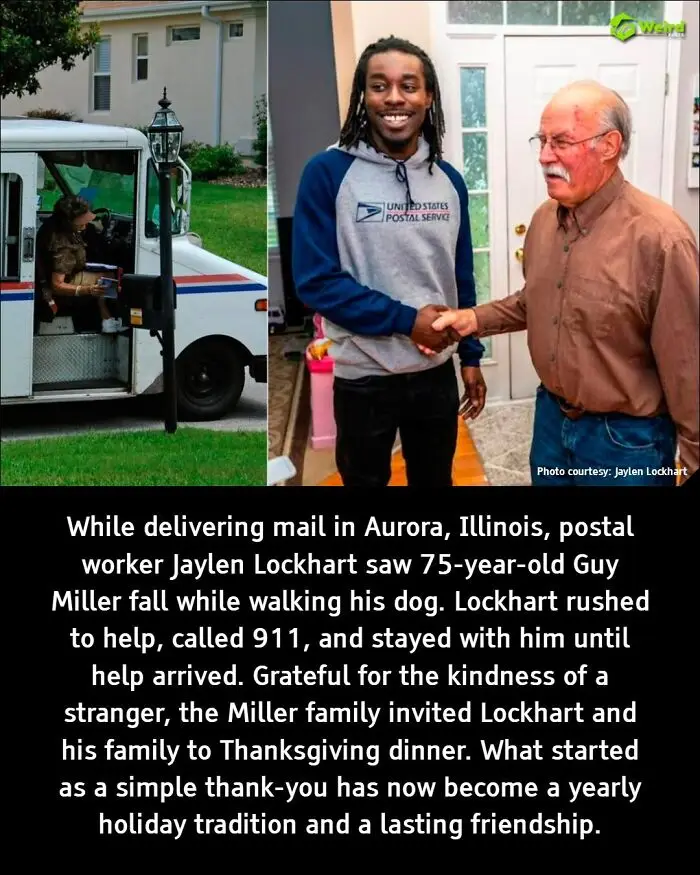
While delivering mail in Aurora, Illinois, 26-year-old postal worker Jaylen Lockhart noticed 75-year-old Guy Miller fall while walking his dog.
Lockhart saw the fall in the rear-view mirror of his mail truck and immediately turned around to help. Miller had hit his head and was bleeding, so Lockhart quickly called 911, applied pressure to the wound, alerted neighbors, and ran to Miller’s home to inform his wife, Marcia Miller.
Thanks to the quick response, Miller suffered only minor injuries. Grateful for the kindness of a stranger, the Miller family invited Lockhart and his family to join them for Thanksgiving dinner. What started as a simple thank-you quickly turned into a warm friendship.
The Millers now say Lockhart isn’t just a guest anymore — he’s part of the family. The story touched many people in the community. The city of Aurora honored Lockhart with the Mayor’s Award of Service and even proclaimed August 29, Lockhart’s birthday as “Jaylen Lockhart Day.”
What began with a stranger stopping to help someone in need has grown into a lasting bond and a holiday tradition built on kindness.
Credits: factsweird
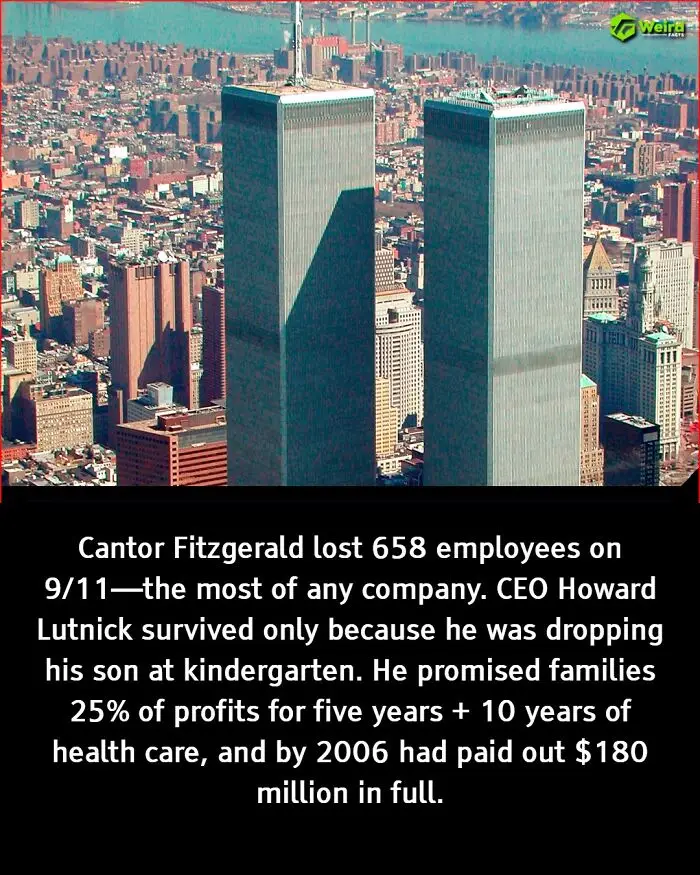
Cantor Fitzgerald, located on the top floors of the World Trade Center's North Tower, lost 658 employees—two-thirds of its workforce—on September 11, 2001.
CEO Howard Lutnick survived only because he was dropping his son off for his first day of kindergarten. In the aftermath, Lutnick pledged 25% of the firm's profits for five years to the families of the victims, plus ten years of health insurance coverage. The company also established the Cantor Fitzgerald Relief Fund.
By September 2006, on the fifth anniversary, Cantor had fulfilled the commitment, distributing a total of $180 million directly to the families.
Credits: factsweird

According to United Nations and U.S. Census Bureau estimates, the global population reached 1 billion around 1804, 2 billion in 1927, and 3 billion in 1960. That means the first 3 billion people took all prior human history plus about 150 years of modern demographic records.
After 1960, growth accelerated sharply: a UN report notes that the world climbed from 3 billion to 6 billion by 1999, a doubling in just 39 years. This rapid increase was driven by falling mortality rates thanks to better medicine, sanitation and food production, while birth rates stayed high for several decades in many countries.
Since then, fertility has dropped in much of the world, so each additional billion is now taking slightly longer, but the 1960–1999 period remains one of the fastest sustained population booms in history.
Credits: factsweird

In 1975, actress Tippi Hedren was visiting a refugee camp in California when the women kept admiring her fancy nails. Instead of just smiling, she flew in her personal manicurist every weekend to teach them the trade.
She helped those first 20 women get licensed and land jobs in salons.
That one act of kindness grew into something huge. Today around 80% of nail technicians in California are Vietnamese.. many are the children and grandchildren of those original women Hedren supported.
Sometimes the smallest gesture creates a whole new American dream.
Credits: factsweird
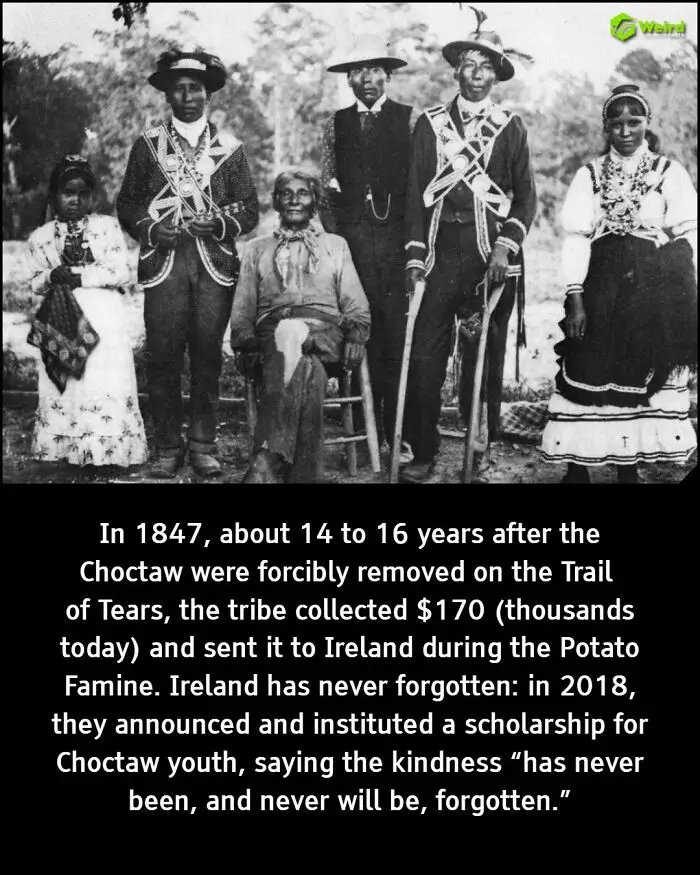
In 1831–1833, the Choctaw Nation was forcibly removed from Mississippi to Indian Territory (Oklahoma) under the Treaty of Dancing Rabbit Creek, an event that became part of the Trail of Tears.
In March 1847, only 14 years later, Choctaw people in Oklahoma collected $170 (equivalent to several thousand dollars today) and sent it to Ireland to aid victims of the Great Potato Famine. The donation was made at a meeting in Skullyville and forwarded through U.S. relief committees.
This act of generosity, coming so soon after their own suffering, created a lasting bond between the Choctaw and Irish peoples.
In 2018, Irish Prime Minister Leo Varadkar announced a scholarship programme for Choctaw students to study in Ireland, stating that the Choctaw act of kindness “has never been, and never will be, forgotten in Ireland.”
Credits: factsweird

During World War II, one Indian Maharaja became a real-life father to over 600 Polish children, many of them orphans, in one of history’s most heartwarming rescues.
After the Soviet invasion of eastern Poland in 1939, thousands of Polish children were sent to brutal camps and orphanages deep inside the USSR. Starving and sick, they had almost no hope.
Then in 1941, an amnesty let some leave. The Maharaja of Nawanagar, Jam Saheb Digvijaysinhji, offered them a home. India became the first place to offer them a safe home.
In early 1942, the exhausted children arrived in Balachadi near his palace. The Maharaja greeted them personally and said: “You are no longer orphans. From now on you are Nawangarians, and I am Bapu, father of all Nawangarians, so I’m your father as well.’ ”
He turned his palace guest house into a school, built dormitories, and gave them food, clothes, medical care, a Polish library, sports and plays. They lived safely there through the war years, and many remained until 1946.
When it was finally time to return to Europe, both the children and the Maharaja were heartbroken. He never asked for financial compensation – only that a street in Warsaw be named after him.
After Poland became a democracy, the country honoured him. A square in Warsaw was named after him, and in 2012, a park in Warsaw’s Ochota district was named the Square of the Good Maharaja. A monument was added in 2014, he received a posthumous high Polish honour, and a school in Warsaw now carries his name.
What an extraordinary hero. His legacy of love still shines brightly today.
Credits: factsweird
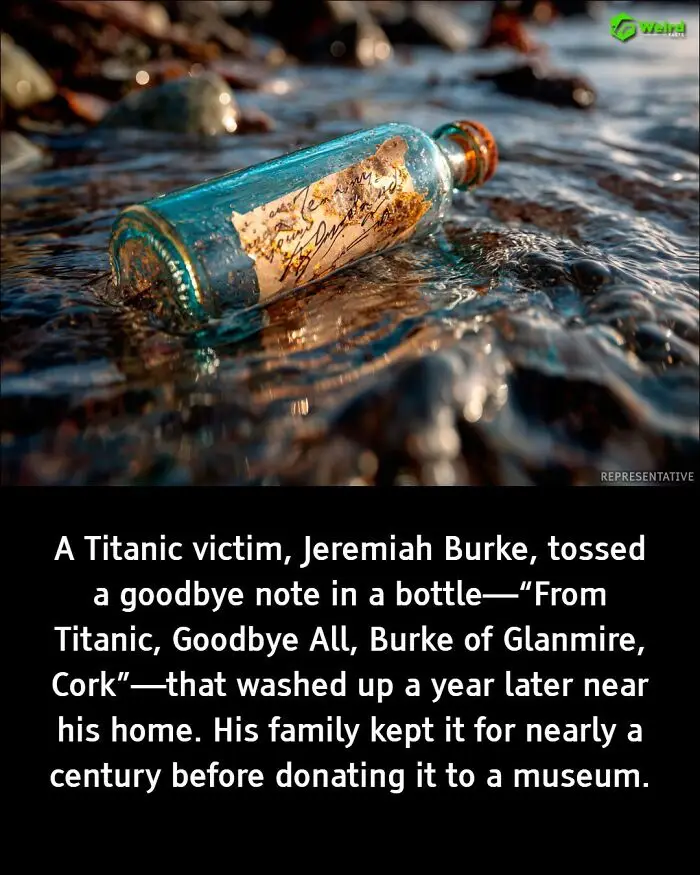
Nineteen-year-old Jeremiah Burke from Glanmire, County Cork, boarded the Titanic at Queenstown on 11 April 1912.
Before he left, his mother Kate gave him a small bottle of holy water to carry on the journey. Sometime before the ship went down, Burke wrote a brief farewell note on a scrap of paper, placed it inside the bottle, tied it shut with one of his shoelaces, and threw it into the sea.
In the summer of 1913, the bottle washed ashore at Dunkettle, only a few miles from his family home. Burke’s family recognised both his handwriting and the holy-water bottle his mother had given him. They kept the note as a treasured family relic for nearly a century.
In 2011, the family donated it to Cobh Heritage Centre, where it remains on public display.
Credits: factsweird
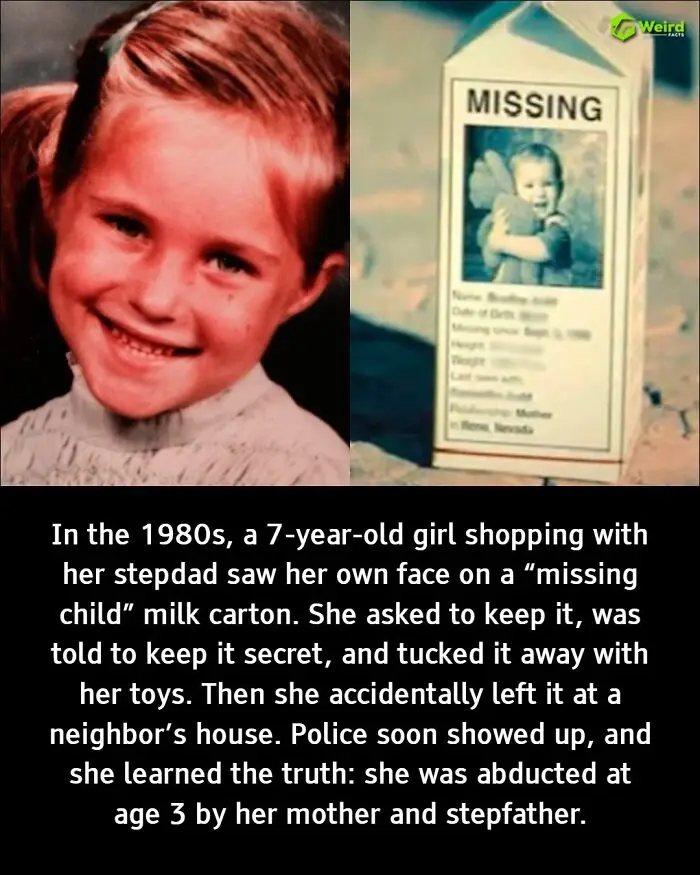
Bonnie Lohman was 3 years old when she was abducted by her mother and stepfather, taken from her father’s care. Her case wasn’t the typical fit for the milk carton program, but her father still managed to get her photo printed.
A few years later, when Bonnie was 7, she was in a grocery store with her stepfather and spotted her own face on the side of a milk carton. She recognized the picture, but didn’t understand what it meant. She asked to keep the cut-out image and was allowed to—on the condition that she kept it secret.
Her neighbors later learned who she was after the carton was accidentally left behind in a bag of toys at their house. They contacted authorities, and Bonnie was reunited with her father. Bonnie is one of the few success stories of the milk carton programme.
Credits: factsweird
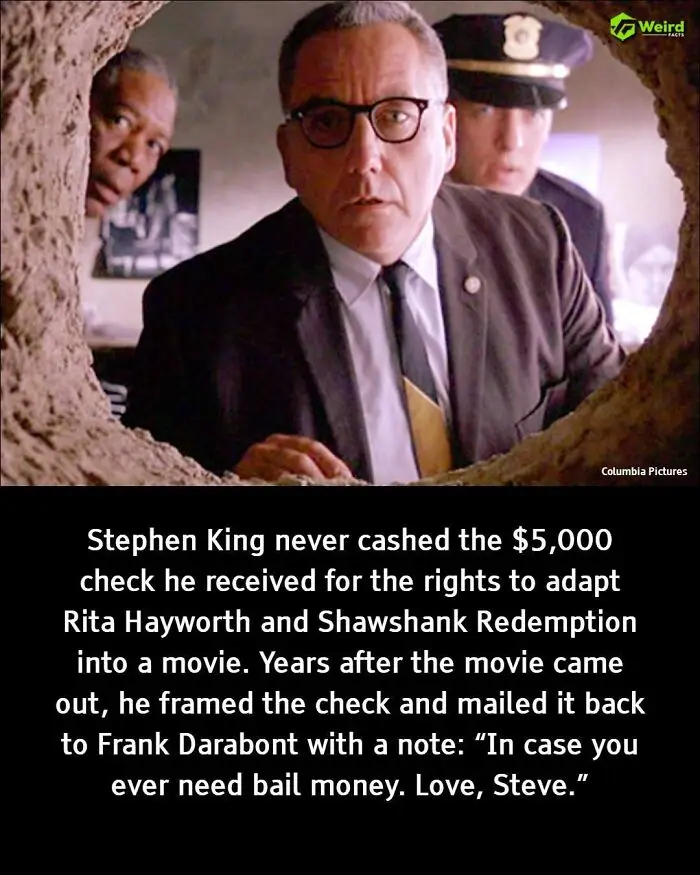
Stephen King sold the movie rights to Shawshank Redemption for just $5,000 back in 1987. He never cashed the check.
Years after the film became a beloved classic, he had it framed and mailed it back to director Frank Darabont with a note that said: “In case you ever need bail money. Love, Steve.”
It’s one of those rare, heartwarming Hollywood stories that shows real gratitude. Darabont has talked about how much it meant to him. King basically turned a small paycheck into a legendary keepsake and a funny thank-you note.
Sometimes the best gestures aren’t about the money, they’re about the thought behind them.
Credits: factsweird
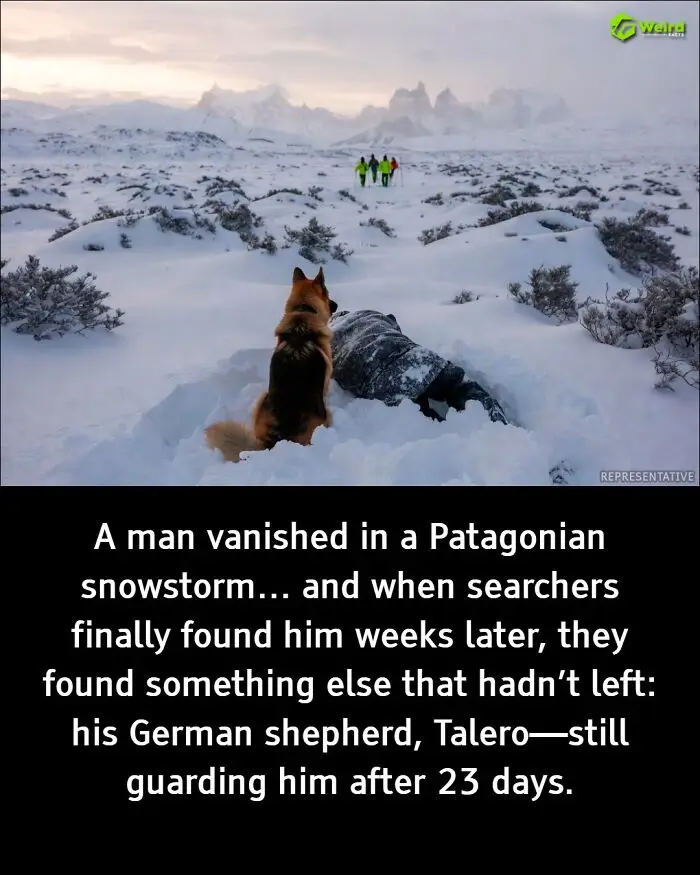
In 2013 in Patagonia, Argentina, a man named Bernardo Leónidas Quirós went missing after his car broke down in a remote area. Reports say he walked off with his German shepherd, Talero, to find help, but he got lost in a snowstorm and passed on from the cold.
When rescuers found his body 23 days later, Talero was still there, guarding him. Reports said the dog kept predators away and may have tried to keep him warm by staying close.
A heartbreaking reminder of a dog’s loyalty — even to the very end.
Credits: factsweird
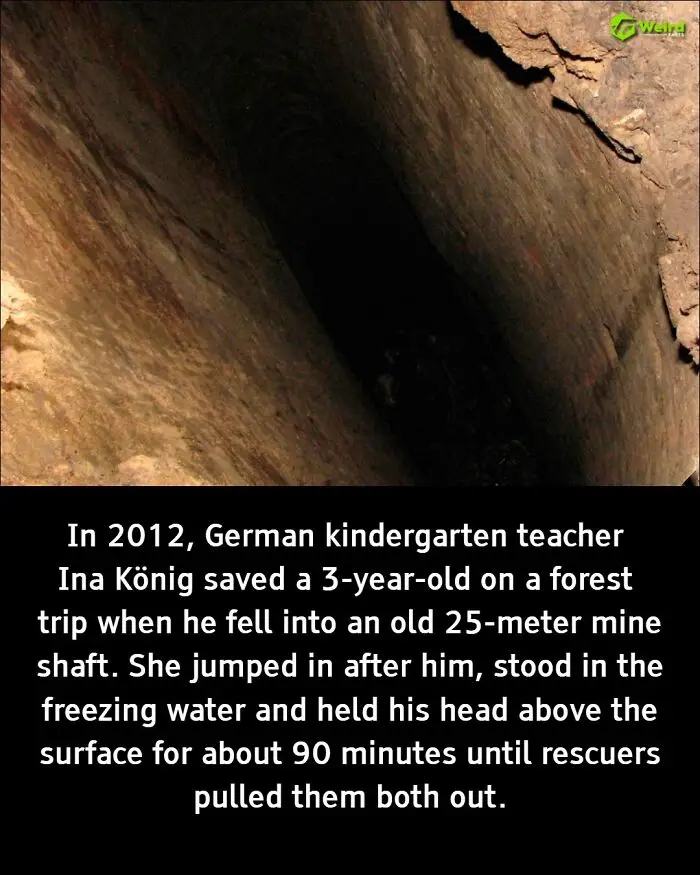
In July 2012, a group from the St. Nicolai kindergarten in Oldendorf, Germany, was walking in the Osterwald when a three-year-old boy fell through a poorly covered opening into an old coal-mine ventilation shaft.
Reports say the shaft was about 25 meters deep and contained very cold water. Kindergarten teacher Ina König immediately jumped in after him, not knowing how deep it was. Both landed in the water at the bottom, where König managed to hold the child in a small niche and keep his head above the surface while they waited in darkness.
Emergency services arrived and eventually raised the boy and then König from the shaft. She spent around one and a half hours in the icy water and both survived with only minor injuries, for which she later received a state rescue medal.
Credits: factsweird
Credits: factsweird

In 1964, Bell Labs scientists Arno Penzias and Robert Wilson were using the Holmdel Horn Antenna, an extremely sensitive radio instrument in New Jersey, when they found a persistent background signal they could not eliminate.
The noise came from all parts of the sky at all times. They checked for possible sources of interference, including pigeons and debris in the antenna, but the signal remained.
The radiation they detected matched what Princeton researchers had predicted as leftover radiation from the universe’s hot early beginning. That signal became known as the cosmic microwave background, one of the strongest pieces of evidence supporting the Big Bang model.
In 1978, Penzias and Wilson received the Nobel Prize in Physics for the discovery.
Credits: factsweird
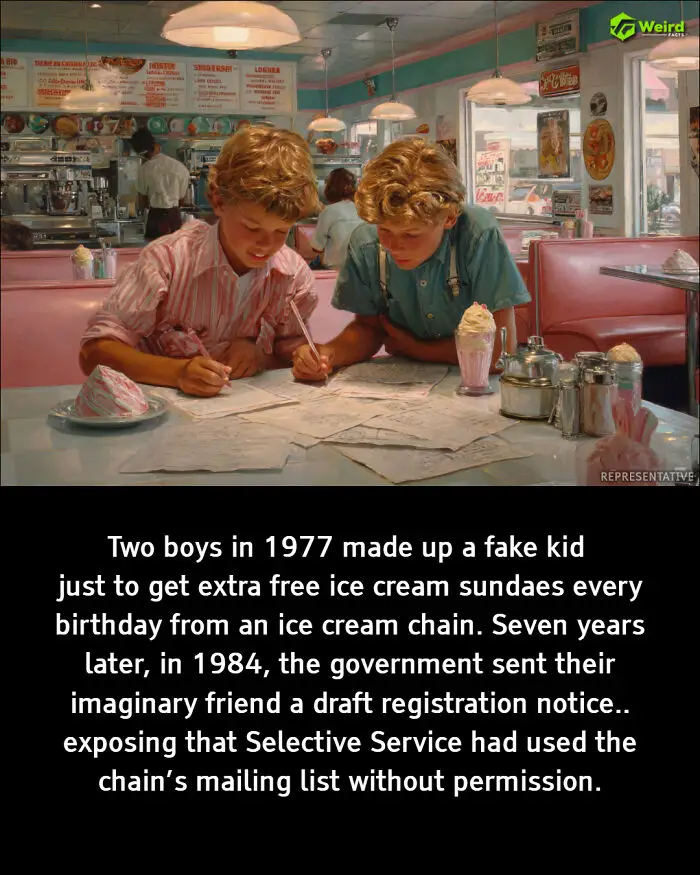
In 1977, two brothers signed up a made-up boy for Farrell’s Ice Cream Parlour Birthday Club so they could collect extra free birthday sundaes. For years, the fake child kept getting birthday offers in the mail like he was real.
Then came the weird part.
In 1984, the imaginary boy received a Selective Service registration notice. That was the moment the prank exposed something much bigger: Selective Service had been using a mailing list linked to Farrell’s birthday-club data to contact young men about draft registration.
It turned out the U.S. government had bought (or accessed) the chain’s mailing list without anyone knowing.
One of the greatest accidental privacy scandals started by two kids just trying to get more ice cream.
Credits: factsweird
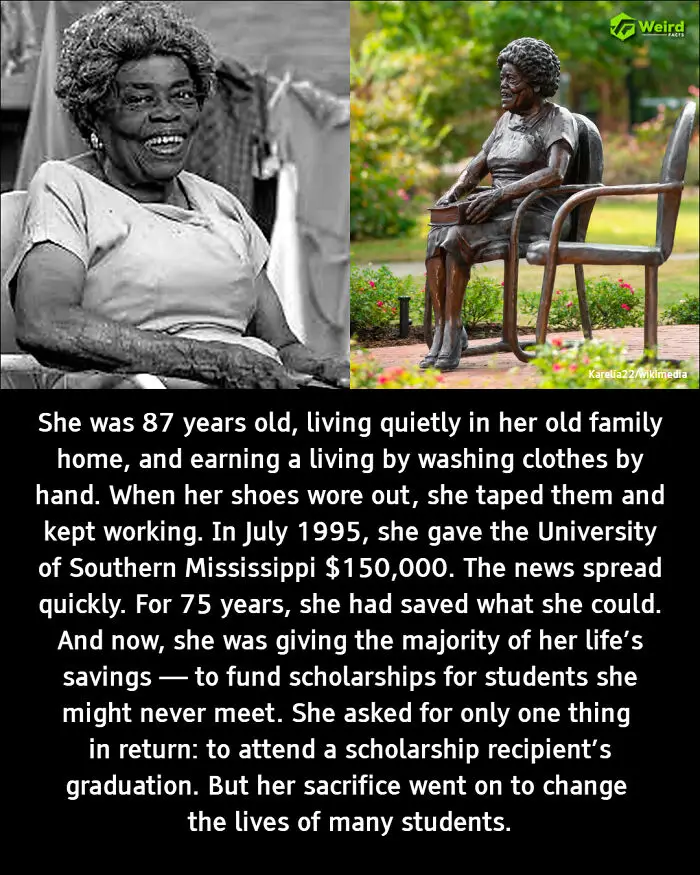
Her name was Oseola McCarty. She was born in 1908 in rural Mississippi and left school in the sixth grade to care for her sick aunt. That decision shaped her entire life. For decades, she worked as a washerwoman, cleaning other people’s clothes by hand, earning small sums at a time. She never married, never owned a car, and lived simply in her old family home with no luxuries.
What few people knew was that she quietly saved money for decades, depositing small amounts whenever she could. In 1995, at the age of 87, she gave the University of Southern Mississippi $150,000 — the majority of her life savings — to create scholarships for students who couldn’t afford college.
Her gift inspired many. It led to national recognition, including the Presidential Citizens Medal, and encouraged others to donate in her name, multiplying her impact far beyond her savings. Oseola McCarty proved that generosity has nothing to do with wealth—and everything to do with heart.
Credits: factsweird

In 1963, a man in Turkey was renovating his home when he discovered a hidden opening behind a wall. He had noticed his chickens disappearing through a gap in the basement, and that odd clue helped lead him to Derinkuyu, a vast underground city hidden beneath Cappadocia.
What he had stumbled onto was enormous.
Derinkuyu reaches about 85 meters (280 feet) underground and has 18 levels. At its peak, it may have sheltered as many as 20,000 people, along with their livestock and food stores.
Archaeologists found that it included all kinds of spaces built for survival: storage rooms, stables, wells, ventilation shafts, a chapel, and even a religious school. The city was used for long periods and became part of the underground town landscape of Cappadocia, which is now protected as a UNESCO World Heritage site.
Losing a few chickens and ending up rediscovering one of the world’s most incredible underground cities is about as wild as history gets.
Credits: factsweird

Who knew pseudoscience could accidentally save a marriage..
Credits: factsweird
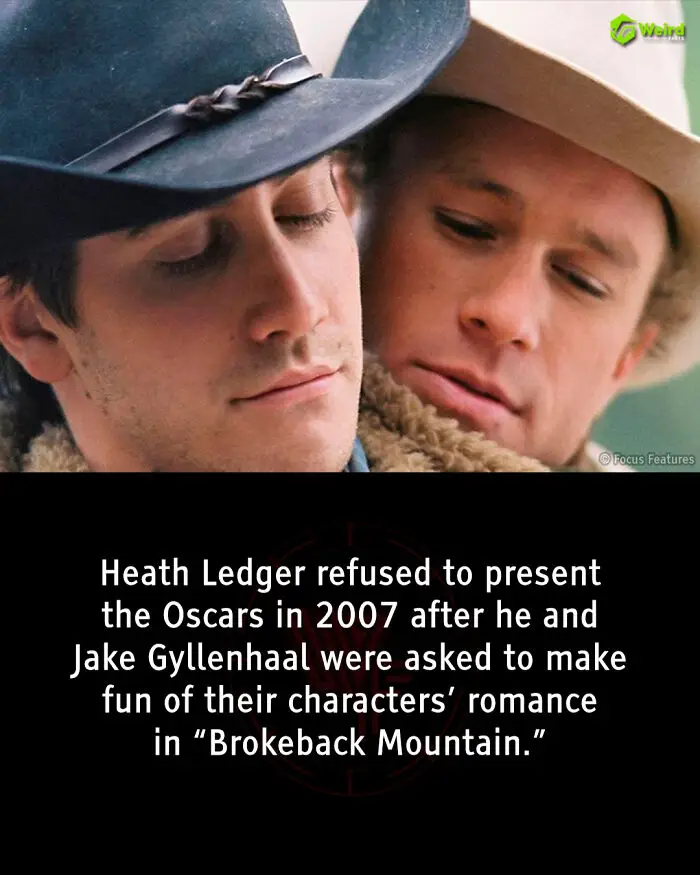
Jake Gyllenhaal says Oscar producers once asked him and Heath Ledger to joke about their Brokeback Mountain characters’ relationship during the show’s opening. Ledger refused. According to Gyllenhaal, the plan “joked about it,” and Ledger said, “It’s not a joke to me.” People often cite this to show how seriously he took the movie’s message.
Credits: factsweird

In 1916, Nathan Handwerker opened a hot-dog stand at Coney Island — but people didn’t trust cheap meat back then.
So he pulled a clever move: he had men in white coats eat the hot dogs in public. Customers assumed they were doctors, figured the food must be safe, and lined up.
The trick worked — and Nathan’s became a Coney Island legend.
Credits: factsweird

During the height of the Cold War, Apollo 11 astronauts carried two Soviet commemorative medals to the Moon.
The medals honoured fallen cosmonauts Yuri Gagarin, the first human in space, and Vladimir Komarov, who was a victim of the Soyuz 1 accident.
The medals had been given to American astronaut Frank Borman by the cosmonauts’ widows during a visit to Moscow.
Neil Armstrong and Buzz Aldrin left them on the lunar surface as a quiet gesture of respect for fallen space pioneers. President Nixon even publicly noted the act, saying courage has no national boundaries.
Credits: factsweird
You might also like: 32 surprising secrets that people have hidden from their partners
Follow Bored Panda's daily dive into internet culture on MSN for more curious finds, quirky content, and offbeat observations.