






Kids learn pretty quickly that they can actually get away with not doing a task if they simply claim to not know how to do it. Unfortunately, this useful (or insidious) hack means that some folks take this mindset well into adulthood.
So we’ve gathered the worst examples of weaponized incompetence women have shared in a post that went viral on Threads (remember threads?) Get comfortable as you prepare to read about netizen’s discomfort, upvote the most egregious examples and be sure to share your own stories in the comments section down below.
#21

Our 6-month-old is going through a sleep regression. I was up at 1 AM, 3 AM, and 5 AM. I got maybe two hours of broken sleep total. My eyes feel like they have sand in them.
My husband slept from 11 PM to 7 AM. He woke up once when the baby cried, rolled over, put a pillow over his head, and went back to snoring.
I was in the kitchen at 8 AM, trying to pour coffee with shaking hands. He walked in, yawning theatrically, stretching his arms.
"Man," he groaned. "I am beat. The baby was so loud last night. I barely slept a wink."
I gripped the mug so hard I thought it would crack. "You slept eight hours," I said, my voice flat. "I slept two."
He waved me off. "Yeah, but it wasn't quality sleep. I kept waking up. It's actually worse than not sleeping at all. You wouldn't understand, you're running on adrenaline."
Then came the knockout punch. "I'm gonna go lay back down for a couple of hours to catch up," he announced, heading back to the bedroom. "Try to keep the baby quiet, okay? I have a big week coming up."
He didn't ask. He informed. He assumed his rest was essential, and mine was optional. He assumed that because I am "home" I don't need to function.
I looked at the sink full of dishes. I looked at the pile of laundry. I looked at the baby who needed changing.
"Sleep when the baby sleeps," everyone says. But who cleans when the baby sleeps? Who showers? Who eats?
He was prioritizing his comfort over my sanity. He was treating me like a robot that doesn't need to recharge.
I didn't argue. I waited until I heard his door close. Then I put the baby in the carrier, grabbed my keys, and walked out the front door.
I texted him: "Baby is awake. I'm going for a drive. I'll be back in three hours. Use your 'big week' energy to be a dad."
I am currently sitting in a parking lot, drinking hot coffee in silence. Let him realize that my "shift" isn't automatic. If he wants to sleep, he can hire a nanny.
Report
24points
#22

My husband insists on being the only one with access to our savings. He gives me a weekly "allowance" for groceries and household items. He calls it "being fiscally responsible."
Every Sunday, I have to present him with the receipts. He sits at the table with a highlighter, going line by line. I feel like a teenager in trouble, not a 35-year-old partner.
Yesterday, he circled an item in red. "Raspberries?" he asked, looking over his glasses. "Six dollars for berries? Do you think we are royalty?"
I felt my face get hot. "They are for the kids' lunches. They love them."
"Bananas are fifty cents," he lectured. "You are reckless with money. This is why we can't save."
He made me Venmo him the $6 back from my personal money.
I swallowed my pride and went to clean out his car later that afternoon. Under the passenger seat, I found a crumpled bag from the liquor store. I looked inside.
A receipt from yesterday. A bottle of premium bourbon. $85. A pack of cigars. $20.
I stood in the driveway holding the two receipts. My $6 raspberries for our children were "reckless." His $105 treat for himself was... what? "Necessary"?
There is a separate set of rules for him. I am expected to pinch pennies and deny myself basic joys so that he can live like a king on our joint income.
It's not about the budget. It never was. It is about keeping me in a state of scarcity. If I am worried about the price of fruit, I don't have the mental energy to look at the bigger picture.
He shames me for spending to keep my confidence low. He spends freely to keep his ego up.
I didn't confront him. I stopped cleaning his car. I went inside and logged into his laptop while he was in the shower. I downloaded all the bank statements for the lawyer.
Then I went to the store and bought the biggest, most expensive container of berries they had. I ate them all in the car. They tasted like freedom.
The audit is over.
Report
24points
#23

It was his mother’s birthday. I bought the card. I bought the gift. I wrapped the gift. I booked the restaurant for four.
He looked at me over his phone as I was getting ready and asked: “Did you remember to write the card from both of us?”
And just like that, I saw it.
I wasn’t a partner. I was staff.
I asked him later that night, quietly. “Why do I have to be the one who remembers everything?”
He looked genuinely confused. “Because you’re just better at it, babe.”
He said it like a compliment. Said I was making a big deal out of nothing.
But it wasn't nothing. It was everything. My mind was a shared Google Calendar he never logged into.
I started noticing it everywhere. The dentist appointments I made for him. The reminders to take his own medication. The mental map of where everything was in our own house. The emotional energy spent pre-empting his bad moods.
I wasn’t sharing a life with him. I was managing his. For free.
The next week, his car registration was due. The reminder email came. I saw it. I archived it.
And I said nothing.
I didn't yell. I didn't fight. I just… stopped. I dropped one of the dozens of balls I was juggling for him, just to see if he’d notice.
He didn’t. For three weeks.
He got pulled over for expired tags. He called me, furious. “You let me forget! I can’t believe you!”
And the calmest voice came out of my mouth. “No. I just stopped reminding you to be an adult.”
He was looking for a manager.
But the position is no longer available.
24points
#24

My phone rang at 5:15 PM during a conference call. It was an unknown number, so I sent it to voicemail. It rang again immediately. Then a third time.
Panic set in. I stepped out of the meeting to answer.
It was the school secretary. Her voice was tight. "Mrs. Miller? We have Leo here in the front office. Everyone else has been picked up. Is someone coming for him?"
I froze. School ends at 3:30 PM. My husband was supposed to pick him up today. It was his only task.
"I'm on my way," I said, my hands shaking so hard I dropped my pen. "I am so sorry. I'll be there in twenty minutes."
I called my husband. No answer. I called again. Straight to voicemail.
I checked "Find My Friends." He wasn't in a ditch somewhere. He wasn't at the hospital. His dot was sitting perfectly still at our house.
My son had been sitting on a plastic chair in an empty school office for nearly two hours, wondering if his parents had forgotten him.
I drove like a maniac, crying the whole way.
When I burst into the school office, Leo looked so small. He wasn't even crying anymore; he just looked resigned. Like he expected this.
I hugged him so tight it probably hurt. The secretary looked at me with pure judgment. "Please make sure this doesn't happen again," she said coldly. "We are not a daycare service."
She was right. It was humiliating. But mostly, it was terrifying.
I drove home with Leo in the backseat eating a granola bar I found in my purse. He was silent.
When we walked in the front door, the house was quiet.
I walked into the living room. My husband was on the couch, wearing his noise-canceling headset. He was shouting commands at his teammates in Call of Duty.
He was so immersed in a virtual war that he forgot his actual son existed in the real world.
I walked up to him and pulled the power cord of the PlayStation out of the wall. The screen went black.
He ripped the headphones off, furious. "What the helll? I was in a ranked match!"
"Leo was at school," I said. My voice was dangerously quiet. "School ended two hours ago."
The color drained from his face. He looked at the clock. Then he looked at Leo standing behind me with his backpack still on.
"I... I lost track of time," he stammered. "The game matches are long, and I just..."
"You prioritized a game over your child's safety," I interrupted.
I didn't yell. I didn't scream.
I just took the power cord with me to the kitchen and cut it in half with the poultry shears.
"Game over," I said.
If he acts like a teenager, he gets treated like one. No more toys until he learns to be a parent.
Report
23points
#25

He said we didn’t need passwords. “We trust each other, right?”
I nodded.
Meanwhile, he had his texts on silent, Snapchat set to auto-delete, and Instagram logins I’d never seen. Trust? He meant: don’t ask questions.
He left his iPad open one night. Not unlocked — open. DMs still up.
Messages from a girl with his location pinned. Caption: “Let me know when she’s asleep.”
I stared at it for ten minutes. Didn’t cry. Didn’t scream. I took a screenshot and sent it to myself.
The next morning, he kissed my forehead. Made me coffee. Told me I was “the only woman who ever really got him.”
I smiled. Told him I booked us a weekend away. Somewhere with no Wi-Fi.
He loved the idea. He had no idea he was about to lose everything.
At the hotel, I waited until he was in the shower. Then I posted the screenshots. Tagged him. Unfollowed everyone we knew.
Left the room key on his phone.
And left.
Not back home — but to a friend’s place he never knew about.
He called twelve times. Left voicemails saying I was “vindictive.” That I “ruined his life over one stupid message.”
One? I counted fifteen girls. Three cities. Two phones.
He played the wrong game with the wrong girl.
People say I was petty. But petty would’ve been bleaching his clothes. I gave him exposure. And the dignity of watching his own mask fall off in front of an audience he built.
Closure? No. That was a performance.
This was an exit.
Report
23points
#26

It started over something stupid. I think I asked him to put his phone away during dinner.
He didn't yell. He didn't argue. He just looked at me, cold and blank, and then looked back at his screen.
For the next three days, he didn't speak a single word to me. He walked past me in the hallway like I was a ghost. He ate the dinner I cooked without looking up. He slept next to me with his back turned, radiating ice.
In the beginning of our marriage, this silence used to make me panic. I would follow him around, begging: "Please talk to me." "I'm sorry if I annoyed you." "Can we just resolve this?" I would apologize for things I didn't do, just to make the air in the house breathable again. Just to get him to look at me.
But this time, I didn't apologize. I sat in the silence and really tasted it.
It wasn't "cooling off." It wasn't "needing space." It was punishment.
He was teaching me a lesson: If you criticize me, I will remove my love until you beg for it back. It is a control tactic designed to make you feel small, anxious, and crazy.
Psychologists call this Stonewalling. Dr. John Gottman lists it as one of the "Four Horsemen" of the apocalypse regarding relationships. It is the number one predictor of divorce.
It is emotional abuse disguised as "quiet." It sends a brutal message to your partner: "You are not worth a response. Your feelings do not exist."
By day four, the silence broke. Not because he apologized, but because he needed to know where his blue tie was. He asked me casually, as if the last 96 hours hadn't happened. He expected me to jump up, relieved, and find it for him. He expected the cycle to reset.
But I stayed seated on the sofa drinking my coffee.
"I don't know," I said calmly.
And I went back to reading my book.
He looked shocked. He waited for the usual begging. The usual relief. It didn't come.
The silence didn't scare me anymore.
Because in those four days of quiet, I realized something important: I wasn't lonely because he wasn't talking to me. I was lonely because I was the only one in this relationship.
And that is a silence you can't fix.
Report
22points
#27
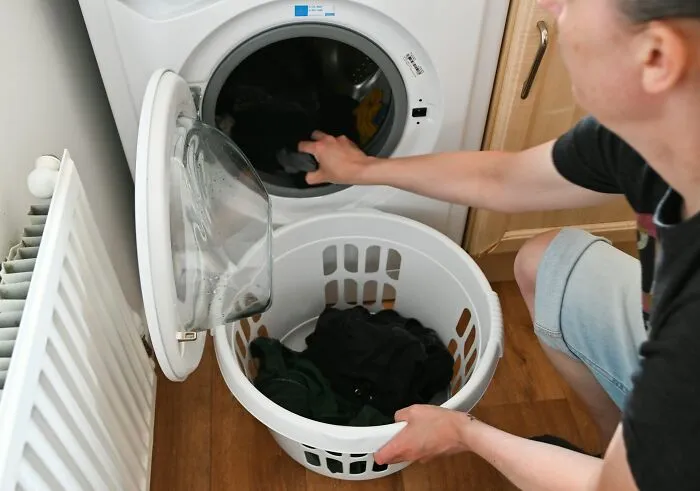
Have you ever asked your partner for one simple thing, and watched them fail so spectacularly you start to wonder if it was on purpose?
I was sick last week. Fever, chills, the works. All I wanted was a specific brand of pre-made mashed potatoes from the grocery store. The one I always buy. I sent him a photo of it. "Can you please just get this for me?"
He came back an hour later. He handed me a can of cold, sliced potatoes. "They were out of the other kind," he said with a shrug.
I was too tired to argue.
But later, I opened the store's app on my phone. The mashed potatoes I wanted were in stock. They were always in stock.
And suddenly, it wasn't about the potatoes anymore.
It was about the dishwasher he loads so badly the dishes come out dirtier. The important mail he "never saw." The one time he did laundry and "accidentally" dyed all my white clothes pink.
It was about the thousand tiny failures that always, somehow, created more work for me.
This pattern is so common, psychologists gave it a name: Weaponized Incompetence. It's the art of doing a task so poorly, so consistently, that the other person, out of sheer exhaustion, finally gives up and says the most dangerous words in a relationship: "It's just easier if I do it myself."
That phrase is not a solution. It's a surrender. It’s the moment a partnership starts its slow death, and a parent-child dynamic is born. The moment you become the manager of their life, not the partner in yours.
The resentment that follows is a quiet, slow-acting poison.
So last night, he asked me what was for dinner.
I smiled, and handed him my phone with the grocery store app open. The mashed potatoes were right there on the screen.
"I don't know," I said. "But I'm sure you'll figure it out."
My new job is to stop managing his incompetence, and start managing my own recovery.
Report
21points
#28

We were at a neighborhood BBQ. I was telling a funny story about a project I managed at work. People were laughing, engaged. I felt good.
Suddenly, my husband’s hand landed heavily on my shoulder. "Actually," he interrupted, his voice booming. "You're telling it wrong. It wasn't Tuesday, it was Wednesday. And it wasn't the CEO, it was the VP."
The rhythm of the conversation died instantly. "It doesn't matter," I smiled tightly. "Anyway, the point is..."
He cut me off again. "No, but details matter, babe. If you're going to tell it, tell it right. Here, let me explain."
He proceeded to hijack my story about my career, retelling it with zero charisma but 100% "accuracy." I stood there, silenced in my own anecdote.
He does this constantly. If I talk about politics, he "corrects" my stats. If I talk about a movie, he talks over me to explain the plot "better."
He treats me like an unreliable narrator in my own life. He isn't trying to be helpful. He is asserting dominance. He cannot stand to see me hold the room's attention. If eyes are on me, he feels invisible. So he has to puncture my balloon to get the air back into his ego.
When he finished "fixing" my story, the neighbors looked awkward. "Wow, thanks for the Wikipedia edit," I said loudly. "Does anyone else want a drink?"
I walked away and left him standing there. I am done being his rough draft. Next time, he can go to the party alone and correct the silence.
Report
20points
#29
He said he was saving to propose. I believed him. I stopped getting takeout. Canceled my gym membership. Even skipped my annual trip with the girls. Every month, I handed him $300. He kept it “safe,” he said, in a shared folder on his bank app.
After 11 months, I asked how much we’d saved. He said, “Don’t worry about it.” Laughed it off like I was being impatient. Then one night, I saw his phone light up. Bank alert. Withdrawal. $1,200. Location: Vegas. I wasn’t in Vegas.
The next morning, I waited. He came home hungover. I asked. He blinked like I was the crazy one. “I deserved a break.” “I needed time to think.” “You always said you wanted me to be happy.” He didn’t say a word about the money.
I checked the bank folder. Empty. Nothing in savings. Nothing in checking. He spent it. All of it. Not even on someone else. On himself. Bottles. Blackjack. A VIP table for one.
I packed while he was asleep. Left a note: “Enjoy your happiness. I’ll find mine elsewhere.” Blocked his number. Called my bank. Opened a new account with my name only. This time, I’m saving for something real: Peace.
The worst part? It wasn’t even about the money. It was the look in his eyes when I confronted him. No guilt. No shame. Just inconvenience. That’s when I knew: He never planned to build a future. He just needed funding.
Report
19points
#30
The day I signed my first client, he didn’t congratulate me. Just looked up from his phone and said, “Don’t let this get to your head.” It was a $4,000 deal. I wanted to cry. Not from pride — but from the fact that the person I loved looked more threatened than proud.
It kept happening. Every win I had — he had a reason to downplay it. “You’re lucky.” “Probably a fluke.” “Must be nice having free time to focus on that.” Meanwhile, I was working 12-hour days. Networking. Figuring it out alone. Carving a path from scratch. He was watching Netflix and calling it “research.”
One night, he said I was “emasculating” him. Because I paid for dinner. Because I was busy building. Because I didn’t need him financially. I looked at him and realized he didn’t love me. He loved the version of me that stayed behind him.
I tried softening. Tried shrinking. Tried pretending his jealousy was insecurity and not a warning. But it grew louder. He started joking about me at parties. Mocking my job. Calling me “the boss” in that voice that turns admiration into poison.
The last straw was the night he said, “You’re not better than me, you know.”
And I answered, “I never said I was.”
But in that moment, I saw it in his eyes — he wanted me to lose. Not because he hated me, but because he didn’t know how to love someone who outgrew the version of life he settled for.
I left two weeks later. Quietly. No drama. No Instagram post. Just one suitcase, and the version of me he couldn’t stop trying to dim.
And for once, I didn’t apologize for being too much. Because maybe I wasn’t too much. Maybe he was just never enough.
Report
19points
#31
He said we should get a PlayStation. For us, he said. For cozy nights in. For games we could play together. For our relationship.
I put a large part of my savings into it. I believed in the "us" he was selling me.
The giant box arrived. He spent a whole day setting it up. And then he disappeared.
Not from the apartment. Just from our life.
He was there, on the couch, every night. But he was gone. Headset on. Eyes glazed over. Lost in worlds I wasn't invited to.
The "us" never happened.
One night, I reached for the controller to switch to Netflix and watch a movie. The look he gave me was pure ice.
“Don’t touch my stuff,” he snapped.
My stuff... It was never for us. I just helped pay for the ticket to his private escape hatch from our relationship.
That night, I didn’t say a word. I just watched the flashing lights from his screen dance across the ceiling of our dark living room.
And I realized: The loudest silence in the world is the one next to a man who is in a room you can't enter, even when he's sitting right beside you.
The next day, I bought a television. A small, cheap one, just for the bedroom.
He saw the box and laughed. "Why'd you waste money on that? We have a great TV."
I looked at him, and for the first time, I didn't feel sad. Just clear.
"No," I said. "You have a great TV."
Turns out, the most expensive part of that console wasn't the price tag. It was the cost of realizing you were never on the same team.
Report
18points
#32
He gave me his Amazon Prime password. “So you can watch your shows,” he said. A small act of kindness. A gesture of trust. I felt so cared for.
It wasn’t until I accidentally clicked on “Archived Orders” that I found the other life he was living. A history he forgot to delete.
A necklace I never received. A silk robe I never wore. A book of poetry I never read. All shipped to an address I didn’t recognize.
Each with a gift note. Each signed, “For my everything, Chloe.”
My name is not Chloe.
But that wasn't the dagger in my heart. The dagger was the payment method he used for all of Chloe’s gifts. My credit card. The one he’d saved to the account months ago “for convenience,” he said.
He wasn’t just cheating on me. He was making me pay for it.
I didn’t confront him. I didn’t cry. I just watched him that night, as he complained about being broke, as I paid for our takeout.
And I realized something profound. I wasn’t his partner. I was his line of credit with a heartbeat.
The next day, I used his account one last time. I ordered him a small package with same-day delivery.
He opened it. Inside was a simple calculator.
With a note: “So you can start calculating the true cost of your choices.”
I already had. And my freedom was priceless.
Report
17points
#33
He lost his job. I said we’d figure it out together. Cut down on takeout. Paused my skincare subscription. Started bringing lunch to work so he wouldn’t feel bad.
Meanwhile, he slept till noon and played Call of Duty like it was his career.
I made excuses for him. “He just needs time.” “It’s hard out there.” “He’ll bounce back.”
But months passed. No applications. No interviews. Just new excuses and new ways to make me feel guilty for wanting him to try.
I still cooked. Still cleaned. Still split the bills. Still showed up like I wasn’t drowning in quiet resentment.
He once said, “You’re lucky I’m not one of those guys who cheats.”
And I remember thinking — so now fidelity is the reward for carrying everything alone?
One night I asked, “What’s your plan?”
He shrugged. Said, “Why are you being so negative lately?”
I laughed. Not because it was funny — but because I realized I’d become invisible to the man who used to adore me.
The next morning, he asked what was for breakfast. Didn’t say good morning. Didn’t ask how I slept. Just assumed I’d stay in gear.
I looked at him, and all I saw was the version of me that stopped needing anything because asking only led to disappointment.
So I packed quietly. Left a note on the fridge: “This isn’t about money. It’s about effort.”
He texted a week later: “Wish you told me you were unhappy.”
But I did. In every tired smile. Every quiet dinner. Every skipped purchase so he wouldn’t feel small.
Turns out — I shrank, just so he could feel whole.
Report
16points
#34
We had a shared calendar. He called it our “mission control.” A way to stay in sync. Purple for my events, blue for his.
I thought it was a symbol of our partnership. Dinners, appointments, friends' birthdays, vacation plans… I added everything.
It wasn't until last night, scrolling back through the last six months, that I saw it. A sea of purple. And only one blue entry: “Dave’s Bachelor Party.”
I brought it up calmly. “I noticed I’m the only one who really uses the calendar.”
He looked up from his phone. “Babe, you’re just better at that stuff. You’re the organized one.”
He said it like a compliment. But it felt like a job description.
“Just tell me what to add, and I’ll add it,” he offered.
I didn’t want to be his manager. I wanted a co-pilot.
I did the math. Not in dollars, but in energy. Every doctor's appointment I scheduled. Every dinner reservation I made. Every "don't forget your mom's birthday" reminder. Every mental Post-it note of "we're out of milk."
He wasn't a bad guy. He just showed up to a life I was tirelessly producing for us. I realized I wasn't his partner. I was his unpaid executive assistant with romantic benefits.
I didn't have a big fight. I just opened the calendar settings, found his name, and clicked one button: "Stop Sharing."
The blue entry vanished. The sea of purple was mine again.
Then I did something I hadn't done in years. I created a new event, just for me.
"6 PM. Coffee with Myself."
Because you can’t add “care for me” to someone’s calendar.
This morning, he texted. "Hey, what time is my dentist appointment tomorrow? I can't see the calendar."
He wasn't looking for a partner. He was looking for a notification.
He didn’t lose his partner. He lost his planner.
And my calendar is finally my own.
Report
15points
#35
got from me.
The first lie wasn’t big. It was his phone lighting up at 2:17 a.m. Name saved as “Alex.” Pink heart next to it.
He said it was his cousin. Cute. I didn’t know cousins sent mirror selfies in lingerie.
I didn’t say anything that night. I just watched. Noticed the new cologne. The extra showers. The way he started taking his phone to the bathroom like it might run away.
He thought I was naïve. I was just collecting evidence.
He left his laptop open once. Instagram DMs. Notes app. A backup folder named “Receipts.”
How ironic.
Inside: screenshots, saved videos, voice notes. Like he was proud of what he was hiding. Like he wanted to archive the destruction.
I didn’t cry. I made a copy of the folder. Uploaded it to a private drive. Renamed it “Insurance.”
I made breakfast that morning. Asked him how he slept. Kissed his forehead. He had no idea I was staging my exit like a professional.
The day I left, I didn’t slam the door. I emailed him one file: a ZIP with every receipt he thought I’d never find.
Subject line: “Since you like collections.”
Then I blocked him on everything except Venmo.
A week later, he sent $75 with a note: “You didn’t have to be so cold.”
I refunded him 50 cents.
Captioned it: “For the water I wasted boiling your lies.”
And that was the last thing he ever got from me.
Report
14points
#36
$37.50. That was all I had left after paying rent. Groceries? Credit card. Gas? Credit card. Hope? Running on empty. I didn’t tell anyone — not my friends, not my parents. I just kept showing up to work, smiling through it, pretending I was “fine.” Because saying “I’m drowning” felt more humiliating than drowning itself.
The scariest part was how normal it became. Microwaving cheap meals. Avoiding group dinners. Choosing between toothpaste and tampons at Walgreens. I stopped answering texts. Stopped planning anything. Stopped believing this would ever feel different. Being broke isn’t just numbers. It’s shame. It’s isolation. It’s silence.
Then one day, the bank called. Overdraft fees. Automatic payments bouncing. I sat on the kitchen floor, the phone still buzzing in my hand, and laughed. Not because it was funny — but because I was too exhausted to cry again. That was the day I realized: no one was coming to save me. And maybe that meant I had to save myself.
I sold the clothes I never wore. Canceled every subscription. Applied to 14 jobs in one night — even the ones that terrified me. Pride? Deadweight. Comfort zone? Not an option. It wasn’t pretty. It wasn’t inspirational. It was survival.
And slowly, like thawing ice, things began to move. Not all at once. But enough. Enough to hope again.
Six months later, I opened a new bank account. Not for bills. Not for emergencies. For dreams. I named it “Second Chances.” First deposit: $20. Second: $50. Third: tears. Not because I was rich, but because for the first time in a long time, I believed I could build something no one could take from me.
If you’re in the part where it feels impossible — where $20 feels like air and $5 feels like failure — please hear me: It’s not your ending. It’s your first brick. Keep building. Even if your hands shake. Especially when your hands shake.
Because one day, you’ll look back and realize: the version of you who kept going — she was never weak. She was legendary.
Report
14points
#37
We were at his sister’s wedding last weekend. I watched my husband across the room. He was holding a crying baby so his cousin could eat. He was fetching drinks for elderly aunts. He was laughing, dancing, being the absolute life of the party.
People kept coming up to me all night: "You are so lucky. He’s such a catch. He’s so helpful."
I smiled and nodded every time. "Yes, he is."
But inside, I felt like screaming. Because I haven't seen that man in three years.
The second we got into the Uber to go home, the light went out. It was like someone flipped a switch. His smile vanished. His shoulders slumped. He pulled out his phone and started scrolling.
"Did you have fun?" I asked softly.
"It was fine. Exhausting," he grumbled, not looking up.
At home, he left his suit on the floor. He walked past the dishwasher I was loading without a word. The "helpful, charming guy" stayed at the wedding. I was left with the roommate.
It is a specific, suffocating kind of loneliness. Watching your partner give their best energy, their sharpest wit, and their kindest patience to strangers... and then bring you their leftovers.
I get the tired sighs. I get the "not now, I had a long day." I get the silence. His boss gets the best of him. His friends get the best of him. Even the waiter gets a smile. I get the version of him that is "done" for the day. The empty shell.
For a long time, I tricked myself. I thought: This is intimacy. He is comfortable with me. He doesn't have to perform here. He can just be himself.
But I realized tonight that is a lie. Being "comfortable" shouldn't mean being careless. It shouldn't mean saving all your kindness for people who don't matter, and giving your apathy to the person who sleeps next to you.
If you can be charming to a stranger, but you can't ask your wife how her day was, that's not "comfort." That’s a choice.
This morning, he was rushing to a meeting. He stood in front of the mirror and put on his "public face" — big smile, bright eyes, full of life. He looked like the man I fell in love with.
He kissed me on the cheek, but his eyes were already on the door. "See ya," he said flatly.
I looked at him and realized I didn't miss him. I missed the guy from the wedding. And I think I’m done accepting only the leftovers.
Because I deserve the main course too.
Report
13points
#38
The joke wasn’t funny. He made it at dinner with his friends around. About how I “never shut up” when I tell stories. How I “need constant validation.” How “thank God she’s pretty” or I’d be “so much work.”
They laughed. And I smiled. Because that’s what women do when we’re embarrassed in public. We play along.
Later, I said, “That hurt my feelings.” He said, “Don’t be so sensitive.” Said I “always make things about me.” Said “it was just a joke.”
But it wasn’t the first one. Or the fifth. He’d been sharpening his punchlines on my ribs for months.
He joked about how I dress. How I “ask too many questions.” How I’m “so dramatic sometimes.” How “no one else would deal with me.” He called it humor. I called it erosion.
Because every laugh chipped away at something I was trying to hold together. The worst part wasn’t what he said. It was how easily I accepted it. How many times I swallowed the sting. How I stayed quiet to keep the peace in a relationship that never offered me safety.
One night, at another dinner, he said something again. Something small. But this time, I didn’t smile.
I put down my fork, stood up, and said, “Imagine loving someone and thinking it’s cute to humiliate her for laughs.”
Then I left. No scene. No shaking hands. Just done.
He texted later: “Wow. You really took that personally.”
Yes. I did. Because it was personal every time he made me the punchline in a room that only knew me through his sarcasm.
I wasn’t the joke. He was just too careless to see the damage his laughter left behind.
Report
12points
#39
We had a small fight. He said he needed “a little space.”
So I gave it to him.
I spent the next 24 hours waiting for the “I miss you” text. The call to say he was coming over.
The call never came from him.
But my phone did light up.
A text from his mother.
Her message was so polite. So kind. “Hi honey. Mark is going through a lot right now. He asked me to ask you… if you could drop his things off at my place this weekend.”
I read it three times.
He didn’t just break up with me. He had his mom do it.
And in that moment of cold, clean humiliation, I understood everything. All the times he avoided difficult conversations. All the times he made me make the tough phone calls. All the times he was “too tired” to argue for us.
It wasn’t him being “easy-going.” It was a fundamental lack of a spine.
I didn’t reply to him. I didn’t call him.
I replied to his mother.
“Of course,” I wrote. “I’ll drop off the box. Could you do me a favor and remind him that he also left his courage and his decency here? I’ll just throw those out.”
I hit send without shaking.
He didn’t just lack the courage to leave me. He lacked the respect to see me as a person who deserved a real conversation.
I used to think the opposite of love was hate. It’s not. It’s cowardice.
And I no longer have space in my life for men who send their mothers to fight their battles.
Report
10points
#40
She wore the dress. The one he once said made her look “too much.” Red. Fitted. Loud. She wore it to the event they used to attend together. Walked in alone. No apologies. No explanations.
And the moment she stepped into the room, three women turned to look. Not with judgment — with recognition. They remembered her. Not just the dress, but who she was before she shrank. Before the years of “Are you really wearing that?” and “Maybe tone it down a little.”
Before she learned to make herself smaller so he could feel bigger.
She used to change outfits last minute. Used to check his face for approval. Used to wonder if confidence was something she had to earn by first surviving criticism.
Now she understood — he never hated the dress. He hated how she felt in it.
He texted that night. Saw a photo. Said, “Wow. That’s bold.”
She replied: “So was staying with someone who made me doubt myself every time I got dressed.” Then blocked the number.
She didn’t wear the dress for closure. She wore it for the girl who buried it at the back of the closet and called it maturity.
Some women heal in therapy. Others heal in red dresses.
Because sometimes, power isn’t loud. It’s just finally wearing what you were once told to hide.
Report
10points
