




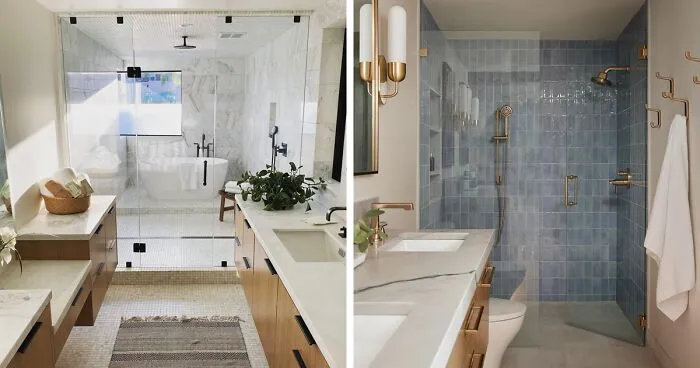




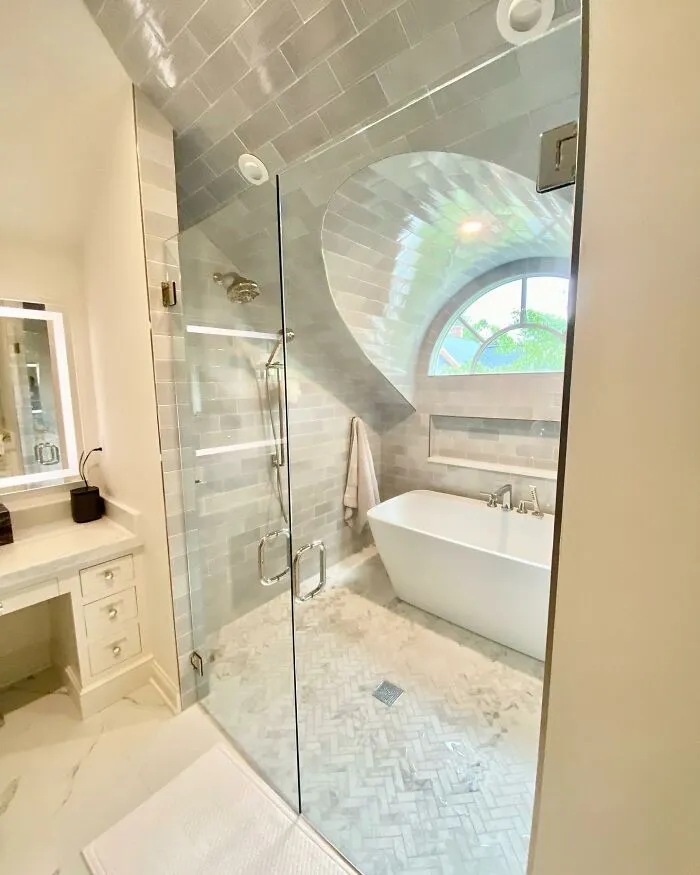
#21 Walk-In Shower With Tub Under Sloped Ceiling
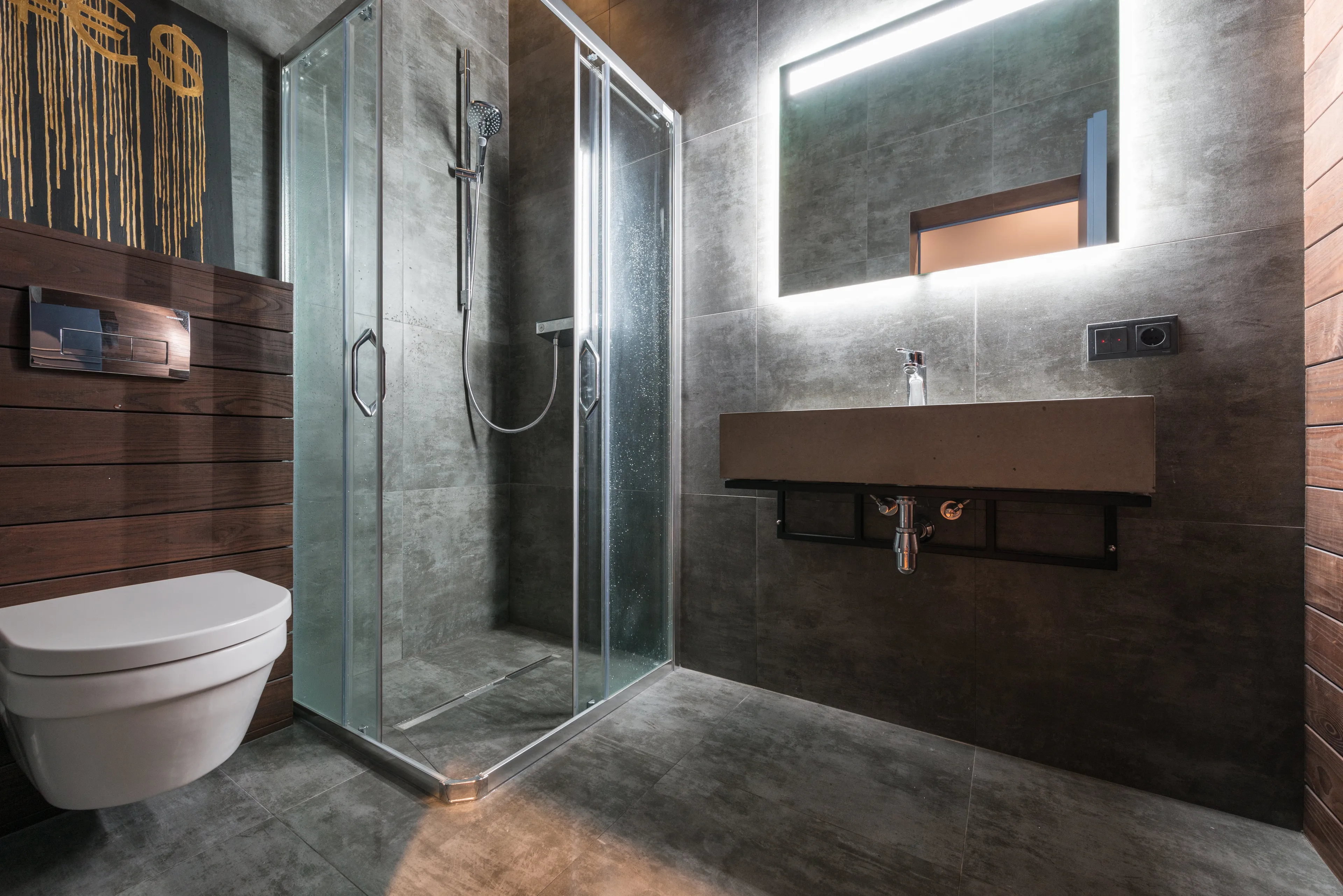
#22 Industrial Walk-In Shower With Inline Panel
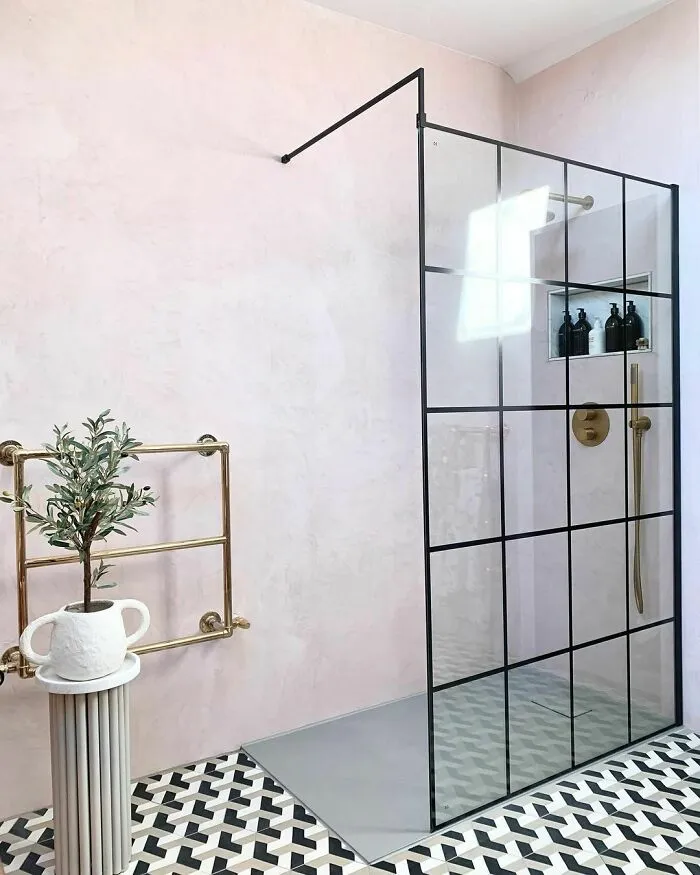
#23 Marble Shower Stall With Floating Bench
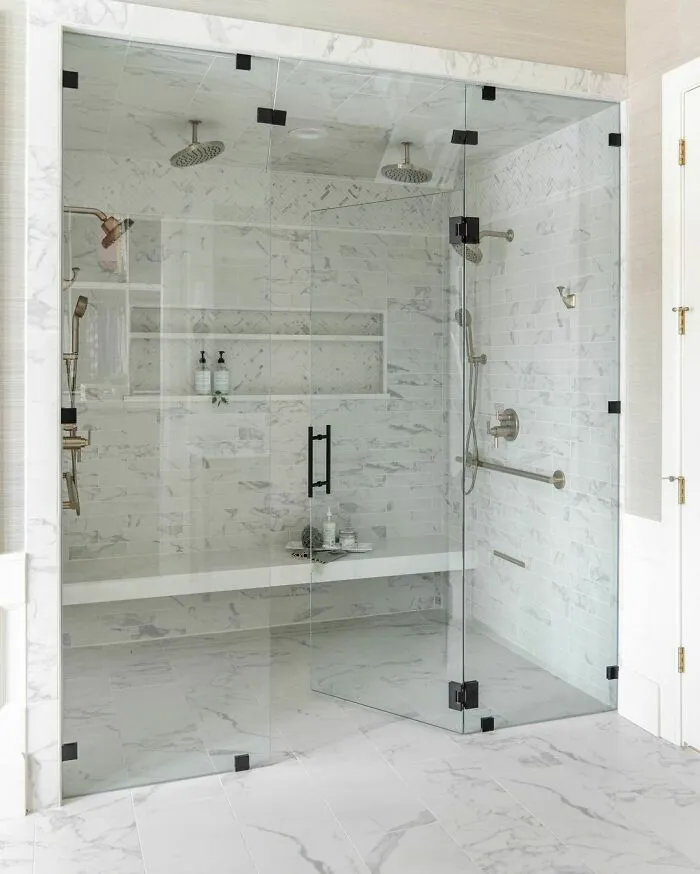
#24 Out-Of-Place Walk-In Shower
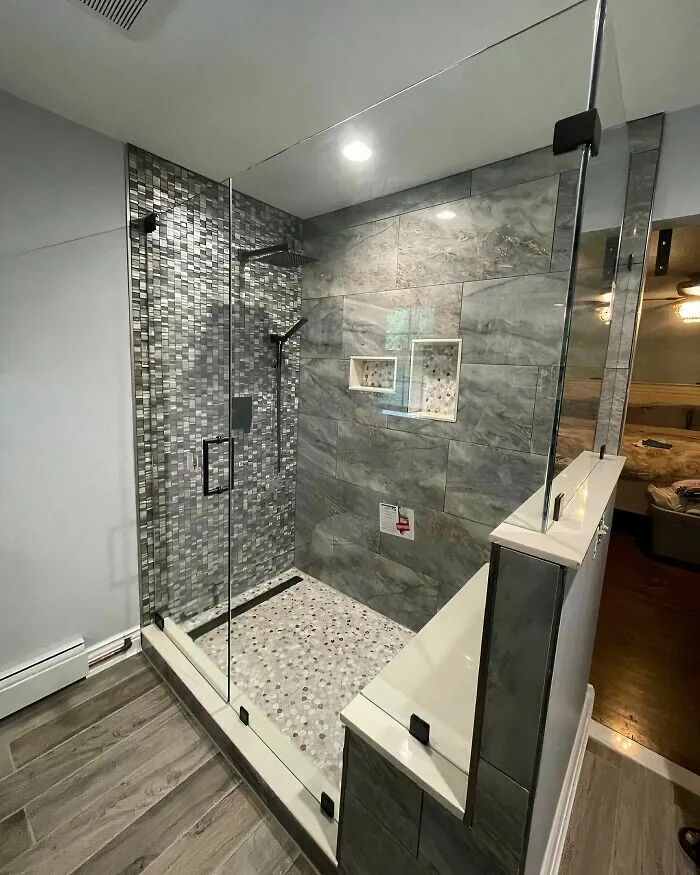
#25 Spacious And Long Walk-In Shower
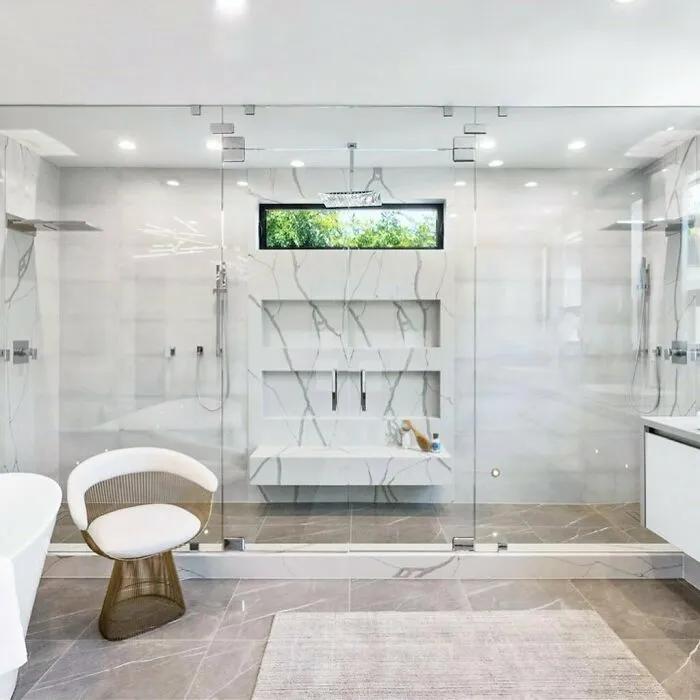
#26 Mix And Match Shapes In Tiled Walk-In Shower
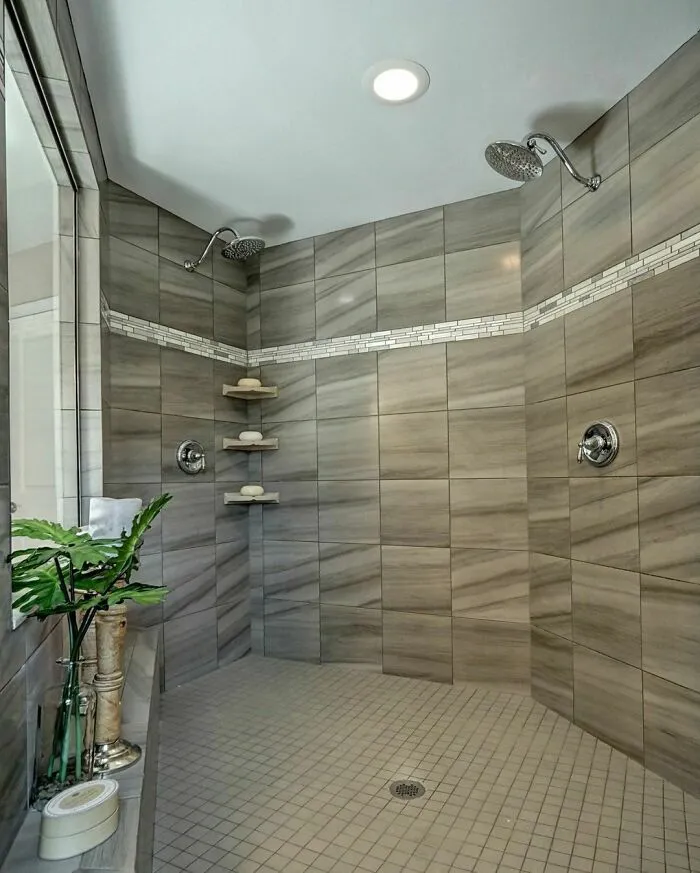
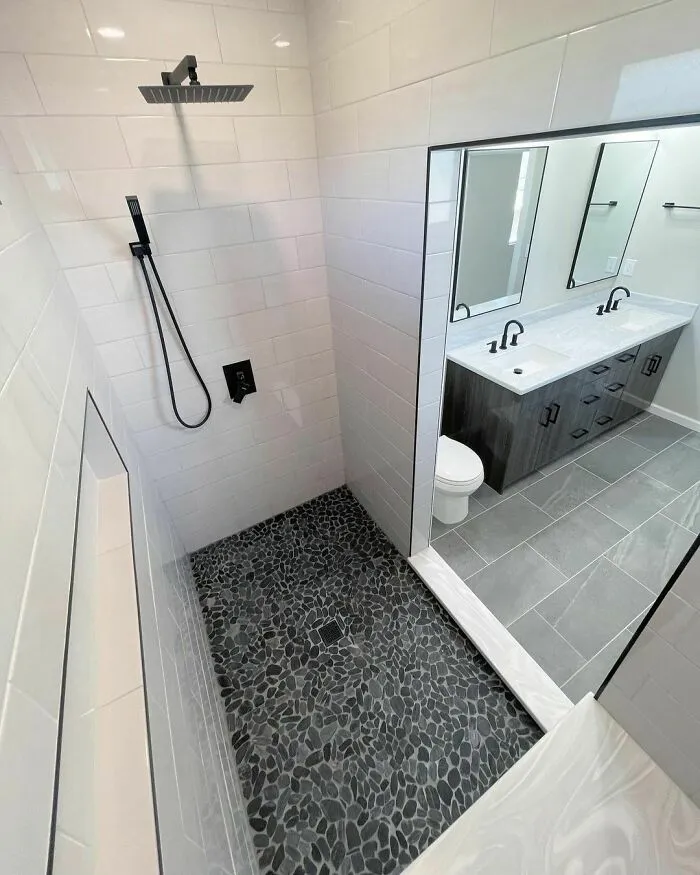
#27 Walk-In Shower With Bench And Pebble Floor
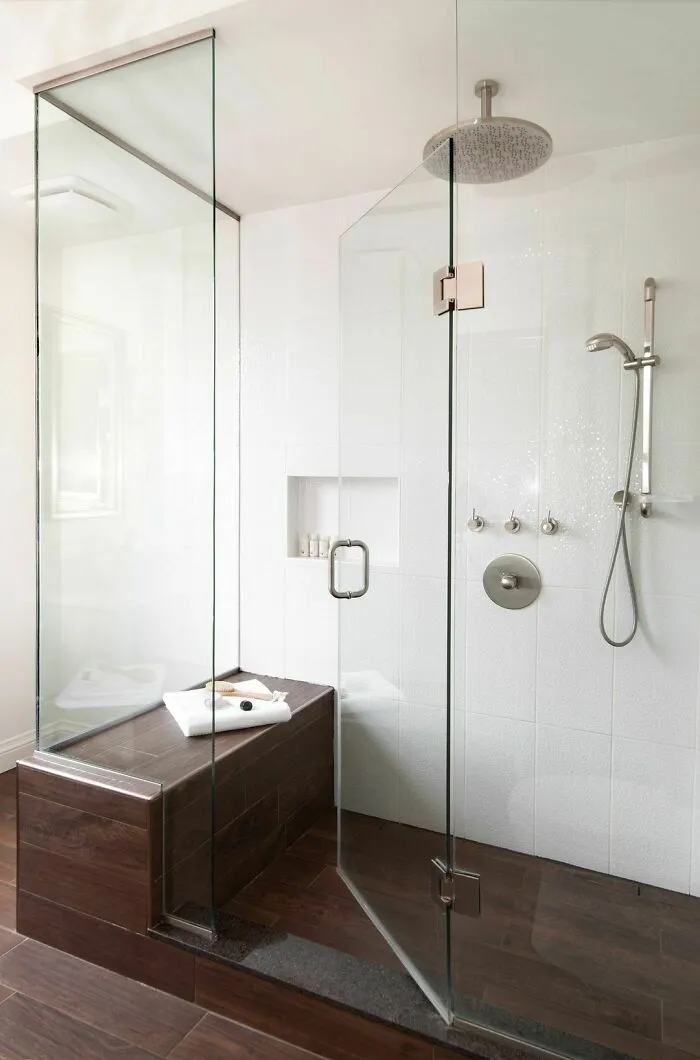
#28 Scandinavian Walk-In Shower With Bench
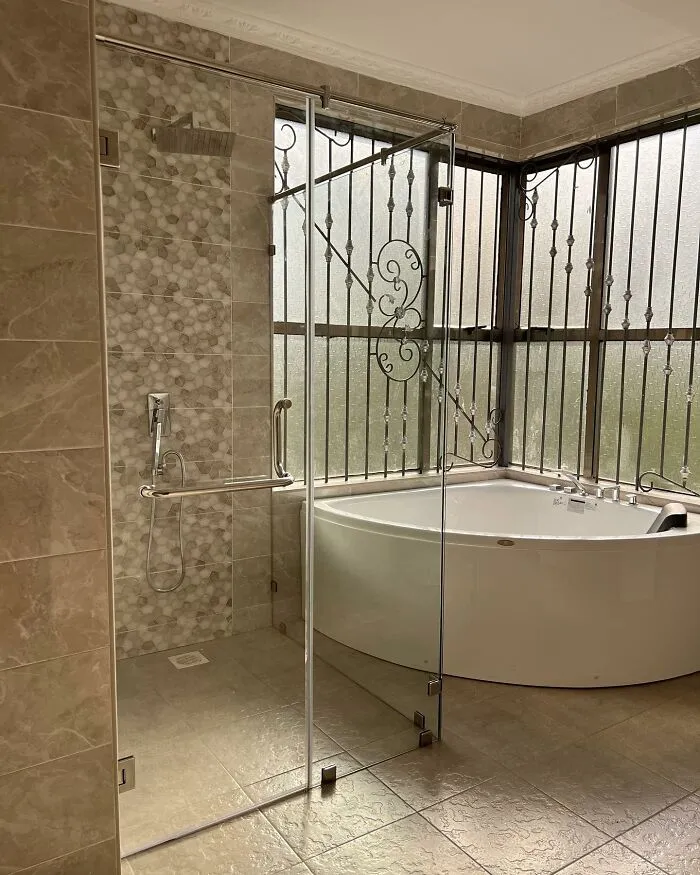
#29 Enclosed Walk-In Shower Next To Corner Tub
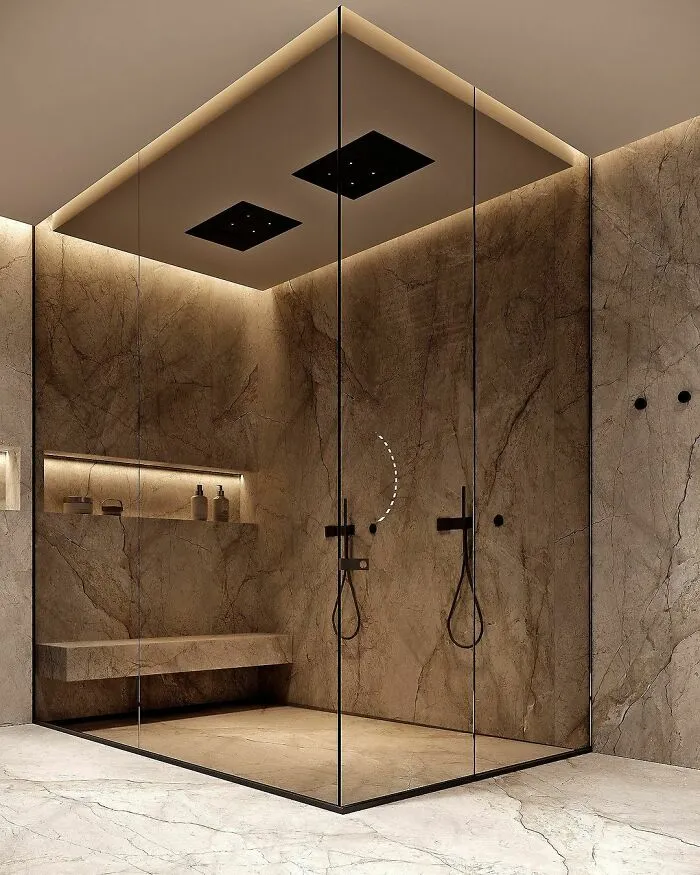
#30 Walk-In Shower With Marble Bench
Before Installing One, Read This
Remodeling your bathroom with a walk-in shower is a step into an innovative, practical future. It’s a splash into a worthy and timeless investment that goes beyond trends. A walk-in shower elevates your bathroom’s set and is a game-changer in many aspects. However, before buying one, ensure you’ve familiarized yourself with all its pros and cons.
Benefits of Having a Walk-in Shower

Image credit: Curtis Adams
Investment: Custom-made walk-in showers usually outlast standard fixtures.
Easy to clean and maintain: Doorless designs mean fewer surfaces to clean.
Adaptable: Custom-made walk-in showers adapt to every space and lifestyle.
Space-efficient: It makes a small bathroom look more spacious, airy, and comfortable.
Home value: A walk-in shower is a highly desirable element in every household, making it a worthy investment.
Highly accessible: With no high thresholds or raised entry points, a walk-in shower is perfect for aged people, young children, or individuals with limited mobility.
Why Walk-In Shower Might Not Be Ideal

Image credit: Max Rahubovskiy
Slippery surface: The lack of threshold or raised plates makes the floor slippery.
Airflow: Doorless walk-in showers are semi-open, letting chilly airflow in.
Humidity: Water splashes, humidity, and soap residues lead to mildew growth.
Privacy: Walk-in showers offer minimal privacy—a no-go for shared houses.
Installment: Walk-in showers aren't the easiest DIY projects. They need professional installation due to layout changes and plumbing issues.
More Things to Consider

Image credit: Hemant Kanojiya
Size and space: Measure your bathroom space to set the ideal size for your walk-in shower. Define the length of the shower screen, the height of a shower enclosure, and its placement in the bathroom.
Style: Choose a walk-in shower design that complements your bathroom’s overall decor. Explore diverse walk-in shower styles like curbless or corner showers. Choose the one that aligns with your bathroom and resonates with your lifestyle.
Safe material: Go for safe, durable, waterproof, and long-lasting materials for shower walls and floors. Choose between tiles, acrylic, and fiberglass material.

Image credit: Jana Heinemann
Features: Based on your preferences and space limits, decide if you want pivot, hinged, or sliding doors, a rainfall or handheld showerhead, a bench, or a bathtub within the walk-in shower.
Accessibility: If accessibility is a priority, opt for a curbless or low curb design, a built-in bench, and grab bars. Ensure that your final choice serves the needs of all family members, regardless of their mobility levels.
Costs and budget: Set a budget range for your walk-in shower project and explore cost-effective options. Don’t neglect to calculate the additional costs of hiring a professional to install it properly.

Image credit: Reddit.com
Walk-in Showers Make a Great Investment
The global walk-in shower market is projected to grow at a CAGR of 2.10% by 2030. As walk-in showers are increasingly seen as a top-rated feature, they are expected to become a common installation choice. Hence, let’s address the costs of installing one.
The price for installing a custom-made walk-in shower may vary from $1,150 up to $8,000, with an average of $6,700. While cost may be an issue for some homeowners, qualities like enhanced accessibility, easy maintenance, and timeless design make such an investment worth every penny.
So, the question is, how all-inclusive do you want your walk-in shower to be?
