




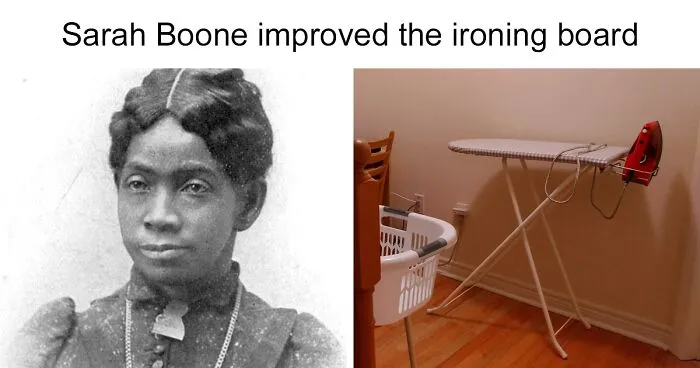


Did you ever think about who invented the dishwasher, the car heater, or who were the first people to write algorithms and make coding easier? They were all women inventors! Often when we talk about inventors, people like Thomas Edison or Alexander Graham Bell come to mind. But women inventors were equally amazing and without their ideas, the modern world would look really different.
Some of these inventions are really simple, like a flat-bottomed paper bag, but you really couldn’t imagine it any other way. And some of them have really changed people’s lives, like laser cataract surgery. Take a look at some of the things that you may not have known were invented by women.
#21 Tabitha Babbitt Invented The Circular Saw
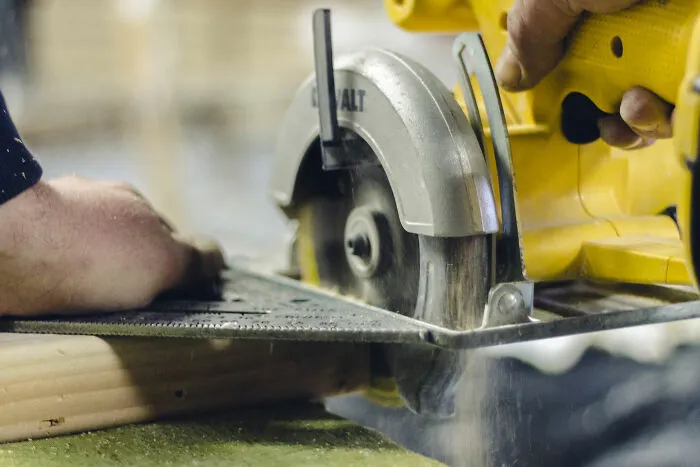
Tabitha Babbitt is credited to be the inventor of the first circular saw for use in a saw mill in the first half of the 1810s. It is speculated whether or not she was the first to invent it as she was a member of a religious group, Shakers, that prohibited applying for patents, so because there is no patent, controversy surrounds this invention. The only proof that this invention existed is in Shaker lore. According to it, Babbitt noticed two men using one whipsaw, but their motion was wasted, because the saw would cut the wood only when it was being pulled forward. Babbitt thought that a round saw would solve the efficiency problem and created a prototype attaching a circular blade to her spinning wheel, using the pedal of her wheel to power it.
Report
104points
#22 Alice H. Parker Invented The Central Heating System
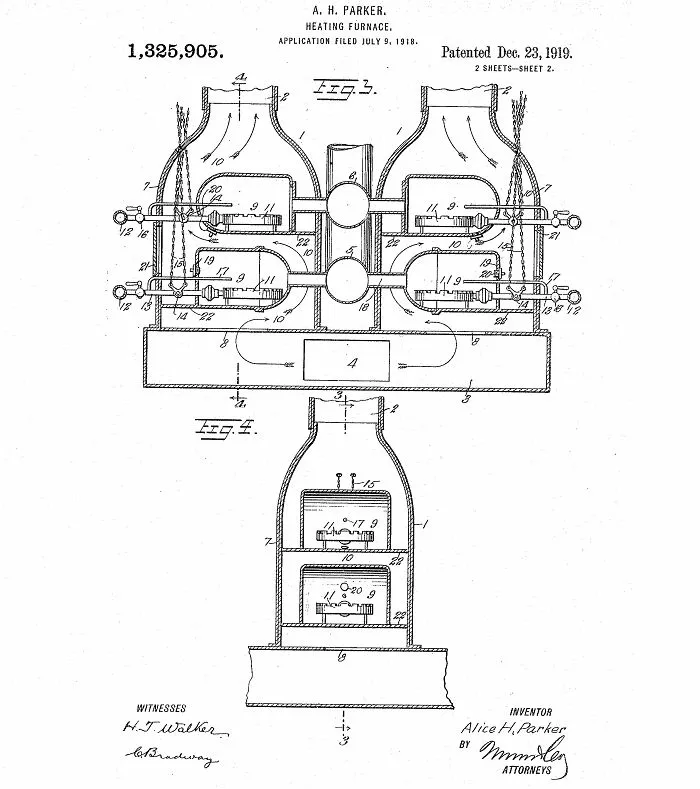
Alice H. Parker was an African American inventor known for her patent for a gas furnace. She grew up in New Jersey, where winters are cold. It was said that because the fireplace didn’t provide enough warmth, she was inspired to search for a better heating solution. While many people at that time were using wood and coal, Parker thought of a gas furnace using air ducts to distribute the heat to all parts of the house. The patent was issued in 1919 and although it was not the first gas furnace design, it was the first to contain individually controlled air ducts to transfer heat to different parts of the building. The invention was never implemented due to safety concerns, because you couldn’t control the heat flow, but it led the way to modern central heating systems.
Report
97points
#23 Olga D. Gonzalez-Sanabria Had A Major Role In Developing Batteries For The International Space Station
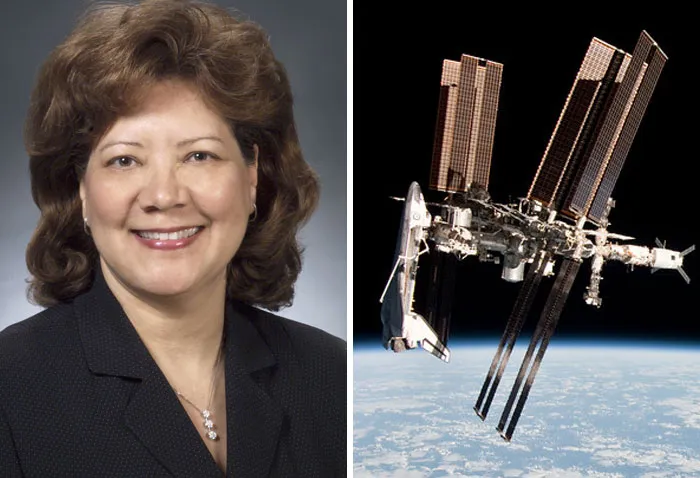
The International Space Station mainly uses solar power, but it is not in direct sunlight all the time, so other power sources must be used. It relies on rechargeable lithium-ion batteries to provide power one third of the station’s orbit. In 2017, lithium-ion batteries replaced the nickel-hydrogen batteries. But it was Olga D. Gonzalez-Sanabria whose technical contributions helped to develop the "Long Cycle-Life Nickel-Hydrogen Batteries" in the 1980s and enable the International Space Station to always have power to sustain life-support systems and experiments.
96points
#24 Jeanne Villepreux-Power Invented The Aquarium
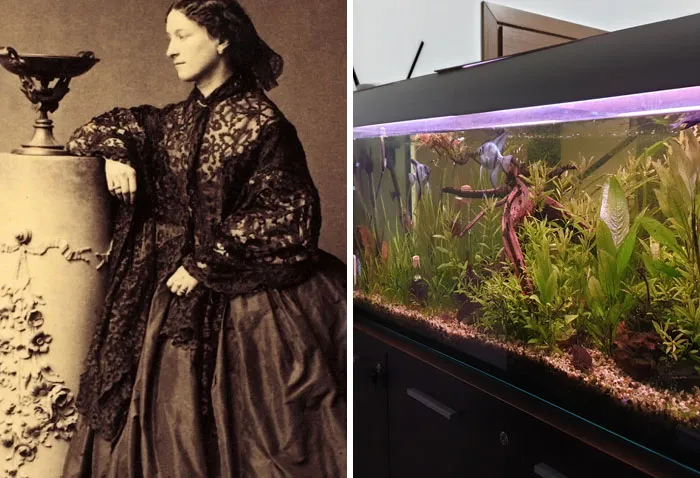
Jeanne Villepreux-Power was a marine biologist who created the first aquarium in 1832. She was observing and experimenting with aquatic organisms and for that, she needed to keep them somewhere. Villepreux-Power created three types of aquaria. The first one was a glass aquarium to study the marine life, another was a glass apparatus placed within a cage for use in shallow water, and the third was another cage-like aquarium capable of lowering its contents to various depths. By using the aquarium, the biologist was able to discover that Argonauta Argo produces its own shell rather than obtaining it from other organisms.
Report
91points
#25 Patsy Sherman Co-Invented Scotchgard
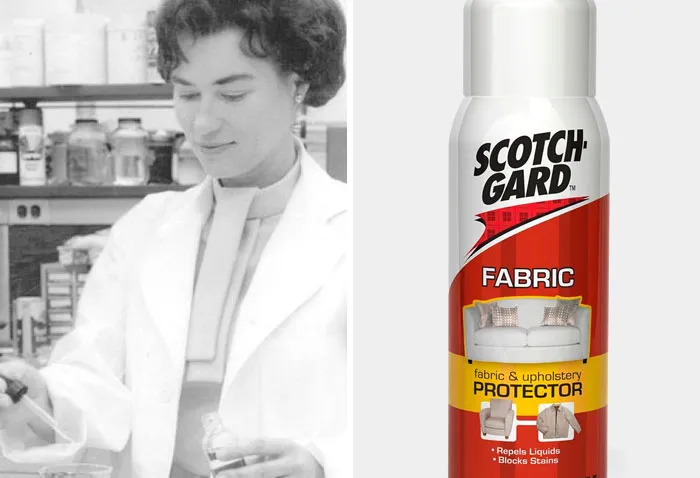
Patsy Sherman was an American chemist who is known for co-inventing the stain and water repellent Scotchgard. The invention was actually an accident. Sherman was working with her colleagues to develop a rubber that could be used for jet fuel hoses. While working in the laboratory, some of a fluorochemical rubber accidentally got on an assistant’s shoe and it didn’t come off, but it also didn’t change the appearance of the shoe fabric. Sherman then realized that this material could be used as a repellent for oil or water. She worked with Samuel Smith and in 1956 developed the fabric stain repellent and material protector, Scotchgard. The scientists continued their work and expanded the use of their discovery to include a carpet treatment, automotive upholstery cleaner and numerous other derivations.
Report
90points