







I love coming across real-life stories and facts that read like novels, especially the kind that surprise me.
One minute you’re learning about a principal who reportedly stopped a school shooter with his bare hands, the next you’re reading about a baker aboard the Titanic whose final moments became part of maritime history.
‘Unknown Facts by Genmice’, a Facebook page with over 16 million followers, curates exactly this kind of content — making it a much more approachable read than an encyclopedia. Below, we’ve gathered some of the most interesting examples.
#61
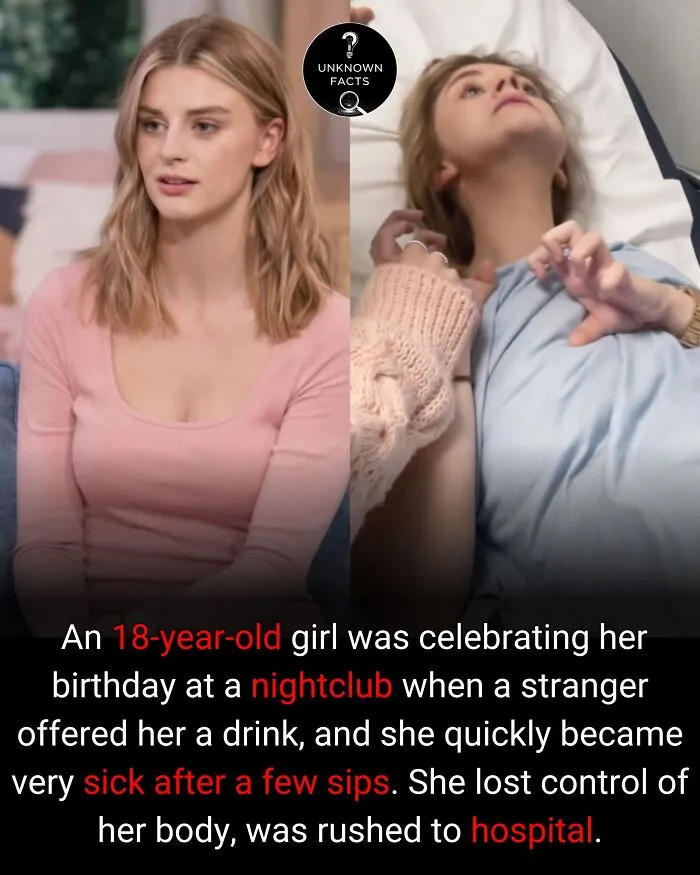
On Saturday, July 31, 2021, Millie Taplin from Southend-on-Sea, Essex, went out to celebrate her 18th birthday at the Moo Moo Clubrooms nightclub. During the night, a stranger approached her and offered her a drink, telling her to “try this.” She took a couple of sips but said the drink was very strong and did not taste right. Within just five to ten minutes, she began feeling extremely unwell.
Her condition quickly worsened. She experienced blurred vision, numbness in her hands, and lost control of her speech and movement. She later described the terrifying moment by saying, “In my head, I was there but in my body, I wasn’t.” She was rushed to the hospital’s emergency department for urgent treatment.
Doctors believed she may have been given a combination of substances that could paralyse and sedate her. Her mother, Claire, recorded her condition in hospital, showing her daughter unable to move properly, to warn others about the risks of drink spiking.
Essex Police later confirmed they were investigating the incident after receiving a report from the nightclub. Thankfully, Millie recovered after staying in hospital overnight. The incident became a strong warning about the importance of never accepting drinks from strangers and staying alert in public places.
Report
29points
#62
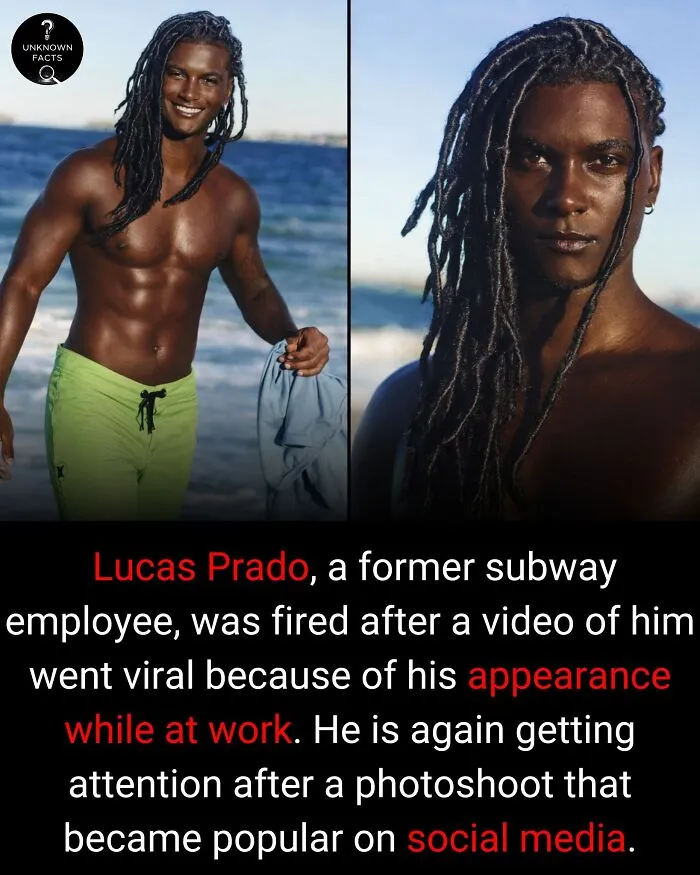
Lucas Prado, also known online as Hassami, worked as a security guard at the Santa Cruz metro station in the southern part of São Paulo, Brazil. He became unexpectedly famous after a video of him wearing his uniform went viral on social media. Many people noticed his appearance, and the video quickly spread across different platforms, gaining a lot of attention.
The viral video received nearly 600,000 likes on Instagram, showing how widely it was shared and appreciated by users. Because of this sudden popularity, Lucas’s life changed very quickly. However, he later confirmed on Instagram that he was dismissed from his job shortly after the video became a big online trend. He said that he was let go by the company soon after the viral moment.
After gaining attention online, Lucas took part in a professional photoshoot with photographer Ruan Walker. The photos were shared on social media and received positive responses from many people. His online fame continued to grow rapidly, and his Instagram following increased from about 130,000 followers to more than 400,000. His story shows how quickly social media can change a person’s life, bringing both opportunities and unexpected challenges in a short time.
Report
27points
#63
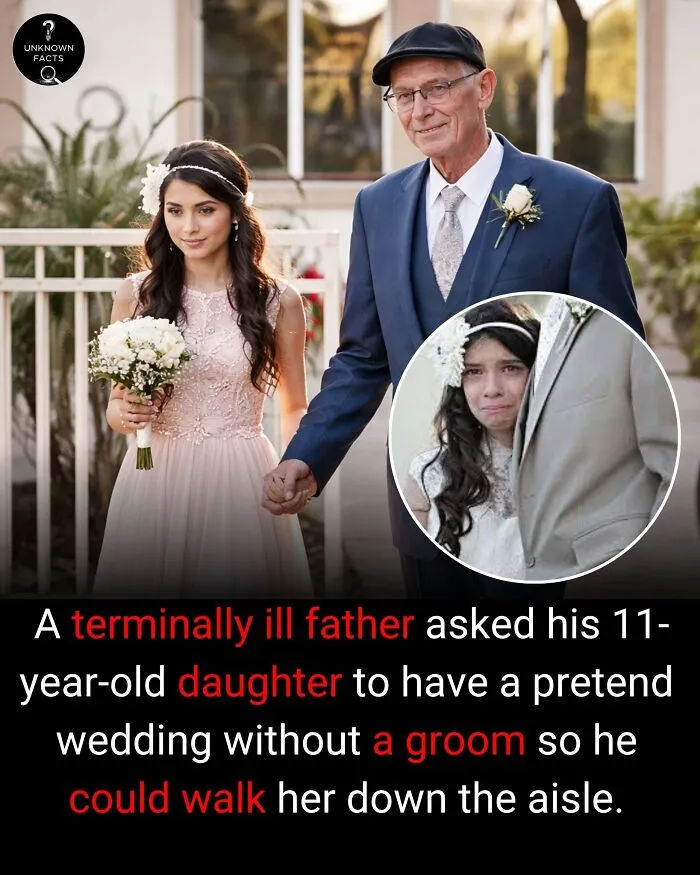
In March 2014, Jim Zetz, a 62-year-old father from California, was diagnosed with stage 4 pancreatic cancer. Doctors told him that he had very little time left. One of his biggest worries was that he would not live to see his 11-year-old daughter, Josie, grow up and get married.
A photographer had been hired to take a final family portrait. After hearing their story, she was deeply moved and decided to do something special for them. In just 72 hours, she secretly organized a surprise event that looked like a wedding.
She brought decorations in trucks and set up a full ceremony. A pastor was invited to lead the event. On the day of the surprise, Josie was brought in and saw a beautiful setup made just for her and her father.
The pastor spoke kind words and told Josie that even though her father would not be there for her real wedding one day, he was there to walk her down the aisle in this special moment. Jim and Josie shared a heartfelt father-daughter ceremony filled with love and emotion.
Jim passed away only a few weeks later, but this moment became a lasting memory for his family.
Report
26points
#64
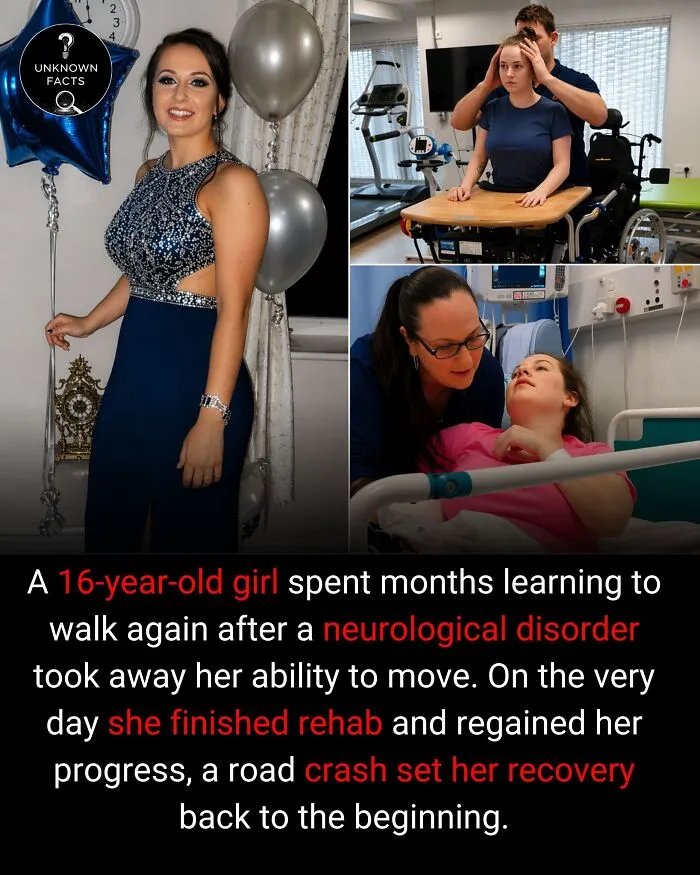
Jade Almond, a 16-year-old girl from Wigan, went through a life-changing and heartbreaking journey after a small injury changed everything for her.
It all began when Jade hit her head. After that, she was diagnosed with Functional Neurological Disorder, a condition that took away her ability to walk. She suddenly became unable to move properly, and her life changed overnight. Her family decided to send her for a special rehabilitation program to help her recover.
Jade spent seven long months in rehab, working hard every single day. It was not easy, but slowly she started to improve. After months of pain and effort, she finally achieved something amazing—she learned to walk again. On the day she was discharged, she was so happy that she even ran up and down the stairs, enjoying her new strength after nearly eight months of struggle.
But that joy did not last long. That very same night, tragedy struck. The car she was travelling in with her mother, sister, and friends was involved in a road crash on the M60. The accident caused serious setbacks and wiped out much of her recovery progress.
Jade described the moment as heartbreaking and unbelievable. Her family had to restart fundraising so she could go back for treatment. Despite everything, she returned to Sheffield and started her recovery journey again with courage and determination.
Report
26points
#65
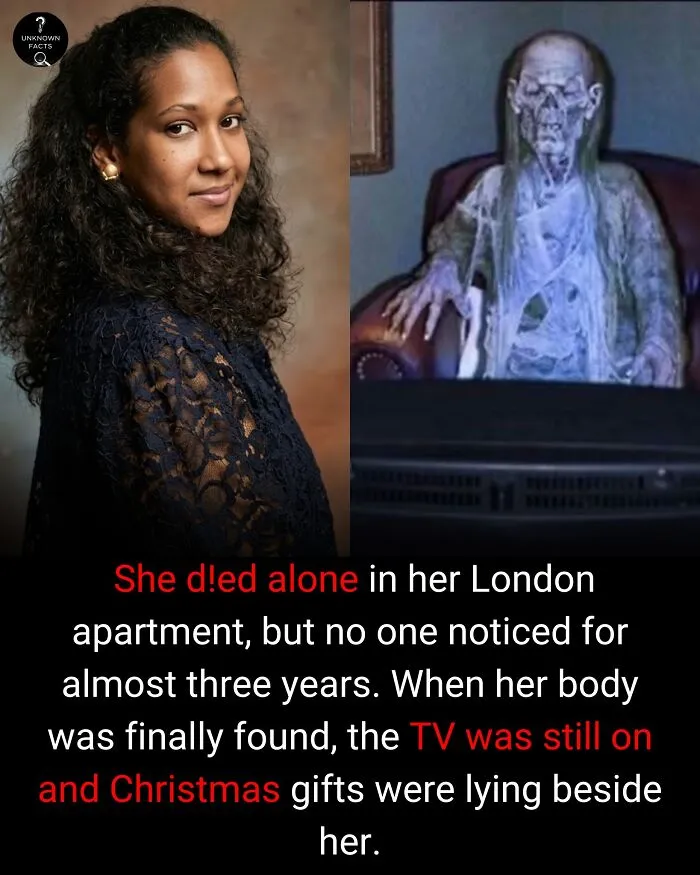
Joyce Carol Vincent was a 38-year-old woman who lived alone in a small apartment in Wood Green, North London. In December 2003, she is believed to have passed away inside her home, most likely due to a health problem such as asthma or another medical condition. Sadly, no one realized she had passed away at the time. Her body was not found until January 2006, almost three years later. Housing officials entered the apartment because rent had not been paid. Inside, they discovered her remains on the sofa in the living room. The television was still on, showing how life had continued quietly around her without anyone noticing what had happened. Near her were wrapped Christmas presents she had prepared before her demise. These gifts were likely meant for family or friends, making the scene even more heartbreaking. It showed that she had plans and care for others, even in her final days. Even though she lived in a busy building above shops, her d**th went unnoticed for years. Some neighbors remembered a strange smell but thought it was coming from outside bins or nearby waste areas. In earlier years, Joyce was known to be social and active, but over time she became more isolated and lost contact with people close to her. Her story later gained worldwide attention and inspired the documentary Dreams of a Life (2011). It raised awareness about loneliness in big cities and the importance of staying connected with others.
Report
25points
#66
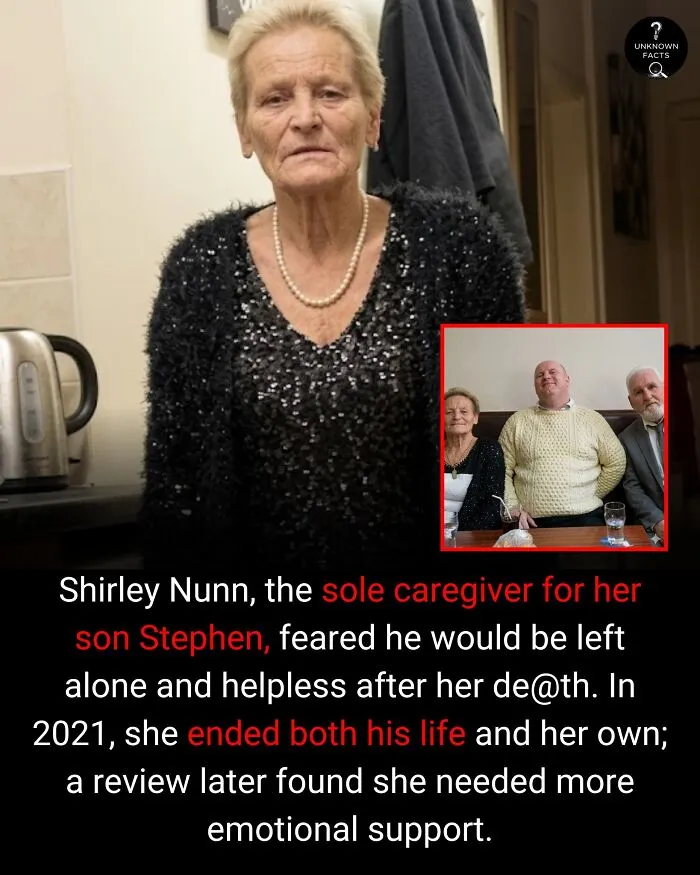
Shirley Nunn, 67, spent many years caring for her son Stephen, who was 50. Stephen had severe brain damage and serious disabilities after an accident when he was just 11 years old. Shirley was his main support, helping him every day with his needs.
In July 2021, Shirley was diagnosed with stage three cancer. Just one month later, doctors told her the illness was terminal. In October, she learned that the cancer had spread to her brain, spine, and pelvis. This made her situation even more difficult, both physically and emotionally.
On October 24, 2021, Shirley gave Stephen a fatal overdose of medication. She then took an overdose herself. Both of them were later found by a family member in Stephen’s bedroom in Middlesbrough.
After their demises, a review looked into what had happened. It found that more could have been done to support Shirley after her diagnosis. She had been facing serious illness while also caring for her son, which likely added to her stress and feelings of being overwhelmed.
This tragic case shows how important emotional and practical support can be for people who are dealing with serious illness while also caring for loved ones.
Report
25points
#67
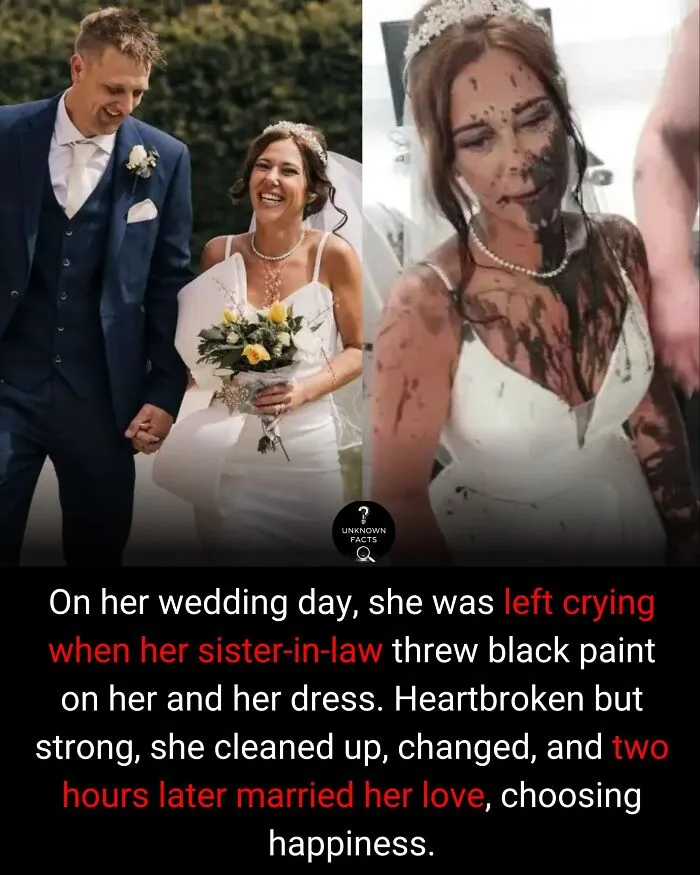
On May 24, 2024, Gemma Monk was getting ready to walk down the aisle at Oakwood House. It was meant to be the happiest day of her life. But suddenly, everything changed.
Her sister-in-law, Antonia Eastwood, threw black paint over her face, arm, and her expensive wedding dress. Gemma was left in shock and tears. The attack came from an old family argument and hurt her deeply, especially after she had already gone through a cancer scare.
For a moment, it felt like her wedding was ruined. But Gemma refused to give up. She washed herself, found another dress, and made a strong decision — she would still get married.
Two hours later, she walked down the aisle and married her childhood love, Ken Monk.
Later, Antonia admitted her crime and was punished by the court. Even though the day became one of Gemma’s worst memories, she showed great strength. What started as a painful moment turned into a story of courage, love, and not letting others destroy your happiness.
Report
24points
#68
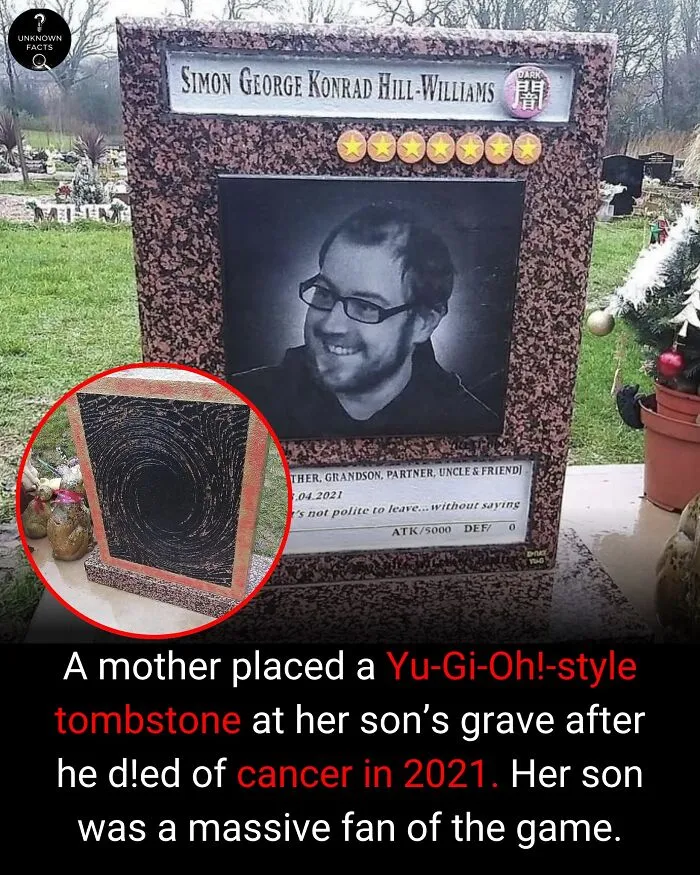
Simon George Konrad Hill-Williams was a 22-year-old from Cardiff who bravely fought cancer for a long time. Despite his illness, he stayed strong and held on to the things he loved most in life. One of his biggest passions was the Yu-Gi-Oh! game, which he had enjoyed since childhood. It was a big part of who he was.
Sadly, Simon passed away on April 18, 2021. His family, especially his mother Virginia, wanted to honor him in a special and meaningful way. They decided to design his headstone to reflect his love for the game.
His grave was made to look like a Yu-Gi-Oh! trading card. It showed high attack points, symbolizing how bravely he fought cancer. His defense points were set to zero, representing that he had no way to protect himself from the disease.
The unique headstone was installed on Christmas Eve in 2021. It cost around £4,000, but for his family, it was a way to celebrate his life and passion.
When people saw his story online, it touched many hearts and quickly spread across social media around the world.
Report
24points
#69
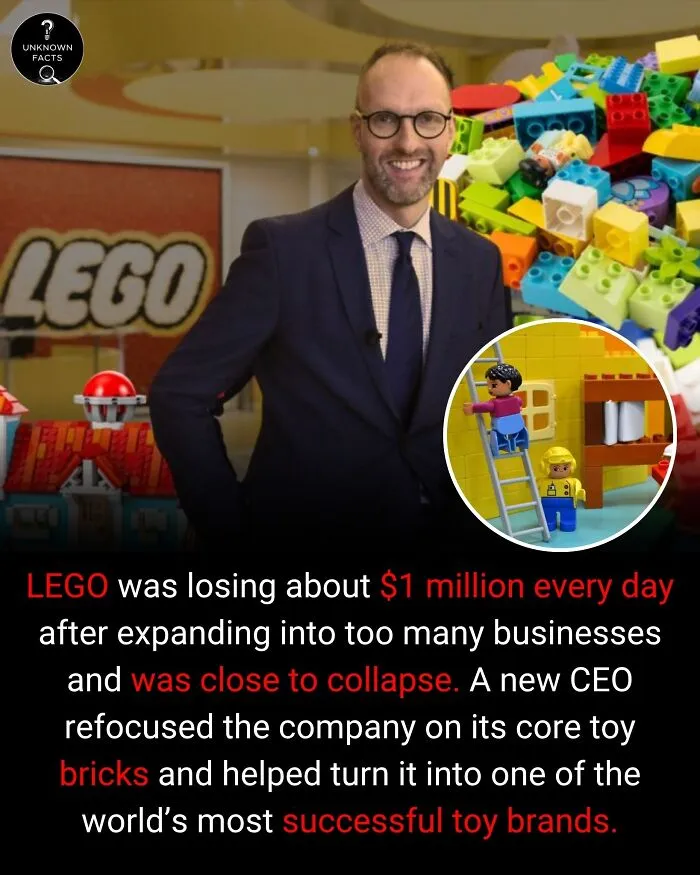
In 2004, LEGO was in serious trouble. The company was losing about $1 million every day. It had tried to grow into many areas like theme parks, clothing, and video games, but this made the business too complicated and expensive. The company was close to collapsing.
To save LEGO, a new CEO named Jørgen Vig Knudstorp was brought in. He was only 35 years old and had worked as a consultant before. Many people were unsure if he could fix such a big problem, but he quickly started making changes.
Instead of only sitting in meetings, he went around the company and talked directly to workers, engineers, and managers. He called this “managing at eye level,” which meant treating everyone equally and listening closely to them.
Then he made tough decisions. He cut costs and sold the four LEGOLAND theme parks for about $460 million. Most importantly, he brought the company back to its main product—LEGO bricks.
Slowly, the changes began to work. The company stopped losing money and started growing again. Over time, LEGO became one of the most successful and profitable toy companies in the world, turning a near failure into a major success story.
Report
23points
#70

A simple pinecone from your backyard can act as a natural humidity detector — and science fully backs this up.
Pinecones are built to protect and spread seeds. Their scales are made of two layers of plant tissue that react differently to water. When moisture or steam hits them — like during a hot shower — the outer layer absorbs water and swells, forcing the scales to close shut.
When the air dries out again, the outer layer shrinks back, and the scales open up again. No batteries. No technology. Just nature.
This is not a trick — it is a real biological process called hygroscopic movement. In the wild, pinecones use this same mechanism to time seed release perfectly. They open on warm, dry days so the wind can carry their seeds far and wide. They close on wet days so rain does not wash the seeds straight to the ground.
This is not a trick — it is a real biological process called hygroscopic movement. In the wild, pinecones use this same mechanism to time seed release perfectly. They open on warm, dry days so the wind can carry their seeds far and wide. They close on wet days so rain does not wash the seeds straight to the ground.
Scientists at the Royal Botanic Gardens, Kew confirm that pinecone scales are one of nature's most elegant examples of passive movement in plants, responding purely to humidity changes. BBC Science Focus and Scientific American have both highlighted pinecones as natural hygrometers — devices that measure humidity.
So next time you shower, watch your pinecone. It is reading the air for you.
Report
23points
#71

Barkhad Abdi was born in Mogadishu, Somalia, and later moved to the United States with his family. Life was not easy, and like many immigrants, he worked hard to support himself. Before acting, he had a simple job selling mobile phones at his brother’s shop in Minneapolis. He had no training in acting and never imagined being part of a Hollywood movie.
One day, everything changed when he was selected to act in the film Captain Phillips. It was a big movie with a large budget, and for Barkhad, it was a completely new experience. He worked hard on his role and gave a powerful performance that surprised audiences around the world. However, for all his effort, he was paid about $65,000. After filming ended, he returned to his normal life and went back to working at the phone shop.
Even though his life seemed unchanged at first, his talent did not go unnoticed. Barkhad went on to win the BAFTA Award for Best Supporting Actor. He was also nominated for major awards like the Academy Award, Golden Globe, and Screen Actors Guild Award. During the film’s promotion, he lived on a simple daily allowance provided by the studio.
His journey from a phone shop worker to an award-winning actor is truly inspiring and shows how life can change unexpectedly.
Report
18points
#72
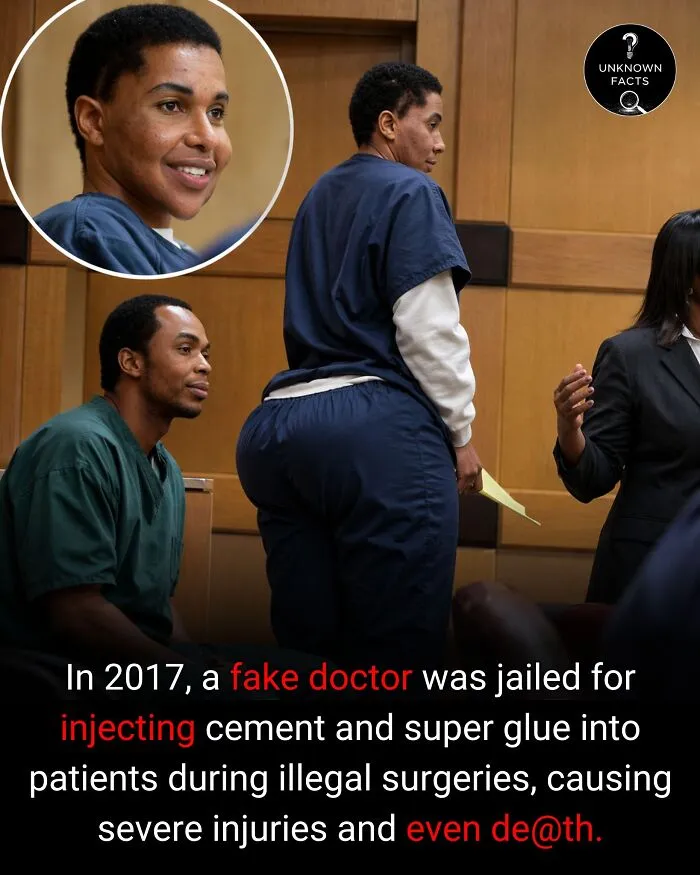
Oneal Ron Morris was a woman in Florida who pretended to be a cosmetic surgeon, even though she had no medical training. She offered cheap body enhancement procedures, mainly targeting people who trusted her and wanted quick results. Instead of using safe medical treatments, she injected a very harmful mix into her patients’ bodies. This mixture included things like cement, tire sealant, and mineral oil. After the injections, she even used super glue to close the wounds. Shockingly, she had also done the same procedure on herself. Many victims suffered serious health problems. Some had infections, hard and painful tissue, and permanent damage to their bodies. Their lives were deeply affected by what happened. In 2011, she was arrested for practicing medicine without a license. Later, the situation became even worse when one of her patients d**d due to complications from the procedure. In 2017, a court sentenced her to 10 years in prison for mans****hter and illegal medical practice. The case shocked many people and showed how risky it can be to trust untrained individuals for medical procedures.
Report
18points
#73
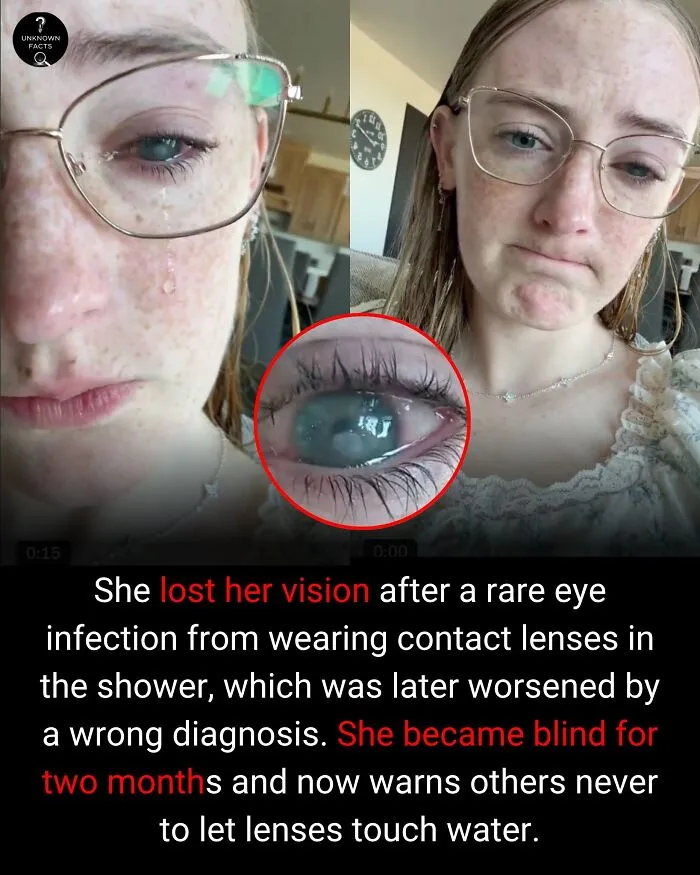
Grace Jamison, a 20-year-old woman from the United States, suffered a rare and serious eye infection called Acanthamoeba keratitis after wearing contact lenses while showering during a trip to the Dominican Republic. The tiny organism that caused the infection is found in water and can easily enter the eye when contact lenses are exposed to it.
After returning home, she visited an optometrist, but her condition was misdiagnosed. She was given steroid eye drops, which are sometimes used for other eye problems. However, in her case, the treatment made things worse because steroids can hide the symptoms of this infection and allow it to spread faster.
Within just one week after the wrong treatment, Grace lost her vision completely in both eyes. She remained blind for about two months until doctors finally identified the correct cause and started proper treatment.
Her recovery was slow and difficult, but she eventually regained some improvement with medical care. Grace has now shared her story publicly to warn others.
She strongly advises contact lens users never to shower, swim, or expose their lenses to any kind of water. Her experience highlights how dangerous improper lens hygiene and misdiagnosis can be for eye health and vision.
Report
17points
#74
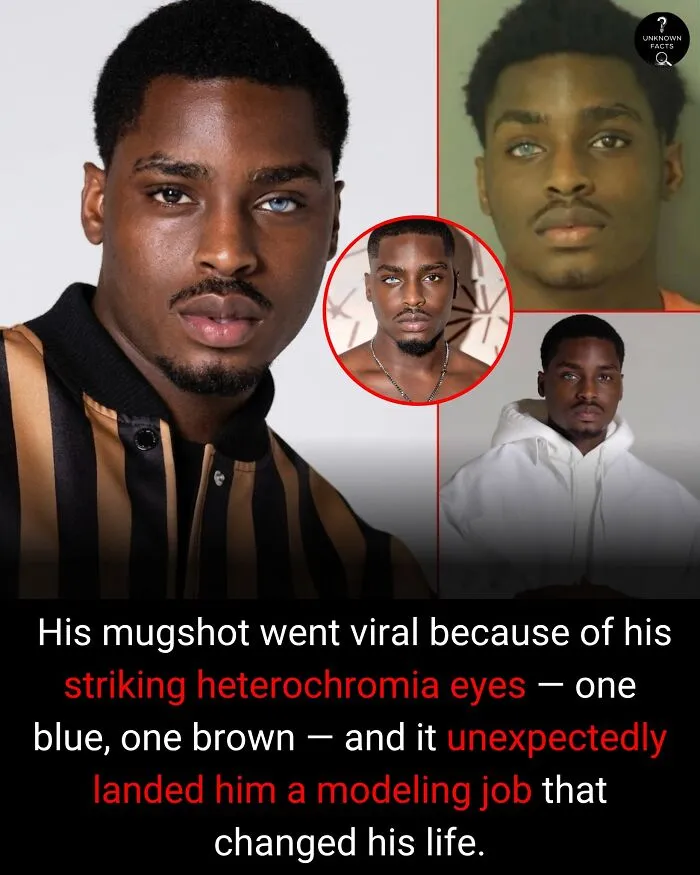
In April 2016, a 20-year-old man named Mekhi Alante Lucky was arrested for allegedly driving a stolen car and trying to escape from police. He also faced smaller charges like resisting an officer and interfering with emergency communication. At the time, it seemed like just another arrest case.
But something unexpected happened. When his mugshot was released, people online quickly noticed his unique appearance. Mekhi had one bright blue eye and one brown eye, a rare condition called heterochromia. His striking look caught the attention of thousands of people on social media.
Soon, the internet gave him a nickname — “Prison Bae.” His photo spread rapidly, and many people talked about how unusual and attractive his look was. What started as a negative situation slowly turned into a life-changing opportunity.
A modeling agency called St. Claire Modeling Agency noticed him online. The founder was impressed by his appearance and decided to reach out to him through social media. She believed his look was rare and special.
Mekhi accepted the opportunity, and his life began to change. From being in trouble with the law, he moved into the fashion world. Soon, he was booked to walk at New York Fashion Week, one of the biggest fashion events in the world.
His story shows how life can take an unexpected turn. A moment that seemed negative at first opened the door to a completely new future.
Report
16points
#75
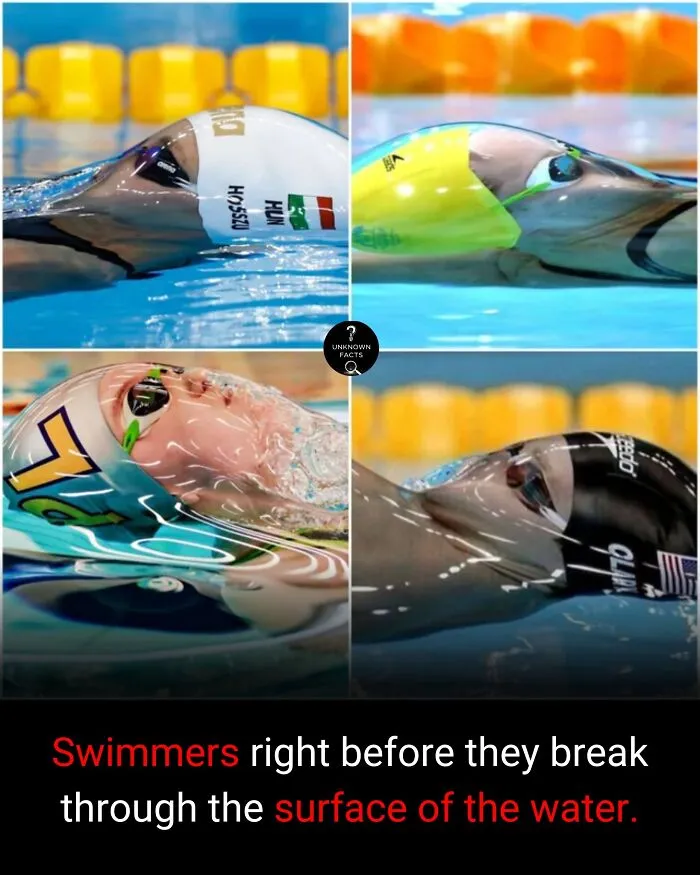
Water has a special “skin” on its surface caused by surface tension, which happens because water molecules pull tightly together. These photos show a swimmer just before breaking through that surface layer. In this moment, the water still holds together strongly, wrapping around the swimmer’s face like a thin, transparent film.
You can clearly see how the water stretches and clings to the goggles, swim cap, and skin. It almost looks like a soft sheet being pulled in different directions. The white curved lines in the image show where the water is under the most stress, just before it separates as the swimmer moves upward.
This effect happens extremely quickly—within a fraction of a second—so it can only be captured using high-speed photography. To the human eye, it usually looks like a smooth splash, but these images freeze that hidden moment in detail.
Surface tension is also the same force that allows small insects, like water striders, to walk on water without sinking. In these photos, however, the effect is shown on a much larger and more dramatic scale, with powerful athletes slicing through the water during motion.
Report
16points
#76

Zhazha is a popular esports commentator and host for Naraka: Bladepoint in China. She recently became part of a big online debate about clothing and professionalism in the gaming world.
The story began when Zhazha appeared at a Naraka: Bladepoint esports event wearing a short skirt. After this, some people online, including feminist voices, criticized her outfit. They said it promoted the “male gaze” and was not suitable for a professional stage. The discussion quickly grew bigger on social media and sparked arguments about fashion, freedom, and respect in esports.
Zhazha later decided to respond. She posted on social media and clearly explained that her outfits were not controlled by the organization. She said the clothing choices were completely her own and reflected her personal style and freedom.
A few days later, she appeared at another tournament wearing a fully covered black outfit from head to toe. This sudden change caught everyone’s attention. Many people saw it as a smart and slightly humorous response to her critics without using harsh words or arguments.
Her reaction quickly went viral online. Fans and viewers in China praised her confidence and calm attitude. Many said she handled the situation in a clever way, turning criticism into a powerful statement about personal choice and expression in esports.
Report
16points
#77
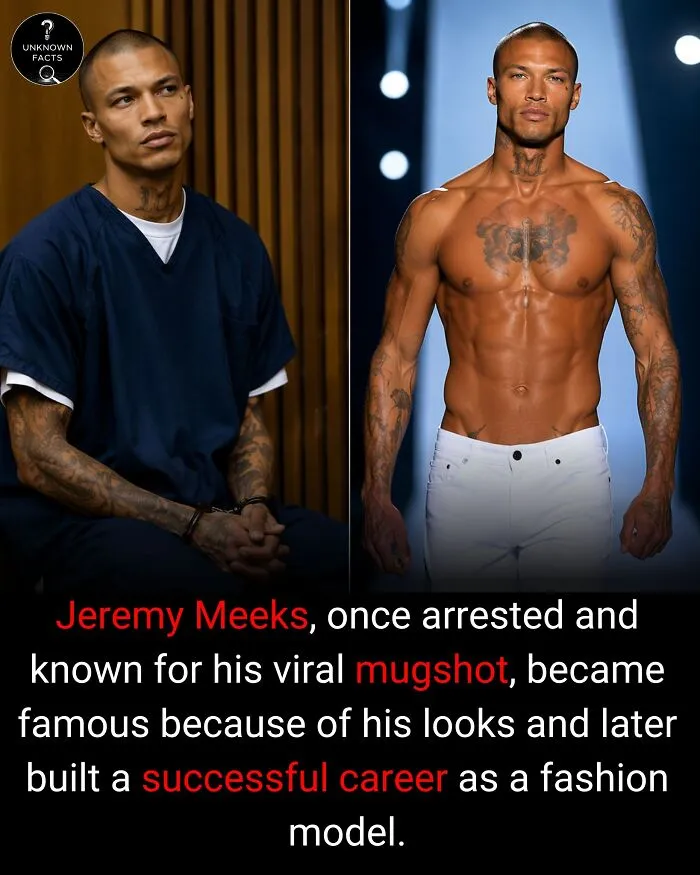
In June 2014, the Stockton Police Department shared mugshots of several arrested men on Facebook. One photo quickly stood out. It was of Jeremy Meeks. Within just 24 hours, his picture received thousands of likes and comments, mostly from people surprised by his striking looks. At that time, Meeks had been arrested on felony g*n charges during a g*ng operation called Operation Ceasefire. He was later sentenced to 27 months in prison. But something unusual happened while he was still behind bars. Because of the attention his photo received, he was offered a chance to sign with a modeling agency. After his release in March 2016, Meeks decided to change his life. He began working as a model and soon got big opportunities. He walked the runway for New York Fashion Week and worked with famous brands like Dolce & Gabbana and Tommy Hilfiger. Over time, he also acted in films and shared his life story in a book called Model Citizen. His journey showed how one moment can completely change a person’s life.
Report
16points
#78
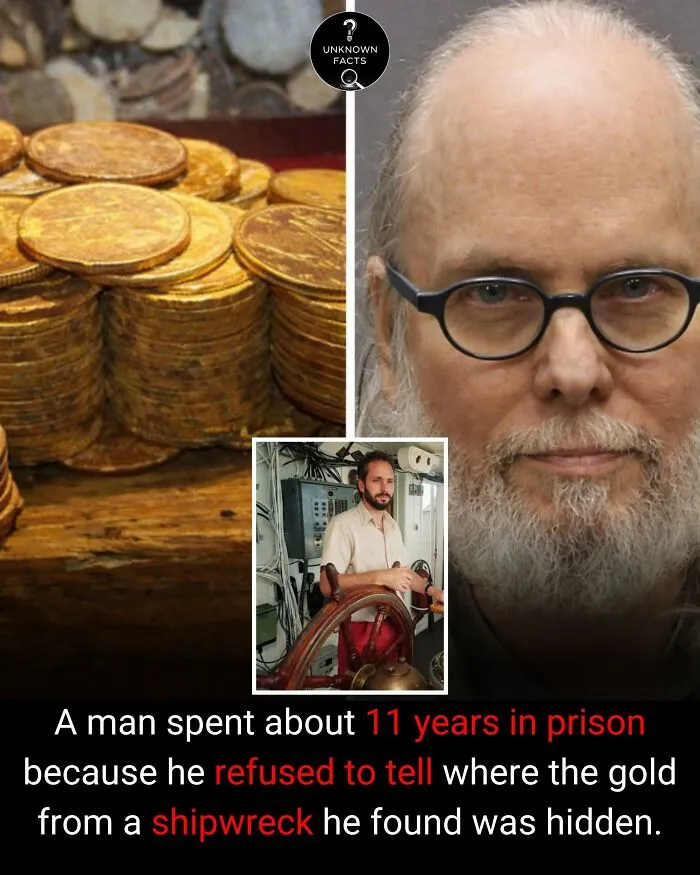
Tommy Thompson, a scientist from Ohio, became famous in 1988 after finding the shipwreck SS Central America. The ship sank in 1857 carrying a huge amount of gold from the California Gold Rush. It stayed at the bottom of the Atlantic Ocean for over 100 years.
Many investors helped fund the search. Later, in 2005, they sued Thompson, saying they did not receive their share of the money from the treasure, which was worth around $50 million.
Before a court hearing in 2012, Thompson disappeared and became a fugitive. He was found in a hotel in Florida in 2015. A judge sent him to prison because he refused to tell where about 500 missing gold coins were.
Thompson said the coins were placed in a trust in Belize and that most of the money was already used for loans and legal costs. He stayed in prison for about 10 years.
In March 2026, he was finally released, but the missing gold coins have still not been found.
Report
15points
#79
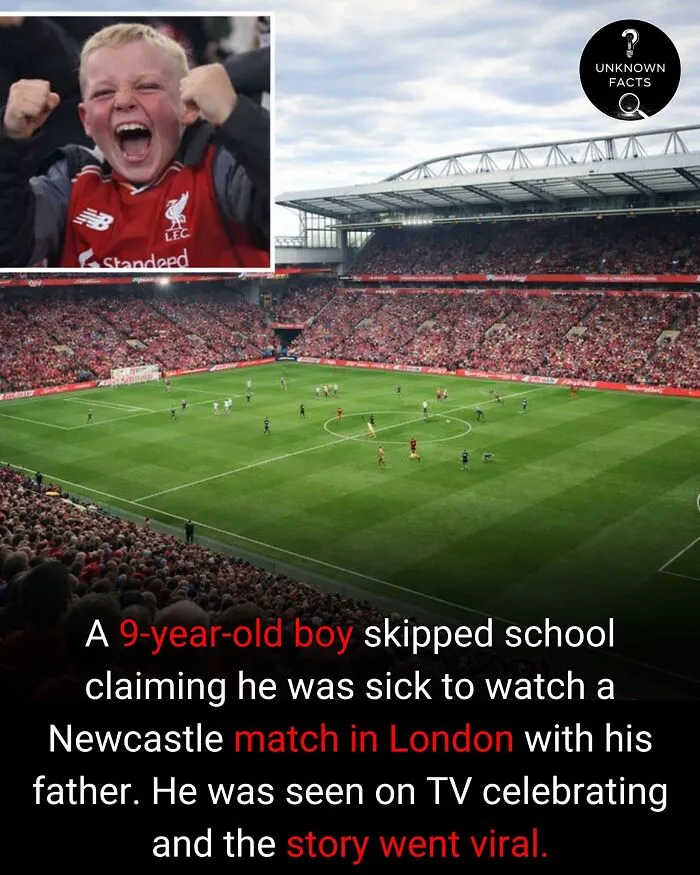
On January 7, 2025, a 9-year-old boy named Sammy Scott, a big fan of Newcastle United, went to London with his father to watch a football match at the Emirates Stadium against Arsenal. His mother had told the school he was sick so he could attend the game.
The match was very exciting, and Newcastle won 2–0. Sammy was seen on TV happily celebrating one of the goals. After the match, his father received many messages from friends who had spotted them on television.
A photo of Sammy was later used on Sky Sports News with the caption “Geordie Joy,” which made him even more well-known online. Because of this, his school found out he was at the match and marked his absence as unauthorised.
The story quickly spread on social media, and many people reacted with sympathy. Some even said it was a special memory for a young football fan. A former football player also said the boy should be given some understanding.
When Sammy returned to school, instead of being punished harshly, his teacher—who was also a Newcastle fan—lightly called him “Celebrity Sammy.”
Report
14points
#80
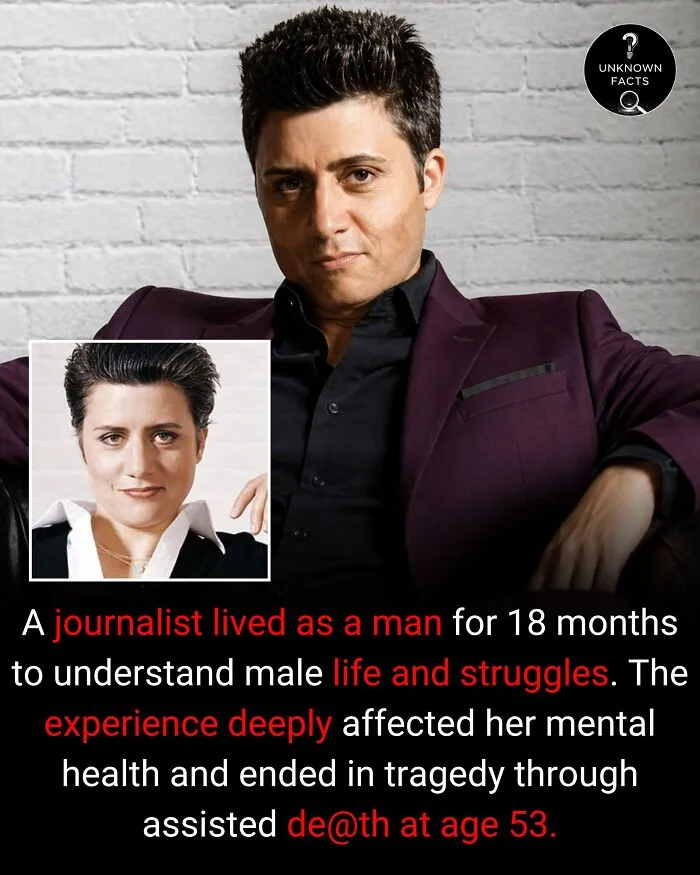
Norah Vincent was an American journalist who wanted to understand how men live and feel in society. To do this, she took on a very unusual project. For 18 months, she disguised herself as a man and called herself “Ned.”
She worked hard to look and act like a man. She trained her voice with a coach, bound her chest, built muscle, and even used makeup to create the look of stubble on her face. With this new identity, she entered spaces that were mostly for men.
As “Ned,” she joined bowling leagues, visited monasteries, and attended men’s group meetings. While living this life, she noticed something surprising. Many of her earlier beliefs about male privilege were not fully true. Instead, she saw that many men were also struggling in their own ways, especially with pressure, loneliness, and emotional stress.
After 18 months, she ended the experiment. But the experience had a serious effect on her mental health. She felt deeply disturbed and later suffered a severe depression. She was admitted to a hospital for treatment.
She later wrote about her experience in her 2008 book Voluntary Madness, where she also discussed mental illness and treatment systems.
In July 2022, Norah Vincent passed away in Switzerland through assisted demise at the age of 53. Her life and work remain widely discussed for the boldness of her experiment and the emotional cost it carried.
Report
13points
