



#2 Someone In My Friends List I Hardly Know Had Some Sort Of Mental Breakdown It Seems... Mind You She’s 29 Years Old

#3 After A Few Years Of Denial, He Finally Revealed That He Is Still A Flat-Earther

Facebook has been around for more than two decades, and it’s still the most popular social media platform in the world. According to the latest figures released by Meta, Facebook had over 3 billion monthly active users at the end of 2023, with more than 2 billion using it every day.
That’s equivalent to roughly a quarter of the global population logging on daily, so among all the lovely photos and interesting stories, we’re bound to come across some questionable opinions and the occasional embarrassing fail.



Over the years, Facebook and other social media platforms have fundamentally changed the way we communicate with one another.
We can keep up with family members who live far away and make friends with people we’ve never met in person. We can announce our relationship status or get into heated debates with complete strangers in the comments section. And we can top it all off by letting everyone know what we had for dinner, whether they asked or not.
Since posting about so many aspects of our lives has become such a normal part of our routine, it’s perhaps easier to lose sight of where the line between sharing and oversharing lies.


Part of the reason we share so much has to do with how good it makes us feel. In a 2012 study, researchers at Harvard University found that talking about ourselves activates areas of the brain associated with reward.
In one experiment, participants were offered different amounts of money to answer questions about either themselves or other people. Interestingly, they were willing to give up a portion of their potential earnings for the opportunity to talk about themselves.


Social media gives us the opportunity to take that enjoyment a step further. When we share something about ourselves, there’s a chance we’ll receive a positive response from others.
A study published in Nature Communications analyzed more than a million social media posts and found that the likes people received influenced how frequently they posted. That little bit of attention can encourage us to keep coming back for more.



Not to mention, many of us also feel more comfortable opening up online than we do in person. Psychologist John Suler refers to this phenomenon as the online disinhibition effect.
When we’re sitting behind a screen, we can’t immediately see other people’s facial expressions or pick up on their body language. Without those usual social cues, we might feel less self-conscious about saying something that we’d normally keep to ourselves.



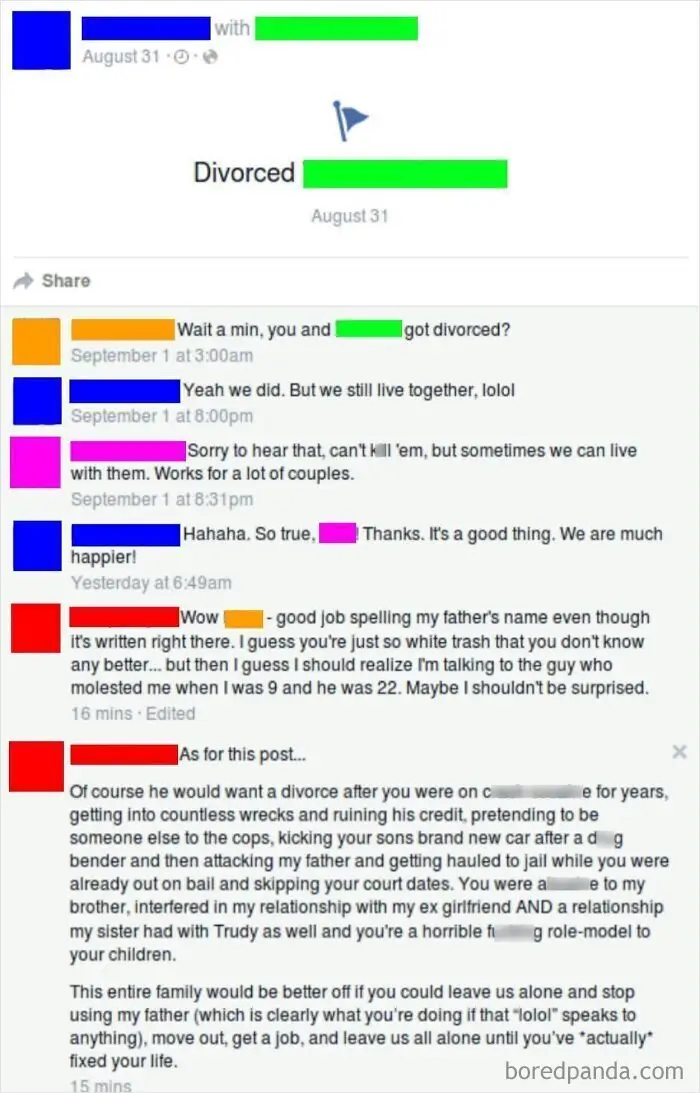
That can become particularly problematic when we’re feeling emotional. Imagine having an argument with your partner and immediately taking to Facebook to vent your frustrations.
A study examining Facebook users’ regrets found that being in a heightened emotional state was among the reasons people shared things they later wished they hadn’t. By the time they’ve calmed down and reconsidered what they’ve written, dozens of people might already have read it.