

This post may include affiliate links.
#3 Hm

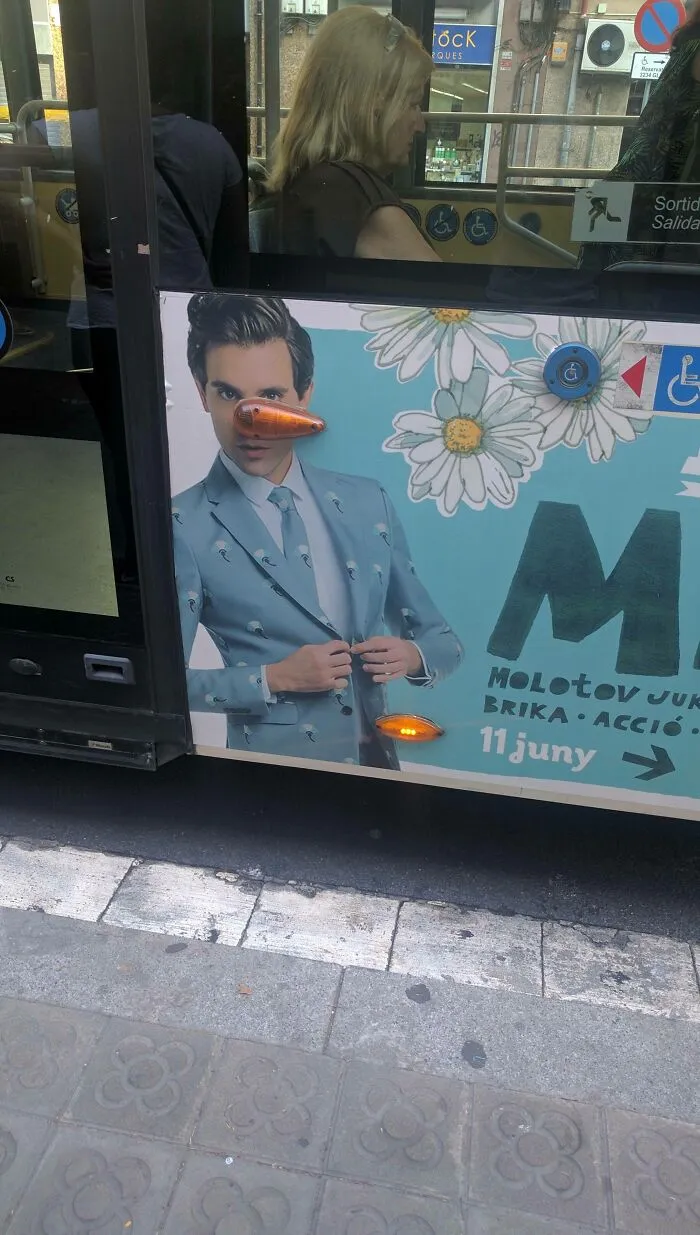
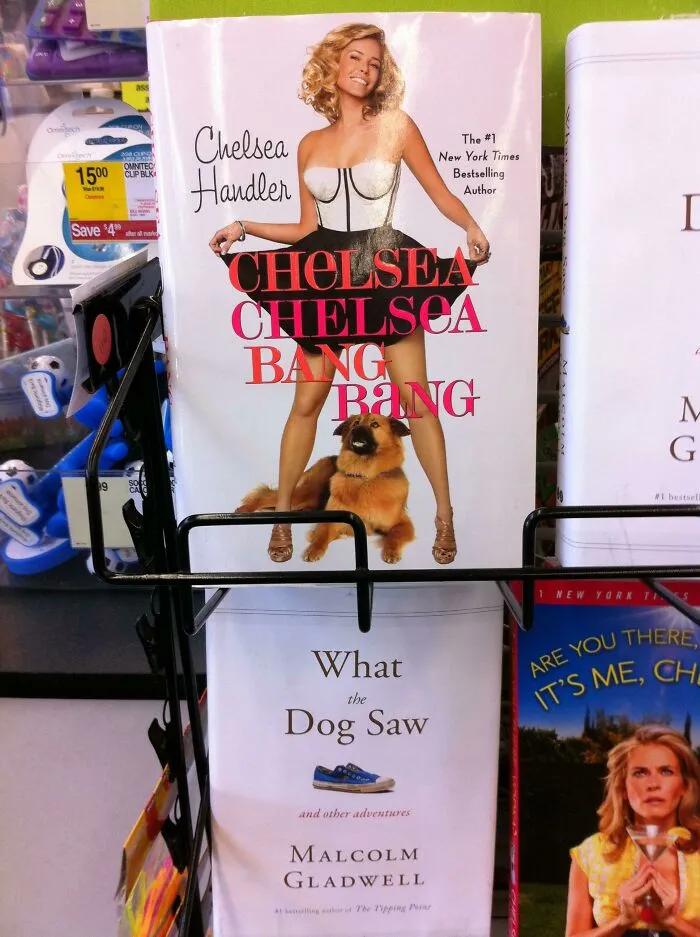
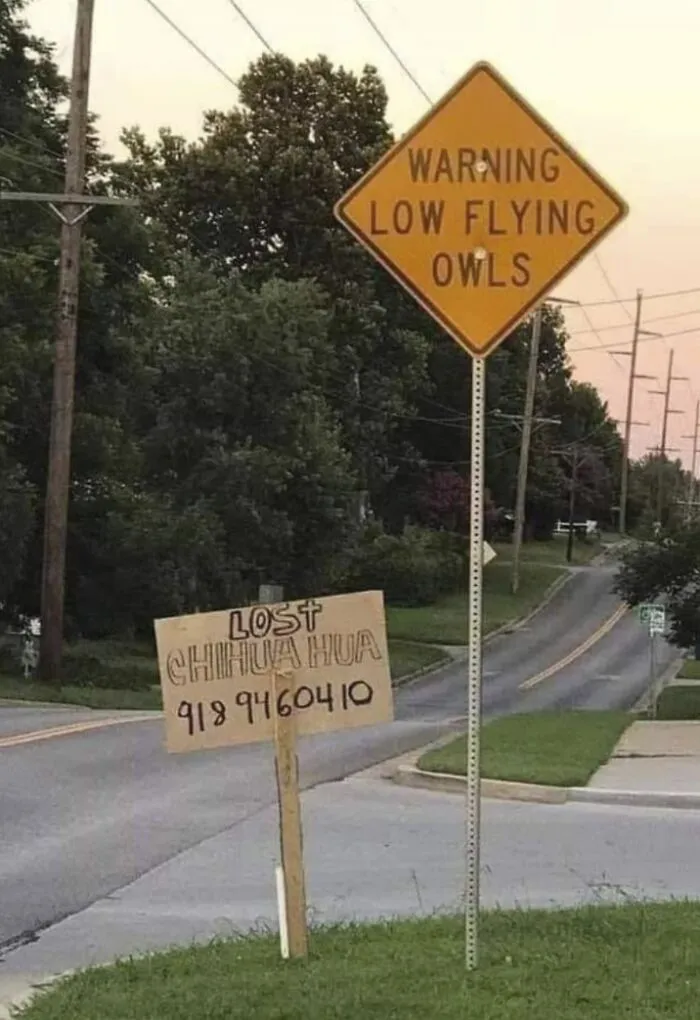
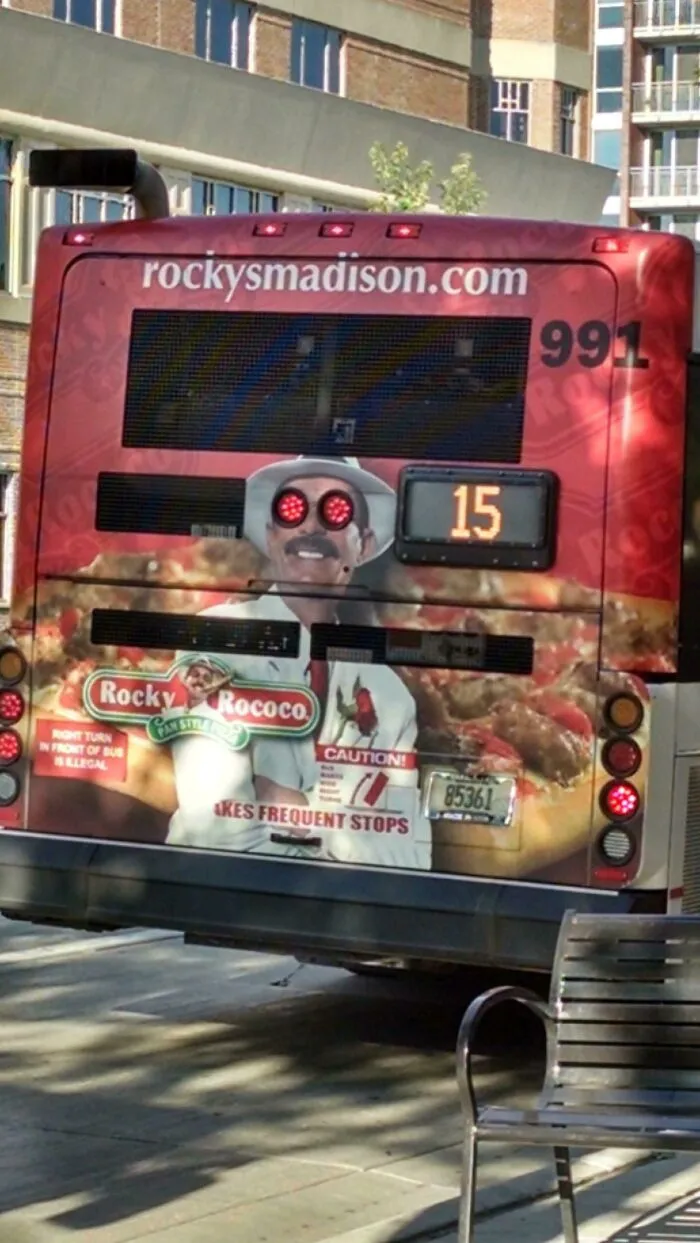
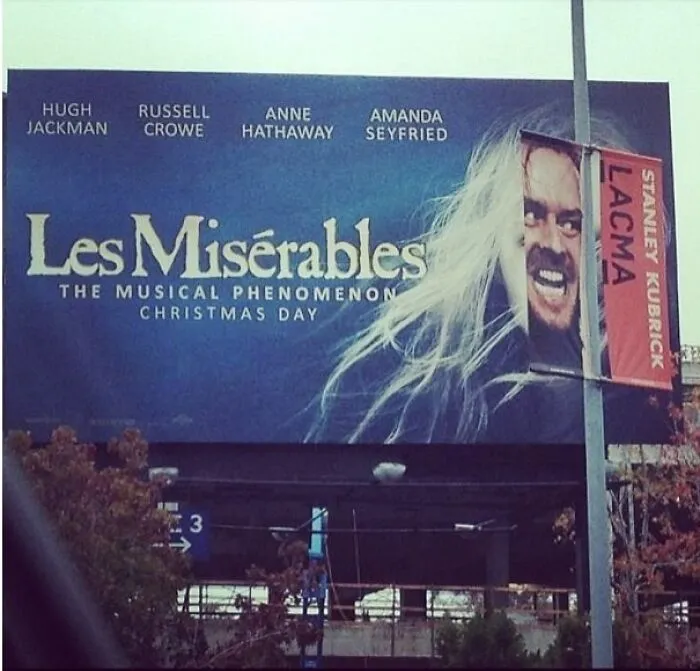
If you’re wondering why these awkward ad placements are so funny, science actually has a cool explanation for it.
In behavioral psychology, this comes down to something called the Benign Violation Theory, researched by experts A. Peter McGraw and Caleb Warren.
Their study shows that we laugh when something feels wrong, even though it is completely harmless.
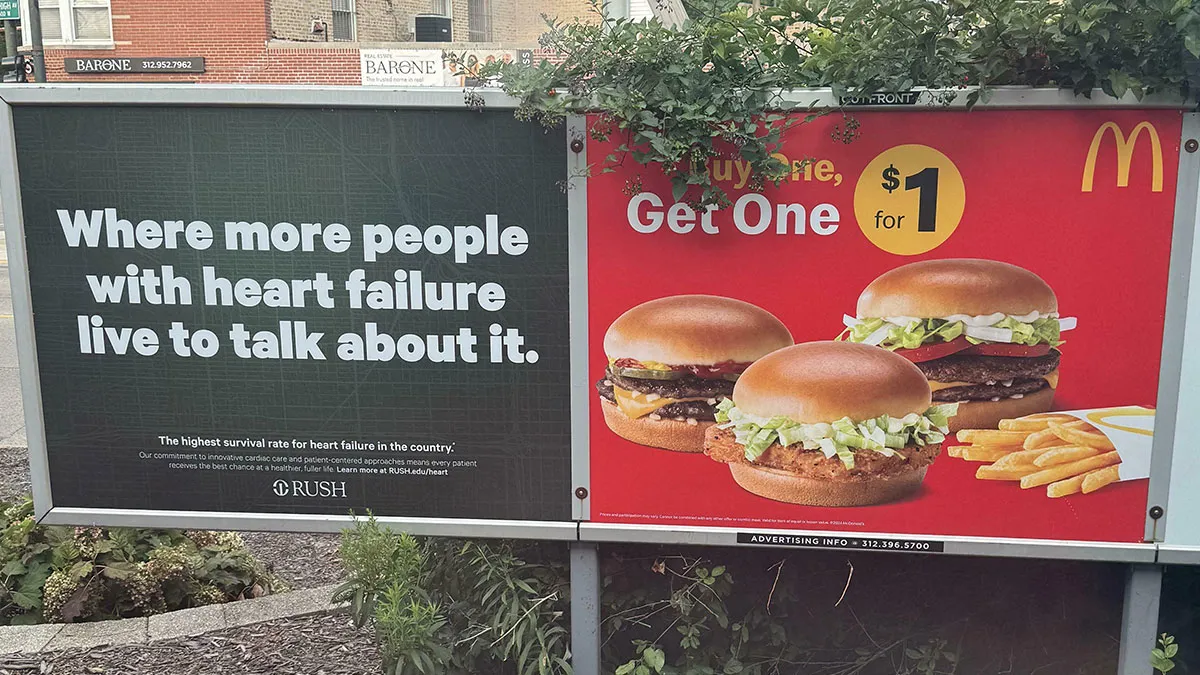
Normally, seeing a fast-food deal right next to a heart health warning feels like a huge mistake. But because no one is actually in danger, your mind relaxes. The sudden shock can then turn into a chuckle.
Dr. Peter McGraw co-authored a popular science book titled The Humor Code: A Global Search for What Makes Things Funny in which he explains how these exact moments of harmless chaos trigger our laughter.
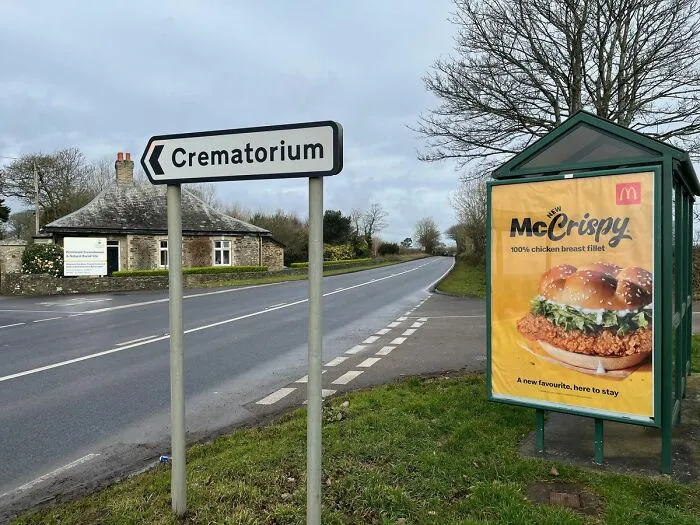
#4 McDonald's Agree To Take Down 'Mccrispy' Advertising Billboard That Was Erected Next To Sign For Local Crematorium

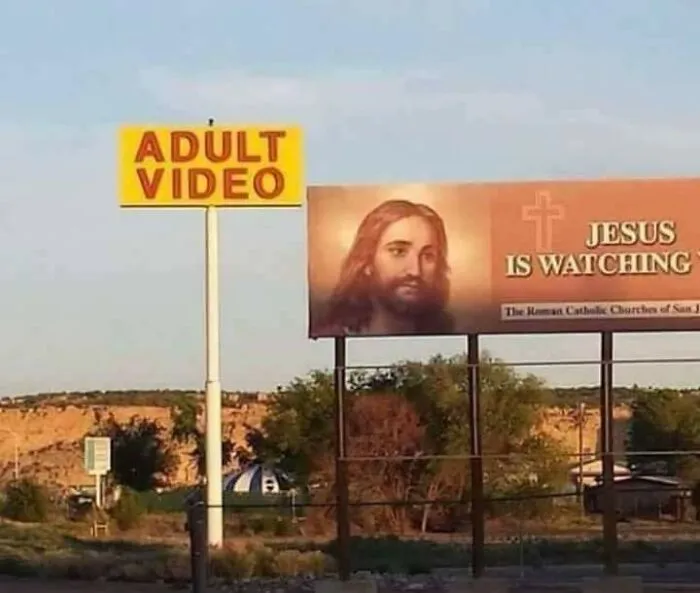
Another reason these images are funny is because of how our brains handle visual surprises.
Experts believe that laughter is a cognitive response to the perception of incongruity. It means when reality breaks our expectations, our brain turns that surprise into a laugh.
Our minds love patterns, so we expect a gym ad near a running track, not an escalator. When two opposite ideas clash in public, your brain snaps out of autopilot to figure out what happened. Once your mind realizes it’s just a silly accident, it rewards you with a moment of pure joy.
Carlo Valerio Bellieni, a professor of pediatrics at the University of Siena, explains it in different terms.
“We can strip back laughter to a three-step process. First, it needs a situation that seems odd and induces a sense of incongruity (bewilderment or panic). Second, the worry or stress the incongruous situation has provoked must be worked out and overcome (resolution). Third, the actual release of laughter acts as an all-clear siren to alert bystanders (relief) that they are safe.”
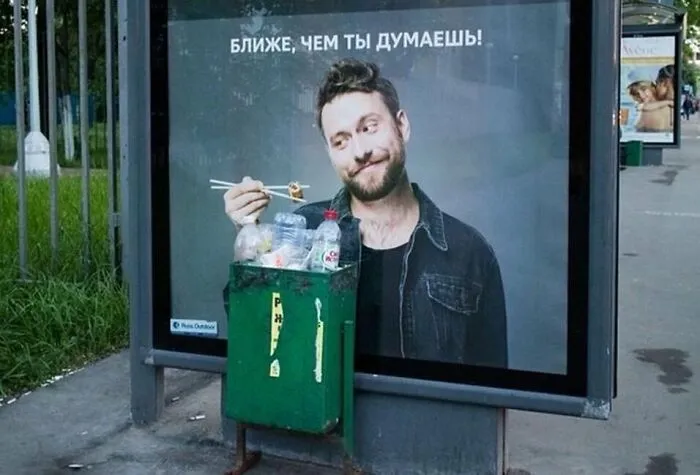
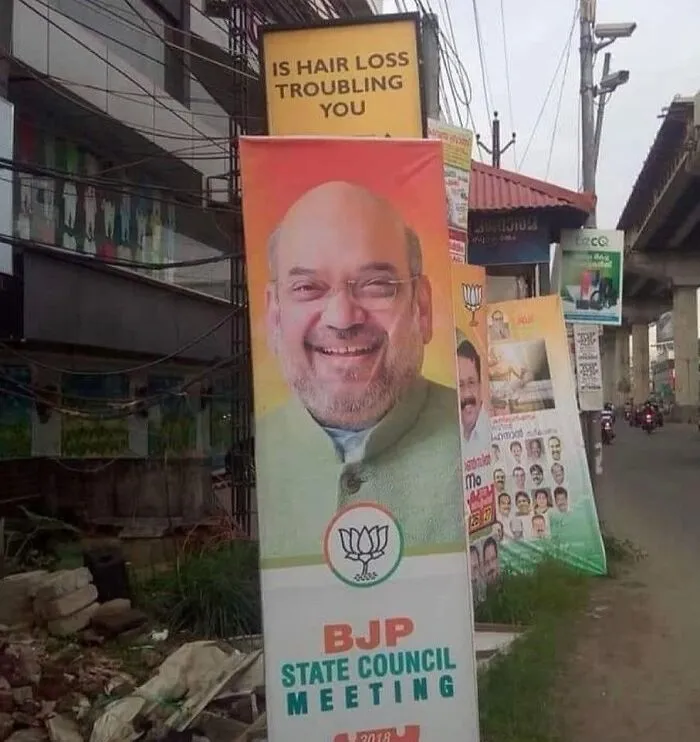

More often than not, brands try to incorporate humor intentionally.
For decades, advertising research has shown that making people laugh is one of the quickest ways to build a strong brand. A report by Oracle found that around 90% of consumers are much more likely to remember ads that use humor. About 72% said they would pick a funny company over the competition every single time.
Studies have found that when an ad makes you laugh, your brain drops its natural defenses against a sales pitch. The positive feeling from the joke instantly attaches itself to the brand, making you trust them more without even realizing it.

Despite these clear perks, funny ads actually hit an all-time low a few years back.
Industry data from the market research firm Kantar revealed that humor in marketing has declined significantly over the past two decades. Fewer than 10% of campaigns used comedy around 2022, as companies leaned heavily into serious, cause-driven messaging.
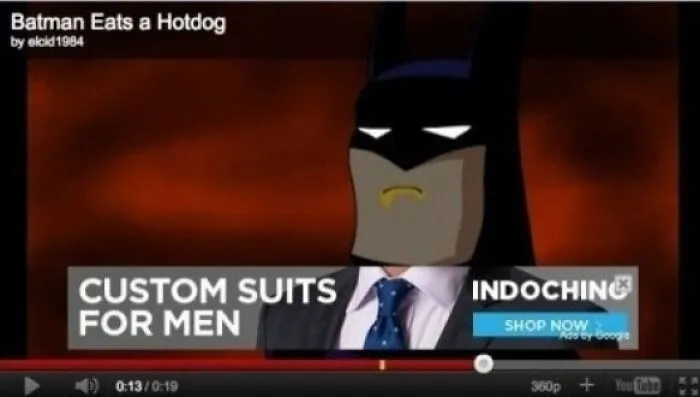
But the industry is currently seeing a gradual comedy comeback. The shift became official when the prestigious Cannes Lions International Festival of Creativity launched a brand-new “humor” award category in 2023, attracting nearly 800 entries from top global companies in its very first run.
The festival led to a sudden rise, and data shows that 75% of US or UK winners used humor in their campaigns in 2024, up from 52% in 2023.
“When Cannes adds a humor category, that merely adds credence to what creatives have suspected for years now — humor is one of the most effective ways to make a complicated point in a sharp, succinct way,” says Hayden Scott of Virtue Asia.
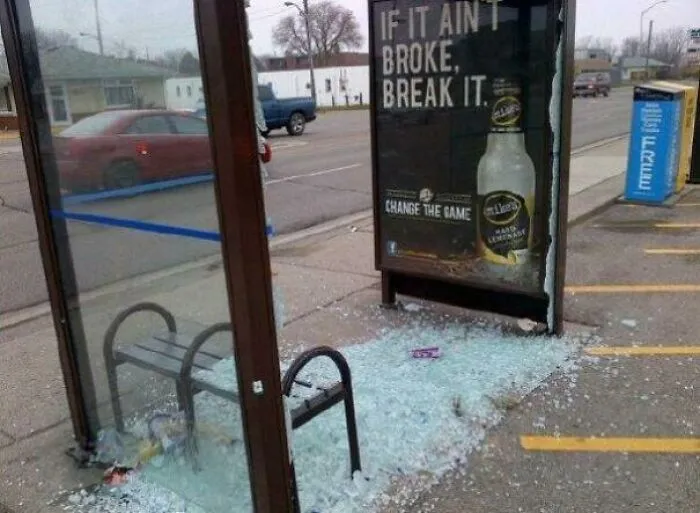

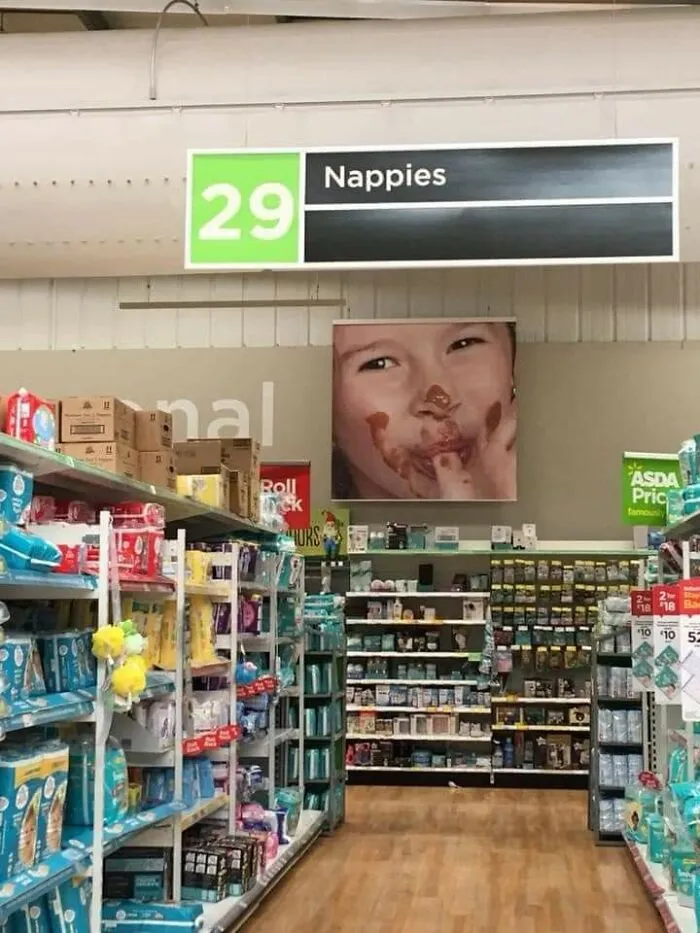
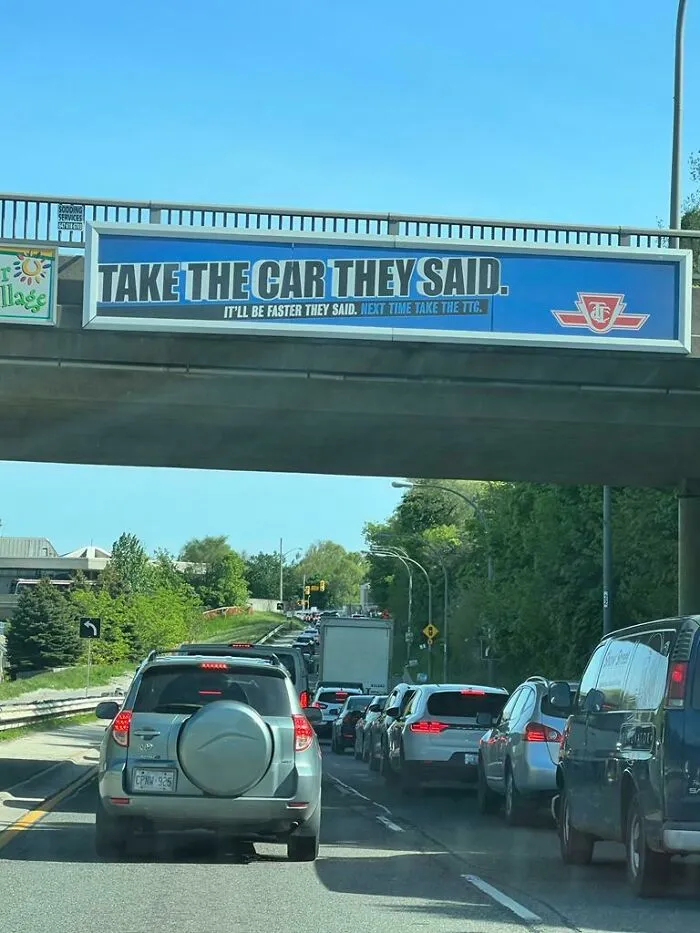
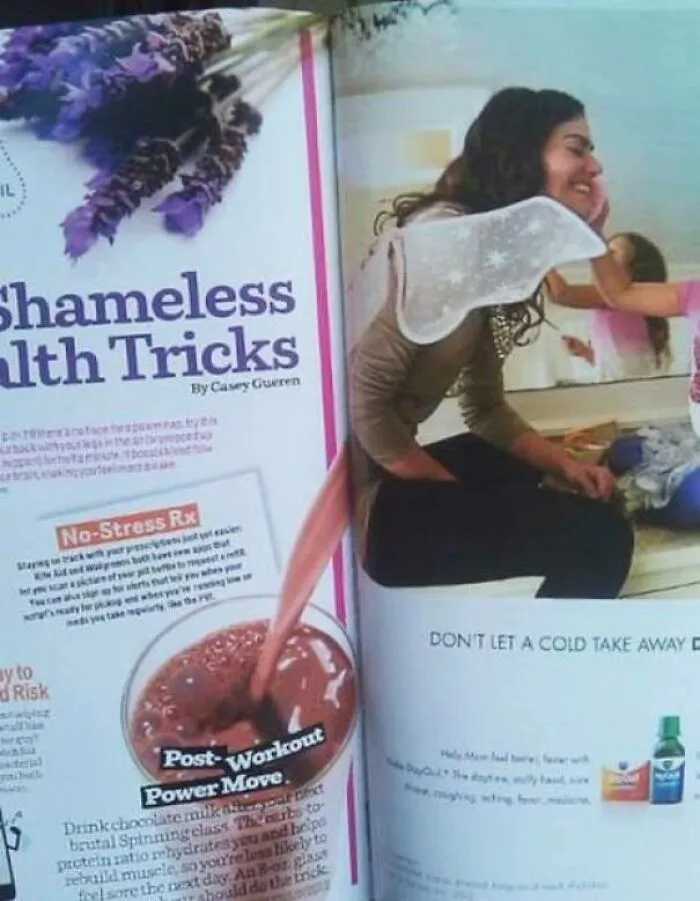
Sometimes, brands also choose to roll with the punch and leave their funny blunders out in the wild.
For example, a 2007 anti-smoking campaign in New Zealand accidentally encouraged kids to quit school instead. The mishap occurred because the school bus signs are fold-down flaps on regular buses, which accidentally obscured part of the ad's text.
Rather than panicking, the Health Sponsorship Council chose to let it run.
“It only runs another couple of weeks and we see the sense of humor in it. It wasn't what we intended it to be, but you've got to be able to laugh. It’s funny, not derogatory, we thought, so we decided to leave it,” the council’s spokesman, Iain Potter, had said at the time.