






This post may include affiliate links.
#1

My boss advised the client to transfer ownership of the site to a newly incorporated limited liability company with no assets. That way, when the government ordered the site to be remediated, the client wouldn't be liable for the clean-up.
I left not too long after that.
EDIT: I'm not based in the United States - yes, lawyers exist in other countries too.
#2

Basically, they had carpet installed in their house in 2005, paid in cash, got a receipt, and went on with their lives.
7 years later, they get a letter from some law firm saying the company they'd had install their carpet never received payment and would press charges if they didn't pay up. My dad, being a paranoid person, had kept the receipt and said he'd see them in court. He did some research, found out what the attorney can and can't do in this situation, and also found out that the attorney had been working with the flooring company for years, accusing paying customers of not paying and collecting excess money from them under threat of lawsuit.
Fast-forward to the court date. Dad shows up knowing his rights, with the receipt stating exactly how much he paid and when. Attorney has nothing except a copy of the invoice for my dad's payment that he leaves in his folder the whole time. Not only does the attorney break almost every rule of court possible, he completely slanders my dad. Calling him "sketchy looking" and "dishonest" even though the receipt is literally right there in front of him, insists that the receipt is fake despite having a copy of the invoice.
My dad lost that case. Before anyone had even left the courtroom, the attorney walked up to chat with the judge, who asked if they were still on for brunch tomorrow. Because it was a super small circuit, this dude had been able to buddy up to a judge to the extent he was allowed to do basically whatever he wanted and still win his cases.
A year later my parents sued the attorney for misconduct and requested an out-of-circuit judge, who essentially told that slimy schmuck to sit down and shut up when he tried to pull something against the rules. They won that case.
#3

It was a weird place to work. The cops very much viewed the defense lawyers and the legal process as their enemy. I’m sure there were a lot of unjust outcomes as a result.
If you've ever read about a major lawsuit in the news or come across a high-profile legal case in a book, you probably know how complicated things can get. From serious allegations to lengthy court proceedings and huge financial settlements, a lot is often at stake for everyone involved. But while we hear about the big cases, we don't always understand how the legal process actually works. So, since today's collection revolves around lawsuits, let's take a closer look at what they involve.
#4

I once represented a guy who was charged with stealing dog food. He was homeless and trying to feed his dog. Needless to say, I was sympathetic, so I was willing to pull something of a dirty trick for him.
I queued him up for trial. As soon as the first witness was sworn in, I moved to dismiss. The entity he was charged with stealing from? “Wal Mart.” That is not a legal entity. I think the real name was Wal-Mart Stores, Inc. or something.
Case immediately dismissed. Since a witness had been sworn in, double jeopardy prevented them from trying him again.
#5

#6

For starters, the American legal system generally distinguishes between civil and criminal cases. Criminal cases involve the government prosecuting someone accused of breaking the law, while civil lawsuits usually deal with disputes between individuals, businesses, or other parties. According to the United States Courts, a civil lawsuit typically begins when someone, known as the plaintiff, files a complaint against another party, called the defendant.
And what's the goal? Well, unlike criminal cases, which can result in imprisonment, civil lawsuits generally aim to resolve disputes or compensate someone for harm they've suffered. A successful case might result in financial compensation or a court order requiring someone to do or stop doing something. Interestingly, many lawsuits never even make it to trial because the parties reach an agreement outside the courtroom.
#7
It was a fine line to walk to do that and not piss off the judge though lol.
#8

Some lawyers tried to use ChatGPT to write their brief.
The language model hallucinated and invented court cases and references. They filed it anyway.
Opposing party candidly asked the judge:
"We don’t seem to be able to find the mentioned cases in any of the legal databases. Could they please provide sources?"
Judge frowned.
Lawyers sweated, tried to play dumb and asked for time while they used again ChatGPT to write the fake cases.
Judge was not amused.
They got only fined and humiliated.
#9
Now, there are plenty of reasons someone might file a lawsuit. Think about car accidents, medical negligence, or a business failing to honor a contract. Workplace disputes involving discrimination or wrongful termination, along with defamation cases where someone's reputation has allegedly been damaged by false statements, are another common area. And that's just the beginning! Legal disputes can also involve stolen creative work, copyright infringement, property disagreements, divorce, or child custody. So, while we often associate lawsuits with huge companies or wealthy celebrities, ordinary people can find themselves involved in legal battles, too.
#10

#11

He took on a client that was injured at work. Since the attorney normally does defense work, the doctor came back saying the injury was clearly not work related. The attorney called the doctor to inform him that he represented the employee and not the employer in this case. The doctor then wrote a report that the injury was clearly work related.
One afternoon the attorney's assistant ran into my room and said I need to go the courthouse right now to defend the attorney in a traffic case. Attorney told me he had no run-ins with law enforcement before, had never been ticketed before, and would just like to get supervision. I go in front of the judge and present this information and I get him supervision. I go back to the office and curiosity got the best of me. I searched his criminal record. Yeah, turns out he had another outstanding speeding ticket and you could see his mugshot for domestic violence.
Oh, and he tried to fine me $5,000 for going to a doctor's appointment on my lunch break. Yup at that point I literally walked out.
#12

And just to give you an idea of how widespread litigation is in the United States, a 2022 article by Munich Re cited an estimate of approximately 40 million lawsuits filed across the country each year. The article also reported that large American companies spent around $22.8 billion on litigation in 2020, citing Statista. That's quite a lot of money going toward legal disputes!
#13
#14

I defeated the tickets but only after the contentious hearing where the hearing office asked me why I thought it was ok to park wherever I wanted despite the signs. I said the signs don’t matter if they’re not legal and he said enforcement (meter maids) go by the signs, not the map. I asked if I could just put up signs wherever I wanted to not have people park and they would enforce it? He didn’t have answer for that one…
It really bothered me that the school made a big deal about getting a dispensation on parking time during exams, because the exams were an hour longer than you could park.
#15

But here's where things get particularly interesting. Some lawsuits result in extraordinarily large payouts, sometimes referred to as nuclear verdicts. These are jury awards worth $10 million or more. According to a 2022 report by the U.S. Chamber of Commerce Institute for Legal Reform, the median nuclear verdict increased from $19.3 million in 2010 to $24.6 million in 2019. That's a rise of 27.5% over the period studied.
#16
Not sure if that's a "loophole," but it's one of the funnier and more harmless get-out-of-jail-free cards I've seen.
#17

The opposing lawyer was even more of a jerk than this guy. He had to find a crack in his armor. So upon the opposing lawyer opening his briefcase, lawyer #1 notices it was full of shoe shine stuff. The guy is obsessed with his shoes.
Before the trial, lawyer #1 greets the opposing lawyer, and while shaking hands,he "accidentally " stepped on his foot.
Shrink said he never had to try so hard not to erupt in laughter in court.
Opposing lawyer was so flustered because the trial had started,and he couldn't shine his shoes, that he lost the case.
Lawyer #1's son is my current attorney.
#18
But a man who was a customer for the construction company I worked for at the time was a real piece of work.
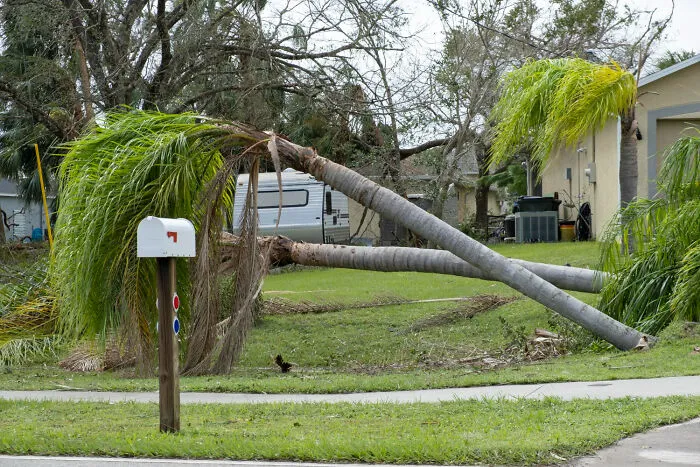
What hurricane sandy hit, I tree fell over and hit into his sons room and made a hole in the ceiling. He then decided for the family to take a vacation after the storm and to let the hole and tree be...for a bit more than a month. This way there was massive amounts of water damage and the houses got to be labeled as unlivable.
He did this so that not only could he collect massive amounts of money from the insurance and from the government, but to also turn around and sue them for much more money. He got all that money. He had his old house torn down and hired my company to build his brand new state of the art mansion that he planned.
What the company didn't know is that this guy was a serial lawsuit filer. He sues everyone all the time. He had a decent paying job but he makes the bulk of his money more from lawsuits it seems. He sued the bank once for a misfiling and somehow got tons of money from that. He then turned around and sued the lawyer he had for that bank case for not getting him as much money as he wanted. He won that one too somehow.
the project ended up being a nightmare, he had two people who were not licensed architects writing up his blueprints and getting them stamped by a sloppy licensed architect that didn't review the blue prints (prob so he could sue later. and when I say sloppy, the head of my company had to point out how the roof was sticking into the body of the garage and how the steps didn't match up and make it to the different floors, ect. and then give it back to the customer to have them redo it all (multiple times)). Customer also would not contact the plumber in time to do the work on the days needed to there were many wasted days, customer would not pay any of the bills on time when they were due, and we then found out later that they were taking doctored pictures the whole time of the property when company was not one the scene at the time and calling the town for trash complaints (complaining about wood, pipes, metal, and other materials sitting in back of property and on sides, not real trash) on his own plot of land during construction so that he could sue us later on.
As the job was starting to finish up, it was about 6 months behind schedule due to all these problems and more that were outside of our control. The head of the company I was with was going to a European country for a wedding of their nephew and that was prefaced and known before the project was accepted. When they left for said wedding, customer tried to directly contract one of the subcontractors to take over and do the whole project (illegal and written as forbidden to even talk prices of anything in contract with subcontractor), and put into motion the whole bologna lawsuit against our company.
Unfortunately the company I was with came back to pure hell and arguments and then pulled out of the project and planned to sue the customer when he refused to pay his next installment and the installment that had been overdue by a month. Left the house in a terrible limbo for a while since no one else could work with the licensed new material my company was using on his home. On top of that, the lawyer that our company hired to sue the customer went AWOL and they had to find a new lawyer that did nothing for months. So instead they got paper work in the mail telling them that the customer was suing them for breaking contract (not true and the other way around). This lead to the new business partner screwing over the Head of the company and stealing money from the joint accounts as they ran away. Ultimately leading to the head of the construction company closing down their business/HOC's life work, from all the lost money.
They never got to counter sue to customer and the customer had to drop the case because they really didn't have anything. In the end though, they got to have half of their new mansion built for 1/16 of the price before getting someone new to finish it up and they screwed an honest company out of business.
TLDR: Fraudulent customer is a serial lawsuiter and forces head of company to lose nearly everything.
Of course, a large payout doesn't automatically mean someone has done anything dishonest. Some cases involve devastating injuries, serious negligence, or enormous financial losses. And when the cost of living and medical treatment increases, the amount needed to compensate someone for their losses can increase, too.
Maura Haynes, then head of casualty at Munich Re US, discussed this in the company's article. She explained how rising medical expenses and inflation could influence the compensation juries consider appropriate. At the same time, larger verdicts can create financial challenges for businesses and insurance companies.
#19

Case gets to trial and the prosecutor puts on a pretty straightforward case. people from the jail and ankle monitor company and arresting cops testify. Then the defense moves to dismiss. Prosecution has failed to prove escape.
There was actually a different law called unlawful evasion that applied to escaping off furlough program. this was extra confusing because escape is the correct charge for cutting an ankle monitor if you are serving your sentence on ankle monitor. Which you can do sometimes. But if you start in jail and get out on an ankle monitor as part of a furlough program then the crime is unlawful evasion.
Prosecutor was furious. Because the defense could have dismissed the case at any point. Arraignment up to trial. But he never said anything. So the guy sat in jail for months awaiting trial on a charge he could get dismissed. Judge ordered the case dismissed.
There was some small debate about whether he could be retried or not, because did double jeopardy attach if he was never actually charged with the right crime? But the DA wasn’t going to highlight the embarrassment and just let it go. A crime (and slam dunk case) with a 6+ year sentence dismissed for a few months in jail.
#20

A salon was raided in connection to a suspected human trafficking ring. The tip turned out to be good, multiple people were arrested, and several victims were taken into custody.
Among them was a 4 year old boy. None of the victims knew him, "he helped clean the salon." Traffickers wouldn't fess up as to where he came from. The kid didn't know his own name, where he was from, where his parents were, or where they were. When the judge asked the kid for his name, he replied "Spiderman!" When they asked for his real name, he told them "Peter Parker!" Yeah, you get the idea.... anyway, prosecution wanted him gone because he was in the US illegally. Not sure where prosecution thought he'd get sent, but whatever.
Now here's a neat thing.... there's a federal statute on refugee eligibility. This particular statute hadn't been cited in over 60 years, but for all intents and purposes was still good law. The statute on question basically says, "if a victim of human trafficking is an unaccompanied minor is under X age and does not know their country of origin, they are to be granted asylum immediately, no court discretion." Now I have to emphasize, this law hadn't been used in literal DECADES, and was effectively forgotten by courts and legislature as a past relic that somehow slipped through immigration reforms over the years. But it was still valid.
My professor intended to cite this statute. The prosecutor was terrified of creating new case law, and offered to drop charges if this statute wouldn't get brought up. Professor agreed, bc client's interests.
In a strange twist of fate, the prosecutor passed away, and the newly assigned prosecutor said he would not honor any preexisting deals. Prof is like, "fine, let's make some case law!" New prosecutor panics and asks to go back to the original deal, which is accepted.