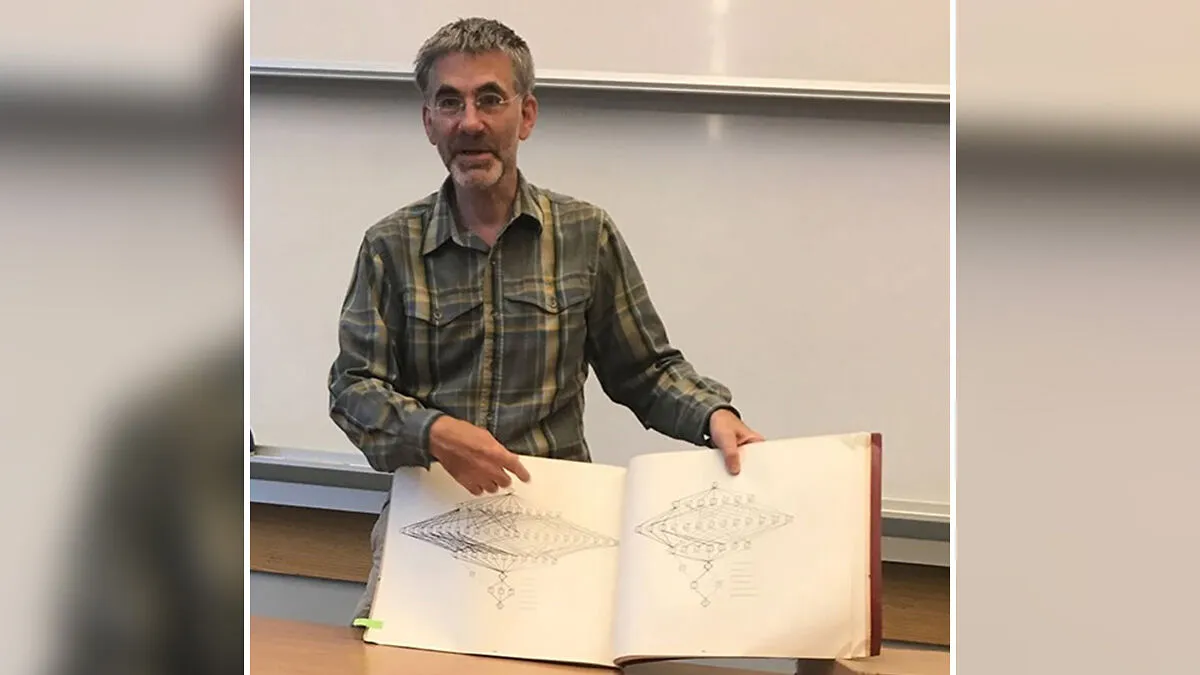


A celebrated mathematics professor has changed how he grades his students’ homework after noticing a troubling trend that he believes has made traditional marking increasingly pointless.
Richard Borcherds, a professor at the University of California, Berkeley, says the growing trend has left him questioning whether students are actually learning from their assignments.
Highlights
- UC Berkeley professor Richard Borcherds has stopped grading homework for correctness, admitting that the traditional approach no longer makes sense.
- Multiple studies raise concerns about students’ learning, with one finding that higher homework scores did not necessarily translate into better exam performance.
- Amid growing concerns, netizens debate whether universities should return to traditional examinations or embrace new assessment methods.
The 1998 Fields Medal winner has admitted his new approach is far from ideal, but he believes the problem is hard to ignore.
One person reacted, “I get not wanting to score it, but not grading it doesn't help either, or he's just assigning filler work.”
1998 Fields Medalist Richard Borcherds has stopped grading homework for correctness due to widespread AI use
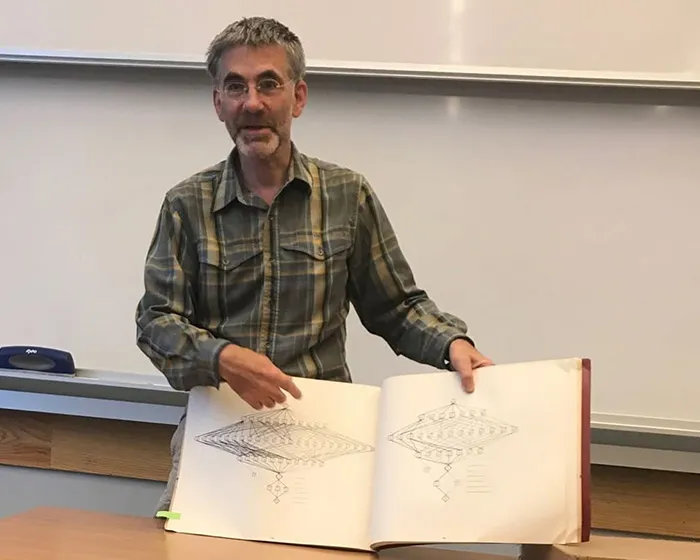
Richard Borcherds, a mathematics professor at UC Berkeley, has stopped grading students’ homework for correctness because he believes artificial intelligence has fundamentally changed the value of traditional assignments.
In an interview, Borcherds explained that students increasingly used AI to produce correct answers, making it hard to tell whether their submissions reflected their own understanding.
“Student use of AI for homework is now widespread,” he told The California Post.
“Grading for correctness just adds a huge incentive for them to use AI for homework instead of doing it themselves, and penalizes students for honesty,” Borcherds said.

He is concerned that students who struggle through difficult problems themselves could receive lower marks than classmates who use AI to generate polished solutions.
If grades reward the final answer without revealing how it was reached, students may feel they have little reason to do the intellectual work themselves.
Borcherds has therefore switched to a completion-based approach, awarding credit for submitting homework rather than assessing whether every answer is correct.
He acknowledged that the arrangement is hardly ideal.
He described the change as “not a very good system,” adding that, for now, he has no alternative.
New research raises concerns about AI use in schoolwork and its potential impact on students’ learning

The professor also noted that “there is no easy way to tell the difference between human and AI-generated work,” adding that although AI occasionally made recognizable mistakes in the past, it has improved to the point that it “rarely makes obvious mistakes.”
A nationally representative survey of 1,017 American teenagers published by Common Sense Media in August 2026 found that 70% used AI for schoolwork.
Among teenagers who used these tools, 63% said they got answers from AI, whether they used them as-is, rewrote them, or modified them with their own knowledge.
Among AI users, 38% said the technology led them to generate fewer of their own ideas, while 39% felt they were missing out on learning when they used AI to complete assignments.



The same survey also found that 66% of teenagers who used AI believed it helped them understand their schoolwork.
However, a June 2026 discussion paper from the Center for Economic Policy Research raised further questions about the consequences of relying on AI to complete homework.
Researchers examined 30 months of data involving 26,811 students in grades seven through 12 in China.
They reported that AI adoption was associated with an 18% increase in homework scores and a 30% decrease in completion times, while monthly exam scores declined by 20% within six months.
A major AI breakthrough has left the mathematics professor questioning the future of mathematics itself
The researchers found that the learning losses were concentrated among students whose behavior suggested they were outsourcing their homework, rather than using AI while maintaining similar study habits.
These findings highlight the tension educators face: AI can help students find explanations, check their work, and tackle difficult topics.
But when students rely on it to produce answers before attempting problems themselves, their homework scores may not accurately reflect what they have learned.
For Borcherds, the challenge extends beyond grading assignments, as he has also expressed uncertainty about what the rapid development of AI could mean for the future of mathematical research.
His concerns have grown amid advances in AI-assisted mathematics, including OpenAI’s September 2026 announcement that an internal AI system had produced a proof addressing a version of the Navier-Stokes existence and smoothness problem, one of the famous Millennium Prize Problems.
OpenAI said its system produced a proof addressing a finite-time singularity in the equations describing fluid motion, along with a formalization intended to allow machine verification.
The development has made Borcherds question whether human mathematicians will retain an advantage as AI systems become more capable.
“If AI continues to improve at present rate, then, in a few years, there'll be nothing human mathematicians can do that AI can't do better,” he warned.
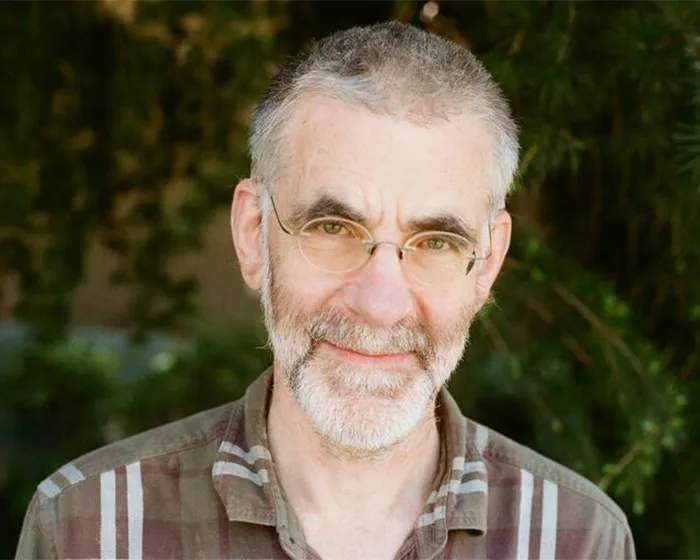


“I have no idea what to advise. I even asked ChatGPT this exact question, and even ChatGPT said it didn't have any idea what was going to happen.”
Borcherds compared the situation with previous technological advances that transformed entire industries.
“There have been plenty of technical breakthroughs in the past,” he explained, pointing to hand weaving being displaced by looms and horses by motor cars.
The professor added, “This is the first time anything like this has happened in mathematics, though.”
Netizens debate whether professors should abandon traditional homework grading or make students prove what they know in person
He also suggested that universities might not change how they operate immediately, even as AI capabilities continue to advance.
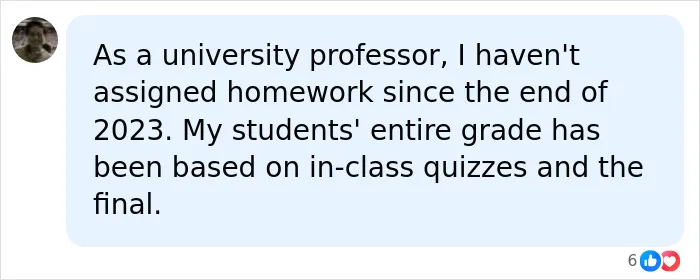
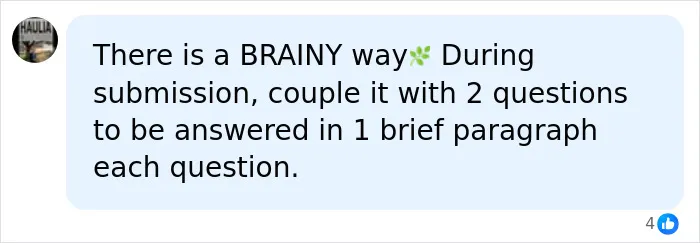
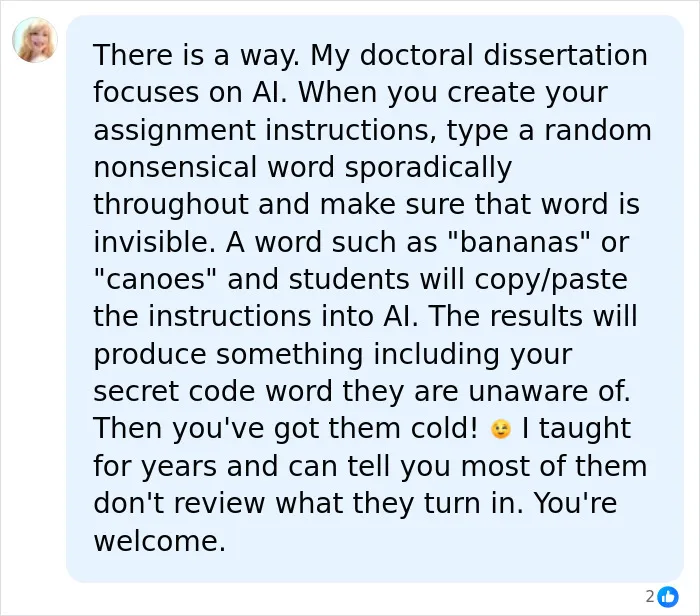
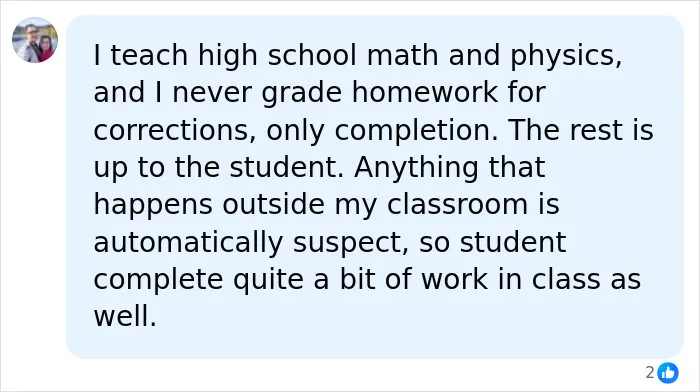
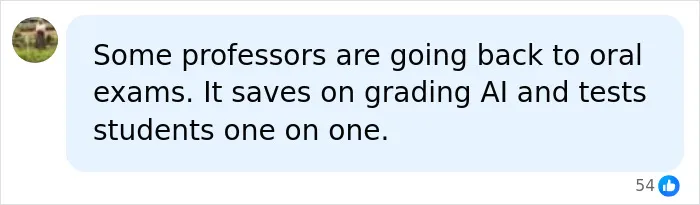
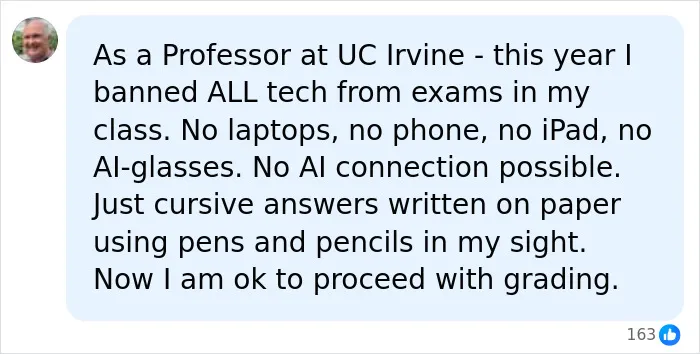
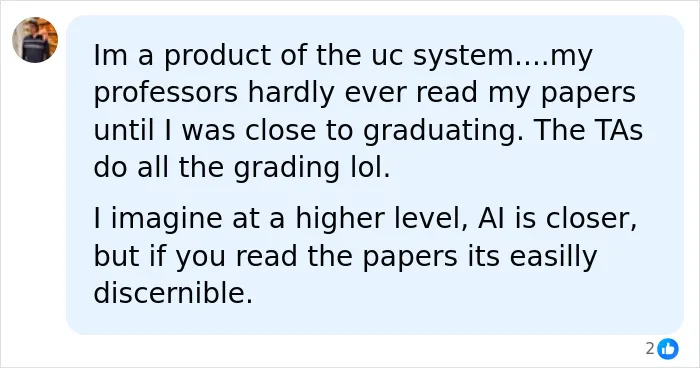
Borcherds’ decision has prompted different reactions online, with some people supporting his approach and others arguing that educators should change how they assess students rather than abandon traditional grading.
One person wrote, “I actually love when profs have this attitude because I like the homework for learning experience; I also like being left alone to study at my own pace.”
Another commenter suggested, “Paper and pencil examinations in person should do the trick.”
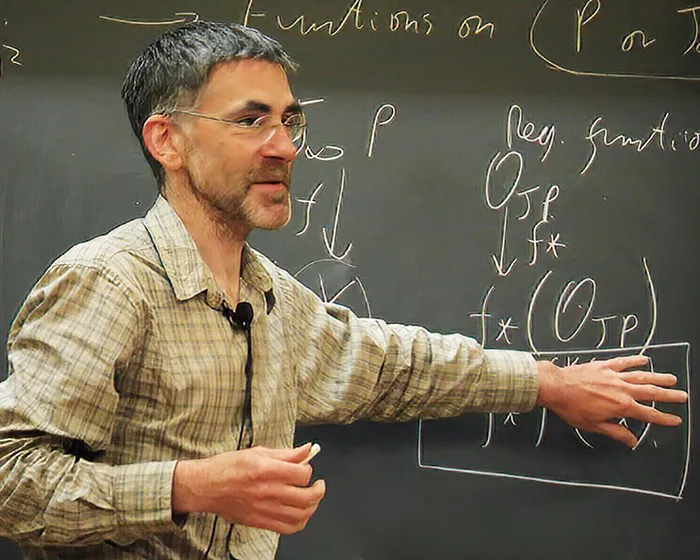
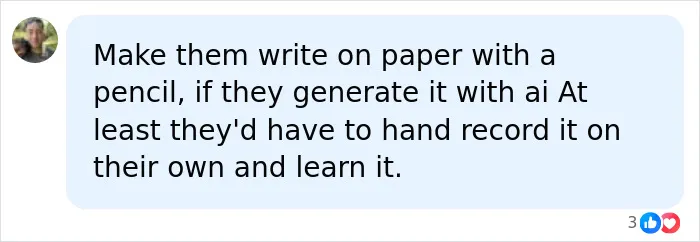
A third person argued, “Make them write on paper with a pencil, if they generate it with AI, at least they'd have to hand-record it on their own and learn it.”
Others said, “It's wild to me how determined people are to hold on to the past. The professor seems pretty smart. It's the way the world is going.”
Another comment read, “My department has changed the structure of all math courses to put much more grading emphasis on in-person, closed-book, timed exams rather than homework. Students can use AI all they like on problem sets as long as they understand the material sufficiently to pass exams.”
“I learned math by doing problems until the process made sense and it got ingrained in my brain. Absolutely effective!” one user wrote